 Nepal Visuals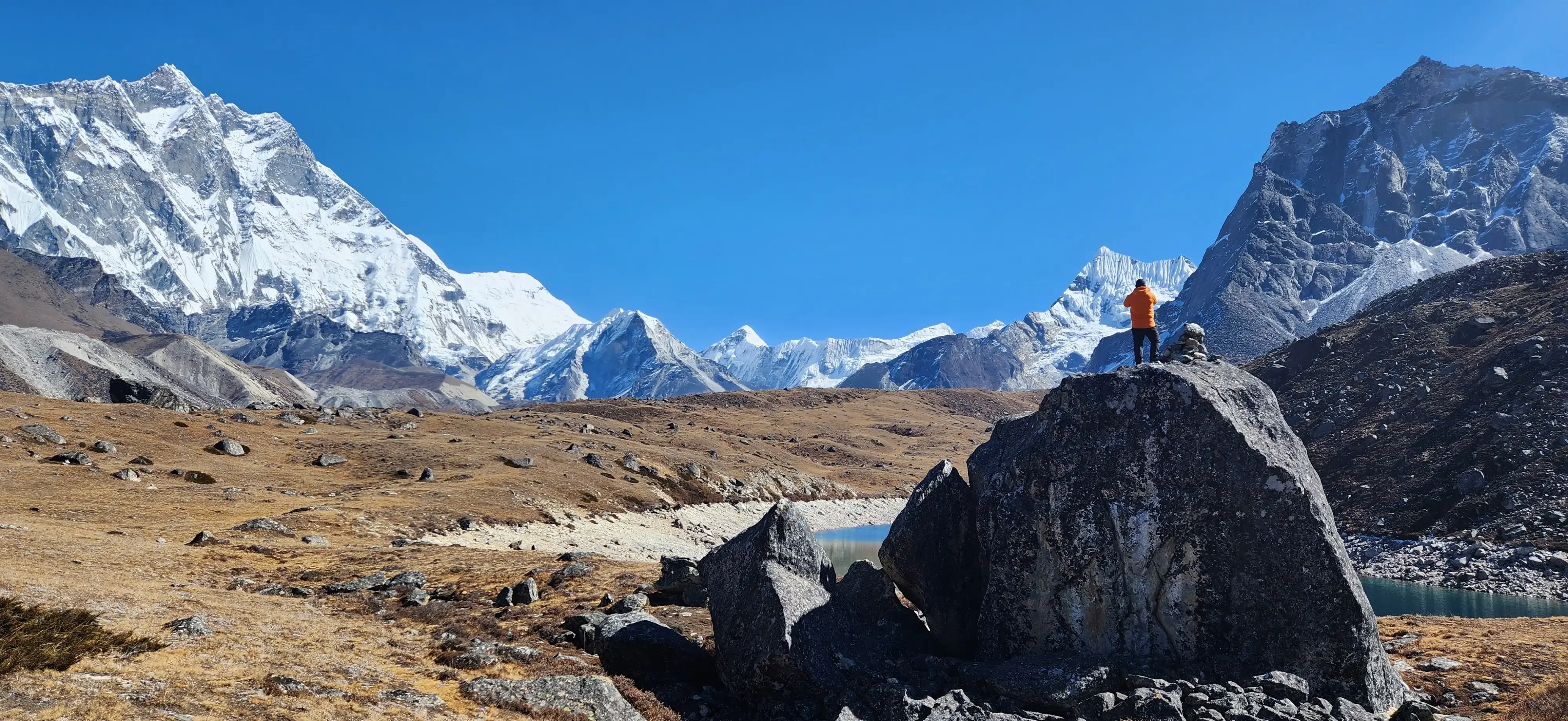
Everest Region · Challenging grade
Classic Everest Base Camp Trek
The route
What the walk is.
The Classic Everest Base Camp Trek – 21 Days offers a complete Himalayan journey following the historic route taken by Sir Edmund Hillary and Tenzing Norgay during their successful 1953 Everest expedition.
While most other treks start this expidition from Jiri, we at Nepal Visuals begin the journey from Phaplu.
This traditional approach allows trekkers to experience a quieter and more authentic side of the Everest region before joining the main Everest trail.
The longer itinerary also allows for better acclimatization through a gradual ascent, making it an excellent choice for those seeking both adventure and cultural depth.
The first week of the trek focuses on cultural immersion as you pass through traditional Tamang, Rai, Jirel, and Sherpa villages.
These early days provide a rare opportunity to witness authentic Himalayan lifestyles, including terraced farmlands, water driven mills, stone built homes, and ancient monasteries.
Since this route avoids the direct Lukla flight approach, trekkers gain altitude gradually while experiencing regions where tourism still has limited influence. By the time you reach Namche Bazaar, you are already well acclimatized and prepared for higher elevations.
A unique feature of this trek is the extension into the beautiful Gokyo Valley. Here, trekkers explore the famous Gokyo Lakes, a chain of six sacred turquoise glacial lakes located between 4,700 and 5,100 meters.
The trek also passes the massive Ngozumpa Glacier, the longest glacier in Nepal. A climb to Gokyo Ri (5,357 m) rewards trekkers with one of the best panoramic views in the Everest region, including Everest, Lhotse, Makalu, and Cho Oyu.
Another major highlight is the crossing of Cho La Pass (5,420 m), a challenging high altitude pass that connects the Gokyo Valley to the Everest Base Camp trail. This section involves steep rocky paths, possible glacier crossings, and a true sense of high mountain adventure.
The journey then continues toward Everest Base Camp (5,364 m), where climbers begin their summit attempts, followed by a climb to Kala Patthar (5,644 m), the most iconic viewpoint for close up views of Mount Everest, especially at sunrise.
This classic route is ideal for trekkers who want more than just reaching Everest Base Camp. It offers a balanced experience of history, culture, natural beauty, and physical challenge.
With its gradual ascent, remote villages, high mountain passes, and iconic viewpoints, this trek delivers one of the most rewarding and complete Everest experiences available.
General Information
Detail | Information |
Region | Everest (Khumbu), Nepal |
Start Point | Phaplu (or Jiri traditionally) |
End Point | Lukla |
Pass Crossing | Cho La Pass (5,420m) |
Why Choose Nepal Visuals for the Classic Everest Base Camp Trek?
Choosing the right trekking company can define your entire Himalayan experience.
Nepal Visuals combines deep local expertise, a genuine commitment to responsible tourism, and an uncompromising focus on trekker safety – making us the ideal partner for the Classic Everest Base Camp Trek.
Rooted in the Himalayas
Nepal Visuals is a Kathmandu-based company founded and operated by Nepali trekking professionals with first-hand experience of every route we offer. Our guides are not just trail leaders – they are local storytellers, cultural interpreters, and mountain safety specialists who grew up in the landscapes you will walk through.
Expert, Certified Guides
Every Nepal Visuals guide holds a government-issued trekking guide license and has completed wilderness first-aid and altitude sickness management training. On longer, higher treks like this 21-day route, lead guides carry professional pulse oximeters and emergency oxygen supplies for rapid response.
Small Group Sizes for a Personal Experience
We deliberately keep our group sizes small, ensuring each trekker receives personal attention and that our footprint in fragile high-altitude ecosystems remains minimal. Smaller groups move more responsibly through remote communities and create less pressure on limited teahouse resources.
Transparent, Honest Pricing
Nepal Visuals operates on a policy of full pricing transparency. There are no hidden costs, surprise fees, or last-minute add-ons. Everything included in your package is clearly listed from booking, allowing you to plan with complete confidence.
Responsible & Ethical Tourism
We are committed to fair wages for all porters and support staff, strictly adhering to Nepal's porter welfare guidelines on load limits, footwear, and accommodation. By travelling with Nepal Visuals, you directly support local economies across the Phaplu to Lukla corridor.
Flexible Itineraries & Custom Support
No two trekkers are the same. Nepal Visuals offers flexible itinerary adjustments to accommodate acclimatization needs, weather delays, or personal pace. Our 24/7 Kathmandu operations support team ensures seamless communication throughout your journey.
End-to-End Trek Logistics
From airport transfers and permit processing to gear rental, hotel nights in Kathmandu, and emergency evacuation coordination, Nepal Visuals manages every logistical detail. You focus entirely on the trail – we handle everything else.
Day by day
Where you sleep, night by night.
Kathmandu → Kathmandu · highest point 5,644 m
- Day 01Lodge/Tea House (Twin Sharing) · Welcome Dinner1,400 m
Arrive at Tribhuvan International Airport. Your Nepal Visuals representative greets you and transfers you to your hotel in Thamel. Welcome briefing with your guide this evening over a traditional Nepali dinner.
- Day 02Lodge/Tea House (Twin Sharing) · Breakfast, Lunch, Dinner2,413 m
An early morning departure by jeep or bus for the scenic drive to Salleri or Phaplu in the Solu region — the classic approach to Everest before the Lukla airport existed. This route follows ancient Sherpa trade paths and offers a cultural immersion that the flight-in trek never provides.
- Day 03Lodge/Tea House (Twin Sharing) · Breakfast, Lunch, Dinner2,440 m
Start your trek from Junbesi to Nunthala, which takes around 6-7 hours. As you cross the Junbesi Khola and ascend towards the Lamjura Pass, you are treated to panoramic views of the surrounding peaks. The trek passes through dense rhododendron and pine forests and Sherpa villages, offering rich cultural insights along the way.
- Day 04Lodge/Tea House (Twin Sharing) · Breakfast, Lunch, Dinner2,250 m
After breakfast in Nunthala, set off on the scenic trek to Bupsa Danda. The trail first takes you down to the Dudh Koshi River, then through peaceful meadows, terraced paddy fields, and welcoming villages. Follow the river to the charming Rai village of Jubing before a gradual climb to Khari Khola and on to Bupsa Danda.
- Day 05Lodge/Tea House (Twin Sharing) · Breakfast, Lunch, Dinner2,610 m
Continue trekking north along the Dudh Koshi River valley, passing through Sherpa villages with their distinctive prayer wheels and colourful flags. The trail joins the classic EBC route as you reach Phakding — a welcoming teahouse village where the mountain atmosphere begins in earnest.
- Day 06Lodge/Tea House (Twin Sharing) · Breakfast, Lunch, Dinner3,440 m
Cross the Hillary Suspension Bridge and make the steep climb into Namche Bazaar — the Sherpa capital of the Khumbu. The Saturday market here is legendary; Sherpa traders, yak herders, and trekkers all converge. On a clear day, Everest appears for the first time through a ridge gap.
- Day 07Rest day · Lodge/Tea House (Twin Sharing) · Breakfast, Lunch, Dinner3,440 m
A rest day in Namche is essential for acclimatisation. Hike up to the Everest View Hotel (3,880m) for sunrise over Everest, Lhotse, and Ama Dablam. Visit the Sherpa Culture Museum and the National Park headquarters. Return to Namche for the afternoon and a well-deserved rest.
- Day 08Lodge/Tea House (Twin Sharing) · Breakfast, Lunch, Dinner3,860 m
A ridge walk dominated by Ama Dablam on your right shoulder. Pass through Phunki Thanga at the river before the final climb to Tengboche Monastery — the most sacred Buddhist site in the Khumbu. The monastery is set against a breathtaking mountain backdrop; catch the monks evening puja ceremony if timing allows.
- Day 09Lodge/Tea House (Twin Sharing) · Breakfast, Lunch, Dinner4,410 m
Descend through Deboche before climbing again past Pangboche — the highest permanently inhabited village in the Khumbu. The trail opens wide into the Imja Khola valley; stone walls and yak pastures appear everywhere as you reach the trekkers town of Dingboche, ringed by Island Peak, Lhotse, and Ama Dablam.
- Day 10Lodge/Tea House (Twin Sharing) · Breakfast, Lunch, Dinner4,470 m
Today, trek from Phorste Thanga to Machhermo in about 6-7 hours. The trail continues to ascend gradually through the Gokyo Valley with views of towering peaks and the Khumbu unique landscapes. Upon arrival in Machhermo, relax and enjoy the scenery as you prepare for the Gokyo Lakes section of the trek.
- Day 11Lodge/Tea House (Twin Sharing) · Breakfast, Lunch, Dinner4,790 m
The trail climbs above the snowline and reveals the first Gokyo Lakes — sacred glacial waters of extraordinary turquoise. Pass the First and Second Lakes before arriving at Gokyo village on the shore of the Third Lake. The Ngozumpa Glacier — the largest glacier in the Himalayas — sprawls across the valley. The afternoon is free to explore the lakeshore.
- Day 12Rest day · Lodge/Tea House (Twin Sharing) · Breakfast, Lunch, Dinner5,357 m
Rise at dawn for the climb to Gokyo Ri. From the summit: a 360-degree Himalayan skyline featuring Everest, Lhotse, Makalu, and Cho Oyu simultaneously — plus the three Gokyo Lakes glittering below. Most photographers rate this view above Kala Patthar. Return to Gokyo for rest and acclimatisation.
- Day 13Lodge/Tea House (Twin Sharing) · Breakfast, Lunch, Dinner4,500 m
Start your day with a trek to Thangna, enjoying stunning views of the Gokyo Lakes and surrounding mountains. As you pass through traditional Sherpa villages, take in the local culture and architecture. Thangna offers breathtaking views of Cho Oyu and serves as the gateway to the Cho La Pass crossing tomorrow.
- Day 14sleep 4,830 m · Lodge/Tea House (Twin Sharing) · Breakfast, Lunch, Dinner5,420 m
One of the most adventurous days of the trek. The Cho La Pass is a genuine high-mountain glacier crossing at 5,420m — crampons may be required. The initial climb is steep and rocky; the top is a narrow snow and ice ridge with staggering views. The descent to Dzongla is equally dramatic. This is what separates the Classic EBC route from the standard trail.
- Day 15Lodge/Tea House (Twin Sharing) · Breakfast, Lunch, Dinner4,910 m
Trek from Dzongla to Lobuche in about 6-7 hours. The trail leads through rugged landscapes with views of Ama Dablam and Cholatse. You will encounter local yak herders providing insight into the region traditional lifestyle. Lobuche is the perfect place to prepare for the final ascent to Everest Base Camp.
- Day 16sleep 5,164 m · Lodge/Tea House (Twin Sharing) · Breakfast, Lunch, Dinner5,364 m
Set off early for your trek to Everest Base Camp along the Khumbu Glacier. At Base Camp: a sea of coloured expedition tents in season, prayer flags, and Everest directly overhead. After soaking in the moment, return to Gorak Shep for dinner and overnight rest.
- Day 17Highest point · sleep 4,371 m · Lodge/Tea House (Twin Sharing) · Breakfast, Lunch, Dinner5,644 m
Rise early for a thrilling hike to Kala Patthar by headtorch for the single best Everest sunrise view on Earth. After the panorama, descend all the way to Pheriche, losing nearly 1,300m of altitude. Your lungs will thank you by nightfall.
- Day 18Lodge/Tea House (Twin Sharing) · Breakfast, Lunch, Dinner3,440 m
Long legs and light packs. Descend through familiar villages — Pangboche, Tengboche — now passed with a sense of ownership and deep calm. The rhododendron forest smells different on the way down. Back in Namche by afternoon for a hot shower and a celebratory meal.
- Day 19Lodge/Tea House (Twin Sharing) · Breakfast, Lunch, Dinner2,860 m
The final day on foot. Reverse the Namche stairs, cross the Hillary Bridge one last time, and follow the Dudh Kosi back to Lukla. The trekking community in Lukla lodges is warm and celebratory — everyone here has the same look: tired, deeply satisfied, and changed.
- Day 20Lodge/Tea House (Twin Sharing) · Breakfast, Dinner1,400 m
Weather-dependent morning flight back to Kathmandu. Back in the city by late morning. Afternoon free for Boudhanath Stupa, Thamel shopping, or rest. Farewell dinner with your guide this evening.
- Day 21Breakfast
Our representative will transfer you to Tribhuvan International Airport for your departure flight. Reflect on the unforgettable journey: the Gokyo Lakes, Cho La Pass, and Everest Base Camp — one of the great Himalayan classics.
Fixed departures
12 group dates open.
144 places across them. Or start on any flexible date in the calendar below.
| Departure | Booked | Filling | Left | Status | Book |
|---|---|---|---|---|---|
| Sat, Mar 6, 2027 | 0/12 | 12 | Available | ||
| Sat, Mar 20, 2027 | 0/12 | 12 | Available | ||
| Sat, Apr 3, 2027 | 0/12 | 12 | Available | ||
| Sat, Apr 17, 2027 | 0/12 | 12 | Available | ||
| Sat, May 1, 2027 | 0/12 | 12 | Available | ||
| Sat, May 15, 2027 | 0/12 | 12 | Available | ||
| Sat, Sep 4, 2027 | 0/12 | 12 | Available | ||
| Sat, Sep 18, 2027 | 0/12 | 12 | Available | ||
| Sat, Oct 2, 2027 | 0/12 | 12 | Available | ||
| Sat, Oct 16, 2027 | 0/12 | 12 | Available | ||
| Sat, Nov 6, 2027 | 0/12 | 12 | Available | ||
| Sat, Nov 20, 2027 | 0/12 | 12 | Available |
Prices are per person, twin share, in USD. Book with a 20 % deposit — the balance is due 7 days before departure. Scheduled departures show places left; flexible departures can be booked on any listed start date. Booking terms
| Su | Mo | Tu | We | Th | Fr | Sa |
|---|---|---|---|---|---|---|
| 1 | 2 | 3 | ||||
| 4 | 5 | 6 | 7 | 8 | 9 | 10 |
| 11 | 12 | 13 | 14 | 15 | 16 | 17 |
| 18 | 19 | 20 | 21 | 22 | 24 | |
| 25 | 26 | 28 | 29 | 30 |
- Selected trip dates
- Available
- Filling fast
- Almost sold out
- Sold out
Fri, Oct 23Thu, Nov 12, 2026
21 days · flexible departure
- StartsFri, Oct 23, 2026 · Kathmandu
- EndsThu, Nov 12, 2026 · Kathmandu
USD $1,799 per person, twin share · Deposit today USD $359.80 (20 %)
On the trail
Photographs from the route.
The whole number
What the price covers.
16 things are in the price and 12 more are named as excluded.
In the price
Transportation & Logistics
- ✓Domestic Flight · One-way flight ticket from Lukla to Kathmandu, including all applicable airport departure taxes.
- ✓Private Transfers · All airport pickups and drop-offs via private tourist vehicle.
- ✓Permits & Official Fees · All necessary conservation fees, trekking permits, and government taxes.
- ✓Government Coordination · Full handling of paperwork and liaison with relevant government offices.
Professional Support & Safety
- ✓Expert Leadership · A government-certified, highly experienced English-speaking guide (friendly, helpful, and knowledgeable).
- ✓Group Support · An assistant guide provided for larger groups (8 or more participants).
- ✓Porter Service · Professional porter support (1 porter per 2 trekkers, with a 10 kg limit per person).
- ✓Health Monitoring · Twice-daily vitals checks using an oximeter (pulse, oxygen levels, and heart rate) and a comprehensive first aid kit.
- ✓Staff Welfare · All wages, meals, lodging, transportation, and insurance for your entire guide and porter team.
- ✓Emergency Coordination · Full assistance in arranging helicopter services for emergencies (costs covered by your insurance).
Accommodation & Meals
- ✓City Stay · 3-star hotel accommodation in Kathmandu on a twin-sharing basis, including breakfast.
- ✓Trek Nutrition · Full board standard meals (breakfast, lunch, and dinner) throughout the duration of the trek.
- ✓Trail Lodging · The best available teahouse or lodge accommodation during the trek (twin-sharing).
- ✓Celebratory Dining · A welcome or farewell dinner at a typical Nepalese restaurant in Kathmandu.
Gear & Recognition
- ✓Trekking Essentials · Complimentary use of duffle bags and trekking poles for those who do not have their own.
- ✓Official Achievement · A formal Trek Completion Certificate issued by Nepal Visuals.
Not included
Flights, Visas, and Logistics
- ×International Travel · International flight fares and airport departure taxes.
- ×Nepal Entry Visa · Fees for your visa ($50 for 30 days or $125 for 90 days), obtainable upon arrival at the airport.
- ×Baggage Overages · Any extra baggage charges exceeding the standard airline weight limits.
- ×Miscellaneous · Any expenses or services not explicitly listed in the inclusions.
Personal Protection & Equipment
- ×Mandatory Insurance · Comprehensive Travel and Medical Insurance (Compulsory), covering high-altitude trekking and evacuation.
- ×Rescue Costs · Charges for emergency rescue or evacuation by helicopter (to be claimed via your insurance).
- ×Individual Gear · All personal trekking clothing, footwear, and specialized equipment.
Trail & City Expenses
- ×Kathmandu Dining · Main meals (lunch and dinner) in Kathmandu, excluding the celebratory dinner and daily breakfasts.
- ×Teahouse Amenities · Personal trail expenses such as hot showers, Wi-Fi/internet access, battery recharging, and extra hot drinks or hot water.
- ×Beverages · All alcoholic and non-alcoholic drinks (sodas, bottled water, etc.).
- ×Extended Stays · Any additional nights of accommodation in Kathmandu due to early arrivals, late departures, or early returns from the trail.
Professional Tips and Gratuity
- ×Staff Appreciation · Customary tips for your guides and porters as a gesture of thanks for their hard work and dedication.
Challenging grade
Is this trek right for you?
You can do this if…
- ✓Walk 6–8 hours a day comfortably
- ✓Carry an 8–10 kg daypack
- ✓Manage long ascents and nights above 4,000 m
Recommended preparation
- ✓3+ months of cardio and leg-strength training
- ✓Back-to-back day hikes with a loaded pack
- ✓Check the itinerary for high passes or glacier days
Experience & support
- ✓Previous multi-day trekking recommended
- ✓Guided throughout — a licensed guide is required on Nepal treks
- ✓Unsure about age, health or fitness? Ask us — we tailor the pace
About three months out? Follow our free 12-week trek fitness plan.
Good to know
Additional information.
Accommodation and Meals
Days 2-7: Remote Village Lodges
Basic family-run lodges with simple rooms, shared squat toilets, minimal electricity, communal dining with wood stoves. This authentic experience connects you to local life. Meals are simple: primarily dal bhat, noodles, eggs, and potatoes.
Days 8-19: Main Route Teahouses
Better facilities with twin-sharing rooms, shared bathrooms (Western and squat toilets), hot showers ($3-5 extra), dining rooms with heaters, electricity for charging ($1-3 per device), WiFi available ($3-4), and varied menus.
Namche Bazaar: Best facilities with attached bathrooms, reliable hot water, bakeries, restaurants.
Gokyo: Good facilities for altitude with stunning lake views.
Gorakshep (5,140m): Very basic, extremely cold, minimal facilities, difficult sleep due to altitude.
Meals
Main Route Menu: Dal bhat (unlimited refills, most nutritious), noodles (chow mein, thukpa), pasta, fried rice, momos, soups (garlic soup helps altitude), eggs, pancakes, porridge, pizza (basic), spring rolls.
Drinks: Tea, coffee, hot chocolate, soft drinks, beer ($5-12 depending on altitude).
Food Safety: Stick to cooked hot food. Dal bhat is your best option. Avoid meat above 4,000m. Eat even if not hungry. Garlic soup aids acclimatization.
Prices: Increase with altitude. Dal bhat NPR 400-500 at 2,500m, NPR 1,000-1,200 at Gorakshep.
Trek Difficulty
Rating: Challenging
What Makes It Challenging:
Extended Duration: 21 days requires mental resilience and sustained physical effort
Extreme Altitude: Multiple days above 4,000m, nights above 5,000m
Cho La Pass: 7-8 hour day at 5,420m with glacier travel, steep climbing, potential ice/snow
Cumulative Fatigue: Three weeks of daily walking accumulates. Small issues become major
Temperature Extremes: From 20°C days to -20°C nights
Basic Facilities: Three weeks of simple accommodations, shared bathrooms, cold rooms
Acclimatization Profile:
Days 2-7: Gradual 2,413m to 2,610m over 6 days
Day 8: Rest at Namche (3,440m), hike to 3,880m
Days 9-11: Gradual to Gokyo (4,790m)
Day 12: Summit Gokyo Ri (5,357m), sleep at 4,790m
Day 14: Cho La Pass (5,420m)
Days 16-17: EBC (5,364m) and Kala Patthar (5,644m) after 16 days preparation
Physical Requirements:
Ability to walk 6-8 hours daily, cardiovascular endurance, leg strength, previous multi-day trekking experience recommended, comfortable carrying 5-7kg daypack.
Preparation:
Start training 3-6 months before. Focus on cardio (running, cycling 3-5x weekly), long hikes building to 6-8 hours, leg strengthening (squats, lunges, stairs with pack), back-to-back hiking days.
Cho La Pass Specific:
Pre-dawn start (3-4 AM), steep sustained climbing, possible crampons/microspikes, scrambling on loose rocks, 7-8 hour total day, no bailout option midway. Not everyone completes it. Alternate route available via Pheriche.
Altitude Sickness
Risk Level: Lower than short treks due to 21-day gradual approach, but still significant at 5,644m.
Symptoms:
Mild (Common): Headache, slight nausea, fatigue, dizziness, difficulty sleeping
Severe (Rare): Confusion, loss of coordination, severe breathlessness at rest, coughing pink froth
Prevention:
Gradual ascent (built into itinerary)
Hydration: 3-4 liters daily
"Climb high, sleep low" principle
Carb-rich diet
Moderate pace ("bistari bistari")
Avoid alcohol initially
Diamox medication (consult doctor)
Proper rest
Management:
Guides monitor health twice daily with oximeters. Mild symptoms: rest, hydrate, don't ascend. Moderate symptoms: consider descent. Severe symptoms: immediate descent and evacuation.
Success Rate: 85-90% completion due to superior acclimatization profile.
Before you book
Questions we get most.
Difficulty & Physical Prep
How does the difficulty compare to the 12-day Lukla trek?
It is significantly more physically demanding. While the Lukla trek starts at 2,860m, this trek starts much lower (around 1,900m). You will face the "Nepali Flat"—a relentless series of 1,000m descents followed by 1,000m ascents every day for the first week before you even reach the main Everest trail.
Why should I choose 21 days over the shorter version?
The main benefit is natural acclimatization. Because you spend a week walking through the "middle hills" (2,000m–3,000m), your body produces more red blood cells gradually. By the time you reach Namche Bazaar, you will likely feel much stronger and have a near-zero risk of early altitude sickness compared to those who fly in.
Do I need to be a professional athlete?
No, but you need high "grit" and leg endurance. You’ll be trekking for 18–19 days total. Training should focus on long-distance walking and leg strength (squats and lunges) to handle the steep "up-and-down" ridges of the Solu region.
Accommodation & Hygiene
What is the accommodation like in the first week?
The teahouses between Jiri and Lukla are much more "authentic" and rustic. Expect fewer Western amenities, simpler food menus, and shared family-run lodges. Once you join the main trail at Lukla/Surke, the lodges become more modern and "touristy."
How is the toilet/shower situation in the lower regions?
In the first week, expect simple squat toilets and "bucket showers" (a bucket of hot water). It is more traditional, but the lower altitude means it's warmer, so taking a shower is much more comfortable than it is at high altitudes.
Is laundry easier on a 21-day trek?
Yes. Since you spend more time in warmer, lower-altitude villages (Jiri, Sete, Junbesi), you can wash your clothes and they will actually dry in the sun. Once you pass Namche, drying clothes becomes nearly impossible.
Food & Water
Is the food different in the Solu (lower) region?
Yes! You’ll get more fresh organic vegetables from local gardens. You can also find local specialties like Champa (roasted barley flour) and authentic Sherpa tea. The food is generally cheaper in the first week than in the high Khumbu.
Can I eat meat in the first week?
It is generally safer than in the high Khumbu because the lower villages have road access or local slaughtering. However, once you cross into the National Park (past Surke/Lukla), the "No Meat" rule is still the safest bet.
How much water should I carry?
You’ll sweat more in the lower, humid forests. Carry at least 2 liters in your daypack. Water is easily available at teahouses, and since you're out for 21 days, using a water filter or UV purifier is essential to save money and plastic.
Clothing & Gear
Do I need different clothes for the lower section?
Yes. The first week is often warm and humid (up to 20°C–25°C). You’ll want lightweight, breathable trekking shirts and shorts. You’ll also need a rain poncho, as the lower hills are prone to afternoon mist and rain.
What about footwear?
Your boots will take a beating over 21 days. Ensure they are high-quality and waterproof. Some trekkers bring a pair of lightweight trail runners for the first week and switch to heavy boots for the rocky/snowy sections above Namche.
Is a heavy down jacket needed for the whole 21 days?
You won't touch your down jacket for the first 7–10 days. Keep it at the bottom of your duffel bag (carried by your porter). You will only need it once you stay overnight above 3,500m.
Electronics & Connectivity
Is there electricity in the villages before Lukla?
Yes, but it can be less reliable. Most villages now have hydro-power or solar. Since the trek is longer, a large solar power bank is a great investment, as you can strap it to your pack and charge it during the 8-hour walking days.
Will I have a phone signal the whole time?
Signal is surprisingly good in the lower valleys (Ncell/NTC). There will be "dead zones" when crossing high passes like Lamjura La (3,530m), but you'll have better connectivity in the first week than you will at Base Camp.
Guides & Support Staff
Is a guide mandatory for the Jiri route?
Yes. In 2026, the regulation remains that all foreign trekkers must have a licensed guide. For the Jiri route, a guide is particularly helpful for navigating the many intersecting local trails that aren't as clearly marked as the main highway from Lukla.
Do I need more porters for a 21-day trip?
No, but your porter’s load will be slightly heavier due to the extra clothes and supplies needed for 3 weeks. It is common to tip slightly more for a 21-day trek ($150–$250 total for the porter) because of the extra duration and physical toll of the lower hills.
Health & Safety
What are the common health issues in the first week?
Instead of altitude sickness, the main issues are blisters, leeches (in monsoon), and heat exhaustion. Take care of your feet early; a small blister on Day 2 can ruin your chance of reaching Base Camp on Day 15.
How does the 21-day itinerary handle altitude?
It's the "gold standard." You cross the Lamjura La Pass (3,530m) around Day 6 and then drop back down. This "climb high, sleep low" happens naturally in the first week, making you incredibly well-acclimatized before you even reach the high-risk zones.
Views & Photography
When will I see Everest for the first time?
On the classic Jiri route, you get your first glimpse of Everest from the ridge above Junbesi or from Phurteng (usually around Day 7 or 8). It’s a distant but magical view that Lukla fliers don't get to see.
What are the landscape highlights of the first week?
You’ll see lush rhododendron and oak forests, terraced rice fields, and the deep river gorge of the Dudh Koshi. The cultural photography like ancient Mani walls and traditional farmhouse life is much better in this section than on the high-altitude "moonscape" near EBC.
Still have a question? WhatsApp us →