 Nepal Visuals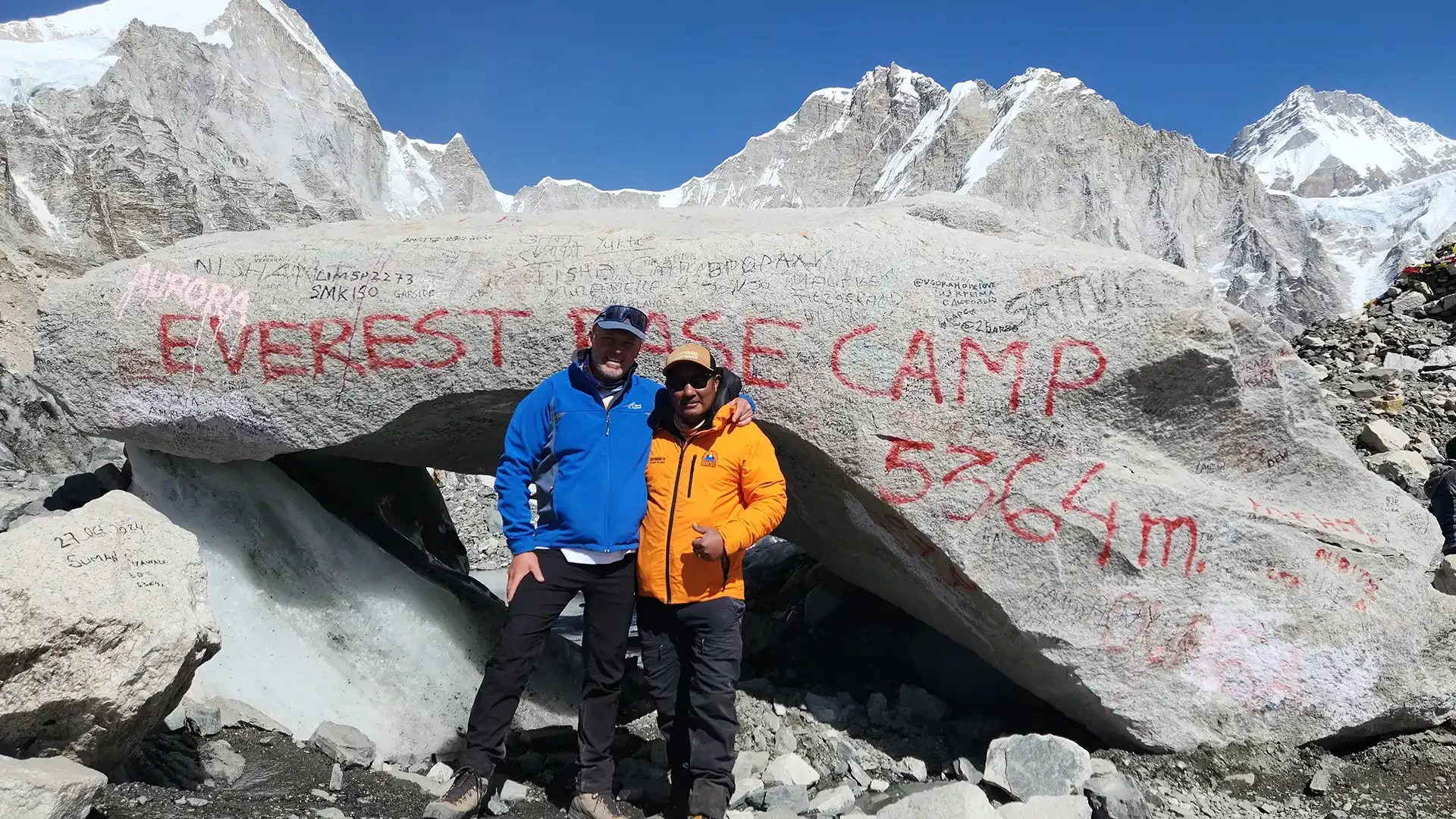
Everest Region · Challenging grade
Everest Base Camp Trek
The route
What the walk is.
Most individuals dream of standing atop the highest point on Earth - Mount Everest.
The climb, however requires specialized knowledge, professional experience, and specific technical gears. Not to mention the cost of climb is also quite high.
As of 2026, climb to the top of Everest takes USD 15,000 per person, just for the permit. Not to mention the extra cost for guides, gears, accommodation, and more.
There is, however, a trek any common, healthy person can do without much technical knowledge and get an experience that takes them closest to the world's tallest peak.
Yes, it is the Everest Base Camp Trek.
Recommended by BBC, Lonely Planet, CNN, and National Geographic, the Everest Base Camp Trek is one of the world's most famous trekking adventures. This unforgettable Himalayan journey takes you to Everest Base Camp (5,364m), the base of Mount Everest, the highest mountain in the world.
This classic 14-day Everest Base Camp trek follows the route through Nepal's beautiful Khumbu region. Along the trail, you will experience traditional Sherpa culture, ancient Buddhist monasteries, and some of the most spectacular mountain scenery on Earth.
Your adventure begins with a scenic mountain flight to Lukla, followed by trekking through famous villages such as Namche Bazaar, Tengboche, and Dingboche. The trail passes through Sagarmatha National Park, a UNESCO World Heritage Site, featuring alpine forests, glacial rivers, and dramatic Himalayan landscapes.
One of the main highlights is the hike to Kala Patthar (5,545m), the best viewpoint for panoramic views of Mount Everest, Lhotse, Nuptse, and Ama Dablam. Standing at Everest Base Camp and witnessing the Khumbu Icefall up close is a once-in-a-lifetime achievement.
The Everest Base Camp trek is considered moderately challenging and is suitable for fit beginners and experienced trekkers. No technical climbing skills are required, and the route is supported by well-established teahouses providing meals and accommodation.
With proper acclimatization, professional trekking guides, and careful itinerary planning, this trek offers a safe, rewarding, and life-changing Himalayan experience.
Lukla flights and Everest Base Camp temperatures
Every Everest Base Camp trek begins with the flight into Lukla, whose Tenzing-Hillary Airport sits at about 2,845 m (9,334 ft) on a short sloping runway cut into the hillside. Flights run in the early morning when the mountain weather is calmest, and delays in cloud or wind are normal rather than exceptional, which is why our itineraries keep contingency time around the flight days.
Temperatures on the trail drop steadily as you gain height. Spring and autumn days at Namche are mild, while nights at Gorak Shep and Everest Base Camp regularly fall well below freezing in any season. Read our Lukla Airport guide for how the flight works, and the Everest Base Camp packing list for what to bring for those cold nights.
Day by day
Where you sleep, night by night.
Kathmandu → Kathmandu · highest point 5,545 m
- Day 01— · Hotel, Kathmandu · Dinner1,400 mTouch down in Kathmandu — the city of temples and trail energy. Your Nepal Visuals guide meets you at Tribhuvan International Airport and transfers you to your hotel in Thamel. This evening is for settling in, a welcome briefing, and a quiet rooftop dinner with Himalayan anticipation in the air.
- Day 02sleep 2,610 m · ~3–4 hrs · Teahouse, Phakding · B/L/D2,860 mAn early morning flight delivers one of the world's most dramatic runway arrivals — Tenzing–Hillary Airport, carved into the mountainside at Lukla. Trek begins almost immediately: through pine forest and suspension bridges strung with prayer flags, following the Dudh Kosi river downstream to the small teahouse village of Phakding.
- Day 035–6 hrs · Teahouse, Namche Bazaar · B/L/D3,440 mThe most iconic approach in trekking. Cross the famous Hillary Suspension Bridge (hanging 100 m above the river) and climb the steep switchbacks into Namche Bazaar — the Sherpa capital and EBC's beating heart. On a clear morning, the first close-up glimpse of Everest appears through a gap in the ridge.
- Day 04Rest day · 3–4 hrs (loop) · Teahouse, Namche Bazaar · B/L/D3,880 mRest and adapt. The golden rule of altitude is 'climb high, sleep low' — so today you hike up to the Japanese-built Everest View Hotel for the most celebrated Himalayan panorama: Everest, Lhotse, Ama Dablam, and Thamserku all at once. Return to Namche for afternoon rest, hot soup, and Sherpa coffee.
- Day 055–6 hrs · Teahouse, Tengboche · B/L/D3,867 mA ridge walk that refuses to let you stop — Ama Dablam fills your right shoulder for hours, the trail weaving through rhododendron forest and across the high Sanasa plateau. Tengboche Monastery, the most sacred site in the Khumbu, awaits at dusk: catch the monks' evening puja if timing allows.
- Day 065–6 hrs · Teahouse, Dingboche · B/L/D4,410 mDescend through Deboche before climbing again past Pangboche — the highest permanently inhabited village in the Khumbu, with a monastery housing what locals say is a yeti scalp. The trail opens wide into the Imja Khola valley; stone walls appear everywhere as you reach the trekkers' town of Dingboche.
- Day 07Rest day · 4–5 hrs (loop) · Teahouse, Dingboche · B/L/D5,083 mThe second critical acclimatisation day. Hike steeply to Nangkartshang Peak for views that confirm you are truly deep in the Himalayas: Makalu, Cho Oyu, Island Peak, and the Lhotse face. Your body is building red blood cells invisibly — respect the process. Afternoon at your own pace in Dingboche.
- Day 085–6 hrs · Teahouse, Lobuche · B/L/D4,940 mThe air thins perceptibly today. Trek through the Khumbu glacier's lateral moraine, pausing at the memorials of Thukla Pass — stone cairns for climbers lost on Everest. Each one is a name, a story, a summit attempt. Lobuche sits at the edge of the glacier, small and spare, with enormous mountains all around.
- Day 09Highest point · 7–8 hrs · Teahouse, Gorak Shep · B/L/D5,364 mThe day everything has been building toward. Trek over the Khumbu glacier to Gorak Shep — the last stop — drop your bag, and push on to Everest Base Camp. The glacier moraine is messy, beautiful, and humbling. At Base Camp: a sea of coloured tents (in season), prayer flags, and Everest directly overhead. Take your time. Breathe it in. Then return to Gorak Shep for a well-earned dinner.
- Day 10sleep 4,280 m · 7–8 hrs · Teahouse, Pheriche · B/L/D5,545 mWake at 4 AM. Headtorch on. Climb Kala Patthar in the dark for the single best Everest sunrise view on Earth — the South Face lit gold, Lhotse and Nuptse flanking it like sentries. Then descend all the way to Pheriche, losing nearly 1,300 m of altitude. Your lungs will thank you by nightfall.
- Day 11sleep 3,440 m · 6–7 hrs · Teahouse, Namche Bazaar · B/L/D4,280 mLong legs and light packs. Descend through familiar villages — Pangboche, Tengboche — now passed with a sense of ownership and calm. The rhododendron forest smells different on the way down. Back in Namche by afternoon: hot shower, cold beer, and the city energy of the Khumbu's capital.
- Day 12sleep 2,860 m · 5–6 hrs · Teahouse, Lukla · B/L/D3,440 mThe final day on foot. Reverse the Namche stairs — easier going down — cross the Hillary Bridge one last time, and follow the Dudh Kosi back to Lukla. The trekking community in Lukla's lodges is warm and celebratory; everyone here has the same look — tired, satisfied, and a little changed.
- Day 13sleep 1,400 m · — · Hotel, Kathmandu · B/D2,860 mWeather-dependent morning flight back to Kathmandu — always build a contingency day into your ticket for this reason. Back in the city by late morning. Afternoon is free: Boudhanath stupa, a Thamel souvenir run, or simply collapsing into a proper hotel bed. Farewell dinner with your guide in the evening.
- Day 14— · — · Breakfast1,400 mFinal morning in Nepal. Your guide transfers you to Tribhuvan International Airport in time for your onward flight. Carry back the mountains in your memory — and your legs, which will remind you of the trail for at least a week.
Fixed departures
16 group dates open.
183 places across them. Or start on any flexible date in the calendar below.
| Departure | Booked | Filling | Left | Status | Book |
|---|---|---|---|---|---|
| Sat, Nov 7, 20263 travellers have joined | 3/12 | 9 | Guaranteed | ||
| Sat, Nov 21, 2026 | 0/12 | 12 | Available | ||
| Sat, Dec 5, 2026 | 1/12 | 11 | Available | ||
| Sat, Dec 19, 20265 travellers have joined | 5/12 | 7 | Guaranteed | ||
| Sat, Mar 6, 2027 | 0/12 | 12 | Available | ||
| Sat, Mar 20, 2027 | 0/12 | 12 | Available | ||
| Sat, Apr 3, 2027 | 0/12 | 12 | Available | ||
| Sat, Apr 17, 2027 | 0/12 | 12 | Available | ||
| Sat, May 1, 2027 | 0/12 | 12 | Available | ||
| Sat, May 15, 2027 | 0/12 | 12 | Available | ||
| Sat, Sep 4, 2027 | 0/12 | 12 | Available | ||
| Sat, Sep 18, 2027 | 0/12 | 12 | Available | ||
| Sat, Oct 2, 2027 | 0/12 | 12 | Available | ||
| Sat, Oct 16, 2027 | 0/12 | 12 | Available | ||
| Sat, Nov 6, 2027 | 0/12 | 12 | Available | ||
| Sat, Nov 20, 2027 | 0/12 | 12 | Available |
Prices are per person, twin share, in USD. Book with a 20 % deposit — the balance is due 7 days before departure. Scheduled departures show places left; flexible departures can be booked on any listed start date. Booking terms
| Su | Mo | Tu | We | Th | Fr | Sa |
|---|---|---|---|---|---|---|
| 1 | 2 | 3 | ||||
| 4 | 5 | 6 | 7 | 8 | 9 | 10 |
| 11 | 12 | 13 | 14 | 15 | 16 | 17 |
| 18 | 19 | 20 | 21 | 22 | 24 | |
| 25 | 26 | 28 | 29 | 30 |
- Selected trip dates
- Available
- Filling fast
- Almost sold out
- Sold out
Fri, Oct 23Thu, Nov 5, 2026
14 days · flexible departure
- StartsFri, Oct 23, 2026 · Kathmandu
- EndsThu, Nov 5, 2026 · Kathmandu
USD $1,499 per person, twin share · Deposit today USD $299.80 (20 %)
On the trail
Photographs from the route.
The whole number
What the price covers.
14 things are in the price and 12 more are named as excluded.
In the price
Stay
- ✓Teahouse / lodge accommodation
Food
- ✓All meals on trek (breakfast, lunch, dinner)
Airport Transfer
- ✓Airport pickup & drop transfer
Park Permit
- ✓Sagarmatha National Park entry permit
TIMS Card
- ✓TIMS card (Trekkers Information Management System)
Guide
- ✓Licensed English-speaking Sherpa guide
Porter
- ✓Porter (usually 1 per 2 trekkers)
Staff Costs
- ✓Guide & porter meals, accommodation, insurance
Domestic Flight
- ✓Domestic flight (Kathmandu–Lukla–Kathmandu)
Local Transport
- ✓All ground transportation
First Aid Kit
- ✓First aid kit & pulse oximeter
Taxes & Fees
- ✓Government taxes & service charges
Trek Briefing
- ✓Pre-trek briefing & gear check
Summit Certificate
- ✓Certificate of completion
Not included
International Flights
- ×International flights
Nepal Visa
- ×Nepal entry visa
Travel Insurance
- ×Travel & rescue insurance
Personal Gear
- ×Personal trekking gear & clothing
KTM Hotel
- ×Extra accommodation in Kathmandu
Personal Expenses
- ×Personal snacks, drinks, hot showers
Tips / Gratuities
- ×Tips for guide & porter
Helicopter Rescue
- ×Emergency helicopter evacuation cost
Extra Meals
- ×Extra meals outside of plan
WiFi & Charging
- ×WiFi, phone charging, battery pack rental
Restricted Permit
- ×Restricted area permit (Manaslu, Mustang etc.)
Gear Rental
- ×Sleeping bag & down jacket rental
Challenging grade
Is this trek right for you?
You can do this if…
- ✓Walk 6–8 hours a day comfortably
- ✓Carry an 8–10 kg daypack
- ✓Manage long ascents and nights above 4,000 m
Recommended preparation
- ✓3+ months of cardio and leg-strength training
- ✓Back-to-back day hikes with a loaded pack
- ✓Check the itinerary for high passes or glacier days
Experience & support
- ✓Previous multi-day trekking recommended
- ✓Guided throughout — a licensed guide is required on Nepal treks
- ✓Unsure about age, health or fitness? Ask us — we tailor the pace
About three months out? Follow our free 12-week trek fitness plan.
Gear checklist. Sign in to download the complete gear list for this trek.
Good to know
Additional information.
Flight Logistics and Transfers
Seasonal Flight Shifts (Kathmandu vs. Ramechhap)
During the peak trekking seasons of March to May and October to November, direct flights from Kathmandu to Lukla are often diverted to Manthali Airport in Ramechhap. This is a strategic move by the Civil Aviation Authority to reduce air traffic congestion at Nepal’s only international airport.
If your trek falls within these months, be prepared for a midnight departure from Kathmandu. You will undergo a 5-hour drive to reach Ramechhap in time for the early morning flight window, which offers the most stable weather for landing at Lukla’s short runway.
The Helicopter Alternative
To skip the long, bumpy road journey to Ramechhap, many trekkers opt for a direct helicopter flight from Kathmandu to Lukla.
This upgrade costs approximately $550 per person on a sharing basis and saves significant time and energy.
Helicopter flights provide a smoother experience and breathtaking aerial views of the Himalayan chain. Private charters are also available for around $3,000 to $3,500, accommodating up to five passengers, which is a popular choice for groups seeking comfort and convenience.
Baggage and Weight Restrictions
Airlines operating the Lukla route enforce a strict weight limit of 15kg per person, which includes both your checked duffle bag and your carry-on daypack. This limit is critical for aircraft performance at high altitudes and short runways.
Porters are assigned to carry up to 20kg, typically shared between two trekkers (10kg each). We provide a durable duffle bag for the trek, and any extra luggage can be stored safely at your hotel in Kathmandu.
Health and Safety Protocols
Understanding Altitude and AMS
The trek reaches a maximum altitude of 5,364m at Base Camp and 5,545m at Kala Patthar. Acute Mountain Sickness (AMS) is a serious consideration, as oxygen levels drop significantly above 3,000m.
Our itinerary is designed with "Trek High, Sleep Low" principles, including mandatory acclimatization days in Namche Bazaar and Dingboche. Symptoms like persistent headaches, nausea, or dizziness should never be ignored and must be reported to your guide immediately.
Emergency Medical Evacuation
Despite the best preparation, severe AMS or injuries may require a helicopter rescue. These evacuations are coordinated from high-altitude points such as Gorakshep, Pheriche, or Lobuche, depending on the urgency and weather conditions.
Trekkers are usually flown to Lukla or directly to specialized hospitals in Kathmandu. Because these flights can cost thousands of dollars, having the correct insurance is not just a recommendation—it is a mandatory requirement for your safety.
Safety Equipment and Expert Guidance
Your trek is led by government-licensed, English-speaking guides trained in Wilderness First Aid. They carry pulse oximeters to conduct daily health checks, monitoring your blood oxygen saturation and heart rate to ensure your body is adapting.
Our team also manages group dynamics and provides motivational support during the more challenging climbs. Their local knowledge of the terrain and weather patterns is your greatest asset in ensuring a successful and safe journey.
Mandatory Travel Insurance
Coverage Requirements
The Nepalese government mandates that all trekkers possess comprehensive insurance. Your policy must explicitly cover trekking up to an altitude of 6,000m, as many standard travel policies exclude "high-risk" activities above a certain elevation.
Essential Policy Inclusions
Helicopter Rescue: Ensure your policy covers the full cost of emergency air evacuation.
Medical Expenses: Coverage should include hospital stays and professional medical treatment in Kathmandu.
Trip Cancellation: Given the unpredictability of Lukla flights, coverage for delays or cancellations is highly recommended.
Minimum Coverage: We recommend a policy with a minimum medical and evacuation limit of $100,000.
Cultural Immersion and Festivals
The Heart of Sherpa Culture
The Everest region is the ancestral home of the Sherpa people, renowned for their mountaineering prowess and deep-rooted Buddhist faith. As you walk through villages like Khumjung and Pangboche, you are entering a living museum of Himalayan tradition.
You will encounter mani stones etched with the "Om Mani Padme Hum" mantra and colorful prayer flags that send blessings on the wind. It is vital to respect these traditions, such as always walking to the left (clockwise) of sacred structures.
Tengboche Monastery and Spiritual Traditions
Tengboche Monastery, situated at 3,867m, serves as the spiritual epicenter of the Khumbu. Trekkers are often invited to witness the rhythmic chanting of monks amidst the scent of juniper incense and the glow of butter lamps.
This spiritual connection provides a unique perspective on the mountains, which are viewed by locals not just as physical challenges, but as sacred abodes of the deities. The monastery also offers one of the most famous views of Everest and Ama Dablam.
The Mani Rimdu Festival
If you trek during the full moon of October or November, you may witness the Mani Rimdu Festival. This 19-day event celebrates the victory of Buddhism over ancient indigenous beliefs through elaborate masked dances (Cham).
Monks wear vibrant silk robes and terrifying masks to represent different deities and demons. It is a time of great communal joy, bringing together Sherpas from all over the region for prayers, feasting, and storytelling.
Accommodation and Daily Life
Staying in Teahouses
During the trek, you will stay in local teahouses, which provide a cozy, communal atmosphere. While rooms are generally basic with twin beds and shared facilities, they offer a warm place to rest and connect with fellow adventurers.
In Kathmandu, we provide 3-star hotel accommodation in the Thamel district. This lively area is the perfect home base, offering a wide range of restaurants, gear shops, and cultural sites to explore before your trek begins.
Food, Water, and Hygiene
All meals on the trek are provided, featuring a mix of local staples like Dal Bhat (lentil soup and rice) and international dishes like pasta or pancakes. Vegetarian and vegan options are widely available and often fresher than meat options at high altitudes.
Hydration is essential for acclimatization; you should aim to drink 3–4 liters of water daily. Use reusable bottles with purification tablets or filters to reduce plastic waste within the Sagarmatha National Park.
Connectivity and Power
Wi-Fi is available through EverestLink cards, which can be purchased in Lukla or Namche for about $25. While signal strength varies with the weather, it is usually sufficient for messaging and basic updates.
Charging electronics is available in most teahouses for a fee of $1–$3, as they rely on limited solar or hydro power. We recommend bringing a high-capacity power bank and Type C or Type D electrical adapters.
Environmental Rules and Regulations
Protecting Sagarmatha National Park
As a UNESCO World Heritage site, the Everest region is protected by strict environmental laws. Trekkers must stay on designated trails to prevent soil erosion and protect the delicate alpine flora.
Waste Management and Fires
Littering is strictly prohibited, and you are expected to carry out whatever you carry in. Open fires are also banned to protect the ecosystem; teahouses use dried yak dung or fuel-efficient stoves for heating communal areas.
Wildlife and Drone Policy
The park is home to rare species like the Himalayan Thar and Snow Leopard. Observe wildlife from a distance and never attempt to feed them. Drones are not permitted without a special government license, which is rarely granted due to the high volume of helicopter traffic.
Preparation and Solo Travelers
Fitness and Age Requirements
There is no official age limit for the trek, but a good level of cardiovascular fitness is required. We recommend preparing with regular hikes, swimming, or cycling in the months leading up to your trip.
Training with your actual trekking boots and a weighted daypack will help prevent blisters and ensure your body is ready for 5–7 hours of daily walking. Stamina and a positive mindset are more important than speed.
Support for Solo Trekkers
We welcome solo travelers and do not charge extra for those joining our group packages. If you prefer the privacy of a single room in Kathmandu or at the teahouses, a "single supplement" option is available at checkout.
Required Documentation
To secure your domestic flight tickets and trekking permits, we require a clear copy of your passport at the time of booking. These documents are processed through the local municipality and the National Park office to grant you legal access to the trail.
Weather and Timing
Seasonal Highlights
Spring (March–May): Known for rhododendron blooms and stable weather, though it is the busiest time at Base Camp.
Autumn (September–November): Offers the clearest skies and most iconic mountain views after the monsoon dust has settled.
Winter (December–February): Very cold but quiet, offering a peaceful experience for those prepared for sub-zero temperatures.
Flexibility and Buffer Days
The weather in the Himalayas is notoriously unpredictable. Flights to and from Lukla are often delayed by fog or high winds. We strongly advise booking at least two buffer days at the end of your itinerary to ensure you do not miss your international flight home.
Trip Extensions and Customization
Your adventure doesn’t have to end at Base Camp. Many trekkers choose to extend their stay in Nepal to explore other regions or engage in different activities:
Gokyo Lakes: A stunning detour featuring turquoise glacial lakes and the Gokyo Ri viewpoint.
Island Peak Climbing: For those looking to add a technical mountaineering challenge to their trek.
Kathmandu Sightseeing: Guided tours of the Monkey Temple (Swayambhunath), Pashupatinath, and the ancient city of Bhaktapur.
Pokhara and Chitwan: Relax by the lake in Pokhara or head south for a jungle safari in Chitwan National Park.
Before you book
Questions we get most.
Difficulty & Pace
How hard is the 14-day EBC trek?
It is a "strenuous" trek due to its length. You aren't just climbing high; you are staying at high altitude (above 4,000m) for over a week, which causes cumulative fatigue.
Do I need to be an athlete to do this?
No, but you should be able to walk 10–15km on hilly terrain for several days in a row.
What is the daily routine?
Wake up at 6:30 AM, breakfast at 7:30 AM, and hit the trail by 8:00 AM. You’ll usually reach your next lodge by mid-afternoon.
Altitude & Health
What is the highest point reached?
While Everest Base Camp is 5,364m, you will climb Kala Patthar (5,545m) for the best views of the Everest summit.
Are there doctors on the trail?
There is a small clinic in Pheriche and an ER at Everest Base Camp (during spring), but they are far apart. Your guide is your primary first responder.
Is it safe for older trekkers?
Absolutely. With a 14-day pace that includes two acclimatization days, many trekkers in their 60s and 70s successfully reach Base Camp every year.
Accommodation & Food
Can I get a private room?
In lower villages like Namche or Lukla, we can often arrange private rooms. Above 4,000m (Lobuche/Gorak Shep), rooms are very limited and almost always twin-sharing.
Is meat safe to eat on the trek?
All meat is carried up by porters or yaks from lower altitudes. For food safety, we strongly recommend a vegetarian diet once you pass Namche Bazaar.
Logistics & Essentials
What is the Lukla flight "weight limit"?
15kg total (10kg duffel + 5kg backpack). This is strictly enforced for safety on the small planes.
How much should I tip the guide/porter?
While optional, it is standard practice. We suggest roughly 10–15% of your trek cost, shared among the crew.
Do I need to bring my own sleeping bag?
We help you find high-quality -20°C sleeping bags, but many trekkers prefer to bring their own liner for extra hygiene.
What if the flight is canceled?
Weather in Lukla is fickle. Always have 2 buffer days in your travel plans to avoid missing your international flight home.
Communications & Connectivity
Will I have Wi-Fi throughout the entire 14-day trek?
Wi-Fi is available in most villages via prepaid cards (like Everest Link). However, the signal becomes less stable as you get higher. Do not expect to stream video; it is best suited for sending text messages to family.
Should I buy a local SIM card?
Yes, we recommend getting an Ncell or NTC SIM card in Kathmandu. You will get a decent 4G/5G signal up to Namche Bazaar. Above that, signal becomes spotty, though you can often get a bar of service in unexpected places like Everest Base Camp itself.
Environment & Sustainability
How do I manage my trash during the trek?
he Khumbu is a "carry-in, carry-out" zone. We encourage you to bring a small waste bag for your wrappers and batteries and take them back to Kathmandu. There are also designated trash bins along the trail managed by the Sagarmatha Pollution Control Committee (SPCC).
Is there a ban on plastic bottles in the Everest region?
Yes, the local government has banned single-use plastic water bottles. You must bring reusable metal or Nalgene-style bottles. You can fill them with boiled water or use purification tablets/UV filters (like a Steripen) to stay hydrated.
Money & Budgeting
How much "personal cash" should I bring?
Even if your trek is all-inclusive, we recommend bringing $300 to $500 in Nepali Rupees. This covers "extras" like Wi-Fi, hot showers, snacks, soda, and tipping your trekking crew. There are ATMs in Namche Bazaar, but they are not always reliable.
Can I use my credit card on the trail?
Credit cards are accepted in some shops in Namche Bazaar, but they usually charge a 3–4% transaction fee. Above Namche, the region is almost entirely a "cash-only" economy.
Training & Preparation
What is the best way to train for the 14-day EBC trek?
Focus on "Trekking-Specific" training. This means hiking 4–6 hours on weekends with a weighted backpack. If you don't have mountains nearby, use a stair-climber at the gym. Cardiovascular health is important, but leg endurance is what gets you to Base Camp.
When is the best month for the 14-day trek?
The "Goldilocks" windows are March to May (Spring) for rhododendrons and climbing season vibes, and October to November (Autumn) for the crispest, clearest views. Winter (December–February) is possible but extremely cold, often dropping below -20°C.
Packing & Gear Strategy
What is the "Golden Rule" for clothing on a 14-day trek?
The rule is "Layering, not bulk." You shouldn't pack one massive coat for the whole trip; instead, use a three-layer system: Base Layer: Moisture-wicking thermals (merino wool is best) to keep sweat away from your skin. Mid Layer: Fleece or a "light puffy" jacket to trap body heat. Outer Layer: A waterproof and windproof "shell" jacket to protect you from the elements. This system allows you to add or remove layers as your body temperature changes between the sun-drenched valleys and the freezing 5,000m passes. Pro Tip: Avoid cotton entirely, as it stays wet, gets heavy, and can lead to hypothermia.
Should I buy all my gear at home, or can I rent it in Kathmandu?
For items you’ll use again (boots, base layers, socks), buy them at home so you can ensure quality and a perfect fit. However, for bulky "one-time" items like a -20°C Down Jacket or a High-Altitude Sleeping Bag, renting in Kathmandu is a smart, budget-friendly move. Rent: Sleeping bags, heavy down jackets, and trekking poles (approx. $1–$3 per day). Buy: Trekking boots (must be broken-in!), moisture-wicking underwear, headlamp, and high-quality polarized sunglasses. Note: Kathmandu's "Thamel" district is famous for affordable gear, but be wary of "knock-offs" if you are buying technical equipment for the high altitudes.
How do I balance the 15kg weight limit with a 14-day itinerary?
The 15kg limit (10kg for your duffel bag and 5kg for your daypack) is strict for the Lukla flight. To stay under: Wear your heaviest items: Wear your trekking boots and your bulkiest jacket on the plane to save bag weight. Minimize "Just in Case" items: You don't need 14 different outfits. Most trekkers bring 3–4 sets of trekking shirts and change socks/underwear daily. Use Packing Cubes: These help compress your clothes and keep your duffel organized when a porter is carrying it. Share the load: If traveling with a partner, share "communal" items like toothpaste, sunblock, and first-aid kits.
Lukla & Weather
How high is Lukla airport?
Tenzing-Hillary Airport at Lukla sits at about 2,845 m (9,334 ft), and flights operate in the early morning when mountain weather is most stable.
What temperatures should I expect at Everest Base Camp?
Days can feel mild in the sun during spring and autumn, but nights at Gorak Shep and Base Camp fall well below freezing in every season, so a warm sleeping bag and down jacket are essential.
Still have a question? WhatsApp us →