 Nepal Visuals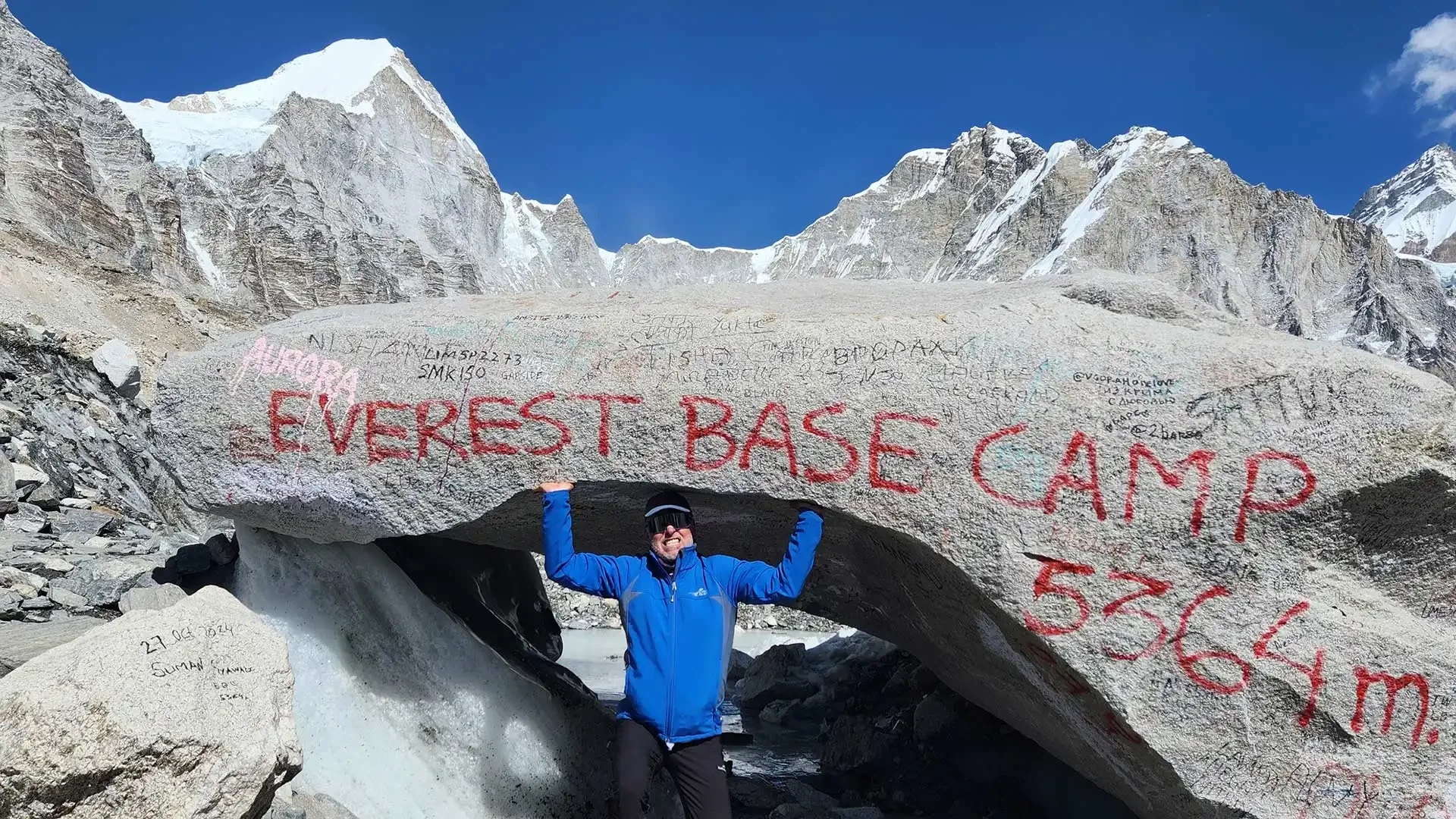
Everest Region · Challenging grade
Everest Base Camp Trek
The route
What the walk is.
The Everest Base Camp Trek – 12 Days is one of the most popular Himalayan adventures, offering trekkers the opportunity to reach the base of the world’s highest mountain within a well planned and rewarding timeframe.
This moderately challenging trek takes you to Everest Base Camp at 5,364 meters and Kala Patthar at 5,545 meters, one of the best viewpoints for panoramic views of Everest and the surrounding Himalayan peaks.
The trek is suitable for fit beginners as well as experienced trekkers who are prepared for high altitude conditions.
The journey begins with a scenic flight to Lukla, followed by a trek through the heart of the Khumbu region.
Along the route, you will pass through famous Sherpa settlements such as Namche Bazaar, Tengboche, Dingboche, and Lobuche.
These villages provide insight into Sherpa culture, Buddhist traditions, and mountain lifestyles.
A visit to Tengboche Monastery adds a spiritual dimension to the journey, while Sagarmatha National Park offers diverse landscapes ranging from forests to glacial terrain.
This 12 day itinerary is carefully designed to support proper acclimatization while covering the major highlights of the Everest region.
Trekkers walk across suspension bridges, through rhododendron forests, and along high altitude trails surrounded by towering Himalayan peaks. Each day offers a mix of natural beauty and cultural experiences.
With its balance of challenge, scenery, and cultural immersion, this trek delivers a memorable Himalayan journey and a strong sense of achievement upon reaching Everest Base Camp.
General Information
Detail | Information |
Region | Everest (Khumbu), Nepal |
EBC Altitude | 5,364m (17,598 ft) |
Start/End Point | Lukla |
Guide/Porter | Government-certified, included |
Transportation | Flight to/from Lukla |
About the Trek
What Makes the 12-Day EBC Trek Special?
The 12-day Everest Base Camp Trek offers a condensed but complete Himalayan experience. It's a bucket-list journey that connects you with the raw majesty of the Everest region. You'll traverse through Sagarmatha National Park, experience Sherpa hospitality, visit ancient monasteries, and witness rich traditions that make this journey unique.
The highlight is undoubtedly reaching Everest Base Camp at 5,364 meters, where climbers from across the globe prepare to ascend Mount Everest. This emotional high is followed by the breathtaking sunrise hike to Kala Patthar, which offers the best views of Mount Everest, Lhotse, Nuptse, and the surrounding Himalayan giants.
Cultural and Natural Highlights:
Along the trek, you'll pass through traditional Sherpa villages where centuries-old customs and traditions are still practiced. Interacting with the Sherpa people offers insights into their rich history, customs, and beliefs, adding depth to your trekking experience. The blend of natural beauty and cultural heritage makes this trek a truly unique journey.
Key Landmarks:
Lukla Airport (2,845m): Officially known as Tenzing-Hillary Airport, this serves as the primary gateway. With a short, sloped runway measuring just 527 meters, it ranks among the most challenging airports in the world.
Sagarmatha National Park: Home to diverse flora and fauna, including rare species like snow leopards, red pandas, Himalayan tahr, and musk deer. The park's rugged terrain and high-altitude ecosystems provide an extraordinary backdrop.
Namche Bazaar (3,440m): The "Gateway to Everest," this bustling market town serves as a crucial acclimatization stop. The town hosts a weekly market and offers stunning views of Ama Dablam and Lhotse.
Kala Patthar (5,545m): Standing at this elevation offers unparalleled views of Mount Everest and the surrounding Himalayan range. Trekkers often set out early to catch the sunrise when the first light paints the mountains in hues of gold and orange.
Why Choose Nepal Visuals for this 12 Day Everest Base Camp Trek?
Your Safety Comes First Our guides prioritize your health at 5,364m by conducting twice-daily oxygen saturation checks and following strict medical protocols to ensure safe acclimatization.
Clarity Over Confusion You will receive a detailed digital roadmap and 2026-specific briefing upon booking, covering everything from the Khumbu terrain to the nuances of the high-altitude schedule.
No Hidden Costs Our all-inclusive pricing covers your round-trip Lukla flights, all required trekking permits, and quality mountain lodging with zero surprise expenses.
Stress-Free Logistics We handle the complex 2026 flight shifts between Kathmandu and Ramechhap and secure high-demand teahouse spots, ensuring your journey flows without interruption.
Travel Light, Store Safe Maximize your stamina by leaving your non-trekking gear in our secure Kathmandu storage for free, allowing you to carry only the essentials to Base Camp.
Prepare with Confidence We provide a specialized 12-day training guide and gear checklist to help you physically prepare for the rigorous demands of the Khumbu icefall region.
Meaningful Experiences, Not Just Miles While reaching Base Camp is the goal, our guides integrate visits to local schools and monasteries, ensuring you experience the true spirit of the Sherpa people.
Always There for You Our 24/7 support line via WhatsApp and Zoom ensures you have immediate access to our team for any real-time assistance or itinerary questions.
Easy, Secure Booking We offer a simplified, secure payment portal with instant confirmation, making the start of your journey to the world’s highest peak effortless.
No Trek Left Behind We guarantee your 12-day departure regardless of group size, providing you with the absolute certainty that your lifetime dream will happen as planned.
Lukla, Kala Patthar and what the cold feels like
The twelve-day route starts with the mountain flight to Lukla at about 2,845 m (9,334 ft), then climbs through Namche Bazaar and Tengboche to Gorak Shep, Everest Base Camp and the Kala Patthar viewpoint at 5,644 m (18,519 ft) - the highest point on this trek and the best ground-level view of Everest itself.
Expect mild afternoons lower down and sub-zero nights from Dingboche upward, whatever the season. Sunrise from Kala Patthar is the coldest hour of the trek and also the one most people remember; our Kala Patthar guide covers the timing, and the Lukla town guide explains the gateway town where it all starts.
Day by day
Where you sleep, night by night.
Lukla → Kala Patthar · highest point 5,545 m
- Day 01sleep 2,610 m · Tea House (Twin Sharing) · Lunch, Dinner2,860 m
Early morning flight from Kathmandu (or Ramechhap during peak season) to Lukla — one of the world most thrilling mountain landings. Trek begins almost immediately: through pine forest and suspension bridges strung with prayer flags, following the Dudh Kosi River downstream to the small teahouse village of Phakding.
- Day 02Tea House (Twin Sharing) · Breakfast, Lunch, Dinner3,440 m
Cross the iconic Hillary Suspension Bridge hanging 100m above the river, and climb the steep switchbacks into Namche Bazaar — the Sherpa capital of the Khumbu. On a clear morning, catch your first close-up glimpse of Everest through a gap in the ridge. Namche is alive with trekkers, bakeries, gear shops, and mountain energy.
- Day 03Rest day · Tea House (Twin Sharing) · Breakfast, Lunch, Dinner3,880 m
Rest and adapt. Hike up to the Japanese-built Everest View Hotel for the most celebrated Himalayan panorama: Everest, Lhotse, Ama Dablam, and Thamserku all at once. Return to Namche for rest, hot soup, and Sherpa coffee. Visit the Sherpa Culture Museum and explore the Saturday Sherpa market.
- Day 04Tea House (Twin Sharing) · Breakfast, Lunch, Dinner3,860 m
A ridge walk that refuses to let you stop — Ama Dablam fills your right shoulder for hours, the trail weaving through rhododendron forest and across the high Sanasa plateau. Tengboche Monastery, the most sacred site in the Khumbu, awaits at dusk. Catch the monks evening puja if timing allows.
- Day 05sleep 3,860 m · Tea House (Twin Sharing) · Breakfast, Lunch, Dinner4,410 m
Leaving Tengboche, trek through rhododendron forests and cross the Imja Khola River before arriving at the village of Pangboche — home to the oldest monastery in the Khumbu. The landscape gradually changes as you ascend, with alpine meadows and rocky terrain leading to Dingboche, surrounded by dramatic peaks including Island Peak, Lhotse, and Ama Dablam.
- Day 06Rest day · Tea House (Twin Sharing) · Breakfast, Lunch, Dinner5,083 m
The second critical acclimatisation day. Hike steeply to Nangkartshang Peak for views that confirm you are deep in the Himalayas: Makalu, Cho Oyu, Island Peak, and the Lhotse face. Your body is building red blood cells — respect the process. Afternoon at your own pace in Dingboche.
- Day 07Tea House (Twin Sharing) · Breakfast, Lunch, Dinner4,940 m
The air thins perceptibly today. Trek through the Khumbu glacier lateral moraine, pausing at the Thukla Pass memorials — stone cairns for climbers lost on Everest. Each one is a name, a story, a summit attempt. Lobuche sits at the edge of the glacier, small and spare, with enormous mountains all around.
- Day 08Tea House (Twin Sharing) · Breakfast, Lunch, Dinner5,364 m
The day everything has been building toward. Trek over the Khumbu glacier moraine to Gorak Shep, drop your bag, and push on to Everest Base Camp. At Base Camp: a sea of coloured expedition tents in season, prayer flags, and Everest directly overhead. Take your time. Breathe it in. Return to Gorak Shep for a well-earned dinner.
- Day 09Highest point · Hotel (Twin Sharing) · Breakfast, Lunch, Dinner5,545 m
Wake at 4 AM. Headtorch on. Climb Kala Patthar in the dark for the single best Everest sunrise view on Earth — the South Face lit gold, Lhotse and Nuptse flanking it like sentries. After soaking in the panorama, descend to Gorak Shep where your helicopter awaits for a breathtaking flight back over the Khumbu glacier to Kathmandu. Touch down in the city by midday.
- Day 10Hotel (Twin Sharing) · Breakfast, Dinner
A free day to explore Kathmandu at your own pace. Recommended visits: Pashupatinath Temple (a UNESCO World Heritage Site), Boudhanath Stupa, Swayambhunath (the Monkey Temple), and the vibrant Thamel district. Celebrate your summit achievement over a farewell dinner with your guide.
- Day 11Hotel (Twin Sharing) · Breakfast
A flexible buffer day built in for any delays, additional sightseeing, souvenir shopping, or simply recovering from the adventure. This day can also be used for a Kathmandu Valley day trip to Bhaktapur or Patan Durbar Square.
- Day 12Breakfast
Our representative transfers you to Tribhuvan International Airport in time for your onward flight. Carry back the Himalayas in your heart — and the memories of standing at the roof of the world.
Fixed departures
12 group dates open.
144 places across them. Or start on any flexible date in the calendar below.
| Departure | Booked | Filling | Left | Status | Book |
|---|---|---|---|---|---|
| Sat, Mar 6, 2027 | 0/12 | 12 | Available | ||
| Sat, Mar 20, 2027 | 0/12 | 12 | Available | ||
| Sat, Apr 3, 2027 | 0/12 | 12 | Available | ||
| Sat, Apr 17, 2027 | 0/12 | 12 | Available | ||
| Sat, May 1, 2027 | 0/12 | 12 | Available | ||
| Sat, May 15, 2027 | 0/12 | 12 | Available | ||
| Sat, Sep 4, 2027 | 0/12 | 12 | Available | ||
| Sat, Sep 18, 2027 | 0/12 | 12 | Available | ||
| Sat, Oct 2, 2027 | 0/12 | 12 | Available | ||
| Sat, Oct 16, 2027 | 0/12 | 12 | Available | ||
| Sat, Nov 6, 2027 | 0/12 | 12 | Available | ||
| Sat, Nov 20, 2027 | 0/12 | 12 | Available |
Prices are per person, twin share, in USD. Book with a 20 % deposit — the balance is due 7 days before departure. Scheduled departures show places left; flexible departures can be booked on any listed start date. Booking terms
| Su | Mo | Tu | We | Th | Fr | Sa |
|---|---|---|---|---|---|---|
| 1 | 2 | 3 | ||||
| 4 | 5 | 6 | 7 | 8 | 9 | 10 |
| 11 | 12 | 13 | 14 | 15 | 16 | 17 |
| 18 | 19 | 20 | 21 | 22 | 24 | |
| 25 | 26 | 28 | 29 | 30 |
- Selected trip dates
- Available
- Filling fast
- Almost sold out
- Sold out
Fri, Oct 23Tue, Nov 3, 2026
12 days · flexible departure
- StartsFri, Oct 23, 2026 · Lukla
- EndsTue, Nov 3, 2026 · Kala Patthar
USD $1,249 per person, twin share · Deposit today USD $249.80 (20 %)
On the trail
Photographs from the route.
The whole number
What the price covers.
14 things are in the price and 11 more are named as excluded.
In the price
Transportation & Logistics
- ✓Domestic Airfare · Round-trip flight tickets (Kathmandu–Lukla–Kathmandu) including all applicable airport taxes.
- ✓Permits & Official Fees · All necessary conservation fees, trekking permits, and government taxes.
- ✓Official Liaison · Full coordination and handling of all administrative requirements for the trek.
Professional Support & Safety
- ✓Expert Leadership · A government-certified, English-speaking trekking guide.
- ✓Group Support · An assistant guide provided for larger groups (8 or more participants).
- ✓Porter Service · Professional porter support (1 porter per 2 trekkers, with a 10 kg limit per person).
- ✓Health Monitoring · Twice-daily vitals checks using an oximeter and access to a comprehensive first aid kit.
- ✓Staff Welfare · All wages, meals, lodging, transportation, and insurance for your entire guide and porter team.
- ✓Emergency Coordination · Full assistance in arranging emergency helicopter services (costs covered by your insurance).
Accommodation & Meals
- ✓Kathmandu Stay · Hotel accommodation in Kathmandu on a twin-sharing basis.
- ✓Trek Nutrition · Full board meals (breakfast, lunch, and dinner) during the trekking days.
- ✓Celebratory Dining · A welcome dinner at a traditional Nepalese restaurant in Kathmandu to start your journey.
Gear & Recognition
- ✓Trekking Essentials · Complimentary use of duffel bags and trekking poles for the duration of the trek.
- ✓Official Achievement · A formal Trek Completion Certificate to document your success.
Not included
Flights, Visas, and Logistics
- ×International Travel · International flight fares to and from Nepal.
- ×Entry Requirements · Nepal Entry Visa fees and any necessary extensions.
- ×Baggage Overages · Any extra baggage charges exceeding the standard weight limits.
Personal Protection & Equipment
- ×Mandatory Insurance · Comprehensive Travel and Medical Insurance (Compulsory).
- ×Rescue Costs · Any emergency rescue or evacuation charges if not covered by your insurance policy.
- ×Individual Gear · All personal trekking clothing, footwear, and specialized equipment.
Trail & City Expenses
- ×City Dining · Main meals (lunch and dinner) in Kathmandu, excluding the welcome dinner.
- ×Teahouse Amenities · Extra charges at lodges, such as hot showers, Wi-Fi/internet, and battery recharging.
- ×Beverages · All alcoholic and non-alcoholic drinks (sodas, bottled water, etc.).
- ×Extended Stays · Any additional nights of accommodation in Kathmandu due to early arrivals or late departures.
Professional Tips and Gratuity
- ×Staff Appreciation · Customary tips for your guides and porters as a gesture of thanks for their hard work.
Challenging grade
Is this trek right for you?
You can do this if…
- ✓Walk 6–8 hours a day comfortably
- ✓Carry an 8–10 kg daypack
- ✓Manage long ascents and nights above 4,000 m
Recommended preparation
- ✓3+ months of cardio and leg-strength training
- ✓Back-to-back day hikes with a loaded pack
- ✓Check the itinerary for high passes or glacier days
Experience & support
- ✓Previous multi-day trekking recommended
- ✓Guided throughout — a licensed guide is required on Nepal treks
- ✓Unsure about age, health or fitness? Ask us — we tailor the pace
About three months out? Follow our free 12-week trek fitness plan.
Good to know
Additional information.
Lukla Airport
Lukla Airport, officially known as Tenzing-Hillary Airport, serves as the primary gateway for trekkers heading to the Everest region in Nepal. Nestled at an elevation of 2,845 meters (9,335 feet) in the Khumbu region, the airport is famous for its breathtaking mountain scenery and unique landing conditions. With a short, sloped runway measuring just 527 meters (1,732 feet), it ranks among the most challenging airports in the world, often leading to thrilling and adventurous flights.
Sagarmatha National Park
As trekkers make their way to Everest Base Camp, they pass through Sagarmatha National Park, a UNESCO World Heritage Site. This national park is home to diverse flora and fauna, including rare species. The park's rugged terrain and high-altitude ecosystems provide an extraordinary backdrop for trekking, with each step revealing new wonders of nature.
In addition to its natural beauty, Sagarmatha National Park holds significant cultural importance. The park is dotted with ancient monasteries and traditional Sherpa villages, where trekkers can learn about the local way of life. Interacting with the Sherpa people offers insights into their rich history, customs, and beliefs, adding depth to the trekking experience. The blend of natural beauty and cultural heritage makes the EBC trek a truly unique journey.
Namche Bazaar-The Gateway to the Himalayas
Namche Bazaar is a vibrant Sherpa village nestled in the Khumbu region of Nepal, sitting at an elevation of 3,440 meters (11,286 feet). Often referred to as the "Gateway to Everest," this bustling market town serves as a crucial acclimatization stop for trekkers on their journey to Everest Base Camp. The town is famous for its stunning views of the surrounding peaks, including the iconic Ama Dablam and Lhotse.
As you wander through Namche Bazaar, you'll find a lively atmosphere filled with shops, cafes, and guesthouses catering to trekkers. The town hosts a weekly market where locals trade goods, providing an authentic glimpse into Sherpa culture. Visitors can also explore nearby attractions, such as the Everest View Hotel, which boasts panoramic vistas of Mount Everest, and the Sherpa Museum, which offers insights into the rich history of mountaineering in the region. With its unique blend of natural beauty and cultural experiences, Namche Bazaar is an essential stop for any trekking adventure in the Himalayas.
The Iconic Kala Patthar Viewpoint
One of the most rewarding experiences on the EBC Trek is reaching the Kala Patthar viewpoint. Standing at an elevation of 5,545 meters (18,192 feet), this peak offers unparalleled views of Mount Everest and the surrounding Himalayan range. Trekkers often set out early in the morning to catch the sunrise from this vantage point, when the first light of day paints the mountains in hues of gold and orange.
The trek to Kala Patthar is demanding but incredibly rewarding. As you ascend, the excitement builds, and the anticipation of witnessing the mighty Everest creates an exhilarating atmosphere. Upon reaching the top, the breathtaking panoramic views make every effort worthwhile. This moment serves as a fitting conclusion to the remarkable journey to Everest Base Camp, leaving trekkers with lasting memories and a profound sense of achievement.
Best Time to Visit Everest Base Camp
When planning your adventure to Everest Base Camp, choosing the best time to hike Everest Base Camp is crucial for a successful trek. The ideal seasons are pre-monsoon (March to May) and post-monsoon (September to November). During these months, trekkers can expect stable weather conditions, clear skies, and moderate temperatures. This is particularly important for navigating challenging terrains and maximizing visibility.
In contrast, the monsoon season (June to August) often brings heavy rainfall, making trails slippery and potentially hazardous. Winter (December to February) can be extremely cold, with snow covering the paths. By selecting the right time, trekkers can enhance their chances of experiencing the majestic beauty of the Himalayas and making lasting memories on their journey to Everest Base Camp.
Important Notes
Flights to Lukla
Due to congestion at Kathmandu airport, all flights to Lukla during peak seasons depart from Ramechhap Airport (4-5 hour drive from Kathmandu). Departure from Kathmandu around 1 AM to catch early morning flights (afternoon flights not possible due to strong mountain winds).
Weather Delays
Bad weather can delay or cancel flights. Add 2-3 night buffer after your planned Lukla return. For example, if your trek ends Monday, book international flight for Thursday or later.
If needed, helicopter flight from Kathmandu to Lukla costs around $250-$300 extra. Great backup option during flight delays.
Solo Travelers and Room Options
No extra charge for solo trekkers. However, if you want a single room, choose single supplement option at checkout.
Baggage and Packing
Porters carry up to 20kg (we provide duffel bag)
Flight weight limit: 15kg per person including hand-carry
Extra baggage allowed only if flight has space (pay airline directly)
Pack light to make journey easier and comply with airline rules
Required Documents
Email us a copy of your passport at booking. We need this to secure domestic flight tickets.
Meals and Extras
All meals on trek included (breakfast, lunch, dinner). Drinks (tea, coffee, cold drinks, alcohol), snacks, and Kathmandu meals (except welcome dinner) not included. Extras like hot showers ($3-5) and battery charging ($1-3) payable at lodges.
WiFi in the Himalayas
Purchase WiFi card from EverestLink in Lukla or Namche Bazaar. Costs around $25 for 10-20GB data (valid 30 days). Signal strength varies based on location and weather.
Weather Flexibility
Weather changes rapidly. Your safety is our priority. Your guide may adjust itinerary if needed. Be flexible, stay calm, and trust your guide.
Drone Use Restricted
Drones not allowed unless you have special permit (difficult to obtain). Due to frequent helicopter flights, unapproved drones pose serious risk. We recommend leaving them at home.
Insurance is a Must
Comprehensive travel insurance covering high-altitude trekking, evacuation, and medical emergencies is essential.
Accommodation and Meals
Accommodation
During the 12-day trek, you'll stay in teahouses or lodges, which are basic family-run establishments offering essential amenities.
What to Expect:
Rooms: Twin-sharing with basic beds, pillows, and blankets
Bathrooms: Usually shared; Western toilets available at some larger lodges
Heating: Limited to dining areas; bring a good sleeping bag
Facilities: More basic as altitude increases
Kathmandu Hotels: We provide accommodation in good hotels in Thamel (Kathmandu's tourist hub) on a twin-sharing basis. Your hotel room will have attached bathrooms, clean sheets, blankets, and amenities. Thamel offers great choices of restaurants, cafes, shops, and gear stores.
Note: If you want a private room during the trek or a higher-standard hotel in Kathmandu, contact us for pricing.
Meals
You can enjoy hearty and nutritional meals throughout the trek. Breakfast, lunch, and dinner are provided during the trek and will energize you for the challenging trails and high altitude.
What's on the Menu:
Dal Bhat: Traditional Nepali lentils, rice, and vegetable curry (often with free refills)
Noodles & Pasta: Instant noodles, chow mein, spaghetti
Soups: Garlic soup, vegetable soup, noodle soup
Breakfast: Pancakes, porridge, toast, eggs, Tibetan bread
Drinks: Tea, coffee, hot chocolate, ginger lemon honey tea
Dietary Options:
Vegetarian and vegan options readily available
Gluten-free options limited (bring your own snacks if needed)
Inform your guide of dietary preferences
Water:
Avoid bottled water (expensive and environmentally unfriendly)
Fill reusable bottles with boiled water from teahouses
Use water purification tablets or filters
Carry a Nalgene bottle to stay hydrated
Trek Difficulty: Altitude, Terrain, and Fitness
Altitude Management
From the moment you reach Lukla airport at 2,860m, you're already at significant elevation. The trek follows the principle "Trek High and Sleep Low" to minimize Altitude Mountain Sickness risk.
The itinerary includes two crucial acclimatization days:
Namche Bazaar (3,440m): First acclimatization with hike to higher elevation
Dingboche (4,410m): Second acclimatization before final push
Our guides are well-trained in wilderness first aid and monitor your vitals twice daily using oximeters to watch for any signs of Acute Mountain Sickness (AMS).
Common AMS Signs:
Headaches
Loss of appetite
Difficulty sleeping
Shortness of breath
Stay aware of these signs and report them to your guide without hesitation. Contracting AMS doesn't mean you can't trek. It means you might need extra time to adjust to lower oxygen levels. One of the most popular prevention methods is hiking at a stable pace for longer periods. Our guides are trained in pacing techniques.
Fitness Requirements
The trek might seem demanding, but rest assured, we can help get you to the required fitness level with our Everest Fitness Calendar. This calendar helps you assess your fitness, follow daily workout regimes, and monitor progress.
Trekking 7-8 hours daily might sound daunting, but with right preparation, the experience is extremely rewarding. Start with long hikes, walking, or running. Add a loaded backpack to replicate trek conditions. This increases cardiovascular function and helps you get accustomed to backpack weight.
Start with shorter distances and gradually increase to build endurance and confidence. Include strength-building with lunges, squats, and burpees to prepare your legs for steep ascents and descents. Progressively introduce harder routines each week: interval running for endurance, weighted squats for leg strength, and yoga for recovery and mental focus. Take strategic recovery days to prevent burnout.
The Everest Fitness Calendar also provides tips on nutrition, hydration, and altitude acclimatization, ensuring you're fully prepared.
Safety & Security
Expert Guides & Local Porters
Your trek is led by experienced, English-speaking, government-licensed guides and local porters well-versed in the terrain, local culture, and high-altitude trekking challenges. Guides are trained to manage group dynamics, provide motivational support, and ensure a safe trekking experience.
Emergency Preparedness
At Nepal Visuals, we prioritize your safety with state-of-the-art safety tools and practices:
Oximeters: Daily oxygen level checks to monitor acclimatization
Helicopter Rescue Navigation: Guides trained for swift evacuation if needed
Wilderness First Aid: Guides handle minor injuries and medical conditions on trail
Safety Briefings: Pre-trek preparation for potential challenges
Travel Insurance Requirements
The Nepalese government mandates comprehensive travel and medical insurance. Your insurance must cover:
Minimum Coverage: Up to $100,000 for potential high-altitude emergencies including emergency medical evacuation
Altitude Coverage: Must explicitly include trekking up to 5,644 meters (Kala Patthar). General insurance may exclude high-altitude activities
Helicopter Rescue Coverage: Must include emergency helicopter evacuations, which can cost thousands of dollars in case of severe altitude sickness or injury
Recommended Providers: Global Rescue, World Nomads, Travelex
Trekking Permits
The Nepalese government imposes permit fees to preserve natural resources of protected areas. Revenue is used for:
Trail maintenance
Wildlife protection
Waste management programs
Local community support (education, healthcare, conservation awareness)
Infrastructure development
Suspension bridge maintenance
Sustainable tourism initiatives
Required Permits
Sagarmatha National Park Entry Permit: NPR 3,000 (approx. USD 25) per person per entry into the UNESCO World Heritage Site
Khumbu Pasang Lhamu Rural Municipality Permit: NPR 2,000 (approx. USD 20) per person for 4 weeks
How to Obtain Permits
Permits can be arranged either from Kathmandu or in Lukla upon arrival.
Documents Required:
Passport
Passport-sized photographs
Trekking agencies, including ours, can assist in obtaining these permits to save you time and effort.
Guide & Porter Details
Experienced Guides
Our guides are government-certified professionals with years of experience navigating the Everest region. They provide invaluable insights into the trek, trekking history in Nepal, local culture, and wildlife.
Porter Details
Porters are the MVPs of Nepal's trekking industry. The Nepalese government has mandated:
Weight limit: 20kg (44 lbs) maximum
Minimum wage: NPR 2,500 (USD 16-22)
These heroes carry the duffle bags we provide with a ratio of 1 porter for 2 clients (2:1). Each client has a weight limit of 10kg.
Tipping: Please tip them wholeheartedly. A normal rate is 10% of the total trek price, which would amount to at least $150. We appreciate your understanding of their hard work.
Accommodation Details
In Kathmandu
We provide accommodation in good hotels in Thamel on a twin-sharing basis. You can request a private room or higher-standard hotel for an extra charge. Your hotel room will have attached bathrooms, clean sheets, blankets, and amenities. Thamel is Kathmandu's tourist hub offering great restaurants, cafes, bars, clubs, and essential shops.
During the Trek
We provide simple guesthouses. Guesthouses may or may not have attached bathrooms based on availability. Beds, blankets, and bed sheets might not be up to standard but will keep you warm.
Note: If bedding isn't clean enough, contact our guide and ask to transfer to another room.
Food and Drinks
You can enjoy hearty and nutritional meals throughout the trek. Breakfast, lunch, and dinner are provided during the trek and will energize you for the challenging trails and high altitude.
Menu Variety: The meals include a variety of local and international dishes. Vegetarian and vegan options are readily available to ensure your dietary needs are met without compromising taste or nutrition. Let us know your preferences and make sure your guide remembers them.
Drinking Water: Always carry purification tablets or a reusable water filter. Clean drinking water is critical for high-altitude trekking. Carry a Nalgene bottle to stay hydrated and safe during long distances.
Refill stations are common along the route, allowing you to reduce single-use plastic waste and contribute to environmental conservation.
Before you book
Questions we get most.
Difficulty & Physical Prep
How difficult is the 12-day EBC trek?
It is rated as Moderate to Challenging. You will walk about 130 km round-trip over 12 days, averaging 5–8 hours of trekking daily. The challenge isn't just the distance; it’s the thin air. At Base Camp, there is 50% less oxygen than at sea level.
What kind of training do I need?
You don't need to be an athlete, but you do need stamina. Start training 2–3 months prior. Focus on: Cardio: Running, cycling, or swimming 3–4 times a week. Leg Strength: Squats, lunges, and step-ups. Stair Climbing: This is your "secret weapon" for the steep Khumbu terrain.
Can I do this trek if I have no previous experience?
Yes, beginners can successfully reach EBC. However, you must be disciplined about your pre-trek training and choose a guided group to ensure your safety and pacing are managed by experts.
Itinerary & Pacing
What is the standard 12-day route?
The most effective 2026 itinerary follows this flow: Days 1–2: Flight to Lukla; trek to Phakding and then Namche Bazaar. Day 3: Acclimatization Day in Namche (Hike to Everest View Hotel). Days 4–7: Trek through Tengboche, Dingboche (with a 2nd acclimatization day), and Lobuche. Day 8: Reach Gorak Shep and Everest Base Camp (5,364m). Day 9: Sunrise at Kala Patthar (5,545m); begin descent. Days 10–12: Return to Lukla and fly back to Kathmandu.
Why are there two acclimatization days?
Skipping these is the #1 reason for failure. Your body needs time to create more red blood cells at Namche (3,440m) and Dingboche (4,410m). We follow the "Climb High, Sleep Low" rule on these days to prepare your lungs for the 5,000m+ push.
Altitude & Safety
What are the symptoms of Altitude Sickness (AMS)?
Mild symptoms include a persistent headache, loss of appetite, and dizziness. If these progress to vomiting, shortness of breath at rest, or loss of coordination, you must descend immediately.
How do guides monitor my health?
In 2026, professional guides carry pulse oximeters to check your oxygen saturation and heart rate every morning and evening. They are trained to distinguish between "normal" mountain fatigue and dangerous AMS.
Is travel insurance mandatory?
Yes. You must have a policy that specifically covers "High Altitude Trekking up to 6,000m" and "Emergency Helicopter Evacuation." A rescue flight from the Khumbu can cost over $5,000 out of pocket.
Accommodation & Food
Where will I sleep?
You will stay in teahouses; mountain lodges with twin-sharing rooms. While lower villages like Namche offer relatively modern comforts, higher up in Gorak Shep, the lodges are very basic and bedrooms are unheated.
What is the "Khumbu Rule" for food?
Avoid meat above Namche Bazaar. All meat is carried up by porters or yaks and is not refrigerated. Stick to the "Sherpa Power" diet: Dal Bhat (lentils and rice), pasta, and garlic soup, which is known to help with blood flow at altitude.
Gear & Electronics
What is the most important piece of gear?
Your hiking boots. They must be waterproof, have high ankle support, and most importantly be broken-in at least 2 months before you arrive. Blisters on Day 2 can end your trek.
Do I need a sleeping bag if teahouses provide blankets?
Yes. Teahouse blankets are often not enough for $-10$°C nights. A 4-season sleeping bag (rated to $-15$°C) is essential. You can rent high-quality bags in Kathmandu for about $1–$3 per day.
How do I keep my batteries from dying?
Cold temperatures drain batteries instantly. Keep your phone and power bank inside your sleeping bag at night. During the day, keep them in an inside jacket pocket close to your body heat.
Connectivity & Costs
Is there Wi-Fi and electricity?
Yes, but it is rarely free. Expect to pay $2–$6 for an hour of charging or Wi-Fi. Many trekkers buy an Everest Link card (approx. $20 for 10GB–20GB) for more consistent internet access across the trail.
How much cash should I carry?
Even if your trek is pre-paid, you need NPR 30,000–40,000 ($250–$300 USD) for personal expenses like hot showers, charging, Wi-Fi, snacks, and tips for your guide and porter. ATMs in Namche are sometimes unreliable, so carry cash from Kathmandu.
Logistics & Permits
What are the new permit rules for 2026?
You need two main permits: Khumbu Pasang Lhamu Rural Municipality Permit (~$20) Sagarmatha National Park Permit (~$30) Solo trekking is strictly regulated; hiring a licensed guide is now mandatory for safety and local support.
What happens if my Lukla flight is delayed?
Lukla (Tenzing-Hillary Airport) is weather-dependent. Flights are often delayed or moved to Ramechhap Airport (a 5-hour drive from Kathmandu). Always keep 2 buffer days at the end of your trip before your international flight home.
Lukla & Weather
How high is Lukla and how does the flight work?
Lukla's Tenzing-Hillary Airport is at about 2,845 m (9,334 ft). Flights leave early in the morning and delays due to cloud or wind are normal, so we build contingency time around them.
How cold does it get on this trek?
Expect sub-zero nights from Dingboche upward year-round. Sunrise at Kala Patthar (5,644 m) is the coldest hour of the whole route.
Still have a question? WhatsApp us →