 Nepal Visuals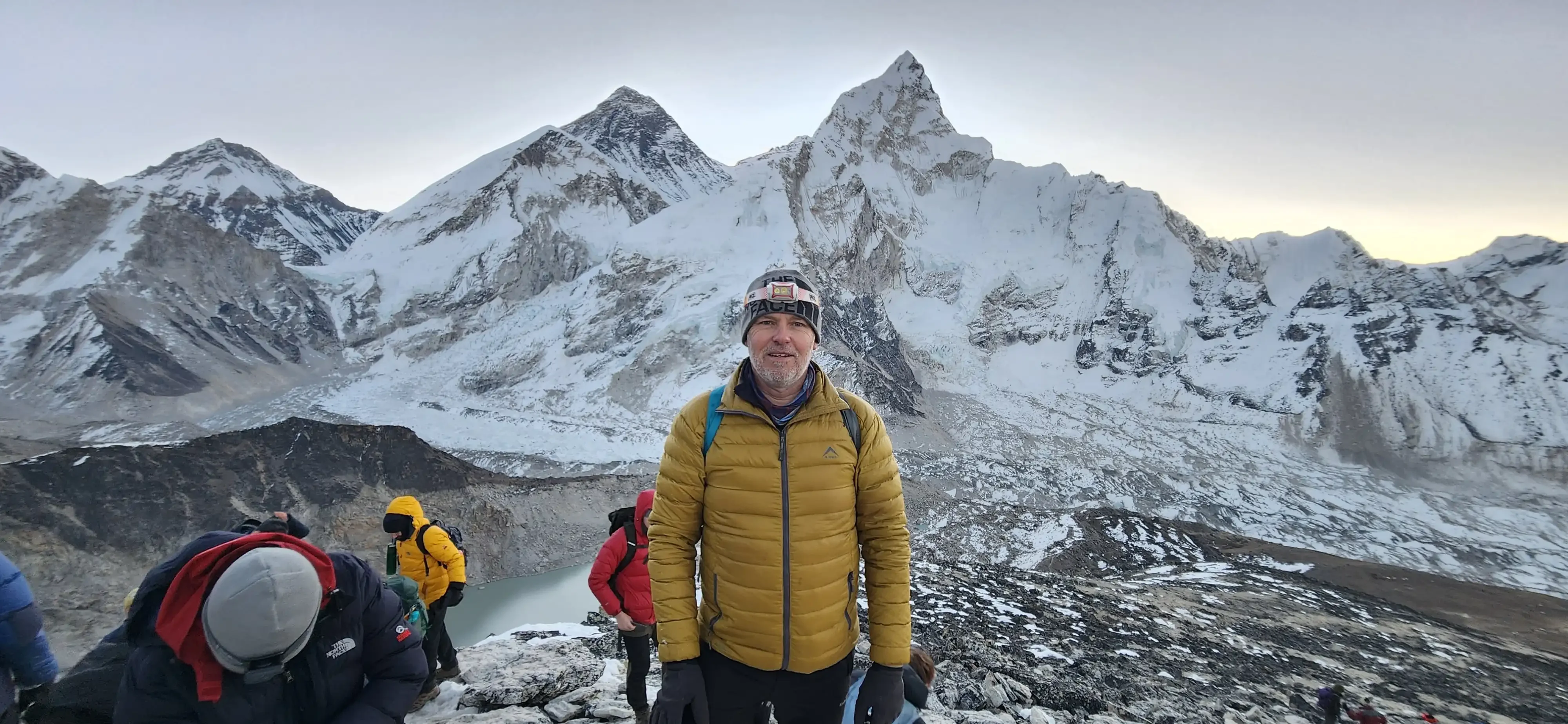
Everest Region · Challenging grade
Everest Base Camp with Gokyo Lakes Trek
The route
What the walk is.
Two Legends, One Epic Journey
Imagine standing under a sky filled with Himalayan giants: Everest, Lhotse, Nuptse. Then trekking to a serene high-altitude valley with turquoise lakes and panoramic mountain views.
That's exactly what the Everest Base Camp with Gokyo Lakes Trek delivers: an epic journey through the majestic Khumbu region, combining the legendary route to Everest Base Camp with an unforgettable side adventure to the sacred Gokyo Valley.
On this unique trek you'll:
Fly into Lukla, the adventure gateway
Walk through Namche Bazaar, the Sherpa hub, where mountain stories thrive
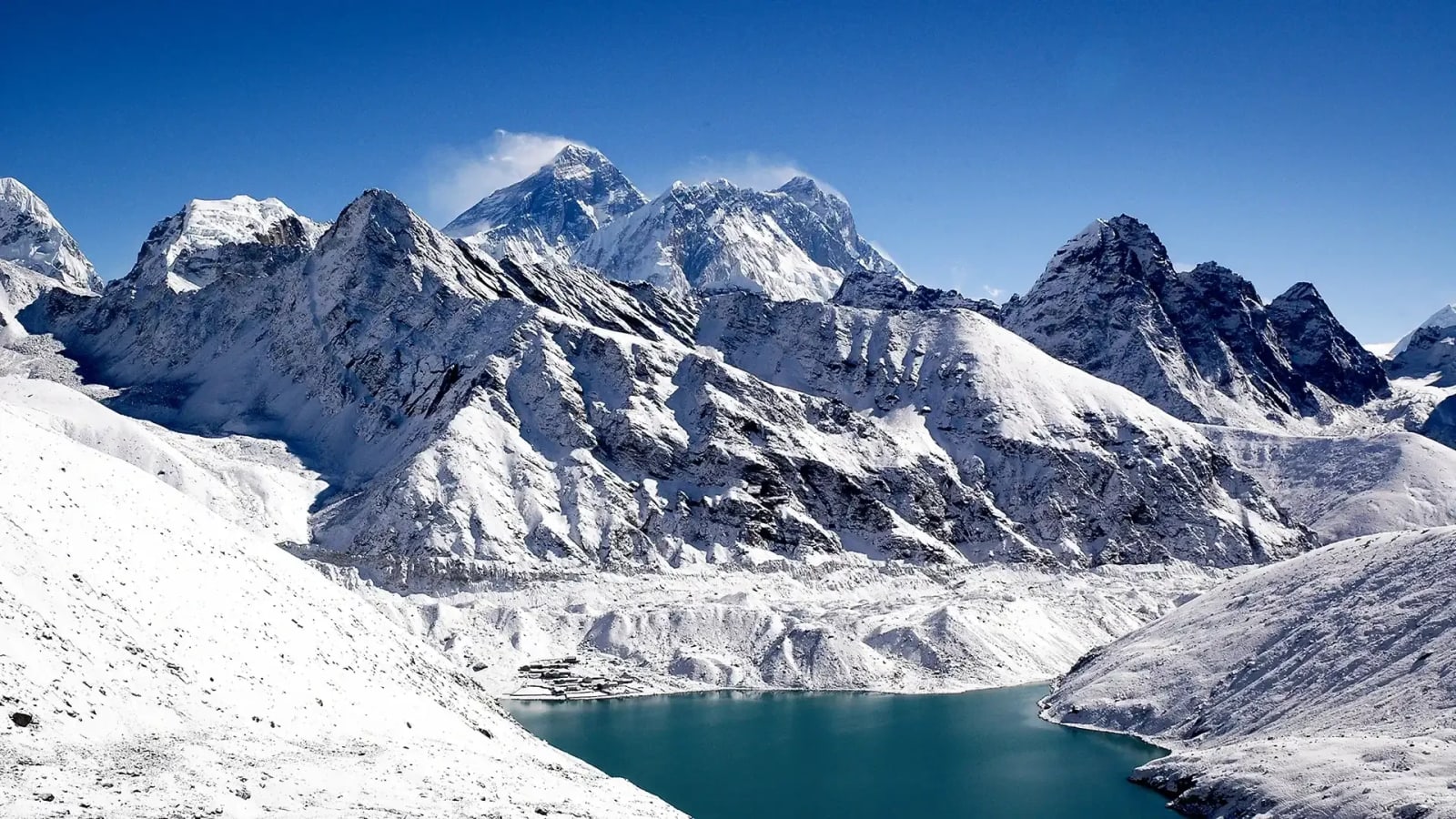
Explore the remote Gokyo Valley, home to a system of six crystal-clear Gokyo Lakes
Climb up to Gokyo Ri (5,357 m) for one of the most stunning views of Everest and its neighboring giants
Cross the dramatic Cho La Pass, rejoining the classic EBC trail before heading to Everest Base Camp and Kala Patthar
At roughly 17-19 days, this trekking route offers high-altitude thrills balanced with cultural immersion, wild landscapes, and the famed silhouette of Everest.
It's an ideal journey for trekkers craving both solitude and summit spectacle, all while ticking off two of the Himalaya's most iconic destinations.
Why Choose This Trek?
If you're torn between the Classic Everest Base Camp trek and the desire for something a bit more offbeat, this hybrid route delivers the best of both worlds.
Here's why this journey stands out from the crowd:
Dual Wonders in One Trek
Most people either do Everest Base Camp or Gokyo Lakes, but why settle for one when you can experience both?
This trek loops through Everest Base Camp, then swings across the high-altitude Cho La Pass into the glacial paradise of Gokyo Valley. It's like doing two epic adventures in one seamless journey.
Views You Can't Get Anywhere Else
Sure, everyone gets a peek at Everest from Kala Patthar, but the view from Gokyo Ri offers a sweeping panorama of four 8,000-meter giants.
It's rare, stunning, and often less crowded, which means your mountaintop moment feels all the more personal.
A Richer Acclimatization Experience
Because you zigzag through varied altitudes, this route is actually better for gradual acclimatization.
You'll have more scenic acclimatization stops in places like Namche Bazaar and Gokyo, which means lower risk of altitude sickness and a smoother journey.
Escape the Crowds, Embrace the Peace
Once you branch off toward Gokyo, you leave most of the tourist herd behind. The trails are quieter, the lodges more intimate, and the experience more meditative.
It's perfect if you crave some serenity with your adventure.
Challenge and Reward
Yes, the Cho La Pass is tough. But crossing it feels like stepping into a different realm of the Khumbu. It's remote, wild, and exhilarating.
Completing this route gives you a genuine sense of accomplishment and a story that few other trekkers can match.
Wildlife and Wilderness
Between pine forests, frozen rivers, and glacial valleys, the biodiversity of this trek is underrated. Keep your eyes open.
You might spot Himalayan monals, blue sheep, or elusive snow leopards around the Gokyo area.
 Gokyo Lake Adventure
A Short Day-to-Day Itinerary For The EBC Trek With Gokyo Lake Trek
1. Arrive in Kathmandu
You land at Tribhuvan International Airport, get picked up by your guide, and check into your hotel in Thamel. In the evening, you have a welcome dinner and get a full briefing on the trek ahead.
Travel day
2. Fly to Lukla and walk to Phakding (2,610m)
You take a short but thrilling flight from Kathmandu to Lukla, the mountain airstrip that is your gateway into the Khumbu. From there, a gentle 3 to 4 hour downhill walk through Sherpa villages and pine forests brings you to the quiet teahouse village of Phakding.
Flight day, Altitude: 2,610m
3. Walk to Namche Bazaar (3,440m)
A big 6 to 7 hour day. You cross suspension bridges, pass through villages, enter Sagarmatha National Park, and finish with a steep 600m climb into Namche Bazaar, the busy trading hub of the Everest region. On a clear day you catch your first glimpse of Mount Everest along the way.
Altitude: 3,440m
4. Rest day in Namche with acclimatization hike (3,880m)
You stay in Namche but go on a short hike up to the Everest View Hotel for jaw-dropping views of Everest, Ama Dablam, and Lhotse. You also visit Khumjung village, the Edmund Hillary School, and a monastery famous for its so-called Yeti scalp. Back to Namche for the night.
Acclimatization day, Altitude: 3,880m
5. Walk to Dole (4,038m)
You leave the main Everest trail and head into the quieter Gokyo valley. The path climbs through rhododendron forests, past waterfalls, and up into open alpine terrain. Far fewer trekkers, far more peace. You arrive at the small hillside village of Dole for the night.
Altitude: 4,038m
6. Walk to Machhermo (4,470m)
The trail climbs steadily through windswept tundra and yak pastures. Big views of Cho Oyu, the sixth highest mountain in the world, open up ahead of you. You stop for tea at the tiny settlement of Luza before arriving at Machhermo, a bowl-shaped village famous for a reported Yeti sighting in 1974.
Altitude: 4,470m
7. Walk to Gokyo and the sacred turquoise lakes (4,790m)
Today you reach one of the most beautiful places on the trek. The trail follows the Dudh Koshi River past several glacial lakes before arriving at Gokyo village, perched beside the third and largest lake, Dudh Pokhari. The water is a stunning shade of teal and the views of the surrounding peaks are unforgettable.
Gokyo Lakes, Altitude: 4,790m
8. Rest day in Gokyo with hike up Gokyo Ri (5,357m)
This is an acclimatization day but also one of the best hikes of the entire trek. You climb Gokyo Ri, a steep ridge above the lakes, and are rewarded with a full 360 degree view of Everest, Lhotse, Makalu, and Cho Oyu all at once, with the turquoise Gokyo Lakes shimmering far below you.
Acclimatization day, Best viewpoint: 5,357m
9. Walk to Thangnak (4,700m)
A shorter day but a dramatic one. You cross the Ngozumpa Glacier, the longest glacier in Nepal, which looks like a vast, rocky moonscape of shifting ice and moraine. You arrive at Thangnak, a tiny and remote settlement with just a few basic lodges, positioned right below the Cho La Pass.
Altitude: 4,700m
10. Cross Cho La Pass (5,420m) and walk to Dzongla (4,830m)
The hardest day of the trek. You set off around 5 AM to climb the icy and steep Cho La Pass, a high mountain crossing draped in snow and ice with prayer flags at the top. Crampons or microspikes are often needed. After the pass, you descend into the peaceful valley of Dzongla for the night.
Most difficult day, Altitude: 5,420m
11. Walk to Lobuche (4,940m)
You rejoin the classic Everest Base Camp trail. The path follows a high ridge with views of the Khumbu Glacier and passes a collection of stone memorial cairns built for climbers who lost their lives on Everest. A sobering but powerful moment. You arrive at Lobuche, a small and windswept village near the glacier.
Altitude: 4,940m
12. Reach Everest Base Camp (5,364m) and return to Gorak Shep (5,164m)
The biggest day of the trek. You hike over rocky glacier moraine to Gorak Shep for a tea break, then push on to Everest Base Camp. You stand at the foot of the world's highest mountain, take your photos at the iconic EBC sign, and soak in the moment before heading back to Gorak Shep for the night.
Goal achieved, Altitude: 5,364m
13. Climb Kala Patthar (5,545m) and walk down to Pheriche (4,371m)
You wake up before dawn for a steep climb to Kala Patthar, the highest point of the entire trek. From here you get the most famous and unobstructed view of Mount Everest anywhere. Golden sunrise light on the summit is something you will never forget. Then you descend all the way down to Pheriche for the night.
Highest point, Altitude: 5,545m
14. Walk back to Namche Bazaar (3,440m)
A long 6 to 7 hour descent back through alpine meadows, rhododendron forests, and familiar villages. With every step down, the air gets thicker and warmer. You arrive back in Namche where you can enjoy a proper meal, a hot shower, and finally call your family.
Return journey
15. Walk back to Lukla (2,860m)
The final day of trekking. A long 5 to 6 hour walk retracing your steps back through Phakding and into Lukla, the town where it all began 14 days ago. Your legs are tired but your heart is full. Tonight you celebrate with your guide and porter team.
Final trek day
16. Fly back to Kathmandu
You board the short scenic flight from Lukla back to Kathmandu. Looking out the window at the valleys and peaks you walked through, the scale of what you just did starts to sink in. Back in the city, the evening is yours to rest, celebrate, and reflect.
Flight day
17. Depart from Kathmandu
Your EBC and Gokyo Lakes trek is complete. You head to the airport and fly home carrying memories of turquoise lakes, icy passes, and the highest mountain on Earth that will stay with you for the rest of your life.
Departure day
Why Nepal Visuals is the Right Choice
Your Safety Comes First: Our certified local guides are trained in high-altitude trekking and first aid. They know the terrain, weather patterns, and how to keep you safe, especially in remote areas where quick thinking matters most.
Clarity Over Confusion: We provide a detailed online trip briefing after booking, so you know exactly what to expect. No vague plans or surprises along the way.
No Hidden Costs: Our pricing is transparent. From permits to transport and accommodations, we clearly outline what's included so you don't face unexpected charges mid-trip.
Stress-Free Logistics: We handle everything: permits, teahouse bookings, transportation, and even airport transfers. You focus on walking and wonder. We'll take care of the rest.
Travel Light, Store Safe: Leave your extra luggage with us in Kathmandu at no extra cost. Travel light, trek free.
Prepare with Confidence: We help you plan physically and mentally for the trek, offering fitness guidance and tips to ensure you're ready, not overwhelmed, on the trail.
Meaningful Experiences, Not Just Miles: Nepal Visuals' treks are designed to immerse you in local culture, not rush you past it. You'll return home with stories, not just steps.
Always There for You: Whether you have a question months before or during the trek, we're available 24/7 via WhatsApp, Email, Instagram, and Zoom.
Easy, Secure Booking: We make booking simple with flexible payment options and prompt confirmations.
No Trek Left Behind: Your departure is 100% guaranteed once booked. No cancellations. No disappointments.
Day by day
Where you sleep, night by night.
Kathmandu → Kathmandu · highest point 5,545 m
- Day 01Kathmandu1,400 mArrive in Kathmandu (1,400 m). Transfer to hotel and rest.
- Day 02sleep 2,610 m · 3-4 hrs · Phakding · B, L, D2,860 mScenic mountain flight to Lukla, then an easy trek down to Phakding.
- Day 035-6 hrs · Namche Bazaar · B, L, D3,440 mTrek along the Dudh Koshi river, cross suspension bridges and climb to Namche Bazaar.
- Day 04Rest day · 3-4 hrs · Namche Bazaar · B, L, D3,440 mDay hike to the Everest View Hotel (3,880 m) for first Everest views, then descend to Namche to sleep low.
- Day 055-6 hrs · Dole · B, L, D4,038 mBranch off the main EBC trail toward the Gokyo valley, climb through rhododendron forest to Dole.
- Day 064-5 hrs · Machhermo · B, L, D4,470 mSteady climb above the tree line with views of Cho Oyu and the Ngozumpa glacier to Machhermo.
- Day 074-5 hrs · Gokyo · B, L, D4,790 mTrek past the first and second Gokyo lakes to the village of Gokyo on the shore of the third lake.
- Day 08Highest point · sleep 4,790 m · 4-5 hrs · Gokyo · B, L, D5,357 mPre-dawn climb of Gokyo Ri (5,357 m) for a panorama of Everest, Lhotse, Makalu and Cho Oyu. Return to Gokyo to sleep.
- Day 09sleep 4,700 m · 7-8 hrs · Thagnag · B, L, D5,420 mBig day crossing the technical Cho La Pass (5,420 m) on snow and rock to reach Thagnag.
- Day 104-5 hrs · Lobuche · B, L, D4,940 mRejoin the main EBC trail with views of Pumori and Nuptse, walking to Lobuche.
- Day 11Highest point · sleep 5,164 m · 7-8 hrs · Gorak Shep · B, L, D5,364 mTrek along the Khumbu glacier to Gorak Shep, then continue to Everest Base Camp (5,364 m) before returning to Gorak Shep.
- Day 12Highest point · sleep 4,280 m · 7-8 hrs · Pheriche · B, L, D5,545 mSunrise climb of Kala Patthar (5,545 m) for the best Everest views of the trek, then descend to Pheriche.
- Day 13sleep 3,440 m · 6-7 hrs · Namche Bazaar · B, L, D4,280 mLong but rewarding descent back to Namche Bazaar through Tengboche.
- Day 14sleep 2,860 m · 5-6 hrs · Lukla · B, L, D3,440 mFinal trekking day down to Lukla, celebrating the trek with the team.
- Day 15sleep 1,400 m · Kathmandu · B2,860 mMorning flight back to Kathmandu and transfer to hotel.
- Day 16Rest day · Kathmandu · B1,400 mBuffer day in case of Lukla flight delays, otherwise free for sightseeing or shopping.
- Day 17B1,400 mTransfer to the airport for your onward flight home.
Fixed departures
12 group dates open.
144 places across them. Or start on any flexible date in the calendar below.
| Departure | Booked | Filling | Left | Status | Book |
|---|---|---|---|---|---|
| Sat, Mar 6, 2027 | 0/12 | 12 | Available | ||
| Sat, Mar 20, 2027 | 0/12 | 12 | Available | ||
| Sat, Apr 3, 2027 | 0/12 | 12 | Available | ||
| Sat, Apr 17, 2027 | 0/12 | 12 | Available | ||
| Sat, May 1, 2027 | 0/12 | 12 | Available | ||
| Sat, May 15, 2027 | 0/12 | 12 | Available | ||
| Sat, Sep 4, 2027 | 0/12 | 12 | Available | ||
| Sat, Sep 18, 2027 | 0/12 | 12 | Available | ||
| Sat, Oct 2, 2027 | 0/12 | 12 | Available | ||
| Sat, Oct 16, 2027 | 0/12 | 12 | Available | ||
| Sat, Nov 6, 2027 | 0/12 | 12 | Available | ||
| Sat, Nov 20, 2027 | 0/12 | 12 | Available |
Prices are per person, twin share, in USD. Book with a 20 % deposit — the balance is due 7 days before departure. Scheduled departures show places left; flexible departures can be booked on any listed start date. Booking terms
| Su | Mo | Tu | We | Th | Fr | Sa |
|---|---|---|---|---|---|---|
| 1 | 2 | 3 | ||||
| 4 | 5 | 6 | 7 | 8 | 9 | 10 |
| 11 | 12 | 13 | 14 | 15 | 16 | 17 |
| 18 | 19 | 20 | 21 | 22 | 24 | |
| 25 | 26 | 28 | 29 | 30 |
- Selected trip dates
- Available
- Filling fast
- Almost sold out
- Sold out
Fri, Oct 23Sun, Nov 8, 2026
17 days · flexible departure
- StartsFri, Oct 23, 2026 · Kathmandu
- EndsSun, Nov 8, 2026 · Kathmandu
USD $1,630 per person, twin share · Deposit today USD $326 (20 %)
On the trail
Photographs from the route.
The whole number
What the price covers.
14 things are in the price and 11 more are named as excluded.
In the price
Transportation & Logistics
- ✓Domestic Airfare · Round-trip flight tickets (Kathmandu/Ramechhap–Lukla–Kathmandu/Ramechhap) including all domestic airport taxes and transfers.
- ✓Private Transfers · Airport pickup and drop-off services via private vehicle.
- ✓Permits & Official Fees · Sagarmatha National Park entry permits, Khumbu Pasang Lhamu Rural Municipality fees, and all necessary government taxes.
- ✓Official Liaison · Full coordination of all administrative requirements and service charges.
Professional Support & Safety
- ✓Expert Leadership · A government-certified, English-speaking lead guide.
- ✓Group Support · An assistant guide provided for larger groups (8 or more trekkers).
- ✓Porter Service · Professional porters (1 porter per 2 trekkers, with a 10 kg limit per person).
- ✓Staff Welfare · All wages, meals, lodging, and insurance for the entire trekking crew.
- ✓Health Monitoring · Daily vitals checks using a pulse oximeter and access to a comprehensive first aid kit.
Accommodation & Meals
- ✓Kathmandu Stay · Hotel accommodation in Kathmandu on a twin-sharing basis.
- ✓Trek Nutrition · Full board meals (breakfast, lunch, and dinner) throughout the entire 17-day trek.
- ✓Cultural Welcome · A traditional Nepali welcome dinner featuring a cultural performance.
Gear & Recognition
- ✓Trekking Equipment · Complimentary use of seasonal sleeping bags, duffel bags, and trekking poles (to be returned after the trek).
- ✓Official Achievement · An official NepalVisuals trek completion certificate.
Not included
Flights, Visas, and Logistics
- ×International Travel · International airfare and departure taxes.
- ×Entry Requirements · Nepal entry visa fees (obtainable upon arrival).
- ×Contingency Costs · Any costs incurred due to flight delays, cancellations, or weather-related changes.
- ×General Extras · Any other expenses not specifically mentioned in the "What's Included" section.
Personal Protection & Equipment
- ×Mandatory Insurance · Comprehensive travel and medical insurance (must specifically cover helicopter evacuation up to 6,000m).
- ×Rescue Costs · Emergency rescue or evacuation charges if not covered by your insurance provider.
- ×Individual Gear · Personal trekking gear such as down jackets, boots, and specialized clothing.
Trail & City Expenses
- ×City Dining · Lunch and dinner in Kathmandu, excluding the welcome dinner.
- ×Teahouse Amenities · Personal expenses at lodges, including hot showers, Wi-Fi, battery charging, and laundry.
- ×Beverages · All bottled and boiled water, alcoholic drinks, and cold beverages (sodas, etc.).
Professional Tips and Gratuity
- ×Staff Appreciation · Tips for the guide and porters, which are expected according to industry standards in Nepal.
Challenging grade
Is this trek right for you?
You can do this if…
- ✓Walk 6–8 hours a day comfortably
- ✓Carry an 8–10 kg daypack
- ✓Manage long ascents and nights above 4,000 m
Recommended preparation
- ✓3+ months of cardio and leg-strength training
- ✓Back-to-back day hikes with a loaded pack
- ✓Check the itinerary for high passes or glacier days
Experience & support
- ✓Previous multi-day trekking recommended
- ✓Guided throughout — a licensed guide is required on Nepal treks
- ✓Unsure about age, health or fitness? Ask us — we tailor the pace
About three months out? Follow our free 12-week trek fitness plan.
Good to know
Additional information.
Trek Permits
You can't just roll into the Khumbu with your hiking boots and a smile. Permits are essential. Here's what you need and how to get them:
1. Sagarmatha National Park Permit
Required for: Entry into Sagarmatha National Park, where Mount Everest and Gokyo Lakes lie.
Cost:
NPR 3,000 (Approx. USD 25) for foreigners
NPR 1,500 for SAARC nationals
Where to get it:
Nepal Tourism Board office in Kathmandu
Monjo entry checkpoint near Lukla
2. Khumbu Pasang Lhamu Rural Municipality Permit
Introduced in 2018, this replaces the TIMS card in the Everest region.
Cost: NPR 2,000 (Approx. USD 15-17)
Where to get it: Lukla (at the Rural Municipality Office) or at the checkpoint in Monjo
What You'll Need
A valid passport with a Nepal visa
2 passport-sized photos (just in case)
Nepali currency for permit payments (they often don't accept cards)
Pro Tips
If you're doing the trek with Nepal Visuals, we handle all permit paperwork for you
Keep permits handy in a waterproof pouch. They'll be checked at several checkpoints along the trail
Don't lose them. Replacement in remote areas is complicated and expensive
Trek Difficulty
Short answer: It's challenging but doable.
Long answer: This trek is more demanding than the classic Everest Base Camp route.
Why? Because you're crossing Cho La Pass (5,420 meters), adding Gokyo Ri (5,357 meters), and climbing up to Kala Patthar (5,545 meters), all within a 2 to 3-week span.
Trek Difficulty Breakdown
Factor | Difficulty Level |
Altitude | High risk of AMS above 3,000m |
Toughest Parts | Cho La Pass, Gokyo Ri, Kala Patthar |
Fitness Required | Moderate to High |
Technical Skills | Not needed, but good hiking experience helps |
What Makes It Tough
Thin Air: Most of the trek happens above 3,500 meters. You'll feel the difference, especially at night.
Cho La Pass: Expect icy trails, steep ascents, and some scrambling. It's not technical, but it's not a walk in the park either.
Back-to-back climbs: Gokyo Ri, Base Camp, and Kala Patthar are all high viewpoints. You'll feel every meter of gain.
Who Can Do It?
If you:
Have prior trekking or hiking experience
Can walk 6-8 hours a day for two weeks
Are mentally prepared for altitude, cold, and long days
Then yes, you can do it.
Insider Advice
Add 2–3 acclimatization days to your itinerary
Don't rush Cho La Pass: start early, avoid bad weather, and check conditions
Train with cardio and leg workouts at least 6 weeks before the trek
Trek Distance
The Everest Base Camp with Gokyo Lakes Trek covers approximately 130 to 150 kilometers (80 to 93 miles) round trip, depending on your exact route, side hikes, and where you begin and end your journey.
It's a high-altitude odyssey filled with switchbacks, suspension bridges, glacier crossings, and jaw-dropping views around every corner.
What It Feels Like
You'll walk 5 to 8 hours a day, often gaining or losing serious altitude
Trails vary: think rocky terrain, snow patches, and glacier crossings near Cho La
The route is a circuit, not an out-and-back. Every day brings something new
Pro Tips
Start slow: Day 1 to Day 3 should focus on acclimatization, not speed
Track your progress: Use GPS or a trekking app like Maps.me or AllTrails
It's not about racing. It's about lasting
Budget-Smart Tips
Book locally with Nepali agencies for cost savings and cultural immersion
Bring snacks from Kathmandu. Energy bars and instant noodles get pricey up high
Use a rechargeable power bank to save on charging fees
People and Culture
As you hike through yak trails, prayer-flag-lined ridges, and sleepy stone villages, you're walking through the heartland of the Sherpa people. This trek isn't just about seeing Mount Everest and Gokyo Ri. It's about meeting the mountain guardians who've lived in this rugged terrain for centuries.
Meet the Sherpas
Who they are: An ethnic group of Tibetan origin, the Sherpas have called the Khumbu region home for over 500 years.
Their legacy: Globally respected for their mountaineering skills. Many have summited Everest multiple times.
Spiritual backbone: Deeply Buddhist. You'll pass sacred mani walls, chortens (stupas), and fluttering prayer flags that are part of everyday life.
Culture You Can See, Hear, and Feel
Language: Sherpa language, a dialect of Tibetan, is widely spoken. Most locals also speak Nepali and basic English in trekking hubs.
Dress: Traditional woolen chubas and colorful aprons (pangden) still feature in daily wear, especially among elders.
Religion: Tibetan Buddhism shapes everything, from the architectural layout of villages to festivals, rituals, and how yaks are herded.
Cultural Highlights on the Trail
Tengboche Monastery: The spiritual crown jewel of the Khumbu. Monks here chant ancient mantras beneath a backdrop of Everest.
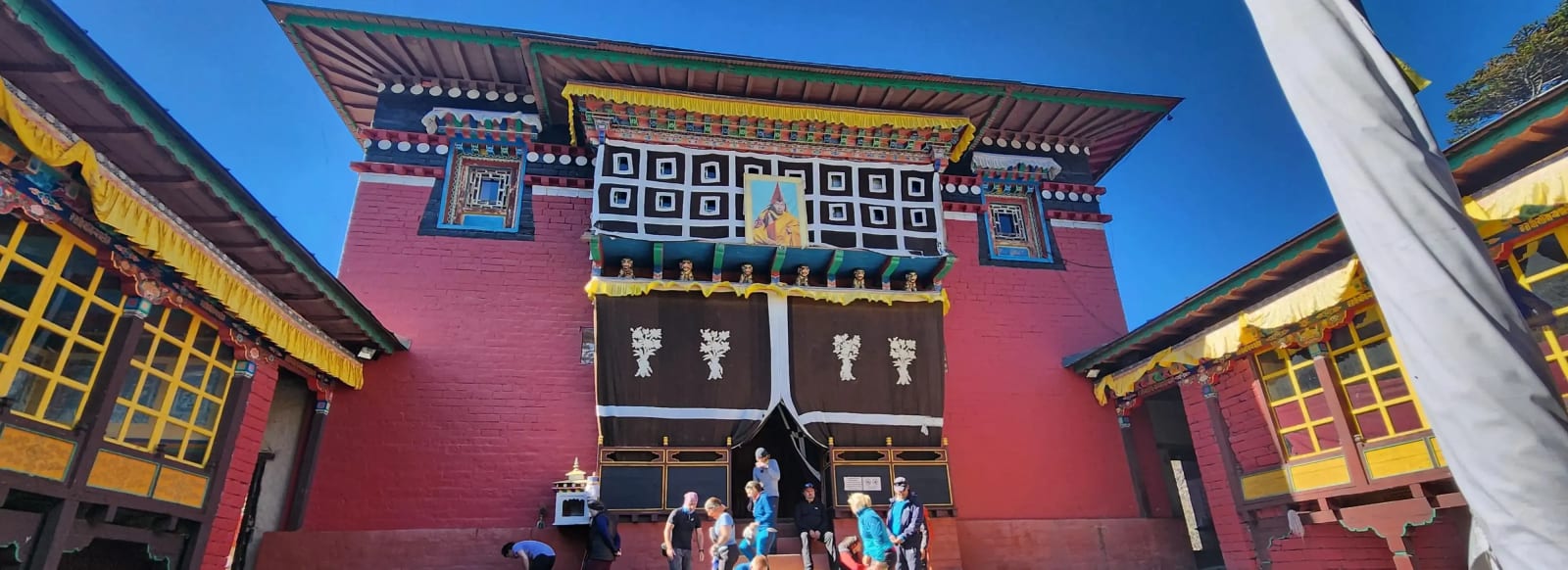 Tengboche Monastery
Khumjung Village: Visit the Hillary School and the famous "yeti scalp" preserved at the local monastery.
Gokyo Valley: Though less inhabited, the area carries strong Tibetan influences. You'll often see stone-carved mani prayers tucked into cliff faces.
Local Festivals
Dumje (June): Celebrates the birth of Guru Rinpoche. Expect masked dances and traditional songs.
Mani Rimdu (October-November): Held in Tengboche. It's the most colorful Buddhist festival in the region, with public blessings and dramatic lama performances.
Insider Tips for Cultural Connection
Greet locals with "Namaste" and a slight bow. It's respectful and always appreciated
Always walk left around mani stones or stupas. This aligns with Buddhist custom
When offered food or tea (like salty butter tea), accept it graciously, even if just symbolically
Avoid pointing at people or sacred objects with your finger. Use an open hand gesture instead
Safety and Security
The short answer? Yes, with the right preparation, guidance, and awareness, the Everest Base Camp with Gokyo Lakes Trek is a safe and incredibly rewarding journey. Thousands of trekkers from all over the world complete it every year. That said, it's high-altitude terrain, so let's break down what you need to know to trek smart and safe.
1. Altitude Considerations
The biggest risk on this trek isn't wildlife or trail conditions. It's altitude sickness.
High points like Gokyo Ri (5,357 meters), Cho La Pass (5,420 meters), and Kala Patthar (5,545 meters) push your body to the edge. Symptoms of Acute Mountain Sickness (AMS) include headaches, nausea, and dizziness. In severe cases, it can escalate to HAPE or HACE, which require immediate descent.
To stay safe:
Ascend slowly and allow 2-3 acclimatization days
Drink at least 3 liters of water daily
Avoid alcohol or sleeping pills during ascent
Take Diamox if advised by your doctor
2. Trail Safety
The trail is well-marked and frequently traveled
Trekkers often walk in groups or meet others along the way
Some sections like crossing the Cho La Pass involve snow or icy paths. Microspikes or crampons can help
Tip: If you're trekking in the shoulder seasons (late autumn or early spring), check if passes are open. Local guides always have the latest updates.
3. Guided vs Independent
All Nepal Visuals treks are guided, and a licensed guide dramatically increases your safety, especially in the remote Gokyo or Cho La region.
Guides offer:
First aid and altitude sickness expertise
Trail familiarity and cultural translation
Real-time decisions in case of changing weather
4. Emergencies & Rescue
Helicopter evacuations are available from most points on the trail
Clinics in Pheriche and Lobuche offer basic medical help
Ensure your travel insurance covers high-altitude trekking and evacuation
5. Final Safety Tips
Keep your permits handy: they are checked at Monjo and other checkpoints along the trail
Carry a basic first aid kit with altitude meds, plasters, and water purification tablets
Trust your gut: if something feels off, whether health or weather, take a rest day or descend
Fitness & Preparation
You don't need to be an elite athlete to complete the Everest Base Camp with Gokyo Lakes Trek. You just need to be prepared, determined, and respectful of the altitude. This is a multi-day, high-altitude adventure that demands endurance, not speed.
Who Is This Trek For?
Moderately fit trekkers
First-time high-altitude trekkers (with proper acclimatization)
Anyone who can walk 6-8 hours a day with a daypack
If you can comfortably hike for several hours with elevation gain, you're on the right track.
What Kind of Training Helps?
Start training at least 8-12 weeks before your trek. Focus on:
Cardio: Hiking, jogging, swimming, or cycling. Build lung capacity.
Leg Strength: Squats, lunges, and hill climbs. Your legs do all the work.
Endurance Hikes: Simulate trekking conditions. Do long walks with a backpack.
Stair Climbing: Great for mimicking uphill trails.
Core & Balance: Helps with carrying your gear and navigating rocky terrain.
Tip: Don't forget to break in your hiking boots during your training. No one wants new-boot blisters at 4,000 meters.
Mental Preparation Is Key
You'll face:
Fatigue
Cold mornings and hot afternoons
Limited Wi-Fi or creature comforts
Come with a positive attitude and flexible mindset. The Himalayas reward patience and resilience.
Acclimatization Schedule Matters
Plan for 2-3 acclimatization days in places like Namche Bazaar and Gokyo. This allows your body to adapt, especially when tackling Cho La Pass or summiting Kala Patthar.
Hire a Porter or Not?
If you're worried about fitness or joint strain, hiring a porter to carry your heavy gear can make the experience significantly more enjoyable. You'll just carry a light daypack.
Final Tips for Preparation
Practice breathing deeply and walking slowly. It's not a race
Stay hydrated and learn the symptoms of altitude sickness
Stretch before and after hiking days to avoid stiffness
The better prepared you are physically and mentally, the more you'll enjoy the journey through the heart of the Khumbu and Gokyo valleys.
Lukla Flights
If Everest is the heart of the Himalayas, Lukla is the gateway that gets it pumping. Nearly every trek to Everest Base Camp with Gokyo Lakes begins with a dramatic flight from Kathmandu (or Ramechhap) to Tenzing-Hillary Airport in Lukla, often dubbed "the world's most thrilling airport."
Where Do Flights Depart From?
During peak seasons, most flights don't depart from Kathmandu due to congestion. Instead, you'll likely fly from Ramechhap Airport (Manthali): About 4-5 hours drive from Kathmandu
Why the switch?
To ease air traffic at Kathmandu's Tribhuvan International Airport
Pro Tip: Factor in an overnight stay in Ramechhap if your flight departs early morning.
Flight Delays Are Normal
The weather in the mountains doesn't follow your itinerary. Fog, wind, and sudden cloud cover can ground flights for hours or days.
Always build buffer days into your itinerary (especially if you have international flights scheduled soon after)
Travel insurance should include trip interruption or delay coverage
Helicopter Option
If you're tight on time or your flight is canceled, helicopter services are available, but they cost significantly more.
Price: $500-$600 per person (depending on group size)
Advantage: Direct, flexible, and oh-so-scenic
Luggage Rules to Know
Weight limit: 10 kg for check-in bag; 5 kg for hand luggage
Pack smart: Use soft-sided duffels, not hard suitcases
Excess baggage may be charged extra or left behind
Flying into Lukla is the first taste of high-altitude adventure. It's unpredictable, unforgettable, and absolutely part of the story.
Food on the Trek
You might be trekking in one of the most remote places on Earth, but that doesn't mean you'll go hungry. In fact, the Everest region offers a surprisingly rich variety of meals that keep your energy up and your taste buds happy.
What You'll Eat on the Trail
Most meals are served in tea houses, which act as both accommodation and restaurants in the mountains.
1. Nepali Staples
Dal Bhat (Lentils & Rice): The holy grail of trekking food. It comes with rice, lentil soup, vegetables, and sometimes pickles. Bonus? It's all-you-can-eat and incredibly nutritious.
Tarkari: A veggie curry often served with dal bhat.
Gundruk: A fermented leafy green that's high in fiber and locally sourced.
2. Comfort Food, Himalayan Style
Pancakes, Toast & Eggs: Popular for breakfast with jam, honey, or peanut butter.
Tibetan Bread: Deep-fried, doughy, and perfect with honey or curry.
Momos (Dumplings): Steamed or fried, filled with veggies, cheese, or meat depending on availability.
Sherpa Stew: A hearty noodle-based soup often packed with vegetables and yak meat.
3. Western Options
As you go higher, variety decreases, but you'll often still find:
Pasta (macaroni, spaghetti)
Fried rice
Pizza (yes, really, though "Everest pizza" is very much its own thing)
French fries or boiled potatoes
4. Dietary Needs & Freshness
Vegetarian and vegan options are widely available
Gluten-free options are limited. Bring snacks if you have strict dietary needs
Meat is available but not recommended above Namche Bazaar. It's usually carried up without refrigeration
5. Water & Beverages
Bottled water is available but pricey the higher you go. Use water purification tablets or SteriPEN to refill from taps or streams safely.
Popular drinks:
Masala tea
Ginger lemon honey tea (great for altitude cough)
Hot chocolate
Yak butter tea (acquired taste, but very warming)
6. Snacks & Energy
Bring your own:
Protein bars
Chocolate
Electrolyte tablets
Trail mix
Dried fruits and nuts
These are more expensive and less available the higher you trek, especially beyond Gokyo or Lobuche.
Insider Tips
Eat more carbs than you usually would. Your body needs them at altitude
Avoid alcohol and caffeine in excess. They contribute to dehydration and altitude sickness
Tea houses serve food on a fixed menu system. Ordering off-menu isn't usually possible
You'll be amazed how a simple bowl of garlic soup or a plate of dal bhat can feel like a gourmet meal after a long trek day. Eat well, hydrate often, and listen to what your body needs. It's your fuel for every step toward Everest and Gokyo.
Accommodation
Forget five-star resorts. This trek offers something better: tea houses with character, warmth, and unmatched mountain views. Your stay may be basic, but it's memorable.
What Are Tea Houses?
Tea houses are local lodges offering both food and accommodation to trekkers. These form the backbone of the trekking infrastructure in the Everest and Gokyo region. You'll find them at almost every stop, from Lukla to Namche, Gokyo, and Everest Base Camp.
What to Expect
Rooms:
Basic twin-share rooms with wooden walls and thin mattresses
Bedding: Foam mattress, pillow, and blanket (but bring a sleeping bag!)
Little insulation. Expect chilly nights, especially above 4,000 meters
No heating in rooms. Only the dining area has a wood stove
Bathrooms:
Vary from shared squat toilets to Western-style flush toilets
Hot showers available at lower elevations (solar or gas-heated)
Cost of hot showers: USD 3-7 depending on altitude
Electricity & Charging:
Charging is not free at most lodges. Expect to pay USD 2-5 per device
Some lodges have solar power only
Bring a power bank and/or solar charger
Booking & Availability
No advance booking needed in the off-season
During peak months (October-November; March-April), booking via your guide or agency is advised
Gokyo and Lobuche have fewer tea houses than Namche. Arrive early to secure a room
What to Bring for Comfort
4-season sleeping bag
Travel towel & toiletries
Slippers or camp shoes
Headlamp or torch
Pro Tips
Always check if Wi-Fi, hot showers, and charging are included
Be respectful of tea house rules: keep noise down, don't hang wet gear in dining rooms
Share common spaces and chat with fellow trekkers. It's part of the fun!
While the accommodations on the Everest Base Camp with Gokyo Lakes Trek are simple, they offer a warm refuge after long days of walking through breathtaking terrain. Think of each tea house as a checkpoint on your journey, each one offering hot food, local smiles, and maybe even a story or two around the stove.
A Journey That Stays With You
The Everest Base Camp with Gokyo Lakes Trek isn't just a trek. It's a soul-stirring journey across some of the most dramatic and awe-inspiring landscapes on Earth. From standing at the foot of Mount Everest to witnessing the turquoise brilliance of the Gokyo Lakes from the top of Gokyo Ri, this route fuses two legendary trails into one unforgettable Himalayan experience.
You'll cross the towering Cho La Pass, walk beside ancient glaciers, and climb to viewpoints that leave even the most seasoned trekkers breathless. Along the way, you'll eat dal bhat with Sherpa families, sip tea under prayer flags, and sleep under a sky riddled with stars.
This trek is a test of endurance, yes, but also a lesson in humility, resilience, and connection. It's the kind of experience that etches itself into your memory long after the blisters heal and the gear is packed away.
Before you book
Questions we get most.
Difficulty & Preparation
How difficult is this trek compared to the standard EBC route?
This is a strenuous trek. While the standard EBC route is moderate, adding the Gokyo Lakes and crossing the Cho La Pass (5,420m) adds significant challenge. You will walk on moving glaciers, steep scree slopes, and often encounter snow or ice on the pass.
What level of fitness do I need?
You should be in excellent cardiovascular shape. A good benchmark is the ability to jog 5km in 30 minutes or hike for 6–7 hours with a light pack. Previous high-altitude trekking experience is highly recommended.
Do I need technical climbing skills for Cho La Pass?
No technical "climbing" (ropes or harnesses) is usually required. However, you will need crampons or micro-spikes for the icy glacier crossing on the pass. Your guide will provide a briefing on how to use these.
Logistics & Transport
Why does my flight to Lukla depart from Ramechhap instead of Kathmandu?
In 2026, the Civil Aviation Authority of Nepal often diverts Lukla flights to Ramechhap (Manthali) during peak seasons (March–May and Oct–Nov) to avoid air traffic congestion in Kathmandu. This involves a 4-hour drive from Kathmandu starting at 2:00 AM.
What happens if my Lukla flight is canceled due to weather?
Weather in the Himalayas is unpredictable. We recommend building 2 buffer days at the end of your trip. If planes are grounded, helicopter alternatives may be available at an additional cost (approx. $400–$600 per person).
What is the luggage weight limit for the Lukla flight?
The total limit is 15kg per person (10kg for your duffel bag and 5kg for your carry-on). Excess weight is charged extra, but we recommend staying within this limit for the sake of your porters.
Health & Safety
How do you manage altitude sickness (AMS)?
Our 17-day itinerary includes two full acclimatization days (Namche Bazaar and Gokyo). Your guide carries a pulse oximeter to check your oxygen levels twice daily. If symptoms of AMS occur, the rule is always to descend.
Is the water safe to drink?
No, you should never drink tap or river water. You can purchase boiled water at teahouses or use water purification tablets/filters (like LifeStraw or Aquatabs) with the tap water provided.
Is there emergency evacuation available?
Yes. In case of serious illness or injury, we coordinate helicopter evacuation. This is why specialized travel insurance covering "Search and Rescue" up to 6,000m is mandatory.
Life on the Trail
What is the accommodation like?
You will stay in local teahouses (mountain lodges). Rooms are generally twin-sharing with two beds and a shared bathroom. As you get higher (above 4,000m), facilities become more basic, and bedrooms are not heated.
Can I charge my phone and use Wi-Fi?
Most teahouses offer electricity and Wi-Fi for an extra fee ($3–$7). However, at higher altitudes, these can be unreliable. We recommend a solar power bank and a local Ncell/NTC SIM card (though signal is spotty).
Can I get a hot shower on the trek?
Hot showers (gas or solar-powered) are available at most teahouses for an extra cost ($5–$10). We recommend using "wet wipes" for hygiene at higher elevations like Gorak Shep and Gokyo to avoid catching a cold.
Scenery & Viewpoints
What is the "Five 8,000m Peak" view?
While the standard EBC trek focuses on Everest, the 17-day loop includes an ascent of Gokyo Ri (5,357m). From this specific summit, you can see four of the world’s six highest peaks—Everest, Lhotse, Makalu, and Cho Oyu—plus Shishapangma across the border in Tibet. Many trekkers consider this panorama superior to the view from Kala Patthar.
What are the "Renjo La" and "Cho La" perspectives?
This 17-day route typically tackles the Cho La Pass (5,420m). As you descend from the pass toward Dzongla, you get a unique, vertical view of Mt. Ama Dablam and Cholatse that standard trekkers never see. Crossing the pass allows you to witness the massive Ngozumpa Glacier, the longest glacier in the Himalayas, stretching across the valley floor like a giant frozen river.
Trail Challenges & Terrain
How do we navigate the Ngozumpa Glacier?
Crossing the glacier between Dragnag and Gokyo is one of the most surreal parts of the 17-day trek. The trail constantly shifts due to moving ice and rock, so it is marked by cairns (stone piles). Your guide will lead you through this moonscape of turquoise melt-pools and debris, which requires steady footwork but no technical climbing gear.
What is the "Kala Patthar vs. Gokyo Ri" summit strategy?
On a 17-day trip, you get to do both. We typically climb Kala Patthar (5,545m) for the classic close-up of Everest’s southwest face, and Gokyo Ri (5,357m) for the wider landscape view. Doing both provides a complete 360-degree visual understanding of the Everest massif that 12-day trekkers simply miss.
Nutrition & Mountain Wellness
What is the "Garlic Soup" rule at high altitude?
In the Khumbu, Sherpa guides swear by fresh garlic soup to help thin the blood and improve oxygen circulation. On a long 17-day trek, we recommend eating this daily once you pass 4,000m. It’s a natural, local remedy that helps many trekkers manage the symptoms of altitude better than medication alone.
How should I adjust my diet for the Cho La Pass day?
Crossing the pass is a 7-to-9-hour endeavor. We recommend a "high-carb" dinner the night before in Gokyo or Dragnag—think pasta or a large portion of Dal Bhat. For the actual crossing, carry high-energy "pocket snacks" like nuts, chocolate, or energy gels, as you won't find any teahouses until you reach the other side of the pass.
2026 Regulations & Sustainability
Are "WAG Bags" mandatory for the 17-day loop?
Yes. As of 2026, the Sagarmatha Pollution Control Committee (SPCC) requires all trekkers visiting high-altitude zones (including Gokyo and EBC) to use official, gelling-agent waste bags. These are registered to your permit and must be carried back down to Lukla to protect the fragile glacial water systems.
Is solo trekking allowed on the Gokyo/Cho La route?
No. Under the 2026 Nepal trekking regulations, all foreign trekkers in the Khumbu must be accompanied by a licensed guide. This is strictly enforced at the checkposts in Jorsale and Gokyo, ensuring that someone is there to assist with navigation through the glacier and the high pass.
Connectivity & Power
Should I buy a local SIM or use "Everest Link" Wi-Fi?
For a 17-day trip, we recommend both. A local Ncell or NTC SIM card works well in Namche and Lukla. However, in the deeper Gokyo and Lobuche valleys, Everest Link cards (purchasable at most lodges) provide more reliable satellite-based internet, though speeds will drop during the afternoon "rush hour" when everyone is online.
How do I manage charging for nearly three weeks?
With 17 days in the cold, a 20,000mAh power bank is your most important tool. While most lodges charge $5–$8 for a full phone charge, many "community lodges" in the Gokyo valley have limited solar capacity. Keeping your phone in "Airplane Mode" and tucked inside your sleeping bag at night is essential to making your charge last.
Still have a question? WhatsApp us →