 Nepal Visuals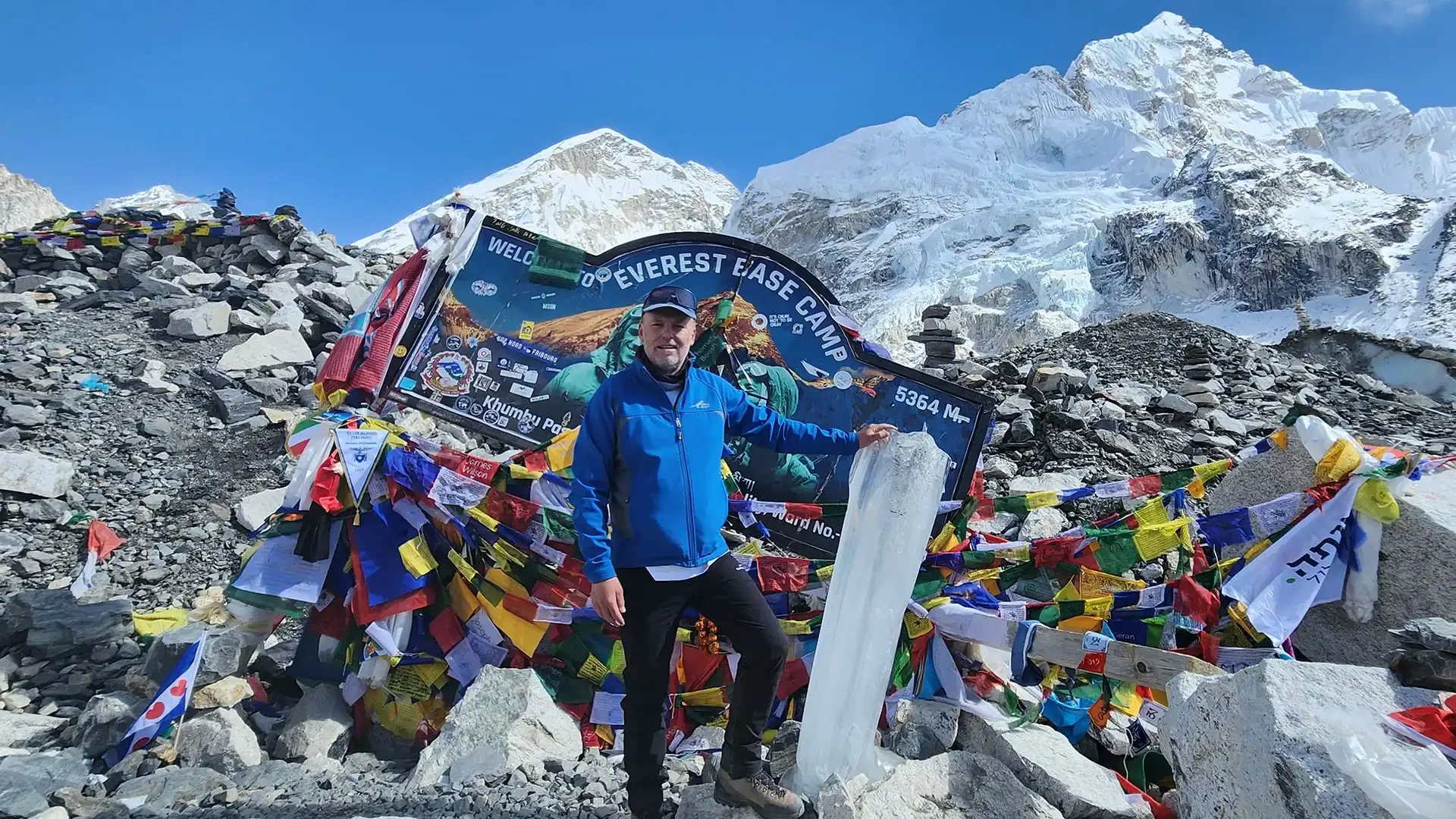
Everest Region · Challenging grade
Everest Three Passes Trek
The route
What the walk is.
The Everest Three Passes Trek is the most challenging and complete trekking circuit in the Everest region.
This demanding journey crosses three spectacular high-altitude passes above 5,300 meters: Kongma La (5,535 m), Cho La (5,420 m), and Renjo La (5,360 m).
It combines the classic Everest Base Camp route with the scenic Gokyo Valley, creating a full loop through the region’s most dramatic landscapes.
Starting and ending with the flight to Lukla, the trek delivers an unmatched mix of adventure, mountain scenery, and cultural experiences in the heart of the Himalayas.
General Information
Detail | Information |
Region | Everest (Khumbu), Nepal |
Max Altitude | 5,644m (18,517 ft) at Kala Patthar |
Start/End Point | Lukla |
Three Passes | Kongma La (5,535m), Cho La (5,420m), Renjo La (5,360m) |
One of the highlights of this trek is reaching Everest Base Camp (5,364 m), where climbers prepare for expeditions to Mount Everest.
Trekkers also climb Kala Patthar (5,644 m), the most famous viewpoint in the region, known for its breathtaking sunrise views of Everest and the surrounding peaks.
On the western side of the circuit, the trek leads to the beautiful Gokyo Lakes, a series of turquoise glacial lakes set beneath towering mountains.
A climb to Gokyo Ri (5,357 m) provides one of the finest panoramic viewpoints in the Himalayas, with views of Everest, Lhotse, Makalu, and Cho Oyu.
Crossing the three passes is the defining challenge of the trek.
Kongma La Pass is the highest and requires steady effort across rugged terrain at extreme altitude.
Cho La Pass is considered the most technical crossing, often involving glacier travel and early morning starts to safely cross icy sections.
Renjo La Pass offers one of the most spectacular viewpoints of the entire trek, revealing a wide panorama of Himalayan giants and the Gokyo valley below.
This trek is physically demanding and best suited for experienced trekkers with previous high altitude experience above 4,000 meters.
The route involves multiple days above 4,500 meters, long trekking days of six to eight hours, and significant elevation gain across seventeen trekking days.
Strong fitness, endurance, and mental determination are essential to complete the circuit.
For those prepared for the challenge, the Everest Three Passes Trek offers the most complete Himalayan experience.
It combines iconic destinations, remote high mountain passes, traditional Sherpa villages, and the pristine landscapes of Sagarmatha National Park.
The journey rewards trekkers with a powerful sense of accomplishment and some of the most spectacular mountain scenery on earth.
Why choose Nepal Visuals for your Everest Three Passes trek?
Certified, Experienced Guides: Skilled in high-altitude trekking, culture, and terrain for a richer, safer journey.
Complimentary Airport Transfers: Free airport pickup and drop-off in a private vehicle for added convenience.
Pre-Trek Online Briefing: Comprehensive online trip briefing provided upon booking confirmation.
Flexible Itineraries: Tailored options to suit your fitness level and preferences.
Seamless Logistics: Coordinated permits, accommodations, and transport for a stress-free experience.
Secure Luggage Storage: Free storage for extra luggage at Nepal Visuals store.
Authentic Cultural Engagement: Opportunities for immersion in local culture and meaningful experiences.
Dedicated 24/7 Support: Multi-channel communication (Email, WhatsApp, Facebook, Insta, Viber, Skype, Zoom.
Easy Booking & Payment Options: Smooth reservation and payment process for your convenience.
Day by day
Where you sleep, night by night.
Kathmandu → Kathmandu · highest point 5,546 m
- Day 01Lodge/Tea House (Twin Sharing) · Welcome Dinner1,400 m
Arrive at Tribhuvan International Airport. Your Nepal Visuals representative greets you and transfers you to your hotel in Thamel. Welcome briefing with your guide over a traditional Nepali dinner this evening.
- Day 02sleep 2,610 m · Lodge/Tea House (Twin Sharing) · Breakfast, Lunch, Dinner2,860 m
Early morning flight to Lukla — one of the world most exhilarating runway landings. Trek through pine forest and across prayer-flag suspension bridges, following the Dudh Kosi River to Phakding.
- Day 03Lodge/Tea House (Twin Sharing) · Breakfast, Lunch, Dinner3,440 m
Cross the iconic Hillary Suspension Bridge and climb the steep switchbacks into Namche Bazaar. The trek from Phakding to Namche takes you through lush forests and over iconic suspension bridges. Pass into Sagarmatha National Park, where the scenery transforms with views of snow-capped peaks and deep river valleys.
- Day 04Rest day · Lodge/Tea House (Twin Sharing) · Breakfast, Lunch, Dinner3,440 m
A rest day essential for acclimatisation. Hike up to the Everest View Hotel (3,880m) for sunrise over Everest, Lhotse, and Ama Dablam. Visit the Sherpa Culture Museum. Return to Namche for rest and exploration of the Saturday market if available.
- Day 05Lodge/Tea House (Twin Sharing) · Breakfast, Lunch, Dinner3,860 m
After breakfast, descend through beautiful forests, cross the Dudh Koshi River, and trek towards Tengboche, home to the famous Tengboche Monastery. As you approach, enjoy breathtaking views of Everest, Ama Dablam, and other peaks. The monastery surrounded by mountains offers a tranquil atmosphere for reflection.
- Day 06Lodge/Tea House (Twin Sharing) · Breakfast, Lunch, Dinner4,410 m
Descend from Tengboche through Deboche before climbing again past Pangboche. The trail opens into the Imja Khola valley leading to Dingboche — a key acclimatisation stop surrounded by dramatic peaks including Island Peak, Lhotse, and Ama Dablam.
- Day 07Highest point · Lodge/Tea House (Twin Sharing) · Breakfast, Lunch, Dinner5,546 m
Begin with a hike to Chukhung Ri, a high-altitude viewpoint offering 360-degree views of Everest, Lhotse, Makalu, Ama Dablam, and more. This challenging hike helps your body adjust to the elevation, crucial for crossing the Three Passes ahead.
- Day 08Lodge/Tea House (Twin Sharing) · Breakfast, Lunch, Dinner4,940 m
Trek through the Khumbu glacier lateral moraine, pausing at the Thukla Pass memorials — stone cairns for climbers lost on Everest. Each one is a name and a story. Lobuche sits at the edge of the glacier with enormous mountains all around.
- Day 09sleep 5,164 m · Lodge/Tea House (Twin Sharing) · Breakfast, Lunch, Dinner5,364 m
The day everything has been building toward. Trek over the Khumbu glacier moraine to Gorak Shep, drop your bag, and push on to Everest Base Camp. At Base Camp: prayer flags, expedition tents, and Everest directly overhead. Return to Gorak Shep for a well-earned dinner.
- Day 10sleep 4,830 m · Lodge/Tea House (Twin Sharing) · Breakfast, Lunch, Dinner5,545 m
Wake at 4 AM and climb Kala Patthar by headtorch for the best Everest sunrise view on Earth. Descend and continue to Dzongla, the staging point for tomorrow Kongma La crossing. The afternoon is for rest and preparation.
- Day 11sleep 4,730 m · Lodge/Tea House (Twin Sharing) · Breakfast, Lunch, Dinner5,535 m
The first of the three passes. Kongma La at 5,535m is the highest of the three crossings. A steep climb from Dzongla rewards with sweeping views of the Khumbu Glacier and the Lhotse Wall. The descent to Chukhung is long but spectacular.
- Day 12sleep 4,500 m · Lodge/Tea House (Twin Sharing) · Breakfast, Lunch, Dinner5,420 m
The second and most dramatic pass. The Cho La is a genuine glacier crossing — crampons may be required. The narrow snow and ice ridge at the top offers staggering views. The descent to Thangna is steep and rocky, with Cho Oyu dominating the horizon.
- Day 13Lodge/Tea House (Twin Sharing) · Breakfast, Lunch, Dinner5,357 m
Trek to Gokyo village on the shore of the Third Lake — turquoise glacial waters of extraordinary beauty. In the afternoon, climb Gokyo Ri for a 360-degree Himalayan skyline: Everest, Lhotse, Makalu, and Cho Oyu simultaneously, plus the Gokyo Lakes below. Many rate this view above Kala Patthar.
- Day 14sleep 4,380 m · Lodge/Tea House (Twin Sharing) · Breakfast, Lunch, Dinner5,360 m
The third and final pass. Renjo La at 5,360m offers arguably the finest lake view of the entire trek — looking back over the turquoise Gokyo Lakes with Everest rising behind them. Descend through remote Lungden valley to the village of Lungden.
- Day 15Lodge/Tea House (Twin Sharing) · Breakfast, Lunch, Dinner3,820 m
Descend through alpine forests and traditional Sherpa villages, arriving at Thame, a charming village with strong cultural significance in Sherpa history. Thame is the birthplace of Tenzing Norgay — one of the first two men to summit Everest. Relax and soak in the peaceful surroundings.
- Day 16Lodge/Tea House (Twin Sharing) · Breakfast, Lunch, Dinner3,440 m
Final descent back into Namche Bazaar — now passed with a deep sense of achievement. After completing the Three Passes loop, Namche feels like a celebration. Hot shower, cold beer, and a shared sense of accomplishment with your guide.
- Day 17Lodge/Tea House (Twin Sharing) · Breakfast, Lunch, Dinner2,860 m
The final stretch of this challenging trek takes you back to Lukla. Cross the Hillary Bridge one last time and follow the Dudh Kosi River to the mountain town that started it all. Celebrate completing one of the most iconic high-altitude treks in Nepal.
- Day 18Lodge/Tea House (Twin Sharing) · Breakfast, Dinner1,400 m
Weather-dependent morning flight back to Kathmandu. Back in the city by late morning — free afternoon for sightseeing, shopping, or rest. Farewell dinner with your guide this evening.
- Day 19Breakfast1,400 m
Our representative transfers you to Tribhuvan International Airport for your onward flight. You have crossed three Himalayan passes above 5,300m, stood at Everest Base Camp, and looked out from Gokyo Ri. Carry those mountains with you.
Fixed departures
12 group dates open.
144 places across them. Or start on any flexible date in the calendar below.
| Departure | Booked | Filling | Left | Status | Book |
|---|---|---|---|---|---|
| Sat, Mar 6, 2027 | 0/12 | 12 | Available | ||
| Sat, Mar 20, 2027 | 0/12 | 12 | Available | ||
| Sat, Apr 3, 2027 | 0/12 | 12 | Available | ||
| Sat, Apr 17, 2027 | 0/12 | 12 | Available | ||
| Sat, May 1, 2027 | 0/12 | 12 | Available | ||
| Sat, May 15, 2027 | 0/12 | 12 | Available | ||
| Sat, Sep 4, 2027 | 0/12 | 12 | Available | ||
| Sat, Sep 18, 2027 | 0/12 | 12 | Available | ||
| Sat, Oct 2, 2027 | 0/12 | 12 | Available | ||
| Sat, Oct 16, 2027 | 0/12 | 12 | Available | ||
| Sat, Nov 6, 2027 | 0/12 | 12 | Available | ||
| Sat, Nov 20, 2027 | 0/12 | 12 | Available |
Prices are per person, twin share, in USD. Book with a 20 % deposit — the balance is due 7 days before departure. Scheduled departures show places left; flexible departures can be booked on any listed start date. Booking terms
| Su | Mo | Tu | We | Th | Fr | Sa |
|---|---|---|---|---|---|---|
| 1 | 2 | 3 | ||||
| 4 | 5 | 6 | 7 | 8 | 9 | 10 |
| 11 | 12 | 13 | 14 | 15 | 16 | 17 |
| 18 | 19 | 20 | 21 | 22 | 24 | |
| 25 | 26 | 28 | 29 | 30 |
- Selected trip dates
- Available
- Filling fast
- Almost sold out
- Sold out
Fri, Oct 23Tue, Nov 10, 2026
19 days · flexible departure
- StartsFri, Oct 23, 2026 · Kathmandu
- EndsTue, Nov 10, 2026 · Kathmandu
USD $1,599 per person, twin share · Deposit today USD $319.80 (20 %)
On the trail
Photographs from the route.
Challenging grade
Is this trek right for you?
You can do this if…
- ✓Walk 6–8 hours a day comfortably
- ✓Carry an 8–10 kg daypack
- ✓Manage long ascents and nights above 4,000 m
Recommended preparation
- ✓3+ months of cardio and leg-strength training
- ✓Back-to-back day hikes with a loaded pack
- ✓Check the itinerary for high passes or glacier days
Experience & support
- ✓Previous multi-day trekking recommended
- ✓Guided throughout — a licensed guide is required on Nepal treks
- ✓Unsure about age, health or fitness? Ask us — we tailor the pace
About three months out? Follow our free 12-week trek fitness plan.
Good to know
Additional information.
Accommodation and Meals
Accommodation Standards
Lower Elevations (Lukla-Namche): Better teahouses with Western toilets, hot showers available, WiFi in most lodges, electricity reliable, more comfortable rooms
Mid Elevations (Tengboche-Dingboche): Standard teahouses, shared bathrooms, hot showers ($3-5), WiFi available ($3-4), basic but clean rooms
High Elevations (Chukhung-Gorakshep): Very basic lodges, minimal facilities, extremely cold, shared squat toilets, dormitory-style common, heating limited to dining rooms
Remote Valleys (Dzongla-Lungden): Most basic accommodations, very cold, limited services, minimal menus, authentic mountain experience
Meals
Standard Menu: Dal bhat (unlimited refills, most nutritious), noodles (chow mein, thukpa), fried rice, pasta, momos, eggs, pancakes, soups (garlic soup aids altitude), porridge, tea/coffee
High Altitude: Menu options decrease significantly. Dal bhat remains most reliable. Food more expensive (NPR 1,200+ at Gorakshep).
Pass Days: Early breakfast boxes prepared (3-4 AM departures). Carry high-energy snacks (chocolate, energy bars, nuts).
Trek Difficulty
Rating: Challenging to Extreme
What Makes It Extreme:
Three High Passes: Sustained effort above 5,300m on three separate days
Extreme Altitude: Multiple nights above 5,000m
Technical Terrain: Cho La requires glacier travel, possible crampons
Long Duration: 17 consecutive trekking days with minimal rest
Cumulative Fatigue: No recovery time between major challenges
Weather Exposure: Passes are weather-dependent, delays possible
Commitment: Once in the circuit, limited exit options
Physical Requirements:
Ability to trek 6-8 hours daily for 17 consecutive days, excellent cardiovascular fitness, strong legs for sustained climbing, previous successful high-altitude experience (4,500m+), mental toughness to push through extreme discomfort, experience with crampons (basic), comfortable with exposure and steep terrain.
Preparation:
Start training 4-6 months before. Focus on long-duration cardio (running, cycling 5-6x weekly), weekend practice treks building to 8+ hours, leg strengthening with heavy focus, back-to-back trekking days (essential), altitude training if possible, crampon practice on snow/ice, mental preparation for extended challenge.
Pass-Specific Difficulty:
Kongma La: Steep rocky ascent, loose scree, sustained climbing, highest pass
Cho La: Most technical with glacier sections, ice/snow possible, pre-dawn starts, fixed ropes in sections, careful navigation required
Renjo La: Steep switchbacks both sides, loose rocks, long sustained climb, completing when already fatigued
Success Rate: 75-85%. Lower than standard EBC trek. Main reasons for not completing: inadequate fitness preparation (most common), altitude sickness despite precautions, weather closing passes temporarily, underestimating cumulative fatigue, injury, or personal decision.
Altitude Sickness
Risk Level: Significant due to rapid altitude gain and three days above 5,300m.
Critical Days:
Days 9-11: Three consecutive days above 4,900m (Kongma La, Gorakshep, Kala Patthar)
Day 12: Cho La Pass crossing at 5,420m
Day 14: Renjo La Pass at 5,360m
Prevention:
The itinerary includes two acclimatization days (Namche and Chukhung Ri). Additional strategies: hydrate 3-4 liters daily, Diamox medication (consult doctor), moderate pace especially on pass days, proper nutrition, listen to body and guides, be willing to turn back if necessary.
Management:
Guides monitor twice daily with oximeters. If symptoms worsen: rest at current altitude, do not ascend, consider descent if moderate symptoms, immediate descent if severe symptoms, helicopter evacuation if necessary (insurance covers).
Success Factor: Proper acclimatization is the difference between success and failure. The two built-in rest days are non-negotiable.
Before you book
Questions we get most.
Difficulty & Physical Prep
How much harder is the Three Passes Trek than the standard EBC trek?
It is significantly more difficult. While the EBC trek follows a well-trodden valley path, the Three Passes Trek requires crossing three 5,000m+ ridges. You will face steeper ascents, loose scree, and glacier walking. It demands roughly 30% more physical endurance.
Do I need technical climbing skills for the passes?
No, it is still a "trek," not a climb. However, Cho La Pass often involves walking across a slippery glacier. While you don't need ropes, microspikes are essential for traction.
What kind of training should I do?
Focus on stamina and leg strength. Weighted hiking (carrying a 10kg pack), stair climbing, and long-distance running are the best preparations. You should be comfortable walking 7–9 hours on the "Pass Days."
Accommodation & Hygiene
Are teahouses different on the Three Passes route?
In popular stops like Namche or Gokyo, teahouses are quite comfortable. However, in remote villages like Lungden or Dzongla, accommodations are much more basic. Rooms are twin-sharing with thin walls, and the "toilets" are often simple pits or shared squat toilets.
Can I get a hot shower every day?
Technically yes, for a fee ($5–$10), but it is not recommended above 4,000m. Stripping down in freezing temperatures increases your risk of catching a cold or the "Khumbu Cough," which can end your trek early. Most veterans stick to "wet wipe" showers.
Is there laundry service available?
Only in Namche Bazaar. Once you head toward the passes, you’ll be hand-washing socks in cold water or simply wearing them for multiple days. Pack enough pairs of merino wool socks (which naturally resist odor).
Food & Water
Will the menu change in the remote areas?
The menu is surprisingly consistent across the Khumbu—Dal Bhat, pasta, and potatoes. However, in smaller settlements like Chhukung or Dragnag, the variety may be slightly less than in Namche.
How do I manage hydration on such a long trek?
You need to drink 4–5 liters of water daily to combat altitude. Since you are out for 19 days, buying bottled water is not only eco-unfriendly but will cost you over $200. Use a SteriPen (UV) or purification tablets with a reusable Nalgene bottle.
What should I do if I lose my appetite?
Loss of appetite is a common early symptom of altitude. Even if you aren't hungry, you must eat. Garlic soup is a local favorite for altitude, and carrying high-calorie snacks like snickers or nuts is vital for energy on the passes.
Clothing & Gear
Do I need specialized gear for the glaciers?
Yes, microspikes (lightweight crampons) are mandatory for Cho La Pass. You should also bring collapsible trekking poles to save your knees during the steep, rocky descents from the passes.
What is the temperature range for a 19-day trek?
Expect extreme variance. In the lower valleys, it may be 15°C (59°F) and sunny. At the top of Kongma La or during the night in Gorak Shep, temperatures can drop to $-20$°C ($-4$°F). Layering is the only way to survive.
Is a $-20$°C sleeping bag overkill?
Not at all. For 19 days, sleep is your recovery. Even if the room is slightly warmer, having a high-rated bag ensures you aren't shivering at 3:00 AM before a big pass crossing.
Electronics & Connectivity
How do I keep my camera alive for 19 days?
Charging becomes very expensive ($5–$8 per full charge) higher up. Bring two high-capacity power banks (20,000mAh each) and keep them inside your sleeping bag at night. Solar chargers can work if strapped to the outside of your pack during the day.
Is there Wi-Fi on the entire circuit?
"Everest Link" works in most villages, but it is notoriously spotty in the Gokyo Valley and virtually non-existent on the pass crossing days. Buy a local Ncell or NTC SIM card in Kathmandu for data in the lower regions.
Guides & Support Staff
Can I do the Three Passes trek solo in 2026?
No. New regulations require all trekkers in the Khumbu to have a licensed guide. For this specific trek, a guide is life-saving because the trail over the passes can be obscured by snow or fog, making navigation dangerous.
How many porters do I need for 19 days?
Usually, one porter is shared between two trekkers (carrying 10kg–12kg per person). Given the length and difficulty of the Three Passes, having a porter is highly recommended so you can focus on your breathing and balance.
Health, Safety & Logistics
What is the acclimatization strategy for this trek?
A typical 19-day itinerary includes at least three "rest" days: usually at Namche (3,440m), Dingboche (4,410m), and Gokyo (4,750m). This gradual ascent is why the Three Passes often has a higher success rate for reaching Base Camp than shorter EBC treks.
What if one pass is blocked by snow?
This happens. If a pass is deemed too dangerous by your guide, you can "loop around" via the lower valley trails to reach the next destination. This is why a 19-day itinerary includes "buffer days."
Views & Photography
Which pass offers the best view?
Most trekkers agree that Renjo La Pass offers the most spectacular view in the world. You look back over the turquoise Gokyo Lakes with Everest, Lhotse, and Makalu lined up in a single panoramic frame.
Is Gokyo Ri better than Kala Patthar?
They are different. Kala Patthar gets you "face-to-face" with Everest. Gokyo Ri gives you a "grand scale" view of four 8,000m peaks at once. On a 19-day trek, you get to do both!
How do I photograph the Cho La glacier safely?
The glacier can be bright and blinding. Use a Circular Polarizer (CPL) filter on your lens to manage the glare from the snow and bring out the deep blues of the ice and sky.
Still have a question? WhatsApp us →