 Nepal Visuals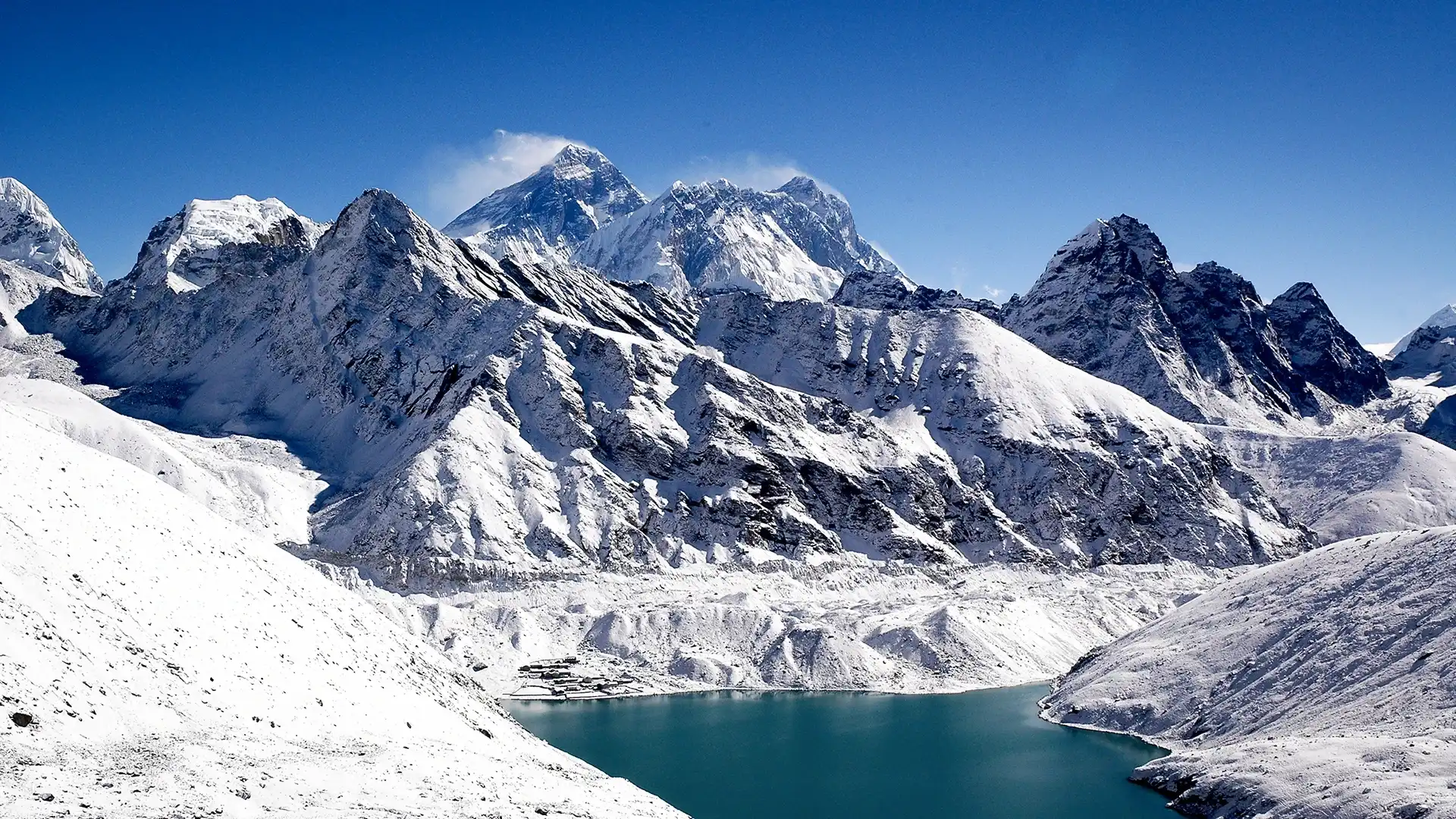
Everest Region · Challenging grade
Gokyo Lakes and Ri Trek
The route
What the walk is.
The Gokyo Lakes and Gokyo Ri Trek (12 Days) is a spectacular high-altitude journey in Nepal’s Everest (Khumbu) region, offering a quieter and more scenic alternative to the classic Everest Base Camp route.
This trek takes you through traditional Sherpa villages, lush valleys, and rugged alpine landscapes to the breathtaking Gokyo Valley, home to a chain of six sacred turquoise glacial lakes. Recognized as a Ramsar wetland site, these pristine lakes hold religious significance for both Hindus and Buddhists and are among the highest freshwater lake systems in the world.
Designed for fit trekkers with proper acclimatization, the trek combines cultural immersion with dramatic Himalayan scenery.
Along the route, you will pass Namche Bazaar, the vibrant Sherpa hub, before branching off toward the peaceful Gokyo region. Trekkers also walk alongside the massive Ngozumpa Glacier, the largest glacier in Nepal, adding to the adventure.
The ultimate highlight of the trek is the ascent of Gokyo Ri (5,357 m), one of the finest viewpoints in the Everest region. From the summit, you are rewarded with unforgettable panoramic views of four of the world’s highest peaks: Everest, Cho Oyu, Lhotse, and Makalu.
Best experienced in spring and autumn, this trek is perfect for those seeking dramatic mountain views, rich culture, and a less crowded Himalayan experience.
General Information
Detail | Information |
Region | Everest (Khumbu) |
Accommodation | Hotel in Kathmandu, Tea-houses on trek |
Start/End Point | Lukla |
Group Size | Flexible (solo to group) |
Guide/Porter | Available and recommended |
About the Trek
What Makes Gokyo Lakes Trek Special?
The Gokyo Lakes Trek is perfect for trekkers who want a quieter, more reflective experience without missing the grandeur of the Himalayas. With surreal views, rich culture, and the jaw-dropping Gokyo Ri summit, many say this is the most beautiful trek in the Everest region.
The Gokyo Lake system consists of six stunning high-altitude lakes located between 4,700 and 5,000 meters. The largest lake, Dudh Pokhari, sits beside Gokyo village and the stone-built lodges that form the Gokyo resort area. These lakes aren't just photogenic. They hold cultural, ecological, and spiritual significance as the world's highest freshwater lake system.
The Six Gokyo Lakes:
Lake | Local Name | Altitude | Notability |
First Lake | Longpanga Tsho | 4,690m | Smallest of the main lakes |
Second Lake | Taujung Tsho | 4,710m | Close to main trekking path |
Third Lake | Dudh Pokhari | 4,750m | Beside Gokyo Village & lodges |
Fourth Lake | Thonak Tsho | 4,860m | Largest by surface area (62 ha) |
Fifth Lake | Ngozumpa Tsho | 5,000m | Remote, glacier views |
Sixth Lake | Gyazumba Tsho | 5,100m | At the foot of Cho Oyu |
Why Choose the Gokyo Lakes Trek?
Fewer Crowds: The Gokyo trek route is less traveled than the Everest Base Camp trail, giving you a more peaceful, intimate Himalayan experience.
Stunning Views: From the top of Gokyo Ri, you get a front-row seat to Everest, Makalu, Cho Oyu, and the massive glacial landscape.
Sacred Lakes: The Gokyo Lake system is sacred to both Hindus and Buddhists, offering cultural and spiritual depth.
Sherpa Culture: Experience authentic traditions in Sherpa communities throughout the Gokyo Valley.
Eco-Rich Environment: The trail falls within Sagarmatha National Park, home to rare wildlife, yak herds, and diverse alpine flora.
Why Nepal Visuals Is The Right Choice For This Gokyo Lakes Trek?
Your safety comes first: Our certified guides use pulse oximeters daily to monitor your health as the trail climbs toward the 5,357 m summit of Gokyo Ri.
Clarity over confusion: You receive a comprehensive online briefing after booking covering the Gokyo Valley trail, Lukla flight schedules, and what to expect at each sacred lake.
No hidden costs: Your price includes Lukla flights, Sagarmatha National Park permits, and all local fees. No surprise invoices waiting at Gokyo village.
Stress-free logistics: We manage all 2026 Ramechhap flight diversions and teahouse bookings so you can focus entirely on the lakes and Cho Oyu panoramas above.
Travel light, store safe: Leave your city luggage in our free, secure Kathmandu storage facility and collect it safely when you return from the mountains.
Prepare with confidence: We provide a tailored fitness plan and packing list built for Gokyo's long high-altitude days, helping you reach the summit comfortably.
Meaningful experiences, not just miles: Our itinerary builds in time at Dole, Machhermo, and lakeside Buddhist shrines so you connect with Sherpa culture rather than rushing the trail.
Always there for you: Our team is available 24/7 via WhatsApp, Email, or Zoom throughout your journey, from packing in Kathmandu to resting at Gokyo teahouse.
Easy, secure booking: Our streamlined booking system and flexible payment options make reserving your Gokyo dates fast and stress-free, whether months ahead or last minute.
No trek left behind: Your departure is 100% guaranteed once booked. We never cancel small groups, so your chance to stand above three sacred Himalayan lakes is always protected. Even under extreme conditions like weather changes, local political situation, or other emergencies, we try our best to ensure that your trek progresses smoothly.
Day by day
Where you sleep, night by night.
Kathmandu → Kathmandu · highest point 5,357 m
- Day 01Hotel (Twin Sharing) · Breakfast, Welcome Dinner1,350 m
Our airport representative will welcome you to Nepal. After a quick photo, they will escort you to your hotel in Thamel. After settling in, a traditional Nepali dinner awaits you at a local restaurant. Your guide will introduce themselves and brief you on the Gokyo Lake Trek. You will be provided with duffel bags and company apparel.
- Day 02sleep 2,610 m · Tea-House (Twin Sharing) · Breakfast, Lunch, Dinner2,860 m
Early morning flight from Kathmandu (or Ramechhap in peak season) to Lukla — one of the world most thrilling mountain landings. From Tenzing-Hillary Airport, begin trekking downhill through pine forests and across suspension bridges strung with prayer flags, following the Dudh Kosi River to the small village of Phakding.
- Day 03Tea-House (Twin Sharing) · Breakfast, Lunch, Dinner3,440 m
Cross the iconic Hillary Suspension Bridge — hanging 100m above the river — and climb the steep switchbacks into Namche Bazaar, the Sherpa capital of the Khumbu. On a clear morning, catch your first close-up glimpse of Everest through a gap in the ridge. Namche buzzes with trekkers, bakeries, gear shops, and mountain energy.
- Day 04Rest day · Tea-House (Twin Sharing) · Breakfast, Lunch, Dinner3,880 m
Rest and adapt. Today you hike high but sleep low. Trek up to the Japanese-built Everest View Hotel for arguably the most celebrated Himalayan panorama: Everest, Lhotse, Ama Dablam, and Thamserku all at once. Return to Namche for afternoon rest, hot soup, and Sherpa coffee. Visit the Sherpa Culture Museum and Saturday market if timing allows.
- Day 05Tea-House (Twin Sharing) · Breakfast, Lunch, Dinner4,038 m
Today marks the moment your trek shifts from the classic EBC trail toward the turquoise serenity of the Gokyo Valley. From Namche, the trail climbs steeply to Mong La ridge offering sweeping views of Ama Dablam, Thamserku, and distant Cho Oyu. Descend to Phortse Thenga then climb again through juniper forests to the cosy hamlet of Dole. Fewer trekkers, more solitude — the Gokyo Valley begins here.
- Day 06Tea-House (Twin Sharing) · Breakfast, Lunch, Dinner4,470 m
A steady climb through alpine terrain with widening views of the Gokyo peaks ahead. The trail passes through Lhabarma and Luza before reaching Machhermo — a small cluster of teahouses perched above the valley. This village was famously the site of a reported yeti attack in 1974. The altitude is significant today; walk slowly and drink plenty of water.
- Day 07Tea-House (Twin Sharing) · Breakfast, Lunch, Dinner4,790 m
One of the most rewarding days of the trek. The trail climbs above the snowline and reveals the first of the Gokyo Lakes — sacred glacial waters of extraordinary turquoise. Pass the First and Second Lakes before arriving at Gokyo village on the shore of the Third Lake (Dudh Pokhari). The Ngozumpa Glacier — the largest glacier in the Himalayas — sprawls across the valley ahead. The afternoon is free to explore the lakeshore and acclimatise at altitude.
- Day 08Highest point · Tea-House (Twin Sharing) · Breakfast, Lunch, Dinner5,357 m
This might be the most rewarding day of your life. Rise at 4:30 AM and climb Gokyo Ri by headtorch for sunrise. From the summit: a 360-degree Himalayan skyline with Everest (8,849m), Lhotse (8,516m), Makalu (8,485m), and Cho Oyu (8,188m) all visible simultaneously — plus the three Gokyo Lakes glittering below. Most photographers rate this view above Kala Patthar. Descend to Gokyo for breakfast, then continue down to Machhermo for better acclimatisation overnight.
- Day 09Tea-House (Twin Sharing) · Breakfast, Lunch, Dinner3,440 m
After breakfast, leave Machhermo and follow the trail back toward Namche Bazaar. Pass through Dole and continue via Mong La for lunch before descending to Phortse Thenga and climbing to Mong La. The trail offers farewell views of Everest, Ama Dablam, and Lhotse as you descend to Namche. After days at high altitude, Namche feels like a bustling metropolis — celebrate with a hot shower and a cold beer.
- Day 10Tea-House (Twin Sharing) · Breakfast, Lunch, Dinner2,860 m
The final day on foot. Descend the Namche stairs — much easier going down — cross the Hillary Bridge one last time, and follow the Dudh Kosi river back to Lukla. The trekking community in Lukla lodges is warm and celebratory; everyone here has the same look — tired, deeply satisfied, and a little changed. Celebrate with your guide over dinner.
- Day 11Hotel (Twin Sharing) · Breakfast, Dinner1,350 m
Weather-dependent morning flight back to Kathmandu. Always build a contingency day into your return ticket for this reason. Back in the city by late morning. Afternoon is free — visit Boudhanath Stupa, explore Thamel, or simply rest in your hotel. Farewell dinner with your guide in the evening.
- Day 12Breakfast1,350 m
Final morning in Nepal. Our representative transfers you to Tribhuvan International Airport in time for your onward flight. Carry back the mountains in your memory — and your legs, which will remind you of the trail for at least a week.
Fixed departures
12 group dates open.
144 places across them. Or start on any flexible date in the calendar below.
| Departure | Booked | Filling | Left | Status | Book |
|---|---|---|---|---|---|
| Sat, Mar 6, 2027 | 0/12 | 12 | Available | ||
| Sat, Mar 20, 2027 | 0/12 | 12 | Available | ||
| Sat, Apr 3, 2027 | 0/12 | 12 | Available | ||
| Sat, Apr 17, 2027 | 0/12 | 12 | Available | ||
| Sat, May 1, 2027 | 0/12 | 12 | Available | ||
| Sat, May 15, 2027 | 0/12 | 12 | Available | ||
| Sat, Sep 4, 2027 | 0/12 | 12 | Available | ||
| Sat, Sep 18, 2027 | 0/12 | 12 | Available | ||
| Sat, Oct 2, 2027 | 0/12 | 12 | Available | ||
| Sat, Oct 16, 2027 | 0/12 | 12 | Available | ||
| Sat, Nov 6, 2027 | 0/12 | 12 | Available | ||
| Sat, Nov 20, 2027 | 0/12 | 12 | Available |
Prices are per person, twin share, in USD. Book with a 20 % deposit — the balance is due 7 days before departure. Scheduled departures show places left; flexible departures can be booked on any listed start date. Booking terms
| Su | Mo | Tu | We | Th | Fr | Sa |
|---|---|---|---|---|---|---|
| 1 | 2 | 3 | ||||
| 4 | 5 | 6 | 7 | 8 | 9 | 10 |
| 11 | 12 | 13 | 14 | 15 | 16 | 17 |
| 18 | 19 | 20 | 21 | 22 | 24 | |
| 25 | 26 | 28 | 29 | 30 |
- Selected trip dates
- Available
- Filling fast
- Almost sold out
- Sold out
Fri, Oct 23Tue, Nov 3, 2026
12 days · flexible departure
- StartsFri, Oct 23, 2026 · Kathmandu
- EndsTue, Nov 3, 2026 · Kathmandu
USD $1,230 per person, twin share · Deposit today USD $246 (20 %)
On the trail
Photographs from the route.
The whole number
What the price covers.
15 things are in the price and 11 more are named as excluded.
In the price
Transportation & Logistics
- ✓Domestic Airfare · Round-trip flight tickets (Kathmandu–Lukla–Kathmandu) including all applicable airport taxes.
- ✓Arrival & Departure · Professional airport pickup and drop-off services.
- ✓Permits & Official Fees · All necessary conservation fees, trekking permits, and government taxes.
- ✓Official Liaison · Full coordination of all administrative requirements for the trek.
Professional Support & Safety
- ✓Expert Leadership · A government-certified, English-speaking trekking guide.
- ✓Group Support · An assistant guide provided for larger groups (8 or more participants).
- ✓Porter Service · Professional porter support (1 porter per 2 trekkers, with a 10 kg limit per person).
- ✓Health Monitoring · Twice-daily vitals checks using an oximeter and access to a comprehensive first aid kit.
- ✓Staff Welfare · All wages, meals, lodging, transportation, and insurance for your entire guide and porter team.
- ✓Emergency Coordination · Full assistance in arranging emergency helicopter services (costs covered by your insurance).
Accommodation & Meals
- ✓Kathmandu Stay · Hotel accommodation in Kathmandu on a twin-sharing basis.
- ✓Kathmandu Stay · Hotel accommodation in Kathmandu on a twin-sharing basis.
- ✓Cultural Welcome · A traditional welcome Nepali dinner to start your journey.
Gear & Recognition
- ✓Trekking Essentials · Complimentary use of duffel bags and trekking poles for the duration of the trek (if needed).
- ✓Official Achievement · A formal Trek Completion Certificate to document your success.
Not included
Flights, Visas, and Logistics
- ×International Travel · International flight fares and airport departure taxes.
- ×Entry Requirements · Nepal Entry Visa fees and any necessary extensions.
- ×General Extras · Any expenses or services not explicitly mentioned in the "Cost Includes" section.
Personal Protection & Equipment
- ×Mandatory Insurance · Comprehensive Travel and Medical Insurance (Compulsory).
- ×Rescue Costs · Any emergency rescue or evacuation charges if not covered by your insurance policy.
- ×Individual Gear · All personal trekking clothing, footwear, and specialized equipment.
Trail & City Expenses
- ×City Dining · Main meals (lunch and dinner) in Kathmandu, excluding the welcome dinner.
- ×Teahouse Amenities · Extra charges at lodges, such as hot showers, internet access, battery/device charging, and extra hot drinks.
- ×Beverages · All alcoholic and non-alcoholic drinks (sodas, bottled water, etc.).
- ×Extended Stays · Additional nights of accommodation in Kathmandu due to early arrival or late departure.
Professional Tips and Gratuity
- ×Staff Appreciation · Customary tips for your guides and porters as a gesture of thanks for their hard work.
Challenging grade
Is this trek right for you?
You can do this if…
- ✓Walk 6–8 hours a day comfortably
- ✓Carry an 8–10 kg daypack
- ✓Manage long ascents and nights above 4,000 m
Recommended preparation
- ✓3+ months of cardio and leg-strength training
- ✓Back-to-back day hikes with a loaded pack
- ✓Check the itinerary for high passes or glacier days
Experience & support
- ✓Previous multi-day trekking recommended
- ✓Guided throughout — a licensed guide is required on Nepal treks
- ✓Unsure about age, health or fitness? Ask us — we tailor the pace
About three months out? Follow our free 12-week trek fitness plan.
Good to know
Additional information.
Accommodation and Meals
Accommodation
Accommodation along the Gokyo Lake trek is cozy, simple, and surprisingly welcoming given the remote alpine setting. Most trekkers stay in traditional teahouses or family-run lodges scattered throughout the Gokyo Valley.
What to Expect:
Rooms: Usually twin-sharing, with basic beds, pillows, and blankets. Some lodges at lower altitudes offer private rooms with attached bathrooms.
Common Areas: Dining halls with warm fireplaces where trekkers gather to eat, chat, and warm up.
Gokyo Resort Options: In Gokyo village near the lakes, you'll find upgraded lodges with slightly more amenities and stunning views.
Things to Note:
The higher you go, the more basic the facilities become
Hot showers often come at an extra cost, especially above Namche
Heating is usually limited to the dining area
Booking in advance during peak season is recommended
Meals
What's on the Menu:
Dal Bhat: Lentils, rice, and vegetable curry (the most popular meal, often with free refills)
Noodles, soups, pasta, and potatoes: Great carb-loaded options for energy
Tibetan bread, pancakes, and eggs: Common breakfast fare
Tea and coffee: Widely available (ginger or lemon honey tea are trekker favorites)
Dietary Options:
Vegetarian meals widely available
Vegan options possible with advance notice
Limited gluten-free options (bring your own snacks if needed)
Water:
Avoid plastic bottles
Fill reusable bottles with boiled water from teahouses
Use water purification tablets, UV filters, or LifeStraw-type filters
Trek Difficulty
The Gokyo Lakes trek is considered moderate to challenging depending on your fitness level and trekking experience. While it doesn't involve technical climbing, the altitude, steep ascents (especially the climb to Gokyo Ri), and long walking days can make it demanding.
Trek Difficulty Breakdown
Factor | Level |
Altitude | High risk of AMS above 3,000m |
Highest Point | Gokyo Ri at 5,357m (17,575 ft) |
Total Trekking Days | 12 days |
Average Walking Time | 5-7 hours per day |
Technical Skills | None required |
Fitness Level | Moderate to high |
What Makes It Challenging?
High Altitude: You'll ascend steadily from Lukla (2,860m) to over 5,357m at Gokyo Ri, which is higher than Everest Base Camp. Most of the trek happens above 3,500 meters.
Daily Walking Hours: Expect to walk 5-7 hours per day on mountainous terrain with a mix of gentle climbs, rocky staircases, suspension bridges, and glacier views.
Elevation Gain: The cumulative altitude gain is significant, though gradual.
Remote Location: The trail is less developed than the Everest Base Camp route. Services are basic and spread out.
Who Can Do This Trek?
Fit beginners who train ahead of time and acclimatize properly
Regular hikers looking for something quieter than Everest Base Camp
Altitude-savvy trekkers seeking off-the-beaten-path views
The trail is well-marked and safe, with no technical climbing involved, but the elevation gain is real and demands respect.
Permits Required
Sagarmatha National Park Permit: NPR 3,000 (approx. USD 25) for foreigners, NPR 1,500 for SAARC nationals
Khumbu Pasang Lhamu Rural Municipality Permit: NPR 2,000 (approx. USD 15-17)
If trekking via Jiri: Gaurishankar Conservation Area Permit required
How Long Does the Trek Take?
The standard Gokyo Lakes trek takes 12 days including arrival in Kathmandu and departure. The actual trekking days are 8-9 days, with 2 acclimatization days built in for safety.
Trek Distance: Approximately 92 to 100 kilometers (57 to 62 miles) round trip
Daily Breakdown:
Lukla to Gokyo: Around 45-50 kilometers
Gokyo Ri ascent and descent: 2-4 kilometers
Return to Lukla: 45-50 kilometers
The trek can be shortened to 10 days or extended to 14 days depending on your schedule and acclimatization needs. It can also be combined with the Everest Base Camp trek via Cho La Pass for a longer adventure.
Facilities on the Trek
Internet & WiFi
Many teahouses offer paid WiFi services, especially in Namche Bazaar, Dole, and Gokyo village. WiFi quality varies. In lower villages, it's usually reliable enough for messaging and light browsing. At higher altitudes, expect slow or unstable connections. Some lodges use Everest Link cards for WiFi, which you can purchase and top up along the route.
Mobile Network
Ncell: Decent coverage up to Namche Bazaar but struggles at higher altitudes.
Nepal Telecom (NTC): Better coverage in the upper Khumbu Valley, including areas around Gokyo Lake.
Buy your SIM card in Kathmandu or Lukla and load it with data for backup.
Drinking Water
Safe drinking water is available from teahouses. You can buy bottled water, but it's expensive and environmentally unfriendly. Better options:
Fill reusable bottles with boiled water from teahouses (small fee)
Use water purification tablets
Use UV filters or LifeStraw-type filters
Aim to drink 3-4 liters of water daily to combat altitude effects.
Charging Facilities
Power banks are essential. Charging outlets are available at teahouses, but you'll likely need to pay per hour or per device at higher elevations (USD 2-5). Some lodges rely on solar power, especially above Dole, so charging access may be limited in cloudy weather.
Transportation
To Lukla: Scenic mountain flight from Kathmandu or Ramechhap (during peak season). Flight duration is 20-30 minutes.
During Trek: All movement is on foot. No vehicles beyond Lukla.
From Lukla: Return flight to Kathmandu or Ramechhap, then drive to Kathmandu.
Toilets
Expect squat toilets at most teahouses. Western toilets are available at some larger lodges (like in Namche or Gokyo village). Toilet paper is rarely provided, so bring your own. Hand sanitizer is essential.
Altitude Sickness
What Is Altitude Sickness?
Altitude sickness, or Acute Mountain Sickness (AMS), occurs when you ascend to high altitude too quickly without giving your body time to adjust to lower oxygen levels. It can affect anyone, regardless of fitness level.
When Does It Occur?
AMS typically occurs above 2,500-3,000 meters. On the Gokyo Lakes trek, you'll be at risk starting from Namche Bazaar (3,440m) and increasingly so as you ascend to Gokyo (4,790m) and Gokyo Ri (5,357m).
Symptoms
Mild AMS:
Headache
Nausea or loss of appetite
Dizziness
Fatigue
Difficulty sleeping
Severe AMS (HAPE/HACE):
Shortness of breath at rest
Severe headache
Loss of coordination (ataxia)
Confusion or altered mental state
Fluid in lungs or brain (medical emergency)
Prevention
Gradual Ascent: Follow the itinerary with built-in acclimatization days at Namche Bazaar and Machhermo.
Climb High, Sleep Low: Take short hikes to higher altitudes during the day and return to lower elevation to sleep.
Stay Hydrated: Drink 3-4 liters of water daily. Dehydration increases AMS risk.
Avoid Alcohol: No alcohol or sleeping pills at high altitude.
Eat Well: Maintain energy with carb-rich meals like dal bhat.
Medications: Diamox (Acetazolamide) can aid acclimatization. Consult your doctor before use.
How Nepal Visuals Manages It
Our experienced guides are trained to:
Monitor your health using pulse oximeters twice daily
Recognize early AMS symptoms
Make informed decisions about acclimatization and rest
Arrange immediate descent or evacuation if needed
Emergency Response: Helicopter evacuations are available from Gokyo Valley, Machhermo, or Dole. Travel insurance covering high-altitude evacuation is mandatory.
What to Do If You Have Symptoms
Mild symptoms: Rest, hydrate, inform your guide.
Worsening symptoms: Stop ascending. Stay at current altitude or descend.
Severe symptoms: Descend immediately and seek medical help.
Altitude sickness is serious but preventable with proper acclimatization and awareness. Listen to your body and don't push beyond your limits.
Booking Procedure
Step-by-Step Process
1. Inquiry
Contact us via WhatsApp, email, or our website form. Let us know your preferred dates, group size, and any special requirements.
2. Consultation
We'll discuss the trek details, answer your questions, and provide a customized itinerary and quote.
3. Confirmation
Once you're ready, we'll send a booking confirmation form and invoice.
4. Payment
Pay a 30% deposit to secure your booking. The remaining balance is due before or upon arrival in Kathmandu. We accept bank transfers and credit/debit cards.
5. Pre-Departure Briefing
We'll provide a detailed online trip briefing covering:
Trek itinerary and what to expect each day
Packing list and gear recommendations
Permit requirements and documentation
Health and safety guidelines
Contact information for emergencies
6. Arrival in Kathmandu
Our representative will meet you at the airport and escort you to your hotel. You'll meet your guide for a final briefing and gear check.
What's Included in Your Booking
Airport pickup and drop
Hotel accommodation in Kathmandu
Domestic flights (Kathmandu-Lukla-Kathmandu)
All meals during the trek (breakfast, lunch, dinner)
Government-certified English-speaking guide
Porter service (1 porter for 2 trekkers, 10kg limit per trekker)
All trekking permits and fees
First aid kit and oximeter
Duffel bag and trekking poles
Trek completion certificate
Flexible Cancellation Policy
Life happens. We understand. Our cancellation policy is:
30+ days before departure: Full refund minus 10% admin fee
15-29 days: 50% refund
Less than 15 days: No refund, but you can reschedule within 12 months
Emergency cancellations due to medical reasons may be eligible for full refund with documentation.
Departures
Fixed Group Departures
We offer fixed departure dates throughout the year during spring and autumn seasons. Check our booking calendar for available dates.
Private Departures
Available year-round. You can choose your own dates and trek with your own group. Minimum 2 people required for private departures.
Seasonal Availability
Peak Season (March-May, September-November): High demand. Book early to secure lodges and flights.
Off-Season (December-February, June-August): Fewer crowds, but weather challenges. Limited tea house availability at higher altitudes in winter.
Note on Lukla Flights
During peak seasons (March-May, October-November), Lukla flights depart from Ramechhap (Manthali) instead of Kathmandu due to air traffic. This requires a midnight departure from Kathmandu and a 5-hour drive to catch the early flight.
Always build 2-3 buffer days into your schedule to account for potential flight delays.
Trek Map
Route Overview
The Gokyo Lakes trek follows a well-established trail through the Khumbu Valley, branching off from the classic Everest Base Camp route at Namche Bazaar.
Key Route Points:
Lukla (2,860m) → Phakding (2,610m) → Namche Bazaar (3,440m)
Namche → Dole (4,038m) → Machhermo (4,470m) → Gokyo (4,790m)
Gokyo → Gokyo Ri (5,357m) summit → Return via same route
Altitude Profile
The trek follows a gradual ascent pattern with strategic acclimatization stops:
Day 2: Lukla (2,860m) to Phakding (2,610m) - slight descent
Day 3: Phakding to Namche Bazaar (3,440m) - gain 830m
Day 4: Acclimatization day (hike to 3,880m)
Day 5: Namche to Dole (4,038m) - gain 598m
Day 6: Dole to Machhermo (4,470m) - gain 432m
Day 7: Machhermo to Gokyo (4,790m) - gain 320m
Day 8: Gokyo to Gokyo Ri (5,357m) - gain 567m, then descend
Acclimatization Points:
Namche Bazaar (3,440m): First major acclimatization stop
Machhermo (4,470m): Optional second acclimatization day
Gokyo (4,790m): Rest before Gokyo Ri ascent
The map shows daily elevation changes and helps you visualize the gradual ascent pattern that's crucial for safe acclimatization.
Before you book
Questions we get most.
Difficulty & Pace
Is the Gokyo Lakes trek easier than EBC?
It is considered a "quieter" alternative with fewer crowds, but the ascent to Gokyo Ri (5,357m) is steeper and more sustained than many sections of the EBC trail.
How many hours will I walk daily?
On average, expect to walk 5–6 hours per day. The summit day for Gokyo Ri is the longest, starting at dawn and lasting about 7 hours.
Is it suitable for beginners?
Yes, provided you have good cardiovascular fitness. The 12-day itinerary includes a crucial acclimatization day in Namche Bazaar to prepare you for the higher lakes.
Altitude & Health
What is the maximum altitude?
The highest point is the summit of Gokyo Ri at 5,357m (17,575 ft).
How do I prevent altitude sickness?
Walk at a "Sherpa pace" (slow and steady), drink 4 liters of water daily, and eat garlic soup, which locals believe helps with oxygen absorption.
What if I get sick in Gokyo?
Gokyo is remote. Our guides carry oximeters to monitor you daily. If symptoms of AMS persist, the only treatment is immediate descent.
Accommodation & Food
What are the lodges like in the Gokyo Valley?
Accommodations are traditional teahouses. They are cozy but basic; rooms are twin-sharing with common bathrooms. As you go higher, the dining hall is the only heated room.
What kind of food is available?
You can enjoy Dal Bhat (lentil soup and rice), pasta, momos, and pancakes. We recommend sticking to vegetarian meals at higher altitudes for better digestion.
Logistics & Essentials
How do I get to the trailhead?
You will take a 35-minute scenic flight from Kathmandu (or Ramechhap) to Lukla.
What permits do I need?
You need the Khumbu Pasang Lhamu Rural Municipality Permit and the Sagarmatha National Park Entry Permit.
Is there Wi-Fi at the lakes?
Yes, most lodges in Gokyo village offer Wi-Fi for a fee, though it can be slow during bad weather.
What is the best month for this trek?
October and November offer the clearest views of the turquoise lakes, while April and May feature blooming rhododendrons.
Scenery & Glacial Wonders
What is the "Ngozumpa Glacier" and will I cross it?
The Ngozumpa is the longest glacier in the Himalayas. On Day 6 or 7, you will hike along its lateral moraine and eventually cross a section of it to reach Gokyo village. The landscape is a surreal moonscape of ice, rock, and sandy pits, offering a stark contrast to the lush forests of the lower Khumbu.
How many lakes are there in the Gokyo series?
There are six primary lakes in the valley, though most 12-day treks focus on the 3rd lake (Dudh Pokhari), where the village is located. On your acclimatization day, we highly recommend hiking to the 4th (Thonak Tsho) and 5th (Ngozumpa Tsho) lakes for a much closer, "private" view of Everest’s north face.
Summit Perspectives (Gokyo Ri)
How does the view from Gokyo Ri compare to Kala Patthar?
While Kala Patthar is closer to Everest, Gokyo Ri (5,357m) offers a broader "Grand Panorama." From the summit, you can see four 8,000m peaks at once: Everest, Lhotse, Makalu, and Cho Oyu. Many photographers prefer this spot because it captures the massive scale of the Ngozumpa Glacier snaking through the valley below.
What is the best time of day to climb Gokyo Ri?
Most trekkers start at 4:30 AM to catch the sunrise. The "Golden Hour" light hitting the turquoise lakes and the massive wall of Cho Oyu is a world-class sight. However, if the morning is cloudy, a sunset climb can be equally spectacular, as the peaks glow pink (Alpenglow) long after the valley is in shadow.
Connectivity & Modern Life
Is the "Everest Link" Wi-Fi reliable at the lakes?
Gokyo village (4,750m) uses the Everest Link satellite network. While it is generally reliable for messaging, the high-altitude winds and heavy snow can interrupt the signal. In 2026, many lodges have upgraded to more stable systems, but we still recommend purchasing a data card in Namche as a backup.
Can I charge my camera for the 5,357m summit push?
Yes, but charging at 4,750m is expensive ($5–$8 per full charge) and relies entirely on solar power. Because the cold at the lakes drains batteries 40% faster, we suggest keeping your power bank and spare batteries inside your sleeping bag at night to preserve their life for the summit day.
Gear & Packing Strategy
Are micro-spikes necessary for the Gokyo route?
If you are trekking in March, April, or November, the trail around the 2nd and 3rd lakes can be very icy. We strongly recommend carrying lightweight micro-spikes (slip-on chains) in your daypack. They provide essential grip on the frozen sections of the moraine, preventing slips and twisted ankles.
What should I wear for the Gokyo Ri ascent?
The summit is extremely windy. You need a four-layer system: a thermal base, a fleece mid-layer, a down jacket, and a windproof outer shell. Don’t forget a warm "Buff" or neck gaiter to protect your lungs from the "Khumbu Cough" caused by breathing the dry, freezing air during the steep 2-hour climb.
Comparison & Logistics
Why choose the 12-day Gokyo route over the 15-day "Cho La Pass" loop?
The 12-day "Gokyo Only" route is perfect for those who want the best views of Everest without the technical difficulty of crossing the Cho La Pass. It is a safer, more focused itinerary that allows for a "Slow Travel" experience at the lakes rather than a grueling high-altitude transit.
How do we handle the "Ramechhap" flight situation in 2026?
Due to air traffic congestion in Kathmandu, Lukla flights often move to Ramechhap during the peak spring and autumn seasons. We coordinate a private vehicle to take you from Kathmandu to Ramechhap (a 4-hour drive) at 1:00 AM to ensure you catch the first flight into the mountains.
Still have a question? WhatsApp us →