 Nepal Visuals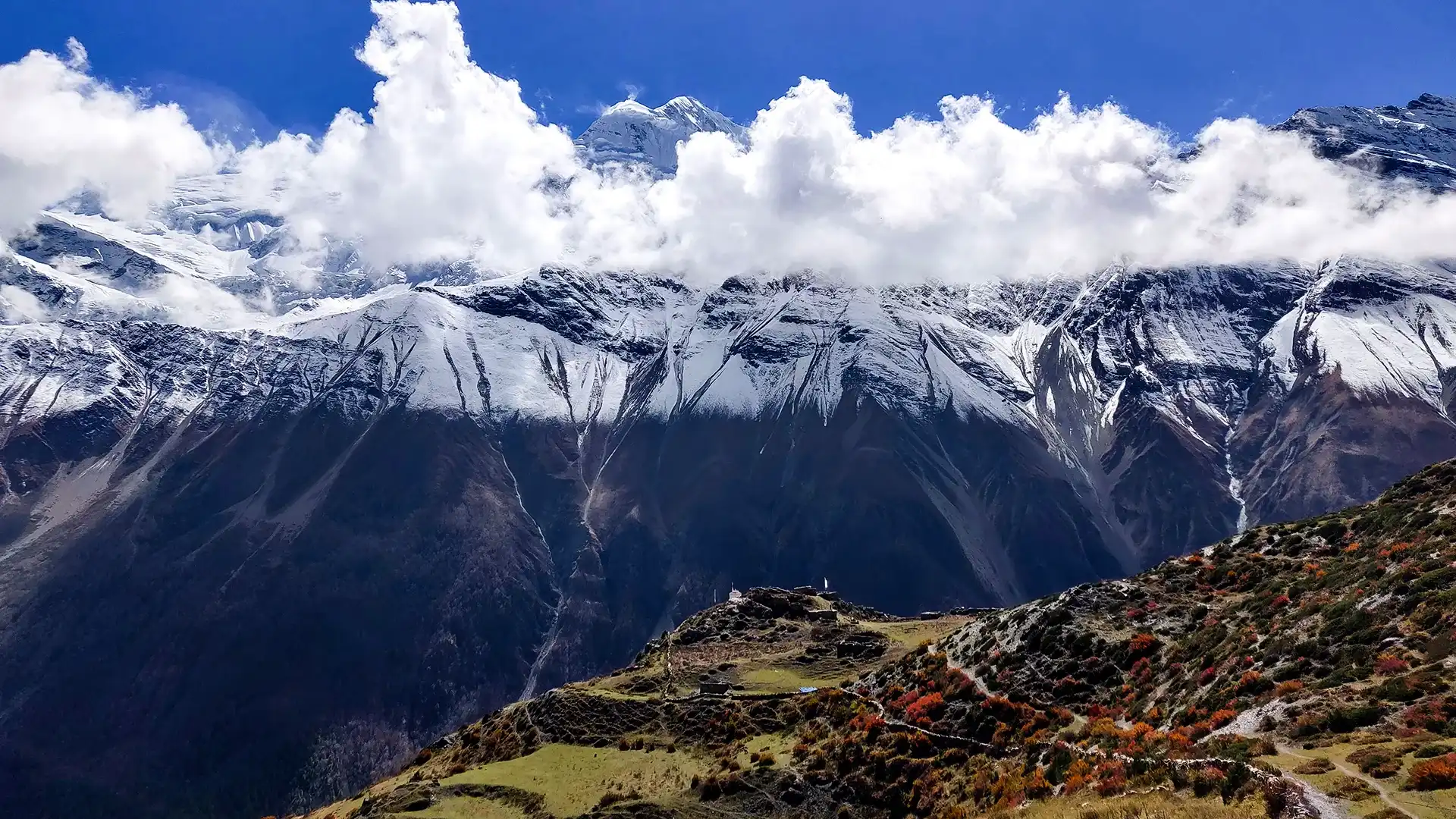
Annapurna Region · Challenging grade
Annapurna Circuit Trek
The route
What the walk is.
The Annapurna Circuit Trek (12 Days) is one of the world’s most iconic trekking routes, offering an unforgettable journey around the Annapurna massif through Nepal’s most diverse mountain landscapes. This challenging adventure is perfect for experienced trekkers seeking a classic Himalayan circuit that combines natural beauty, cultural encounters, and high altitude achievement.
The trek begins in the Marsyangdi Valley, where trails pass through terraced farmland, pine forests, and traditional Gurung settlements. As the elevation increases, the environment gradually changes from lush greenery to rugged alpine terrain with dramatic mountain views.
An important stop along the route is Manang (3,519 m), where trekkers spend a day acclimatizing to the altitude. This village also offers a chance to experience Tibetan Buddhist culture while preparing for the higher sections of the trek.
The most demanding and rewarding part of the journey is the crossing of Thorong La Pass (5,416 m). This high mountain pass offers breathtaking panoramic views of Annapurna I, Dhaulagiri, and many other Himalayan peaks, making it one of the greatest highlights of the trek.
After the pass, the trail descends toward Muktinath (3,800 m), an important spiritual site visited by both Hindu and Buddhist pilgrims. The route then continues through the dry and dramatic landscapes of the Mustang region toward Jomsom.
Throughout the trek, the constantly changing scenery provides a rare opportunity to experience multiple climate zones within a single journey. From subtropical valleys to high altitude deserts, the diversity is one of the reasons this trek is considered a classic.
This trek requires strong fitness, previous trekking experience, and proper preparation for high altitude conditions. For those ready for the challenge, the Annapurna Circuit Trek offers a deeply rewarding experience and a true sense of accomplishment.
General Information
Detail | Information |
Start Point | Dharapani (via Besisahar from Kathmandu) |
End Point | Jomsom (fly or drive to Pokhara then Kathmandu) |
Daily Walking | 5-8 hours |
Permits Required | ACAP, TIMS |
Ideal For | Experienced trekkers, ultimate challenge seekers |
What makes the Annapurna Circuit extraordinary:
Diverse Landscapes: The circuit showcases Nepal's incredible biodiversity and terrain variety compressed into trekking duration. Experience lush green valleys with rice terraces and banana trees (lowlands), dense rhododendron and pine forests (mid-elevations), alpine meadows with yak herds (high valleys), barren rocky terrain approaching pass, dramatic high-altitude desert (Mustang). This diversity creates constantly changing scenery preventing monotony despite 10 consecutive trekking days.
Thorong La Pass (5,416m): Crossing one of the world's highest trekking passes represents ultimate challenge and reward. The pre-dawn ascent (starting 4-5 AM), sustained effort at extreme altitude, reaching prayer flag-adorned summit with 360-degree Himalayan panoramas, and euphoric sense of accomplishment create unforgettable experiences. Unlike technical mountaineering peaks, Thorong La requires no special equipment—just determination, proper acclimatization, and sustained effort.
Cultural Richness: The circuit passes through diverse ethnic communities: Hindu lowland villages, Gurung settlements, and Tibetan-Buddhist upper valleys featuring monasteries, mani walls, prayer wheels, and chortens. Manang Valley particularly maintains strong Tibetan identity with traditional architecture, active religious practices, and genuine hospitality despite decades of tourism.
Legendary Status: As one of world's most famous treks (alongside Everest Base Camp, Inca Trail, Kilimanjaro), completing the Annapurna Circuit carries special recognition among trekking community. This isn't obscure route—it's classic adventure earning global respect.
This 12-day itinerary provides efficient yet safe pacing: proper acclimatization at Manang (crucial rest day before pass attempt), manageable daily distances despite challenging overall, and time for cultural absorption not just rushing through villages. The complete package handles everything: transportation from Kathmandu to trek start and exit, experienced high-altitude specialist guides, porter service, teahouse accommodation, all meals, permits, and emergency support.
Why choose Nepal Visuals for the 12-day Annapurna Circuit Trek?
The full circuit, expertly fitted into 12 days
We have refined this itinerary so the complete Annapurna Circuit experience, including Thorong La Pass, fits a 12-day window without cutting corners on the places that matter most.
Pass-day readiness is something we plan for
Crossing Thorong La at 5,416 m on a tighter schedule makes preparation even more critical. Our guides track your health and energy across the preceding days so the crossing happens when you are genuinely prepared.
Smarter pacing for a shorter timeline
Every overnight stop is chosen to balance daily distance with effective acclimatization, keeping altitude gain controlled and your body in the best possible condition for the high sections ahead.
Permits, transfers, and beds booked before you arrive
ACAP and TIMS permits, trailhead transfers, and teahouse reservations along the circuit are all confirmed in advance so not a single morning starts with avoidable delays or uncertainty.
Honest pricing from the first conversation
The full cost of your 12-day circuit is laid out clearly before you book. There are no additional charges surfaced at checkpoints, teahouses, or on departure day.
Route-specific preparation advice sent after booking
We share a packing guide and training plan built around the circuit's rapid elevation changes, from the warm lower Marsyangdi valley to the cold and exposed terrain near the pass.
Manang and Tibetan highland culture included, not skipped
Even within 12 days, time in Manang and through the high Tibetan-influenced villages of the upper circuit is preserved so the cultural heart of the route stays intact.
Leave the extra bags, carry only the mountains
Store non-essential luggage at our secure Kathmandu facility free of charge and trek the circuit with a pack built only for the trail, collecting everything safely on your return.
Quick responses when the schedule leaves no slack
On a 12-day trip, a delayed answer can mean a disrupted day. Our team stays available via WhatsApp, Email, and Zoom so questions get resolved before they affect the itinerary.
Every confirmed booking is a promise we keep
Group size never determines whether a departure runs. Once your circuit is booked, it goes ahead as planned and your Thorong La crossing remains firmly on the calendar.
Manang altitude and acclimatisation on the circuit
Manang is the pivot point of the Annapurna Circuit. The village sits at roughly 3,540 m (11,614 ft) in the upper Marsyangdi valley, and almost every well-planned circuit itinerary stops here for a full acclimatisation day before pushing on to Yak Kharka, Thorong Phedi and the 5,416 m (17,769 ft) Thorong La pass.
That extra day in Manang is not padding. It is the single biggest factor in whether the pass crossing feels manageable or miserable, and it also gives you time for short acclimatisation walks toward Gangapurna Lake or the Ice Lake viewpoint above the village. If you want to add the region's other high-altitude highlight, our Tilicho Lake Trek reaches the 4,919 m lake before rejoining the same circuit route.
Day by day
Where you sleep, night by night.
Kathmandu → Kathmandu · highest point 5,416 m
- Day 01Hotel (Twin Sharing) · Welcome Dinner1,400 m
Your Nepal Visuals representative meets you at the airport and transfers you to your hotel in Thamel. Welcome briefing and dinner.
- Day 02Tea House (Twin Sharing) · Breakfast, Lunch, Dinner840 m
Drive to Besisahar (6 hours), the trailhead for the Annapurna Circuit. Begin trekking through subtropical farmland along the Marsyangdi River to Bhulbhule. Rice paddies, waterfalls, and warm weather welcome you to the trail.
- Day 03Tea House (Twin Sharing) · Breakfast, Lunch, Dinner1,410 m
Follow the Marsyangdi River through terraced farmland and forest. The valley narrows dramatically as you ascend. Cross several suspension bridges and pass through small ethnic Gurung villages. Arrive at Chamje with the river thundering below.
- Day 04Tea House (Twin Sharing) · Breakfast, Lunch, Dinner3,250 m
Continue ascending through forests with stunning Annapurna Range views. Cross the Marsyangdi River multiple times on suspension bridges. The valley dramatically opens at Pisang. Explore Upper Pisang with its ancient gompa perched above the village. First views of Annapurna II.
- Day 05Tea House (Twin Sharing) · Breakfast, Lunch, Dinner3,650 m
Two route options: lower (easier) or upper via Ghyaru (better views). The upper route recommended for its spectacular Annapurna panoramas. Arrive at Ngawal, a beautiful traditional village with an ancient gompa. Afternoon rest and acclimatisation walks.
- Day 06Tea House (Twin Sharing) · Breakfast, Lunch, Dinner3,519 m
Descend from Ngawal through beautiful landscape to Braga village with its impressive ancient gompa built into a cliff face. Continue to Manang, a prosperous village with strong trekking infrastructure. Attend the Himalayan Rescue Association altitude sickness lecture this afternoon.
- Day 07Rest day · Tea House (Twin Sharing) · Breakfast, Lunch, Dinner3,519 m
A crucial rest day. Hike to Gangapurna Lake (3,540m) or climb to Praken Gompa (3,700m) for valley views. Hydrate constantly (3-4 litres), eat carbohydrate-rich meals. This climb-high-sleep-low day is essential for safe Thorong La crossing. Do not skip.
- Day 08Tea House (Twin Sharing) · Breakfast, Lunch, Dinner4,450 m
Short but important day moving to base camp for the pass crossing. Arrive early afternoon, rest thoroughly. Prepare equipment, pack everything tonight, set alarm for 4 AM. The pass crossing demands an early start.
- Day 09Highest point · sleep 3,800 m · Tea House (Twin Sharing) · Breakfast, Lunch, Dinner5,416 m
Start at 4-5 AM by headtorch. The 1,000m ascent to Thorong La is steep but manageable with proper acclimatisation. The pass rewards with breathtaking panoramas of the Annapurna and Mustang ranges. Descend steeply to Muktinath, one of the most sacred sites in the Hindu-Buddhist world, with its 108 water spouts and eternal flame.
- Day 10Tea House (Twin Sharing) · Breakfast, Lunch, Dinner2,720 m
Descend through Kagbeni and follow the Kali Gandaki River, the world deepest valley, to Jomsom. Strong afternoon winds are characteristic; start early. Arrive Jomsom for a well-earned rest in this gateway town with phone signal and hot showers.
- Day 11Hotel (Twin Sharing) · Breakfast, Lunch, Dinner822 m
Morning flight from Jomsom to Pokhara with spectacular Annapurna and Dhaulagiri views. Afternoon free at Phewa Lake. Celebrate completion of the Annapurna Circuit over a lakeside dinner.
- Day 12Hotel (Twin Sharing) · Breakfast, Dinner1,400 m
Scenic drive back to Kathmandu. Arrive afternoon. Final dinner in Thamel celebrating your Annapurna Circuit achievement.
Fixed departures
12 group dates open.
144 places across them. Or start on any flexible date in the calendar below.
| Departure | Booked | Filling | Left | Status | Book |
|---|---|---|---|---|---|
| Sat, Mar 6, 2027 | 0/12 | 12 | Available | ||
| Sat, Mar 20, 2027 | 0/12 | 12 | Available | ||
| Sat, Apr 3, 2027 | 0/12 | 12 | Available | ||
| Sat, Apr 17, 2027 | 0/12 | 12 | Available | ||
| Sat, May 1, 2027 | 0/12 | 12 | Available | ||
| Sat, May 15, 2027 | 0/12 | 12 | Available | ||
| Sat, Sep 4, 2027 | 0/12 | 12 | Available | ||
| Sat, Sep 18, 2027 | 0/12 | 12 | Available | ||
| Sat, Oct 2, 2027 | 0/12 | 12 | Available | ||
| Sat, Oct 16, 2027 | 0/12 | 12 | Available | ||
| Sat, Nov 6, 2027 | 0/12 | 12 | Available | ||
| Sat, Nov 20, 2027 | 0/12 | 12 | Available |
Prices are per person, twin share, in USD. Book with a 20 % deposit — the balance is due 7 days before departure. Scheduled departures show places left; flexible departures can be booked on any listed start date. Booking terms
| Su | Mo | Tu | We | Th | Fr | Sa |
|---|---|---|---|---|---|---|
| 1 | 2 | 3 | ||||
| 4 | 5 | 6 | 7 | 8 | 9 | 10 |
| 11 | 12 | 13 | 14 | 15 | 16 | 17 |
| 18 | 19 | 20 | 21 | 22 | 24 | |
| 25 | 26 | 28 | 29 | 30 |
- Selected trip dates
- Available
- Filling fast
- Almost sold out
- Sold out
Fri, Oct 23Tue, Nov 3, 2026
12 days · flexible departure
- StartsFri, Oct 23, 2026 · Kathmandu
- EndsTue, Nov 3, 2026 · Kathmandu
USD $875 per person, twin share · Deposit today USD $175 (20 %)
On the trail
Photographs from the route.
The whole number
What the price covers.
15 things are in the price and 11 more are named as excluded.
In the price
Transportation & Logistics
- ✓Private Transfers · Airport pickup and drop-off, along with all necessary land transportation via private tourist vehicle.
- ✓Permits & Fees · All required conservation fees, trekking permits, and government taxes.
- ✓Official Liaison · Full coordination with relevant government offices for a hassle-free experience.
Professional Support & Safety
- ✓Expert Leadership · A government-certified, highly experienced English-speaking guide known for being helpful and knowledgeable.
- ✓Group Support · An assistant guide provided for larger groups (8 or more participants).
- ✓Porter Service · Professional porter support to carry your luggage (1 porter per 2 trekkers, with a 10 kg limit per person).
- ✓Health Monitoring · Twice-daily vitals checks using an oximeter (pulse, oxygen levels, and heart rate) and a comprehensive first aid kit.
- ✓Staff Welfare · All wages, meals, lodging, transportation, and insurance for your entire guide and porter team.
- ✓Emergency Coordination · Full assistance in arranging helicopter services for emergencies (costs covered by your insurance).
Accommodation & Meals
- ✓City Stay · 2-star hotel accommodation in Pokhara on a twin-sharing basis, including breakfas
- ✓Trek Nutrition · Full board standard meals (breakfast, lunch, and dinner) throughout the duration of the trek.
- ✓Cultural Welcome · A celebratory welcome dinner at a typical Nepalese restaurant in Kathmandu.
- ✓Trail Lodging · The best available teahouse or lodge accommodation during the trek (twin-sharing).
Gear & Recognition
- ✓Trekking Essentials · Complimentary use of duffle bags and trekking poles for those who do not have their own.
- ✓Official Achievement · A formal Trek Completion Certificate issued by Nepal Visuals.
Not included
Travel & Entry Requirements
- ×International Travel · International flight fares and airport departure taxes.
- ×Nepal Entry Visa · Fees for your visa ($50 for 30 days or $125 for 90 days), obtainable upon arrival at the airport.
- ×Baggage Overages · Any extra baggage charges exceeding the standard weight limits.
- ×Miscellaneous · Any expenses or services not explicitly listed in the inclusions.
Personal Protection & Equipment
- ×Mandatory Insurance · Comprehensive Travel and Medical Insurance (Compulsory), covering high-altitude trekking and evacuation.
- ×Rescue Costs · Charges for emergency rescue or evacuation by helicopter (to be claimed via your insurance).
- ×Individual Gear · All personal trekking clothing, footwear, and specialized equipment.
Trail & City Expenses
- ×City Dining · Main meals (lunch and dinner) in Kathmandu and Pokhara, except for the welcome dinner and Pokhara breakfasts.
- ×Teahouse Amenities · Personal trail expenses such as hot showers, Wi-Fi/internet, battery recharging, and extra hot drinks or hot water.
- ×Beverages · All alcoholic and non-alcoholic drinks (sodas, bottled water, etc.).
- ×Extended Stays · Any additional nights of accommodation due to early arrivals, late departures, or early returns from the trail.
Challenging grade
Is this trek right for you?
You can do this if…
- ✓Walk 6–8 hours a day comfortably
- ✓Carry an 8–10 kg daypack
- ✓Manage long ascents and nights above 4,000 m
Recommended preparation
- ✓3+ months of cardio and leg-strength training
- ✓Back-to-back day hikes with a loaded pack
- ✓Check the itinerary for high passes or glacier days
Experience & support
- ✓Previous multi-day trekking recommended
- ✓Guided throughout — a licensed guide is required on Nepal treks
- ✓Unsure about age, health or fitness? Ask us — we tailor the pace
About three months out? Follow our free 12-week trek fitness plan.
Good to know
Additional information.
The Classic Circuit: Route Breakdown
Phase 1 - Marsyangdi Valley Ascent (Days 1-5): Drive from Kathmandu to Besisahar then Dharapani (1,860m), beginning trek through beautiful Marsyangdi River valley. Steady ascent from 1,860m to 3,519m over 4 days through Chame (2,740m), Pisang (3,250m), Ngawal (3,650m) to Manang allows natural acclimatization. Landscape transitions from subtropical to temperate forests to alpine meadows. Views progressively improve: Lamjung Himal, Annapurna II, Annapurna IV appearing and growing more dramatic.
Phase 2 - Manang Acclimatization (Day 6): Full rest day at Manang (3,519m)—CRUCIAL for safe Thorong La crossing. Optional hikes to Gangapurna Lake, Praken Gompa, Ice Lake (if very strong), or simply resting and hydrating. Himalayan Rescue Association offers altitude sickness lecture (highly recommended). This rest day dramatically reduces altitude sickness risk at 5,416m pass.
Phase 3 - Approach to Thorong La (Days 7-8): Trek from Manang through increasingly barren landscape to Yak Kharka (4,020m) then Thorong Phedi (4,450m). Vegetation progressively disappears, terrain becomes rocky and dramatic, altitude effects increasingly noticeable. Thorong Phedi (literally "foot of Thorong") serves as final staging point with basic lodges. Very early dinner (4-5 PM), extremely early bed (attempt sleep despite altitude), wake-up call 4-5 AM for pass crossing.
Phase 4 - Thorong La Crossing (Day 9): THE BIG DAY. Pre-dawn start (4-5 AM), headlamps illuminating trail, steady switchback climb to Thorong La Pass (5,416m). Approximately 4-5 hours ascent, arriving 9-10 AM if starting early. Prayer flag-adorned summit with spectacular 360-degree panoramas: Annapurna range, Dhaulagiri massif, Thorong Peak, countless others. Photos, celebration, snacks, then begin long descent to Muktinath (3,800m). Total 7-8 hours (ascent + descent), physically and mentally demanding but profoundly rewarding.
Phase 5 - Mustang Descent & Exit (Days 10-11): From sacred Muktinath temple descend through completely different arid Mustang landscapes: stark beauty, deep gorges, minimal vegetation, strong winds, desert-like terrain contrasting dramatically with lush Marsyangdi Valley where trek began. Pass through Kagbeni (optional stop if time), reach windy Jomsom (2,743m), trek's official end. Drive to Pokhara (5-6 hours scenic but bumpy road) or fly (20 minutes, weather-dependent).
Phase 6 - Return to Kathmandu (Day 12): Drive Pokhara to Kathmandu (7-8 hours) allowing reflection on incredible 10-day circuit accomplishment.
Thorong La Pass: The Ultimate Challenge
Crossing Thorong La Pass (5,416m) represents this trek's defining moment—the literal and metaphorical high point justifying all preceding days' effort and anticipation.
Pre-Dawn Start: Wake 4-5 AM (difficult after restless altitude-disrupted sleep), light breakfast (tea, biscuits, porridge if stomach tolerates), headlamp on, start climbing in darkness. Steady stream of headlamps ahead and behind creates moving light trail up mountain. Cold (typically -15 to -10°C), dark, altitude makes every step require conscious effort.
The Ascent: Approximately 1,000m elevation gain from Thorong Phedi (4,450m) to pass (5,416m) over 4-5 hours. Well-defined switchback trail climbs steadily upward through rocky terrain. Altitude effects very noticeable: breathlessness normal, must rest frequently, walk at sustainable pace ignoring faster trekkers. Watch spectacular sunrise during climb as first light progressively illuminates surrounding peaks.
Summit Experience: Reach prayer flag-draped pass around 9-10 AM (if early start). Overwhelming emotions common: tears, laughter, euphoria, profound exhaustion, awe at accomplishment and 360-degree Himalayan vastness. Spectacular views in all directions: Annapurna range south and east, Dhaulagiri west, Thorong Peak north, countless 6,000-7,000m giants. Celebratory photos, congratulations exchanged with fellow trekkers, snacks, brief rest (cold and altitude limit extended stays).
The Descent: Begin long steep descent to Muktinath (1,600m loss over 3-4 hours). Knees suffer on relentless downhill but relief of lower altitude and accomplishment create euphoria. Reach Muktinath mid-afternoon, exhausted but profoundly satisfied having crossed one of world's highest trekking passes through personal effort.
Success Factors: Proper acclimatization (Manang rest day essential), early start (weather typically best mornings), sustainable pace (slow and steady), proper gear (warm clothes, headlamp, trekking poles), and mental determination. Success rate approximately 90% for properly prepared trekkers during good seasons.
Manang: The Acclimatization Gateway
Manang village (3,519m) serves as the circuit's crucial acclimatization stop and cultural highlight. This large, beautiful settlement features dramatic location with Gangapurna's massive face looming directly north, traditional Tibetan-style architecture, active monasteries, and comprehensive trekking infrastructure.
Acclimatization Day Activities:
Hike to Gangapurna Lake (3,540m) beneath impressive glacier
Climb to Praken Gompa (3,700m) for excellent valley views
Visit Manang gompa and village stupa
Attend Himalayan Rescue Association altitude sickness lecture
Simply rest, hydrate constantly (3-4L water), eat carb-rich meals
Explore village shops, bakeries (famous for apple pie), cultural sites
Why Manang Matters: The full rest day at 3,519m plus short "climb high, sleep low" hikes allows bodies to adjust before 5,416m pass attempt. Rushing through Manang dramatically increases altitude sickness risk and pass failure. This rest day is non-negotiable for safety and success.
Sacred Muktinath Temple
After Thorong La descent, reach Muktinath (3,800m), one of Nepal's most revered pilgrimage sites sacred to both Hindus and Buddhists. The ancient temple complex features 108 water spouts where pilgrims take ritual baths symbolizing spiritual purification. Many Hindus believe visiting Muktinath fulfills lifetime pilgrimage obligation.
The combination of completing Thorong La pass and experiencing Muktinath's sacred atmosphere creates powerful day. Most trekkers report profound emotional resonance—physical accomplishment combined with spiritual setting creates memorable moments transcending typical trekking experiences.
Who Should Trek the Annapurna Circuit
Ideal for:
Experienced trekkers seeking ultimate Himalayan challenge
Adventure enthusiasts wanting diverse landscapes/cultures in one trek
Those drawn to legendary routes with global recognition
Trekkers specifically wanting "Thorong La Pass" achievement
People comfortable with sustained multi-day effort and high altitude
Those with 2 weeks total time available
Anyone seeking complete Annapurna experience (versus just ABC or Poonhill)
Not ideal for:
Complete beginners (too challenging for first trek—5,416m serious altitude)
Those uncomfortable with basic high-altitude facilities
Anyone with altitude sensitivity or cardiovascular issues
Trekkers requiring daily comfort and amenities
Those unable to commit 12 full days
Accommodation and Meals
Lower Elevations (Dharapani-Chame): Comfortable teahouses, decent facilities, hot showers available (fee)
Mid-Elevations (Pisang-Manang): Good lodges (Circuit traffic creates infrastructure), varied menus, bakeries/cafes
High Route (Yak Kharka-Thorong Phedi): Basic teahouses, shared bathrooms, limited hot water, simple facilities
Post-Pass (Muktinath-Jomsom): Better facilities return, more options, comfortable
Pokhara (Day 11): 2-star hotel, comfortable, hot showers, WiFi
Meals: Dal bhat (unlimited refills), fried rice, chowmein, momos, soups, eggs, pancakes. Variety decreases with altitude.
Before you book
Questions we get most.
Modern Trekking & Roads
How is the 12-day Circuit different from the 14-day version?
The 12-day version is a "Short-Circuit" that uses jeeps to skip the dusty road sections at the beginning and end. It focuses exclusively on the high-altitude highlights: the Manang Valley and the Thorong La Pass.
Is this still a "real" trek if we use jeeps?
Absolutely. We only use vehicles to bypass the areas where a modern road now exists. This ensures that every hour you spend walking is on beautiful, car-free mountain trails with spectacular views.
How does this compare to the Manaslu Circuit?
The Annapurna Circuit has much better infrastructure. While Manaslu is more remote and "raw," the 12-day Annapurna Circuit offers better food, more reliable Wi-Fi, and more comfortable lodges with better heating.
The High Pass (Thorong La)
What is the highest point of the 12-day trek?
You will cross the Thorong La Pass at 5,416m (17,769 ft). This is higher than Everest Base Camp and is the physical and emotional climax of the entire 12-day journey.
Is Thorong La Pass dangerous?
It is not technically "dangerous" (no ropes needed), but it is a massive physical challenge. In the 12-day version, we ensure you have a mandatory acclimatization day in Manang to ensure you cross the pass safely.
What time do we start on "Pass Day"?
You will wake up at 3:30 AM and start walking by 4:00 AM. This is to ensure you reach the summit of the pass and descend to Muktinath before the dangerously strong afternoon winds begin to blow.
Landscape & Culture
Is the landscape different from the ABC treks?
The Circuit is a "trans-Himalayan" trek. You start in green forests but quickly move into a dry, rain-shadow desert that looks like Tibet. It is a much more dramatic change in scenery than the ABC trek.
What is special about the village of Manang?
Manang is a high-altitude Tibetan-style village with flat-roofed houses and ancient monasteries. It even has "High Altitude Cinemas" where you can watch movies about the mountains with other trekkers!
Do we visit the sacred temple of Muktinath?
Yes, after crossing the pass, the 12-day route descends into Muktinath. This is one of the most sacred pilgrimage sites in the world for Hindus and Buddhists, famous for its 108 water sprouts.
Preparation & Health
Do I need crampons for the 12-day circuit?
Depending on the month (especially March or November), there may be ice on the pass. We recommend "micro-spikes" (lightweight chains for boots) to ensure you have grip on the steep 1,600m descent into Muktinath.
How much water should I drink at 5,000m?
Hydration is the best defense against altitude sickness. You should aim for 4 to 5 liters of water daily. We recommend adding electrolytes to your water to help your body absorb it more effectively at high altitude.
How do we get back to Pokhara after 12 days?
From the town of Jomsom, most 12-day itineraries include a spectacular 20-minute flight to Pokhara. This flight flies directly through the world’s deepest gorge between the 8,000m peaks of Annapurna and Dhaulagiri.
Gear & Packing Essentials
What is the most important piece of gear for the 12-day circuit?
High-quality, polarized sunglasses are absolutely essential. Because you spend several days walking on the high-altitude desert plateaus of Manang and the snow-covered Thorong La Pass, the solar radiation is intense. Without proper category 3 or 4 protection, you are at high risk of snow blindness, which can cut your 12-day journey short before you even reach the summit.
Should I bring a heavy down jacket or a layered system?
A layered system is much more effective for the 12-day "Short-Circuit." You will experience tropical heat in the lower valleys and sub-zero temperatures at High Camp. We recommend a moisture-wicking base layer, a warm fleece mid-layer, and a high-quality down jacket for the evenings. This allows you to shed layers during the steep climb to the pass without overheating.
Is it necessary to bring a power bank for 12 days?
Yes, a 20,000mAh power bank is highly recommended. While most teahouses in the Annapurna region have electricity, they often charge between $3 and $5 per device to use communal plugs. Having your own power source is more convenient and ensures your phone and camera stay charged for the spectacular sunrise views over the Manang valley.
Safety & Acclimatization
How do we handle the rapid ascent of the 12-day route?
Because the 12-day version uses jeeps to reach higher trailheads, we strictly enforce a "Rest & Acclimatize" day in Manang (3,519m). This day is not for sitting still; we take a short "climb high, sleep low" hike to a nearby viewpoint. This triggers your body to produce more red blood cells, ensuring you are physically ready for the 5,416m crossing.
What is the "Thorong Phedi" vs. "High Camp" dilemma?
On the 12-day trek, you must choose between sleeping at Thorong Phedi (4,450m) or High Camp (4,925m). While High Camp makes "Pass Day" shorter, the risk of altitude sickness is much higher there. Your guide will assess your oxygen levels in Phedi before deciding if it is safe for your group to push higher for the night.
What happens if the Thorong La Pass is closed by snow?
In early spring or late autumn, heavy snow can temporarily block the pass. Because the 12-day itinerary is tight, your guide will monitor weather reports from the Manang "Safe Holiday" center daily. If the pass is closed, we pivot to local exploration in the hidden valleys of Braka or Tilicho before safely descending back via the Manang road.
Connectivity & Comfort
Will I have Wi-Fi throughout the 12-day circuit?
The Annapurna Circuit has some of the best connectivity in the Himalayas. Most lodges in Chame, Manang, and Muktinath offer Wi-Fi, though the signal may weaken during storms. For the most reliable data, we recommend getting an NTC or Ncell SIM card in Kathmandu, which provides decent 4G coverage in most major villages along the route.
What is the "Teahouse Standard" in 2026?
The lodges on the 12-day circuit are surprisingly comfortable. Most offer twin-sharing rooms with wooden beds and foam mattresses. In lower villages, you may even find attached bathrooms and hot gas showers. However, as you get closer to the pass, facilities become more basic, and you will shift to communal dining areas heated by traditional central wood stoves.
Tradition & Sustainability
How do we respectfully interact with the Manangis?
The people of Manang have a rich Tibetan-Buddhist heritage. When passing Mani walls (prayer stone walls) or Chortens, always walk to the left (clockwise) as a sign of respect. This 12-day route passes through many sacred areas, and observing these local traditions is a wonderful way to connect with the community and show that you are a mindful traveler.
Is there a plastic bottle ban on the Annapurna Circuit?
Yes, the Annapurna Conservation Area Project (ACAP) discourages the use of single-use plastic bottles to protect the fragile mountain environment. You should bring two 1-liter reusable bottles and use water purification tablets or a UV filter. Most teahouses also provide "Safe Drinking Water" stations where you can refill for a small, environmentally-friendly fee.
Manang & Altitude
How high is Manang and why do we stop there?
Manang sits at roughly 3,540 m (11,614 ft). The acclimatisation day there is what makes the 5,416 m Thorong La crossing feel manageable a few days later.
Still have a question? WhatsApp us →