 Nepal Visuals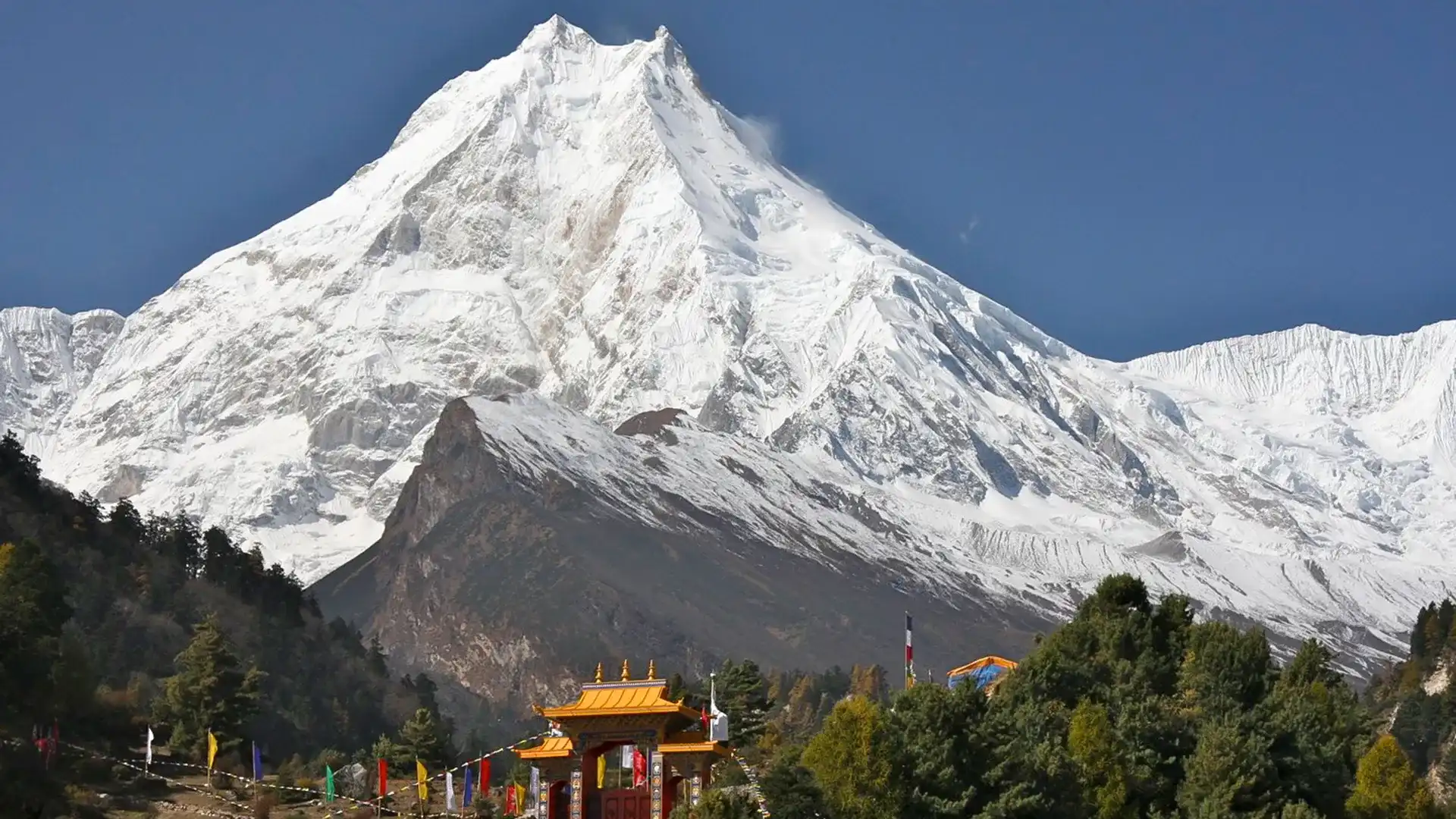
Manaslu Region · Challenging grade
Manaslu Circuit Trek
The route
What the walk is.
he Manaslu Circuit Trek (15 Days) is one of Nepal’s most complete off the beaten path Himalayan adventures, offering a perfect balance of challenge, cultural immersion, and comfortable pacing. This trek circles Mount Manaslu (8,163 m), the world’s eighth highest peak, and takes you through remote landscapes that remain far less crowded than the Everest and Annapurna regions.
The journey begins with preparation time in Kathmandu before heading into the Manaslu Conservation Area. The trail passes through lush subtropical forests, terraced fields, and traditional Gurung villages before gradually entering high mountain terrain influenced by Tibetan Buddhist culture.
Key cultural highlights include visits to Samagaun, Samdo, and Lho, where trekkers can explore monasteries, prayer walls, and experience authentic mountain lifestyles. Extra acclimatization days allow time for side trips to Manaslu Base Camp (4,800 m) and the beautiful Birendra Lake.
The greatest physical challenge is crossing Larkya La Pass (5,160 m), one of the most dramatic high passes in Nepal. The climb rewards trekkers with breathtaking views of Manaslu and surrounding Himalayan peaks, making it a truly unforgettable achievement.
The extended 15 day itinerary allows proper acclimatization, shorter daily walking hours, and flexibility for weather conditions. This thoughtful pacing increases the overall success rate and allows trekkers to fully appreciate both the scenery and culture.
Due to its restricted area status, this trek requires special permits, a licensed guide, and a minimum group of two trekkers. These regulations help preserve the region’s natural beauty and cultural authenticity.
Overall, the Manaslu Circuit Trek is ideal for trekkers seeking a quieter Himalayan experience with rich cultural encounters and dramatic mountain scenery. It is a perfect choice for those who value a deeper journey with time to explore rather than rushing through the trail.
General Information
Detail | Information |
Start Point | Machakhola (via Kathmandu Day 2) |
End Point | Dharapani (return Kathmandu Day 14) |
Special Status | Restricted Area (permits required) |
Guide | Mandatory (licensed required) |
Rest Days | 2 acclimatization days |
The 15-Day Advantage: Why Extra Days Matter
While 10-day and 13-day Manaslu circuits exist, the 15-day itinerary offers distinct advantages making it the preferred choice for discerning trekkers:
Proper Acclimatization: Two full rest days (Samagaun Day 8, Samdo Day 10) allow thorough altitude adjustment, dramatically reducing altitude sickness risk and increasing summit success rates to 95%+.
Cultural Immersion: Extra time in villages means attending monastery ceremonies, learning traditional crafts, sharing meals with families, understanding daily life rather than just passing through.
Photography Opportunities: Sunrise/sunset timing at key locations (Lho, Samagaun, Birendra Lake), proper light for mountain photography, patience for wildlife encounters.
Flexibility Buffer: Weather delays, minor illness, or simply wanting extra time somewhere won't derail your trek. The schedule accommodates real-world unpredictability.
Reduced Daily Distances: Comfortable 4-7 hour days (versus exhausting 8-9 hour pushes) allow enjoyment rather than mere survival, arriving at lodges with energy to explore.
Kathmandu Preparation: Day 1 in Kathmandu allows proper briefing, gear checks, permit finalization, adjustment after international travel, and last-minute shopping.
Post-Trek Recovery: Day 14 return to Kathmandu provides rest before international departure rather than rushing to airport still exhausted.
Why choose Nepal Visuals for the Manaslu Circuit Trek?
A restricted area trek handled by those who know the process
The Manaslu Circuit requires a special restricted area permit that cannot be obtained independently. We manage the entire permit process, including the mandatory licensed guide requirement, so nothing blocks your entry to this protected corridor.
Larkya La Pass crossed with proper preparation
At 5,160 m, Larkya La is one of the highest and most demanding trekking passes in Nepal. Our guides track your health and altitude response across the preceding days and only move for the crossing when your body is genuinely ready.
Fifteen days structured around the mountain, not just the pass
The Manaslu Circuit is far more than its famous high crossing. Our 15-day itinerary gives every section of the route its due, from the subtropical lower valleys to the high Tibetan plateau communities above Samdo.
Acclimatization planned with the pass day as the priority
Reaching 5,160 m safely on a circuit that also includes significant daily elevation gains requires a precise ascent plan. Rest days at Samagaon and Samdo are built in so your body peaks at exactly the right moment.
Every permit, checkpoint, and teahouse arranged in advance
Manaslu restricted area permits, Manaslu Conservation Area permits, TIMS cards, and all teahouse bookings along the circuit are confirmed before your trek begins so no morning is lost to paperwork or uncertainty.
Full and honest pricing from the first conversation
Restricted area treks carry multiple permit layers that can catch trekkers off guard. We itemise every cost upfront so the complete picture of what your 15-day circuit involves financially is clear before you commit.
Tibetan border culture encountered at its most authentic
Villages like Samagaon, Samdo, and Lho sit in one of Nepal's least commercialised cultural corridors. Our guides create meaningful time with Nubri Tibetan communities whose traditions remain largely untouched by mass tourism.
Remote terrain guided by people who have walked every section
The Manaslu Circuit passes through genuinely isolated terrain with limited evacuation options. Our guides carry emergency equipment and have the route knowledge to make sound decisions quickly if conditions change.
Support that reaches you even in remote connectivity
Signal along the Manaslu corridor can be inconsistent, making reliable pre-trek and in-trek communication with a responsive team even more critical. We stay reachable via WhatsApp, Email, and Zoom throughout all 15 days.
Your circuit departure is guaranteed and fully protected
The planning and anticipation that goes into a 15-day restricted area trek deserves a firm commitment in return. Every confirmed Manaslu Circuit booking departs as scheduled regardless of group size, without exception.
Day by day
Where you sleep, night by night.
Kathmandu → Kathmandu · highest point 5,135 m
- Day 01Hotel (Twin Sharing) · Welcome Dinner1,400 m
Your Nepal Visuals representative meets you at the airport and transfers you to your hotel in Thamel. Welcome briefing over dinner.
- Day 02Tea-house · Breakfast, Lunch, Dinner900 m
Early departure by jeep through Dhading Bensi and Arughat following the Budhi Gandaki River upstream to Machakhola, the trek starting point.
- Day 03Tea-house · Breakfast, Lunch, Dinner1,300 m
Begin the Manaslu Circuit along the roaring Budhi Gandaki River through subtropical forest. Cross suspension bridges, pass Tatopani hot springs. Arrive Jagat, official Manaslu Conservation Area entry.
- Day 04Tea-house · Breakfast, Lunch, Dinner1,860 m
Continue through the gorge crossing the river multiple times. Dramatic waterfalls and terraced fields. Arrive at Deng marking the transition into Tibetan-influenced culture.
- Day 05Tea-house · Breakfast, Lunch, Dinner2,630 m
Ascend through forest into pine and rhododendron zones. Pass Ghap village with its entry chorten. Arrive Namrung with the first close views of Manaslu.
- Day 06Tea-house · Breakfast, Lunch, Dinner3,180 m
Pass through Lihi village and its ancient chortens. Arrive in Lho with one of the finest direct views of Manaslu. Visit the Ribung Gompa overlooking the valley.
- Day 07Tea-house · Breakfast, Lunch, Dinner3,530 m
Continue through high altitude terrain with Manaslu towering overhead. Arrive in Samagaun, the largest village in upper Manaslu and a critical acclimatisation stop. Visit the ancient Pungen Gompa.
- Day 08Rest day · Tea-house · Breakfast, Lunch, Dinner4,800 m
Crucial rest day. Hike up to Manaslu Base Camp for close views of the magnificent south face of Manaslu (8,163m). Return to Samagaun for afternoon rest.
- Day 09Tea-house · Breakfast, Lunch, Dinner3,875 m
Short day continuing gradual altitude gain. Follow the valley to Samdo, a traditional Tibetan trading village 20 km from the Tibet border. Afternoon acclimatisation hike.
- Day 10Rest day · Tea-house · Breakfast, Lunch, Dinner3,875 m
Second acclimatisation day. Short hike toward the Tibet border for panoramic views. Afternoon rest, hydrate, and prepare gear for the pass crossing tomorrow.
- Day 11Tea-house · Breakfast, Lunch, Dinner4,470 m
Pre-pass camp day. Ascend through barren rocky terrain. Reach Dharmasala, the basic stone shelter at the foot of Larkya La. Prepare equipment and sleep early. Tomorrow starts at 3-4 AM.
- Day 12Highest point · sleep 3,590 m · Tea-house · Breakfast, Lunch, Dinner5,135 m
Start before dawn by headtorch. Cross the glacier and summit Larkya La at 5,135m with panoramic views of Manaslu, Himlung, Cheo Himal, and Annapurna II. Long descent to Bhimtang where altitude relief is welcome.
- Day 13Kathmandu hotel · Breakfast, Lunch, Dinner1,960 m
Descend through alpine meadows and rhododendron forests passing through villages, crossing into Annapurna Conservation Area. Arrive Dharapani, the junction town where the circuit ends. Celebrate with your team.
- Day 14Kathmandu hotel · Breakfast, Lunch, Dinner1,400 m
Board a jeep for the scenic drive back through Tal, Chamje, and Besisahar to Kathmandu. Arrive evening for a farewell dinner.
- Day 15Breakfast1,400 m
Transfer to Tribhuvan International Airport for your onward flight. Carry the Manaslu Circuit with you always.
Fixed departures
12 group dates open.
144 places across them. Or start on any flexible date in the calendar below.
| Departure | Booked | Filling | Left | Status | Book |
|---|---|---|---|---|---|
| Sat, Mar 6, 2027 | 0/12 | 12 | Available | ||
| Sat, Mar 20, 2027 | 0/12 | 12 | Available | ||
| Sat, Apr 3, 2027 | 0/12 | 12 | Available | ||
| Sat, Apr 17, 2027 | 0/12 | 12 | Available | ||
| Sat, May 1, 2027 | 0/12 | 12 | Available | ||
| Sat, May 15, 2027 | 0/12 | 12 | Available | ||
| Sat, Sep 4, 2027 | 0/12 | 12 | Available | ||
| Sat, Sep 18, 2027 | 0/12 | 12 | Available | ||
| Sat, Oct 2, 2027 | 0/12 | 12 | Available | ||
| Sat, Oct 16, 2027 | 0/12 | 12 | Available | ||
| Sat, Nov 6, 2027 | 0/12 | 12 | Available | ||
| Sat, Nov 20, 2027 | 0/12 | 12 | Available |
Prices are per person, twin share, in USD. Book with a 20 % deposit — the balance is due 7 days before departure. Scheduled departures show places left; flexible departures can be booked on any listed start date. Booking terms
| Su | Mo | Tu | We | Th | Fr | Sa |
|---|---|---|---|---|---|---|
| 1 | 2 | 3 | ||||
| 4 | 5 | 6 | 7 | 8 | 9 | 10 |
| 11 | 12 | 13 | 14 | 15 | 16 | 17 |
| 18 | 19 | 20 | 21 | 22 | 24 | |
| 25 | 26 | 28 | 29 | 30 |
- Selected trip dates
- Available
- Filling fast
- Almost sold out
- Sold out
Fri, Oct 23Fri, Nov 6, 2026
15 days · flexible departure
- StartsFri, Oct 23, 2026 · Kathmandu
- EndsFri, Nov 6, 2026 · Kathmandu
USD $1,249 per person, twin share · Deposit today USD $249.80 (20 %)
On the trail
Photographs from the route.
The whole number
What the price covers.
12 things are in the price and 11 more are named as excluded.
In the price
Transportation & Logistics
- ✓Arrival & Departure · Complimentary airport pickup and drop-off services.
- ✓Permits & Official Fees · All necessary conservation fees, trekking permits, and government taxes.
- ✓Trekking Crew · All costs for your guide and porter team, including wages, meals, lodging, and insurance.
Professional Support & Safety
- ✓Expert Leadership · A government-certified, experienced local English-speaking guide.
- ✓Porter Service · Professional porter support (1 porter for 2 trekkers, with a 10 kg limit per person).
- ✓Health Monitoring · Provision of a first aid kit and an oximeter for daily health checks.
- ✓Emergency Coordination · Full assistance in arranging emergency helicopter evacuations (costs covered by your travel insurance).
Accommodation & Meals
- ✓Kathmandu Stay · Hotel accommodation in Kathmandu on a twin-sharing basis.
- ✓Trek Nutrition · All meals provided throughout the duration of the trek.
- ✓Farewell Dining · A celebratory farewell dinner at a traditional Nepalese restaurant to mark the end of your journey.
Gear & Recognition
- ✓Trekking Essentials · Complimentary use of duffle bags and Nepal Visuals baseball caps.
- ✓Official Achievement · A formal Trek Completion Certificate issued by Nepal Visuals.
Not included
Flights, Visas, and Logistics
- ×International Travel · International flight fares and airport departure taxes.
- ×Entry Requirements · Nepal Entry Visa and extension fees ($50 for 30 days or $125 for 90 days).
- ×Baggage Overages · Any extra baggage charges exceeding the standard weight limits.
- ×General Extras · Any expenses not explicitly mentioned in the "What's Included" section.
Personal Protection & Equipment
- ×Mandatory Insurance · Comprehensive Travel and Medical Insurance (Compulsory).
- ×Rescue Costs · Actual charges for emergency helicopter rescue fees (to be claimed via your insurance).
- ×Individual Gear · All personal trekking gear and mountain equipment.
Trail & City Expenses
- ×City Dining · Main meals (lunch and dinner) in Kathmandu, except for the farewell dinner.
- ×Teahouse Amenities · Personal trail expenses such as hot showers, internet access, battery recharging, and hot water.
- ×Beverages · All alcoholic and non-alcoholic drinks (sodas, bottled water, etc.).
Professional Tips and Gratuity
- ×Staff Appreciation · Customary tips for your guides and porters as a gesture of thanks for their hard work.
Challenging grade
Is this trek right for you?
You can do this if…
- ✓Walk 6–8 hours a day comfortably
- ✓Carry an 8–10 kg daypack
- ✓Manage long ascents and nights above 4,000 m
Recommended preparation
- ✓3+ months of cardio and leg-strength training
- ✓Back-to-back day hikes with a loaded pack
- ✓Check the itinerary for high passes or glacier days
Experience & support
- ✓Previous multi-day trekking recommended
- ✓Guided throughout — a licensed guide is required on Nepal treks
- ✓Unsure about age, health or fitness? Ask us — we tailor the pace
About three months out? Follow our free 12-week trek fitness plan.
Good to know
Additional information.
Mount Manaslu: The Mountain of Spirit
At 8,163 meters (26,781 feet), Manaslu ranks as the world's eighth highest peak and Nepal's fourth. The name derives from Sanskrit "Manasa" meaning "intellect" or "soul," reflecting the mountain's spiritual significance to local Tibetan-Buddhist communities who consider it sacred. Monasteries throughout the valley maintain rituals seeking Manaslu's blessings for safety and prosperity.
The mountain's massive presence dominates views throughout your 12-day trekking circuit, from subtropical foothills where you begin to high glacial passes where you circle beneath its towering faces. Each day reveals different perspectives: the south face from Samagaun, the dramatic glaciers from Manaslu Base Camp, the full massif from Samdo, and the distant profile from Larkya La Pass.
Manaslu Conservation Area
Established 1998, protecting 1,663 sq km of spectacular biodiversity:
Flora: 2,000+ plant species including 150 rhododendron species creating spring color explosions, blue pine forests, birch groves, juniper thickets, high-altitude medicinal herbs.
Fauna: 33 mammal species (snow leopards, red pandas, Himalayan black bears, musk deer, Himalayan tahr, blue sheep), 110+ bird species (Himalayan monals, blood pheasants, golden eagles, lammergeiers).
Ecosystems: Multiple climate zones from subtropical forests at 900m to alpine tundra above 4,000m create visually distinct daily landscapes as you ascend through ecological zones.
Tibetan Cultural Corridor
Upper Manaslu Valley villages preserve Nepal's most authentic Tibetan-Buddhist culture. Following the 1959 Tibetan uprising, refugees strengthened already robust cultural ties to Tibet just 20 km north. Experience stone houses with flat roofs, intricately carved windows, prayer wheels lining lanes, mani walls with sacred inscriptions, active monasteries maintaining centuries-old practices, traditional yak and dzo agriculture, and Tibetan language as primary communication.
The 15-day itinerary provides time to truly absorb this cultural depth through monastery visits, village explorations, local interactions, and observing daily rhythms unchanged for generations.
The Larkya La Pass Challenge
Crossing Larkya La Pass (5,160m) on Day 12 represents the trek's ultimate challenge and most spectacular reward. This high mountain pass separates upper Manaslu Valley from Annapurna region, demanding a 9-hour effort from Dharmasala to Bhimtang.
The 15-day preparation makes this challenging day achievable: two prior acclimatization days, gradual altitude gain over 10 days, proper rest before attempt, and physical conditioning from previous days all combine to ensure high success rates.
Pass Day Rewards: Spectacular 360-degree panoramas of Manaslu (8,163m), Himlung Himal (7,126m), Cheo Himal (6,820m), Annapurna II (7,937m), Kang Guru (6,981m), prayer flag-adorned summit, profound accomplishment after 11 days preparation.
Samagaun Village and Birendra Lake
One of the 15-day trek's unique advantages is adequate time to properly explore Samagaun, the largest village in upper Manaslu valley. Your acclimatization day (Day 8) allows visiting Pungyen Gompa monastery, hiking to Manaslu Base Camp, and exploring the stunning glacial Birendra Lake with its turquoise waters and surrounding peaks. This hidden gem provides perfect rest, reflection, and photography opportunities impossible when rushing through on compressed itineraries.
Who Should Choose the 15-Day Itinerary
Ideal for:
Trekkers prioritizing comfort and cultural immersion over speed
Photographers wanting optimal lighting and timing
Families with teenagers (ages 14+) needing comfortable pace
First-time Manaslu trekkers wanting highest success probability
Travelers with 3 weeks total time (including travel days)
Those seeking complete experience without exhaustion
People valuing flexibility for weather or health contingencies
Not ideal for:
Very experienced trekkers comfortable with faster pace (consider 13-day)
Travelers with strictly limited time (minimum 10-day exists)
Those seeking extreme challenge (this emphasizes enjoyment)
Accommodation and Meals
Lower Elevations (Machakhola-Deng): Better teahouses, some attached bathrooms, solar hot showers available.
Mid Elevations (Namrung-Samagaun): Basic family-run lodges, mostly shared bathrooms, wood/yak-dung stove heating.
High Elevations (Samdo, Dharmasala): Very basic, shared cold-water bathrooms, essential facilities only.
Kathmandu (Days 1, 14-15): 2-star hotels with private bathrooms, hot showers, WiFi, restaurants.
Meals: Dal bhat (unlimited refills, most nutritious), momos, fried rice, thukpa, Tibetan bread, eggs, pancakes. Tibetan specialties including tsampa, yak cheese, butter tea. Vegetarian always available. Prices NPR 500-1,500 depending on elevation.
Locations Covered
Kathmandu (Day 1, 14-15): Capital city, preparation and recovery days
Machakhola (870m, Day 2): Trek start after 7-8 hour drive
Jagat (1,300m, Day 3): Conservation Area entry
Deng (2,130m, Day 4): Buddhist transition zone
Namrung (2,660m, Day 5): Tibetan cultural entry
Lho (3,180m, Day 6): Ancient Ribung Gompa monastery
Samagaun (3,530m, Days 7-8): Largest upper valley village, acclimatization base
Manaslu Base Camp (4,800m, Day 8): Optional acclimatization hike
Birendra Lake (Day 8): Stunning glacial lake near Samagaun
Samdo (3,875m, Days 9-10): Highest settlement, second acclimatization
Dharmasala (4,470m, Day 11): Pre-pass camp
Larkya La Pass (5,160m, Day 12): Trek's highest point
Bhimtang (3,720m, Day 12): Post-pass celebration
Dharapani (1,960m, Day 13): Trek terminus
Trek Difficulty
Rating: Challenging but achievable with 15-day pacing
Challenges: Maximum 5,160m altitude, 12 consecutive trekking days, 9-hour pass day, remote location, basic facilities.
What Makes It More Manageable:
Two full acclimatization days (Samagaun, Samdo)
Comfortable daily distances (4-7 hours most days)
Gradual altitude gain over 10 days before pass
Flexibility buffer for weather/health
Proper Kathmandu preparation time
Recovery day before international departure
Success Rate: 95%+ with proper preparation (highest of all Manaslu itineraries)
Training: Start 3 months before. Cardio 4-5x weekly, long hikes building to 7+ hours, consecutive day practice (4-5 day trips), leg strength, break in boots.
Before you book
Questions we get most.
The Larkya La Challenge
What is the highest point of the 15-day Manaslu Trek?
The physical climax is crossing the Larkya La Pass at 5,106m (16,752 ft). It is a long, demanding day that requires an early 4:00 AM start to avoid the high-altitude winds that typically pick up on the pass after midday.
How does the 15-day pace help with the high pass?
The 15-day itinerary is the "Gold Standard" for safety. It includes a mandatory acclimatization day in Sama Gaon (3,530m), allowing your body to adjust to the thinning air before you push toward the 5,000m mark.
Is the descent from the pass difficult?
Yes, the descent from Larkya La to Bimthang is notoriously steep and can be icy. We recommend high-quality trekking poles and micro-spikes to protect your knees and ensure stability on the loose moraine and snow.
Permits & Regulations
Why is Manaslu called a "Restricted Area"?
Due to its proximity to the Tibetan border and its fragile environment, the Nepal government limits tourism. You cannot trek solo; a minimum of two trekkers and a government-licensed guide are legally required to obtain the permit.
What permits do I need for the 15-day trek?
You need four distinct permits: the Manaslu Restricted Area Permit (RAP), the Manaslu Conservation Area Permit (MCAP), the Annapurna Conservation Area Permit (ACAP), and the recently introduced Chumnubri Local Government fee.
Can I apply for the Manaslu permits myself?
No. The Restricted Area Permit (RAP) must be processed by a registered Nepali trekking agency through the Department of Immigration. You will need to provide your original passport in Kathmandu for at least one business day.
Culture & Landscapes
What is the "Nubri" and "Tsum" cultural distinction?
The 15-day trek takes you through the Nubri region, where the culture is heavily Tibetan. You will see ancient monasteries like Pungyen Gompa and Ribung Gompa, where the local language and dress remain remarkably traditional.
How does the scenery change over 15 days?
The trek is famous for its "Vertical Diversity." You start in subtropical jungles with monkeys and waterfalls at 900m and end in a high-alpine glacial desert surrounded by 8,000m peaks—all in a single loop.
What is special about the village of Sama Gaon?
Sama Gaon is the largest village in the region and sits at the foot of Mt. Manaslu (8,163m). On your 15-day trek, you have time to visit Birendra Lake or the Manaslu Base Camp, which are located just a few hours from the village.
Logistics & Survival
How long is the drive to the starting point?
The journey from Kathmandu to Machha Khola takes about 8 to 9 hours. While the first half is on paved roads, the final section is a rugged "off-road" experience in a 4WD Jeep that is an adventure in itself.
Is there Wi-Fi and electricity on the 15-day route?
Electricity is available for charging (usually $2–$5) via micro-hydro or solar. Wi-Fi is available in larger villages like Namrung and Samdo, but it is often slow and unreliable; we recommend a local NTC SIM card for better coverage.
What kind of food is served in the Manaslu teahouses?
The menu is a mix of Tibetan and Nepali cuisine. We recommend the "Sherpa Stew" (Syakpa) and fresh Tibetan bread. As you get higher, meat becomes scarce, so vegetarian options like Dal Bhat are the safest and most nutritious.
High-Altitude Exploration
What is the "Manaslu Base Camp" side trip like?
During your acclimatization day in Sama Gaon (Day 8), you can hike to Manaslu Base Camp (4,800m). It is a steep, 6-to-7-hour round trip that brings you to the edge of the glacier where expedition teams prepare to summit the world’s 8th highest peak. Even if you don't go all the way, the view of Birendra Lake at the start of the trail is spectacular.
Can I see the "Pungyen Gompa" from the trail?
Pungyen Gompa is a hidden monastery tucked away on a high plateau near Sama Gaon. A side trip here offers one of the most intimate views of Manaslu’s massive east face. In 2026, the trail has been improved with better signage, making it a peaceful alternative for those who want a cultural experience instead of the physical grind of Base Camp.
Wildlife & Environmental Care
What animals might I spot in the Conservation Area?
The Manaslu region is a sanctuary for rare Himalayan species. You have a high chance of seeing Blue Sheep (Bharal) and Himalayan Tahr on the rocky slopes above Samdo. While the elusive Snow Leopard lives here, you are more likely to see their tracks. In the lower forests, look for Langur monkeys and the colorful Danphe pheasant.
What are the 2026 "Waste Management" rules?
To protect the fragile alpine ecosystem, local committees now strictly monitor waste in Samdo and Bimthang. Trekkers are encouraged to use "Safe Drinking Water" stations instead of buying plastic bottles. In 2026, many lodges have also introduced 100% solar-powered lighting to reduce the reliance on kerosene and wood.
Nutrition & High-Altitude Health
Why is "Samdo" the most critical night for health?
Samdo (3,860m) is the last permanent village before the pass. Because the air is significantly thinner here, we recommend a "light" dinner—soups and grains—rather than heavy fats. This ensures your body spends its energy on acclimatization and oxygenating your blood rather than heavy digestion before the move to Dharamsala.
Is it safe to eat the local Yak Cheese?
Yes, but we recommend buying it in the lower villages like Namrung or Lho where it is freshest. The cheese is a fantastic, high-calorie snack that provides the slow-burning energy needed for the 8-hour crossing of Larkya La. In 2026, many teahouses also serve "Sea Buckthorn" juice, which is packed with Vitamin C and great for immunity.
Gear & Tech
Do I really need micro-spikes for a non-technical trek?
While the trek is "non-technical," the 2026 Spring and late Autumn seasons often see "black ice" on the descent from Larkya La toward Bimthang. Lightweight, slip-on micro-spikes take up very little room in your pack but provide essential safety on the steep, frozen moraine sections where standard boots might slip.
How do I manage my "Power Bank" for 15 days?
Electricity becomes expensive ($4–$7 per charge) and solar-dependent above Namrung. We suggest a 20,000mAh power bank. A 2026 pro-tip: Keep your devices and power bank inside your sleeping bag at night. The extreme cold at Dharamsala (4,460m) can drain a lithium battery from 100% to zero in a single night if left exposed.
Connectivity & Logistics
Which SIM card works best on the Manaslu Circuit?
In 2026, NTC (Nepal Telecom) has the widest coverage in the Budhi Gandaki valley, often providing 4G signals as far as Lho. However, once you reach Samdo and the Larkya La pass, most cellular signals disappear. For the final days in the Annapurna region (Dharapani), both Ncell and NTC work well again.
What is the "Jeep vs. Bus" situation for the return?
The 15-day trek ends in Dharapani, where you join the Annapurna Circuit road. While public buses are available, they are often crowded and slow (10+ hours). We include a private 4WD Jeep for the return to Kathmandu, which is safer, more comfortable, and significantly faster on the bumpy mountain roads.
Still have a question? WhatsApp us →