 Nepal Visuals
Manaslu Region
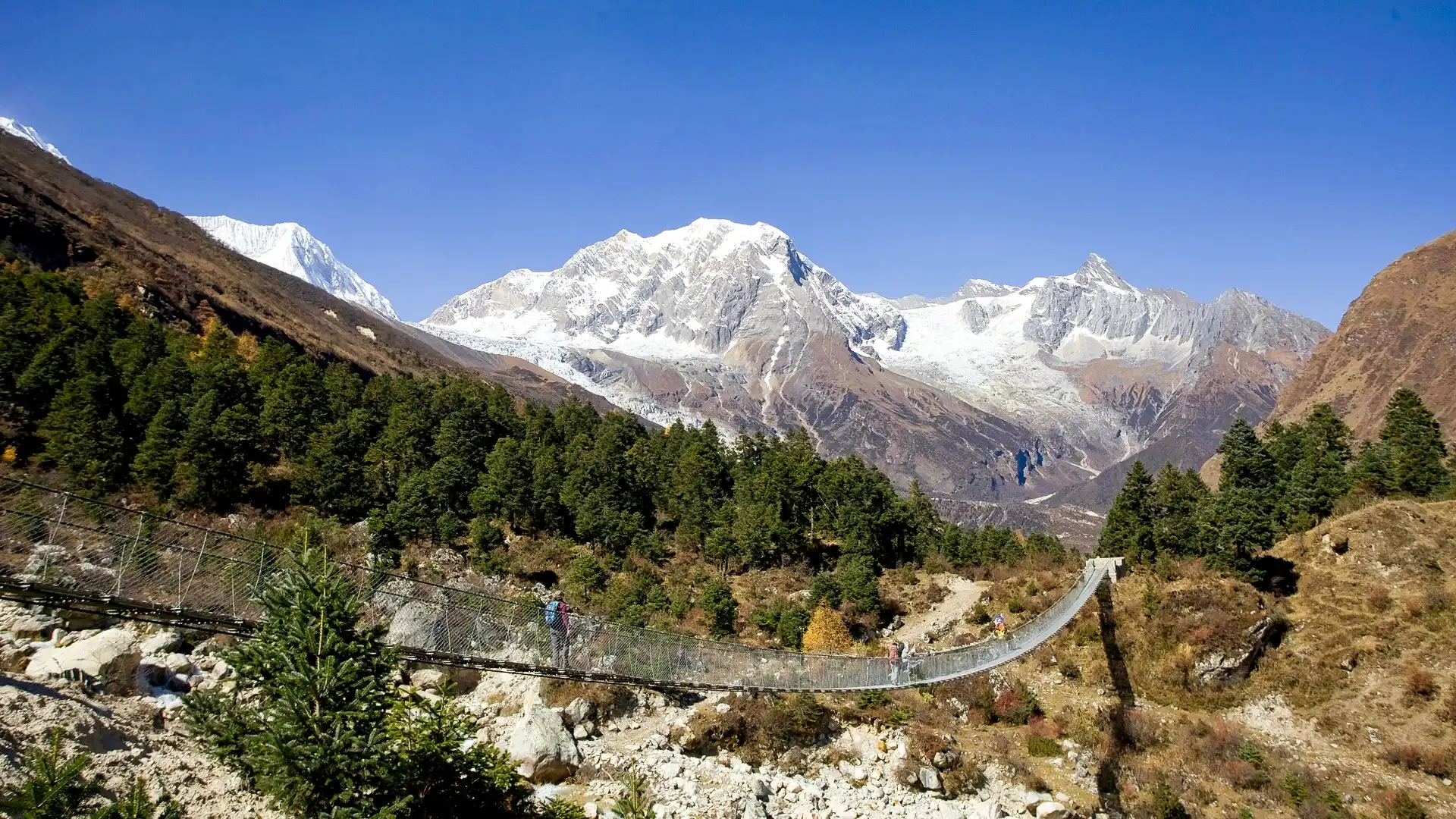
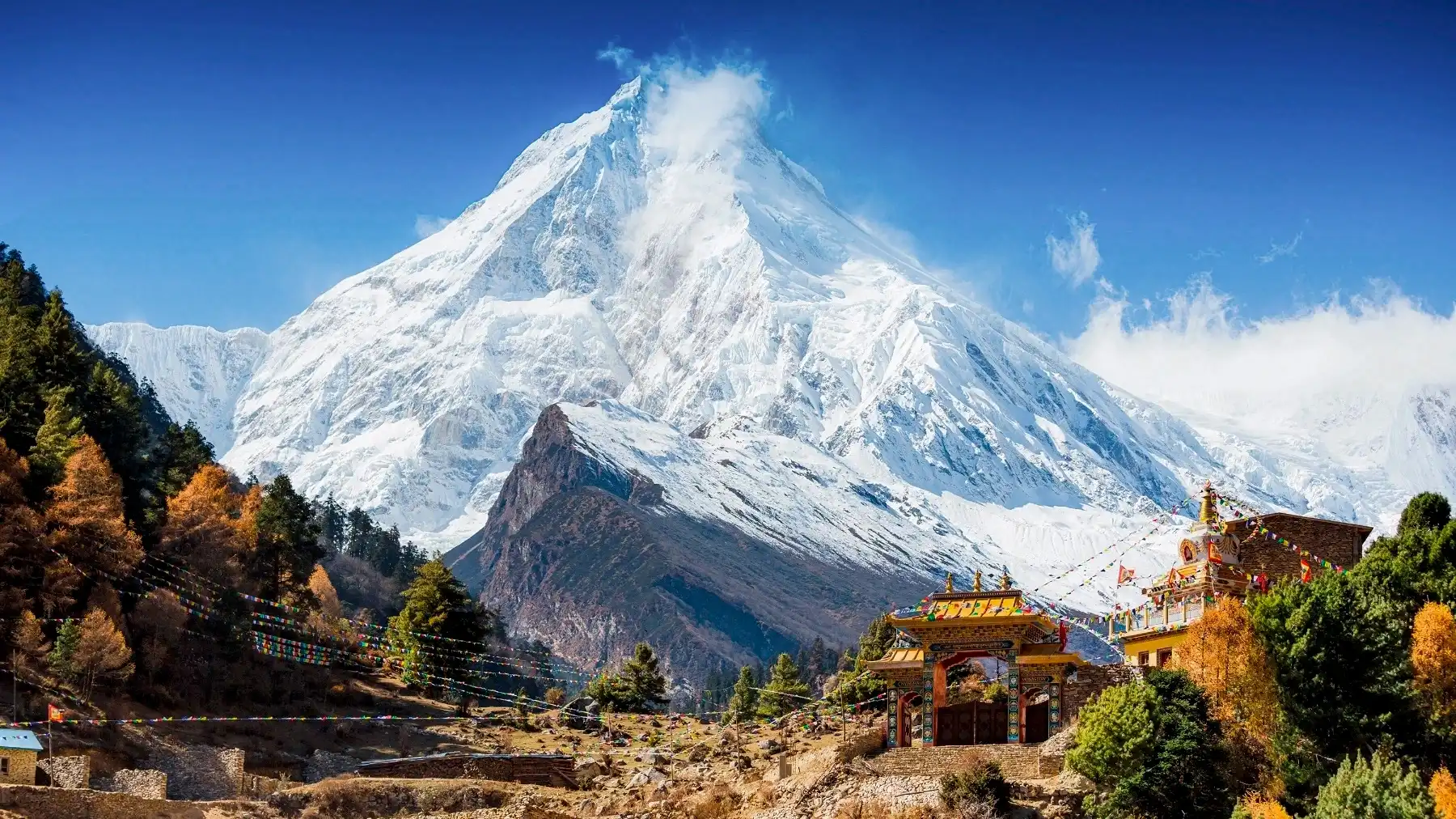
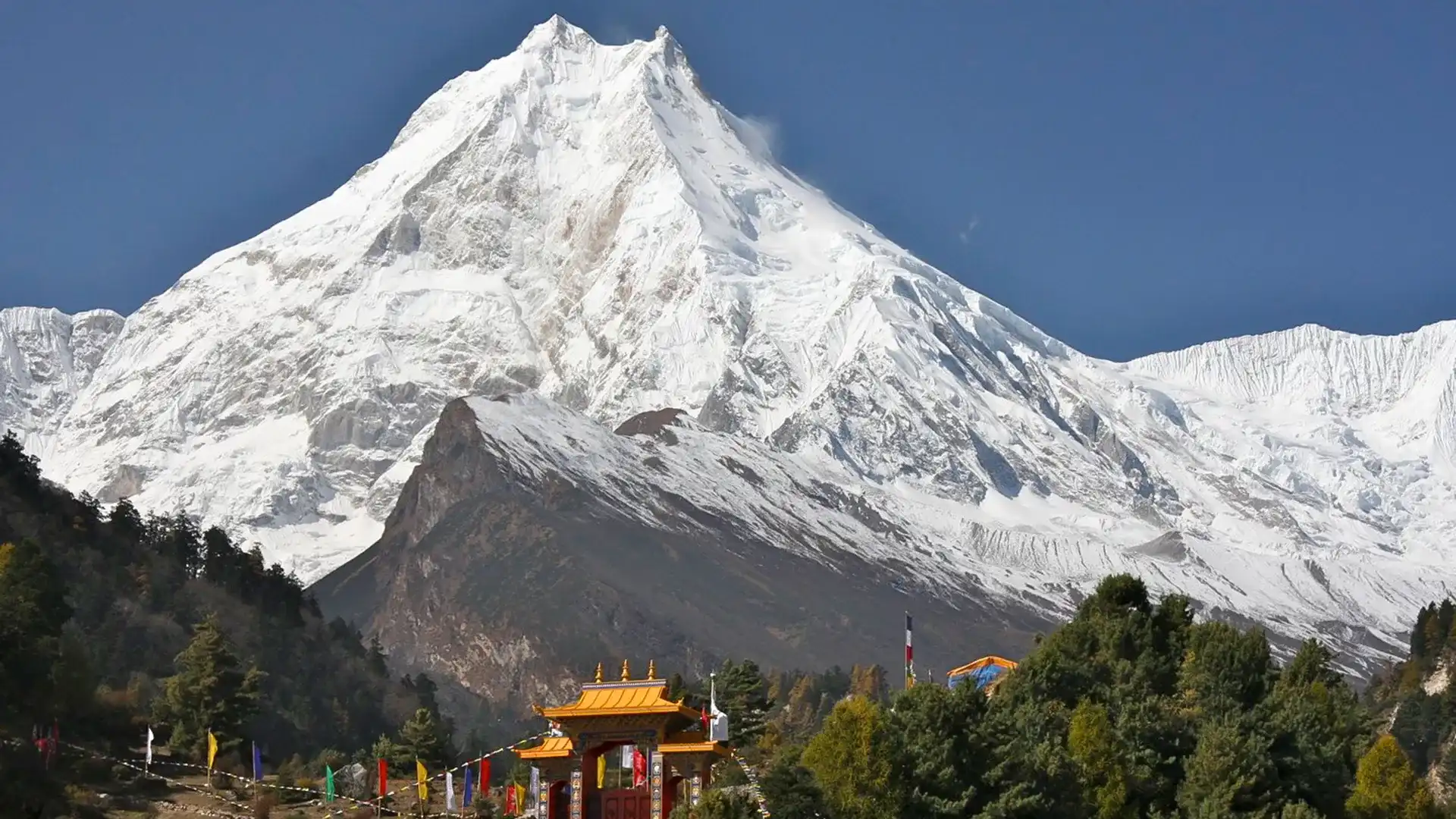
The Manaslu region wraps around Mount Manaslu (8,163m), the eighth highest mountain in the world, whose name comes from the Sanskrit for "mountain of the spirit". It remains one of Nepal's quietest major trekking areas: a restricted zone where trekkers must travel with a licensed guide in a group of at least two, which keeps crowds far thinner than on the Everest or Annapurna trails. The Manaslu Circuit follows the Budhi Gandaki river north through a deep, humid gorge, climbing from subtropical terraces and waterfalls into pine forest, then into open high country where the villages turn visibly Tibetan. The route crosses the Larkya La pass (5,106m), one of the most dramatic pass crossings in Nepal, before descending into the Annapurna region at Dharapani. Culture shifts as clearly as the landscape. The lower valleys are Gurung and Hindu; the upper Nubri valley is Tibetan Buddhist, with stone-built villages, hilltop gompas and chortens marking every approach. A side trip into the Tsum Valley, a sacred hidden valley near the Tibetan border that only opened to trekkers in 2008, adds some of the most atmospheric walking anywhere in the country. For trekkers who want Himalayan scale without Himalayan traffic, this is the obvious choice.
A landscape shaped by time and spirit.
The Manaslu region wraps around Mount Manaslu (8,163m), the eighth highest mountain in the world, whose name comes from the Sanskrit for "mountain of the spirit". It remains one of Nepal's quietest major trekking areas: a restricted zone where trekkers must travel with a licensed guide in a group of at least two, which keeps crowds far thinner than on the Everest or Annapurna trails. The Manaslu Circuit follows the Budhi Gandaki river north through a deep, humid gorge, climbing from subtropical terraces and waterfalls into pine forest, then into open high country where the villages turn visibly Tibetan. The route crosses the Larkya La pass (5,106m), one of the most dramatic pass crossings in Nepal, before descending into the Annapurna region at Dharapani. Culture shifts as clearly as the landscape. The lower valleys are Gurung and Hindu; the upper Nubri valley is Tibetan Buddhist, with stone-built villages, hilltop gompas and chortens marking every approach. A side trip into the Tsum Valley, a sacred hidden valley near the Tibetan border that only opened to trekkers in 2008, adds some of the most atmospheric walking anywhere in the country. For trekkers who want Himalayan scale without Himalayan traffic, this is the obvious choice.
Featured Treks
- Short Manaslu Circuit Trek - 10 Days
- Manaslu Circuit Trek - 13 Days
- Manaslu Circuit Trek - 15 Days