 Nepal Visuals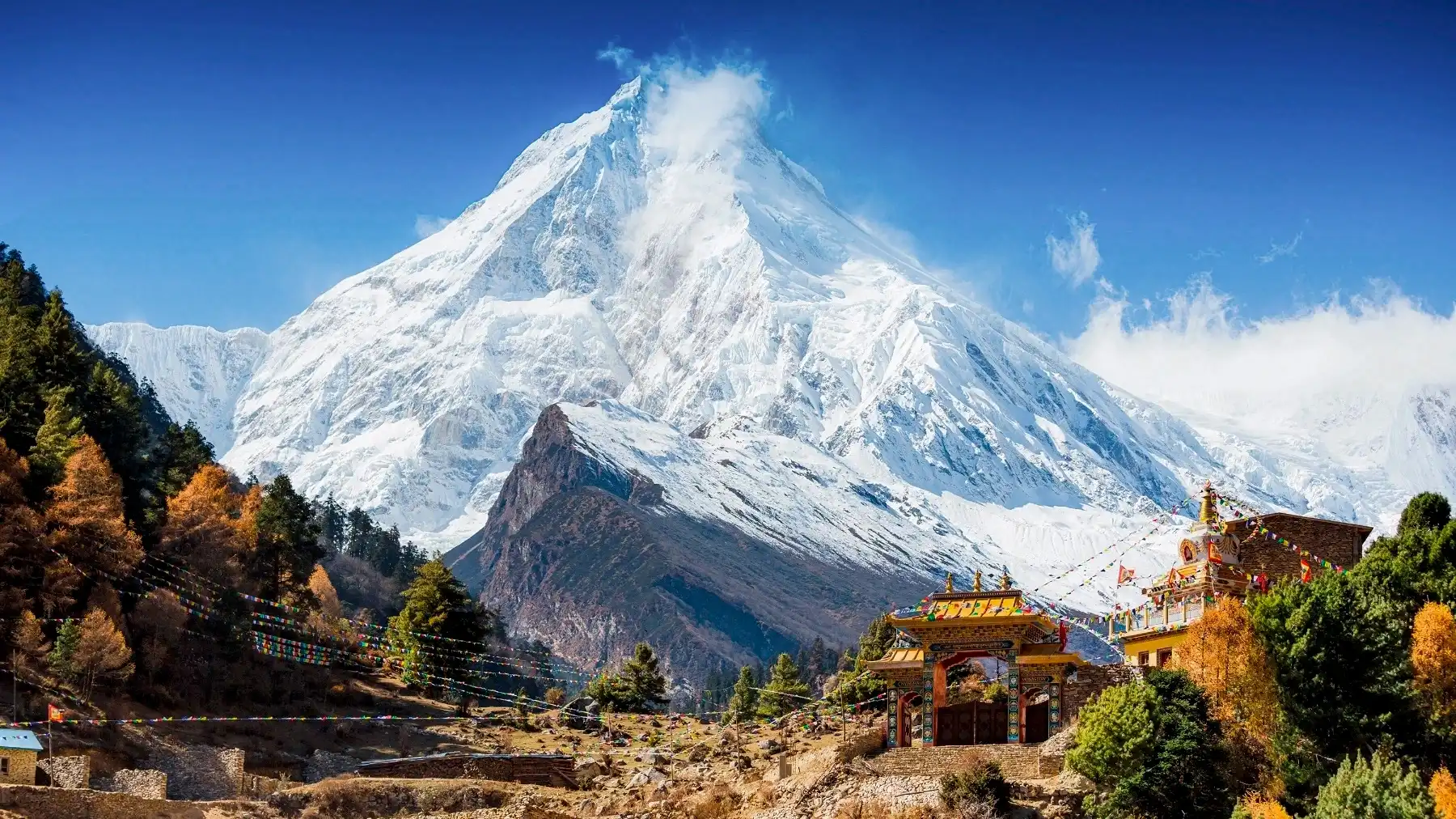
Manaslu Region · Challenging grade
Manaslu Circuit Trek
The route
What the walk is.
The Manaslu Circuit Trek (13 Days) is one of Nepal’s most remarkable remote trekking adventures, offering a complete circuit around Mount Manaslu (8,163 m), the world’s eighth highest peak. This challenging trek is ideal for experienced trekkers looking for pristine mountain wilderness, rich cultural encounters, and fewer crowds than the more popular Everest and Annapurna regions.
The journey begins in the lower hills with trails passing through subtropical forests, terraced fields, and traditional Gurung villages. As the trek progresses, the landscape gradually changes into alpine terrain with strong Tibetan Buddhist cultural influences visible in villages such as Lho, Samagaun, and Samdo.
Two important acclimatization days are included to improve safety and allow exploration of key highlights such as Manaslu Base Camp (4,800 m) and surrounding glacial landscapes. These extra days also provide opportunities to visit monasteries and experience the unique mountain culture preserved in this restricted region.
The most demanding section of the trek is the crossing of Larkya La Pass (5,160 m), which rewards trekkers with stunning views of Manaslu, Himlung Himal, Annapurna II, and other surrounding peaks. This achievement is often considered the defining moment of the trek.
Due to its restricted area status, the Manaslu region requires special permits, a licensed guide, and a minimum of two trekkers. These regulations help protect the region’s fragile environment and traditional way of life.
With daily walking times of about 5 to 8 hours and proper acclimatization, the 13 day itinerary provides a good balance between challenge and comfort. Overall, the Manaslu Circuit Trek is perfect for trekkers seeking an authentic and adventurous Himalayan journey filled with dramatic scenery and cultural depth.
General Information
Detail | Information |
Start Point | Machakhola |
End Point | Dharapani |
Daily Walking | 5-8 hours |
Special Status | Restricted Area (special permits required) |
Guide | Mandatory (licensed required) |
The Manaslu Region: Where Wilderness Meets Culture
While Everest and Annapurna regions host tens of thousands annually, Manaslu remains refreshingly uncrowded. The government's 1998 restricted area designation requires special permits, mandatory guides, and minimum two-person groups, naturally filtering visitor numbers while preserving pristine trail character and authentic cultural atmosphere that's rapidly disappearing elsewhere in Nepal.
Mount Manaslu: Mountain of the Spirit
Derived from Sanskrit "Manasa" meaning "intellect" or "soul," Mount Manaslu embodies the Himalayas' spiritual essence. At 8,163 meters (26,781 feet), it ranks as the world's eighth highest peak and Nepal's fourth. The mountain's massive presence dominates views throughout your journey, from subtropical foothills where you begin to high passes where you circle beneath its towering faces.
Local Tibetan-Buddhist communities consider Manaslu sacred. Monasteries throughout the valley maintain rituals seeking the mountain's blessings for safety and prosperity. This spiritual reverence adds profound depth transforming trekking from adventure into pilgrimage.
Manaslu Conservation Area: Biodiversity Hotspot
Established in 1998, the Manaslu Conservation Area protects 1,663 square kilometers of incredibly diverse terrain. The conservation area shelters:
Flora: Over 2,000 plant species including rhododendrons (150+ species), blue pine, birch, juniper, and high-altitude medicinal herbs prized in traditional medicine.
Fauna: 33 mammal species including elusive snow leopards, Himalayan tahr, musk deer, red pandas, Himalayan black bears, and blue sheep. Over 110 bird species including Himalayan monals (Nepal's national bird), lammergeiers, blood pheasants, and golden eagles.
Ecosystems: Multiple climate zones from subtropical forests at 900m to alpine tundra above 4,000m create spectacular biodiversity. Each day brings visually distinct landscapes as you ascend through ecological zones.
The Tibetan Cultural Corridor
Upper Manaslu Valley villages (Samagaun, Samdo, Lho) preserve Nepal's most authentic Tibetan-Buddhist culture. Following the 1959 Tibetan uprising, refugees strengthened already robust cultural ties to Tibet just 20 km north across mountain passes.
Experience:
Stone houses with flat roofs for drying crops
Intricately carved wooden windows and doors
Prayer wheels lining village lanes (spin clockwise for blessings)
Mani walls covered with Buddhist mantras
Active gompas where monks maintain centuries-old practices
Traditional agriculture using yaks and dzo (yak-cow hybrids)
Tibetan language as primary communication
This cultural authenticity transforms trekking from scenic adventure into genuine cultural immersion rarely found elsewhere in modern Nepal.
Why choose Nepal Visuals for the 13-day Manaslu Circuit Trek?
The full Manaslu experience in a sharper timeframe
Our 13-day itinerary covers every essential section of the circuit without stretching unnecessarily. Every overnight stop is chosen to keep the route complete and the experience intact within a tighter schedule.
Restricted area permits managed entirely by our team
The Manaslu Circuit cannot be trekked independently and requires a licensed guide by law. We handle the restricted area permit, Manaslu Conservation Area permit, and TIMS card so every checkpoint is cleared without delay.
Larkya La Pass readiness built into a leaner schedule
Crossing 5,160 m on a 13-day window demands precise acclimatization planning. Our guides monitor your oxygen levels and physical condition daily, adjusting pace where needed so the pass day arrives when you are genuinely prepared.
Every logistical detail locked in before departure
Teahouse bookings, ground transfers from Kathmandu, and all permit documentation are confirmed well in advance so not a single one of your 13 days is spent resolving something that should have been sorted earlier.
Multi-layer permit costs presented with full clarity
The Manaslu Circuit involves several overlapping permit fees that are easy to overlook until they surface on the trail. We lay out every cost before booking so your budget is accurate from the first day to the last.
Nubri Tibetan culture included, not compressed away
Even within 13 days, time in Samagaon, Samdo, and the high border villages is preserved in the itinerary. The cultural heart of the Manaslu corridor is treated as essential, not optional.
Guides with genuine Manaslu route experience
The circuit's remoteness and limited evacuation options mean guide quality is not a detail to overlook. Our team has navigated this route repeatedly and carries the emergency equipment and decision-making experience the terrain demands.
Trek-specific preparation sent after your booking is confirmed
A 13-day high-altitude restricted area circuit requires targeted fitness and packing guidance. We send a preparation plan built around the Manaslu route's elevation profile, weather patterns, and daily demands.
Reachable when the route makes communication harder
Connectivity along the Manaslu corridor is patchy at best. Knowing our team is available via WhatsApp, Email, and Zoom before and during your trek provides genuine reassurance on one of Nepal's more remote routes.
Confirmed bookings depart, every single time
The effort that goes into preparing for a restricted area circuit deserves an unconditional commitment from your operator. Every confirmed 13-day Manaslu booking runs as planned, regardless of group size, without exception.
Day by day
Where you sleep, night by night.
Machakhola → Dharapani · highest point 5,135 m
- Day 01Tea-house · Breakfast, Lunch, Dinner900 m
Early departure by jeep through Dhading Bensi and Arughat. Follow the Budhi Gandaki River upstream. Arrive Machakhola by late afternoon.
- Day 02Tea-house · Breakfast, Lunch, Dinner1,300 m
Begin the Manaslu Circuit trekking along the roaring Budhi Gandaki River through lush subtropical forest. Cross thrilling suspension bridges, pass Khorlabesi and Tatopani hot springs. Arrive Jagat, official Manaslu Conservation Area entry with permit check.
- Day 03Tea-house · Breakfast, Lunch, Dinner1,860 m
Continue through the Budhi Gandaki gorge crossing the river multiple times. Pass through Salleri and Sirdibas with dramatic waterfalls. Arrive at Deng marking the transition into Tibetan-influenced culture.
- Day 04Tea-house · Breakfast, Lunch, Dinner2,630 m
Ascend through subtropical forest into pine and rhododendron zones. Cross the river several times and pass through Ghap village with its entry chorten. Arrive in Namrung with the first close views of Manaslu.
- Day 05Tea-house · Breakfast, Lunch, Dinner3,530 m
Pass through Lho village with its extraordinary direct view of Manaslu and the Ribung Gompa overlooking the valley. Continue through high altitude terrain to Samagaun, the largest village in upper Manaslu and a critical acclimatisation stop.
- Day 06Rest day · Tea-house · Breakfast, Lunch, Dinner4,800 m
A crucial rest day. Hike up to Manaslu Base Camp for up-close views of the magnificent south face of Manaslu (8,163m). Return to Samagaun for afternoon rest. Visit the ancient Pungen Gompa.
- Day 07Tea-house · Breakfast, Lunch, Dinner3,875 m
A short day continuing gradual altitude gain. Follow the valley past yak herds to Samdo, a traditional Tibetan trading village historically connected to Tibet. Just 20 km from the Tibet border.
- Day 08Rest day · Tea-house · Breakfast, Lunch, Dinner3,875 m
Second acclimatisation day. Short hike toward the Lungur Pass and Tibetan border area for panoramic views. Return to Samdo. Rest, hydrate, and prepare gear for the pass crossing in two days.
- Day 09Tea-house · Breakfast, Lunch, Dinner4,470 m
Pre-pass camp day. Ascend through barren rocky terrain past frozen streams and moraine. Reach Dharmasala, a basic stone shelter at the foot of Larkya La. Prepare equipment, eat carbohydrate-rich food, sleep early. Tomorrow starts at 3-4 AM.
- Day 10Highest point · sleep 3,590 m · Tea-house · Breakfast, Lunch, Dinner5,135 m
Start before dawn by headtorch, crossing the glacier to Larkya La at 5,135m. The summit rewards with panoramic views of Manaslu, Himlung, Cheo Himal, Annapurna II, and Lamjung Himal. Long descent to Bhimtang where altitude relief is palpable by evening.
- Day 11Tea-house · Breakfast, Lunch, Dinner2,300 m
Descend through alpine meadows and rhododendron forests passing Yak Kharka, Karche, and Gho villages. Cross into Annapurna Conservation Area, joining the Annapurna Circuit trail. Arrive Tilije, a prosperous village with apple orchards and a local distillery.
- Day 12Tea-house · Breakfast, Lunch, Dinner1,960 m
Final descent to Dharapani, a junction town where the Manaslu Circuit meets the Annapurna Circuit. Road access returns. Celebrate your trek completion with your guide and team. Tips, photos, and farewells.
- Day 13Kathmandu hotel · Breakfast, Lunch, Dinner1,960 m
Board a jeep for the long but scenic drive back through Tal, Chamje, and Besisahar to Kathmandu. Arrive late afternoon or evening. Hot shower, clean clothes, and a celebratory dinner.
Fixed departures
12 group dates open.
144 places across them. Or start on any flexible date in the calendar below.
| Departure | Booked | Filling | Left | Status | Book |
|---|---|---|---|---|---|
| Sat, Mar 6, 2027 | 0/12 | 12 | Available | ||
| Sat, Mar 20, 2027 | 0/12 | 12 | Available | ||
| Sat, Apr 3, 2027 | 0/12 | 12 | Available | ||
| Sat, Apr 17, 2027 | 0/12 | 12 | Available | ||
| Sat, May 1, 2027 | 0/12 | 12 | Available | ||
| Sat, May 15, 2027 | 0/12 | 12 | Available | ||
| Sat, Sep 4, 2027 | 0/12 | 12 | Available | ||
| Sat, Sep 18, 2027 | 0/12 | 12 | Available | ||
| Sat, Oct 2, 2027 | 0/12 | 12 | Available | ||
| Sat, Oct 16, 2027 | 0/12 | 12 | Available | ||
| Sat, Nov 6, 2027 | 0/12 | 12 | Available | ||
| Sat, Nov 20, 2027 | 0/12 | 12 | Available |
Prices are per person, twin share, in USD. Book with a 20 % deposit — the balance is due 7 days before departure. Scheduled departures show places left; flexible departures can be booked on any listed start date. Booking terms
| Su | Mo | Tu | We | Th | Fr | Sa |
|---|---|---|---|---|---|---|
| 1 | 2 | 3 | ||||
| 4 | 5 | 6 | 7 | 8 | 9 | 10 |
| 11 | 12 | 13 | 14 | 15 | 16 | 17 |
| 18 | 19 | 20 | 21 | 22 | 24 | |
| 25 | 26 | 28 | 29 | 30 |
- Selected trip dates
- Available
- Filling fast
- Almost sold out
- Sold out
Fri, Oct 23Wed, Nov 4, 2026
13 days · flexible departure
- StartsFri, Oct 23, 2026 · Machakhola
- EndsWed, Nov 4, 2026 · Dharapani
USD $1,059 per person, twin share · Deposit today USD $211.80 (20 %)
On the trail
Photographs from the route.
The whole number
What the price covers.
15 things are in the price and 14 more are named as excluded.
In the price
Transportation & Logistics
- ✓Private Ground Transport · Round-trip transfers via private jeep (Kathmandu to Machakhola and Dharapani back to Kathmandu).
- ✓Arrival & Departure · Complimentary airport pickup and drop-off by private vehicle.
- ✓All Restricted Area Permits · Manaslu Restricted Area Permit (RAP), Manaslu Conservation Area Permit (MCAP), Annapurna Conservation Area Permit (ACAP), and TIMS card.
- ✓Official Coordination · Full handling of all conservation fees, taxes, permit processing, and official government liaison.
Professional Support & Safety
- ✓Specialized Leadership · A government-certified, English-speaking guide who is a specialist in the Manaslu region.
- ✓Group Support · An assistant guide automatically provided for groups of 8 or more people.
- ✓Staff Welfare · All wages, meals, lodging, transportation, and comprehensive insurance for the trekking crew.
- ✓Health Monitoring · Daily vitals checks using an oximeter (twice daily) and a comprehensive first aid kit.
- ✓Emergency Coordination · Full support in arranging helicopter evacuations (costs covered by your travel insurance).
Accommodation & Meals
- ✓Trek Nutrition · Full board meals (breakfast, lunch, and dinner) on all trekking days.
- ✓Trail Lodging · Best available teahouse/lodge accommodation throughout the trek (twin-sharing).
- ✓Celebratory Dining · Both welcome and farewell dinners at traditional Nepalese restaurants in Kathmandu.
- ✓City Convenience · Free secure luggage storage in Kathmandu for items not needed during the trek.
Gear & Recognition
- ✓Trekking Essentials · Complimentary use of duffel bags, trekking poles, and a Nepal Visuals baseball cap.
- ✓Official Achievement · An official trek completion certificate from Nepal Visuals.
Not included
Flights, Visas, and Kathmandu Stays
- ×International Travel · International flight fares and departure taxes.
- ×Entry Requirements · Nepal Entry Visa fees.
- ×City Accommodation · Hotel stays in Kathmandu before and after the trek dates.
- ×City Dining · Lunch and dinner in Kathmandu (except for the included welcome/farewell dinners).
- ×Extended Stays · Extra accommodation in Kathmandu for early arrival or late departure beyond the itinerary.
Personal Protection & Optional Services
- ×Optional Porter · Personal porter service is not included but can be hired for $240.
- ×Mandatory Insurance · Comprehensive travel insurance covering trekking up to 6,000m and helicopter evacuation (estimated $150–$250).
- ×Rescue Costs · Actual charges for emergency rescue or evacuation if not covered by your insurance.
Individual Gear & Items
- ×Personal Equipment · Trekking boots, clothing, and sleeping bags (rentals available in Kathmandu for approximately $60–$100).
- ×Personal Items · Toiletries, medications, energy bars, and personal snacks.
- ×Baggage · Any extra baggage charges.
Daily Trail Expenses
- ×Teahouse Amenities · Out-of-pocket costs for hot showers ($3–$5), battery charging ($3–$6), and Wi-Fi (limited and expensive).
- ×Beverages · All bottled water, boiled water, alcoholic drinks, and cold beverages.
Professional Tips and Gratuity
- ×Staff Appreciation · Recommended tips for the guide ($140–$175 total) and porter if hired ($110–$135 total).
Challenging grade
Is this trek right for you?
You can do this if…
- ✓Walk 6–8 hours a day comfortably
- ✓Carry an 8–10 kg daypack
- ✓Manage long ascents and nights above 4,000 m
Recommended preparation
- ✓3+ months of cardio and leg-strength training
- ✓Back-to-back day hikes with a loaded pack
- ✓Check the itinerary for high passes or glacier days
Experience & support
- ✓Previous multi-day trekking recommended
- ✓Guided throughout — a licensed guide is required on Nepal treks
- ✓Unsure about age, health or fitness? Ask us — we tailor the pace
About three months out? Follow our free 12-week trek fitness plan.
Good to know
Additional information.
The 13-Day Advantage
This itinerary provides optimal pacing compared to rushed 10-day versions or extended 16-18 day routes:
Two acclimatization days at Samagaun (Day 7) and Samdo (Day 9) dramatically reduce altitude sickness risk
Comfortable daily distances averaging 5-8 hours allow enjoyment rather than exhaustion
Time for cultural immersion visiting monasteries, interacting with locals, absorbing village life
Optional side trips to Manaslu Base Camp (4,800m) and Tibet border viewpoints
Proper rest before Larkya La ensuring you're physically prepared for the demanding pass crossing
Flexibility buffer for weather delays or pace adjustments without derailing schedule
Larkya La Pass: The Ultimate Challenge
Crossing Larkya La Pass (5,160m) on Day 11 represents the trek's ultimate challenge and most spectacular reward. This high mountain pass separates upper Manaslu Valley from Annapurna region, involving a demanding 9-hour day from Dharmasala to Bhimtang.
Challenges:
Altitude effects at 5,160m
1,300m elevation gain from Dharmasala
1,440m descent to Bhimtang
Weather exposure (wind, potential snow)
Physical endurance requirements
Rewards:
Spectacular 360-degree Himalayan panorama
Views of Manaslu (8,163m), Himlung Himal (7,126m), Cheo Himal (6,820m), Annapurna II (7,937m), Kang Guru (6,981m)
Crossing prayer flag-adorned summit creating spiritual atmosphere
Profound accomplishment after days of preparation
Transition between distinct valleys and cultures
Who Should Trek Manaslu Circuit - 13 Days
Ideal for:
Experienced trekkers with previous multi-day high-altitude experience
Fit adventurers seeking challenge beyond popular routes
Travelers with 2-3 weeks total (including travel days)
Those wanting authentic culture without tourist masses
Trekkers who've completed Everest Base Camp or Annapurna and seek something different
People valuing proper acclimatization and comfortable pacing
Not recommended for:
First-time Himalayan trekkers (try Langtang or Annapurna Base Camp first)
Those without recent multi-day trekking experience
People with known altitude sensitivity
Travelers seeking luxury or extensive facilities
Anyone unable to train 2-3 months beforehand
Seasonal Considerations
Spring (March-May): Rhododendron forests explode in vivid blooms, comfortable temperatures, clear skies increasing through season, all teahouses operational, excellent wildlife activity.
Autumn (September-November): Clearest mountain views annually, most stable weather, comfortable temperatures, harvest season cultural interest, festival celebrations in villages, absolute peak season.
Monsoon (June-August): Heavy daily rain, extreme landslide danger, leeches, swollen rivers, limited views, strongly not recommended.
Winter (December-February): Larkya La often impassable, extreme cold, most lodges closed above Namrung, only for expert winter trekkers, not recommended for 13-day schedule.
Accommodation and Meals
Accommodation Standards by Elevation
Lower Elevations (Machakhola to Deng, 900-1,860m):
Better-established teahouses with mix of room types (some attached bathrooms available), solar-heated hot showers available for fee (NPR 300-500), decent dining areas with seating, relatively comfortable by mountain standards, some lodges have charging stations.
Mid Elevations (Namrung to Samagaun, 2,630-3,530m):
Basic but adequate family-run teahouses, mostly shared bathrooms (mix of squat and Western toilets), limited hot water availability, wood or yak-dung stove heating in communal dining rooms only, simple clean rooms with mountain views, authentic local hospitality, cultural interactions with Tibetan families.
High Elevations (Samdo and Dharmasala, 3,860-4,460m):
Very basic lodges essential simplicity, shared cold-water bathrooms only, minimal facilities, yak-dung stove heating exclusively in dining areas (very warm and smoky), essential accommodation before pass crossing, limited food menu options.
Bhimtang (3,720m, post-pass):
Basic teahouse after exhausting pass crossing, simple facilities welcome after long day, warm dining room incredibly inviting, celebration atmosphere among successful trekkers.
Room Setup Throughout:
Twin-sharing standard (two beds per room), foam mattresses with pillows and blankets provided (bring sleeping bag essential rated -10°C minimum), minimal furniture (usually hooks for clothes, small shelf), no room heating anywhere (only dining areas heated), windows offering stunning mountain or valley views at higher elevations, thin walls (earplugs recommended).
Facilities:
Shared bathrooms standard throughout (mix of squat and Western toilets), hot showers very limited (available lower elevations for NPR 300-500, solar or gas heated), charging available all lodges for fee (NPR 200-500 per device, more expensive with altitude), WiFi very limited (Samagaun only, paid, slow, unreliable), wood/yak-dung stoves in dining rooms (smoky but essential warmth).
Meals
Breakfast Options:
Porridge (oats, tsampa, or cornmeal), Tibetan bread with jam or honey, pancakes or chapati, boiled eggs or omelets, toast with butter, muesli when available, black tea, milk tea, masala chai, coffee, hot lemon honey.
Lunch & Dinner:
Dal Bhat: Lentils, rice, vegetables with unlimited refills (most nutritious option, trekkers' staple fuel)
Fried rice or chowmein with vegetables, eggs, or meat
Momos: Tibetan dumplings (steamed or fried, vegetable or meat)
Sherpa stew (hearty broth with noodles, vegetables, sometimes yak meat)
Pasta or macaroni (Nepali-style, often spicy)
Soups (garlic, vegetable, noodle, mushroom)
Pizza (Nepali interpretation, available lower elevations)
Potatoes prepared various ways
Tibetan Specialties:
Tsampa (roasted barley flour, traditional Tibetan food), yak cheese (locally produced, unique flavor), Tibetan butter tea (salty, nutritious at altitude, acquired taste), thukpa (traditional noodle soup), chang (millet beer in lower villages).
Drinks & Water:
Boiled water available at lodges (NPR 100-300 per liter, increases with altitude), tea varieties (lemon, ginger, honey combinations popular), bring water purification tablets or UV filter, avoid tap or river water unless treated, coffee available (instant, expensive at altitude).
Food Quality and Safety:
Simple but hearty mountain meals, locally sourced ingredients when possible, vegetarian options always available and recommended, meat quality questionable at high elevations (many trekkers go vegetarian above Samagaun), portions generous especially dal bhat, food safety generally good if sticking to cooked items, hygiene standards basic but adequate.
Dietary Accommodations:
Vegetarians easily accommodated throughout, vegan possible with advance notice and flexibility, gluten-free very challenging (bring supplements), food allergies inform guide ahead, bring personal snacks (energy bars, trail mix, protein powder) from Kathmandu.
Trek Difficulty
Rating: Challenging
What Makes It Challenging:
High Altitude: Maximum elevation 5,160m at Larkya La Pass where altitude effects significant (headaches, breathlessness, fatigue common), multiple nights above 3,500m requiring acclimatization, cumulative altitude exposure over 11 trekking days.
Sustained Duration: 11 consecutive trekking days with only 2 rest days means building cumulative fatigue, mental stamina required for consistent daily effort, sustained time at altitude affects body.
Long Daily Distances: Most days 5-8 hours steady trekking, Day 11 (Larkya La crossing) brutal 9 hours at high altitude with significant elevation changes, carrying daypack throughout.
Elevation Changes: Constant ascents and descents (not just altitude but terrain), total elevation gain over trek approximately 6,500m+, descents equally challenging on knees and leg muscles, switchback climbs through moraine and rocky terrain.
Remote Location: Once past Jagat, serious wilderness begins, medical evacuation difficult and expensive, nearest hospital many days away, self-sufficiency essential, limited rescue infrastructure.
Weather Exposure: High passes mean exposure to wind and cold, open valleys and alpine terrain, weather changes rapidly and unpredictably, must be prepared for snow even in good seasons.
Technical Sections: While no climbing required, trail includes scrambling over moraine, crossing glacial streams, steep rocky descents requiring careful footing, potential snow/ice on Larkya La.
Basic Facilities: Simple teahouses throughout, minimal comfort especially high elevations, cold rooms, limited hot water, no luxury anywhere, physical discomfort standard.
Physical Requirements:
Cardiovascular Fitness: Excellent endurance essential for 5-8 hours daily trekking at altitude, comfortable ascending sustained hills, good lung capacity.
Previous Experience: Multi-day high-altitude trekking experience strongly recommended, should have completed at least one other major Himalayan trek (Everest Base Camp, Annapurna Circuit, Annapurna Base Camp).
Altitude Experience: Previous experience above 4,000m helpful for understanding body's altitude response and recognizing symptoms.
Mental Toughness: The 13-day duration requires mental preparation for sustained daily effort, ability to manage discomfort and challenging conditions, positive attitude essential when tired or uncomfortable.
Age Range: Typically 18-65 years with excellent fitness, younger and older possible but less common, realistic self-assessment crucial.
Training Requirements:
Start training minimum 3 months before departure (4 months ideal). Focus on:
Cardiovascular Endurance: Running, cycling, swimming, stair climbing 4-5 times weekly, building to 60+ minute sessions, interval training helpful.
Long Hikes: Build to 8+ hours with elevation gain similar to trek days, consecutive day training (practice 4-5 day trips most important), carry weighted pack matching trek daypack weight (5-7kg).
Leg Strength: Squats, lunges, weighted step-ups, calf raises, leg press, focus on endurance not max weight.
Core Stability: Planks, bridges, stability exercises, important for balance on uneven terrain.
Flexibility: Stretching routine for recovery, yoga beneficial for breath control at altitude.
Break in Boots: Thoroughly break in trekking boots during training hikes (blisters at altitude are miserable and potentially trek-ending).
Success Rate: Approximately 90-93% for properly prepared trekkers following the 13-day itinerary with two acclimatization days. Main non-completion causes: altitude sickness (5-7%), weather closing Larkya La (2-3%), injury or exhaustion (1-2%).
Compared to Other Major Treks:
More challenging than: Everest Base Camp (higher pass), Annapurna Base Camp (much longer), Langtang Valley (higher and longer), Gokyo Lakes (higher pass).
Similar to: Annapurna Circuit (comparable but less infrastructure), Three Passes Trek Everest region (similar altitude and challenge).
Less challenging than: Kanchenjunga Circuit (higher, longer, more remote), Dolpo region treks (higher, more extreme), actual mountaineering expeditions.
Before you book
Questions we get most.
Pacing & Difficulty
How is the 13-day trek different from the 15-day version?
The 13-day version is a more streamlined itinerary that reduces the time spent in the lower foothills. By driving further into the valley and skipping some cultural side-trips, we focus purely on the Larkya La Pass loop.
Is the 13-day itinerary safe for beginners?
It is recommended for trekkers with some prior mountain experience. While it still includes acclimatization, the daily walking hours are slightly longer (6–7 hours), requiring a higher baseline of physical fitness and endurance.
Do we still get an acclimatization day?
Yes, even in the 13-day version, a rest day in Sama Gaon is non-negotiable. This is essential for safety, as moving directly from Namrung (2,630m) to the pass without a break would pose a high risk of altitude sickness.
Terrain & Environment
What are the trail conditions like in 2026?
The trail is well-maintained but remains "wild." Unlike the Annapurna Circuit, there are very few roads on the Manaslu side. You will cross numerous high suspension bridges over the Budhi Gandaki River, which can be thrilling for some!
Will I see Mt. Manaslu clearly on this route?
Yes! Starting from the village of Lho, you get your first dramatic "face-to-face" view of Mt. Manaslu. The 13-day route ensures you spend three days in the shadow of the world's 8th-highest peak.
Are there many steep climbs on this trek?
The terrain involves "Nepali Flats"—which means constant short ups and downs. The most significant sustained climb is the 1,200m ascent from Dharamsala to the summit of Larkya La Pass on Day 10 or 11.
Gear & Preparation
Do I need a sleeping bag for the 13-day trek?
Yes, a -20°C rated sleeping bag is essential. While teahouses provide blankets, they are often not enough for the freezing nights at Dharamsala (4,460m), and a personal bag provides much-needed hygiene and warmth.
How much cash should I carry for 13 days?
There are no reliable ATMs once you leave Kathmandu. You should carry enough Nepali Rupees to cover roughly $25–$35 per day for personal expenses like snacks, hot showers, charging, and Wi-Fi.
What is the most important piece of gear for this route?
Properly "broken-in" waterproof trekking boots. Since you will be walking for 11 consecutive days on rocky, uneven trails, avoiding blisters and ensuring ankle support is the key to finishing the circuit successfully.
Health & Safety
What is "Dharamsala" (Larkya Phedi)?
Dharamsala is the final stop before the pass. It is a very basic "Base Camp" with limited lodges. Because it is at 4,460m, it is often the coldest and most challenging night of the entire 13-day journey.
How do guides handle Altitude Sickness (AMS)?
Our guides carry pulse oximeters to monitor your oxygen levels daily. If you show signs of severe AMS, the protocol is immediate descent. In 2026, helicopter evacuation is available but requires valid high-altitude insurance.
Is the water safe to drink in the Manaslu region?
You should never drink tap water. We recommend using UV purifiers (like a SteriPEN) or Chlorine/Iodine tablets. This is more environmentally friendly than buying plastic bottles, which are discouraged in the Conservation Area.
Trail Dynamics & Navigation
How does the "Clockwise vs. Counter-Clockwise" rule affect the route?
The Manaslu Circuit is almost exclusively trekked counter-clockwise to ensure a safe and gradual gain in altitude. Attempting the circuit clockwise from the Annapurna side would mean climbing from Bimthang (3,700m) to the Larkya La Pass (5,106m) in a single day, which poses an extreme risk of Acute Mountain Sickness (AMS). By following the standard 13-day northern route, your body has over a week to adjust before you reach the highest point.
Are there many suspension bridges on this specific 13-day route?
Yes, you will cross some of the longest and highest suspension bridges in the Himalayas, particularly in the first few days between Jagat and Deng. In 2026, these bridges are well-maintained steel structures that are essential for crossing the turbulent Budhi Gandaki River. While safe, they can be narrow, so always give way to approaching yak caravans or mule trains to avoid being squeezed on the bridge.
Wellness & Mountain Hygiene
What is the 2026 "Shower Strategy" for high altitudes?
On a performance-focused 13-day trek, we recommend avoiding full head-to-toe showers once you reach Namrung (2,630m). Taking a hot shower in a cold environment can lead to a sudden drop in body temperature and increase your vulnerability to the "Khumbu Cough" or altitude fatigue. Most trekkers in 2026 use large biodegradable wet wipes for hygiene at higher camps to stay warm and save energy for the pass.
Is it safe to eat fermented foods like "Gundruk" during the trek?
Gundruk, a fermented leafy green vegetable, is a local staple and is generally safe and highly nutritious. It is often served as a soup and is excellent for digestion and providing a probiotic boost to your gut health. Since your digestive system slows down at high altitudes, eating light, local vegetable-based dishes like Gundruk or Sherpa Stew is often better than eating heavy, meat-based Western meals.
Financials & Local Economy
Should I tip my guide and porter in US Dollars or Nepalese Rupees?
While both are accepted, Nepalese Rupees are much more practical for your trekking crew. It allows them to use the money immediately in their home villages without having to travel to a city to find an exchange counter. In 2026, the standard tip is approximately 15% to 20% of the total trek cost, usually presented in a small ceremony or envelope on the final night of the trek in Dharapani.
Are there any hidden costs for "Luxury" items in the teahouses?
Most teahouses charge extra for items that require electricity or manual labor. This includes hot bucket showers ($3–$5), charging your electronic devices ($2–$4), and even using a heated dining hall in some remote locations. Budgeting an extra $15 to $20 per day in small-denomination Nepalese Rupees will ensure you can afford these small comforts without running out of cash before the end of the 13-day loop.
Still have a question? WhatsApp us →