 Nepal Visuals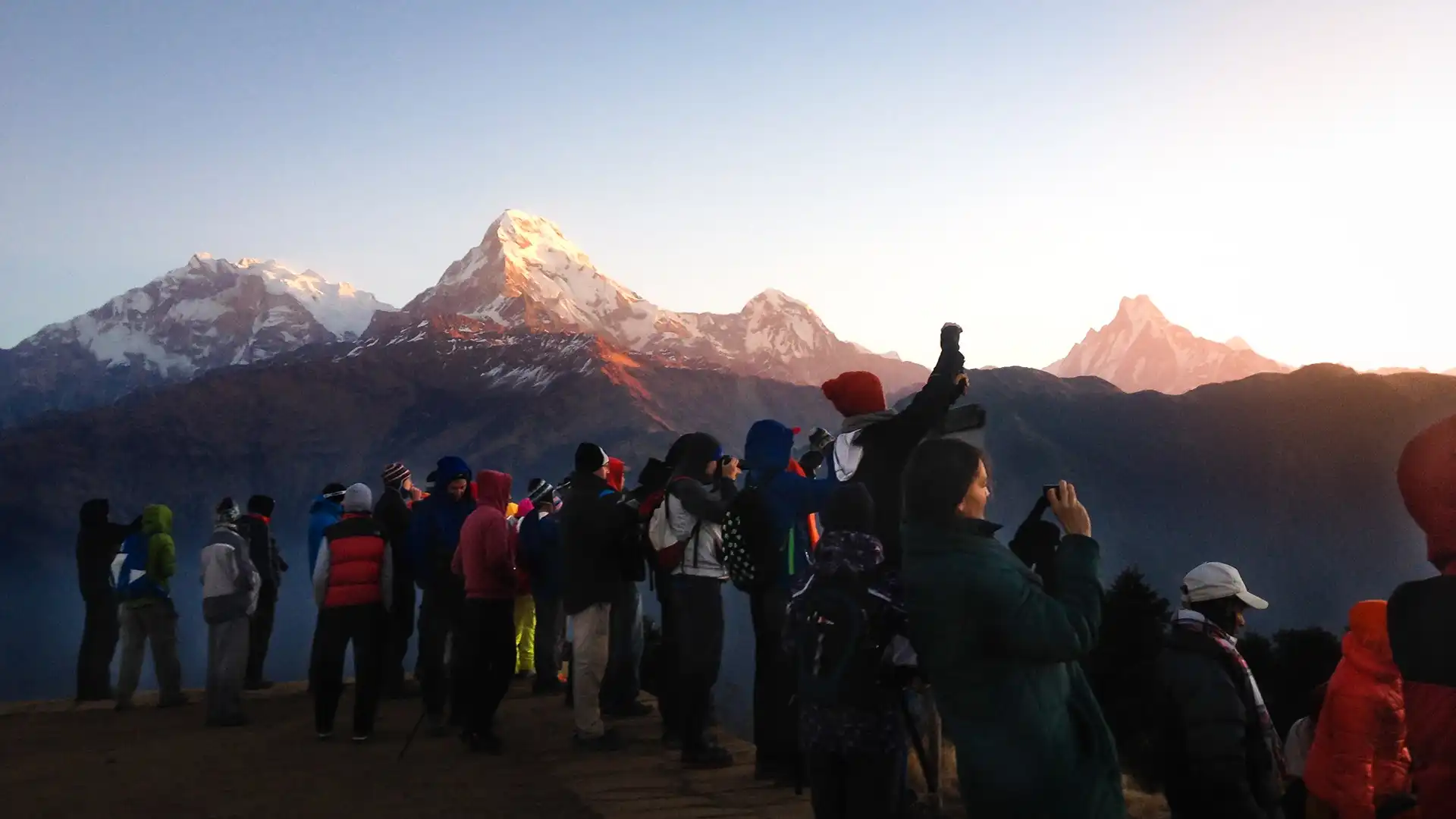
Annapurna Region · Moderate grade
Poonhill & Ghandruk Trek
The route
What the walk is.
The Poonhill & Ghandruk Trek (5 Days) is Nepal’s most popular short Himalayan trek, perfect for beginners, families, and travelers with limited time who still want a complete mountain experience.
This easy and rewarding journey combines the famous Poonhill sunrise viewpoint (3,210 m), traditional Gurung culture in Ghandruk village, scenic rhododendron forests, and spectacular views of the Annapurna and Dhaulagiri ranges.
With well-maintained trails, comfortable teahouses, and moderate daily walking distances of about 3–7 hours, the trek offers an accessible introduction to multi-day trekking without technical difficulty or high altitude risks.
The highlight of the trek is the early morning hike to Poonhill, where trekkers witness one of Nepal’s most iconic sunrises as golden light gradually illuminates peaks such as Annapurna I, Dhaulagiri, Machapuchare (Fishtail), and Annapurna South. Despite being a popular viewpoint, the shared sunrise experience creates a memorable atmosphere as trekkers celebrate the moment together.
Another major highlight is the visit to Ghandruk (2,012 m), a beautiful Gurung village known for its traditional stone houses, terraced fields, and rich mountain culture. Here, trekkers can explore the Gurung Museum, experience local hospitality, and enjoy close-up mountain views.
Ideal as a first Himalayan trekking experience, this short adventure delivers breathtaking scenery, cultural discovery, and confidence-building trekking experience in just five unforgettable days.
General Information
Detail | Information |
Best Season | March-May, September-November |
Start Point | Tikhedhunga (via Nayapul from Pokhara) |
End Point | Syauli (return to Pokhara) |
Daily Walking | 3-7 hours |
Permits Required | ACAP, TIMS |
Ideal For | Beginners, families, first-timers, time-constrained |
The Poonhill Sunrise Experience
Day 3 creates the trek's unforgettable moment. Wake-up call 4:30 AM (challenging after previous day's hiking but absolutely worth it). Quick light breakfast (tea, biscuits), headlamps on, join steady stream of trekkers climbing from Ghorepani to Poonhill. The 45-minute pre-dawn ascent builds anticipation—darkness gradually giving way, first hints of light touching eastern horizon.
Reaching the Viewpoint: Arrive Poonhill around 5:30 AM (timing varies by season). Already 100-300 people gathered (peak season can be 500+), everyone bundled in warm layers, cameras ready, excited chatter in dozens of languages. Find your spot (arrive earlier for better position), wait as light gradually increases.
The Magic Unfolds: First light touches highest peaks—Dhaulagiri (8,167m) far west begins glowing pink. Progressively, light descends mountains and spreads east: Annapurna I (8,091m), Annapurna South, Nilgiri, Machapuchare's distinctive Fishtail, Annapurna II, Lamjung Himal, Manaslu (8,163m) far east. The entire 200km Himalayan panorama spanning horizon transforms from dark silhouettes to pink to gold to brilliant white over 30-40 minutes. Spectacular doesn't capture it—you understand why this viewpoint earned global fame.
The Crowd Reality: Yes, Poonhill is very crowded. This isn't secret hidden gem—it's Nepal's most famous sunrise viewpoint for good reasons. But the crowds actually enhance experience: shared joy as light show unfolds, spontaneous applause when sun appears, strangers congratulating each other, dozens of languages creating United Nations atmosphere. Embrace the shared experience rather than resenting crowds. Alternatively, arrive 45 minutes early (4:45 AM departure Ghorepani) for better position and slightly fewer people.
Ghandruk Village Immersion
Day 4 brings you into Ghandruk (2,012m), the trek's cultural heart. This large, prosperous Gurung village showcases traditional mountain life: stone-paved streets between slate-roofed houses, terraced agriculture cascading hillsides, women weaving traditional textiles, elders chatting in village squares, prayer flags fluttering, and spectacular Annapurna South/Machapuchare backdrop dominating skyline.
Afternoon Exploration: With only 3-4 hours trekking, arrive Ghandruk by lunch. Afternoon free for: visiting excellent Gurung Museum (traditional dress, farming implements, religious artifacts, cultural explanations—small entrance fee), wandering stone streets discovering viewpoints, watching daily village life, shopping for handicrafts (traditional bags, scarves), or simply relaxing in teahouse with mountain views. This cultural depth distinguishes Poonhill/Ghandruk from pure viewpoint treks.
Rhododendron Forest Glory
The route from Ulleri to Ghorepani and onward to Tadapani passes through magnificent rhododendron forests—Nepal's national flower growing as massive trees (20-30 meters tall) creating forest canopy rather than low shrubs. Spring (late March through early May, mid-April typically peak) sees forests explode in bloom: deep crimson, soft pink, pure white flowers creating vibrant corridors. Walking through blooming rhododendron forest on sunny spring morning with mountain views and bird songs creates ethereal atmosphere trekkers remember as fondly as Poonhill sunrise itself.
Day by day
Where you sleep, night by night.
Pokhara → Ghandruk · highest point 3,210 m
- Day 01Hotel (Twin Sharing) · Breakfast, Dinner822 m
Drive or fly to Pokhara. Transfer to lakeside hotel. Evening free at Phewa Lake. Trek briefing over dinner.
- Day 02Tea House (Twin Sharing) · Breakfast, Lunch, Dinner1,495 m
Drive to Nayapul (1 hour). Begin trekking through Birethanti and along the Modi Khola river to Tikhedhunga. A gentle first day warming up.
- Day 03Tea House (Twin Sharing) · Breakfast, Lunch, Dinner2,874 m
Climb the famous stone staircase through Ulleri into rhododendron and oak forest to Ghorepani. Very early dinner and early bed for tomorrow pre-dawn Poonhill climb.
- Day 04Highest point · sleep 2,630 m · Tea House (Twin Sharing) · Breakfast, Lunch, Dinner3,210 m
Pre-dawn climb to Poon Hill for the famous Annapurna and Dhaulagiri sunrise. After breakfast trek through rhododendron forests to Tadapani with excellent mountain views.
- Day 05Hotel (Twin Sharing) · Breakfast, Lunch, Dinner2,012 m
Short descent through beautiful forest to Ghandruk, one of the most beautiful Gurung villages in Nepal. Visit the Gurung Museum. Drive back to Pokhara from Ghandruk. Celebration lakeside dinner.
Fixed departures
12 group dates open.
144 places across them. Or start on any flexible date in the calendar below.
| Departure | Booked | Filling | Left | Status | Book |
|---|---|---|---|---|---|
| Sat, Mar 6, 2027 | 0/12 | 12 | Available | ||
| Sat, Mar 20, 2027 | 0/12 | 12 | Available | ||
| Sat, Apr 3, 2027 | 0/12 | 12 | Available | ||
| Sat, Apr 17, 2027 | 0/12 | 12 | Available | ||
| Sat, May 1, 2027 | 0/12 | 12 | Available | ||
| Sat, May 15, 2027 | 0/12 | 12 | Available | ||
| Sat, Sep 4, 2027 | 0/12 | 12 | Available | ||
| Sat, Sep 18, 2027 | 0/12 | 12 | Available | ||
| Sat, Oct 2, 2027 | 0/12 | 12 | Available | ||
| Sat, Oct 16, 2027 | 0/12 | 12 | Available | ||
| Sat, Nov 6, 2027 | 0/12 | 12 | Available | ||
| Sat, Nov 20, 2027 | 0/12 | 12 | Available |
Prices are per person, twin share, in USD. Book with a 20 % deposit — the balance is due 7 days before departure. Scheduled departures show places left; flexible departures can be booked on any listed start date. Booking terms
| Su | Mo | Tu | We | Th | Fr | Sa |
|---|---|---|---|---|---|---|
| 1 | 2 | 3 | ||||
| 4 | 5 | 6 | 7 | 8 | 9 | 10 |
| 11 | 12 | 13 | 14 | 15 | 16 | 17 |
| 18 | 19 | 20 | 21 | 22 | 24 | |
| 25 | 26 | 28 | 29 | 30 |
- Selected trip dates
- Available
- Filling fast
- Almost sold out
- Sold out
Fri, Oct 23Tue, Oct 27, 2026
5 days · flexible departure
- StartsFri, Oct 23, 2026 · Pokhara
- EndsTue, Oct 27, 2026 · Ghandruk
USD $350 per person, twin share · Deposit today USD $70 (20 %)
On the trail
Photographs from the route.
The whole number
What the price covers.
12 things are in the price and 11 more are named as excluded.
In the price
Professional Support & Safety
- ✓Expert Leadership · Govt. certified highly experienced English speaking helpful, knowledgeable and friendly trekking guide.
- ✓Group Support · An assistant guide provided for groups of 8 or more people.
- ✓Porter Service · Porters to carry your luggage during the trek (1 porter for 2 trekkers, 10 kg limit per trekker).
- ✓Staff Welfare · All wages, meals, lodging, transportation, and insurance for guides and porters.
- ✓Health Monitoring · First aid kit and an oximeter used twice a day to check pulse, oxygen levels, and heart rate.
- ✓Emergency Coordination · Helicopter service arrangement for emergencies (cost covered by travel insurance).
Permits & Logistics
- ✓Official Fees · All conservation fees, permit fees, and government taxes.
- ✓Government Liaison · Coordination with relevant government offices.
Accommodation & Meals
- ✓Trail Lodging · The best available tea-house/lodge during trekking.
- ✓Trek Nutrition · Full board standard meals (breakfast, lunch, and dinner) during the trek.
Gear & Recognition
- ✓Trekking Essentials · Duffle bags and trekking poles in case you don’t have your own.
- ✓Official Achievement · Trek Completion Certificate from Nepal Visuals.
Not included
Flights, Visas, and Logistics
- ×International Travel · International flight fare and airport departure tax.
- ×Entry Requirements · Nepal Entry Visa and Visa extension fees (USD 50 for 30 days and USD 125 for 90 days).
- ×Baggage Overages · Extra baggage charges.
- ×Miscellaneous · Any expenses other than the Price Inclusion Section.
Personal Protection & Equipment
- ×Mandatory Insurance · Travel and Medical Insurance (Compulsory).
- ×Rescue Costs · Charges for emergency rescue or evacuation by helicopter, if needed.
- ×Individual Gear · Personal trekking gears and equipment.
Trail & City Expenses
- ×Teahouse Amenities · Other charges at lodges/tea houses such as showers, internet access, battery re-charging, hot water and extra hot drink.
- ×Beverages · Alcoholic and non-alcoholic drinks.
- ×Extended Stays · Any additional night’s accommodation in Pokhara owing to early arrivals, late departures, or early returns from the trek.
Professional Tips and Gratuity
- ×Staff Appreciation · Tips for the guides and porters.
Moderate grade
Is this trek right for you?
You can do this if…
- ✓Walk 5–6 hours a day, some of it steep
- ✓Carry a 5–8 kg daypack
- ✓Comfortable with several days in a row on foot
Recommended preparation
- ✓2–3 months of regular cardio (walking, running, cycling)
- ✓Weekend hikes with a loaded pack
- ✓Read the altitude notes below — you will sleep above 3,000 m
Experience & support
- ✓A good first Himalayan trek
- ✓Guided throughout — a licensed guide is required on Nepal treks
- ✓Unsure about age, health or fitness? Ask us — we tailor the pace
About three months out? Follow our free 12-week trek fitness plan.
Good to know
Additional information.
Accommodation and Meals
Infrastructure: Excellent teahouse network developed over decades. Comfortable lodges at all stops.
Ulleri: Good lodges, decent facilities
Ghorepani: Numerous teahouses (popular Poonhill staging point), varied options, hot showers (fee)
Tadapani: Several comfortable lodges, beautiful forest setting
Ghandruk: Excellent village teahouses, best facilities on route, cultural atmosphere
Meals: Dal bhat (unlimited refills), fried rice, chowmein, momos, soups, eggs, pancakes. Good variety throughout.
Before you book
Questions we get most.
Difficulty & Physical Prep
How difficult is the Poon Hill and Ghandruk trek?
It is classified as Easy to Moderate. While it doesn’t require technical skills, you should be prepared for the "3,000 Stone Steps" of Ulleri. Most days involve 4–6 hours of walking, making it accessible for beginners, families, and those with basic fitness.
Do I need to be a serious hiker to do this?
No, but a bit of cardio (like jogging or brisk walking) for a few weeks before your trip will make the steep ascents more enjoyable. It is one of the most beginner-friendly treks in Nepal, as the trails are well-marked and the elevation gain is gradual.
Altitude & Safety
Is altitude sickness a concern on this route?
The risk is very low. The maximum altitude is 3,210m at the Poon Hill viewpoint, which is well below the "danger zone" (3,500m+) where serious AMS usually occurs. Most trekkers experience no symptoms other than catching their breath a bit faster on the climbs.
What are the safety protocols for 2026?
As of 2026, licensed guides are mandatory for all treks in the Annapurna region. Your guide will monitor your pace and health daily. Additionally, since the trail stays at lower altitudes, emergency descent is quick and easy compared to high-mountain treks.
Accommodation & Food
What is the accommodation like in Ghandruk and Ghorepani?
These are some of the most developed trekking villages in Nepal. You will stay in teahouses that range from basic wooden rooms to more modern lodges with attached bathrooms and even Wi-Fi. Ghandruk, in particular, is known for its clean, stone-built traditional guest houses.
Can I get a hot shower and charge my phone?
Yes, easily. Unlike the higher Everest treks, hot showers and electricity are available at almost every stop. Some lodges may charge a small fee ($2–$4), but in many Ghandruk lodges, these amenities are included in the room price.
What kind of food should I expect?
The menus are surprisingly diverse. You can enjoy the traditional Dal Bhat, but you’ll also find pasta, pancakes, and even apple pie. Because the region is lower in altitude, fresh vegetables and eggs are readily available and very safe to eat.
Connectivity & Costs
Will I have internet and phone signal?
Yes, mobile networks like Ncell and NTC have good coverage throughout most of the route. Most teahouses also offer Wi-Fi for a small fee. It is the most "connected" trek in the Himalayas, so you can easily share your sunrise photos.
What permits do I need for this 5-day loop?
You need two main permits: ACAP (Annapurna Conservation Area Project) TIMS (Trekkers' Information Management System) card. In 2026, these are usually arranged by your trekking agency (NepalVisuals) and must be carried with you to be checked at Nayapul and Ghorepani.
Views & Timing
When is the best time to see the rhododendrons in bloom?
If you want to walk through forests of bright red and pink flowers, visit in Spring (March to April). This is when the hillsides around Ghorepani turn into a vibrant garden, offering a stunning contrast against the white peaks.
Is the sunrise at Poon Hill really worth the 4 AM wake-up?
Absolutely. It is the highlight of the trek. Standing at 3,210m, you get a 360-degree panorama of over 20 peaks, including Dhaulagiri (8,167m) and Annapurna I (8,091m). The way the light hits the "Fishtail" peak (Machhapuchhre) is something you’ll never forget.
Still have a question? WhatsApp us →