 Nepal Visuals
Nepal is home to many mountains and their respective base camps. More prominent among them include the Annapurna Base Camp, Mardi Himal Base Camp, Everest Base Camp, etc.
On this page(11)
Nepal does not offer one great trekking destination. It offers dozens.
While Everest Base Camp rightly dominates the global conversation around Himalayan trekking, Nepal is home to a remarkable collection of base camp routes, each leading to the foot of a different giant, through different landscapes, different cultures, and different levels of solitude.
From the iconic trails of the Khumbu to the remote wilderness of the far west, base camp trekking in Nepal is one of the most diverse and rewarding adventure categories available anywhere on Earth.
This guide covers the full range: the popular routes, the hidden gems, what to expect on any base camp trek, how to prepare, and how to choose the right route for your experience level and goals.
What Makes Base Camp Trekking in Nepal So Special?
Most trekking destinations in the world take you through beautiful landscapes and back home again.
Base camp trekking in Nepal takes you somewhere different.
It places you at the literal foot of the highest mountains on Earth, in the company of people whose ancestors have lived among those peaks for centuries, on trails that carry centuries of history, pilgrimage, and human endeavor.
The views are extraordinary. But the views are almost secondary to everything else.
You walk through Buddhist monasteries where monks have chanted prayers at dawn for generations. You cross suspension bridges strung with prayer flags over glacial rivers that run straight off the icecap. You sleep in teahouses run by families who have fed and sheltered trekkers and mountaineers for decades.
Every base camp route in Nepal is different. But every one of them offers this: the experience of being genuinely small in a genuinely enormous world, and finding that the feeling is not frightening at all.
It is actually a relief.
Everest Base Camp Trek: The World's Most Iconic Trail
What Makes the EBC Trek So Special?
The Everest Base Camp Trek is the most famous trekking route on the planet, and it earns that reputation every single season.
It begins with the legendary flight into Lukla Airport, one of the most dramatic landings in commercial aviation, and ends at 5,364 meters at the foot of the Khumbu Icefall, with the world's highest mountain rising above.
In between, the trail passes through the heart of Sherpa country, through ancient villages and forested ridgelines, past prayer flag-draped suspension bridges and the grand Tengboche Monastery, through the high glacier terrain of Lobuche and Gorak Shep, and up to Kala Patthar at 5,545 meters for the most celebrated sunrise view of Everest available to any non-climber in the world.
Pro tip: Book a seat on the left side of the plane for the Kathmandu to Lukla flight. The views of the Himalayan range on that side are breathtaking from the moment the plane turns northeast out of the Kathmandu valley.
Key Highlights of the EBC Trek
Standing at the foot of Mount Everest at 5,364 meters is the centerpiece, but it is far from the only highlight.
The Khumbu Icefall, visible from Base Camp, is one of the most dramatic natural features in the Himalayas. The constantly shifting maze of ice towers and crevasses is both beautiful and humbling in equal measure.
Kala Patthar at dawn, when Everest turns from grey to gold in the first light of morning, is the defining visual memory most EBC trekkers carry home.
Namche Bazaar, the cultural hub of the Khumbu at 3,440 meters, is a genuine town with bakeries, museums, gear shops, and a weekly market. It is also where you spend your first essential acclimatization day.
Tengboche Monastery, the spiritual heart of the Everest region, offers one of the most atmospheric settings of any religious site in Nepal.
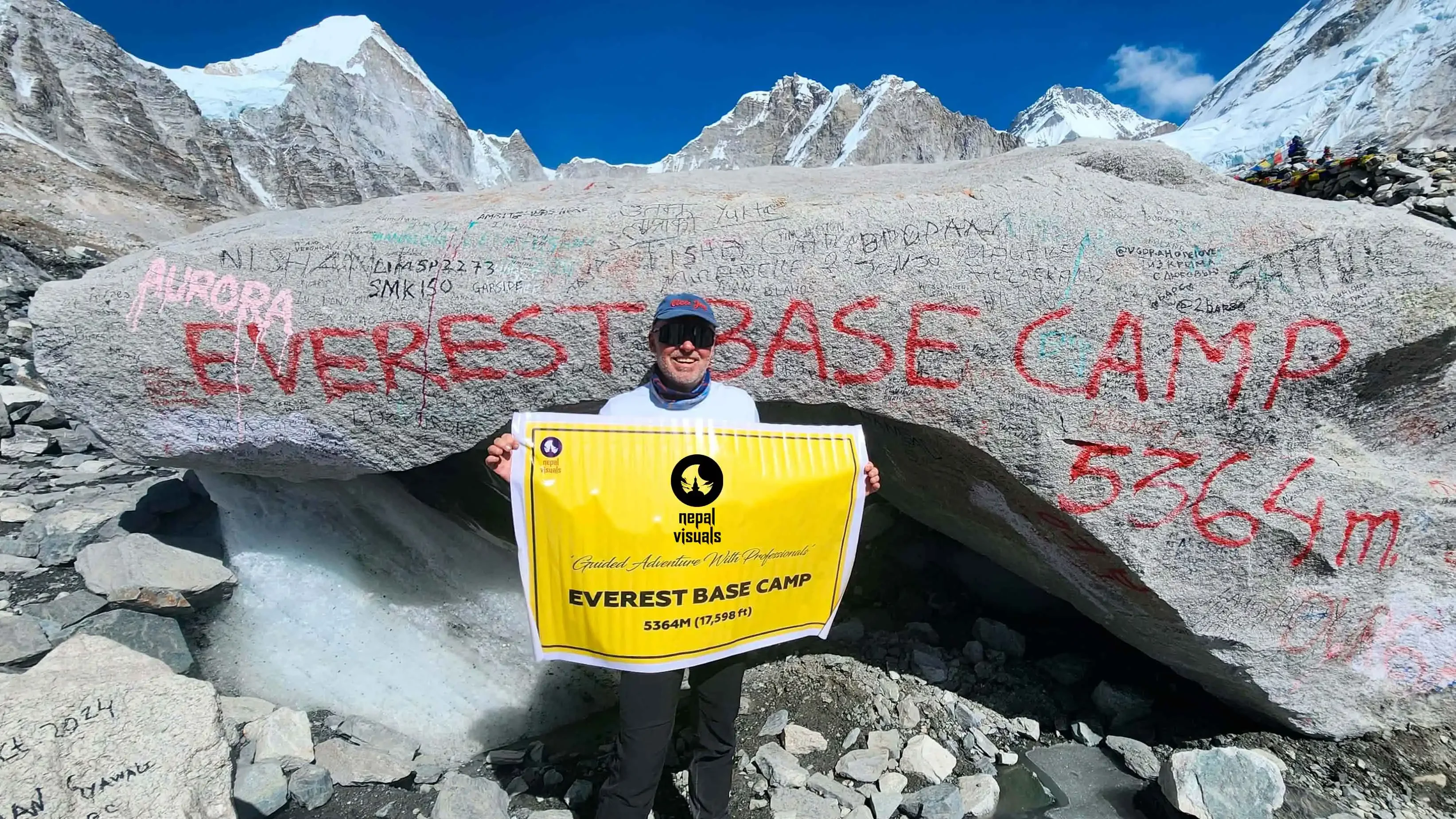 Everest Base Camp
EBC Trek at a Glance
Maximum altitude: Kala Patthar at 5,545 m
Duration: 12 to 14 days
Difficulty: Moderate to challenging
Best seasons: Spring (March to May) and Autumn (September to November)
No technical climbing skills required.
Annapurna Base Camp Trek: Beauty, Culture, and Accessibility
Why the ABC Trek Deserves More Attention Than It Gets
The Annapurna Base Camp Trek is consistently overshadowed by the EBC Trek in global trekking conversations, and that is genuinely unfair.
The ABC Trek offers something the EBC route cannot: the experience of walking directly into the heart of a mountain sanctuary.
Annapurna Base Camp sits at 4,130 meters inside the Annapurna Sanctuary, a natural high-altitude bowl completely encircled by peaks over 6,000 meters.
When you arrive at Base Camp after days of walking through forest and valley and high alpine terrain, the mountains close around you on all sides. It feels like the world has ended and something larger has begun.
What Makes the ABC Trek Unique
The approach through the Modi Khola valley passes through Gurung and Magar villages where traditional mountain culture remains vibrant and largely unchanged.
The trail passes through dense rhododendron and bamboo forests that are spectacular in spring bloom, with the lower trail sections a canopy of red and pink flowers in March and April.
The Jhinu Danda hot springs, located a short detour off the main trail, offer one of the most welcome experiences available on any long-distance trek: a natural hot pool in a forest setting after days of cold mountain walking.
The lower maximum altitude compared to EBC means acclimatization is slightly less demanding, making this trek a genuinely excellent option for fit first-time high-altitude trekkers.
ABC Trek at a Glance
Maximum altitude: Annapurna Base Camp at 4,130 m
Duration: 7 to 12 days
Difficulty: Moderate
Best seasons: Spring (March to May) and Autumn (September to November)
Natural hot springs along the route are a unique and welcome bonus.
Manaslu Base Camp Trek: Silence, Wilderness, and Tibetan Culture
The Best-Kept Secret in Himalayan Trekking
The Manaslu Base Camp Trek is the choice of trekkers who have done the popular routes and want something quieter, more remote, and more authentic.
Mount Manaslu at 8,163 meters is the eighth highest mountain in the world. Its base camp sits in a remote valley surrounded by glaciers and high peaks in the Gorkha region of western Nepal.
Unlike the Everest and Annapurna regions, the Manaslu area requires a Restricted Area Permit, which limits the number of trekkers who can enter. This restriction is exactly what makes it special.
What to Expect on the Manaslu Base Camp Trek
The trail passes through strikingly remote Tibetan-influenced villages including Samagaun and Samdo, where traditional architecture, chortens, and ancient monasteries create a cultural atmosphere that feels completely separate from the outside world.
The communities along the Manaslu route have maintained strong connections to their Tibetan Buddhist heritage, and the cultural immersion available here is arguably deeper and more authentic than on the busier Everest and Annapurna routes.
The high point of the Manaslu Base Camp Trek is the Larkya La Pass at 5,160 meters, described by many trekkers as one of the finest high mountain crossings in the Himalayas.
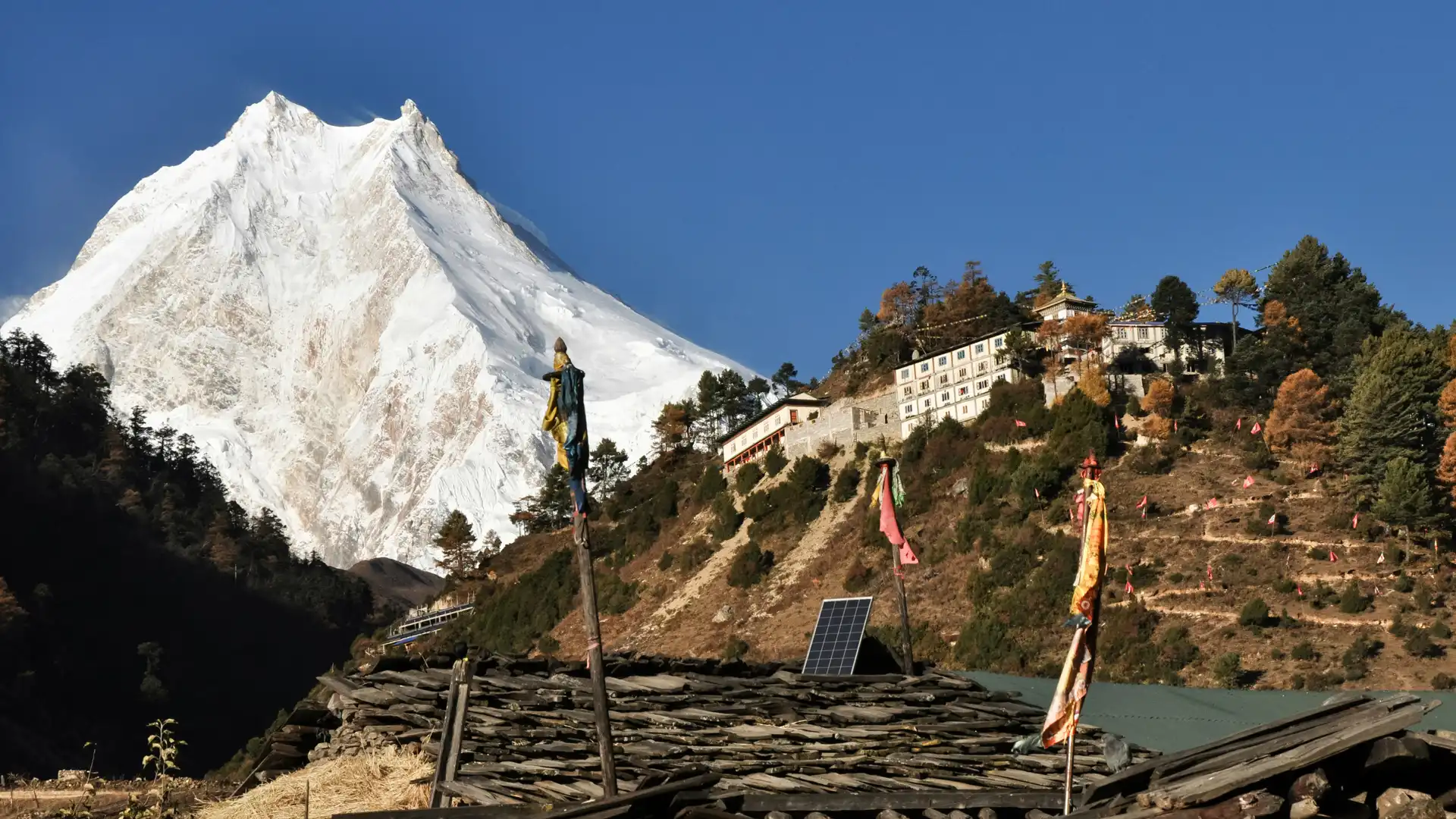 Mount Manaslu
The views from Larkya La stretch across Manaslu, Himalchuli, and the Ganesh Himal range. On a clear day, the panorama is extraordinary.
The approach to Manaslu Base Camp passes through a remarkable variety of landscapes: subtropical forest at lower elevations, alpine meadows in the mid-section, and high glacial terrain near the base camp.
Read More: Manaslu Circuit Trek Full Guide
Manaslu Base Camp Trek at a Glance
Maximum altitude: Larkya La Pass at 5,160 m
Duration: 15 to 20 days
Difficulty: Challenging
Restricted Area Permit required (must be arranged through a licensed agency).
A licensed guide is mandatory for this route.
Makalu Base Camp Trek: True Wilderness at Its Most Uncompromising
For Trekkers Who Want Something Real
The Makalu Base Camp Trek is the most remote and least commercialized base camp route covered in this guide, and for trekkers who want genuine wilderness, that is precisely its appeal.
Makalu at 8,485 meters is the fifth highest mountain in the world. Its base camp sits within the Makalu-Barun National Park in eastern Nepal, one of the most ecologically diverse protected areas in the Himalayas.
You are extremely unlikely to encounter traffic jams on this trail. On many days, you may not encounter another trekking group at all.
What Makes the Makalu Base Camp Trek Remarkable
The Makalu-Barun National Park is home to an extraordinary range of Himalayan wildlife. Snow leopards, red pandas, Himalayan tahrs, clouded leopards, and over 400 species of birds have been recorded within the park boundaries.
The trail crosses high passes with 270-degree views of some of the greatest peaks on Earth, including Everest, Lhotse, Baruntse, and Makalu itself, a combination available on very few trekking routes anywhere.
The cultural communities along the route, primarily Rai and Sherpa villages, offer a genuine mountain culture experience that feels entirely unaffected by mass tourism.
Lakes, glaciers, and high passes create a constantly changing landscape that keeps the trek visually and physically engaging throughout.
What to Know Before You Go
The Makalu Base Camp Trek requires careful logistical planning due to its remoteness.
Teahouse facilities are significantly more limited than on the Everest and Annapurna routes. Carrying a tent and camping supplies is advisable for certain sections.
The trail is less clearly marked than on popular routes. An experienced and knowledgeable guide is not just recommended here. It is essential.
Makalu Base Camp Trek at a Glance
Maximum altitude: Makalu Base Camp at approximately 5,700 m
Duration: 15 to 20 days
Difficulty: Very challenging
Best suited for experienced trekkers with prior high-altitude exposure.
Api Base Camp Trek: Nepal's Final Frontier
The Most Remote Base Camp Trek in Nepal
The Api Base Camp Trek is the least-known and most off-grid trekking route in Nepal, located in the far-western corner of the country near the border with India and Tibet.
Mount Api at 7,132 meters is the highest peak in the Byas Himalayas of far-western Nepal and is largely unknown outside serious mountaineering circles.
Very few trekkers make it to this corner of Nepal in any given year. Those who do describe an experience of complete solitude and untouched natural beauty that is almost impossible to find anywhere else in the country.
What the Api Base Camp Trek Offers
The approach passes through dense subtropical forests, high alpine meadows, and pristine glacial lakes in landscapes that have been visited by almost no international trekkers.
The indigenous Bhotiya communities of the far-western region have a culture and way of life that is distinct from both the Sherpa communities of the Khumbu and the Gurung villages of Annapurna. The cultural encounter here is genuinely rare.
This trek requires a high level of self-sufficiency. Facilities are minimal. Resupply points are far apart. Weather can be unpredictable and route-finding is demanding.
The Api Base Camp Trek is for experienced and adventurous trekkers only, and requires thorough logistical preparation, strong guides, and the mental readiness for a genuinely remote wilderness experience.
Api Base Camp Trek at a Glance
Maximum altitude: Api Base Camp at approximately 4,800 m
Duration: 13 to 15 days
Difficulty: Very challenging
Restricted Area Permit required.
Suitable for experienced trekkers seeking total solitude.
Choosing the Right Base Camp Trek for You
With five major options ranging from world-famous to genuinely undiscovered, choosing the right base camp trek depends on several factors.
Your experience level is the most important consideration. If you have never trekked at altitude before, Annapurna Base Camp is the most approachable option. If you have completed EBC or a similar route and want more, Manaslu or Makalu offer the next level of challenge and reward.
Your available time shapes the options significantly. The ABC Trek can be completed in seven days. The Makalu and Manaslu routes require three weeks. Be honest about your schedule and build in buffer days for weather and acclimatization.
Your appetite for solitude versus infrastructure is another key factor. The EBC and ABC routes have excellent teahouse infrastructure, well-marked trails, and steady company from other trekkers. The Manaslu, Makalu, and Api routes offer progressively more solitude but progressively fewer facilities.
Your cultural interests can also guide the choice. The Khumbu is Sherpa country. Annapurna is the domain of the Gurung and Magar peoples. Manaslu offers deep Tibetan Buddhist cultural immersion. Each region has its own distinct cultural identity.
Here is a simple comparison to help:
Everest Base Camp Trek: 12 to 14 days, moderate to challenging, maximum altitude 5,545 m, well-developed infrastructure, ideal for first-time high-altitude trekkers.
Annapurna Base Camp Trek: 7 to 12 days, moderate, maximum altitude 4,130 m, well-developed infrastructure, best for first-timers wanting a shorter high-altitude experience.
Manaslu Base Camp Trek: 15 to 20 days, challenging, maximum altitude 5,160 m, limited facilities, best for experienced trekkers wanting solitude and cultural depth.
Makalu Base Camp Trek: 15 to 20 days, very challenging, maximum altitude 5,700 m, minimal facilities, for experienced wilderness trekkers.
Api Base Camp Trek: 13 to 15 days, very challenging, maximum altitude 4,800 m, minimal facilities, for adventurers seeking total off-grid experience.
What to Expect on Any Base Camp Trek in Nepal
Regardless of which route you choose, certain realities apply to all base camp trekking in Nepal.
Altitude
Every base camp trek in Nepal climbs to a significant altitude, and altitude is the defining challenge of this style of trekking.
Above 3,000 meters, the reduced oxygen density affects everyone differently and to different degrees.
Proper acclimatization is the most important factor in a successful base camp trek, regardless of the route. Follow the itinerary. Take rest days seriously. Never ascend with altitude sickness symptoms.
Staying hydrated, eating well, and ascending gradually are the three most reliable prevention strategies.
Weather
Mountain weather in Nepal is variable and can change rapidly at any altitude.
Clear mornings can become stormy afternoons. Temperatures can drop dramatically within hours.
Packing for a wide range of conditions, including sun, rain, wind, and cold, is essential on every Nepal base camp route.
The two most reliable trekking windows are spring (March to May) and autumn (September to November), which offer the best combination of clear skies, stable temperatures, and manageable trail conditions.
Accommodation
The teahouse system covers most popular base camp routes in Nepal with a network of small, family-run lodges offering basic rooms and meals.
On remote routes like Makalu and Api, teahouse infrastructure is sparse and camping may be necessary on certain sections.
A sleeping bag rated to at least -15 degrees Celsius is essential on all base camp routes above 4,000 meters.
Physical Demands
Base camp trekking involves five to eight hours of walking per day on uneven, rocky terrain, over multiple consecutive days.
No technical climbing skills are required on most routes. The demands are those of sustained endurance, not technical ability.
Begin training at least three to four months before departure with a focus on cardiovascular endurance, loaded pack hiking, and leg and core strength.
Permits
All Nepal base camp routes require at least one permit. Most require two.
National Park or Conservation Area Entry Permits are needed for routes inside protected areas including Sagarmatha, Annapurna, and Makalu-Barun.
Restricted Area Permits are additionally required for the Manaslu, Api, and certain other remote routes and must be arranged through a licensed trekking agency.
Your agency will handle all permit logistics as part of the booking process.
Responsible Base Camp Trekking
Nepal's mountain environments are beautiful, fragile, and increasingly under pressure from growing visitor numbers.
Every trekker has a responsibility to leave these trails in better condition than they found them.
Carry out all waste generated during your trek. Leave nothing behind on the trail or in teahouses.
Use a reusable water bottle with a personal filter rather than buying single-use plastic bottles. Plastic waste is one of the most visible and damaging environmental problems in the Nepal trekking regions.
Hire local guides and porters. Spend money in locally owned teahouses and shops. Keep the economic benefits of trekking tourism inside the mountain communities that make these journeys possible.
Support organizations like the Sagarmatha Pollution Control Committee (SPCC) and the Annapurna Conservation Area Project (ACAP) that do essential work maintaining the trail environment year-round.
Respect the cultural sites, sacred spaces, and local customs you encounter along every route. The mountains and the communities within them are not a backdrop. They are the destination.
Your Base Camp Adventure Starts Here
Nepal's base camps offer something for every level of trekker and every kind of adventurer.
Whether you are dreaming of your first view of Everest from the iconic trail through the Khumbu, seeking the sanctuary experience of Annapurna Base Camp, exploring the Tibetan-influenced wilderness of Manaslu, or venturing into the rarely visited terrain of Makalu or Api, Nepal has a base camp route waiting for you.
The mountains have been standing here for millions of years. They will be patient while you prepare.
Plan Your Base Camp Trek with Nepal Visuals
At Nepal Visuals, we have spent years building deep expertise in every base camp route covered in this guide.
We are a locally owned and operated trekking company based in Kathmandu, and our team includes experienced licensed guides who know these trails intimately in every season.
We believe in responsible trekking, fair wages for guides and porters, and the kind of personalized experience that large operators cannot provide.
Every year, we take only a small number of groups to maintain the quality and personal attention that our trekkers deserve. Spots fill quickly, particularly for the spring and autumn peak seasons.
Whether you are planning your first base camp trek or returning to Nepal for a more remote adventure, we would love to help you design the perfect journey.
Contact Nepal Visuals today to start planning your base camp trek.
Visit us at nepalvisuals.com or reach out directly at info@nepalvisuals.com
The trail is waiting. Let's get you there.
Sharing route guides and trail experience from the high trails of Nepal.