 Nepal Visuals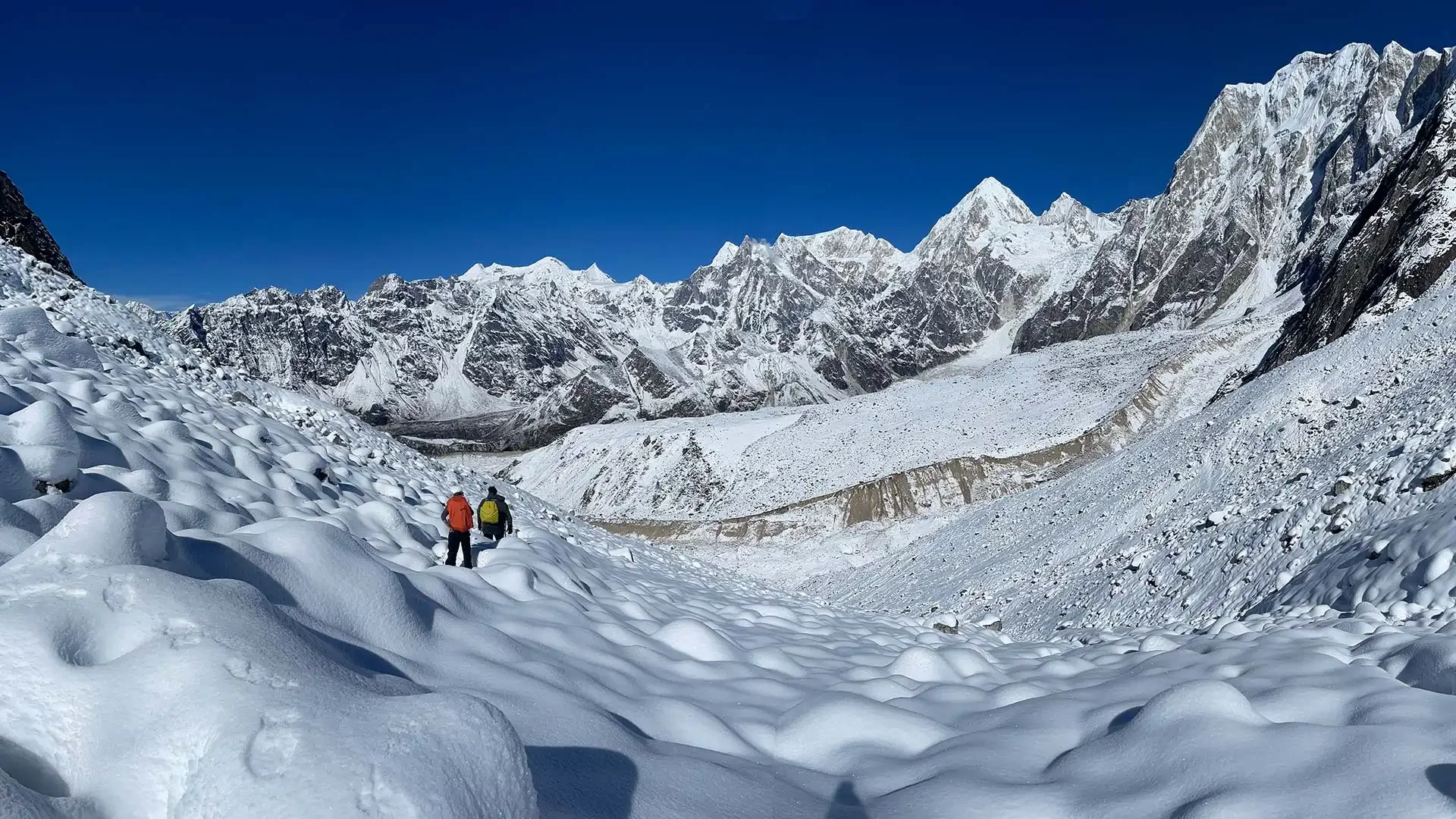
Larkya La Pass is one of the highest passes of the world. Discover the marvel of this pass through the article.
On this page(18)
Some mountain passes are just waypoints on a map. Larkya La Pass is not one of them.
At 5,160 meters above sea level, Larkya La is the highest point on the Manaslu Circuit Trek and one of the most dramatic high-altitude crossings available to non-technical trekkers anywhere in Nepal.
The views from the top span some of the most iconic peaks in the Himalayas. The approach winds through glacial moraine, frozen lakes, and Tibetan Buddhist villages that feel entirely removed from the modern world.
This is not a pass you cross casually.
But for those who prepare properly, it is one of the most rewarding days in Himalayan trekking.
This guide covers everything you need to know before attempting Larkya La Pass in Nepal, including the elevation, the trekking route and itinerary, weather by season, temperature expectations, gear, permits, costs, and safety.
Larkya La Pass: Basic Facts
Before getting into the detail, here are the core numbers:
Larkya La Pass elevation: 5,160 meters (16,929 feet)
Also spelled: Larke Pass, Larky La Pass
Location: Gorkha District, Gandaki Province, Nepal
Trek: Manaslu Circuit Trek
Highest point on: The Manaslu Circuit
Crossing day distance: approximately 14 to 17 kilometers from Dharamsala to Bimthang
Crossing day duration: 8 to 10 hours
Trek start point: Macha Khola or Soti Khola
Trek end point: Dharapani (Annapurna region)
Total trek distance: approximately 180 kilometers
Total trek duration: 13 to 17 days depending on pace and acclimatization
The pass connects the upper Manaslu valley on the eastern side with the Bimthang valley and the Annapurna region on the western side.
On a map, Larkya La sits in the northwest section of the Manaslu Conservation Area, at the top of a long glacial approach from Dharamsala, which is also known as Larke Phedi.
Why Larkya La Pass Matters
Larkya La Pass is more than the highest point on the Manaslu Circuit. It is the physical and emotional climax of one of Nepal's most complete trekking routes.
The Manaslu Circuit itself passes through subtropical river valleys, traditional Gurung and Tibetan villages, ancient monasteries, glacial moraines, and high alpine terrain. Larkya La is where all of that builds to.
Crossing it gives you panoramic views of peaks that most people in the world will never see from this angle. Manaslu (8,163 meters), Himlung Himal, Cheo Himal, Kangguru, Annapurna II, and Pang Phuchi spread across the horizon in every direction.
Unlike the heavily commercialized trails of Everest or Annapurna, the approach to Larkya La remains blissfully quiet. There are no teahouses every thirty minutes, no crowds of organized tour groups, no plastic trinket shops.
What you get instead is the kind of trekking that has become genuinely rare. Remote, raw, and deeply satisfying.
A Brief History of Larkya La Pass
Larkya La Pass has a history that predates trekking by centuries.
For generations, the pass served as a vital corridor in the trans-Himalayan trade network connecting the Tibetan Plateau with the mid-hills of Nepal. Merchants crossed it with yak caravans loaded with salt, wool, and grain, moving between the high villages of Samdo and Bimthang in conditions that make a modern trekking day look comfortable by comparison.
These trade routes were not just commercial. They carried cultural and spiritual exchange between Tibet and Nepal that remains visible today in the Tibetan Buddhist character of the Manaslu region's villages, monasteries, and daily life.
In Himalayan Buddhism, high mountain passes are regarded as sacred thresholds. The prayer flags and stone cairns at the top of Larkya La are not decorations. They are offerings, placed by those who have crossed before in acknowledgment that passing safely over a place this high is something worth giving thanks for.
The Manaslu region only opened to international trekkers in the early 1990s.
Larkya La quickly became the defining feature of the circuit, drawing those who wanted serious Himalayan trekking without the infrastructure and crowds of the more established routes. As of 2026, the pass retains much of its original wild character.
Larkya La Pass Weather and Temperature
Understanding what the weather is like at Larkya La Pass is essential for planning.
The conditions at 5,160 meters are significantly more extreme than in the valleys below, and they change fast.
Larkya La Pass Temperature by Season
Spring (March to May)
Daytime temperatures at the pass range from minus 5 to plus 5 degrees Celsius. Early mornings are well below freezing.
March can still have significant snow at higher elevations, but April and May generally offer more stable conditions. Wind is moderate in spring.
Autumn (October to November)
This is the most predictable season for the crossing. Daytime temperatures at the summit are typically between minus 10 and 0 degrees Celsius.
The skies are clear and dry after the monsoon, and mountain visibility is at its best. Wind is present but generally manageable.
Winter (December to February)
Larkya La Pass in December and beyond is a serious undertaking. Temperatures at the summit drop to minus 15 to minus 25 degrees Celsius, sometimes lower with wind chill.
The approach from Dharamsala can be buried in snow, and the descent to Bimthang becomes dangerously icy. December conditions at Larkya La are harsh enough that many agencies do not operate the crossing during this period.
Monsoon (June to September)
Heavy rainfall, landslides, and poor visibility make trekking to the pass difficult and often unsafe in the lower sections of the Manaslu valley.
The pass itself may be snow-covered, and cloud cover eliminates the views that make the crossing worthwhile.
Wind Conditions at Larkya La Pass by Season
Wind is a major factor at the summit that many trekkers underestimate.
The pass sits in an exposed position and funnels high-altitude winds from the Tibetan Plateau side. In autumn, winds at the summit are typically strongest in the afternoon.
This is the key reason that starting the crossing before dawn is not just a tradition but a practical safety measure. Most experienced guides aim to reach the summit no later than 9 or 10 AM, before afternoon wind and cloud builds.
In spring, winds are generally lighter than in autumn but can still be significant. In winter, wind chill at the summit can push effective temperatures well below minus 30 degrees Celsius, which is genuinely dangerous without proper equipment.
The general rule: cross early. Regardless of season, the morning window between first light and mid-morning offers the calmest and clearest conditions at Larkya La.
Is Larkya La Pass Dangerous in Winter?
Yes, Larkya La Pass in winter is genuinely dangerous for most trekkers.
This is not an exaggeration intended to discourage adventure.
The combination of extreme cold, heavy snow on the approach from Dharamsala, icy conditions on the steep descent to Bimthang, and the remoteness of the location creates a situation where errors in judgment or equipment have serious consequences.
Helicopter evacuation from the area around the pass is difficult in winter due to weather windows and altitude.
Early December, if snow has not yet accumulated significantly, is manageable for experienced trekkers with proper gear and a qualified guide. By January and February, the pass is effectively closed for all but mountaineering expeditions.
If you are considering a winter crossing, be honest with yourself about your cold-weather experience and your gear. This is not the place to find out that your sleeping bag is not as warm as advertised.
The Larkya La Pass Trekking Route
The Manaslu Larkya La Pass trek follows the Manaslu Circuit from Macha Khola in the south to Dharapani in the west.
The route runs through the Budi Gandaki River valley, climbing steadily through subtropical terrain, pine forest, alpine meadow, and finally glacial moraine before reaching the pass.
Lower Valley: Macha Khola to Namrung
The trek begins at Macha Khola (approximately 900 meters), reached by road from Kathmandu via Arughat.
The lower valley is warm and lush, with terraced farms, suspension bridges, and the Budi Gandaki River running alongside the trail. Key stops in the lower section include Jagat (1,340 meters), where permits are first checked, and Deng (1,860 meters).
The trail gains elevation gradually through this section, and the landscape shifts noticeably as you climb toward Namrung (2,630 meters).
Mid Valley: Namrung to Samagaun
Above Namrung, the Tibetan Buddhist character of the region becomes unmistakable.
Villages like Lho (3,180 meters) offer some of the finest views of Mt. Manaslu available from the trail, with the mountain's north face rising directly above the valley.
Samagaun (3,530 meters) is the primary acclimatization stop on the Manaslu Circuit and one of the most important overnight points on the entire trek. Most itineraries include a full rest day here, with optional hikes to Manaslu Base Camp (4,800 meters) or Pungyen Gompa for acclimatization.
Upper Valley: Samdo and Dharamsala
Samdo (3,875 meters) is the last village of any real size before the pass.
It has basic tea house accommodation and serves as both an acclimatization stop and a cultural highlight, maintaining strong Tibetan traditions in its architecture, dress, and daily life.
From Samdo, the trail climbs further to Dharamsala, also called Larke Phedi (4,460 meters). This is the final overnight point before the crossing.
Accommodation here is extremely basic: stone and timber shelters with minimal heating and shared facilities. The altitude makes sleep difficult.
Most trekkers have an early dinner, pack everything they need for the crossing, and try to sleep by 7 or 8 PM for a pre-dawn start.
The Larkya La Crossing Day
The crossing typically begins between 3 and 5 AM, depending on conditions and your guide's judgment.
Starting in darkness is not comfortable, but it is important for two reasons: avoiding afternoon wind at the summit, and ensuring you complete the long descent to Bimthang before conditions deteriorate.
The trail from Dharamsala climbs through glacial moraine, crosses frozen streams, and traverses snowfields before the final steep push to the summit. The Larkya La Pass distance from Dharamsala to the summit is approximately 6 to 8 kilometers, gaining around 700 meters.
At the summit, prayer flags mark the top.
On a clear morning, the panorama is extraordinary. Manaslu (8,163 meters) dominates to the east. Himlung Himal, Cheo Himal, Kangguru, Annapurna II, and Pang Phuchi fill the western and northern horizon.
This is the view that makes the pre-dawn start, the cold, and the weeks of trekking feel entirely justified.
The descent to Bimthang (3,720 meters) is steep and long. Loose rock and ice require careful footwork.
Trekking poles are not optional on this section. The total crossing day from Dharamsala to Bimthang covers approximately 14 to 17 kilometers and takes 8 to 10 hours.
Bimthang is a picturesque valley with rhododendron forests and meadows. After the barren high-altitude terrain of the preceding days, it feels like a different planet.
Descent to Dharapani
From Bimthang, the trail descends through increasingly lower and warmer terrain to Dharapani (1,970 meters), where it connects with the Annapurna Circuit trail.
Most trekkers then travel by road to Besisahar and from there back to Kathmandu.
Larkya La Pass Trek Itinerary: 13 Days
Here is a classic 13-day Manaslu Circuit trek itinerary including the Larkya La crossing:
Day 1: Drive from Kathmandu to Macha Khola (900 meters) via Arughat. 7 to 8 hours by road.
Day 2: Trek Macha Khola to Jagat (1,340 meters). 5 to 6 hours. Permit checks at Jagat.
Day 3: Trek Jagat to Deng (1,860 meters). 5 to 6 hours. Through subtropical forest and river crossings.
Day 4: Trek Deng to Namrung (2,630 meters). 6 to 7 hours. Landscape shifts noticeably toward alpine terrain.
Day 5: Trek Namrung to Lho (3,180 meters). 4 to 5 hours. Outstanding views of Mt. Manaslu.
Day 6: Trek Lho to Samagaun (3,530 meters). 3 to 4 hours. Arrive early for acclimatization.
Day 7: Rest and acclimatization day in Samagaun. Optional hike to Manaslu Base Camp (4,800 meters) or Pungyen Gompa.
Day 8: Trek Samagaun to Samdo (3,875 meters). 3 to 4 hours. Last significant village before the pass.
Day 9: Rest day in Samdo. Short acclimatization hike toward the Tibetan border viewpoint.
Day 10: Trek Samdo to Dharamsala, Larke Phedi (4,460 meters). 3 to 4 hours. Early arrival recommended for rest before the crossing.
Day 11: Pre-dawn departure. Cross Larkya La Pass (5,160 meters) and descend to Bimthang (3,720 meters). 8 to 10 hours. The defining day of the trek.
Day 12: Trek Bimthang to Dharapani (1,970 meters). 6 to 7 hours. Through rhododendron forest and lower valley terrain.
Day 13: Drive from Dharapani to Besisahar, then continue to Kathmandu. 7 to 9 hours total.
For trekkers who want more acclimatization time or a slower pace, a 15 to 17 day itinerary adds additional rest days at Namrung, Lho, or extends the time in Samagaun and Samdo.
Larkya La Pass Difficulty
The Larkya La Pass trek is graded as strenuous.
It does not require technical climbing skills or the use of ropes and fixed lines, but it demands solid physical fitness, good high-altitude acclimatization, and mental readiness for a very long, cold day.
The crossing day is one of the longest single days in Himalayan trekking. Eight to ten hours of walking at altitude, starting before dawn and finishing on a steep descent in fading energy, is genuinely hard work regardless of how fit you are.
The altitude is the other major factor.
At 5,160 meters, the available oxygen is roughly half of what it is at sea level. Tasks that would feel easy at lower elevation become effortful.
This is why the acclimatization stops at Samagaun and Samdo are not optional additions to the itinerary. They are the reason most people succeed.
The descent to Bimthang is steep, loose in sections, and demands good knee strength and trekking poles. Many trekkers find the descent harder on their bodies than the ascent.
This trek is suitable for trekkers with previous multi-day high-altitude experience. If you have done Everest Base Camp, Annapurna Base Camp, or a similar route, you have a realistic baseline for what Larkya La requires.
First-time high-altitude trekkers can attempt it, but should train seriously for at least 8 to 12 weeks beforehand and allow extra acclimatization days.
Microspikes vs Crampons for Larkya La Pass
This is one of the most practical questions trekkers ask about the crossing, and the answer depends on season.
In autumn (October to November), the trail to the summit and the descent to Bimthang typically involves compacted snow and some icy sections, particularly on the descent. Microspikes are sufficient for these conditions and are strongly recommended for the descent.
In spring (April to May), conditions are similar to autumn. Microspikes are adequate and practical.
In early December, when snow coverage is heavier and the descent can be more seriously icy, microspikes may not provide enough grip on steeper sections. Crampons become more appropriate in these conditions.
Full crampons are rarely necessary for the standard autumn or spring crossing.
But light aluminum microspikes are not optional equipment. Pack them regardless of season. The descent to Bimthang on icy rock and snow is where trekkers fall, and microspikes make a significant difference.
Gloves and Insulation for Larkya La Pass
Cold management on the crossing day is as important as fitness.
The summit of Larkya La is exposed, windy, and well below freezing even in ideal conditions.
Gloves
A layered glove system is essential. Use lightweight liner gloves for the approach, with waterproof insulated outer gloves or mittens for the summit section.
Single-layer gloves are not adequate. Fingers lose dexterity fast in cold and wind, which affects your ability to use trekking poles, manage layers, and handle camera equipment.
Base Layers
Merino wool or synthetic moisture-wicking base layers are essential.
Cotton is dangerous at altitude because it holds moisture against the skin when you sweat on the ascent, then chills rapidly when you stop moving.
Insulating Mid-Layer
A down jacket or synthetic insulated jacket goes on immediately at the summit and during any extended stop. Do not wait until you are cold to put it on.
Outer Shell
A waterproof and windproof shell is non-negotiable. Even in clear conditions, wind at the summit can cut through unprotected layers quickly.
Balaclava and Neck Gaiter
At the summit before the sun is fully up, exposed skin loses heat rapidly. Cover everything.
Warm Hat
A hat rated for minus 10 degrees Celsius or colder is necessary. The standard beanie that works in Kathmandu is not adequate at 5,160 meters before dawn.
Permits for Larkya La Pass
Because Larkya La Pass lies within both a restricted area and a conservation zone, three permits are required.
These cannot be arranged at checkpoints on the trail. They must be obtained before the trek begins in Kathmandu through a registered trekking agency.
1. Manaslu Restricted Area Permit (RAP)
This is the primary permit for the Manaslu region. It is issued only through registered Nepali trekking agencies and requires a minimum group size of two trekkers and a licensed guide.
Costs as of 2026:
September to November: USD 100 per person for the first seven days, then USD 15 per day for additional days
December to August: USD 75 per person for the first seven days, then USD 10 per day for additional days
2. Manaslu Conservation Area Permit (MCAP)
Required from Philim onward. Cost: NPR 3,000 per person (approximately USD 22 to 25).
3. Annapurna Conservation Area Permit (ACAP)
Required as the trail exits the Manaslu region and enters the Annapurna Conservation Area near Dharapani. Cost: NPR 3,000 per person (approximately USD 22 to 25).
Additional permit rules:
Solo trekking is prohibited. A minimum of two trekkers is required for permit issuance.
A government-licensed guide is mandatory throughout the restricted section.
Permits are checked at multiple checkpoints including Jagat and Samagaun. Carry originals and photocopies.
Bring two passport-sized photos and copies of your passport and visa when applying.
Do you need rescue insurance for the Larkya La Pass trek?
Yes, and this is not negotiable.
Rescue insurance covering helicopter evacuation above 5,000 meters is essential. Helicopter rescue from the area around the pass and Dharamsala is possible in good weather but expensive.
Without insurance, a single rescue can cost USD 3,000 to 8,000 or more.
Most reputable trekking agencies will not operate the trek without proof of adequate insurance coverage.
Larkya La Pass Trek Cost
The total cost of the Manaslu Larkya La Pass trek depends on whether you go independently or with a guided package and how long your itinerary is.
Permit costs:
Restricted Area Permit: USD 100 to 175 depending on season and length
MCAP: approximately USD 25
ACAP: approximately USD 25
Total permits: USD 150 to 225 per person
Independent trekking daily costs on the trail:
Tea house accommodation: USD 5 to 15 per night depending on elevation
Meals: USD 15 to 30 per day, rising at higher elevations
Hot showers, device charging, and Wi-Fi: paid separately at most tea houses
Transport Kathmandu to Macha Khola: USD 20 to 40 per person by shared jeep
Guided package costs:
Organized Manaslu Circuit trek packages including the Larkya La crossing typically cost between USD 1,200 and USD 2,000 for 14 to 17 days.
Standard inclusions in guided packages are:
All permits and conservation fees
Government-certified English-speaking guide
Porter service (typically one porter per two trekkers)
All tea house accommodation during the trek
All meals during the trek
Kathmandu hotel accommodation
Airport transfers and road transport to and from the trailhead
Emergency coordination support
Standard exclusions include international flights, Nepal visa fees, travel and medical insurance, personal gear, alcoholic drinks, hot showers and device charging on the trail, and guide and porter tips.
Guide and porter daily rates as of 2026:
Licensed guide: USD 30 to 40 per day
Porter: USD 18 to 25 per day
Tipping is customary in Nepal. A standard tip at the end of the trek is one to two days of their daily rate.
Remember the cost shown here is a relative estimation. They can differ depending on your customized itinerary, fuel prices, evacuations, and several other unknown factors.
Accommodation on the Larkya La Pass Trek
Tea houses are the primary accommodation throughout the Manaslu Circuit.
Standards vary significantly depending on altitude and how close you are to the pass.
In lower sections of the trail, tea houses in villages like Jagat, Deng, and Namrung offer private rooms with basic bedding, shared bathrooms, and communal dining areas with wood stoves. Hot showers are sometimes solar-heated and usually cost extra.
In Samagaun and Samdo, tea houses are reasonably comfortable by Himalayan standards.
Expect clean rooms, reliable meals, and occasionally some Wi-Fi signal.
At Dharamsala (Larke Phedi, 4,460 meters), the final overnight stop before the crossing, facilities are genuinely basic.
Stone and timber shelters, shared bathrooms, limited food options, and no hot showers. The altitude makes it difficult to sleep well regardless.
Bring earplugs, a sleep mask, and your warmest sleeping bag.
There is no accommodation at the pass itself. The crossing day is always a one-way journey from Dharamsala to Bimthang.
In Bimthang, tea houses are simple but feel like luxury after Dharamsala. The valley setting with rhododendron forests and mountain views makes it a genuinely pleasant overnight stop.
Carry Nepali rupees throughout the trek. Credit cards are not accepted anywhere on the Manaslu Circuit.
Learn some Sleeping tricks for recovery during treks
Food on the Larkya La Pass Trek
Meals along the Manaslu Circuit are simple, carbohydrate-heavy, and designed for people burning significant calories at altitude.
Dal bhat is the staple.
Steamed rice, lentil soup, vegetable curry, and pickles make up the standard plate. It is all-you-can-eat at most tea houses.
At altitude, this is genuinely the best option. It is freshly cooked, easy to digest, and provides steady energy for long days.
Other common options include Tibetan bread with jam, pasta, fried rice, chow mein, momos (Tibetan dumplings), porridge, and pancakes for breakfast. Soups and noodles are reliable at higher elevations when fresh ingredients are limited.
Above Namrung, avoid meat dishes.
Meat is carried up unrefrigerated from lower elevations and food safety becomes a legitimate concern the higher you go.
Hydration at altitude requires deliberate effort.
Aim for 3 to 4 liters of water per day. Bottled water is available in lower villages but environmentally costly.
Boiled water from tea houses is safe and cheaper. Carry water purification tablets or a filter as a backup.
A reusable bottle cuts down on plastic waste, which is a real issue on trekking routes in Nepal.
Tea is everywhere: black tea, ginger tea, masala chai, lemon tea, and butter tea in the more Tibetan-influenced villages near the pass.
Avoid alcohol above 3,500 meters. It dehydrates you, disrupts sleep, and impairs your body's ability to acclimatize.
Carry a day's worth of backup snacks from Kathmandu or Pokhara: energy bars, nuts, dried fruit, and chocolate for the crossing day. Tea houses at Dharamsala have limited stock and prices reflect the portering cost of getting anything to 4,460 meters.
Read More: What to eat and drink on long treks.
Altitude Sickness and Safety on Larkya La Pass
Acute Mountain Sickness (AMS) is the most common medical issue on the Manaslu Circuit trek and must be taken seriously on the approach to Larkya La.
Symptoms of AMS include headache, nausea, dizziness, fatigue, loss of appetite, and disrupted sleep.
These can appear at any elevation above 2,500 meters but become more likely and more serious above 4,000 meters.
The two mandatory acclimatization stops on the standard itinerary, Samagaun and Samdo, exist for this reason.
The climb high, sleep low principle applies throughout: short hikes to higher elevations during rest days, returning to sleep at a lower altitude, trigger the body's acclimatization response.
Never ascend to the next stage if you are experiencing moderate to severe AMS symptoms.
The treatment for altitude sickness is descent. Not rest. Not waiting. Descent.
The day before the pass crossing, spend time resting at Dharamsala.
Hydrate well. Eat a good carbohydrate-heavy dinner early. Sleep as much as you can.
Emergency evacuation from the Manaslu Circuit is possible by helicopter from Samdo or Bimthang in good weather conditions.
Your guide should carry emergency contacts and know the protocols. Travel insurance that specifically covers helicopter rescue above 5,000 meters is not optional on this trek.
Confirm your policy covers this before leaving home.
Diamox (acetazolamide) is sometimes prescribed by doctors to aid acclimatization.
If your doctor recommends it, bring it. It does not replace proper acclimatization but can help manage symptoms.
Physical Preparation for Larkya La Pass
Training for the Larkya La Pass trek should begin at least 8 to 12 weeks before departure.
The crossing day itself is one of the most physically demanding single days in Himalayan trekking for non-technical routes.
Recommended training:
Cardiovascular base: hiking, running, cycling, or stair climbing for 45 to 60 minutes, four to five times per week
Weighted pack hiking: regular hikes on inclines with a loaded backpack, building up to the weight you will carry on the trail
Leg strength and knee stability: squats, lunges, step-downs, and lateral movements to prepare for the long steep descent to Bimthang
Multi-day hiking: at least two or three multi-day hikes before the trek to prepare your body for consecutive days of effort
The mental side of preparation matters as well.
The Manaslu Circuit passes through remote terrain where the nearest hospital is many hours away. Days are long and sometimes difficult.
Knowing that in advance and approaching the experience with patience and adaptability makes a genuine difference.
Read More: Build your strength for trekking without going to a gym.
Frequently Asked Questions
How high is Larkya La Pass?
Larkya La Pass stands at 5,160 meters (16,929 feet) above sea level.
It is the highest point on the Manaslu Circuit Trek and one of the highest trekking passes in Nepal accessible without technical climbing.
What is the best month to cross Larkya La Pass?
October is widely considered the single best month for the crossing.
Skies are clear, temperatures are cold but manageable, and trail conditions are stable after the monsoon. November is also excellent. In spring, April and May are the best months.
What temperatures should I expect at Larkya La Pass?
On the crossing day in autumn, expect summit temperatures between minus 10 and 0 degrees Celsius before wind chill.
With wind, effective temperatures can be significantly lower. In winter months, temperatures at the summit can drop to minus 20 or 25 degrees Celsius.
When should I cross Larkya La Pass to avoid wind?
Aim to reach the summit before 9 or 10 AM.
Afternoon winds build at the pass from mid-morning onward in most seasons and can make conditions at the summit genuinely dangerous. This is the primary reason for the pre-dawn start from Dharamsala.
Is Larkya La Pass dangerous in winter?
Yes.
December conditions at Larkya La involve extreme cold, heavy snow coverage on the approach, and icy descents. The pass is effectively closed from January through February for all but experienced mountaineers.
Early December is possible for well-equipped experienced trekkers with a qualified guide, but it should not be underestimated.
Do I need microspikes or crampons?
Microspikes are strongly recommended for the descent to Bimthang in all seasons.
In early December or when snow coverage is heavy, full crampons may be more appropriate for steeper icy sections. For standard autumn and spring crossings, microspikes are sufficient.
What gloves and insulation do I need?
A layered glove system is essential: liner gloves plus waterproof insulated outer gloves or mittens.
A down or synthetic insulated jacket, waterproof shell, balaclava, warm hat, and neck gaiter are all essential for the crossing day.
Do I need rescue insurance for the Larkya La Pass trek?
Yes, and this is not negotiable.
Rescue insurance covering helicopter evacuation above 5,000 meters is essential. Helicopter rescue from the area around the pass and Dharamsala is possible in good weather but expensive.
Without insurance, a single rescue can cost USD 3,000 to 8,000 or more.
Most reputable trekking agencies will not operate the trek without proof of adequate insurance coverage.
Can I trek solo to Larkya La Pass?
No.
Solo trekking in the Manaslu region is prohibited. A minimum of two trekkers per group and a licensed guide are required for the Restricted Area Permit.
This is a regulatory requirement, not a suggestion.
How much does the Larkya La Pass trek cost?
Budget approximately USD 1,500 to 2,200 total for a guided 14 to 17 day Manaslu Circuit trek including permits, accommodation, meals, guide, porter, and transport.
Independent trekkers can manage lower costs but still need the permits, which require a registered agency to obtain.
What permits are required?
Three permits are required: the Manaslu Restricted Area Permit, the Manaslu Conservation Area Permit (MCAP), and the Annapurna Conservation Area Permit (ACAP).
All must be arranged in Kathmandu through a registered trekking agency before the trek begins.
What if I get sick during the trek?
Descend immediately if symptoms of altitude sickness worsen.
Do not wait to see if you feel better at the same elevation. Emergency helicopter evacuation is available from Samdo and Bimthang in good weather.
Your guide should be trained in AMS protocols. Rescue insurance is essential for this reason.
Larkya La Pass Is Difficult to Forget
There are high passes in Nepal that reward you with a summit and a view and then fade from memory within a few months.
Larkya La is not one of those.
The combination of what you go through to get there, the week-plus of trekking through the Manaslu valley, the acclimatization days in Samagaun and Samdo, the cold and wakeful night at Dharamsala, the pre-dawn departure in darkness, and then the moment the sun catches Manaslu's summit above you while you stand at 5,160 meters, is the kind of experience that sits with you permanently.
The Manaslu Larkya La Pass trek is one of the most complete and genuinely rewarding trekking routes in Nepal.
For those who prepare properly and approach it with respect for the altitude and the conditions, it delivers exactly what it promises.
Contact us at Nepal Visuals for the Manaslu Circuit and Larkya La Pass Trek.
Sharing route guides and trail experience from the high trails of Nepal.