 Nepal Visuals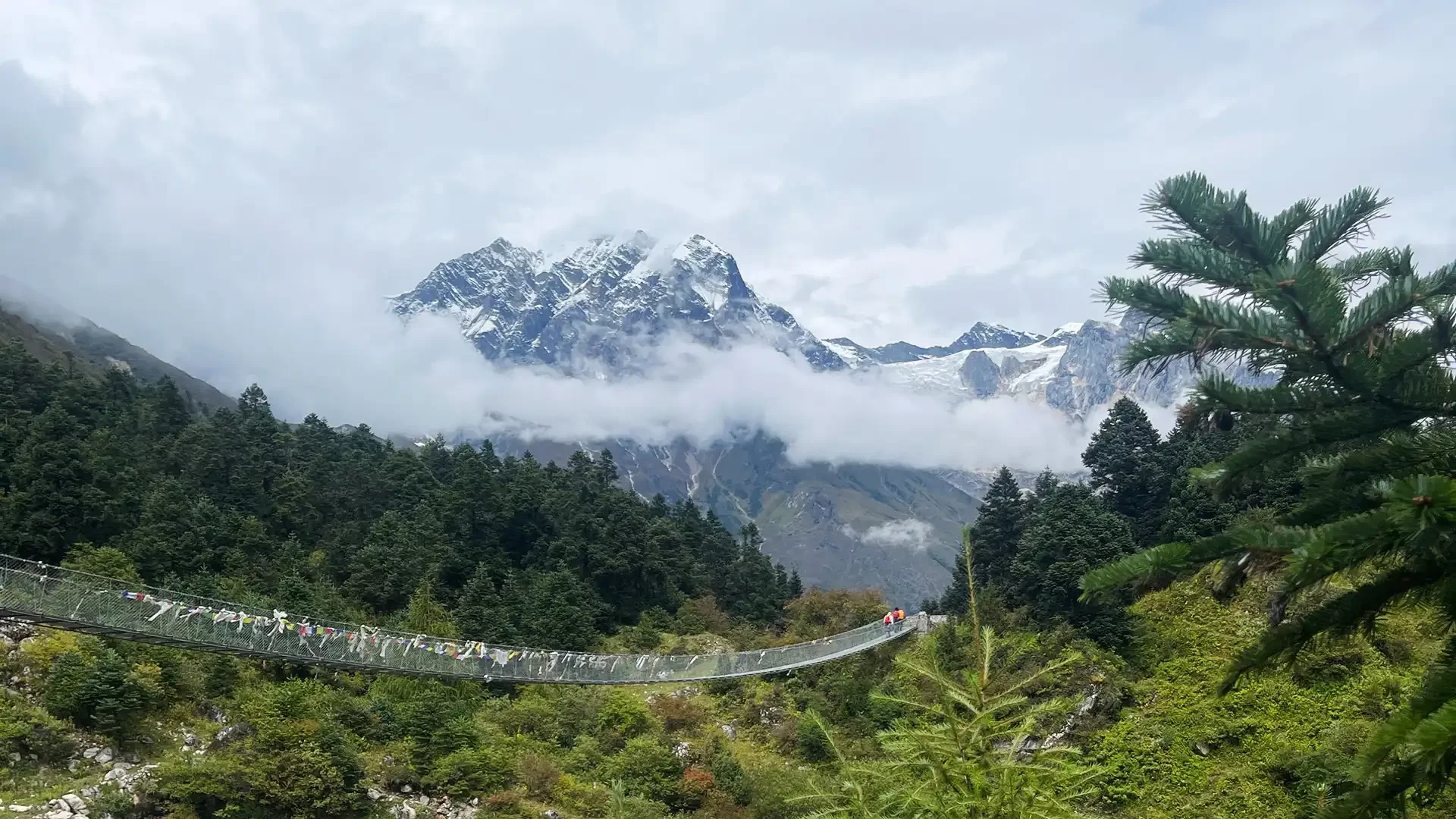
Manaslu Conservation area is an area rich with biodiversity and nature. Learn more about this region in this article.
On this page(13)
Nepal is home to some of the most extraordinary protected landscapes on the planet, and the Manaslu Conservation Area stands out as one of its least explored and most rewarding.
Tucked away in the Gorkha District of Gandaki Province, this region draws trekkers, nature lovers, and cultural explorers who want something more raw and authentic than the well-worn Everest or Annapurna trails.
Where Is the Manaslu Conservation Area Located?
The Manaslu Conservation Area is located in north-central Nepal, within the Gorkha District of Gandaki Province. It sits roughly 126 kilometers northwest of Kathmandu.
Geographically, it occupies a powerful position:
The Ganesh Himal range lies to the east
The Annapurna range borders it to the west
The Tibetan Plateau stretches to the north
The area is centered around Mount Manaslu, the eighth-highest mountain in the world at 8,163 meters above sea level. The Budi Gandaki River valley cuts through the lower sections of the region, and the terrain climbs dramatically from subtropical forest floors to icy glacial zones near the high passes.
If you look at the Manaslu Conservation Area on a map of Nepal, you will see it forming a natural corridor between two of the country's most iconic trekking regions, the Annapurna Circuit to the west and the Langtang region to the east. This placement makes it an ideal destination for those who want the grandeur of the Himalayas without the crowds.
When Was the Manaslu Conservation Area Established?
The Manaslu Conservation Area was established in 1998. It was created under the management of the National Trust for Nature Conservation (NTNC) through the Manaslu Conservation Area Project, commonly known as MCAP.
Before this formal protection, the region had already been shaped by centuries of Tibetan Buddhist culture and Himalayan trade. Ancient salt trade routes connecting Tibet to the lower valleys of Nepal passed directly through the area, particularly over the Larkya La Pass. Old monasteries like Mu Gompa and Rachen Gompa in the Tsum Valley are living reminders of this long history.
During the 1980s and 1990s, tourism grew rapidly in neighboring regions like Annapurna and Everest. Nepal's government recognized the need to act before unregulated trekking could damage the Manaslu region's fragile ecosystems and cultural fabric. That recognition led to the founding of MCAP in 1998.
The project had a clear mandate from the beginning:
Promote sustainable and responsible tourism
Conserve the region's biodiversity and cultural heritage
Empower local communities through education and eco-friendly development
Revenue from trekking permits goes directly toward building schools, health posts, and clean energy systems in remote villages throughout the area.
Area and Geography of the Manaslu Conservation Area
The total area of the Manaslu Conservation Area covers 1,663 square kilometers of Himalayan terrain. This makes it one of Nepal's larger protected zones, and the landscape within those boundaries is remarkably varied.
The elevation range is striking. The region starts at around 600 meters in the Budi Gandaki River valley and rises all the way to the summit of Mount Manaslu at 8,163 meters. This dramatic vertical range means that in a single trek, you pass through entirely different climate zones and ecosystems.
Here is what the terrain looks like at different elevations:
Below 1,000 meters: Subtropical forest, warm and humid, with rice terraces and bamboo groves
1,000 to 2,000 meters: Temperate zone with pine and rhododendron forests
2,000 to 3,000 meters: Sub-alpine terrain, cooler nights, and open meadows
3,000 to 4,500 meters: Alpine zone with thin air and dramatically changing weather
Above 4,500 meters: Permanent snow and glacial terrain
Major rivers like the Budi Gandaki, Syar Khola, and Dudh Khola flow through the region, fed by glaciers from peaks including Himalchuli, Ngadi Chuli, and Manaslu itself. The landscape also includes glacial lakes, high-altitude plateaus, and deep canyon trails that challenge and reward trekkers in equal measure.
The Manaslu Conservation Area Project (MCAP)
The Manaslu Conservation Area Project is not just a regulatory body. It is an active, community-driven conservation program that shapes how the entire region is managed and experienced.
MCAP operates on a philosophy that people and nature can coexist. Rather than excluding local communities from the protected zone, the project invites them to lead the conservation work. Locals are trained as guides, lodge operators, porters, and conservation assistants. Tourism revenue is reinvested into community infrastructure.
Key programs run by MCAP include:
Anti-poaching patrols and wildlife monitoring to protect endangered species
Eco-tourism guidelines that reduce waste and encourage cultural respect
Environmental education in local schools and villages
Research on climate change, glacial retreat, and ecosystem health
Promotion of solar energy and biodegradable practices in tea houses
One of the most notable achievements of MCAP is that it became Nepal's first conservation area to be fully managed by local communities. This participatory model has since inspired similar projects across the country.
The challenges are real. Climate change is causing glaciers to retreat, threatening water supplies for downstream communities. Seasonal over-tourism puts pressure on waste management in popular villages like Sama Gaun and Lho. Remote settlements still lack reliable electricity, sanitation, and emergency medical services. But the progress made since 1998 has been meaningful, and the model continues to evolve.
Wildlife and Biodiversity
The Manaslu Conservation Area is a biodiversity hotspot, home to an impressive variety of plants and animals across its many ecosystems.
The numbers tell part of the story:
Over 1,500 species of plants
At least 110 species of birds
33 mammal species
11 species of butterflies
The lower forests are lush with rhododendron, oak, pine, and bamboo. Higher up, alpine meadows bloom with wildflowers during spring, and the rocky highland zones host plants adapted to extreme cold and low oxygen.
Among the wildlife, the most famous residents are the endangered species:
Snow leopard (rare but present at higher elevations)
Red panda (found in mid-elevation forests)
Himalayan tahr (commonly seen on rocky slopes)
Musk deer
Blue sheep, also called bharal
At lower altitudes, you might encounter Himalayan black bears, barking deer, langurs, and various monkey species. For birdwatchers, the Himalayan monal, which is Nepal's national bird, is a particular highlight. Golden eagles, snow pigeons, and numerous butterfly species round out the wildlife picture.
The diversity here is not accidental. It is the direct result of the wide elevation range and the conservation work that has protected these habitats for over two decades.
Culture and Local Communities
The Manaslu region is home to two primary cultural communities: the Gurung people and Tibetan-influenced communities of the Nubri and Tsum Valleys. Both have lived in this mountain landscape for generations, maintaining traditions that have remained largely unchanged despite the modern world pressing in from all sides.
Tibetan Buddhism is the dominant spiritual influence throughout the area. You see it everywhere: in the ancient monasteries perched above river valleys, in the chortens and mani walls lining trekking paths, in the prayer flags snapping in the wind above every ridge and pass.
Daily life in these villages is shaped by farming and animal husbandry. Yak herding, barley cultivation, and small-scale trade are common livelihoods. The communities are known for their warmth toward visitors, and many trekkers find that the cultural immersion is just as memorable as the mountain scenery.
Some of the most important cultural sites in the region include:
Rachen Gompa: An active monastery in the Tsum Valley
Mu Gompa: One of the highest monasteries in Nepal, also in Tsum Valley
Manaslu Base Camp area near Samagaun, where ancient village life meets high-altitude adventure
The Lhosar Festival, marking the Tibetan New Year, is celebrated with feasts, dances, and prayers. If your trek coincides with this event, it offers a rare window into the spiritual and communal life of these mountain communities.
Permits for the Manaslu Conservation Area
Trekking in the Manaslu Conservation Area requires three separate permits. This is not optional, and permits are checked at multiple checkpoints along the route. Trying to trek without them is not just illegal but also puts you at real risk of being turned back.
Here is a breakdown of what you need:
1. Manaslu Restricted Area Permit (RAP)
This is the most important permit and the most strictly enforced. The Manaslu region is classified as a restricted area by the Nepal government, which means access is controlled.
Costs vary by season:
September to November: USD 100 per person for the first seven days, then USD 15 per day for additional days
December to August: USD 75 per person for the first seven days, then USD 10 per day for additional days
This permit is only issued through registered Nepali trekking agencies. You cannot obtain it independently at the immigration office on your own. You must also trek in a group of at least two people and be accompanied by a licensed guide.
2. Manaslu Conservation Area Permit (MCAP)
The Manaslu Conservation Area permit costs NPR 3,000 per person, which is roughly USD 25. It is required from Philim onward and goes directly toward funding conservation and community development programs.
3. Annapurna Conservation Area Permit (ACAP)
The Manaslu Circuit Trek ends in the Annapurna region near Dharapani. As a result, trekkers also need the ACAP, which also costs NPR 3,000 per person (around USD 25).
A few important things to keep in mind:
All permits must be arranged before the trek begins; you cannot get them at trailside checkpoints
Bring two passport-sized photos and copies of your passport and visa
Your trekking agency or guide will handle most of the logistics, but always double-check the dates and route details
Solo trekking is not permitted in the restricted zone under any circumstances
The entry fee for foreigners is NPR 3,000 for the MCAP component, though the total cost including all three permits is considerably higher depending on season and length of stay.
Trekking in the Manaslu Conservation Area
Manaslu Conservation Area trekking is the primary reason most visitors make the journey here. The trails offer something genuinely different from Nepal's more commercialized routes. The scenery is dramatic, the villages are remote, and the cultural encounters feel unscripted and genuine.
The Manaslu Circuit Trek
This is the flagship route and the most popular way to experience the region. The circuit typically takes 14 to 18 days to complete, starting at Soti Khola or Machha Khola and ending in Dharapani in the Annapurna region.
The highlight of the circuit is the Larkya La Pass, which sits at 5,106 to 5,160 meters (sources vary slightly on the exact elevation). Crossing this pass is physically demanding but delivers one of the most extraordinary panoramas in all of Nepal, with views of Himlung Himal, Cheo Himal, and the entire Annapurna range spread out before you.
Along the way, you pass through villages including Jagat, Namrung, Lho, Samagaun, and Samdo. Each has its own character, and each adds a layer to the cultural experience of the trek.
Experience the Manaslu Circuit Trek with Nepal Visuals
The Tsum Valley Trek
The Tsum Valley is a remote, largely self-contained region within the conservation area that has maintained deep Buddhist traditions for centuries. The valley is considered sacred, and local religious practices have long discouraged hunting and forest clearing, which has helped preserve its natural environment.
This trek takes 7 to 10 days on its own and can also be combined with the Manaslu Circuit for a longer journey. It is less visited than the main circuit, which is a significant part of its appeal.
The Manaslu Base Camp Side Trip
From Samagaun, a side trail leads up toward Manaslu Base Camp. This is not a full mountaineering route but an acclimatization hike that gives trekkers a close-up view of the mountain itself. It is worth adding a day for this detour if your schedule allows.
The Manaslu Annapurna Circuit Trek
For those with more time, it is possible to combine the Manaslu Circuit with the classic Annapurna Circuit. This extended route takes around 18 to 20 days and moves through two of Nepal's most spectacular trekking regions back to back.
Read More; Annapurna Circuit Trek Guide
Best Time to Trek in the Manaslu Conservation Area
Timing matters significantly in the Manaslu region, both for safety and for the quality of the experience.
Spring (March to May) is one of the two peak trekking seasons. The weather is warm and generally clear, rhododendron forests are in full bloom, and mountain views are sharp. Temperatures during the day range from around 10 to 20 degrees Celsius at moderate elevations, though nights above 3,000 meters can still drop well below freezing.
Autumn (September to November) is widely considered the best time to visit the Manaslu Conservation Area. Skies are crystal clear after the monsoon rains have passed, temperatures are comfortable, and the light is ideal for photography. Visibility of the surrounding peaks is at its sharpest during this period.
Winter (December to February) is not recommended for most trekkers. Temperatures become extreme at altitude, many tea houses above 3,500 meters close for the season, and the Larkya La Pass can be blocked by heavy snow. That said, experienced cold-weather trekkers do visit in early December and find quiet trails and beautiful snowy landscapes.
Monsoon (June to August) is generally avoided. Heavy rainfall makes trails slippery and increases the risk of landslides, particularly in the lower valley sections. However, the Tsum Valley lies in a partial rain shadow and remains somewhat accessible even during monsoon months, making it an option for those who specifically want to visit that area.
Getting to the Manaslu Conservation Area
Most journeys to the Manaslu Conservation Area begin in Kathmandu. There are no direct flights to the region, so the approach is overland, which is rough but scenic.
The most common starting point for the Manaslu Circuit Trek is either Soti Khola or Machha Khola. Getting there from Kathmandu involves a long drive through the hills of Gorkha District.
By public bus: This is the cheapest option but also the least comfortable. Travel time is typically 10 to 12 hours depending on road conditions, with a possible transfer in Dhading or Gorkha.
By private jeep: A private vehicle takes 7 to 9 hours and offers significantly more comfort. It can also drop trekkers closer to the actual trailhead, saving time on foot.
Roads in this region can be rough at the best of times. During the monsoon season, landslides and flooding can make sections impassable, so always check conditions before setting out.
The trek usually ends in Dharapani, which connects to the Annapurna Circuit trail. From there, trekkers drive back to Kathmandu via Besisahar, either by public bus or private vehicle.
Accommodation Along the Route
Tea houses and small lodges line the main trekking routes through the Manaslu Conservation Area. These are the primary accommodation options, and the quality varies considerably depending on elevation and remoteness.
In the lower sections of the trail, tea houses tend to be better equipped, with more menu options, warmer rooms, and more reliable electricity. At higher elevations, facilities become more basic. Expect simple meals like dal bhat, noodles, and Tibetan bread. Charging devices may cost extra, especially above 3,500 meters where solar power is sometimes the only source of electricity.
Clean drinking water is available along the route, but it is a good habit to carry water purification tablets or a filter, particularly at higher altitudes where water sources may be less reliable.
Responsible Trekking and Conservation
Every trekker who enters the Manaslu Conservation Area plays a role in either supporting or undermining its long-term survival. The choices you make on the trail have a direct impact on the ecosystem and the communities that depend on it.
Some of the most important things trekkers can do:
Follow Leave No Trace principles and carry out all waste
Avoid single-use plastics and use a refillable water bottle
Use biodegradable soap and personal care products
Hire local licensed guides and porters rather than bringing external staff
Support local tea houses and shops rather than relying entirely on imported supplies
Respect cultural norms, dress modestly in villages and monasteries, and ask before taking photographs of people
Stay on marked trails to avoid disturbing fragile alpine vegetation
The permit fees you pay contribute directly to conservation programs and village infrastructure. Trekking here is not just a personal adventure; it is a financial contribution to the communities and ecosystems that make the experience possible.
Why the Manaslu Conservation Area Is Worth the Effort
Getting to the Manaslu Conservation Area takes more planning than showing up in Pokhara and heading to Annapurna. The permits are more complex, the roads are rougher, and the trails are less developed. But that is precisely the point.
What you get in return is a Himalayan experience that feels genuine. Fewer trekkers on the trail means more space to absorb the scenery and more meaningful interactions with local people. The mountain views are equal to anything in Nepal.
The cultural depth of the Tsum Valley and the Nubri communities is extraordinary. And crossing the Larkya La Pass, with the full sweep of the Annapurna and Manaslu ranges visible in every direction, is the kind of moment that stays with you.
The Manaslu Conservation Area is not the easiest destination in Nepal, but it may well be one of the most rewarding. For those willing to make the effort, it delivers exactly what it promises: a Himalayan journey that is still largely untouched.
Nepal Visuals can provide you with a custom trek to the Manaslu Circuit and more. All you need to do is contact us.
Sharing route guides and trail experience from the high trails of Nepal.