 Nepal Visuals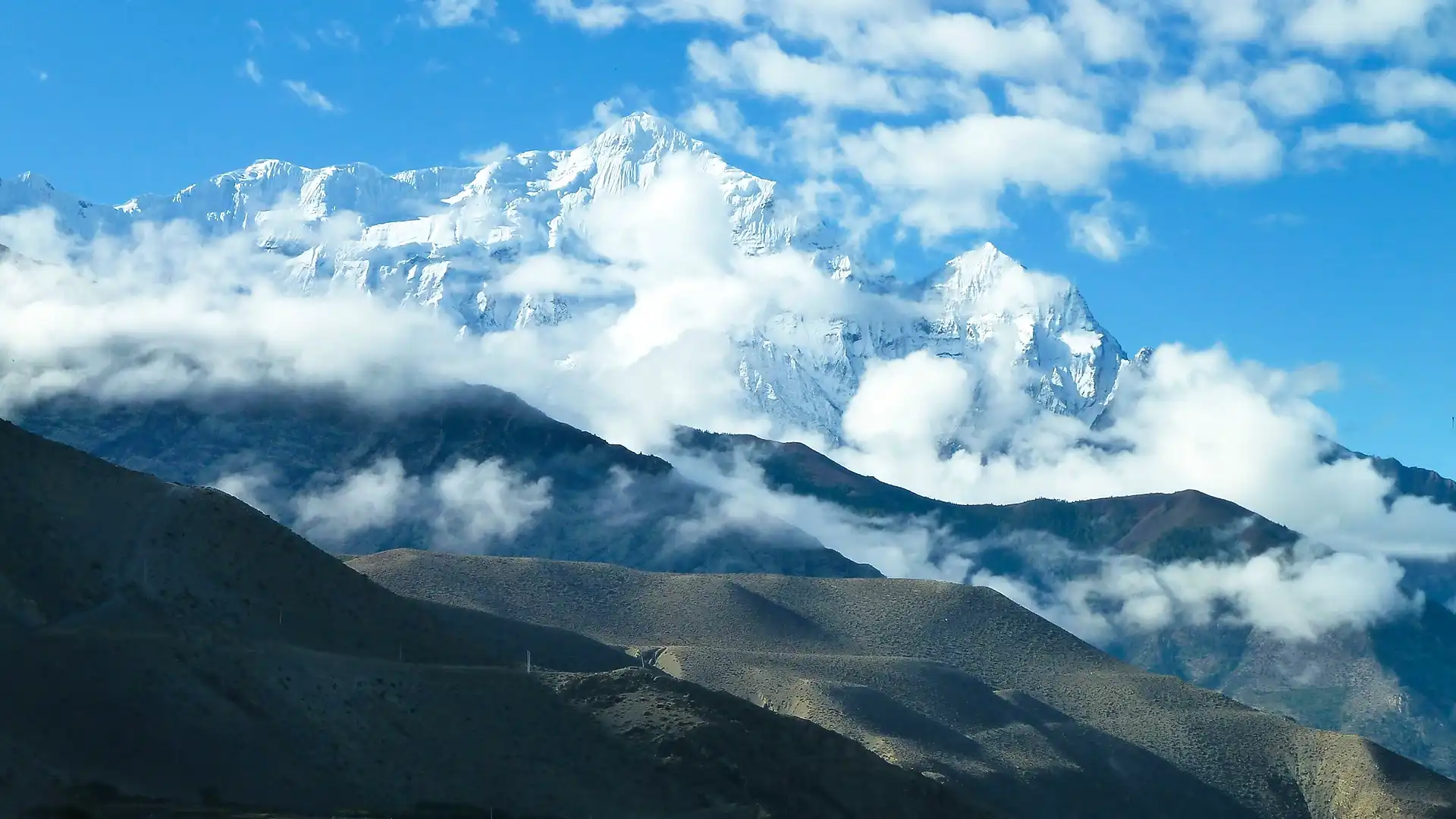
Annapurna Region · Challenging grade
Annapurna Circuit Trek
The route
What the walk is.
The Annapurna Circuit Trek (14 Days) is one of the world’s most legendary trekking adventures, offering a complete journey around the Annapurna massif with comfortable arrival and departure arrangements in Kathmandu. This comprehensive itinerary is perfect for trekkers who want a well-paced experience that combines dramatic mountain scenery, cultural discovery, and one of the highest trekking passes on Earth.
The trek begins with preparation time in Kathmandu before heading toward the Marsyangdi Valley, where the journey starts through lush subtropical forests, terraced fields, and traditional Gurung villages. As the trail gradually climbs, the scenery transforms into pine forests and high mountain terrain with constant views of Himalayan giants.
A key stop is Manang (3,519 m), where trekkers spend an acclimatization day exploring Tibetan Buddhist culture and adjusting to the altitude. This important pause improves safety and allows time to appreciate the unique culture and landscapes of the region.
The biggest challenge comes with the crossing of Thorong La Pass (5,416 m), one of the highest trekking passes in the world. The early morning ascent rewards trekkers with breathtaking panoramic views of the Annapurna and Dhaulagiri ranges and a deep sense of accomplishment.
After the pass, the trail descends to Muktinath (3,800 m), a sacred pilgrimage site respected by both Hindus and Buddhists. The journey then continues through the dry, wind-shaped landscapes of the Mustang region to Jomsom.
The adventure concludes with time to relax in Pokhara before returning to Kathmandu for departure. This balanced itinerary allows trekkers to recover while also enjoying Nepal’s famous lakeside scenery.
With its challenging difficulty, diverse landscapes, and rich cultural experiences, the Annapurna Circuit Trek is ideal for experienced trekkers seeking a classic Himalayan adventure. It is a perfect choice for those wanting a complete two-week journey that combines mountain challenge, spiritual sites, and Nepal’s natural beauty.
General Information
Detail | Information |
Start Point | Dharapani (via Besisahar from Kathmandu) |
End Point | Pokhara then Kathmandu |
Daily Walking | 5-8 hours |
City Days | 3 days (Kathmandu arrival, Pokhara recovery, Kathmandu departure) |
Permits Required | ACAP, TIMS |
Ideal For | Experienced trekkers, complete package seekers |
What makes this 14-day package ideal:
Complete Experience: Unlike trek-only packages, this comprehensive itinerary includes: Kathmandu arrival day with welcome dinner, trek briefing, and proper preparation (Day 1), comfortable 10-day circuit trekking with proper acclimatization at Manang, post-trek recovery day in beautiful lakeside Pokhara (Day 12), scenic drive back to Kathmandu with time to rest/shop/pack (Day 13), and departure day matching your international flight (Day 14). You experience Nepal holistically—not just mountains but also vibrant Kathmandu culture, serene Pokhara lakes, and warm hospitality throughout.
Proper Preparation & Recovery: Day 1 in Kathmandu allows crucial: jet lag recovery after international flight, comprehensive trek briefing with guide covering altitude awareness for 5,416m pass, final gear checks and last-minute purchases, permit finalization, and mental preparation. Similarly, post-trek Pokhara day (Day 12) provides proper recovery before long Kathmandu drive, hot showers and comfortable beds after 10 days trekking, celebration of accomplishment, and optional activities (boating, paragliding, massage). Day 13 in Kathmandu ensures you depart rested rather than racing to airport still exhausted.
Legendary Circuit: The route showcases everything serious trekkers dream of: dramatic landscapes changing daily from lush forests to barren highlands, challenging Thorong La Pass (5,416m) requiring pre-dawn ascent and sustained high-altitude effort, spectacular panoramic views of Annapurna and Dhaulagiri ranges throughout, authentic cultural immersion in Tibetan-Buddhist villages, sacred Muktinath pilgrimage site, and the profound satisfaction of completing one of trekking's most famous circuits earning global recognition.
Diverse Landscapes: Experience Nepal's incredible biodiversity and terrain variety: subtropical rice terraces and banana trees (lowlands), dense rhododendron and pine forests blooming spectacularly in spring (mid-elevations), alpine meadows with yak herds (high valleys), barren rocky terrain approaching pass, dramatic high-altitude desert (Mustang post-pass). This constant change prevents monotony despite 10 consecutive trekking days.
This complete package handles everything: airport transfers, Kathmandu and Pokhara hotels (comfortable 2-3 star with hot showers), all transportation to and from trek, experienced high-altitude specialist guides, porter service, teahouse accommodation throughout circuit, all trek meals, permits, emergency support, and return logistics. Simply arrive in Nepal ready for adventure while we manage all details.
Why choose Nepal Visuals for the 14-day Annapurna Circuit Trek?
Thorong La Pass crossed with confidence
At 5,416 m, Thorong La is the defining moment of the circuit. Our guides assess your condition in the days leading up to the crossing and only move when your body is genuinely ready.
A route that earns its reputation, guided properly
The circuit passes through more distinct landscapes, climates, and cultures than almost any other trek in Nepal. We structure each day so you absorb it fully rather than simply pass through it.
Acclimatization days planned into the schedule
Rest days at Manang and other key elevations are built into the 14-day itinerary so your body adapts progressively, reducing altitude risk before the high pass attempt.
Every permit, transfer, and teahouse sorted in advance
ACAP and TIMS permits, road transfers from Kathmandu to the trailhead, and accommodation bookings along the full circuit are arranged before your trip begins.
No unexpected costs appear mid-circuit
We price the full 14-day journey transparently from the outset. Every included service is listed clearly so you can focus on the trail rather than tracking what the next expense will be.
From lush subtropical valleys to high arid plateaus
The circuit's extraordinary range of terrain and climate requires route-specific packing and preparation advice, which we provide to every trekker after booking.
Mustang and Manang culture given proper time
Tibetan-influenced villages, ancient gompas, and the distinct traditions of the Manang valley are woven into the itinerary rather than treated as quick roadside stops.
Secure luggage storage keeps your city bags safe
Non-essential bags stay locked in our Kathmandu storage facility throughout your circuit, collected on your return without any handling fees or complications.
Responsive support across a 14-day window
Whether you need advice on weather near the pass or want to flag something with your guide, our team stays reachable via WhatsApp, Email, and Zoom from start to finish.
Your circuit departure is locked in and guaranteed
We commit fully to every confirmed booking regardless of group size. Fourteen days of planning and preparation on your part will never be undone by a cancellation on ours.
Manang, Tilicho and the high side of the circuit
The fourteen-day circuit gives you the time the route really wants. You walk from subtropical valleys up to Manang at roughly 3,540 m (11,614 ft), spend an acclimatisation day there, then continue to Thorong La at 5,416 m (17,769 ft) and drop into Mustang on the far side.
Manang's altitude is also why this version suits trekkers who want margin rather than a rushed schedule: the extra days sit exactly where the air gets thin. Travellers who want to add the region's highest lake can look at the Tilicho Lake Trek at 4,919 m, or read our Tilicho Lake guide before deciding which route fits.
Day by day
Where you sleep, night by night.
Kathmandu → Kathmandu · highest point 5,416 m
- Day 01Hotel (Twin Sharing) · Welcome Dinner1,400 m
Your Nepal Visuals representative meets you at the airport and transfers you to your hotel in Thamel. Welcome briefing and dinner this evening.
- Day 02Tea House (Twin Sharing) · Breakfast, Lunch, Dinner840 m
Drive to Besisahar (6 hours) then begin trekking through subtropical farmland along the Marsyangdi River to Bhulbhule. Rice paddies, waterfalls, and warm weather welcome you to the trail.
- Day 03Tea House (Twin Sharing) · Breakfast, Lunch, Dinner2,710 m
Follow the Marsyangdi River upstream through the narrowing valley. Cross suspension bridges and pass through Gurung and Magar villages. The landscape transforms from subtropical to temperate forest. Arrive at Chame, the district headquarters with supplies and phone signal.
- Day 04Tea House (Twin Sharing) · Breakfast, Lunch, Dinner3,250 m
Continue ascending through forests with stunning Annapurna Range views. The valley dramatically opens at Pisang with the first striking view of Annapurna II. Explore Upper Pisang with its ancient gompa above the village.
- Day 05Tea House (Twin Sharing) · Breakfast, Lunch, Dinner3,650 m
Two route options: lower or upper via Ghyaru (recommended for spectacular Annapurna panoramas). Arrive Ngawal, a beautiful traditional village with ancient gompa and wide mountain views. Afternoon rest and acclimatisation walks.
- Day 06Tea House (Twin Sharing) · Breakfast, Lunch, Dinner3,519 m
Descend through beautiful landscape past Braga village with its ancient cliff-face gompa. Arrive in Manang, the major acclimatisation stop. Attend the Himalayan Rescue Association altitude lecture this afternoon — highly recommended.
- Day 07Rest day · Tea House (Twin Sharing) · Breakfast, Lunch, Dinner3,519 m
A crucial rest day. Hike to Gangapurna Lake, climb to Praken Gompa, or simply rest and hydrate (3-4 litres daily). This day is essential for safe Thorong La crossing. Do not skip it.
- Day 08Tea House (Twin Sharing) · Breakfast, Lunch, Dinner4,050 m
Short day continuing altitude gain. Trek through alpine meadows past yak herds to Yak Kharka. Views of Chulu East and the Thorong La route become visible. Early arrival allows rest ahead of the pass crossing in two days.
- Day 09Tea House (Twin Sharing) · Breakfast, Lunch, Dinner4,450 m
Short morning trek to the base camp for Thorong La. Arrive mid-morning, rest thoroughly all day. Pack everything tonight, set alarm for 4 AM. Thorong La starts in the dark.
- Day 10Highest point · sleep 3,800 m · Tea House (Twin Sharing) · Breakfast, Lunch, Dinner5,416 m
Start at 4-5 AM by headtorch. The 1,000m ascent to Thorong La is the highest point of the circuit at 5,416m. The summit rewards with breathtaking panoramas. Descend steeply to Muktinath, a sacred pilgrimage site for both Hindus and Buddhists.
- Day 11Tea House (Twin Sharing) · Breakfast, Lunch, Dinner2,670 m
Descend through Kagbeni and the wind-blasted Kali Gandaki River valley. Arrive in Marpha, the apple capital of Nepal. Famous for apple brandy, fresh apple pie, and one of the most charming village main streets in the country.
- Day 12Hotel (Twin Sharing) · Breakfast, Lunch, Dinner2,720 m
Short morning walk to Jomsom airport. Morning flight to Pokhara with panoramic mountain views. Afternoon free at Phewa Lake. Celebrate the circuit completion over a lakeside dinner.
- Day 13Hotel (Twin Sharing) · Breakfast, Dinner1,400 m
Scenic drive back to Kathmandu. Arrive afternoon. Final dinner in Thamel celebrating your Annapurna Circuit achievement.
- Day 14Breakfast1,400 m
Transfer to Tribhuvan International Airport for your onward flight. You have crossed the world highest trekking pass and completed one of the greatest trekking circuits on Earth.
Fixed departures
12 group dates open.
144 places across them. Or start on any flexible date in the calendar below.
| Departure | Booked | Filling | Left | Status | Book |
|---|---|---|---|---|---|
| Sat, Mar 6, 2027 | 0/12 | 12 | Available | ||
| Sat, Mar 20, 2027 | 0/12 | 12 | Available | ||
| Sat, Apr 3, 2027 | 0/12 | 12 | Available | ||
| Sat, Apr 17, 2027 | 0/12 | 12 | Available | ||
| Sat, May 1, 2027 | 0/12 | 12 | Available | ||
| Sat, May 15, 2027 | 0/12 | 12 | Available | ||
| Sat, Sep 4, 2027 | 0/12 | 12 | Available | ||
| Sat, Sep 18, 2027 | 0/12 | 12 | Available | ||
| Sat, Oct 2, 2027 | 0/12 | 12 | Available | ||
| Sat, Oct 16, 2027 | 0/12 | 12 | Available | ||
| Sat, Nov 6, 2027 | 0/12 | 12 | Available | ||
| Sat, Nov 20, 2027 | 0/12 | 12 | Available |
Prices are per person, twin share, in USD. Book with a 20 % deposit — the balance is due 7 days before departure. Scheduled departures show places left; flexible departures can be booked on any listed start date. Booking terms
| Su | Mo | Tu | We | Th | Fr | Sa |
|---|---|---|---|---|---|---|
| 1 | 2 | 3 | ||||
| 4 | 5 | 6 | 7 | 8 | 9 | 10 |
| 11 | 12 | 13 | 14 | 15 | 16 | 17 |
| 18 | 20 | 21 | 22 | 24 | ||
| 25 | 26 | 28 | 29 | 30 |
- Selected trip dates
- Available
- Filling fast
- Almost sold out
- Sold out
Mon, Oct 19Sun, Nov 1, 2026
14 days · flexible departure
- StartsMon, Oct 19, 2026 · Kathmandu
- EndsSun, Nov 1, 2026 · Kathmandu
USD $970 per person, twin share · Deposit today USD $194 (20 %)
On the trail
Photographs from the route.
The whole number
What the price covers.
15 things are in the price and 11 more are named as excluded.
In the price
Transportation & Logistics
- ✓Private Transfers · Airport pickup and drop-off, plus all necessary land transfers via private tourist vehicle.
- ✓Permits & Official Fees · All conservation fees, trekking permits, and government taxes.
- ✓Government Coordination · Full handling of all paperwork and coordination with relevant government offices.
Professional Support & Safety
- ✓Expert Leadership · A government-certified, highly experienced English-speaking guide known for being knowledgeable and friendly.
- ✓Group Support · An assistant guide provided for larger groups (8 or more participants).
- ✓Porter Service · Professional porter support (1 porter per 2 trekkers, with a 10 kg limit per person).
- ✓Health Monitoring · Twice-daily vitals checks using an oximeter (pulse, oxygen levels, and heart rate) plus a comprehensive first aid kit.
- ✓Staff Welfare · All wages, meals, lodging, transportation, and insurance for your guide and porter team.
- ✓Emergency Coordination · Full assistance in arranging helicopter services for emergencies (costs covered by your insurance).
Accommodation & Meals
- ✓City Stays · 2-star hotel accommodation in Kathmandu and Pokhara on a twin-sharing basis, including breakfast.
- ✓Trek Nutrition · Full board standard meals (breakfast, lunch, and dinner) throughout the duration of the trek.
- ✓Cultural Welcome · A celebratory welcome dinner at a typical Nepalese restaurant in Kathmandu.
- ✓Trail Lodging · The best available teahouse or lodge accommodation during the trek (twin-sharing).
Gear & Recognition
- ✓Trekking Essentials · Complimentary use of duffle bags and trekking poles for those who do not have their own.
- ✓Official Achievement · A formal Trek Completion Certificate issued by Nepal Visuals.
Not included
Flights, Visas, and Logistics
- ×International Travel · International flight fares and airport departure taxes.
- ×Nepal Entry Visa · Fees for your visa ($50 for 30 days or $125 for 90 days), available upon arrival at the airport.
- ×Baggage Overages · Any extra baggage charges exceeding the standard weight limits.
- ×Miscellaneous · Any expenses or services not explicitly listed in the inclusions.
Personal Protection & Equipment
- ×Mandatory Insurance · Comprehensive Travel and Medical Insurance (Compulsory), covering high-altitude trekking and evacuation.
- ×Rescue Costs · Charges for emergency rescue or evacuation by helicopter (to be claimed via your insurance).
- ×Individual Gear · All personal trekking clothing, footwear, and specialized equipment.
Trail & City Expenses
- ×City Dining · Main meals (lunch and dinner) in Kathmandu and Pokhara, except for the welcome dinner and daily breakfasts.
- ×Teahouse Amenities · Personal trail expenses such as hot showers, Wi-Fi/internet, battery recharging, and extra hot drinks or hot water.
- ×Beverages · All alcoholic and non-alcoholic drinks (sodas, bottled water, etc.).
- ×Extended Stays · Any additional nights of accommodation due to early arrivals, late departures, or early returns from the trail.
Challenging grade
Is this trek right for you?
You can do this if…
- ✓Walk 6–8 hours a day comfortably
- ✓Carry an 8–10 kg daypack
- ✓Manage long ascents and nights above 4,000 m
Recommended preparation
- ✓3+ months of cardio and leg-strength training
- ✓Back-to-back day hikes with a loaded pack
- ✓Check the itinerary for high passes or glacier days
Experience & support
- ✓Previous multi-day trekking recommended
- ✓Guided throughout — a licensed guide is required on Nepal treks
- ✓Unsure about age, health or fitness? Ask us — we tailor the pace
About three months out? Follow our free 12-week trek fitness plan.
Good to know
Additional information.
The Complete 14-Day Journey
Day 1 (Kathmandu Arrival): Land at Tribhuvan International Airport, meet representative, transfer to hotel, evening welcome dinner at traditional restaurant with cultural show, comprehensive trek briefing with guide, gear checks, questions answered. Proper preparation day ensuring confident start.
Days 2-11 (Circuit Trekking): The legendary 10-day circuit from Dharapani through Manang to Thorong La Pass and down to Jomsom. This is the core adventure detailed below in Phase 1-5.
Day 12 (Pokhara Recovery): Drive Jomsom to beautiful lakeside Pokhara, comfortable 3-star hotel, hot showers, clean clothes, celebration dinner, rest and reflection. Optional activities: boating on Phewa Lake, paragliding, massage, shopping, or simply relaxing watching Annapurna range reflections on water.
Day 13 (Return to Kathmandu): Scenic 7-8 hour drive through countryside, arrive afternoon, evening free for last shopping/dining/packing, proper rest before international departure.
Day 14 (Final Departure): Airport transfer matching flight time, farewell after incredible 14-day journey.
The Circuit Phases
Phase 1 - Marsyangdi Valley Ascent (Days 2-6): Drive Kathmandu to Besisahar then Dharapani (1,860m). Trek through beautiful Marsyangdi River valley with steady ascent: Chame (2,740m) → Pisang (3,250m) → Ngawal (3,650m) → Manang (3,519m) over 4 days. Landscape transitions from subtropical to alpine, views progressively improve.
Phase 2 - Manang Acclimatization (Day 7): CRUCIAL full rest day at Manang. Optional hikes (Gangapurna Lake, Praken Gompa), Himalayan Rescue Association lecture, village exploration, or simply resting. This day dramatically reduces Thorong La altitude sickness risk.
Phase 3 - Pass Approach (Days 8-9): Manang → Yak Kharka (4,020m) → Thorong Phedi (4,450m). Vegetation disappears, terrain becomes rocky and dramatic, altitude effects increase. Thorong Phedi final staging with very early dinner/bed.
Phase 4 - Thorong La Crossing (Day 10): Pre-dawn (4-5 AM) start, 4-5 hour ascent to Thorong La Pass (5,416m), spectacular 360-degree panoramas, 3-4 hour descent to Muktinath (3,800m). Total 7-8 hours. THE BIG DAY.
Phase 5 - Mustang Descent (Day 11): Muktinath → Jomsom (2,743m) through arid Mustang landscapes completely different from lush beginning.
Why 14 Days Over 12 Days?
The 14-day version adds crucial comfort elements the 12-day cannot provide:
Kathmandu Preparation Day: Arrive, recover from jet lag, attend proper briefing, check gear, ask questions, mentally prepare. The 12-day version often rushes this or assumes you arrive day before.
Pokhara Recovery Day: Post-trek day in beautiful Pokhara allows: proper shower and rest after 10 days, celebration without rushing, optional activities, recovery before long Kathmandu drive. The 12-day drives immediately Jomsom-Pokhara-Kathmandu (14+ hours total) same day—exhausting.
Kathmandu Departure Prep: Full day to rest, pack, last shopping, proper sleep before international departure rather than arriving Kathmandu evening and departing next morning still exhausted.
Who Should Choose 14 Days: First-time Circuit trekkers wanting complete package, international travelers needing proper arrival/departure buffer, those valuing comfort and proper rest over bare efficiency, families or older trekkers appreciating extra recovery, anyone wanting holistic Nepal experience not just trekking.
Before you book
Questions we get most.
The Tilicho Lake Detour
How is the 14-day trek different from the 12-day version?
The 14-day version includes a detour to Tilicho Lake (4,919m), one of the highest lakes in the world. This adds two days of challenging trekking but offers some of the most stunning glacial scenery in the Himalayas.
Is the trail to Tilicho Lake difficult?
Yes, it is more challenging than the main circuit. It involves walking across steep "landslide-prone" scree slopes. It requires a steady foot and a good head for heights, but it is a highlight for most adventurous trekkers.
Does visiting Tilicho Lake help with the Thorong La Pass?
Strangely, yes! By spending two extra days trekking near 5,000m at Tilicho, your body becomes incredibly well-acclimatized. Most trekkers find the 5,416m Thorong La Pass much easier after visiting the lake.
Comparison with EBC
How is the 14-day Annapurna Circuit different from the EBC trek?
While EBC stays in one valley, the Annapurna Circuit is a complete loop. You never see the same trail twice. Additionally, the Circuit offers much more cultural diversity, moving from Hindu lowlands to Tibetan-Buddhist highlands.
Is the 14-day Circuit harder than EBC?
The "Pass Day" on the Circuit (Thorong La) is generally considered tougher than the hike to Everest Base Camp. However, the overall "comfort" of the Annapurna teahouses is often rated higher than those at Everest.
Which trek has better views of the high peaks?
This is subjective! EBC gets you closer to Everest, but the 14-day Annapurna Circuit gives you a "front-row seat" to Dhaulagiri (8,167m), the world's 7th highest mountain, which EBC does not offer.
Costs & Logistics
Is the 14-day trek more expensive?
The cost is slightly higher to cover the extra two days of guide/porter wages and food. However, it is considered the "best value" because you experience both Tilicho Lake and Thorong La in one single journey.
What is the baggage limit for this trek?
Your porter will carry up to 10kg to 12.5kg per person. Because this is a 14-day journey, you must pack efficiently. We recommend "merino wool" layers which can be worn for several days without needing a wash.
Are there ATMs available on the 14-day route?
There are ATMs in Manang and Jomsom, but they are notoriously unreliable. You should carry enough cash (Nepali Rupees) from Kathmandu to cover all your personal expenses for the full 14 days.
Survival & Gear
What is "Mustang Cough" and how do I avoid it?
The 14-day route ends in the dry, windy Mustang region. The dust and dry air can cause a persistent cough. Wearing a "Buff" or face mask during the windy afternoons in Jomsom is the best way to protect your lungs.
Do I need to bring a sleeping bag for 14 days?
We provide a -20°C sleeping bag, but for a 14-day trek, we strongly recommend bringing your own silk or fleece sleeping bag liner. It adds an extra layer of warmth and is much more hygienic for a two-week trip.
What is the "Apple Capital" of Nepal?
Near the end of your 14-day trek, you will reach Marpha, the apple capital. You must try the local apple pie and Marpha brandy—it is the traditional way to celebrate successfully crossing the Thorong La Pass!
Safety & High Altitude
What is the "Golden Rule" for crossing Thorong La Pass?
The most critical rule is to reach the 5,416m summit before 9:00 AM. After midday, the pass is hit by incredibly strong, freezing winds that make the descent toward Muktinath dangerous. A 14-day itinerary ensures you stay in Thorong Phedi or High Camp the night before, allowing for a 4:00 AM start to beat the weather.
How do guides monitor health on a 14-day trek?
Because you spend nearly a week above 3,500m, your guide will perform daily "Pulse Oximeter" checks every evening. This measures your oxygen saturation and heart rate to ensure your body is adapting to the altitude. This data-driven approach is the safest way to decide if you are ready for the push to Tilicho Lake and Thorong La.
What is the evacuation protocol in the Manang region?
If a trekker shows severe signs of altitude sickness, the first step is an immediate descent to a lower elevation. For life-threatening emergencies, we coordinate helicopter evacuations to Kathmandu. In 2026, the Manang valley is well-serviced by rescue flights, provided you have insurance that covers "emergency heli-evacuation" up to 6,000m
Culture & Heritage
What is the spiritual significance of Muktinath?
After crossing the pass, you reach Muktinath, a sacred site for both Hindus and Buddhists. It is famous for its 108 water sprouts and a "natural flame" that burns on water. For many trekkers on the 14-day route, this serves as a powerful spiritual conclusion to the physical challenge of the high mountains.
Will I see traditional Tibetan culture on this loop?
Yes, especially in the villages of Upper Manang like Ngawal and Braka. These settlements feature ancient "flat-roof" stone houses and monasteries that are over 500 years old. The 14-day pace allows you to visit these hidden gems, offering a deep look into the Tibetan-Buddhist lifestyle that shorter "road-based" trips often skip.
Connectivity
Is there mobile network coverage at Tilicho Lake?
Do not expect any mobile signal at Tilicho Lake or the Base Camp. While 4G is becoming more common in Manang and Jomsom, the "Detour" section remains a total digital blackout zone. We recommend informing your family that you will be offline for at least 48 to 72 hours while exploring the high-altitude glacial lake.
How do I manage charging electronics for 14 days?
Most teahouses use solar power and charge $3–$5 per device. Because the 14-day route is longer, these costs add up. We strongly suggest bringing a 20,000mAh power bank to keep your phone and camera ready for the sunrise views. Keep your batteries inside your sleeping bag at night, as the cold drains them rapidly.
Environment & Timing
Is the 14-day route open during the Monsoon?
Yes, parts of the Annapurna Circuit lie in a "Rain Shadow." While the drive from Kathmandu may be wet, the area from Manang to Mustang stays relatively dry. This makes the 14-day Circuit one of the few reliable options for trekking in Nepal during the summer months of July and August.
How does the "Road Construction" affect the 14-day trek?
While a road now exists in parts of the valley, the 14-day itinerary focuses on the "NATT" (Natural Annapurna Trekking Trails). These are marked trails that keep you away from the dust and jeeps, ensuring you still get the authentic, quiet mountain experience that the Annapurna Circuit is world-famous for.
Manang & Altitude
What is Manang's height on the Annapurna Circuit?
Manang village is at roughly 3,540 m (11,614 ft), and it is the acclimatisation base before Yak Kharka, Thorong Phedi and the 5,416 m Thorong La pass.
Still have a question? WhatsApp us →