Why Spring Is the Best Season for Everest Base Camp Trek with Helicopter Return
Published Mon Apr 27 2026
pring is the golden window for the Everest Base Camp trek with helicopter return. From crystal clear Himalayan views and stable helicopter weather to rhododendron forests in full bloom, here is why March to May is when the EBC heli return experience is at its very best.
Spring is not just a season. It is the golden window for one of the world's most iconic treks.
If you are planning the Everest Base Camp trek with helicopter return, choosing the right season can make or break your experience. And for most trekkers, spring stands above all others.
Here is a detailed breakdown of why March, April, and May are the best months to trek to Everest Base Camp and fly back in style on a helicopter.
The Spring Season Window: March, April, and May
The spring trekking season in Nepal runs from March through May.
These three months offer a combination of clear skies, moderate temperatures, and low precipitation that is hard to match at any other time of year.
March: Cool and crisp, with fewer crowds and fully clear mountain views
April: Peak of spring, widely considered the single best month for the EBC trek
May: Slightly warmer, still excellent, and home to Everest summit attempts
This is the same window used by most Everest summit expeditions. That is not a coincidence.
1. Crystal Clear Mountain Views
The number one reason trekkers choose spring is visibility.
After the cold, dry winter months, the Himalayan atmosphere clears dramatically in spring. You get unobstructed, jaw-dropping views of the world's highest peaks, including Everest, Lhotse, Nuptse, Ama Dablam, and Pumori.
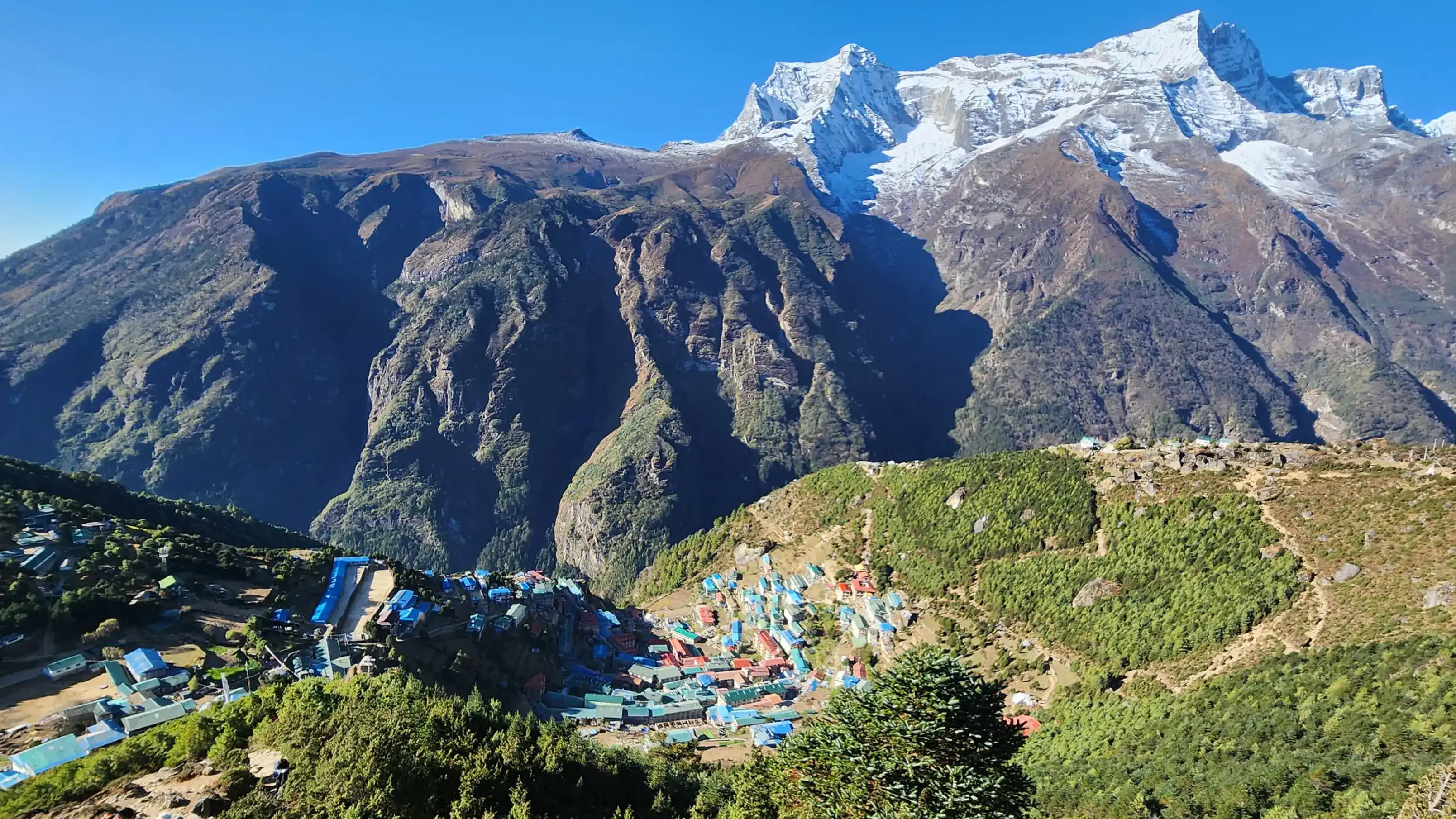
On clear spring mornings, Everest is visible from as far as Namche Bazaar.
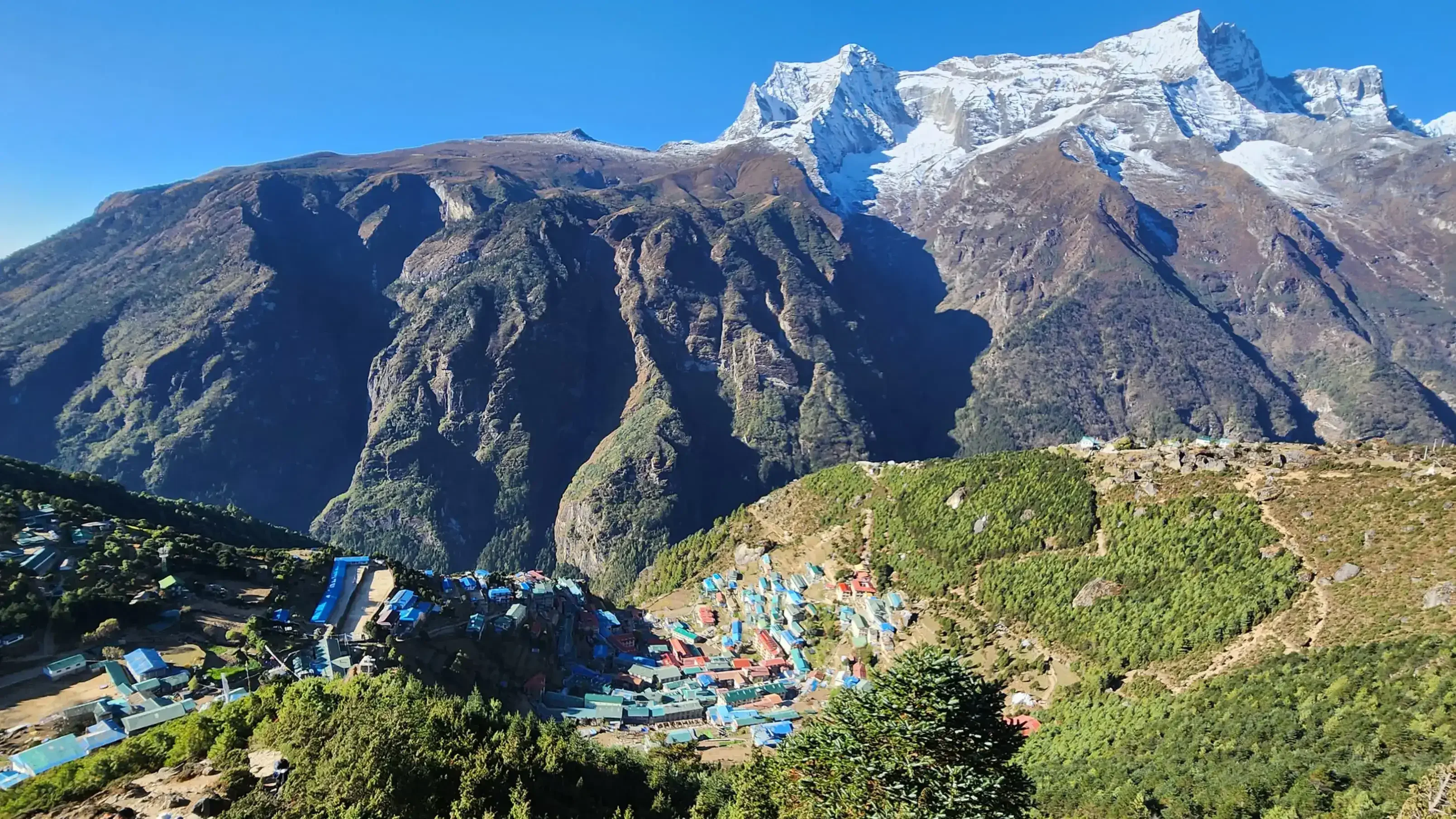 Namche Bazaar
These are the kinds of views that end up in travel magazines. This is what you are trekking 130+ kilometers for.
If you are serious about photography or simply want to see Everest in all its glory, spring is when it happens.
2. Stable Weather for Helicopter Operations
The Everest Base Camp trek with helicopter return is not just about the trek. It is also about a safe, smooth, and spectacular helicopter flight back.
Spring weather is ideal for helicopter operations in the Khumbu region.
Low wind speeds at altitude during early morning hours
Minimal precipitation compared to monsoon or post-monsoon
Predictable daily weather patterns that allow pilots to plan safe flights
High-pressure systems that dominate the Himalayas from March to May
We time our helicopter return flights for early morning, when spring skies are at their clearest and winds are calmest. The result is an aerial ride over glaciers, ice falls, and towering peaks that is simply unforgettable.
3. Rhododendron Forests in Full Bloom
Spring transforms the Khumbu trails into something truly magical.
As you trek from Lukla up toward Namche Bazaar and beyond, the forests burst into color. Rhododendrons, Nepal's national flower, bloom in vivid shades of red, pink, and white.
These forests cover vast stretches of the lower trail, particularly between Phakding and Namche.
The contrast of colorful forests against the snow-capped peaks above is one of the most visually stunning aspects of the spring EBC trek. No other season offers this.
4. Ideal Temperatures for High-Altitude Trekking
Temperature matters more than most first-time trekkers realize.
In winter (December to February), temperatures at Everest Base Camp can plunge to minus 20 degrees Celsius at night. In monsoon (June to August), rain, leeches, and muddy trails make trekking miserable.
Spring sits perfectly in between.
Daytime temperatures at lower elevations: 10 to 15 degrees Celsius
Daytime temperatures at Everest Base Camp (5,364m): minus 5 to 5 degrees Celsius
Nighttime lows are cold but manageable with proper gear
This temperature range is challenging enough to feel like an adventure but not so extreme that it endangers unprepared trekkers. It is the Goldilocks zone of Himalayan trekking.
5. Longer Daylight Hours
More daylight means more flexibility on the trail.
Spring days in Nepal are long, giving trekkers extra time to reach their teahouse before dark. This is especially important on longer acclimatization days, such as the hike from Namche up to Everest View Hotel and back.
Longer daylight also means more time to enjoy the views at key locations like:
Kala Patthar (5,545m), the highest point of the classic EBC itinerary
Everest Base Camp itself, surrounded by the Khumbu Glacier
Gokyo Ri, for those adding a side trip to the route
You will not feel rushed. That makes a big difference at altitude.
6. Vibrant Trail Culture and Festive Atmosphere
Spring is when the Khumbu region comes alive.
Summit expeditions are underway on Everest and other peaks. You will cross paths with international mountaineering teams, Sherpa climbing crews, and porters hauling expedition supplies.
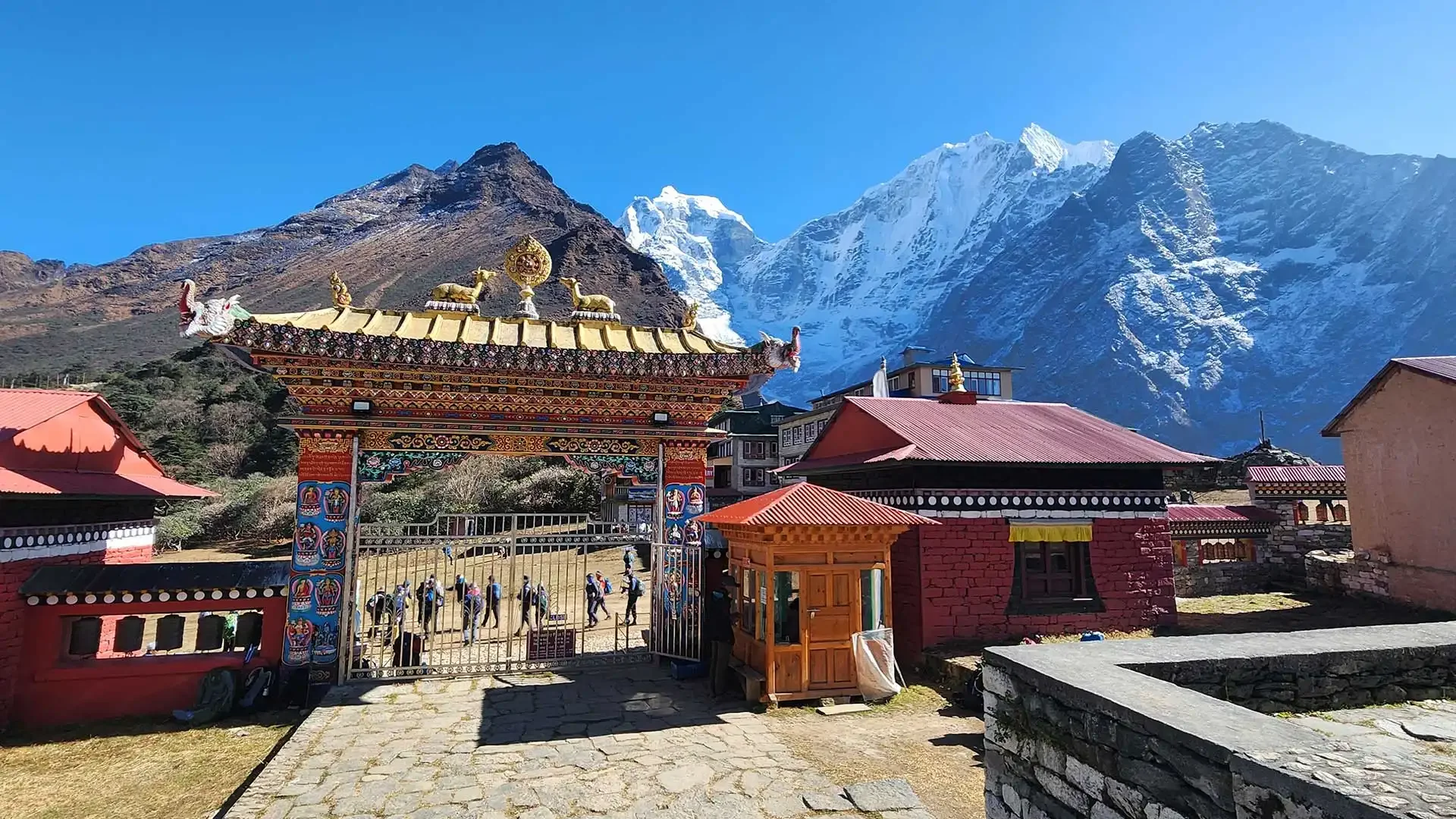 Experience The Sherpa Culture In Tengboche Monastery
The energy on the trail in spring is electric. Teahouses are lively. The Sherpa communities celebrate Mani Rimdu and other local festivals in nearby monasteries.
Trekking to Base Camp in spring means you are part of something bigger, a global gathering of adventurers at the foot of the world's highest mountain.
7. Best Acclimatization Conditions
Altitude sickness is the biggest risk on the EBC trek. Proper acclimatization is essential.
Spring conditions make acclimatization safer and more effective.
Stable daytime weather allows for proper "climb high, sleep low" rest days
Clear skies reduce psychological stress on trekkers
Teahouses are well-stocked, warm, and staffed throughout the spring season
Medical facilities at Namche and Pheriche are fully operational
A well-planned 12-day Everest Base Camp trek with built-in acclimatization days in spring gives your body the best chance to adapt safely and successfully.
8. Why a Helicopter Return Transforms the Spring Experience
The helicopter return is not a luxury add-on. It is a smart, strategic choice that enhances everything about the trek.
Here is what the helicopter return does for you:
Saves 4 to 5 days of repetitive downhill trekking on sore knees
Eliminates altitude re-exposure from descending the same trail
Delivers an aerial perspective of the Khumbu region that no trail can offer
Reduces injury risk from tired legs on steep descents
Gets you back to Lukla (or Kathmandu) faster, saving vacation days
In spring, the helicopter return is at its absolute best. Clear skies mean the pilot can fly higher, take wider scenic arcs, and give you sweeping aerial views of Everest, the Khumbu Icefall, and the endless Himalayan ranges stretching into Tibet.
This is a once-in-a-lifetime aerial experience that spring uniquely enables.
9. Flight Connections Through Lukla
Lukla Airport is the gateway to the Khumbu and one of the world's most famous (and demanding) airstrips.
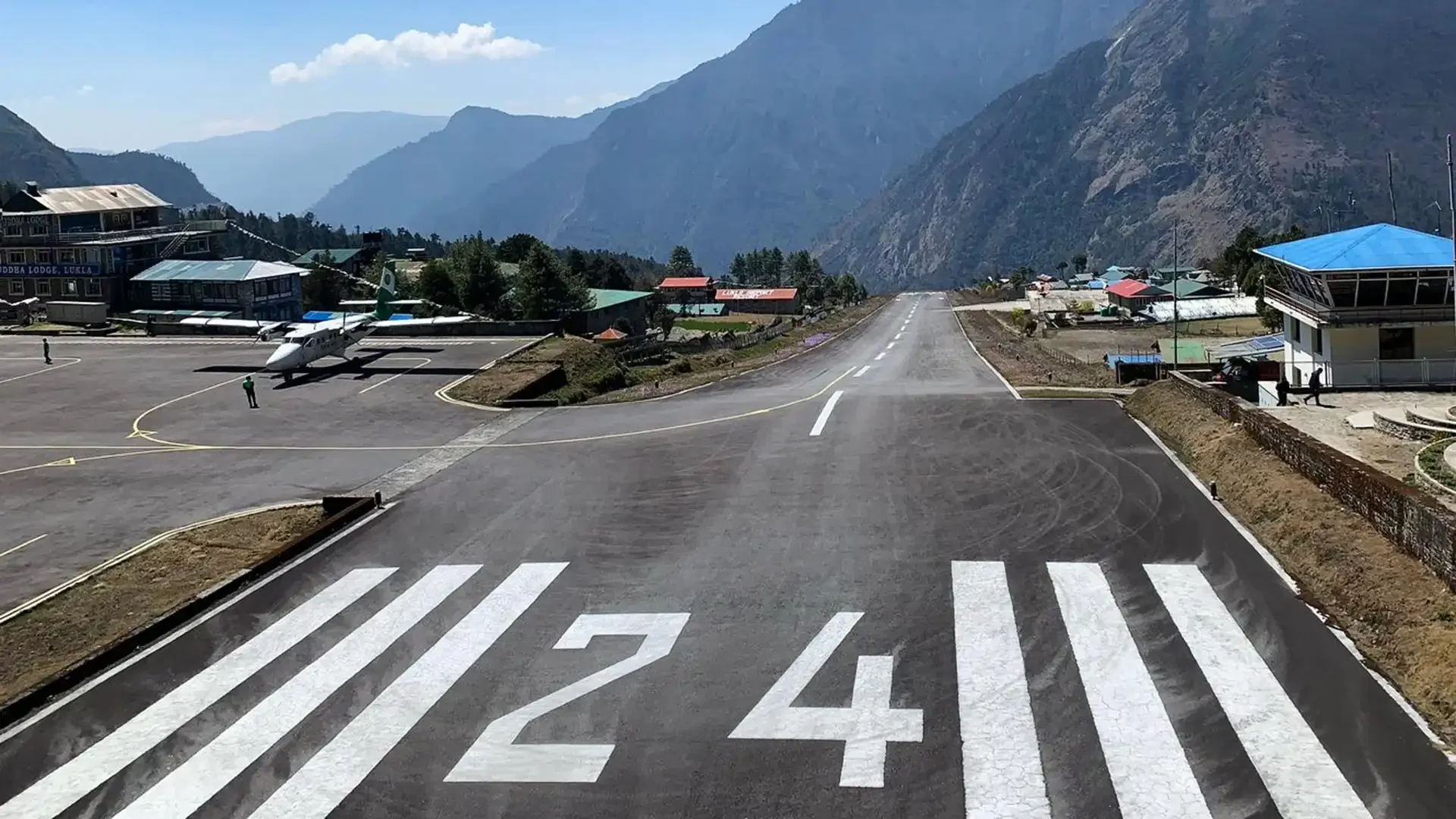 Lukla Airport
In spring, Lukla flights operate with far greater reliability than in monsoon or winter.
Morning flights are typically clear and on schedule
Weather windows are predictable and consistent
Flight cancellations are relatively rare compared to post-monsoon season
For trekkers using the helicopter return option, this means your entire journey, from the Lukla flight in to the helicopter flight back, is far more likely to run smoothly in spring.
Delays and cancellations are stressful at altitude. Spring minimizes that risk.
10. Spring vs. Autumn: Which Is Better for EBC Heli Return?
Autumn (September to November) is also an excellent trekking season. But spring has key advantages for the helicopter return specifically.
Factor | Spring | Autumn |
|---|---|---|
Mountain visibility | Excellent | Very good |
Helicopter weather | Most stable | Generally stable |
Trail crowds | High but manageable | Peak crowding in October |
Flora and scenery | Rhododendrons blooming | Dusty, post-monsoon trails |
Summit expedition energy | Yes, Everest season | No, post-season quiet |
Temperature | Moderate | Moderate to cold |
Both seasons are great. But spring offers the added spectacle of expedition season, blooming forests, and the most stable helicopter flying conditions of the year.
Who Should Choose the Spring EBC Trek with Helicopter Return?
This combination is ideal for a specific kind of traveler.
You are the right candidate if:
You have limited vacation time and cannot spend 16 to 18 days on a full trek
You want the complete EBC experience without the punishing descent
You are concerned about knee pain or joint stress on long downhill sections
You want the best possible aerial views and clear weather photographs
This is your first or only Himalayan trekking experience and you want it done right
The EBC trek with helicopter return is one of the smartest itinerary choices available for Everest Base Camp.
Preparing for the Spring EBC Trek with Helicopter Return
Preparation is everything on a high-altitude trek.
Physical preparation:
Train for at least 8 to 12 weeks before departure
Focus on cardiovascular fitness: hiking, stair climbing, cycling
Include strength training for legs and core
Practice trekking with a loaded daypack on inclines
Gear essentials for spring:
Down jacket (for mornings and evenings above 3,500m)
Moisture-wicking base layers
Waterproof outer shell (afternoon showers are possible in late spring)
Quality trekking boots, broken in before the trip
Trekking poles (invaluable on descents and at altitude)
Sun protection: SPF 50+ sunscreen, UV sunglasses, sun hat
Health and altitude:
Consult your doctor about Diamox (acetazolamide) for altitude sickness prevention
Stay well hydrated throughout the trek (3 to 4 liters per day minimum)
Never skip acclimatization rest days
Know the symptoms of AMS, HACE, and HAPE
If you are new to high-altitude trekking, the Everest Base Camp beginner guide covers everything you need to know before booking.
What to Expect on the Spring EBC Trek: Day by Day Overview
Days 1 to 2: Kathmandu arrival and preparation
Arrive in Kathmandu, complete final gear checks, meet your guide, and take a pre-trek briefing.
Day 3: Fly Kathmandu to Lukla, trek to Phakding
The famous Lukla flight takes about 35 minutes. You land at 2,860m and begin your first day on the trail.
Days 4 to 5: Trek to Namche Bazaar and acclimatization day
Namche Bazaar (3,440m) is the hub of the Khumbu. Your acclimatization day here is non-negotiable and always worth it.
Days 6 to 7: Namche to Tengboche and Dingboche
The trail passes Tengboche Monastery, one of Nepal's most sacred Buddhist sites, with Everest and Ama Dablam looming behind it.
Days 8 to 9: Dingboche acclimatization and trek to Lobuche
A second acclimatization day at Dingboche (4,410m) prepares you for the final push above 5,000m.
Day 10: Lobuche to Gorak Shep, visit Everest Base Camp
You reach Everest Base Camp (5,364m). This is the moment. Let it sink in.
Day 11: Summit Kala Patthar, helicopter return to Lukla or Kathmandu
Early morning ascent of Kala Patthar for the most famous view of Everest. Then descend to Gorak Shep, board your helicopter, and fly back in spectacular fashion.
Day 12: Kathmandu departure or additional rest day
Full round-trip journey complete in 12 days. Without the helicopter, the same trek takes 16 to 18 days.
Why Trekkers Choose Nepal Visuals for the Spring EBC Heli Return Trek
Choosing the right trekking company matters as much as choosing the right season.
We specialize in small-group and private Everest Base Camp experiences with professional high-altitude guides, seamless helicopter coordination, and full logistical support from Kathmandu to Kala Patthar and back.
Our Everest Base Camp trek with heli return is a 12-day itinerary designed specifically for trekkers who want the complete experience with maximum efficiency and safety.
Still Deciding Whether EBC Is Right for You?
If you are still weighing your options, these resources will help:
Everything to know about Everest Base Camp: A comprehensive guide covering all EBC essentials
Why trek Everest Base Camp?: The personal and experiential case for doing this trek
EBC trek beginner guide: Essential reading if this is your first serious trek
Classic EBC trek (without helicopter return): For those who prefer the full round-trip on foot
The right itinerary depends on your time, fitness, and goals. But if you are going in spring, you are already making the smartest seasonal choice possible.
Final Word: Spring, Helicopters, and Everest
There is a reason the world's best mountaineers, photographers, and adventure travelers converge on the Khumbu every spring.
The light is extraordinary. The air is clear. The mountains are at their most dramatic.
Adding a helicopter return to your spring EBC trek takes an already remarkable journey and elevates it, literally, into the upper atmosphere of travel experiences.
You trek in on foot, through rhododendron forests and ancient Sherpa villages, acclimatizing slowly, earning every meter of altitude.
Then you fly out over the roof of the world.
Spring makes both halves of that story better. That is why it is the best season for the Everest Base Camp trek with helicopter return.
Book your spring EBC heli return trek: Everest Base Camp Trek with Helicopter Return (12 Days)