 Nepal Visuals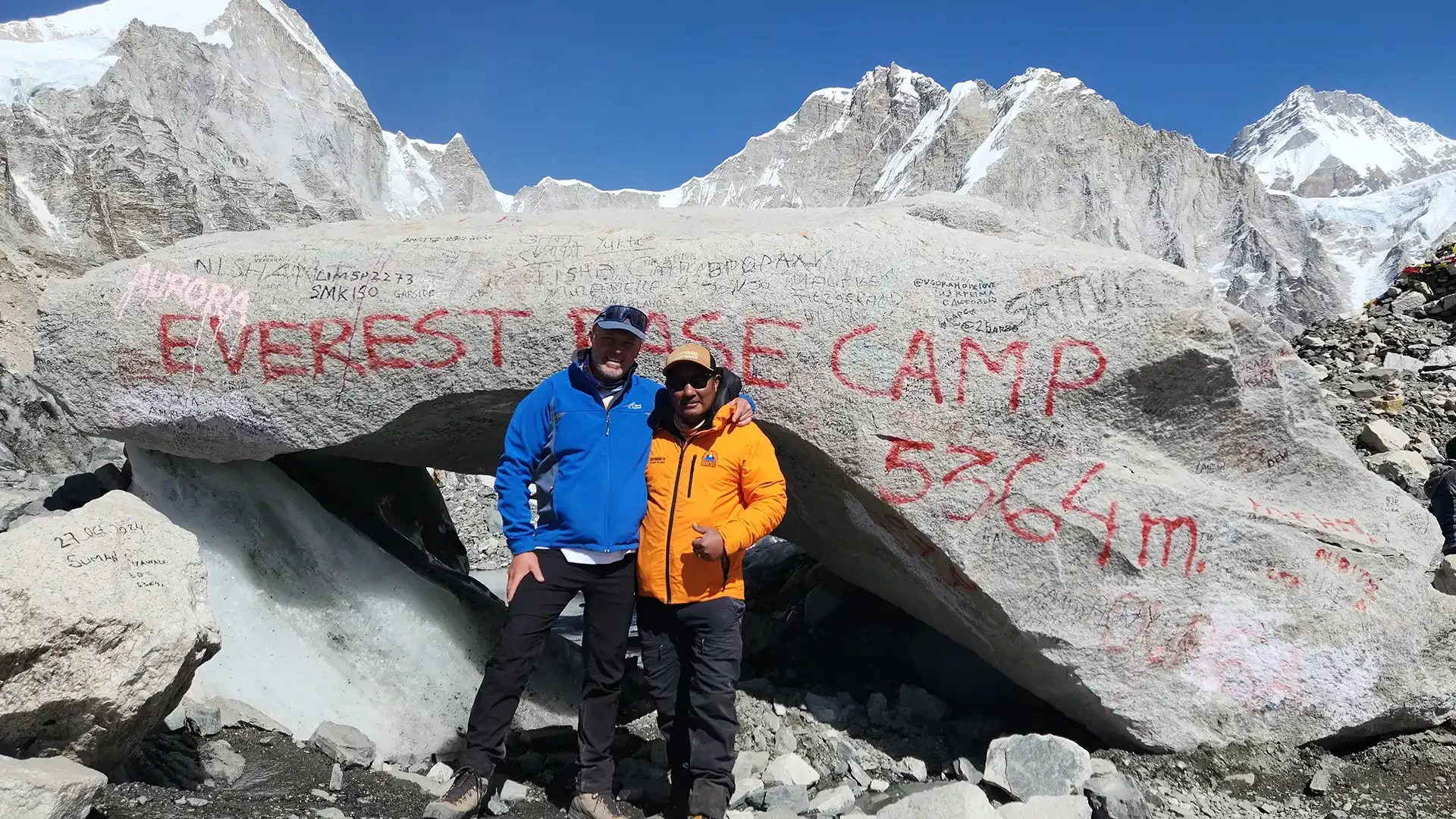
This guide for Everest Base Camp is for all trekkers; beginners, professionals, and adventure enthusiasts. Learn everything about EBC trek in 2026.
On this page(22)
Standing at the foot of the world's highest mountain is not something you stumble into. It takes planning, preparation, and a genuine willingness to push yourself beyond what feels comfortable.
The Everest Base Camp Trek is one of the most celebrated journeys on Earth. It has been recommended by National Geographic, CNN, Lonely Planet, and BBC Travel. Thousands of people from every country and background complete it every year.
But what makes this trek truly special is not the destination alone. It is the journey itself: the culture, the landscape, the friendships, the challenge, and the quiet transformation that happens somewhere between the first day on the trail and the last.
This guide covers everything you need for a successful, safe, and deeply rewarding EBC Trek in 2026.
Understanding the Trek: What You Are Actually Signing Up For
Before you book flights or buy boots, it helps to understand exactly what the EBC Trek involves.
This is not a technical mountaineering expedition. You do not need ropes, crampons, or an ice axe.
It is a long-distance high-altitude trek covering approximately 130 kilometers round trip, starting and ending in Lukla.
You will walk for five to eight hours per day across rocky trails, through forest and glacial moraine, over suspension bridges and mountain passes.
The maximum altitude you reach on the standard route is Kala Patthar at 5,545 meters, with Everest Base Camp itself sitting at 5,364 meters.
The full trek takes 12 to 14 days, including essential acclimatization rest days at Namche Bazaar and Dingboche.
The difficulty is rated moderate to challenging. The altitude is the primary challenge, not the technical nature of the terrain.
Most reasonably fit adults who prepare properly can complete this trek. What separates those who make it from those who turn back is rarely physical fitness. It is acclimatization, preparation, and patience.
Read more: Everything you need to know about the Everest Base Camp
What Exactly Is Everest Base Camp?
Everest Base Camp is not a building, a visitor center, or a fixed structure of any kind.
It is a point on the Khumbu Glacier in northeastern Nepal where trekkers arrive at the foot of the world's highest mountain, and where mountaineers set up their expedition camps before attempting the Everest summit.
During the spring climbing season, the area transforms into a temporary high-altitude city. Hundreds of colorful tents appear on the rocky glacier. Mountaineers, Sherpa guides, cooks, doctors, communications staff, and expedition support teams fill the space with activity, noise, and an extraordinary sense of shared purpose.
Outside of the climbing season, Base Camp is quiet, cold, and completely empty. The glacier remains. The icefall remains. The mountain remains. Everything else is packed away and carried back down.
There are actually two Everest Base Camps. The more famous one sits on the Nepal side at 5,364 meters (17,598 feet) on the Khumbu Glacier. The other is on the Tibet side at approximately 5,200 meters, below the Advanced Base Camp on the East Rongbuk Glacier. When people talk about trekking to Everest Base Camp, they are almost always referring to the Nepal side.
What Do You Actually See at Base Camp?
This is one of the most common questions first-time trekkers ask, and the honest answer surprises many people.
You cannot see the summit of Mount Everest from Everest Base Camp.
The mountain's upper ridges and peak are hidden behind the massive bulk of the West Ridge and the Khumbu Icefall, which towers directly above the camp.
What you do see is extraordinary in its own right. The Khumbu Icefall is one of the most dramatic natural features in the Himalayan region. It is a churning, constantly shifting cascade of blue-white ice, enormous ice towers called seracs, and deep crevasses that groan and crack around the clock.
Nuptse and Pumori rise dramatically on either side of the glacier. The surrounding peaks create a natural amphitheater of rock and ice that makes you feel very small and very alive at the same time.
For views of the Everest summit itself, the place to go is Kala Patthar, a rocky hill at 5,545 meters located just before Base Camp on the standard trekking route. Most trekkers visit Kala Patthar at sunrise and consider it the most visually spectacular moment of the entire journey.
The Routes: Classic EBC, Gokyo Lakes, and Three Passes
The Classic Everest Base Camp Route
The classic EBC Trek is the most popular trekking route in the Himalayas and the one most people mean when they say they are going to Everest Base Camp.
It begins with a flight from Kathmandu to Lukla and follows the Dudh Koshi River valley northward through the Khumbu region.
The route passes through Phakding, Namche Bazaar, Tengboche, Dingboche, Lobuche, and Gorak Shep before arriving at Base Camp.
Most itineraries also include an early morning ascent of Kala Patthar for sunrise views of Everest.
The classic route takes 12 to 14 days and is the most well-supported trek in the Khumbu, with teahouses, clear trail markings, and experienced guides available throughout.
The Gokyo Lakes Route
The Gokyo Lakes Trek is an extended variation that diverges from the classic route at Namche Bazaar and heads northwest into the Gokyo Valley.
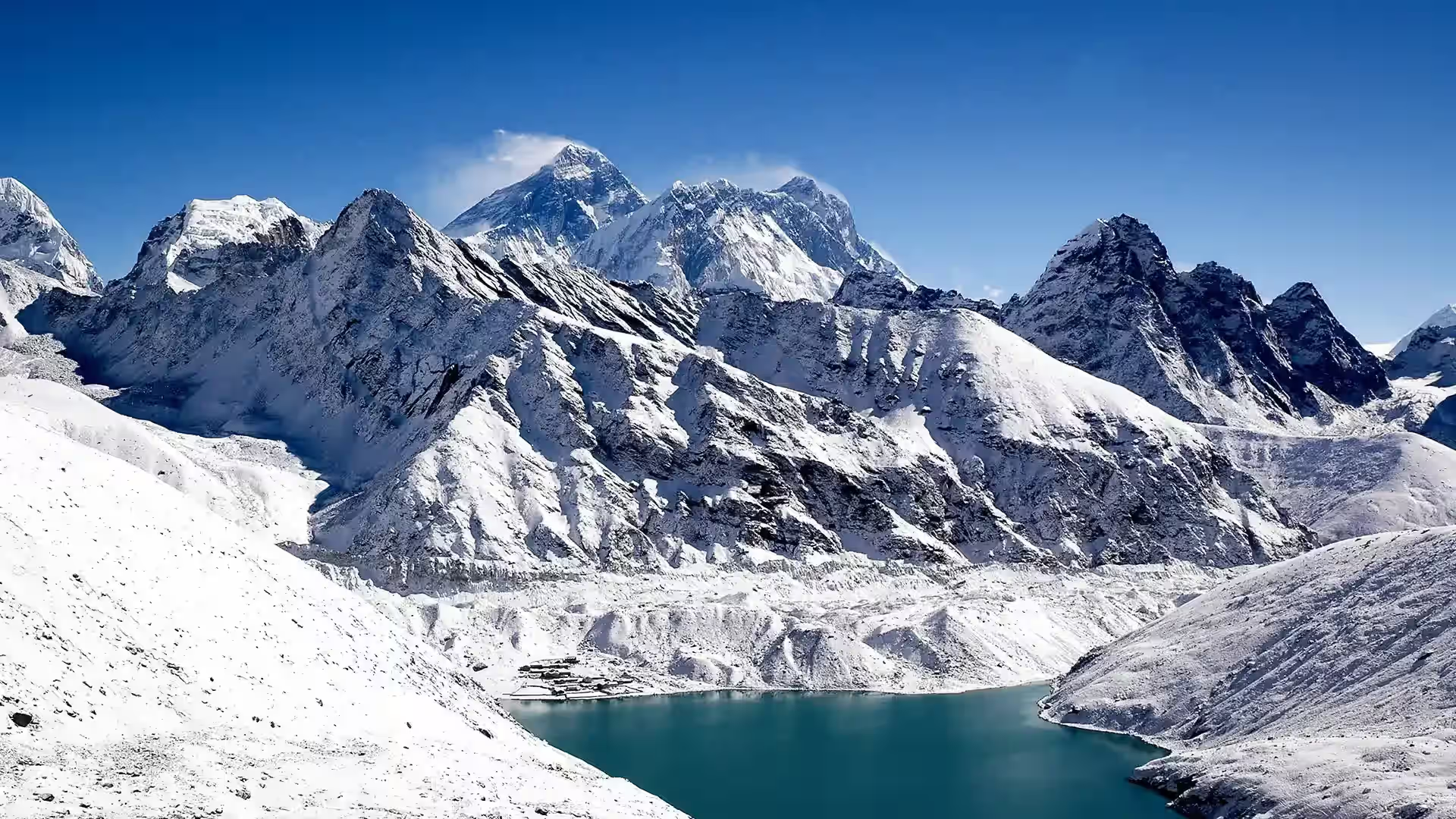
The Gokyo Valley contains a series of stunning glacial lakes at around 4,700 to 5,000 meters, each a vivid shade of turquoise and surrounded by high peaks.
The high point of this variation is Gokyo Ri at 5,357 meters, which offers one of the finest panoramic views of the Everest massif available anywhere in the Khumbu.
From Gokyo, the route crosses the challenging Cho La Pass at 5,420 meters before rejoining the classic trail at Lobuche and continuing to Base Camp.
The Gokyo Lakes variation adds two to three days to the overall itinerary and is rated more challenging than the classic route.
It is strongly recommended for trekkers who want a richer and more varied Khumbu experience and are comfortable with the additional altitude and distance.
 Gokyo Lake Trek
The Three Passes Trek
The Three Passes Trek is the most demanding route in the Everest region and the choice of experienced trekkers looking for a complete Khumbu traverse.
The route crosses three high mountain passes: Renjo La at 5,360 meters, Cho La at 5,420 meters, and Kongma La at 5,535 meters.
Along the way, it also visits the Gokyo Lakes and Everest Base Camp, making it the most comprehensive single itinerary available in the region.
Each pass presents its own physical challenge. The crossings involve steep ascents and descents on rocky, sometimes icy terrain where careful footing is essential.
The Three Passes Trek takes 18 to 21 days and is rated very challenging.
Prior high-altitude trekking experience is strongly recommended. Trekkers who have not previously been above 4,000 meters should complete the classic EBC route first before attempting this itinerary.
Everest Three Passes Trek Guide
Preparing for the Trek: Fitness, Training, and Mental Readiness
Physical Preparation
Begin dedicated training at least three to four months before your departure date.
The most important physical attribute for the EBC Trek is cardiovascular endurance. Not speed. Not strength. The sustained ability to keep moving at altitude for multiple hours per day, day after day.
The most effective training activities are long-distance hiking with a loaded pack, stair climbing, cycling, and hill walking.
Aim for at least two to three long hikes per week in the final two months before departure.
Gradually increase both the distance and the weight in your pack so your body adapts to the physical demands of carrying a loaded daypack on uneven terrain.
Strength training for your legs and core is also valuable. Squats, lunges, step-ups, and planks build the muscular endurance needed for long descents on rocky trails.
Read More: Train your body without a gym for EBC Trek
Mental Preparation
Physical training gets you to the mountain. Mental preparation gets you to Base Camp.
There will be days on the trail when your legs are tired, your head aches from the altitude, and the teahouse feels cold and the food seems repetitive.
On those days, the trekkers who succeed are the ones who have decided in advance that they will keep going, slowly and steadily, regardless of how they feel in the moment.
Visualize the difficult moments before you leave home. Think about how you will respond to fatigue, altitude discomfort, and cold.
Develop a personal strategy for pushing through hard stretches. A focused breathing rhythm, a mantra, the habit of counting steps or focusing only on the next landmark. These techniques work.
The mountain rewards patience above everything else.
Read More: Mental Tricks and Tips for Long Treks
Essential Gear and Packing Guide
Packing for the EBC Trek is about finding the balance between being properly equipped and not carrying unnecessary weight.
Every extra kilogram in your pack is felt acutely above 4,000 meters. Pack with discipline.
Footwear
Waterproof trekking boots with good ankle support are the single most important gear item on this trek.
Buy them at least six to eight weeks before your departure and break them in thoroughly with multiple long walks before the trek begins.
New boots cause blisters. Blisters at altitude are miserable and can derail your entire journey.
Bring two or three pairs of high-quality wool trekking socks. Wool manages moisture, resists odor, and provides warmth even when damp.
Clothing System
The layering system is the most effective approach to managing the huge temperature variation on the EBC Trek.
Temperatures can range from a comfortable 15 degrees Celsius during a sunny afternoon below Namche to minus 20 degrees Celsius at Kala Patthar before dawn.
Your base layer should be a moisture-wicking thermal top and bottom. Merino wool or synthetic fabrics work best.
Your mid-layer should be a fleece jacket or lightweight down jacket for warmth during rest stops and cold mornings.
Your outer layer must be a waterproof, windproof shell jacket and matching pants. This is your protection against rain, snow, and the fierce winds at high altitude.
A high-quality down jacket is essential from Dingboche upward and at Gorak Shep, where nighttime temperatures are seriously cold.
Pack warm gloves, a warm hat that covers your ears, a lightweight sun hat for daytime use at lower elevations, and a buff or neck gaiter for the wind.
Sleeping Bag
Your teahouse blankets will not be sufficient above 4,000 meters on cold nights.
Bring a sleeping bag rated to at least -15 degrees Celsius for the upper sections of the route.
A good sleeping bag is one of the best investments you can make for the comfort of your nights on this trek.
Backpack and Daypack
Your main duffel bag, carried by your porter, should hold the bulk of your gear and weigh no more than 15 kilograms.
Your daypack, which you carry yourself each day, should be 25 to 35 liters and contain your water, snacks, camera, warm layers, headlamp, first aid kit, and documents.
Keep your daypack light. Your porter is there to carry the weight. Let them do their job.
Health and Safety Items
Your first aid kit should include blister treatment, pain relief medication, antiseptic wipes, bandages, rehydration salts, and anti-diarrheal medication.
Bring Diamox (acetazolamide) if your doctor has prescribed it. It is one of the most effective tools available for managing altitude sickness.
Sunscreen of SPF 50 or higher is non-negotiable at altitude. UV radiation increases by roughly 10 percent for every 1,000 meters of elevation gain.
Carry UV-blocking sunglasses with side shields. Snow blindness is a real and preventable risk above 4,000 meters.
A headlamp with fresh batteries is essential for the pre-dawn Kala Patthar ascent and for navigating teahouse corridors at night.
Other Essentials
A personal water filter like a Sawyer Squeeze or a SteriPen reduces plastic waste and saves money compared to buying bottled water at every stop.
A power bank of sufficient capacity to charge your phone multiple times is critical, as charging at teahouses costs extra and is not always reliable above Dingboche.
Carry cash in Nepali rupees for all trail expenses. There are no reliable ATMs above Namche Bazaar.
Budget approximately $40 to $60 USD per day in cash for meals, hot showers, charging, water, and incidentals.
Read More: Comprehensive packing list guide for your EBC trek
EBC Trek Distance and Duration
The Everest Base Camp Trek covers approximately 130 kilometers (80 miles) round trip, starting and ending in Lukla.
The standard duration is 12 to 14 days, which includes the essential acclimatization rest days that make the journey safe and achievable.
Here is a general breakdown of how those days are distributed:
Lukla to Everest Base Camp: 8 to 9 days of trekking
Everest Base Camp back to Lukla: 3 to 4 days
Total walking time each day averages five to eight hours, covering between 10 and 16 kilometers depending on terrain and elevation.
Some trekkers extend the itinerary to include side trips to the Gokyo Lakes, the Three Passes Trek, or additional rest days at high altitude. These extensions add between two and five days to the total duration and are recommended for trekkers who want a more comprehensive Khumbu experience.
The Day-by-Day EBC Trek Itinerary
Day 1: Fly Kathmandu to Lukla (2,845 m). Trek to Phakding (2,610 m). Walking time: 3 to 4 hours.
The Lukla flight is one of the most thrilling 35 minutes in aviation. The descent into a narrow valley and the short sloping runway arrival is an experience that immediately signals you have left the ordinary world behind.
Day 2: Trek from Phakding to Namche Bazaar (3,440 m). Walking time: 5 to 6 hours.
This is the first genuinely demanding day. The trail climbs steeply from the Dudh Koshi valley and crosses several suspension bridges before the long final ascent to Namche. The first view of Everest appears on the hillside just below Namche if the weather is clear.
Day 3: Acclimatization day in Namche Bazaar.
Do not waste this day resting at the teahouse. Hike up to the Everest View Hotel at 3,880 meters, visit the Sherpa Culture Museum, and explore the Saturday market if your timing aligns. The altitude gain on the acclimatization hike helps your body begin adapting, while sleeping lower at Namche consolidates the benefit.
Day 4: Trek from Namche Bazaar to Tengboche (3,860 m). Walking time: 5 to 6 hours.
The trail passes through the village of Khumjung and descends to the Dudh Koshi River before climbing through rhododendron and juniper forest to Tengboche. The first view of the Tengboche Monastery appearing through the trees is one of the great arrival moments of the entire trek.
Day 5: Trek from Tengboche to Dingboche (4,410 m). Walking time: 5 to 6 hours.
The trail descends from Tengboche to Pangboche, the oldest Sherpa village in the Khumbu, before climbing into the broad upper Imja Khola valley. Above the treeline now, the scale of the surrounding peaks becomes impossible to ignore.
Day 6: Acclimatization day in Dingboche.
The standard acclimatization hike from Dingboche goes either to Nagarjun Hill (5,083 m) or toward Chhukung (4,730 m). Both offer remarkable views of Makalu, Lhotse, and Island Peak. This day is critical. Above 4,000 meters, acclimatization rest days are not optional extras. They are what keep you healthy enough to reach the summit.
Day 7: Trek from Dingboche to Lobuche (4,910 m). Walking time: 5 to 6 hours.
The trail climbs past Dughla and up the steep moraine to the Thukla Pass Memorial, one of the most moving places on the entire route. The field of stone monuments honoring climbers who died on Everest creates a profound moment of reflection before the final climb to Lobuche.
Day 8: Trek from Lobuche to Gorak Shep (5,164 m), then to Everest Base Camp (5,364 m) and back to Gorak Shep. Walking time: 7 to 8 hours.
This is the biggest day of the trek. The walk to Base Camp crosses rocky glacial moraine alongside the Khumbu Glacier. The terrain is raw and otherworldly. Arriving at the prayer flag cairns of Base Camp, with the Khumbu Icefall above and the surrounding peaks on every side, is a moment that belongs entirely to you.
Day 9: Early morning hike to Kala Patthar (5,545 m), then descend to Pheriche (4,240 m). Walking time: 6 to 7 hours.
The pre-dawn climb to Kala Patthar in darkness, headlamps cutting through the cold, is demanding but completely worth it. Reaching the cairn at the top as the sun rises and turns Everest gold is the defining visual memory of the entire journey.
Day 10: Trek from Pheriche to Namche Bazaar. Walking time: 6 to 7 hours.
The descent is faster but still tiring. The body is weary from days at altitude, and the legs feel the cumulative effort of the preceding week. The landscape looks different on the way down. Familiar landmarks appear from new angles.
Day 11: Trek from Namche Bazaar to Lukla. Walking time: 6 to 7 hours.
The final walking day. Trekkers who raced past the lower villages on the way up now have time to stop, look, and appreciate what the trail looked like before the altitude became all-consuming.
Day 12: Fly from Lukla back to Kathmandu.
Landmarks That Define the Everest Base Camp Trek
Tengboche Monastery: A Place That Stops You in Your Tracks
At 3,860 meters, the Tengboche Monastery is one of the most significant Buddhist monasteries in the entire Himalayan region.
It sits on a forested ridge with an unobstructed view of Ama Dablam, one of the most photographed peaks on Earth, rising dramatically to the south.
Arriving at Tengboche after a long day on the trail, with the monastery appearing suddenly through the pine trees, is a moment that many trekkers describe as the emotional highlight of the entire journey.
The monastery has been destroyed twice, first by an earthquake and later by fire, and rebuilt each time. There is something quietly powerful about that. The structure that stands before you is an act of faith and resilience.
If you arrive in the early morning, you may hear the monks chanting inside, low resonant voices accompanied by bells and drums, incense smoke curling through the rafters.
Take your time here. Sit on the stone steps and look at the mountains. Let the altitude and the silence and the beauty of the place settle over you. The trail can wait.
The Thukla Pass Memorial: A Moment of Deep Reflection
Above the village of Lobuche, the trail climbs steeply to the Thukla Pass, and at the top you encounter something unexpected.
The Thukla Pass Memorial is a field of stone monuments, each one erected in memory of a climber who died on Everest or in the Khumbu region.
The names carved into the stones belong to Sherpas and foreign climbers alike. Some are legendary figures in mountaineering history. Others are less known but no less significant to the people who loved them.
Standing among these monuments with Everest visible in the distance, you feel the full weight of what it means to pursue the summit.
The memorial does not diminish the ambition of climbing. It honors it. It reminds you that the mountain demands absolute respect, and that the people who gave their lives here knew that better than anyone.
This is a place to pause, reflect, and walk on with humility.
Kala Patthar: The View That Makes It All Real
Most trekkers visit Everest Base Camp and Kala Patthar on the same itinerary, and both are worth every step.
Everest Base Camp at 5,364 meters is deeply atmospheric. The Khumbu Icefall crashes down from the Western Cwm in an endless, frozen cascade of blue ice and seracs. Prayer flags drape over cairns and boulders. The air is thin and cold and completely still.
You cannot see the Everest summit from Base Camp, but you do not need to. The scale of what surrounds you is enough.
Kala Patthar at 5,545 meters is where you get the view. Rising above the glacier before dawn, headlamp cutting through the dark, lungs working hard in the thin air, you reach the cairn at the top just as the first light touches the upper ridges of Everest.
The mountain turns from grey to gold to blazing white. Lhotse, Nuptse, and Pumori glow around it. The sky above is a deep, impossible blue.
This is the moment most trekkers carry home with them. Not a photograph, though you will take many. The feeling. The specific, unrepeatable feeling of standing at 5,545 meters and watching the sun rise over the roof of the world.
Best Time to Trek to Everest Base Camp
Spring (March to May)
Spring is one of the two ideal seasons for the EBC Trek and the most atmospheric time to be in the Khumbu.
The lower trail between Lukla and Namche is lined with rhododendron forests in spectacular bloom during March and April.
Skies are generally clear and daytime temperatures are comfortable at lower elevations.
May is when the majority of Everest summit attempts take place, so Base Camp is at its most active and energized during this month.
Expect busier trails and fuller teahouses, particularly in the peak weeks of late April and early May.
Autumn (September to November)
Autumn is widely considered the single best season for trekking in the Khumbu.
The monsoon clears in early September, leaving the air exceptionally clean and the visibility extraordinary.
October is the peak month. Mountain views are at their sharpest, trail conditions are ideal, and temperatures during the day are comfortable at all elevations.
Nights above 4,000 meters are cold, and nights at Gorak Shep and Kala Patthar are very cold. Come prepared.
Winter (December to February)
Winter trekking is possible for experienced and well-equipped trekkers who prefer quieter trails and dramatic snow scenery.
The primary challenges are extreme cold at altitude, snow on the upper sections of the route, and the psychological difficulty of long nights and short days above 4,000 meters.
This season is not recommended for first-time high-altitude trekkers.
Monsoon (June to August)
The monsoon is not recommended for the EBC Trek.
Heavy rainfall, persistent cloud cover, slippery trails, and frequent Lukla flight disruptions make this the most difficult and least rewarding season.
Mountain views are largely obscured for days at a time, which removes a significant portion of what makes this trek extraordinary.
Acclimatization: The Most Important Factor on the EBC Trek
Acclimatization is not a side note in EBC Trek preparation. It is the central issue around which everything else is organized.
The human body performs well at sea level, where the air contains approximately 21 percent oxygen at a relatively high density.
At 5,000 meters, the air still contains 21 percent oxygen, but the lower atmospheric pressure means each breath delivers significantly less oxygen to your lungs and bloodstream.
Your body compensates by increasing breathing rate, producing more red blood cells, and gradually adjusting its chemistry over several days.
This process cannot be rushed, accelerated by willpower, or bypassed by superior fitness. It simply takes time.
Acute Mountain Sickness (AMS) develops when trekkers ascend faster than their bodies can adapt.
Early symptoms include headache, nausea, dizziness, loss of appetite, and poor sleep quality.
These symptoms are common at a new altitude and usually resolve within one to two days of rest.
The dangerous symptoms that require immediate action are a worsening headache that does not improve with rest, loss of coordination, confusion or unusual behavior, and a wet cough that persists at rest.
These indicate possible HAPE or HACE, both of which are life-threatening and require immediate descent.
The golden rules of acclimatization are simple and non-negotiable.
Never ascend with symptoms. Follow the itinerary and do not skip acclimatization days to save time. Stay hydrated with three to four liters of water per day. Avoid alcohol, particularly in the first few days at a new altitude. Eat well and maintain your energy levels.
The "climb high, sleep low" principle is built into the EBC itinerary at Namche and Dingboche. Short hikes to higher elevations during rest days, followed by sleeping at the lower teahouse altitude, significantly accelerate the acclimatization process.
Altitude Sickness Medication: Should You Take Diamox?
Diamox (acetazolamide) works by stimulating the kidneys to excrete bicarbonate, which causes the blood to become slightly more acidic and triggers deeper, more frequent breathing.
This effectively speeds up the acclimatization process and reduces the risk and severity of AMS symptoms.
It is the most widely used and clinically supported medication for altitude sickness prevention and is commonly taken by EBC trekkers.
The standard prophylactic dose is 125 mg twice daily, beginning one to two days before significant altitude gain.
Common side effects include increased urination, a tingling sensation in the hands and feet, and occasionally blurred vision.
Diamox is a sulfonamide and should not be taken by anyone with a sulfa drug allergy.
Consult your doctor well before your departure to discuss whether Diamox is appropriate for you and to obtain a proper prescription.
Health and Safety on the Trail
Hygiene
Gastrointestinal illness is the second most common health problem on the EBC Trek after altitude sickness.
Wash your hands thoroughly with soap and water or hand sanitizer before every meal and after using the bathroom.
Drink only purified, filtered, or boiled water. Using a personal water filter eliminates the need to purchase bottled water and significantly reduces the plastic waste problem in the Khumbu.
Choose freshly cooked meals at teahouses, particularly above Namche. Avoid raw vegetables, salads, and meat above Dingboche.
Trekking Injuries
Blisters are the most common physical complaint on the EBC Trek and the most preventable.
Break in your boots thoroughly before departure. Change into dry socks whenever possible. Address hot spots immediately with blister plasters before they develop.
Knee pain on descents is also common. Trekking poles significantly reduce the impact load on your knees and are strongly recommended for anyone with previous knee issues.
Ankle sprains can occur on rocky sections of the trail, particularly when fatigue sets in on long days. Take your time on technical terrain.
Emergency Evacuation
Helicopter evacuation is the primary rescue method for serious medical emergencies on the EBC Trek.
It is fast and effective, but it is also expensive. Evacuation costs typically range from $3,000 to $6,000 USD.
Travel insurance covering high-altitude helicopter rescue up to 6,000 meters is absolutely non-negotiable for this trek.
Read your policy carefully before departing. Many standard travel insurance policies do not include high-altitude coverage as a default.
Permits Required for the EBC Trek in 2026
Two main permits are required for the Everest Base Camp Trek in 2026.
The Sagarmatha National Park Entry Permit costs approximately NPR 3,000 (around $25 USD) for foreign nationals and is obtainable at the Nepal Tourism Board in Kathmandu or at the park entry in Monjo.
The Khumbu Pasang Lhamu Rural Municipality Permit has replaced the TIMS card for the Everest region and is obtainable in Lukla or Kathmandu.
Carry physical copies of both permits and your passport, as checkpoints along the trail will ask to see them at multiple points.
Your trekking agency will typically arrange all permits as part of the booking process.
Do You Need a Guide? The 2026 Regulation
As of April 2023, the Nepal government made it a legal requirement to trek with a licensed guide on all major trekking routes, including the EBC Trek.
Independent trekking without a licensed guide is no longer permitted under current regulations.
Beyond the legal requirement, the practical case for having a guide is overwhelming.
An experienced guide knows the trail conditions at every point in the season. They monitor your health and recognize early signs of altitude sickness before they become serious.
They manage logistics, communicate with teahouse owners in Nepali, and handle unexpected situations (bad weather, route closures, medical issues) with the knowledge and local contacts that independent trekkers simply do not have.
Hiring a porter in addition to a guide is also highly recommended.
A porter carries your main duffel bag, freeing your energy for the walking itself. It also directly supports the livelihoods of local mountain communities in a tangible, meaningful way.
Treat your guide and porter with respect. Tip generously. A standard tip is 10 to 15 percent of the total trek cost, split appropriately between guide and porter.
Learn More: Do you need a guide for trekking in Nepal?
Accommodation: What to Expect at Teahouses
Teahouses are the backbone of the EBC Trek accommodation system and one of the features that makes this trek so accessible compared to other routes of similar altitude worldwide.
They are small, family-run lodges offering a room, a bed, and meals. Nothing more, nothing less.
Rooms on the lower trail typically include a private double or twin room with basic furnishings. As you gain altitude, rooms become more basic and shared rooms more common.
Teahouses are not heated overnight. The communal dining room may have a central stove that is lit in the evening, but private rooms are cold once that fire goes out.
Your sleeping bag is your most important source of warmth from Dingboche upward.
Hot showers are available at most teahouses for an additional $2 to $5 USD. At higher elevations, hot water may only be available for a limited window each day.
Charging devices costs $2 to $5 per device at most teahouses. Bring a power bank and charge it whenever an opportunity arises.
Wi-Fi is available through the Everest Link network at most teahouses, purchased as data cards (approximately $20 for 10 GB). Connectivity becomes limited and slow above Dingboche.
Food on the EBC Trek: What to Eat and What to Avoid
Teahouse menus along the EBC route are surprisingly varied and nutritious.
Dal bhat (rice, lentil soup, vegetable curry, and condiments) is the recommended staple of the trek. It is freshly cooked, endlessly refillable, highly nutritious, and perfectly calibrated for the energy demands of high-altitude walking.
Other reliable options include noodle soup, fried rice, pasta, eggs prepared various ways, porridge, pancakes, and a wide range of hot drinks.
Avoid meat above Namche Bazaar. Supply chain logistics become unreliable at higher elevations, and freshness cannot be guaranteed.
Traditional Sherpa dishes like tsampa (roasted barley flour), thukpa (noodle soup), and momos (steamed dumplings) are worth trying at lower altitudes where they are freshly prepared.
Food prices increase significantly with altitude because everything above the road head has to be carried up on foot or by yak. Budget accordingly.
Eat regularly and maintain your caloric intake even when altitude suppresses your appetite. Under-eating at altitude significantly worsens fatigue and increases altitude sickness risk.
Learn more: What to eat and what not to eat during long treks
The Cost of the EBC Trek in 2026
The total cost of the EBC Trek varies significantly depending on your travel style, service level, and booking approach.
A standard 12 to 14-day guided EBC Trek costs approximately $1,400 to $2,000 USD per person.
Here is a realistic cost breakdown for 2026:
Sagarmatha National Park Permit: approximately $25 USD
Khumbu Pasang Lhamu Rural Municipality Permit: approximately $25 USD
Kathmandu to Lukla round trip flights: $400 to $500 USD
Licensed guide (per day): $30 to $40 USD
Porter (per day): $20 to $28 USD
Teahouse accommodation: $5 to $15 per night
Meals on the trail: $25 to $35 per day
Gear rental or purchase: $100 to $300 USD
Travel insurance with helicopter evacuation: $100 to $200 USD
Incidentals (charging, Wi-Fi, hot showers, tips): $200 to $400 USD
Luxury EBC packages with premium lodges and helicopter return can cost $3,500 or more.
Booking through a reputable local trekking agency in Kathmandu is almost always more cost-effective than booking through a foreign operator, while also providing better on-the-ground knowledge and local expertise.
Engaging with Sherpa Culture Along the Trail
The cultural dimension of the EBC Trek is one of its most enriching and underappreciated aspects.
The Sherpa people have lived in the Khumbu for centuries, building a civilization shaped by high altitude, Tibetan Buddhism, and an intimate relationship with some of the most dramatic mountain terrain on Earth.
As you walk the trail, take the time to learn about what you are seeing. The prayer flags are not decorations. Each flag carries a printed mantra, and the wind is believed to carry those prayers outward into the world.
Mani stones are carved with the sacred mantra "Om Mani Padme Hum." Always pass on the left as a sign of respect.
Chortens are Buddhist shrine structures that mark significant locations and honor important figures. Walk clockwise around them.
At Tengboche Monastery, if you arrive during morning prayers, step quietly inside and sit. The experience of monks chanting in that setting, surrounded by high peaks, is genuinely moving.
A few Nepali phrases go a long way. "Namaste" (I bow to the divine in you) is the universal greeting. "Dhanyabad" means thank you. Using even these two phrases in the right moments creates genuine connection.
Support local businesses at every opportunity. Buy supplies from local shops. Eat at locally owned teahouses. Hire local guides and porters. Leave your spending money in the Khumbu community.
Responsible Trekking: Protecting the Khumbu Environment
The Khumbu is a fragile and irreplaceable environment, and the responsibility for protecting it rests partly with every trekker who walks through it.
Carry out all waste. Nothing generated during your trek should be left behind on the trail or in teahouses.
Use a refillable water bottle with a filter instead of purchasing single-use plastic bottles. Plastic waste is one of the most visible and damaging environmental problems in the Everest region.
Avoid using soap, shampoo, or chemical products near streams or water sources.
Choose teahouses that use solar power and eco-friendly facilities where available.
Support clean-up initiatives and organizations like the Sagarmatha Pollution Control Committee (SPCC), which does vital and ongoing work maintaining the trail environment.
The mountains have been here for millions of years. They will outlast all of us. Our job is to leave them as close to the way we found them as possible.
Your Everest Base Camp Adventure Awaits
The EBC Trek is not a comfortable holiday. It does not pretend to be.
It is two weeks of cold mornings, long days on rocky terrain, thin air, and the satisfying simplicity of a life reduced to walking, eating, and sleeping.
And it is one of the most extraordinary experiences available to any human being on this planet.
The landscape is incomprehensible in its scale and beauty. The culture is warm, complex, and endlessly interesting. The challenge is real and meaningful.
When you stand at Everest Base Camp and look up at the Khumbu Icefall, you will not be thinking about your office or your inbox or the traffic on your morning commute.
You will be thinking: I got here. I actually got here.
That feeling is worth every blister, every early morning, and every bowl of dal bhat along the way.
Prepare carefully. Respect the mountains. Trust your guide. And go.
Lukla, altitude and temperatures at a glance
The trek begins with the mountain flight to Lukla at about 2,845 m (9,334 ft) and finishes, in walking terms, at Everest Base Camp with a dawn climb of Kala Patthar at 5,644 m (18,519 ft). Between the two you gain nearly 3,000 vertical metres, which is why the acclimatisation days at Namche Bazaar and Dingboche are non-negotiable.
Temperatures follow the height rather than the calendar. Afternoons below Namche can feel warm in spring and autumn sunshine, while nights at Lobuche and Gorak Shep sit well below freezing in every season. For the flight itself see our Lukla Airport guide, and when you are ready to book, compare the 14-day and 12-day Everest Base Camp itineraries.
Sharing route guides and trail experience from the high trails of Nepal.