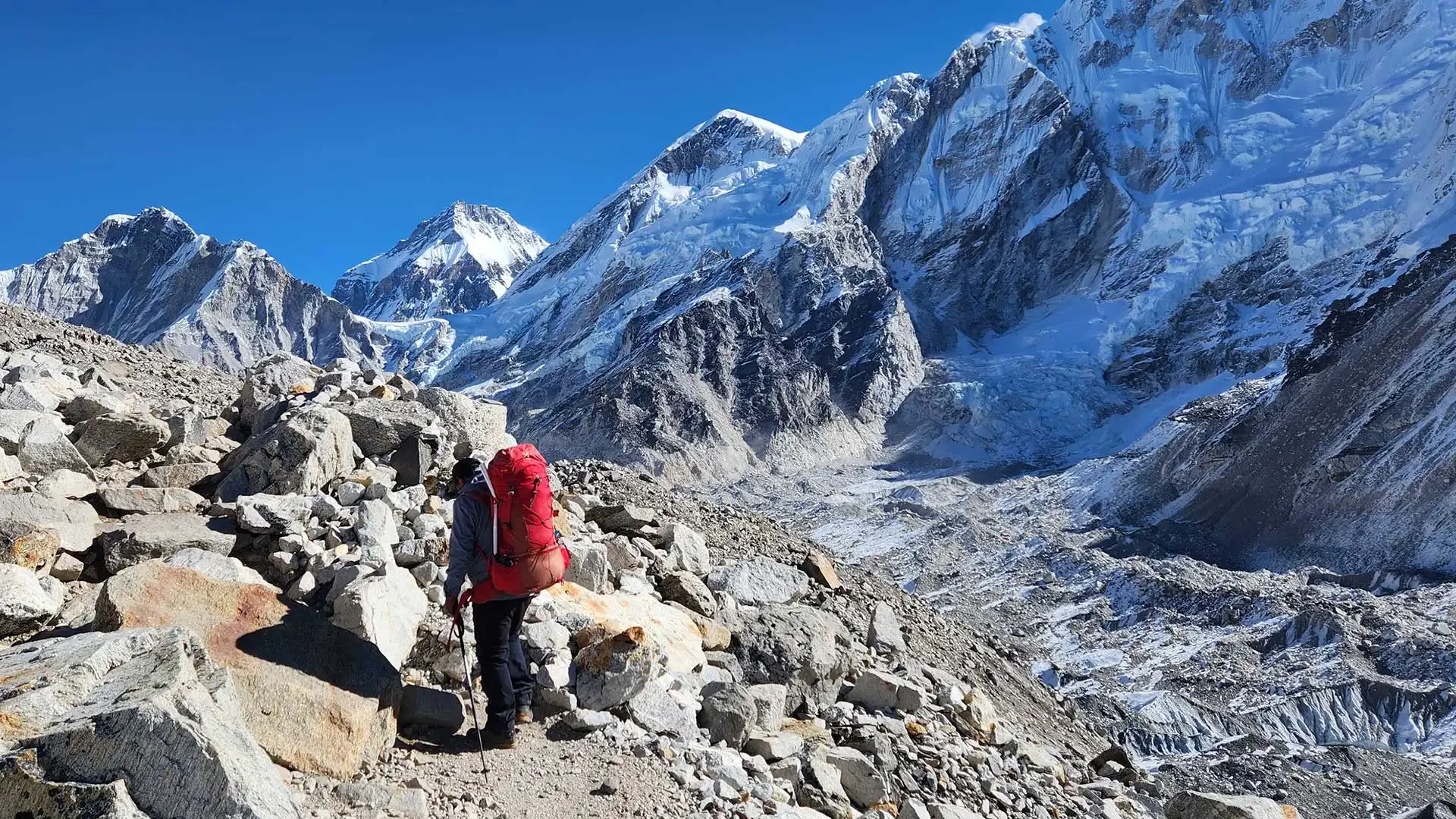
The Everest Base Camp trek is more than just trek. It is an unreal and life changing experience that teaches you more about yourself and the nature.
On this page(12)
Some adventures change the way you see the world. Some change the way you see yourself.
The Everest Base Camp Trek does both.
Every year, thousands of people from every corner of the globe lace up their boots, board a tiny propeller plane to Lukla, and set off on one of the most celebrated trekking routes on Earth. They come for the mountain. They stay for everything else.
This is not just a walk through pretty scenery. It is a full, immersive experience through raw Himalayan landscape, centuries-old Sherpa culture, and the kind of personal challenge that quietly reshapes who you are. If you have been wondering whether the EBC Trek deserves a place on your bucket list, here is your answer.
It Starts Before You Even Set Foot on the Trail
The adventure begins the moment your small aircraft lifts off from Kathmandu and banks northeast toward the mountains.
The Kathmandu to Lukla flight is one of the most thrilling short-haul flights in the world. The plane threads through narrow valleys, skimming past ridgelines at close range, before dropping steeply onto a short, steeply inclined runway perched above a cliff edge.
You will hear people go quiet as the wheels touch down. Some whisper prayers. Others let out a nervous laugh. All of it is part of the experience.
When the doors open and the cold, clean mountain air rushes in, the trek has already begun. You step out onto the tarmac at 2,860 meters and suddenly the noise of Kathmandu feels like a different lifetime.
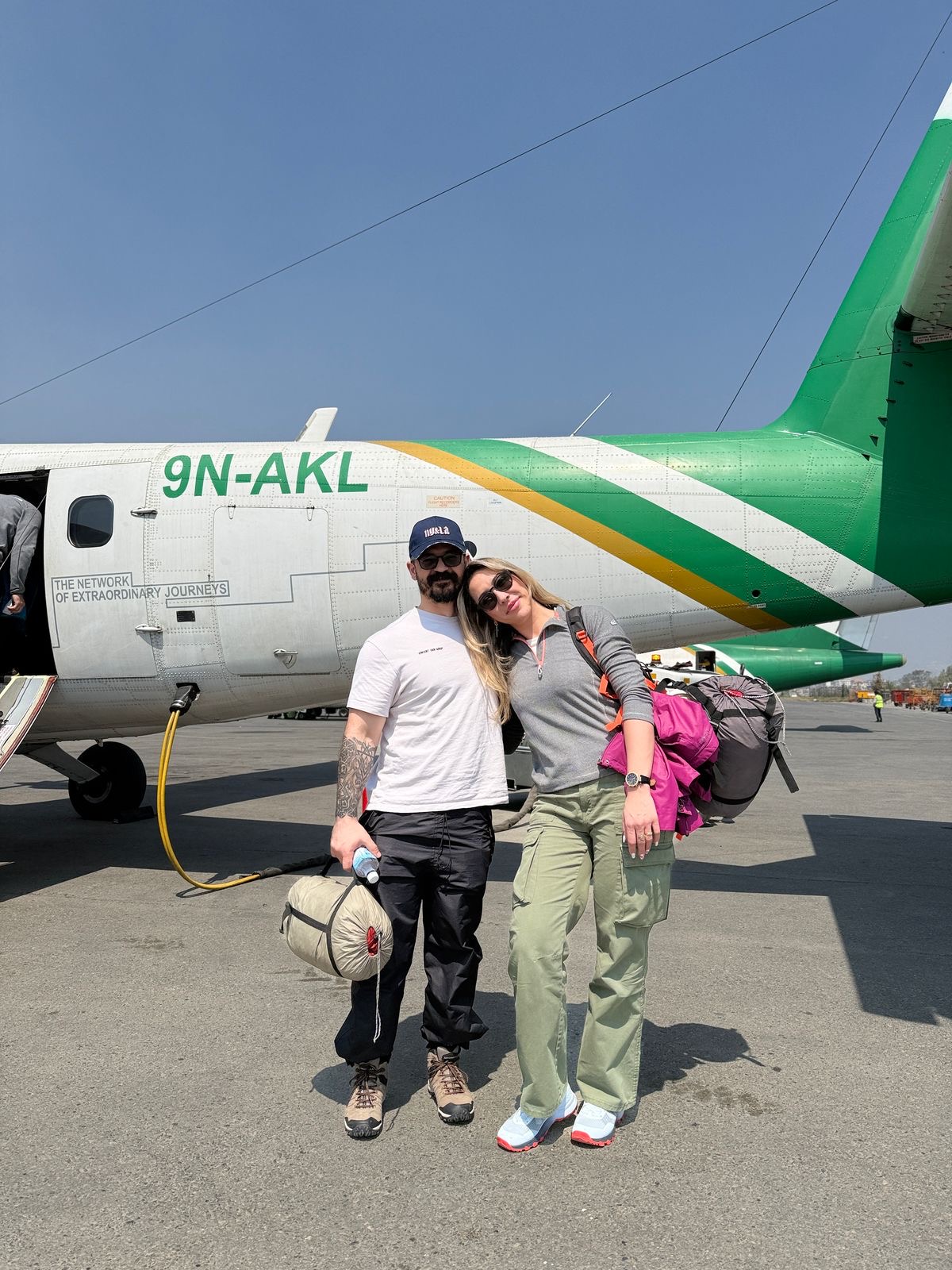 Kathmandu To Lukla
Lukla greets you with prayer flags snapping in the wind, teahouse signs advertising hot meals and comfortable beds, yaks loaded with supplies, and the warm hospitality of a community that has welcomed trekkers for generations.
The Landscape That Unfolds Before You
From Lukla, the trail descends gently into the Dudh Koshi valley and the world opens up around you.
The Khumbu region is breathtaking in the most literal sense. Glacial rivers rush below swinging suspension bridges. Rhododendron and pine forests line the lower trail, especially spectacular in spring when the trees explode in deep red and pink bloom.
As you gain altitude, the trees give way to open alpine terrain and the scale of the Himalayas becomes impossible to ignore.
Ridgelines carved by ancient glaciers rise on every side. Peaks so sharp they look sculpted rather than natural appear around every turn. And then, gradually, unmistakably, Everest itself comes into view.
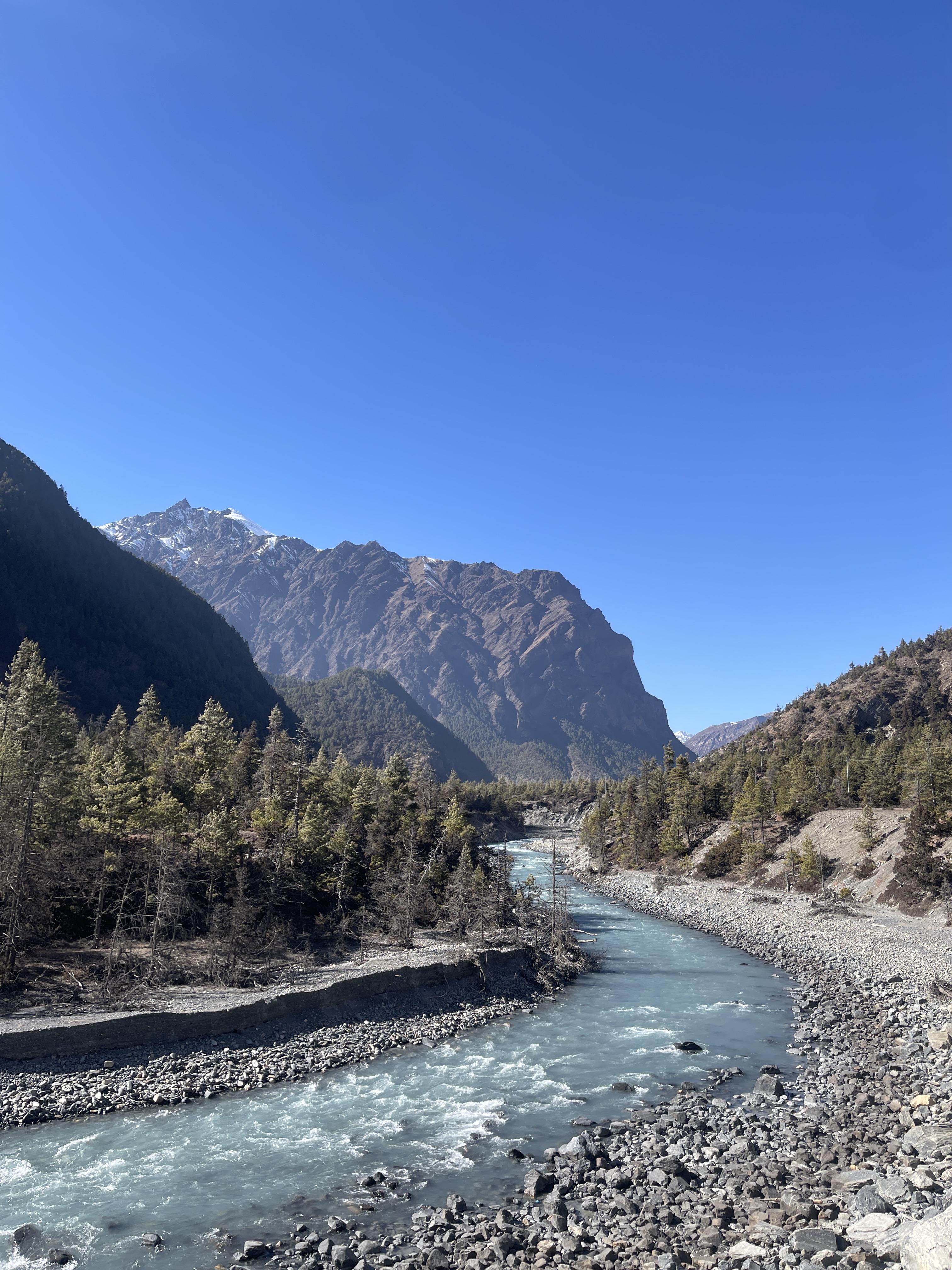 A glimpse of natural landscape of Khumbu Region
No photograph prepares you for this moment. The mountain is massive in a way that defies expectation. It is not just tall. It dominates the entire horizon, magnetic and utterly still, commanding the attention of every person on the trail.
At sunrise, the snow on the upper ridges turns gold. At dusk, it glows a deep, cold blue. These are the kinds of views that make people fall completely silent, not from exhaustion, but from awe.
Namche Bazaar: The Heartbeat of the Khumbu
Two days into the trek, you arrive at Namche Bazaar, sitting at 3,440 meters in a natural amphitheater of mountains.
Namche is one of the great surprises of the EBC Trek. Many first-time trekkers expect a small, quiet outpost. What they find is a lively, layered town full of bakeries, gear shops, restaurants, and a Saturday market that draws traders and locals from surrounding villages.
This is also where you spend your first full acclimatization day, and it is time well spent.
Use the rest day to walk up to the Everest View Hotel for your first real glimpse of Everest and its neighbors, Lhotse and Ama Dablam. Visit the Sherpa Culture Museum to understand the deep history of the people whose homeland you are walking through.
Sit with a cup of butter tea and watch the morning light shift across the peaks. You are not wasting time. You are letting your body and mind settle into the rhythm of the mountains, and that rhythm will carry you all the way to Base Camp.
Walking Through Living, Breathing Sherpa Culture
What separates the EBC Trek from almost every other trekking route in the world is the culture that surrounds you every step of the way.
The Sherpa people have lived in the Khumbu for centuries, building a way of life shaped by altitude, Buddhism, and an extraordinary relationship with the mountains they consider sacred.
As you walk the trail, you pass mani walls, long rows of stones inscribed with Tibetan Buddhist prayers. The tradition is to always pass on the left, a small act of respect that connects you to generations of pilgrims who walked before you.
Prayer wheels line the path through every village. Spin each one clockwise as you pass, releasing the prayers carved into them into the mountain air.
The warmth of the Sherpa people is one of the things trekkers most consistently remember. A "Namaste" from a passing porter carrying twice your body weight in supplies. A teahouse owner who remembers guests from previous seasons. A child waving from the doorway of a stone house.
These moments cost nothing and mean everything.
Tengboche Monastery: A Place That Stops You in Your Tracks
At 3,860 meters, the Tengboche Monastery is one of the most significant Buddhist monasteries in the entire Himalayan region.
It sits on a forested ridge with an unobstructed view of Ama Dablam, one of the most photographed peaks on Earth, rising dramatically to the south.
Arriving at Tengboche after a long day on the trail, with the monastery appearing suddenly through the pine trees, is a moment that many trekkers describe as the emotional highlight of the entire journey.
The monastery has been destroyed twice, first by an earthquake and later by fire, and rebuilt each time. There is something quietly powerful about that. The structure that stands before you is an act of faith and resilience.
If you arrive in the early morning, you may hear the monks chanting inside, low resonant voices accompanied by bells and drums, incense smoke curling through the rafters.
Take your time here. Sit on the stone steps and look at the mountains. Let the altitude and the silence and the beauty of the place settle over you. The trail can wait.
The Thukla Pass Memorial: A Moment of Deep Reflection
Above the village of Lobuche, the trail climbs steeply to the Thukla Pass, and at the top you encounter something unexpected.
The Thukla Pass Memorial is a field of stone monuments, each one erected in memory of a climber who died on Everest or in the Khumbu region.
The names carved into the stones belong to Sherpas and foreign climbers alike. Some are legendary figures in mountaineering history. Others are less known but no less significant to the people who loved them.
Standing among these monuments with Everest visible in the distance, you feel the full weight of what it means to pursue the summit.
The memorial does not diminish the ambition of climbing. It honors it. It reminds you that the mountain demands absolute respect, and that the people who gave their lives here knew that better than anyone.
This is a place to pause, reflect, and walk on with humility.
The Physical Challenge That Becomes a Personal One
The EBC Trek is rated moderate to challenging, and that rating is honest.
You will walk five to eight hours a day on rocky, uneven terrain. Your legs will ache. Your lungs will work harder than they ever have. At altitude, even a gentle uphill stretch can feel like a significant effort.
But here is what the difficulty rating does not capture: the way the challenge changes you from the inside.
Somewhere around day five or six, something shifts. The mountain discomfort that felt daunting at first begins to feel manageable. You stop thinking about how far there is to go and start simply walking. One step, then another.
You discover things about yourself on this trail that you could not have found in a gym or on a weekend hike. You find out how much you can handle when you have no choice but to keep going. You find out how much you can enjoy the present moment when there is nothing else to focus on.
The trekkers who describe the EBC Trek as life-changing are not being dramatic. They are being accurate.
Kala Patthar: The View That Makes It All Real
Most trekkers visit Everest Base Camp and Kala Patthar on the same itinerary, and both are worth every step.
Everest Base Camp at 5,364 meters is deeply atmospheric. The Khumbu Icefall crashes down from the Western Cwm in an endless, frozen cascade of blue ice and seracs. Prayer flags drape over cairns and boulders. The air is thin and cold and completely still.
You cannot see the Everest summit from Base Camp, but you do not need to. The scale of what surrounds you is enough.
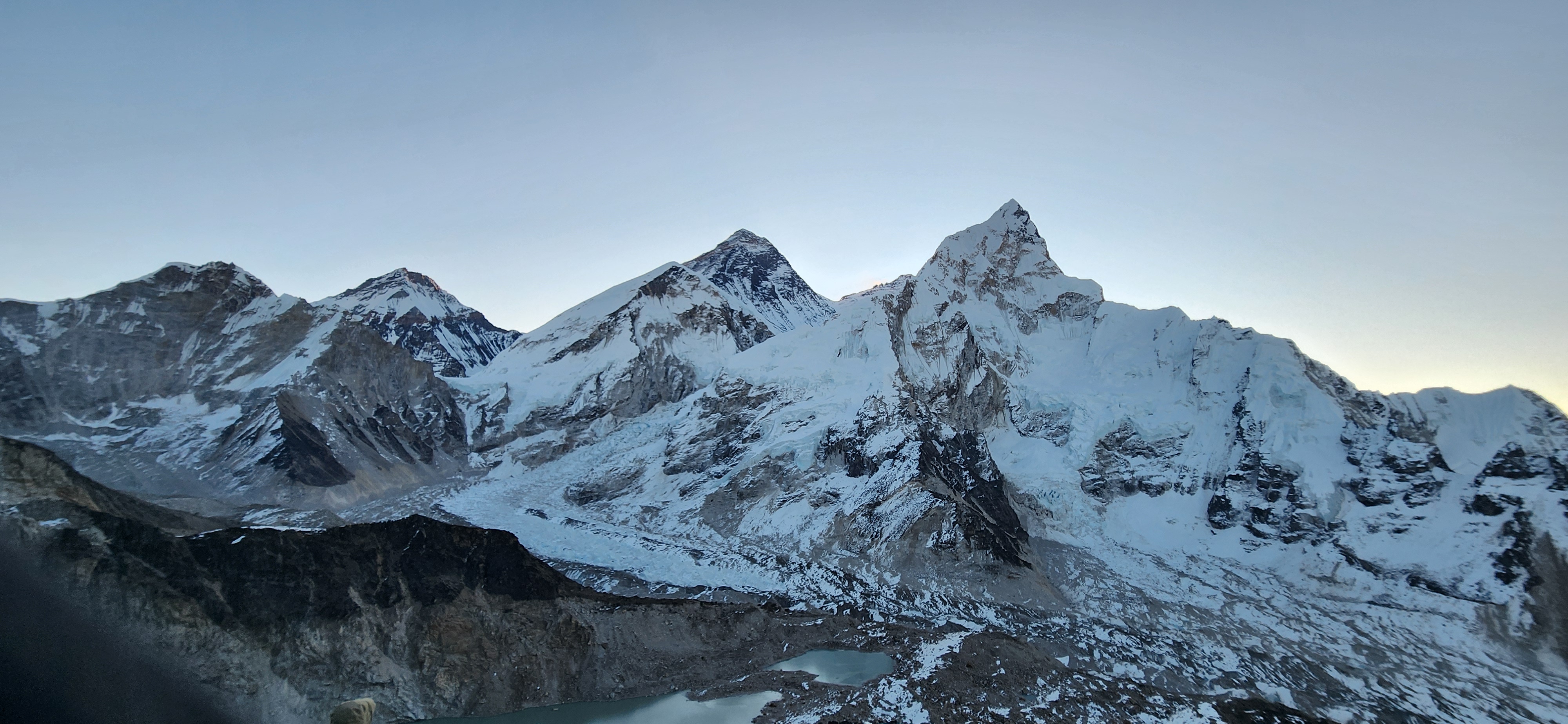 Kala Patthar
Kala Patthar at 5,545 meters is where you get the view. Rising above the glacier before dawn, headlamp cutting through the dark, lungs working hard in the thin air, you reach the cairn at the top just as the first light touches the upper ridges of Everest.
The mountain turns from grey to gold to blazing white. Lhotse, Nuptse, and Pumori glow around it. The sky above is a deep, impossible blue.
This is the moment most trekkers carry home with them. Not a photograph, though you will take many. The feeling. The specific, unrepeatable feeling of standing at 5,545 meters and watching the sun rise over the roof of the world.
The Friendships That Form on the Trail
There is a particular kind of camaraderie that exists on long-distance trekking routes, and the EBC Trek has it in abundance.
You will meet people in teahouse dining rooms, on narrow bridge crossings, on steep switchbacks where everyone stops to catch their breath. You will share tables with strangers and find yourself deep in conversation within minutes.
The trail strips away the usual social barriers. There is no hierarchy at altitude. A CEO and a student nurse huff up the same hill at the same pace. A solo trekker from Japan and a couple from Brazil share a pot of tea and trade stories until late in the evening.
And when you finally reach Everest Base Camp, you celebrate together. It does not matter that you met four days ago. You went through something together, and that creates a bond that is genuinely hard to describe.
What Makes You Come Back
Talk to anyone who has done the EBC Trek and ask them what they miss most. The answers are rarely what you expect.
They miss the simplicity. The rhythm of waking up, eating breakfast, walking, arriving somewhere new, eating again, sleeping deeply.
They miss the teahouse evenings, sitting close to the stove with warm hands wrapped around a mug while the wind picks up outside and the mountains disappear into darkness.
They miss the way the world felt manageable and clear and genuinely beautiful every single day.
The EBC Trek gives you something that is increasingly rare: two weeks of being completely present. No notifications. No commute. No performance reviews. Just the trail, the mountains, the people beside you, and the quiet satisfaction of moving forward under your own power.
Practical Things Worth Knowing
How long does the trek take? The standard EBC Trek takes 12 to 14 days round trip from Lukla, not including travel days to and from Kathmandu.
When is the best time to go? Spring (March to May) and autumn (September to November) are the two ideal seasons. Autumn offers the clearest skies and best overall conditions. Spring is more crowded but spectacular, with rhododendrons in bloom on the lower trail.
How difficult is it? Moderate to challenging. No technical climbing is required. A good baseline fitness level and a gradual acclimatization schedule are what matter most.
What about altitude sickness? It is a real risk above 3,000 meters. Ascend gradually, stay hydrated, never push through symptoms, and carry Diamox if your doctor recommends it.
What should I eat on the trail? Dal bhat is the best choice at altitude. It is freshly cooked, nutritious, and available everywhere. Avoid meat above Namche Bazaar, as supply chains at altitude mean freshness cannot be guaranteed.
Are the flights to Lukla reliable? They are weather dependent. Build at least one or two buffer days into your Kathmandu schedule at the start and end of your trip to account for potential delays.
What accommodation is available? Teahouses all the way. Basic and comfortable on the lower trail, more minimal at higher elevations. Luxury lodge options now exist on certain sections of the route for those who prefer upgraded facilities.
Your Everest Story Is Waiting
The Everest Base Camp Trek is one of those experiences that belongs in a different category from ordinary travel.
It is not a vacation. It is not a sightseeing trip. It is a journey that asks something of you, physically and mentally, and gives back far more than it takes.
You walk in as a trekker. You walk out with a story, a deeper understanding of your own resilience, and a quiet respect for the mountains and the people who call them home.
The trail has been waiting. The mountains have been there for millennia. The only thing missing is you.
Sharing route guides and trail experience from the high trails of Nepal.