
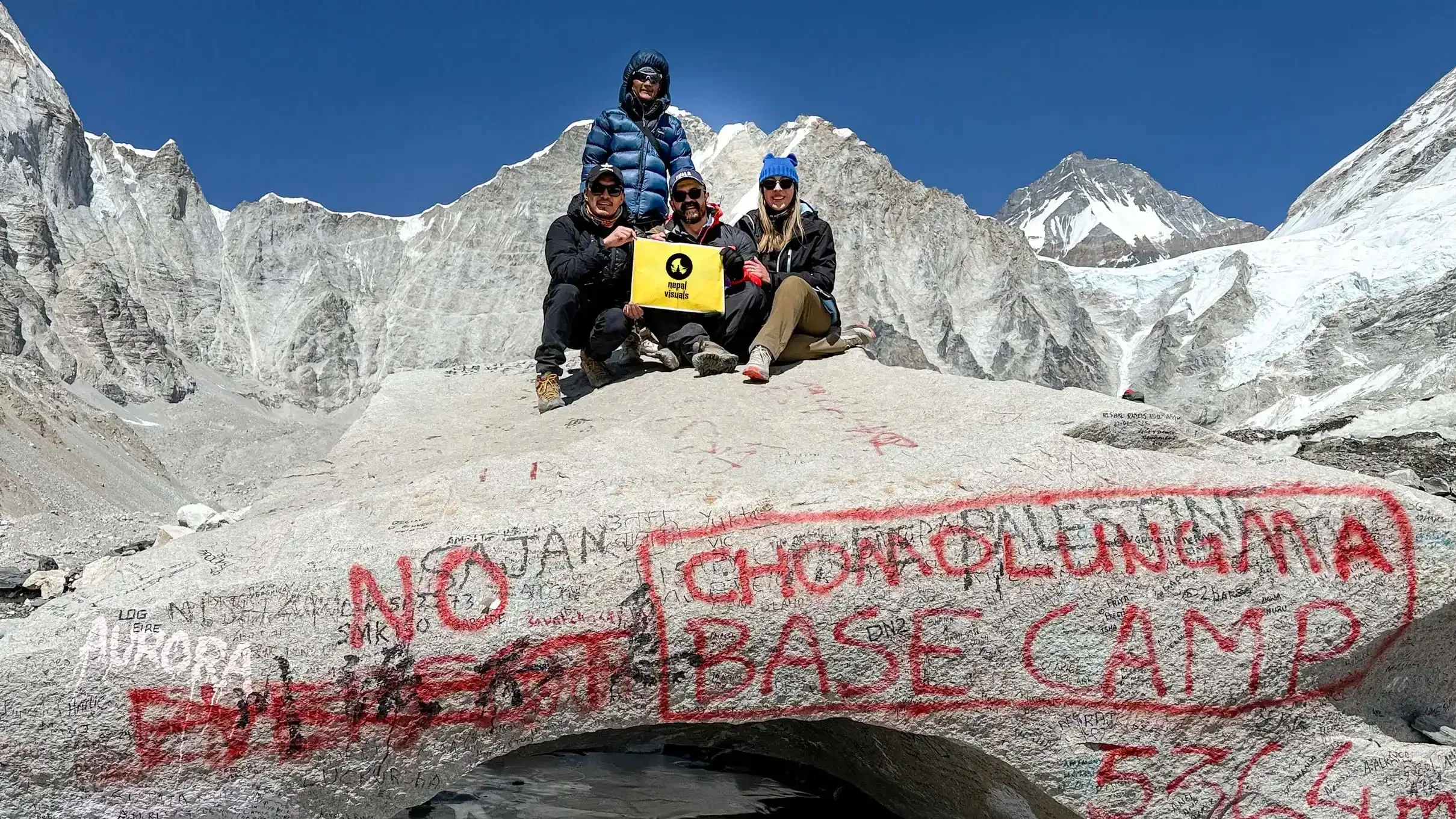
Everest Base Camp Trek - 14 Days
14 Days
5545m (18,192 ft)
Mar-May & Sep-Nov
Hotel & Tea-House
B/L/D during the trek
Land Transportation & Flight
130 km/ 80.7 miles
Everest Base Camp Trek - 14 Days
Recommended by BBC as Lonely Planet, CNN, BBC and National Geographic as one of the best trekking destinations in the world, the Everest Base Camp Trek 14 Days in Nepal is the dream for adventure lovers, and now you can experience it as well.
Walk in the footsteps of the legends like Edmund Hillary and Tenzing Norgay as you walk through the trail of Everest Base Camp (Sagarmatha Base Camp). Guided by Nepal Visuals' experienced English speaking local trekking guides, stand at Everest Base Camp, at an elevation of 5,364m (17,598 feet) and witness the breathtaking beauty of the world’s highest peak, Mount Everest (Sagarmatha Mountain).
The 14 days Everest Base Camp trek (EBC trek) isn’t just about reaching the destination, it’s about the raw beauty of the mountains and the vibrant culture of the Khumbu region, and the thrill of standing at Everest Base Camp (5,364 meters). Imagine standing at the foot of Mount Everest and marvelling on the nature's creation. The feeling of wonder and astonishment cannot be described in words.
Whether you’re a beginner or experienced trekker, this Everest Base Camp Nepal route offers something for everyone. You’ll pass through villages like Namche Bazaar, visit historic monasteries, and walk amongst the towering peaks.
The Everest Base trek begins with a picturesque takeoff and landing at Lukla Airport, followed by days of walking through villages like Namche Bazaar, Tengboche, and Dingboche.
The trail gradually ascends through alpine forests, glacial rivers, and vast valleys, finally arriving at Mount Everest Base Camp near the foot of the Khumbu Icefall. The Everest Base Camp trek itinerary also include a morning hike to Kala Patthar (5,545 meters) for one of the best panoramic views of Mount Everest, Nuptse, Changtse and more during sunrise or sunset.
The 14-day Everest Base Camp Trek takes you through the Khumbu Valley to Everest Base Camp, which offers majestic mountain views and understanding of the Sherpa culture. Experience what's life like in Sherpa Villages like Namche Bazar (3440m), the trading and cultural hub of Everest region and explore local markets.
The Everest Base Camp trek is a moderate-to-challenging trek. It requires good fitness, acclimatization (Acclimatization tips: A Checklist for Travelers by Yellow Book), and proper planning, but no technical climbing skills. The EBC trekking trail is well-marked, with teahouses offering food and accommodation at regular intervals.
Visit the Tengboche Monastery and other monasteries with significance to the Sherpa culture, pass Chortens, and learn the mantra ‘Om Mani Padme Om’ for spiritual emergence.
High-altitude trekking might not be for the faint-hearted. However, with proper preparation, and an encouraging expert Sherpa guide of Nepal Visuals, you’ll be able to complete this dreamy trek.
And with our 'Everest Fitness Calendar' to help you prepare for the Everest Base Trek and with our beginner friendly guide, you’ll be ready to do more than just hike - “You'll Stand where few have dared to dream - at the foot of Mount Everest.”
Whether you call it the Himalayan base camp trek, the Mount Everest base camp trek, Himalaya base camp trek, Basecamp Everest Trek or simply the Mount Everest base trek, the experience is unforgettable. The trail challenges you, inspires you, and connects you with one of the most awe-inspiring places on Earth.
Everest Base Camp Trek Highlights
- Everest Base Camp: Experience being at the foot of Everest the mountain.
- Scenic Lukla Flight: Fly to Lukla on a thrilling flight with a scenic view of the Himalayas.
- Sagarmatha National Park: Experience the raw beauty and serene wilderness of Sagarmatha National Park.
- Tengboche Monastery: Tibetan Buddhist Monastery surrounded by Panoramic views of the Himalayas.
- Namche Bazar: Bustling Sherpa village perched on a mountaintop considered the capital of the Khumbu Region.
- Kala Pathar Sunrise: Experience the best panoramic views of Mount Everest Peak, Mt. Lhotse, and Mt. Nuptse at dawn
- Wildlife: Witness the Himalayan Monal, Danphe, Himalayan Tahr, Snow Leopard, and Himalayan Black Bear.
- Lifetime of Inspiration: Leave with a heart full of memories and inspiration to conquer your own summits.
Here's a list of must see landmarks and hidden gems in the Everest Base Camp trek.
Why Choose Everest Base Camp Trek?
- Experience a Bucket-List Trek: Reach Everest Base Camp Nepal, a dream destination for trekkers and mountaineers worldwide.
- Witness Towering Himalayan Peaks: Gaze at Mt. Everest, Lhotse, Nuptse, Ama Dablam, Pumori, and more.
- Cultural Immersion: Explore ancient Sherpa culture and villages, visit Tengboche Monastery, and interact with warm, resilient locals.
- Adventurous Flights: Begin your journey with a scenic flight to Lukla Airport, famously known as the Tenzing Hillary Airport.
- Challenging Yet Rewarding: The Everest Base Camp trek is strenuous but deeply fulfilling, offering unmatched natural beauty and inner strength.
Why Nepal Visuals is the Right Choice for Your Everest Base Camp Trek?
- Your Safety Comes First: Our certified local guides are trained in high-altitude trekking and first aid. They know the terrain, weather patterns, and how to keep you safe - especially in remote areas where quick thinking matters most.
- Clarity Over Confusion - We provide a detailed online trip briefing after booking, so you know exactly what to expect; no vague plans or surprises along the way.
- No Hidden Costs: Our pricing is transparent. From permits to transport and accommodations, we clearly outline what’s included - so you don’t face unexpected charges mid-trip.
- Stress-Free Logistics We handle everything: permits, teahouse bookings, transportation, and even airport transfers. You focus on walking and wonder - we’ll take care of the rest.
- Travel Light, Store Safe: Leave your extra luggage with us in Kathmandu at no extra cost. Travel light, trek free.
- Prepare with Confidence: We help you plan physically and mentally for the trek, offering fitness guidance and tips to ensure you're ready - not overwhelmed - on the trail.
- Meaningful Experiences, Not Just Miles: Our treks are designed to immerse you in local culture, not rush you past it. You'll return home with stories, not just steps.
- Always There for You: Whether you have a question months before or during the trek, we're available 24/7 via WhatsApp, Email, Instagram, and Zoom.
- Easy, Secure Booking: We make booking simple with flexible payment options and prompt confirmations.
- No Trek Left Behind: Your departure is 100% guaranteed once booked. No cancellations. No disappointments.
Best Time for Everest Base Camp Trek
| Season | Months | Pros | Cons |
|---|---|---|---|
| Spring | March to May | Clear skies, blooming flowers, stable weather | Can be crowded |
| Summer/Monsoon | June to August | Fewer crowds, lush landscapes | Heavy rain, leeches, poor visibility |
| Autumn | September to November | Best visibility, dry weather, great mountain views | Popular and busy season |
| Winter | December to February | Quiet trails, clear skies on sunny days | Very cold, possible snow-blocked passes |
Note:
Detailed Everest Base Camp Trek Itinerary
Day 1: Arrival in Kathmandu
Our airport representative will be there to welcome you to the land of the highest mountains. A quick photo later the representative will escort you to your hotel. After settling in, a traditional Nepali dinner awaits you at a local restaurant. Your guide will introduce himself and debrief you on the Everest Base Camp Trek. Also, you will be provided with duffel bags to pack and other company apparel.
Insider Note: Keep only the essentials with you (Self-care Items, Personal First-Aid Kit, Wind & Slippers, Water-Resistant Jacket, Camera Gear, Travel Flask, Water-Purification Tablets, Portable Chargers, and any other items you deem essential.)
Day 2: Early morning drive to Manthali for the flight to Lukla (2860m) and Trek to Phakding (2610m)
Leave the hotel at 3 am in the morning for a 5-hour drive from Kathmandu to Manthali airport, ensuring you’ll arrive in time for the first flight to Lukla. Experience the exhilarating flight to the mountain airstrip of Lukla (2800m) nestled on a mountaintop. Start the trek by heading north towards the valley of Dudh Kosi and descend into the forested valley, to Phakding.
Insider Note: The flights from Manthali to Lukla are prone to cancellations and delays. And if you leave any gears behind, Lukla has most gear you might need. Namche Bazar is another option for buying gear.
Day 3: Trek from Phakding (2610m) to Namche Bazaar (3440m)
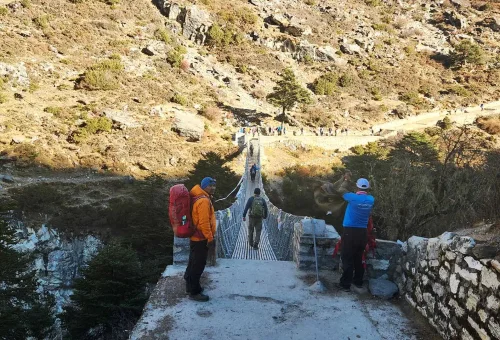
Head out of Phakding towards Namche Bazar along the Dudh Kosi River through the forest with glimpses of the mountains, terraced fields, and lush forest. You cross several suspension bridges as you pass through the villages of Monjo, Zamphuti, and Benkar.
The trail is challenging as you reach Namche Bazar, the busy town of the Everest region. Immerse yourself in the culture of the Sherpas and spend the remaining time roaming the streets of Namche Bazar.
Insider Note: Give way to Mules and Yaks. Don’t get in their way because they are easily spooked and stay opposite the cliff-side when giving way.
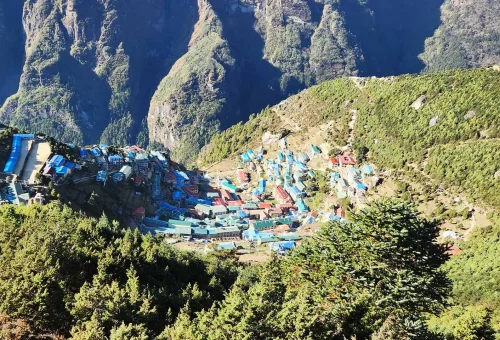
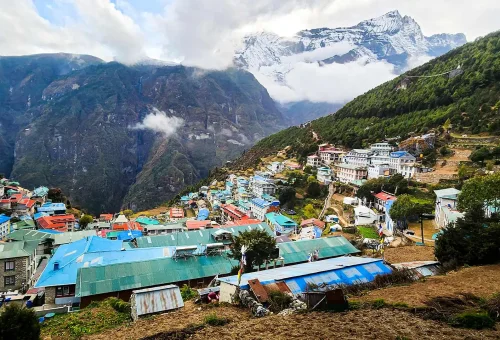
Day 4: Acclimatization Hike to Everest View Hotel (3850m) , Kunde (3850) and Khumjung (3750)
The acclimatization day at Namche Bazar is spent hiking to Khumjung after an early breakfast. Starting from a steep ascent towards the airstrip of Syangboche, you find ourselves in front of Sagarmatha Next. It is a local organization tackling waste pollution on the mountain trails whilst creating amazing art pieces from waste collected.
The next destination is the Everest View Hotel built by the Japanese with your first view of Mt. Everest and Mt. Ama Dablam. After a tea break, you head towards the village of Khumjung for lunch and walk up to Kunde to visit the Edmund Hillary Hospital and Edmund Hillary Secondary School.
You will also visit the Khumjung Monastery where you will be able to see the only ‘Yeti’ skull in the world. The monastery was destroyed during the 2015 earthquake, but repairs are being done. You then hike back down and spend another night at Namche Bazar.
Insider Note: If you are not familiar with trekking poles, learn the basics of using them from your guide. P.s. It’s much easier than you’d think.
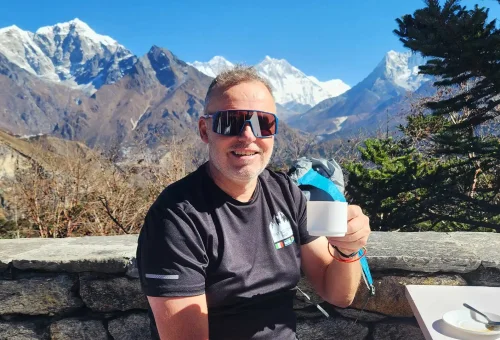
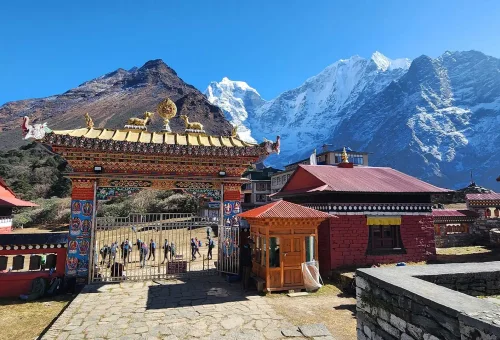
Day 5: Trek from Namche Bazar (3440m) to Tengboche (3860m)
You start the day with a heavy breakfast and leave Namche Bazar early to make it to Tengboche by noon. The trail is straightforward with mesmerizing views of Ama Dablam, Everest, and Lhotse. The trail consists of bits of ascents and descents until you reach Phunki Thanka. From there, it’s a 400m gradual ascent to Tengboche. After lunch at Tengboche, you will visit the monastery in the evening to watch the monks perform a ritual, a small donation would be appreciated.
Insider Note: When you come across a Chorten (our guide will let you know what they are), always go around them in a clockwise direction. A counterclockwise direction walk may lead to bad weather and no views!!! (Beware of Superstition)
Day 6: Trek from Tengboche (3860m) to Dingboche (4410m)
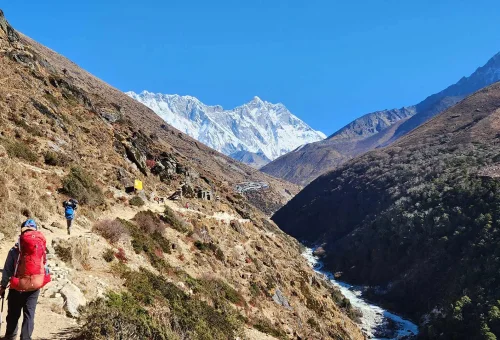
After spending a night at Tengboche, you descend through the forest to Deboche and cross the Imja River towards Pangboche. You follow the alpine trail with an average altitude of 4000m as you reach Shomare for lunch. You go further into the Imja valley as you follow the Imja River to Churo and cross the river once again to reach Dingboche after a short climb of 250m.
Day 7: Acclimatization Hike to Nangkarshang Peak (5073m)
You spend time acclimatizing at Dingboche with a morning hike to Nangkarshang Peak for stunning views of Mt. Makalu, Mt. Lhotse, Mt. Cholatse, Mt. Imja Tse, and Mt. Ama Dablam. You return to Dingboche for lunch and spend the rest of the afternoon relaxing by conversing with fellow trekkers or reading a book.
Day 8: Trek from Dingboche (4410m) to Lobuche (4910m)
The trail starts steeply out of Dingboche, as you ascend the valley gradually to Dugla with Pheriche on the side of the river that flows out of the Khumbu Glacier. A tea break and snack later, you start climbing the trail toward the Thok La (Pass) which is a landscape photographer’s dreamland with numerous 7000+ meter peaks. After crossing the pass, you reach Lobuche as the trail eases off.
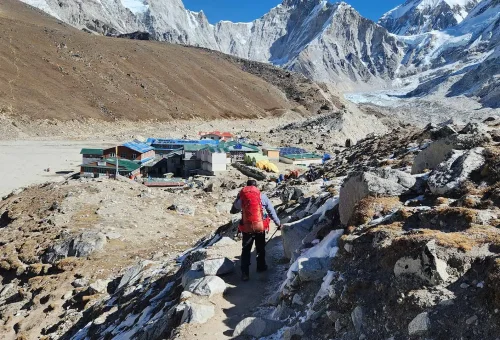
Day 9: Trek to EBC (5364m) from Lobuche then return to Gorakshep (5140m)
This day is the longest and hardest day of the trek to Everest Base Camp. Following the Khumbu Glacier, you will head northwards to Gorakshep. The trail follows the moraine with some short, steep, and rocky sections. After three hours, you will reach Gorakshep for tea and some snacks to help us on our way to Everest Base Camp.
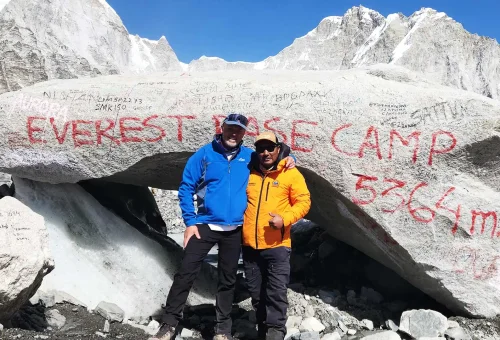
As you stand proud at EBC, take some pictures and spend a moment or two quietly reminiscing about the journey and taking in the Himalayan beauty. Capture the photo with the famed rock which you can later hang the picture on your wall. You then return to Gorakshep to spend the night.
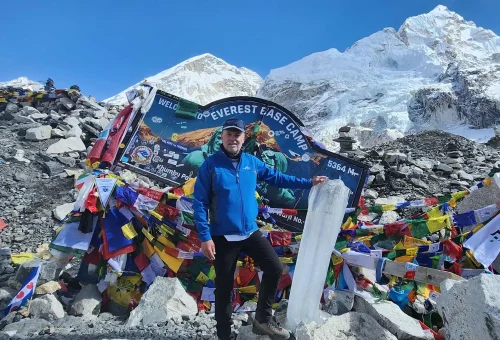
Day 10: Hike to Kala Patthar (5644m) and trek to Pheriche (4371m)
You start early on this day to climb up a small ascent of Kala Pathar (5545m) to watch Mt. Everest, Mt. Lhotse, and Mt. Nuptse being painted in hues of gold at dawn. This climb is steep but worth it. It offers a close-up view of the highest mountains in the world. After the climb, you head back to Gorakshep and then onto Lobuche for lunch. You then continue to Pheriche for the night.
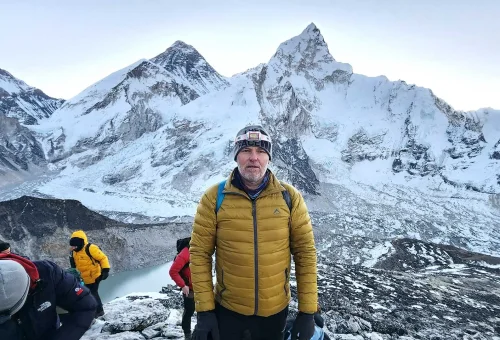
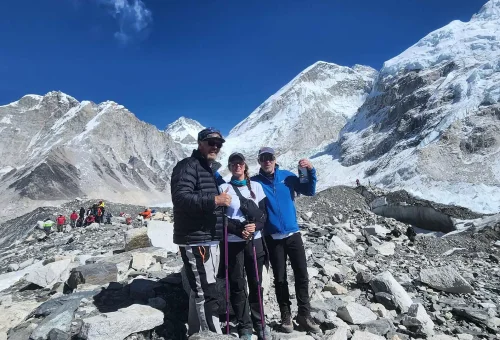
Day 11: Trek from Pheriche (4371m) to Namche Bazaar (3440m)
The trek from Pheriche (4240m) to Namche Bazar (3440m) starts with crossing a bridge and a short climb to descend into the Imja valley. You follow the trail along the Imja River down to Pangboche. Then you descend before crossing a bridge that takes us through Rhododendron forests in Deboche towards Tengboche. You will have your lunch at Tengboche before descending towards Phunki Thanka and climbing towards Kyangjuma. The trail from Kyangjuma is straightforward as you descend towards Namche Bazar, where you can get in touch with your loved ones.
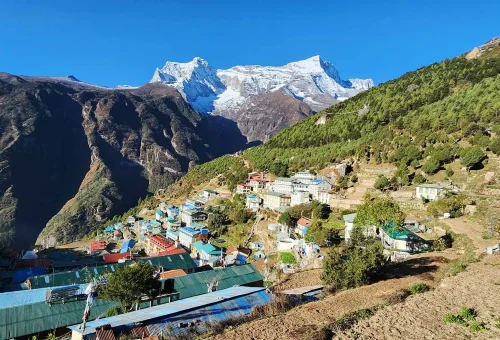
Day 12: Trek from Namche Bazaar (3440m) to Lukla (2860m)
This day is the final leg of your Everest Base Camp Hike. You’ll retrace our steps back to Lukla (2860m) through the villages of Monjo, and Benkar, and stop at Phakding for lunch. This would be the final moments in the Everest region, and it offers the last chance to take in its natural and cultural beauty.
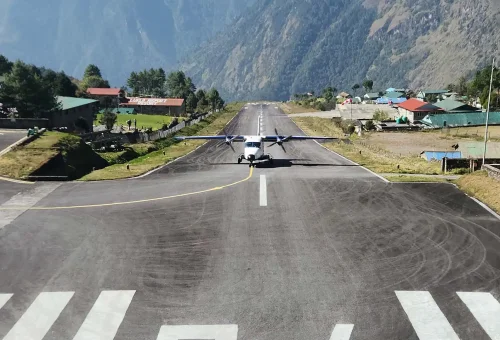
Day 13: Flight from Lukla to Manthali Airport and drive to Kathmandu
You take an early flight back to Manthali Airport and drive back to Kathmandu. The flight from Lukla to Manthali will help you wonder how grand the Himalayas are. You were in between one of the valleys you see out of the window and there are numerous similar valleys, mountains, rivers, and villages. That is why you’ll have the inspiration to come back to Nepal again to do another one of these Base Camp treks.
Day 14: Departure from Kathmandu
After an unforgettable trek in Nepal, it’s time to say goodbye to the land of the highest mountains. Our representative will transfer you to Tribhuwan International Airport for your flight back home or another adventure
Cost Includes of EBC Trek
- Complimentary airport pickup and drop.
- Farewell dinner at a traditional Nepalese restaurant.
- Hotel accommodation in Kathmandu with twin sharing.
- Round-trip domestic flight (Kathmandu – Lukla – Kathmandu).
- Meals (breakfast x 12, lunch x 11, and dinner x 11) during the trek.
- Govt. certified experienced Local English speaking guide.
- 1 Porter for 2 trekkers (10 kg limit per trekker)
- All cost for guides and porters.
- First Aid Kit & Oximeter.
- All conservation and permit fees.
- Emergency Heli Evacuation (Costs covered by your Travel Insurance)
- Duffle bags and baseball caps.
- Trek Completion Certificate.
Cost Excludes of EBC Trek
- Nepal Entry Visa and Visa extension fees ($50 for 30 days and $125 for 90 day)
- Personal trekking gears and equipment.
- International flight fare and airport departure tax.
- Main meals (lunch and dinner) in Kathmandu.
- Other charges at tea houses like showers, internet access, battery re-charging, hot water etc.
- Travel and Medical Insurance (Compulsory).
- Alcoholic and non-alcoholic drinks.
- Emergency Heli Rescue fees.
- Tips for the guides and porters.
- Extra baggage charges.
- Any expenses other than the Price Inclusion Section.
Booking
Traveller's Review

We had a great experience on the Everest Base Camp trek with Nepal Visuals. Our guide Rupesh was very knowledgeable and patient with our many questions and many, many photo sessions during the trek. Resh, the CEO, was responsive and did a great job of taking care of our needs the entire time we were in Nepal. Wonderful experience overall, I would definitely book another trek with Nepal Visuals again.


Desde Cañete, Chile a la Magia del Everest Base Camp con “Nepal Visual” El sueño de alcanzar el Campamento Base del Everest se hizo realidad para Luis y yo, Laura, al partir de Cañete, Chile el 30 de septiembre de 2025. Tras el viaje, aterrizamos en Katmandú el día 2 de octubre, donde la calidez de nuestro guía, Prim, nos dio la bienvenida. Al día siguiente, comenzó nuestra épica caminata. Antes de escribir estas líneas, estuve revisando la logística que Nepal Visual proponía para el viaje, debo confesar que fue superada con creces. Todo salió perfecto, demostrando un nivel de profesionalismo y atención al detalle que nos permitió concentrarnos únicamente en la belleza de la montaña y la experiencia, ellos se preocuparon de todo. El Jepe (como le decía Prim al jefe, cálido, cercano, hizo todo para que nos sintiéramos bien), Prim nuestro Guía en español que no nos tenía fe cuando nos vio, después reconoció lo fuerte que éramos. Ram nuestro Porteador un hombre fuerte, con su sonrisa y humildad y Rajat que nos mostró la historia de su capital KMD, muy documentado. En el hotel “Capital Boutique Hotel” los recepcionistas Anupama y Devendra, nos sorprendieron una mañana saludándonos en español. Nuestras sinceras felicitaciones y admiración a todos por su trabajo, “Todo un Equipo”. El servicio de Nepal Visual hace que esto sea mágico; caminata segura, hoteles, comida suficiente, acompañamiento en las compras de souvenir, a impregnarse de la cultura, de su espiritualidad y de la conectividad. Recomendamos a Nepal Visual a todas las personas que estén buscando una experiencia inolvidable, mágica y, sobre todo, sin contratiempos al CAMPO BASE. Son un verdadero equipo que entrega su corazón en el servicio y lo mejor en español. Además Nepal es muy seguro. Gracias Nepal Visual, son realmente un equipo. ¡¡¡Gracias Totales!!! Firmado: Laura y Luis. (Desde Cañete, Región del Biobio-Chile)


Everest Base Camp Trek with Nepal Visuals (Oct 7–19) We booked our Everest Base Camp Trek with Nepal Visuals from October 7th to 19th, and it was an absolutely wonderful experience from start to finish! Communication from Resh was very prompt and professional throughout the planning and during the trek. We were warmly welcomed at the airport by CEO Resh himself, which was a very nice personal touch. Our guide, Rupesh, was knowledgeable, caring, and always made sure we were comfortable and safe. Our porters, Tara and Ratna, were incredibly hardworking and kind — they not only carried our duffel bags to the next destination ahead of time but even returned to help us with our daypacks. Truly amazing teamwork! All our lodges were comfortable, and the food (breakfast, lunch, and dinner) was well arranged and as described. The overall logistics were smooth, and we felt well taken care of throughout. At the end of the trek, Nepal Visuals organized a farewell dinner at an authentic Nepalese restaurant, which was the perfect way to conclude an unforgettable journey — the icing on the cake! I would highly recommend Nepal Visuals to anyone planning their next trekking adventure in Nepal. They go above and beyond to make the experience memorable.


We did Anapurna Circuit Trek (14 days)
We did Anapurna Circuit Trek (14 days). The organization with CEO Resh was perfect. He could always help us with our questions. When arrived we were picked up at the airport and welcomed very warmly by Resh himself and our guide Rupesh. We were even accompanied by Rupesh for shopping our last trekking items. Even though our luggage arrived two days later, the team came up with a super short-time solution and helped us as good as possible, even gave us a lovely city trip to spend the time before the trek started. During the trek our guide and porter made sure we had the greatest time and assisted us when possible. Both were super friendly and always up to a joke. Summarized, we had the greatest time and definately recommend Nepal Visuals for a safe and well organized trip.

EBC trek with Ama Dablam view
“Nepal Visuals” planned the whole Everest Base Camp trek very well, they were always in control of different situations & the guide was very helpful, calm & explaining everything in detail. Resh was very prompt in answering all our questions & guiding us before the trek and took good care of us right from the day we landed in Kathmandu till we left for back home. We recommend Nepal Visuals to all our friends & will definitely use them when we plan our Annapurna trek.
Desde Cañete, Chile a la Magia del Everest Base Camp con “Nepal Visual”
El sueño de alcanzar el Campamento Base del Everest se hizo realidad para Luis y yo, Laura, al partir de Cañete, Chile el 30 de septiembre de 2025. Tras el viaje, aterrizamos en Katmandú el día 2 de octubre, donde la calidez de nuestro guía, Prim, nos dio la bienvenida. Al día siguiente, comenzó nuestra épica caminata. Antes de escribir estas líneas, estuve revisando la logística que Nepal Visual proponía para el viaje, debo confesar que fue superada con creces. Todo salió perfecto, demostrando un nivel de profesionalismo y atención al detalle que nos permitió concentrarnos únicamente en la belleza de la montaña y la experiencia, ellos se preocuparon de todo. El Jepe (como le decía Prim al jefe, cálido, cercano, hizo todo para que nos sintiéramos bien), Prim nuestro Guía en español que no nos tenía fe cuando nos vio, después reconoció lo fuerte que éramos. Ram nuestro Porteador un hombre fuerte, con su sonrisa y humildad y Rajat que nos mostró la historia de su capital KMD, muy documentado. En el hotel “Capital Boutique Hotel” los recepcionistas Anupama y Devendra, nos sorprendieron una mañana saludándonos en español. Nuestras sinceras felicitaciones y admiración a todos por su trabajo, “Todo un Equipo”. El servicio de Nepal Visual hace que esto sea mágico; caminata segura, hoteles, comida suficiente, acompañamiento en las compras de souvenir, a impregnarse de la cultura, de su espiritualidad y de la conectividad. Recomendamos a Nepal Visual a todas las personas que estén buscando una experiencia inolvidable, mágica y, sobre todo, sin contratiempos al CAMPO BASE. Son un verdadero equipo que entrega su corazón en el servicio y lo mejor en español. Además Nepal es muy seguro. Gracias Nepal Visual, son realmente un equipo. ¡¡¡Gracias Totales!!! Firmado: Laura y Luis. (Desde Cañete, Región del Biobio-Chile)
Essential Information for trek:
History of the EBC Trek
The Everest Base Camp Trek traces its origins back to the early days of Himalayan exploration, well before it became one of the most iconic trekking routes in the world. The turning point came in 1953, when Sir Edmund Hillary and Tenzing Norgay made their historic first ascent of Mount Everest, forever changing the way the world viewed this towering peak. Their success not only placed Everest the mountain in the global spotlight but also laid the foundation for the legendary journey we now know as the Everest Base Camp Trek.
In the decades that followed, adventurers from all over the world dreamed of standing at the foot of the world’s highest mountain. As word spread and infrastructure improved, the once-remote expedition route slowly transformed into a well-established trail, drawing in thousands of trekkers each year.
Today, many people ask: Where is Mount Everest in Asia? Where in Asia is Mount Everest? Where is Mt. Everest? Where is Everest Mountain? All these questions point to one answer: Mount Everest is located in the Himalayas, on the border between Nepal and Tibet (China), with the southern side accessible through Nepal's Khumbu region in South Asia. It lies within Sagarmatha National Park, a UNESCO World Heritage Site in northeastern Nepal.
In the early days, reaching Everest Base Camp meant trekking from the lowlands of Kathmandu over many weeks. But the construction of Lukla Airport dramatically improved access, allowing trekkers to fly directly into the Khumbu region. This made the Everest Base Camp trek more accessible and achievable within two weeks, transforming it from an expedition into a challenging but realistic goal for adventure seekers of all levels.
Yet, the Everest Base Camp trek isn’t just about getting to base camp but it’s about the journey. As you make your way through traditional Sherpa villages, visit ancient Buddhist monasteries, and hike through forests and high-altitude landscapes, you’re not only surrounded by breathtaking views, but you’re also walking in the footsteps of mountaineering legends.
Whether you’re a seasoned hiker or planning your first big adventure, the Everest Base Camp trek (Everest Base trek) offers a powerful blend of history, natural beauty, and cultural richness. It’s an experience that continues to inspire trekkers from across the globe.
Everest Base Camp Trek Distance
The Everest Base Camp trek distance is approximately 130 kilometers (81 miles) round trip. This classic Everest Base Camp trek begins from Lukla Airport and stretches all the way to Base Camp Mount Everest, covering a wide range of elevations and terrains. Most trekkers walk between 12 to 15 kilometers per day, depending on altitude, fitness level, and acclimatization needs. The Mount Everest Base Camp trek usually takes 12 to 14 days, including acclimatization days in places like Namche Bazaar and Dingboche to reduce the risk of altitude sickness.
The gradual progression of the Everest Base Camp trek (Everest base trek) allows you to truly absorb the beauty of the region, meet local Sherpa communities, and explore landmarks like Tengboche Monastery and Kala Patthar. Whether you’re aiming for a personal challenge or simply want to experience life in the high Himalayas, the Everest Base Camp trek offers a rewarding journey that stays with you long after you’ve returned home.
For those short on time or unable to do the full Everest Base Camp trek, the Everest Base Camp Helicopter Tour offers a breathtaking alternative. This tour flies you from Kathmandu or Lukla Airport straight to Everest Base Camp or Kala Patthar, giving you stunning aerial views of the Himalayan base camp trek route and Mount Everest. You’ll land briefly at a high-altitude viewpoint to soak in the scenery and take photos. It's ideal if you're looking for the Everest experience without the physical demands of trekking. Though the Everest base camp trek price is more budget-friendly, the helicopter tour offers unmatched convenience and perspective.
Everest Base Camp Trek Cost
As for the Everest Base Camp trek price, it depends on the services you choose. On average, the Everest Base Camp trek cost ranges between $1,300 to $2,500 per person for a guided package depending on the services. This includes permits, flights, accommodation, and meals. Check out our EBC Trek Cost guide blog for full details and budget options for independent trekkers, but you still need to factor in essential permits and logistics. The cost to climb Everest Base Camp is far less than summiting Mount Everest, but the sense of achievement and scenery are no less rewarding. Check out our Ultimate Everest Base Camp Guide with key tips and tricks to help you conquer the Everest Base Camp.
Cultural Highlights & Festivals on the Trek
The Everest Base Camp trek isn’t just about snow-capped peaks and thin air - it’s also a vibrant journey into the heart of Sherpa culture and Himalayan spiritual traditions.
You’ll pass through ancient villages, spin prayer wheels carved with mantras, and sip salty butter tea in teahouses that echo with stories from generations past. It’s not just a trek—it’s a cultural exchange. And honestly? That’s one of the best parts.
So, if you’re Googling terms like “Sherpa culture Everest Base Camp trek” or “Tengboche Monastery festival”, this guide is made for you.
Sherpa Culture: The Soul of the Everest Region
The Sherpas aren’t just world-famous mountaineers—they’re the heart and soul of the Khumbu Valley. Known for their resilience, kindness, and deep-rooted Tibetan Buddhist beliefs, the Sherpa people have made this high-altitude world feel like home for centuries.
As you pass through villages like:
- Namche Bazaar – the lively hub of trade and trekking
- Khumjung – home to Hillary School and the famous Yeti scalp at the monastery
- Pangboche – with one of the oldest gompas (monasteries) in the region
You’ll see colorful prayer flags fluttering in the wind, mani stones etched with sacred mantras, and white chortens marking the path like quiet guardians.
💡 Insider tip: Always pass prayer stones and stupas clockwise. It’s a sign of respect.
Tengboche Monastery: Spiritual Stop in the Sky
At 3,867 meters, Tengboche Monastery is the most iconic spiritual landmark on the EBC trek. Set against the jaw-dropping backdrop of Ama Dablam and Mount Everest, this sacred site is both peaceful and powerful.
Trekkers are welcome to attend morning or evening chants. It’s a humbling experience—watching robed monks, candles flickering, as ancient hymns echo through the hall.
Mani Rimdu Festival: Dancing Spirits and Mountain Prayers
If you're trekking in October or November, you might be lucky enough to witness the Mani Rimdu Festival at Tengboche Monastery.
It’s one of the most important cultural festivals in the Everest region, featuring:
- Masked dances (Cham) to symbolize the triumph of good over evil
- Chanting ceremonies
- Community gatherings where monks and locals come together
This 19-day festival celebrates the founding of Tibetan Buddhism by Guru Rinpoche and is the perfect fusion of drama, spirituality, and storytelling. You’ll feel like you’ve stepped into a living legend.
Daily Traditions & Hospitality
Beyond the big festivals, the cultural richness of the Everest trail is in the small things:
- Sharing yak butter tea or tsampa (roasted barley flour) with your host family
- Watching locals harvest potatoes from high-altitude fields
- Hearing stories about the mountains’ spiritual significance
- Sherpa hospitality is warm, even in the coldest altitudes.
A simple “Tashi Delek” (hello/good luck in Tibetan) can spark a smile and a conversation.
Why Cultural Connection Matters on the EBC Trek
Trekking through the Everest place isn’t just physical - it’s emotional and spiritual. When you pause at a monastery, watch a festival dance, or hear temple bells in the morning mist, you’re not just passing through - you’re becoming part of a centuries-old tradition.
Adding depth to your journey through Sherpa culture Everest Base Camp trek experiences makes every step more meaningful.
Trek With Curiosity and Respect
Every rock on the Everest trail has a story. Every chorten, every fluttering flag, every chant you hear in the distance - it all adds color to your journey. So take your time, ask questions, and be open to the cultural wonders of the Himalayas.
Want to know more about local traditions or time your trek to attend the Mani Rimdu Festival? Drop us a message - we’re happy to guide you.
Lukla Airport
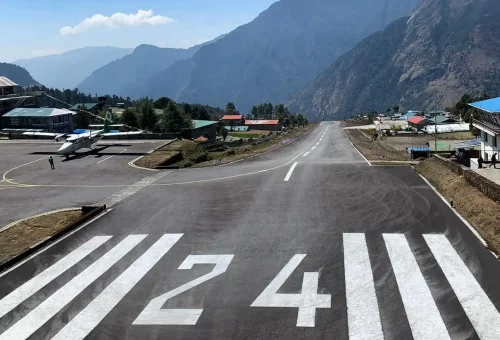
Lukla Airport, officially known as Tenzing-Hillary Airport in the tiny yet world-famous Himalayan town, Lukla; serves as the primary gateway for trekkers heading to the Mount Everest region and the Everest Base Camp trek in Nepal. Nestled at an elevation of 2,845 meters (9,335 feet) in the Khumbu region, the airport is famous for its breathtaking mountain scenery and unique landing conditions. With a short, sloped runway measuring just 527 meters (1,732 feet), it ranks among the most challenging airports in the world, often leading to thrilling and adventurous flights.
Sagarmatha National Park
As trekkers make their way to Everest Base Camp (Sagarmatha Base Camp), they pass through Sagarmatha National Park, a UNESCO World Heritage Site. This national park is home to diverse flora and fauna, including rare species like the snow leopard and the red panda. The park's rugged terrain and high-altitude ecosystems provide an extraordinary backdrop for trekking, with each step revealing new wonders of nature.
In addition to its natural beauty, Sagarmatha National Park holds significant cultural importance. The park is dotted with ancient monasteries and traditional Sherpa villages, where trekkers can learn about the local way of life. Interacting with the Sherpa people offers insights into their rich history, customs, and beliefs, adding depth to the trekking experience. The blend of natural beauty and cultural heritage makes the Everest Base Camp trek (Everest Base Trek) a truly unique journey.
Namche Bazaar : The Gateway to the Himalayas
Namche Bazaar is a vibrant Sherpa village nestled in the Khumbu region of Nepal, sitting at an elevation of 3,440 meters (11,286 feet). Often referred to as the "Gateway to Everest," this bustling market town serves as a crucial acclimatization stop for trekkers on their journey to Everest Base Camp. The town is famous for its stunning views of the surrounding peaks, including the iconic Ama Dablam and Lhotse.
As you wander through Namche Bazaar, you'll find a lively atmosphere filled with shops, cafes, and guesthouses catering to trekkers. The town hosts a weekly market where locals trade goods, providing an authentic glimpse into Sherpa culture. Visitors can also explore nearby attractions, such as the Everest View Hotel, which boasts panoramic vistas of Mount Everest peak, and the Sherpa Museum, which offers insights into the rich history of mountaineering in the region. With its unique blend of natural beauty and cultural experiences, Namche Bazaar is an essential stop for any trekking adventure in the Himalaya Camps.
The Iconic Kala Patthar Viewpoint on Everest Trek
One of the most rewarding experiences on the Everest Base Camp trek (Everest Base Trek) is reaching the Kala Patthar viewpoint. Standing at an elevation of 5,545 meters (18,192 feet), this peak offers unparalleled views of Mount Everest and the surrounding Himalayan range. Trekkers often set out early in the morning to catch the sunrise from this vantage point, when the first light of day paints the mountains in hues of gold and orange.
The trek to Kala Patthar is demanding but incredibly rewarding. As you ascend, the excitement builds, and the anticipation of witnessing the mighty Mount Everest the mountain creates an exhilarating atmosphere. Upon reaching the top, the breathtaking panoramic views make every effort worthwhile. This moment serves as a fitting conclusion to the remarkable journey to Everest Base Camp, leaving trekkers with lasting memories and a profound sense of achievement.
Thukla Pass Memorial: Honoring the Heroes of the Himalayas
As you ascend the rugged trail toward Thukla Pass, you'll come upon a poignant site that stands in stark contrast to the wild beauty surrounding it - the Thukla Pass Memorial. Here, with the towering peaks of Cholatse and Taboche watching over, stone cairns and fluttering prayer flags mark a place of remembrance.
This humble memorial, perched over 4,600 meters above sea level, is dedicated to the brave mountaineers who lost their lives attempting to summit Mount Everest and neighboring giants. Each stone marker, often inscribed with the names and stories of climbers from around the world, serves as a quiet tribute to perseverance, passion, and the indomitable spirit of adventure.
Stopping at the Thukla Pass Memorial, trekkers are invited to pause, reflect, and pay their respects to those who dared to chase dreams amongst the world’s highest peaks. It's a sobering reminder of the risks inherent in Himalayan exploration - and a testament to the vibrant culture of remembrance and resilience that defines life in these mountains.
The Allure of Tengboche Monastery
Tengboche Monastery isn’t just another stop along the trail - it's a spiritual heart of the Mount Everest region and a cultural icon for the Sherpa community. Founded in 1916, this remarkable monastery sits gracefully perched on a ridge, surrounded by sweeping Himalayan vistas - including Mount Everest, Lhotse, Nuptse, Ama Dablam, and Thamserku all framed against a crisp alpine sky.
Visitors to Tengboche can:
- Bask in Spiritual Tranquility: Step inside to soak up the calming atmosphere and intricate murals that tell stories of Tibetan Buddhism.
- Witness Local Traditions: If you arrive in the afternoon, you may catch the mesmerizing chanting of resident monks, a ritual that’s as moving as the landscapes outside.
- Connect with Sherpa Culture: Tengboche plays a pivotal role in local life, serving both as a religious gathering place and as a living showcase of Sherpa heritage and Buddhist traditions.
Even for those who aren’t spiritual seekers, the combination of sweeping views, cultural richness, and the gentle presence of prayer flags fluttering in the mountain breeze makes a visit to Tengboche Monastery an unforgettable highlight on the Everest Base Camp trek.
Is the Everest Base Camp Trek Safe? Your No-Stress Guide to Health, Safety & Altitude
So you’re thinking about trekking to Everest Base Camp (EBC) but somewhere between booking flights and packing boots, the questions creep in:
- Is it safe to trek to EBC?
- What if I get altitude sickness?
- Can I really do this if I’m not a mountaineer?
- What happens if something goes wrong at 5,000 meters?
Take a deep breath. You’re not alone and yes, you can totally do this with the right preparation.
In this friendly guide, we’ll walk you through everything you need to know to stay healthy, safe, and confident on the Everest Base Camp trek - from altitude sickness to evacuation options and fitness tips. Let’s make sure you enjoy the mountains without worry.
Understanding Altitude: It’s Not About Strength - It’s About Smart Choices
The biggest challenge on the Everest Base Camp trek isn’t distance or steepness, it’s altitude.
At 5,364 meters (17,598 feet), Everest Base Camp Nepal sits well above the threshold for Acute Mountain Sickness (AMS). But here’s the good news: if you follow a smart itinerary and give your body time to adjust, most trekkers do just fine.
What Are the Symptoms of Altitude Sickness?
- Headache
- Nausea or vomiting
- Dizziness
- Loss of appetite
- Shortness of breath at rest
- Disturbed sleep
Symptoms usually show up above 2,500 meters and can worsen if ignored. That’s why proper acclimatization is crucial.
Acclimatization Stops: Your Body’s Best Friend
Most EBC itineraries include rest days at key villages:
- Namche Bazaar (3,440m)
- Dingboche (4,410m)
These stops let your body adjust and reduce your risk of AMS. Trust us - rushing is not Everest’s vibe.
🧠 Pro tip: Consider taking Diamox (a common altitude medication) after consulting your doctor, and bring a pulse oximeter to track your oxygen levels.
What If I Get Sick? Emergency Rescue Info
Despite your best prep, sometimes things go sideways. If you suffer from severe altitude sickness or other medical issues, you can be evacuated by helicopter.
Common Helicopter Rescue Points:
- Gorakshep
- Pheriche
- Lobuche
Trekkers are usually flown to Lukla or Kathmandu hospitals depending on the urgency.
Make sure your travel insurance covers helicopter evacuation above 5,000m. It’s non-negotiable.
Fitness and Physical Preparation: Do You Need to Be Super Fit?
Short answer? No.
You don’t need to be an elite athlete to complete the Everest Base Camp trek (EBC trek), but you should be reasonably fit. Think:
- Regular hikes of 5–6 hours
- Some uphill climbs with a light pack
- Basic cardio (jogging, biking, swimming)
🎒 Bonus tip: Train with your daypack and hiking boots. Familiar gear = fewer surprises.
Food, Water & Hygiene: Staying Healthy on the Trail
No one wants an upset stomach at 4,000 meters. Here’s how to stay healthy:
- 💧 Drink only purified or boilde water (bring a filter or idodine tablets)
- 🧼 Use hand sanitizer often, especially before meals
- 🍛 Stick to hot, cooked meals from reputable tea houses
- 🥚 Avoid meat unless you’re confident it’s fresh (portered meat can sit unrefrigerated)
Do You Really Need Insurance?
Absolutely, yes. Your travel insurance should cover:
- High-altitude trekking (above 5,000m)
- Emergency medical evacuation by helicopter
- Trip cancellations or delays
- Lost or stolen gear
Don’t forget: Carry a digital and printed copy of your insurance policy and emergency contacts.
How to Prepare for the trek: Fitness, Mindset & Beginner-Friendly Tips
Thinking about hiking to Everest Base Camp but wondering… “Am I fit enough for this?” or “Do I need to train like a mountaineer?”
Take a breath, you don’t need to be an athlete or a seasoned trekker to reach Base Camp. But some preparation? That’s your secret weapon.
In this guide, we’ll walk you through exactly how to prepare for the Everest Base Camp trek, with beginner-friendly advice, fitness tips, and mental readiness insights. No fluff, no fear - just real, practical prep for the journey of a lifetime.
First Things First: Can Beginners Trek to Everest Base Camp?
Yes, 100% - many EBC trekkers are doing it for the first time. The key is preparing smartly, going slow, and respecting the altitude.
The Everest Base Camp Trek in a Nutshell:
- Total distance: Approx. 130 km round-trip (80 miles)
- Trek duration: 12–14 days with rest/acclimatization stops
- Daily walking time: 4–8 hours
- Terrain: Uneven mountain trails, rocky paths, suspension bridges
- Highest point: 5,364 m (17,598 ft) at Everest Base Camp
So while it’s not a walk in the park, it’s absolutely achievable with steady, consistent preparation.
Fitness Training for Everest Base Camp Trek
Let’s talk physical fitness - you don’t need peak athleticism, but you do need:
- Cardiovascular endurance (to handle uphill climbs and thin air)
- Leg strength & core stability (to support long hiking days)
- Stamina (to trek day after day without burnout)
Note: Once your booking is confirmed, you will be provided a Fitness Calendar from Nepal Visuals to help you prepare for the trek.
12-Week Everest Base Camp Training Plan
Here’s a simple weekly structure you can start 2 months before your trip:
Weeks 1-6: Build Endurance
- 3x weekly: 45–60 mins cardio (jog, swim, bike, fast walk)4
- 2x weekly: Long hike or walk with light pack (1–2 hours)
- Core workouts (planks, squats, bridges) 3x weekly
Weeks 7–12: Elevation + Load
- 3x weekly: 60 mins cardio (increase intensity or add hills)
- 1–2x weekly: Hike with a
- 1x weekly: Stair climbing or incline treadmill session
- Add yoga or stretching to support recovery and flexibility
🎒 Bonus tip: Wear the boots and daypack you plan to take. Breaking them in early = fewer blisters.
🧠 Mental Preparation for the Everest Trek
It’s not just your body that needs training - your mind matters too.
Here’s what can help:
- Expect discomfort: Altitude, cold, basic tea houses - it’s all part of the journey
- Stay positive: Focus on the views, not just the distance
- Practice mindfulness: Deep breathing helps with both stress and oxygen intake
- Trek with a purpose: Whether it’s adventure, personal growth, or “just because” - knowing your why keeps you going
Beginner-Friendly Everest Trekking Tips
If you're new to high-altitude trekking, these tips are gold:
- Take It Slow: Speed is the enemy of acclimatization. Trek slow, hydrate often, and enjoy the view.
- Consider a Helicopter Option: Short on time or concerned about fitness? You can trek one way and fly back from Gorakshep or take a scenic heli-tour to Everest Base Camp for a bird’s-eye view.
- Hydration is Non-Negotiable: Drink 3–4 liters per day, even when you’re not thirsty. It helps prevent altitude sickness.
- Prep Travel Insurance That Covers Altitude: Make sure your policy includes coverage above 5,000 meters, evacuation, and medical emergencies.
Sustainable Trekking with Nepal Visuals
How We (and You) Protect the Everest Trails
Dreaming of the Everest Base Camp trek? We get it. Towering peaks, starlit skies, and the thrill of being in the shadow of Mount Everest - the highest mountain on Earth. But here's what makes the experience even more meaningful: knowing your journey is eco-friendly, respectful, and sustainable.
At Nepal Visuals, we believe trekking isn’t just about reaching the destination - it’s about how you get there and what you leave behind. That’s why we prioritize sustainable tourism in Nepal, from the trails of Sagarmatha National Park to the teahouses of Namche and beyond.
Leave No Trace, Leave It Better
We follow a strict carry-in, carry-out policy on all our treks. Why? Because the Himalayas aren’t equipped with large-scale waste systems. Every wrapper, bottle, and snack packet counts.
Our guides educate trekkers from day one about respecting the environment and minimizing trail impact - so you can enjoy the views knowing you're not harming the fragile ecosystem that supports snow leopards, red pandas, and ancient alpine forests.
Say No to Plastic Bottles - Here’s What Nepal Visuals Recommends
You’ll need to drink a lot at altitude - but you won’t need to buy plastic water bottles with us.
We provide:
- Access to safe, boiled water at local teahouses Advice on
- Our trekkers bring their own reusable bottles - and we show you how to refill safely throughout the trek.
Staying Green: Eco-Lodges and Local Teahouses
Nepal Visuals partners with community-based, eco-conscious lodges that:
- Use solar-powered lighting and water heaters
- Offer composting or improved sanitation systems
- Source ingredients locally to reduce transport waste
- By staying at these lodges, you help support greener infrastructure in remote mountain villages.
Smart Toiletries = Lighter Footprint
Tiny swaps, big impact. We guide trekkers to pack:
- Biodegradable soap and shampoo
- Plastic-free toothbrushes and containers
- Refillable silicone bottles
- Reusable cloths or towels (no wet wipes!)
Respecting Culture & Supporting Locals
We don’t just walk through mountain villages - we connect with them.
Here’s how Nepal Visuals and our trekkers give back:
- Hiring licensed, insured local guides and porters - with fair wages
- Eating and shopping locally to boost village economies
- Encouraging trekkers to learn and use a few words in Nepali or Sherpa
- Contributing to community initiatives, like school and clinic support
- You’re not just visiting. You’re becoming part of a legacy of ethical, responsible travel.
Our Sustainable Everest Pledge
With Nepal Visuals, we:
♻️ Carry our trash out - always
💡 Choose lodges using solar energy and sustainable practices
🚶 Stick to marked trails to prevent erosion
💧 Promote filtered or boiled water (no plastic bottles)
💰 Ensure porters are fairly paid and properly equipped
🛖 Support family-run teahouses, not commercial chains
What we don’t do:
🚫Burn trash (toxic fumes = bad news)
🚫Use disposable wipes or single-use plastics
🚫Feed wildlife or leave food behind
🚫Take shortcuts off marked trails
Because Trekking Everest Shouldn’t Cost the Earth
Trekking to Everest Base Camp is life-changing - but it shouldn’t be Earth-changing. When you travel with Nepal Visuals, you become part of something bigger: a movement that honors nature, uplifts people, and safeguards the Himalayas for the next generation of dreamers.
Sustainability isn’t about perfection. It’s about being intentional. At Nepal Visuals, we’re proud to walk the extra mile - so that you can walk yours responsibly.
What to Know About Flights to Lukla (VNLK Airport)
Flying into Lukla Airport is a big part of the adventure - and it’s definitely earned its reputation as one of the most thrilling landings in the world.
But here’s what many don’t tell you…
Lukla Flight Delays Are Real
Lukla sits at 2,860 meters and the weather changes by the hour. Flights get delayed or canceled - sometimes for a whole day or more.
Lukla Flight Tips:
- Always book early-morning flights (less wind, more visibility)
- Add at least 1-2 buffer days to your return to Kathmandu
- Avoid tight international flight connections right after your trek
- Your checked bag weight is limited to 10 kg (22 lbs) and your daypack to 5 kg (11 lbs), so pack smart
Helicopter Options: Backup & Luxury
If your Lukla flight is delayed or canceled, or you just prefer more flexibility, helicopter flights are an alternative.
Quick facts:
- Kathmandu to Lukla by helicopter: US$450–600 per seat (shared basis)
- Emergency evacuation from Gorakshep: Covered by insurance if medically necessary
- Can also heli back from Pheriche or Namche if short on time
Pro tip: Travel insurance must cover helicopter evacuation above 5,000m.
Best Time for the Everest Base Camp Trek in Nepal
Choosing the right season is crucial for a successful Everest Base Camp trek. The weather, trail conditions, and visibility of the majestic Himalayan peaks can significantly impact your overall Himalayan trekking experience. Whether you’re planning to climb Everest Base Camp or join a guided Everest Base Camp trek, understanding seasonal changes will help you make the most of your adventure.
Spring (March to May): A Vibrant Time for Everest Base Camp Trek
Spring is one of the best season for the Everest Base Camp trek Nepal, offering moderate temperatures, longer daylight hours, and excellent trail conditions. The Everest Base Camp trek during this time bursts with colorful rhododendron blooms and clear skies - perfect for photography and scenic views.
The Everest Base Camp trek remains dry and well-maintained, making it ideal for those concerned about the cost of trekking to Everest Base Camp or the effort involved in challenging terrain. Plus, you can take full advantage of longer days to explore more at a relaxed pace. Whether you're comparing Everest Base Camp trek prices or preparing for the EBC trekking cost, spring is a solid value-for-money season.
Autumn (October to Early December): Peak Season for EBC Treks
Especially from October to early December, is widely regarded as the best time for the Everest Base Camp trek (Everest base trek). The post-monsoon skies are generally crystal clear, offering some of the finest views of the Himalaya camps and the Mount Everest South Base Camp.
However, due to changing climate patterns, Nepal has been receiving 122% of its usual rainfall during the monsoon months (June to September), according to Nepal’s Department of Hydrology and Meteorology. Therefore, it’s crucial to plan your Everest Base Camp trek based on current weather data, especially if you’re starting your trekking for Everest Base Camp adventure in early October.
While autumn nights can get cold, especially at higher altitudes, the clear skies and stable conditions make for an unforgettable Himalayan base camp trek. It’s also a festive season in Nepal, adding cultural richness to your Everest Base Camp trek experience. Expect busy trails and full lodges, so early booking is advised if you're considering Everest basecamp trekking packages.
Planning your Everest Base Camp trek around the right season helps you make the most of your Everest Base Camp trekking cost. Whether you're focused on saving money, enjoying better weather, or immersing yourself in the local culture, spring and autumn offer the best combination of all.
From trekking Everest Base Camp price considerations to ensuring comfort and safety, selecting the proper season will elevate your entire Himalaya trekking Everest Base Camp journey.
How hard is the mount everest base camp trek?
The Everest Base Camp Trek Nepal is a challenging trek that doesn’t require technical climbing but does demand good fitness and mental endurance. You’ll be trekking up to 5,364 meters (17,598 ft) over 12 days, with daily hikes averaging 6 to 8 hours. The altitude is the main challenge, often causing fatigue or mild symptoms of altitude sickness, especially beyond Namche Bazaar.
That said, the Everest Base Camp trek Nepal is achievable for most people with preparation. The path is well-marked, dotted with teahouses, and supported by experienced guides and porters. Rest days at Namche and Dingboche help your body adjust, making the ascent safer. If you maintain a steady pace, stay hydrated, and train for endurance in advance, the Everest Trekking is a rewarding and unforgettable adventure in the heart of the Himalayas. Everest Base Camp Trek without guide can also be done but recommend for experienced trekkers only. Everest Base Camp trek for beginners will be a bit risky without the assistance of guide.
Gear and Equipments
Here is the list of personal gear and equipment you might want to pack for the Nepal Everest Base Camp Trek. We provide a 75-liter duffel bag for your use on the trek. This bag will be provided on the night before you leave Kathmandu.
Note: This list doesn’t contain layers of clothing for winter in Nepal. The duffle bag is company property, and you have to return it. You can rent a sleeping bag and a down jacket for an additional fee of $30 each in Kathmandu.
General
- Puffer Down Jacket (Rentals available for an additional $25)
- All-season Sleeping bag (Rentals available for an additional $35)
- Rucksack (40-50 Liters) with Rain Cover
Upper Body
- Sun hat/Cap (A free Nepal Visuals baseball cap)
- Merino Wool Hat/Beanie (Preferably ear covering)
- Scarf/Neck Gaiter
- Headlamp (Extra Batteries)
- Sunglasses (Cat 3 or above)
Torso
- Woolen or synthetic base Layers/Thermals x 1 (Light for Spring & Heavy for Winter/Autumn)
- Woolen or synthetic material fabric shirts x 2
- Water & Wind Proof Shell
- Fleece Jacket
Lower Body
- Woolen or synthetic material fabric base layer x 1 (Light for Spring & Heavy for Winter/Autumn)
- Hiking Pants x 2
- Warm & comfortable pants/trousers (to be worn indoors)
- Water & Wind Proof Shell
- Hiking Shorts
Hands
- Merino Wool or synthetic fabric liner gloves
- Hard-shell thick gloves
Feet
- Merino Wool or synthetic fabric thick socks
- Hiking Socks x 3 (Depending on your preference)
- Trekking/Hiking Boots (GTX Recommended)
- Micro Spikes (for Winter Treks)
- Gaiters (for Winter Treks)
Undergarments
- Quick drying underwear
- Sports Bra (Women)
- Pajamas/Sleeping Clothes
Note: The quantity of undergarments should be adjusted to suit your preferences.
Personal First-Aid Kit
- Medications (If needed) (Acetazolamide or Dexamethasone)
- Sunscreen (SPF 50+)
- Lip Balm
- Blister Tape
- Water Purification Tablets
- Hand Sanitizer
Essentials
- Passport & Copies of passport-sized photographs
- Power bank & Extra Batteries
- Camera & Mobile Phone
- Trekking/hiking Poles
- Travel Flask (Thermos) & Reusable Water Bottle (Nalgene Recommended)
- Whistle (For emergencies)
- Toiletries
- Hydration Bladder
- Quick-dry Towel
- Neck Pillow
- Dry bags
Food
- Chocolate (Mars & Snickers)
- Granola Bars
Note: Take enough chocolate & granola bars depending on the duration of the trek. Sugar helps you with fatigue at high altitudes.
Trek Difficulty
Altitude
As soon as you reach Lukla airport, you’re at 2,860m/9383ft of elevation. You then trek for 3-4 hours depending on the pace to reach Phakding at 2650m/8690ft. You’re at higher altitudes from the starting day of the trek. The rule of thumb for altitude is “Trek High and Sleep Low”.
To minimize the chances of Altitude Mountain Sickness the itinerary consists of two acclimatization days, one at Namche Bazar (3440m) and the other at Dingboche (4350m). With these acclimatization days, your body gets used to the high altitude and the stress it causes.
The guides at Nepal Visuals are well-trained in wilderness first aid and will be taught to monitor your vitals for any signs of Acute Mountain Sickness (AMS). The most common signs of AMS are headaches, loss of appetite, difficulty sleeping, and shortness of breath. Stay wary of these early signs and report it to the guide without any reservations.
Contracting AMS doesn’t mean you can’t trek, it means you might need some extra time to get used to the lower levels of oxygen in the environment. One of the most popular ways of avoiding AMS is hiking at a stable pace for a longer period. Our guides are trained in the act of stabilizing pace.
Fitness Requirements for Everest Base Camp trek Nepal
The guided Nepal Everest Base Camp trek might seem demanding and tough, most might not believe in you to achieve this, rest assured. We can help get you to the level of fitness required for the trek with our Everest Fitness Calendar. This calendar will help you assess your fitness level, follow daily workout regimes, and monitor your progress.
Trekking for 7-8 hours daily might sound daunting, however with the right preparation, the experience can be extremely rewarding. Start with going on long hikes, walking, or running, a central part of your training regime by adding a loaded backpack to replicate the conditions of the trek. This will increase your cardiovascular functions and help you get accustomed to the weight of your backpack for the Everest Base Camp Trek.
Start with a shorter distance hike or walk and gradually increase the distance to build endurance and confidence for the trek. Alongside hiking, include strength-building with lunges, squats, and burpees to prepare your leg for steep ascents and descents. Progressively introduce harder routines each week, such as interval running for endurance, weighted squats for leg strength, and yoga for recovery and mental focus. Take strategic recovery days to prevent burnout.
The Mount Everest Fitness Calendar also provides tips on nutrition, hydration, and altitude acclimatization, ensuring you’re fully prepared for the Everest Base Camp trek.
Safety & Security for the trek
Expert Guides & Local Porters
Your Everest Base Camp trek is led by experienced, English-speaking, government-licensed guides and local porters who are well-versed in the terrain, local culture, and the challenges of high-altitude trekking. The guide is trained to manage group dynamics, provide motivational support, and ensure a safe trekking experience.
Emergency Preparedness
At Nepal Visuals, we prioritize your safety foremost with state-of-the-art safety tools and practices. Guides are equipped with oximeters for daily oxygen level checks to monitor acclimatization. The guides are trained in navigation for swift Helicopter Rescue services in case of emergencies, ensuring prompt evacuation when required.
Our guides are also trained in Wilderness First Aid to handle minor injuries and medical conditions on the trail. In addition, you provide safety briefings at the start of the trek to prepare trekkers for potential challenges and empower them with the knowledge to stay safe.
Travel Insurance
The Nepalese government mandates comprehensive travel and medical insurance to ensure a safe and secure trekking experience. The insurance must cover:
Minimum Coverage: Your insurance policy must cover up to $100,000 to account for any potential high-altitude emergencies including emergency medical evacuation.
Altitude Coverage: Your insurance policy should explicitly include trekking up to 5,545 meters (Kala Patthar). General insurance may exclude high-altitude activities.
Helicopter Rescue Coverage: Your insurance policy should include emergency helicopter evacuations. These can cost thousands of dollars in case of severe altitude sickness or injury.
We recommend Global Rescue for travel insurance.
Everest Base Camp Trek Permits
The Nepalese government imposes permit fees to preserve the natural resources of respective protected areas. Every national park and conservation area in Nepal requires a permit and the cost is inexpensive for affordability.
There are other permits that are attached to the Rural Municipalities of Nepal which contribute to infrastructure development, maintain suspension bridges, and build huts for shepherds, as well as promote sustainable tourism initiatives.
Required Permits for the Everest Base Camp trek
For Foreign Nationals (non-SAARC):
- Sagarmatha National Park Entry Permit: This permit costs Rs. 3000 per person per entry into the UNESCO World Heritage Site.
- Khumbu Pasang Lhamu Rural Municipality: This permit costs $20 (approx. Rs 3000) per person for 4 weeks and $25 (approx. Rs 3400) per person/week (Beyond 4 weeks).
For SAARC Nationals:
- Sagarmatha National Park Entry Permit: Rs. 1,500 per person
- Khumbu Pasang Lhamu Rural Municipality Permit: Rs. 2,000 per person
How to obtain the permits?
The permits for the Everest Base Camp trek can be arranged either from Kathmandu or in Lukla upon arrival.
Documents required for permits
- Passport
- Passport sized Photographs
Trekking agencies, including ours, can assist in obtaining these permits to save you time and effort.
Guide & Porter Details
Experienced Guides
Our guides are government-certified professionals with years of experience navigating the Everest region. They provide invaluable insights into the trek to Everest Base Camp Nepal, the history of trekking in Nepal, and the local culture, including wildlife.
Porter Details
We use porters to carry our clients’ bags. They are the MVPs of the trekking industry of Nepal, and they are also human. So, the Nepalese government has mandated a limit to the amount of weight they can carry to 20 Kg (44 lbs.) and allocated their minimum wage at Rs 2000 ($16 to $22).
These heroes of the tourism industry of Nepal carry the duffle bag provided by us with a ratio of 1 porter for 2 clients (2:1). So, each client has a weight limit of 10 Kg.
Please remember to tip them wholeheartedly, a normal rate of tips could be considered 10% of the total price of the Everest Base Camp trek. Which would amount to at least $150. You appreciate your understanding of the hard work they do.
Accommodation
On the Everest Base Camp trek, we provide our guests with 2 nights of hotel stay in Kathmandu and 12 nights in teahouses/lodges during the trek.
Room
We provide our guests with accommodation in a 3-Star hotel on a twin-sharing basis. You can let us know if you’d like a private room or a higher-standard hotel, with an extra charge. Your hotel room in Kathmandu will have attached bathrooms, clean sheets & blankets, and amenities. These hotels are in Thamel, the tourist hub of Kathmandu which offers great choices of restaurants, cafes, bars, clubs, and shops for essentials.
We provide our guests with a simple guest house during the Everest Base Camp trek Nepal. The guest houses may or may not have the option of an attached bathroom based on availability. The beds, blankets, and bed sheets at these guest houses might not be up to standard but they will keep you warm.
Note: If the bedding is not clean enough, please contact our guide and ask him to transfer you to another room.
Food and Drinks (Dietary Restrictions & Food Availability for Vegetarians)
You can enjoy the hearty and nutritional meals throughout the Everest Base Camp trek Nepal. Breakfast, Lunch, and Dinner are provided during the trek and will energize you for the challenging trails and high altitude. The meals offered in the Everest Base Camp trek include a variety of local and international dishes.
Vegetarian and vegan options are readily available to ensure your dietary needs are met without compromising taste or nutrition. Let us know your preferences accordingly and make sure your guide remembers them as well.
For drinking water, it is always recommended to carry purification tablets or a reusable water filter. Clean drinking water is a critical part of high-altitude trekking. Carry a Nalgene bottle to stay hydrated and safe during long distances.
Refill stations are common along the route, allowing you to reduce single-use plastic waste and contribute to the National Park Service.
Choose the Everest Base Camp Helicopter Tour Over the Traditional Trek
The Everest Base Camp Helicopter Tour is a quick and comfortable way to explore the Himalayas without trekking. In just a few hours, you can enjoy breathtaking aerial views of Mount Everest, Lhotse, Ama Dablam, and the Khumbu Glacier.
The Everest Base Camp Helicopter Tour offers a thrilling aerial journey from Kathmandu, flying over scenic valleys, alpine forests, and iconic Sherpa villages like Namche Bazaar and Tengboche. Passengers enjoy panoramic views of the Himalayas, with a close-up look at Mount Everest from Kalapatthar (5,545m) - one of the best viewpoints for photography.
The tour includes a brief landing at Kalapatthar or near Everest Base Camp, allowing travelers to step out and experience the high-altitude landscape. Operated by skilled pilots and equipped with oxygen support, the flight ensures both comfort and safety, making it an ideal option for those seeking a quick and memorable Everest experience.
Expenses (Extra for showers, tips, and Wi-Fi)
Hot Showers: Hot Showers can cost between $2-$4.
Wi-Fi: Wi-Fi prices can vary between $3-$4. You can also buy prepaid plans from Everest Link.
Battery Charging: Recharging your batteries might cost between $1-$3. Please remember some teahouses are solar-powered, so the charging might have little to no effect. You advise carrying a portable charger (Power bank) with you on the trek.
Tips: $10-$20 per person for the Guide and $5-$15 per person for the Porter.
These add up to about $150–$300 during your Everest Base Camp trek.
Everest Base Camp Trek Packages
Most Everest Base Camp trek packages range from 12 to 15 days. These usually include guides, permits, lodging, and meals. The Everest base camp trek cost varies:
- Budget: $1,300–$1,500 (group joining)
- Mid-range: $1,500–$2,000
- Luxury: $3,000–$5,000+ (includes helicopter return, high-end lodges)
Additional expenses like gear rental, tips, and snacks can increase your trekking Everest base camp price. For detailed info visit the link.
Rules and Regulations to Follow in the Everest Region
Trekking to Everest Base Camp, one of the most iconic adventures in the Himalayan base camp trek, requires not only preparation but also respect for the natural environment and local communities. Whether you're on a classic Everest Base Camp trek, or a base camp Himalaya expedition, following these guidelines ensures safety and sustainability throughout your journey.
🛕 1. Respect Sherpa Culture and Local Traditions
The Mount Everest Base Camp region is home to the Sherpa people, who follow centuries-old customs and traditions. Always ask for permission before taking photographs of individuals, homes, or sacred sites like monasteries. Respect for local values is essential while exploring the Everest Base Camp trek.
🚯 2. Don’t Litter – Keep the Trails Clean
Proper waste disposal is crucial for protecting the fragile environment of the Sagarmatha National Park. Always carry your trash and avoid using single-use plastics. Clean trails make your hike to Everest Base Camp cost less in terms of environmental impact and preserve the beauty for future trekkers.
🥾 3. Stick to Designated Trails
Avoid taking shortcuts on the Everest Base Camp trek Nepal, as it can lead to erosion and habitat disruption. Staying on marked paths ensures your safety and protects the terrain. This is especially important in remote areas of the Himalaya trekking Everest Base Camp route.
📜 4. Follow Local Guidelines and Instructions
Always listen to your licensed guide and follow regulations from park officials or local authorities. During your Everest Base Camp trek adventure, these rules help manage crowds, monitor altitude-related illnesses, and preserve cultural sites.
🔥 5. Avoid Open Fires
Fires are strictly prohibited within the Himalaya base camp region to protect the delicate alpine ecosystem. Use solar-powered or fuel-efficient alternatives for heating and cooking while trekking to Mount Everest South Base Camp or staying at high-altitude teahouses.
🐾 6. Respect Local Wildlife
The Himalayan base camp trek takes you through Sagarmatha National Park, home to rare animals like the Himalayan Thar, Musk Deer, and even Snow Leopards. Observe wildlife from a distance and never feed or disturb them. Responsible trekking ensures biodiversity remains intact for all future basecamp Everest trek travelers.
Trip Extensions After the Trek
After completing the EBC trekking adventure, many trekkers choose to extend their journey. Popular options include:
- Gokyo Lakes and Gokyo Ri Trek for panoramic Himalayan views.
- Three Passes Trek for experienced trekkers.
- Mera Peak Climbing
- Ama Dablam Base Camp
These additions offer a deeper insight into Nepal’s landscapes and culture beyond the Everest Base Camp trek.
Beginners Guide for Everest Base Camp trek
Trekking Everest Base Camp is beginner-friendly with the right training and mindset. Start preparing at least 2-3 months in advance with cardio, strength training, and hiking practice.
Key beginner tips:
- Choose a 12–14-day itinerary with rest/acclimatization days.
- Stay at teahouses on the Everest Base Camp trek for authentic local experiences.
- Pack light but bring quality trekking gear including layers, trekking poles, and a down jacket.
The Everest Base Camp trek is not technical, but stamina, determination, and altitude preparation are vital.
Important Notes for the trek
Planning your Mount Everest Base Camp trek? Here are some important things you need to know to ensure your base camp Himalaya adventure is smooth, safe, and enjoyable. Whether you're booking your first base camp everest nepal or comparing Everest Base Camp trek prices, these notes will help you prepare better for your everest base trek.
🛫 Flights to Lukla Now Depart from Ramechhap
Due to congestion at Kathmandu airport, all flights to Lukla (gateway to Mount Everest Base Camp) now depart from Ramechhap Airport, which is a 4–5-hour drive from the capital. We leave Kathmandu around 1 AM to catch the early morning flights, as afternoon flights are not possible because of strong mountain winds.
☁️ Weather Delays Are Common – Have a Contingency Plan
Bad weather can delay or cancel flights. To avoid missing international flights, we highly recommend adding a 2-3 night buffer after your planned return from Lukla. For example, if your Everest Base Camp trek ends on a Monday, book your international flight for Thursday or later.
If needed, you can upgrade to a helicopter flight from Kathmandu to Lukla, which costs around $250–$300 extra. This is a great backup option during flight delays.
🧍 Solo Travelers and Room Options
There is no extra charge for solo trekkers on our basecamp Everest trek packages. However, if you want a single room, please choose the single supplement option at checkout.
🎒 Baggage and Packing Guidelines
- Porters carry up to 20kg – we provide a duffle bag suitable for the trek.
- Flight weight limit is 15kg per person, including hand-carry. Extra baggage is allowed only if the flight has space, and you'll pay the airline directly.
- Pack light to make the journey easier and to comply with airline rules during your trekking Everest Base Camp Nepal.
📄 Required Documents
Please email us a copy of your passport at the time of booking. We need this to secure your domestic flight tickets to begin your Himalaya base camp trek.
🍽️ Meals and Extras
- All meals on the Everest Base Camp trek are included (breakfast, lunch, and dinner).
- Drinks (tea, coffee, cold drinks, and alcohol), snacks, and meals in Kathmandu (except breakfast) are not included in the Everest Base Camp trekking cost.
- Extras such as hot showers ($3–$5) and battery charging ($1–$3) are payable at lodges.
🌐 Wi-Fi in the Himalayas
You can purchase a Wi-Fi card from EverestLink in Lukla or Namche Bazaar. It costs around $25 for 10–20 GB of data (valid for 30 days). While useful for staying connected during your Nepal EBC trekking, signal strength can vary based on location and weather.
☁️ Weather Flexibility
The weather in the Himalayas changes rapidly. Your safety is our priority, and your guide may adjust the itinerary if needed. Be flexible, stay calm, and trust your guide throughout your Nepal Everest Base Camp trek.
🚁 Drone Use is Restricted
Drones are not allowed in the Mount Everest South Base Camp area unless you have a special permit, which is difficult to obtain. Due to frequent helicopter flights, unapproved drones pose a serious risk. We recommend leaving them at home.
✅ Insurance is a Must
Comprehensive travel insurance covering high-altitude trekking, evacuation, and medical emergencies is essential for anyone planning to trek to the Himalayas or climb Everest Base Camp.
Is it possible to fly directly from Kathmandu to Lukla, or are there seasonal changes?
During the main trekking seasons - specifically March, April, May, October, and November - direct flights between Kathmandu and Lukla are often diverted due to heavy air traffic at Tribhuvan International Airport. Instead of landing in Kathmandu, flights typically operate to and from Manthali Airport in Ramechhap, which is about a 4-5 hour drive from the capital.
Outside of these busy months, it’s usually possible to book a direct flight back to Kathmandu. However, schedules can change based on weather conditions and regulatory decisions, so it's always best to confirm the latest arrangements with your trekking company as your return date approaches.
What should I pack to stay within the buggage allowance for Lukla flights?
Packing Smart for the Lukla Flight
When preparing your gear for the Everest Base Camp trek (Everest Base trek), it’s important to be strategic with your packing. The airline enforces a strict 15 kg (about 33 lbs) baggage allowance, covering both your duffel bag and your daypack. While it’s technically possible to pay a small fee per extra kilogram, do keep in mind that space is limited on these mountain flights and heavier bags aren’t always accepted, even with the fee.
To stay within the limit:
- Stick to versatile clothing - think layers that can be reused and easily mixed, rather than doubling up on similar items.
- Keep your electronics down to essentials only; a camera or power bank adds up quickly.
- For snacks, pack high-energy, compact options like granola bars or a few Mars & Snickers bars rather than bulky food items.
- Use travel-sized toiletries and pack a quick-dry towel instead of a regular one.
How much extra money should trekkers keep for snacks, beverages, souvenirs, and other expenses for the Everest Base Camp trek?
Beyond showers, tips, and Wi-Fi, you'll want to set aside some extra cash for daily comforts and little splurges along the trail. A reasonable estimate is to bring an additional $100–$150 (USD) for snacks and beverages throughout your trek. This covers things like chocolate bars, Pringles, instant noodles, and hot drinks essential morale boosters, especially at higher altitudes.
Of course, the amount can vary based on how many treats you like, and whether you get the urge to pick up souvenirs like postcards or Tibetan handicrafts in Namche Bazaar or Lukla. Trekkers who plan to celebrate the journey’s end with post-trek beers or who love picking up local crafts may want to pad the budget accordingly.
As always, a little extra tucked away for spontaneous cravings or memorable mementos is never a bad idea.
What is the weather like during the Everest Base Camp trek?
Weather in the Himalayas changes rapidly. Your safety is our priority, and your guide may adjust the itinerary if needed. Be flexible, stay calm, and trust your guide throughout your Nepal Everest Base Camp trek.
What Weather to Expect on the trek?
Conditions in the Everest region can shift in the blink of an eye. One moment you’re basking in sunshine, the next you’re reaching for a rain jacket or an extra layer. Temperatures can swing dramatically - midday highs may hit 25°C (77°F), but after sunset, especially above 4000 meters, the mercury can plummet to –20°C (-4°F). It’s best to pack and prepare for a little bit of everything for Everest Base Camp trek.
Spring (March-June)
Spring brings clear skies, blooming rhododendrons, and a lively base camp atmosphere. Expect daytime temperatures around 20°C (68°F) and nighttime lows down to –15°C (5°F) at higher altitudes. It’s busy, but for good reason—views are often spectacular.
Monsoon (July-Mid-September)
Monsoon season means heavy rain below 3500 meters and the possibility of slick trails. Fewer trekkers venture out, but if you do, you’ll find lush greenery and roaring waterfalls. Temperatures hover near 22°C (71.6°F) during the day, dropping to –5°C (23°F) at night above 4000 meters.
Autumn (Late September-November)
Autumn is another popular window, with crisp air and crystal-clear views. While the flora isn’t as vibrant as in spring, the mountain panoramas are unbeatable. Daytime temperatures average 17°C (62.6°F); nights can dip to –15°C (5°F) at higher elevations.
Winter (December-February)
Winter treks are quieter and colder, with daytime highs near 10°C (50°F) and overnight lows reaching –20°C (–4°F) above 4000 meters. Expect some cloud cover and potentially slower travel. Teahouses usually offer extra blankets, but a warm sleeping bag is still a must.
No matter the season, conditions can surprise you. Pack smart, listen to your guide, and embrace the adventure - weather and all.
Are there age restrictions for participating in the trek?
There’s no official age limit for Everest Base Camp trek, as long as all participants are healthy, enthusiastic, and well-prepared. Families sometimes bring children as young as two on the journey, and it’s not unusual to meet trekkers who are enjoying retirement as much as the mountain views. The primary requirement is stamina - not a birth certificate.
If you’re considering it as a family adventure or planning to tick it off your bucket list at any age, the most important thing is to consult your doctor beforehand and be mindful of how altitude may affect younger or older adventurers. The Everest Base Camp trek is more about mindset and preparation than age.
For further advice on trekking with children, stories abound from parents and grandparents who made the journey together - you’re definitely not alone if you’re thinking of making this a multi-generational adventure.
What is the acclimatization hike to Hotel Everest View, and what mountains can be seenf from there?
To help your body adjust to the altitude before ascending higher, you'll spend a day acclimatizing in Namche Bazaar. This essential rest day isn’t just about relaxation - it’s the perfect opportunity to explore the area and get a taste of the region’s spectacular scenery.
After breakfast, lace up your boots for a short yet rewarding hike up to the famous Hotel Everest View, perched at 3,880 meters (12,730 ft). The trail winds through picturesque landscapes and offers a gentle introduction to trekking at altitude without pushing your limits.
The vantage point at Hotel Everest View lives up to its name. From here, you’ll be treated to sweeping panoramas of the Himalayan giants. Gaze out at Mount Everest itself, along with Lhotse, Nuptse, Ama Dablam, Thamserku, and Khumbila, among others. This spot is a photographer’s dream - and a memory you won’t soon forget.
Enjoy the crisp mountain air, soak in those jaw-dropping views, and let your body acclimatize - tomorrow, your adventure continues higher into the heart of the Khumbu.
Can the Everest Base Camp trek itinerary be customized or extended with additional sightseeing or activities?
Your journey doesn't have to end with your final descent from the mountains. The Everest Base Camp trek itinerary can be tailored to fit your interests or extended with extra time in Nepal. Many trekkers choose to include a couple of buffer days after the trek, as flights in and out of Lukla are frequently affected by weather delays. This approach minimizes stress around your international departure and gives you a safety margin.
If you'd like to make the most of your time in Nepal, consider adding:
Sightseeing tours in Kathmandu - Explore UNESCO World Heritage Sites like Swayambhunath (the Monkey Temple), Pashupatinath, and Durbar Square.
Adventure activities - Enjoy white-water rafting, mountain biking in the Kathmandu Valley, or paragliding over Pokhara.
Cultural day trips - Visit Bhaktapur or Pathan to discover the rich arts, architecture, and traditions that make Nepal unique.
These additions can easily be arranged either before or after your Everest Base Camp trek, letting you create a truly personalized experience.
Is trekking in the mountain regions safe for solo female travelers?
Yes, many solo female travelers find trekking in Nepal's mountain regions to be safe and rewarding. The local culture is generally respectful toward visitors, and the hospitality in the Himalayas whether in bustling Namche Bazaar or a quiet teahouse in Tengboche is well known. While the vast majority of treks pass without incident, it's always wise to take certain precautions:
- Stick to established trails and popular trekking routes like Everest Base Camp, Annapurna Base Camp or Annapurna Circuit, where you'll rarely be truly alone.
- Consider traveling with a reputable guide or joining a small group, especially if it's your first time trekking in Nepal.
- Let someone reliable know your itinerary, and check in regularly if possible.
- Trust your instincts and avoid walking at night or in isolated areas.
Carrying a local SIM card for connectivity is a good idea, and several trekking hubs now offer Wi-Fi. With a bit of common sense and preparation, solo female travelers can enjoy the spectacular mountain scenery and unique Himalayan culture with confidence.
Why Trekkers Opt for a Helicopter to Lukla During Peak Season
During peak trekking months like March, April, May, October, and November, the drive from Kathmandu to Manthali airport can be long, bumpy, and let's face it - an adventure all on its own before your Everest Base Camp trek has even begun. To skip the winding roads and hours in a vehicle, many trekkers choose to book a direct helicopter flight to Lukla instead.
Here’s why you might want to consider the chopper route:
- Saves Time and Energy: Helicopter flights eliminate the need for the 5 to 6 hour pre-dawn drive to Manthali, letting you rest up and start your trek feeling refreshed.
- Comfort Factor: Helicopters offer a smoother, more comfortable ride, especially compared to the unpredictable Nepali roads.
- Scenic Views: Enjoy jaw-dropping aerial views of the Himalayas before your boots even touch the trail.
- Small Group Perks: Flights are typically operated on a sharing basis (usually 5 people per helicopter), which can make the experience both social and cost-effective.
While this option involves an additional cost, approximately USD 550 per person; it’s a favorite for those who value time, convenience, and a spectacular start to the Everest Base Camp trek.
What is the weight limit for passengers and baggage on a helicopter flight?
Typically, helicopters flying to and from the Everest region allow a combined weight of around 475 to 575 kg, including passengers, baggage, and the pilot. For most flights, this means each passenger has a weight allowance of up to 80 kg, with an additional baggage allowance of about 15 kg per person. It’s important to note that strict weight limits are enforced for safety and performance due to the high-altitude conditions, so be sure to pack accordingly and confirm exact allowances with your flight provider before departure.
How much does a private helicopter charter between Kathmandu and Lukla cost?
If you’d prefer to skip the regular flights and opt for a private helicopter between Kathmandu and Lukla, you’ll want to budget around USD 3,500 for a one-way ride. Each helicopter typically seats up to five passengers, so if you’re traveling with friends or meet others heading the same direction, you can split the cost between your group.
For those departing from Manthali instead of Kathmandu, a private charter generally costs around USD 3,000 one way. Prices can fluctuate based on the season and availability, and occasionally, you might find others to share the ride with, which can help lower the per-person price.
If you’re considering this option, let us know when booking, and we’ll be happy to check if others are looking to share a helicopter at your preferred time.
What type of electrical adapters are needed for charging devices during the Everest Base Camp trek?
Most teahouses along the Everest Base Camp route rely on solar or limited hydro power, and the charging sockets aren’t always what you’d find at home. Nepal commonly uses two types of plugs: the European round two-pin (Type C) and the larger, round three-pin (Type D).
Final Note on Everest Base Camp trek
The Everest Base Camp trek is one of the most iconic adventures in the Himalayas. From walking the legendary Everest base trek route to standing face to face with the world’s highest peak, every part of the EBC trek is filled with awe and meaning.
You'll pass through Sherpa villages, cross high suspension bridges, and wake up to views of towering snow peaks. It’s a journey of physical effort, personal growth, and unforgettable memories.
Ready to take the first step? Book your Everest Base Camp trek today or get a personalized quote and start planning your Himalayan adventure.