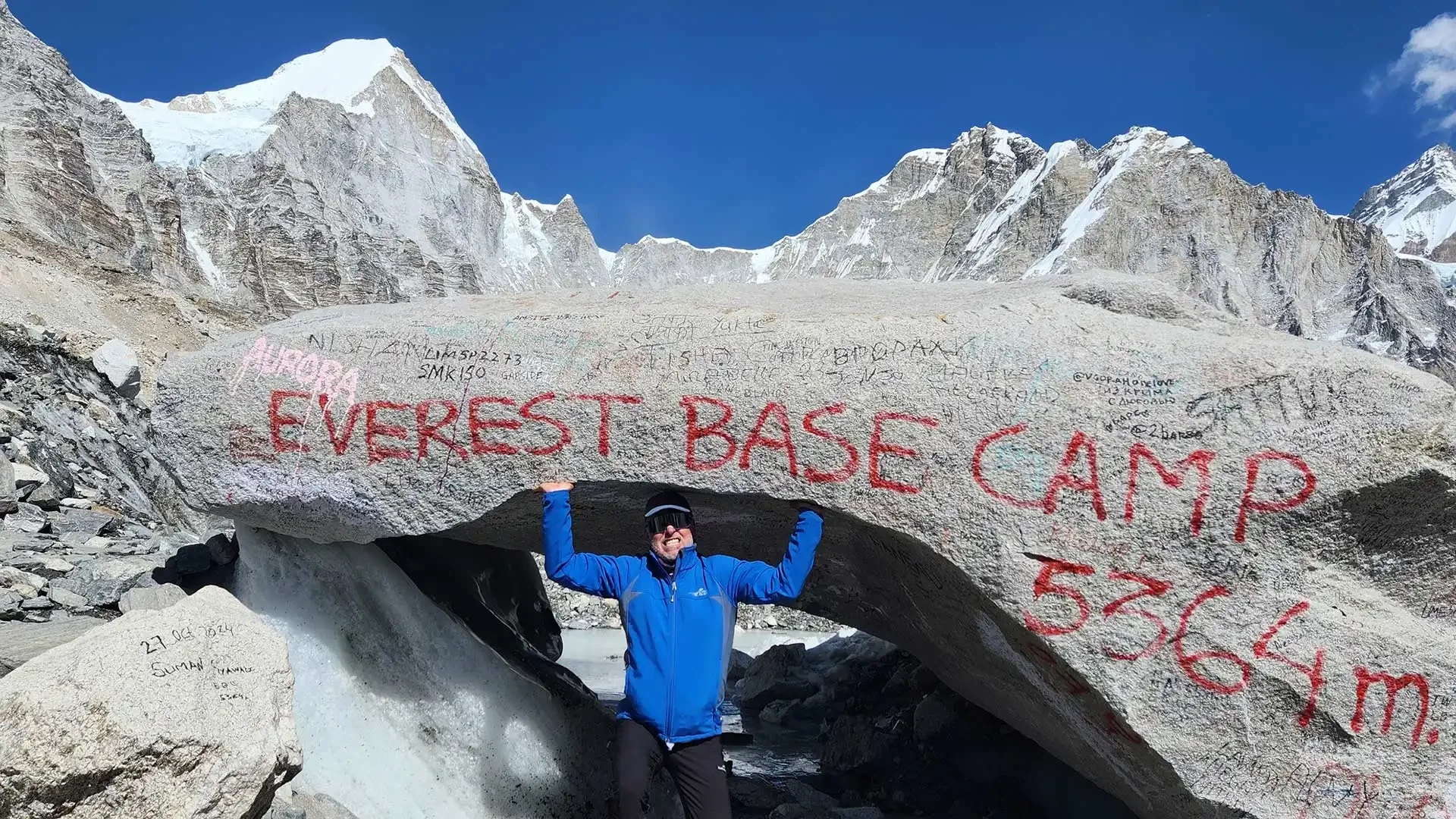
Everest Base Camp Trek | EBC Trek Package - 12 Days

Duration

12 Days

Difficulty
Challenging
Max. altitude

5644m

Best season

Mar-May & Sep-Nov

Start/End Point

Lukla

Accomodation

Hotel & Tea-House

Meals

B/L/D During Trek

Transportation

Tourist Bus & Flight to Lukla

29% Off
From ... ... /Adult
7 reviews
  • Planning with a group? Contact Us for special rates.
  • No hidden fees—what you see is what you pay.
  • Get a $150 Fitness Calendar Free—Your Guide to Getting Trek-Ready!
  • Discount on Next Booking
  • Licensed Guide & Local Porter
  • Instant Response Guarantee – Quick answers to all booking and travel questions.
  • Easy Cancellation: Simple and hassle-free cancellation policy.
Choose Your Date
resh_gurung WhatsApp

Need help? Talk to an expert.

+977-9820578848

Everest Base Camp Trek - 12 Days

The Everest Base Camp Trek - 12 Days is the perfect Himalayan adventure for trekkers looking to experience the raw beauty, cultural richness, and awe-inspiring landscapes of the Mt Everest region within a focused and rewarding timeframe. This 12 Days Everest Base Camp trek takes you through some of the most iconic stops in the Himalayan base camp region — including Lukla, Namche Bazaar, Tengboche, Dingboche, Lobuche, and finally, the legendary base camp of Mt Everest.

Whether you're looking to climb Everest base camp or experience the vibrant Sherpa culture of the Himalaya base camp trek, the 12 days EBC trekking itinerary is thoughtfully designed to provide enough acclimatization and adventure without rushing the journey.

What to Expect in the 12 Days Everest BC Trek

From the thrill of landing at the short Lukla runway to the panoramic views of Mount Everest from Kala Patthar, the 12 days mount everest base camp trek delivers unforgettable moments. Each day of the 12 Days Everest BC trek brings you closer to the towering giants of the Himalayas, walking along suspension bridges, colorful prayer flags, and rhododendron forests, all the way to the glacier fields near Basecamp Everest trek.

The route is carefully paced to help your body adapt to the altitude, making the Mt Everest base camp trek 12 days ideal for both first-time trekkers and experienced mountain lovers.

Cultural and Natural Highlights

Along the 12 days EBC trek, you’ll traverse through Sagarmatha National Park, a UNESCO World Heritage Site home to rare wildlife and stunning alpine ecosystems. The Sherpa hospitality, ancient monasteries, and rich traditions are part of what makes this Himalaya base camp journey so unique.

The highlight of the 12 Days Everest Base Camp trek is undoubtedly reaching Everest Base Camp, standing at 5,364 meters, where climbers from across the globe prepare to ascend Mount Everest. This emotional high is followed by the breathtaking sunrise hike to Kala Patthar, which offers the best views of Mt Everest, Lhotse, Nuptse, and the surrounding Himalayan giants.

Why Choose the Mt Everest Base Camp Trek 12 Days Itinerary?

  • Perfect balance of challenge and comfort
  • Enough days for proper acclimatization
  • Covers all major highlights of the Himalayan Base Camp
  • Best suited for trekkers with limited time but strong determination

The 12 days Everest Base Camp trek is a bucket-list journey that connects you with the raw majesty of the Everest region. It's not just a trek—it's a deep personal experience into the heart of the Himalaya.

If you're dreaming of the Mt Everest Base Camp trek, this 12-day adventure is your path to the top of the world—without needing to climb it.

Everest Base Camp Trek 12 Day Highlights

  • Experience the adrenaline-pumping flight to and from Lukla, known as one of the world’s most exciting airstrips due to its dramatic mountain location.
  • Experience jaw-dropping views of Mount Everest (8,848m) from multiple vantage points, including the famous viewpoint at Kala Patthar.
  • Visit the spiritual heart of the Khumbu region, Tengboche Monastery, a serene and culturally significant place with spectacular views of the surrounding peaks, including Ama Dablam.
  • Explore the vibrant Sherpa town of Namche Bazaar, a lively hub of trekkers, traders, and mountaineers, offering a unique blend of tradition and modernity.
  • Trek through this Sagarmatha National Park (UNESCO World Heritage Site), rich in diverse wildlife, flora, and stunning alpine landscapes, including rhododendron forests and deep river valleys.
  • Immerse yourself in Sherpa hospitality, visiting traditional villages like Phakding, Khumjung, and Dingboche, where you’ll experience local customs, cuisine, and way of life.
  • Witness the dramatic Khumbu Glacier and Everest Base Camp, one of the most challenging sections for climbers attempting the Everest summit.
  • Hike to Kala Patthar (5,545m) view point for an unforgettable sunrise view over Everest, Nuptse and Changtse and the surrounding peaks, bathed in golden light.

Lukla Airport

Lukla Airport, officially known as Tenzing-Hillary Airport, serves as the primary gateway for trekkers heading to the Everest region in Nepal. Nestled at an elevation of 2,845 meters (9,335 feet) in the Khumbu region, the airport is famous for its breathtaking mountain scenery and unique landing conditions. With a short, sloped runway measuring just 527 meters (1,732 feet), it ranks among the most challenging airports in the world, often leading to thrilling and adventurous flights.

Sagarmatha National Park

As trekkers make their way to Everest Base Camp, they pass through Sagarmatha National Park, a UNESCO World Heritage Site. This national park is home to diverse flora and fauna, including rare species. The park's rugged terrain and high-altitude ecosystems provide an extraordinary backdrop for trekking, with each step revealing new wonders of nature.

In addition to its natural beauty, Sagarmatha National Park holds significant cultural importance. The park is dotted with ancient monasteries and traditional Sherpa villages, where trekkers can learn about the local way of life. Interacting with the Sherpa people offers insights into their rich history, customs, and beliefs, adding depth to the trekking experience. The blend of natural beauty and cultural heritage makes the EBC trek a truly unique journey.

Namche Bazaar-The Gateway to the Himalayas

Namche Bazaar is a vibrant Sherpa village nestled in the Khumbu region of Nepal, sitting at an elevation of 3,440 meters (11,286 feet). Often referred to as the "Gateway to Everest," this bustling market town serves as a crucial acclimatization stop for trekkers on their journey to Everest Base Camp. The town is famous for its stunning views of the surrounding peaks, including the iconic Ama Dablam and Lhotse.

As you wander through Namche Bazaar, you'll find a lively atmosphere filled with shops, cafes, and guesthouses catering to trekkers. The town hosts a weekly market where locals trade goods, providing an authentic glimpse into Sherpa culture. Visitors can also explore nearby attractions, such as the Everest View Hotel, which boasts panoramic vistas of Mount Everest, and the Sherpa Museum, which offers insights into the rich history of mountaineering in the region. With its unique blend of natural beauty and cultural experiences, Namche Bazaar is an essential stop for any trekking adventure in the Himalayas.

The Iconic Kala Patthar Viewpoint

One of the most rewarding experiences on the EBC Trek is reaching the Kala Patthar viewpoint. Standing at an elevation of 5,545 meters (18,192 feet), this peak offers unparalleled views of Mount Everest and the surrounding Himalayan range. Trekkers often set out early in the morning to catch the sunrise from this vantage point, when the first light of day paints the mountains in hues of gold and orange.

The trek to Kala Patthar is demanding but incredibly rewarding. As you ascend, the excitement builds, and the anticipation of witnessing the mighty Everest creates an exhilarating atmosphere. Upon reaching the top, the breathtaking panoramic views make every effort worthwhile. This moment serves as a fitting conclusion to the remarkable journey to Everest Base Camp, leaving trekkers with lasting memories and a profound sense of achievement.

Best Time to Visit Everest Base Camp

When planning your adventure to Everest Base Camp, choosing the best time to hike Everest Base Camp is crucial for a successful trek. The ideal seasons are pre-monsoon (March to May) and post-monsoon (September to November). During these months, trekkers can expect stable weather conditions, clear skies, and moderate temperatures. This is particularly important for navigating challenging terrains and maximizing visibility.

In contrast, the monsoon season (June to August) often brings heavy rainfall, making trails slippery and potentially hazardous. Winter (December to February) can be extremely cold, with snow covering the paths. By selecting the right time, trekkers can enhance their chances of experiencing the majestic beauty of the Himalayas and making lasting memories on their journey to Everest Base Camp.

Everest Base Camp Trek Itinerary

Expand all

Day 1: Flight to Lukla (2860m) and Trek to Phakding (2610m) - 3/4 hours

Welcome to Kathmandu! Upon arrival at Tribhuvan International Airport, our friendly representative will meet you and transfer you to your hotel. After settling in and refreshing yourself, you’ll enjoy a traditional Nepali welcome dinner at a local restaurant. This is also the perfect time to meet your Everest trekking guide, who will give you a detailed briefing about the upcoming Everest Base Camp trek. You’ll have an opportunity to ask questions, so you’re well-prepared for the adventure ahead.

Today marks the beginning of your Everest Base Camp hike! You’ll take an exciting flight from Kathmandu to Lukla, the gateway to the Everest region. The short flight is an experience in itself, offering breathtaking views of the towering mountains as you approach the tiny Lukla airport. Upon landing, you’ll begin your trek to Phakding, a charming village along the Dudh Koshi River. As you walk through the lush forests and pass picturesque Sherpa villages, you’ll begin to feel the magic of the Everest trail. The colorful suspension bridges along the way add to the feeling of connection to this spiritual region.

Note: During peak trekking seasons, such as March, April, May, September, October, and November, flights to Lukla depart from Manthali Airport, which is about a 5-6 hour drive from Kathmandu.

However, flights to Lukla can often face delays or cancellations due to runway issues, bad weather, or heavy airport traffic. To ensure a smooth start to your Everest Base Camp trek, it's advisable to plan for an extra day or two in Kathmandu. This way, you’ll have some buffer time in case of any flight disruptions, allowing you to catch your international flight without stress.

Tea House (Twin Sharing)
Lunch Dinner

Day 2: Trek to Namche Bazaar (3440m) from Phakding (2610m) - 5/6 hours

On your third day, the trek becomes more challenging as you hike to Namche Bazaar, the bustling heart of the Khumbu region. The trail weaves through dense forests and crosses suspension bridges, offering increasingly stunning views of the surrounding peaks. The gentle ascent will lead you to Namche Bazaar, where you'll enjoy the lively atmosphere of this market town. It’s a great place to immerse yourself in Sherpa culture and start to feel the excitement building for the rest of your trek to Everest Base Camp.

Tea House (Twin Sharing)
Breakfast Lunch Dinner

Day 3: Rest and Acclimatization day at Namche Bazaar (3440m)

To help your body adjust to the higher altitude, today is an acclimatization day. After breakfast, take a short hike up to the Everest View Hotel, where you’ll be rewarded with panoramic views of Mount Everest, Ama Dablam, and other towering peaks. The Everest region trek offers a first glimpse of the giants you’ve come to see. On your way back to Namche, you can visit the Sherpa Museum and the Sagarmatha National Park Center to learn about the Sherpa culture and the history of mountain climbing. Take the rest of the day to explore Namche’s colorful markets and relax with a cup of tea.

Tea House
Breakfast Lunch Dinner

Day 4: Trek to Tengboche (3860m) from Namche Bazaar (3440m) – 5/6 hours hike

Today’s Everest trekking journey takes you through beautiful pine and rhododendron forests as you make your way to Tengboche, famous for its monastery. The monastery offers serene surroundings and stunning views of Everest, Lhotse, and Ama Dablam. You’ll also have the chance to participate in a traditional evening prayer session at the monastery, which adds a deep spiritual element to your adventure.

Tea House (Twin Sharing)
Breakfast Lunch Dinner

Day 5: Trek to Dingboche (4410m) from Tengboche (3860m) – 4/5 hours hike

Leaving Tengboche, you’ll trek through rhododendron forests and cross the Imja Khola River, before making your way to the village of Pangboche. Here, you’ll get another spectacular view of Ama Dablam and have the opportunity to visit the ancient Pangboche Monastery. The landscape gradually changes as you ascend, with alpine meadows and rocky terrain leading you to Dingboche. Situated at 4,410 meters, Dingboche is a key acclimatization stop on your Everest Base Camp trek. The village is surrounded by dramatic peaks, including Island Peak, Lhotse, and Ama Dablam.

Tea House (Twin Sharing)
Breakfast Lunch Dinner

Day 6: Acclimatization day at Dingboche (4410m) – 4/5 hours hike

Another important acclimatization day to help your body adjust to the higher altitude. You can take a short hike up to Nangkartshang Hill for panoramic views of Ama Dablam, Makalu, and the Imja Valley. The hike is a perfect opportunity to connect with the landscape while helping your body adjust to the altitude. Afterward, return to Dingboche to rest, relax, or explore the village, which offers a peaceful setting to reflect on your hiking to Everest Base Camp.

Tea House (Twin Sharing)
Breakfast Lunch Dinner

Day 7: Trek to Lobuche (4910m) from Dingboche (4410m) - 4/5 hours hike

As you trek from Dingboche to Lobuche, the landscape changes dramatically. The path leads you through a rugged, high-altitude desert where the air is thinner, and the terrain is more challenging. Along the way, you’ll pass memorials dedicated to climbers who have lost their lives in the mountains—a humbling reminder of the dangers and beauty of the Everest region trek. Upon reaching Lobuche, a small settlement surrounded by towering peaks, you’ll feel a sense of accomplishment as you rest and prepare for the final push toward Everest Base Camp Nepal.

Tea House (Twin Sharing)
Breakfast Lunch Dinner

Day 8: Trek to EBC (5364m) then return to Gorakshep (5140m) – 5/6 hours hike

Today is the highlight of your Everest Base Camp hike. You’ll leave Lobuche and trek toward Everest Base Camp, crossing the rugged Khumbu Glacier and passing the iconic prayer flags at the foot of the world’s tallest mountain. Standing at Everest Base Camp, you’ll experience an overwhelming sense of achievement and awe as you take in the view of Mount Everest, the Khumbu Icefall, and the surrounding peaks. After spending some time soaking in the views, you’ll retrace your steps back to Gorakshep, where you’ll rest for the night, proud to have reached the base of the world’s highest mountain.

Tea House (Twin Sharing)
Breakfast Lunch Dinner

Day 9: Early morning hike to Kala Patthar (5644m) and trek to Pheriche (4371m) – 7/8 hours hike

This morning, you’ll begin early to hike up to Kala Patthar, one of the best viewpoints for sunrise over Mount Everest. As the first light hits the mountains, the views are absolutely breathtaking. Afterward, begin your descent to Pheriche, enjoying the beauty of the Everest trail as you make your way down. The journey is a chance to reflect on your incredible achievement, and once you reach Pheriche, you’ll be able to relax and enjoy the quiet serenity of this high-altitude village.

Tea House (Twin Sharing)
Breakfast Lunch Dinner

Day 10: Trek to Namche Bazaar (3440m) from Pheriche (4371m) - 6/7 hours hike

On this day, you’ll trek back to Namche Bazaar, retracing your steps through lush forests and past ancient monasteries. The descent offers some relief from the high altitudes, and the stunning scenery continues to motivate you. As you approach Namche, you’ll be welcomed back to the vibrant town, where you can enjoy a well-deserved rest and reflect on your incredible trekking in Nepal.

Tea House (Twin Sharing)
Breakfast Lunch Dinner

Day 11: Trek to Lukla (2860m) from Namche Bazaar (3440m) - 6/7 hours hike

On the final leg of your Everest region trek, you’ll descend back to Lukla. The trail winds through beautiful forests and crosses suspension bridges, offering one last chance to take in the natural beauty of the Everest region. After reaching Lukla, you'll enjoy a final night in this energetic town, full of fond memories of your hiking to Everest Base Camp.

Tea House (Twin Sharing)
Breakfast Lunch Dinner

Day 12: Flight to Ramechhap/Kathmandu from Lukla- 35/40 mins

This morning, you’ll board your flight back to Ramechhap/Kathmandu. The flight from Lukla to Ramechhap/Kathmandu is as exciting as it is scenic, offering a final glimpse of the towering peaks you’ve just visited. Once you land in Kathmandu, you’ll have time to relax, reflect on your incredible journey, and perhaps explore the city’s vibrant culture before your departure.

Breakfast

Cost Includes of EBC Trek

  • Welcome dinner at a typical Nepalese restaurant in Kathmandu.
  • Best available tea-house/lodge during trekking. Note: In case of need of private room, you can contact us through mail.
  • Domestic flight tickets (Kathmandu – Lukla – Kathmandu) and airport departure taxes.
  • Full board standard meals (breakfast, lunch, and dinner) during the trek.
  • Govt. certified highly experienced English speaking helpful, knowledgeable and friendly trekking guide.
  • Porters to carry your luggage during the trek. Each porter will carry the bags for two trekkers, with a 10 kg limit per trekker.
  • All wages, meals, lodging, transportation, and insurance for guides and porters.
  • For your safety during the trek, the company will provide a first aid kit and an oximeter. The oximeter will be used twice a day to check your pulse, oxygen levels, and heart rate to watch for any signs of altitude sickness.
  • All conservation fees, permit fees, coordination with a relevant government office and government taxes.
  • If there's an emergency, helicopter service can be arranged, and the cost will be covered by your travel insurance.
  • An assistant guide will be provided for groups of 8 or more people.
  • Duffle bags and trekking poles in case you don’t have your own.
  • Trek Completion Certificate from Nepal Visuals.

Cost Excludes of EBC Trek

  • Nepal Entry Visa and Visa extension fees (USD 50 for 30 days visa and USD 125 for 90 days visa, you can get visa upon your arrival at Tribhuvan International Airport, Kathmandu).
  • Personal trekking gears and equipment.
  • International flight fare and airport departure tax.
  • Other charges at lodges/tea houses such as showers, internet access, battery re-charging, hot water and extra hot drink.
  • Travel and Medical Insurance (Compulsory).
  • Alcoholic and non-alcoholic drinks.
  • Charges for emergency rescue or evacuation by helicopter, if needed.
  • Tips for the guides and porters.
  • Any additional night’s accommodation in Kathmandu owing to early arrivals, late departures, or early returns from the trek (for any reason) than the scheduled itinerary.
  • Extra baggage charges.
  • Any expenses other than the Price Inclusion Section.

Everest Base Camp Trek Map & Route

Booking

Loading dates...

Traveller's Review

5
5 Stars 4 reviews
avatar
laura perez
Oct 25, 2025

Desde Cañete, Chile a la Magia del Everest Base Camp con “Nepal Visual” El sueño de alcanzar el Campamento Base del Everest se hizo realidad para Luis y yo, Laura, al partir de Cañete, Chile el 30 de septiembre de 2025. Tras el viaje, aterrizamos en Katmandú el día 2 de octubre, donde la calidez de nuestro guía, Prim, nos dio la bienvenida. Al día siguiente, comenzó nuestra épica caminata. Antes de escribir estas líneas, estuve revisando la logística que Nepal Visual proponía para el viaje, debo confesar que fue superada con creces. Todo salió perfecto, demostrando un nivel de profesionalismo y atención al detalle que nos permitió concentrarnos únicamente en la belleza de la montaña y la experiencia, ellos se preocuparon de todo. El Jepe (como le decía Prim al jefe, cálido, cercano, hizo todo para que nos sintiéramos bien), Prim nuestro Guía en español que no nos tenía fe cuando nos vio, después reconoció lo fuerte que éramos. Ram nuestro Porteador un hombre fuerte, con su sonrisa y humildad y Rajat que nos mostró la historia de su capital KMD, muy documentado. En el hotel “Capital Boutique Hotel” los recepcionistas Anupama y Devendra, nos sorprendieron una mañana saludándonos en español. Nuestras sinceras felicitaciones y admiración a todos por su trabajo, “Todo un Equipo”. El servicio de Nepal Visual hace que esto sea mágico; caminata segura, hoteles, comida suficiente, acompañamiento en las compras de souvenir, a impregnarse de la cultura, de su espiritualidad y de la conectividad. Recomendamos a Nepal Visual a todas las personas que estén buscando una experiencia inolvidable, mágica y, sobre todo, sin contratiempos al CAMPO BASE. Son un verdadero equipo que entrega su corazón en el servicio y lo mejor en español. Además Nepal es muy seguro. Gracias Nepal Visual, son realmente un equipo. ¡¡¡Gracias Totales!!! Firmado: Laura y Luis. (Desde Cañete, Región del Biobio-Chile)

image
image
avatar
baba Kale
Oct 25, 2025

Everest Base Camp Trek with Nepal Visuals (Oct 7–19) We booked our Everest Base Camp Trek with Nepal Visuals from October 7th to 19th, and it was an absolutely wonderful experience from start to finish! Communication from Resh was very prompt and professional throughout the planning and during the trek. We were warmly welcomed at the airport by CEO Resh himself, which was a very nice personal touch. Our guide, Rupesh, was knowledgeable, caring, and always made sure we were comfortable and safe. Our porters, Tara and Ratna, were incredibly hardworking and kind — they not only carried our duffel bags to the next destination ahead of time but even returned to help us with our daypacks. Truly amazing teamwork! All our lodges were comfortable, and the food (breakfast, lunch, and dinner) was well arranged and as described. The overall logistics were smooth, and we felt well taken care of throughout. At the end of the trek, Nepal Visuals organized a farewell dinner at an authentic Nepalese restaurant, which was the perfect way to conclude an unforgettable journey — the icing on the cake! I would highly recommend Nepal Visuals to anyone planning their next trekking adventure in Nepal. They go above and beyond to make the experience memorable.

image
image
image
image
image
image
image
image
image
image
image
image
image
image
image
image
image
image
image
image
image
image
image
image
image
image
image
avatar
Deepak Patel
Oct 24, 2025

“Nepal Visuals” planned the whole Everest Base Camp trek very well, they were always in control of different situations & the guide was very helpful, calm & explaining everything in detail. Resh was very prompt in answering all our questions before trek & took very good care of our family upon arrival in Kathmandu till we left. We recommend Nepal Visuals to all our friends & will definitely use them when we plan our Annapurna trek.

image
image
image
Write a Review on Google
5
5 Stars 3 reviews
avatar
Deepak Patel
Oct 24, 2025

EBC trek with Ama Dablam view

“Nepal Visuals” planned the whole Everest Base Camp trek very well, they were always in control of different situations & the guide was very helpful, calm & explaining everything in detail. Resh was very prompt in answering all our questions & guiding us before the trek and took good care of us right from the day we landed in Kathmandu till we left for back home. We recommend Nepal Visuals to all our friends & will definitely use them when we plan our Annapurna trek.

avatar
Dorina
May 05, 2025

Incredible experience

I recently went on an incredible trek to Nepal with Nepal Visuals, and the experience was outstanding. The team took care of every detail, making the trip smooth and stress-free. A highlight was the unforgettable birthday celebration they organized for my husband at Everest Base Camp—such a thoughtful and magical touch! Our guide Prakash and helper Kiran were amazing, ensuring we felt safe, supported, and enriched by the local culture throughout the journey. I highly recommend Nepal Visuals for anyone seeking a personalized and unforgettable adventure in Nepal.

avatar
Digby Webb
May 05, 2025

EBC Trek, November 2024

In November 2024, I had the opportunity to make use of Nepal Visuals to plan a trek to Everest Base Camp. Communication was great with the planning, accommodation, itinerary and trek information before I left. When I arrived I was met by the team in Kathmandu and they really did a great job in looking after me, including a welcome dinner and briefing session. They had everything arranged, including the flights to Lukla and back, as well as a really experienced, English speaking guide and a friendly capable porter. The trek went without a hitch, teahouse accommodation and 3 meals a day were provided. There seem to be hundreds of trekking and expedition companies in Nepal, however, I would be careful to do your research and make sure you choose a experienced company like Nepal Visuals. I will definitely be back to do another trek soon and would have no hesitation to make use of them again. Thank you Nepal Visuals for the fun, memorable experience.

FAQS

Expand all

General

How difficult is the Everest Base Camp trek?

The Everest Base Camp Trek is moderately difficult due to its high altitude, long walking hours and challenging terrain with steep ascends and descends. Weather can also be unpredictable, and good physical fitness is essential for a successful trek. However, with proper preparation and acclimatization, many trekkers with moderate fitness levels can complete it.

What is the highest altitude/point reached on the Everest Base Camp trek?

The highest point on the Everest Base Camp Trek is Kala Patthar, which stands at 5,545m (18,192 ft). This vantage point offers some of the best views of Mount Everest and is a popular destination for trekkers to witness stunning sunrises and sunsets over the Himalayas.

How long does the Everet Base Camp Trek take?

Trekking to Everest Base Camp typically takes around 12 to 14 days. This includes about 11 days of trekking to reach Base Camp, with additional days for acclimatization and the return journey. The exact duration can vary based on your trekking pace, acclimatization needs, and itinerary preferences.

What are the major attractions of the Everest Base Camp trip?

The Everest Base Camp trek is filled with unforgettable highlights, from breathtaking views of Mount Everest to the rich, welcoming Sherpa culture in villages like Namche Bazaar. Notable attractions include Lukla Airport, the famed Tengboche Monastery set against majestic mountain scenery, and Kala Patthar—a high-altitude viewpoint offering sweeping views of Everest (8,848.86m), Lhotse (8,516m), Makalu (8,485m), Ama Dablam (6,812m), and surrounding peaks. Trekking through Sagarmatha National Park, a UNESCO World Heritage Site, enhances the experience with its diverse flora and fauna, making this journey truly remarkable.

Do I need prior trekking experience for the EBC trek?

While prior trekking experience is not mandatory, it’s recommended. A good level of fitness and some experience in long-distance hiking at high altitudes can make the Everest trek more enjoyable.

What permits do I need for the Everest Base Camp Trek?

For the Everest Base Camp trek, you’ll need two key permits: the Sagarmatha National Park permit and the Khumbu Pasang Lhamu Rural Municipality permit, both of which can be obtained in Kathmandu or during the trek.

Which trek is better: Everest Base Camp or Annapurna Base Camp?

If you’re looking for iconic views and a tough challenge, the Everest Base Camp trek is for you. You’ll see breathtaking peaks like Mount Everest, Lhotse, and Ama Dablam. Along the way, you’ll visit famous stops like Namche Bazaar and Tengboche Monastery. Keep in mind, at 5,364 meters, it’s physically demanding and often busy with trekkers.

The Annapurna Base Camp trek is ideal if you prefer a more relaxed experience. You’ll enjoy stunning views of Annapurna I, Machapuchare, and lush forests. At 4,130 meters, it’s easier on your body and offers a quieter, more peaceful trail.

If you’re after a challenging trek with iconic Everest views, go for Everest Base Camp. For a less crowded, scenic trek, Annapurna Base Camp is the better choice.

Which trek is better: Everest Base Camp or Manaslu Circuit Trek?

If you're after iconic views, the Everest Base Camp trek offers stunning vistas of Mount Everest, Lhotse, Ama Dablam and Nuptse. This popular route can get crowded, but you’ll pass through cultural highlights like Namche Bazaar and Tengboche Monastery. With an altitude of 5,364 meters, it’s a challenging trek.

On the other hand, the Manaslu Circuit trek provides a quieter, off-the-beaten-path experience. You’ll enjoy views of Manaslu and diverse landscapes, reaching 5,160 meters at Larkya La Pass. The trek also immerses you in local culture, with Tibetan-influenced villages along the way.

If you want a classic Everest adventure, go for Everest Base Camp. For a peaceful, scenic trek, choose the Manaslu Circuit.

Is the trek typically crowded?

Yes, the Everest Base Camp trek can become crowded, particularly during peak seasons in spring (March to May) and autumn (September to November), when weather conditions are ideal and views are clear. For a quieter experience, consider trekking in winter or the monsoon season, though these times may present additional weather-related challenges.

What are the documents needed for trekking in Nepal?

Trek members will need to provide 4 passport size photographs, occupation & home address for trekking and climbing permits and a copy of their passport bio-data page. Passport photocopy (should be very clear with color scan) and validity of minimum 6 months. We recommend having your passport ready well in advance to avoid last moment visa procedures.

Is the trek suitable for beginners?

The Everest Base Camp trek is a great option for beginners with a reasonable level of fitness and preparation. The route features a gradual ascent with plenty of acclimatization time, making it accessible for first-time trekkers. With proper training, a positive attitude, and the support of experienced guides, beginners can enjoy the journey through vibrant Sherpa villages, scenic forests, and breathtaking mountain views. It’s an incredible opportunity to experience the Himalayas while trekking at a manageable pace.

Is it possible to trek to Everest Base Camp with kids?

The youngest to complete the EBC trek is 2-year-old Carter Dallas from Scotland, proving that trekking Everest Base Camp with kids is possible with careful planning. Children should have a basic fitness level, and pacing the trek with extra rest and acclimatization days is essential. A knowledgeable guide can enhance safety by monitoring altitude symptoms and offering support. Making the journey enjoyable with games, stories, and frequent breaks keeps young trekkers engaged. With thoughtful preparation, the EBC trek can be an incredible family adventure.

Can I customize my Everest Base Camp trek itinerary?

Yes, you can customize your Everest Base Camp trek itinerary to suit your preferences, fitness level, and schedule. Please contact us at info@contourexpeditions.com to customize your trek.

Should I choose a guided trek or go solo for the Everest Base Camp journey?

Deciding between a guided trek and trekking solo to Everest Base Camp depends on your experience and preferences. A guided trek provides local expertise, logistical support, and help with permits and accommodations, making it ideal for beginners or those new to the region. Guides also offer cultural insights and monitor altitude-related issues. Solo trekking allows for more flexibility and independence but requires strong navigation skills, self-sufficiency, and familiarity with high-altitude conditions.

What safety tips should solo female travelers follow when trekking to EBC?

Trekking solo as a female to Everest Base Camp is generally safe, but certain precautions can make the experience even more secure. Opt for reputable lodges, especially in remote areas, and avoid trekking after dark. Hiring a licensed guide or joining a small group adds extra support and peace of mind. Always share your route and daily plans with someone, and keep important contacts accessible. With thoughtful planning, the EBC trek can be a safe and enriching adventure for solo female travelers.

Can I charge my electronics along the Everest trek?

Yes, but charging electronics in teahouses comes at a small cost, and power availability may be limited. Bringing extra batteries or a portable charger is advised.

Is there Wi-Fi and mobile connectivity along the trek?

Wi-Fi at the EBC trek is available at some teahouses for a small fee, but it can be unreliable, especially at higher altitudes. Mobile networks have limited coverage, though SIM cards with 3G/4G are available.

The Everest region also have a network called "Everest Link" for internet use. It costs approximately NPR 700-800 (USD 6-7) for 6GB of data that may be used at a single location, or NPR 2600 (USD 22) for 10GB of data in a single device that can be used throughout the regions that have access to Everest link.

What is the currency used, and how much money should I carry?

In Nepal, the official currency is the Nepalese Rupee (NPR). For daily expenses during your trek, budget around USD 20 to USD 40 per day for additional expenses like drinks, hot showers, charging electronic devices, or Wi-Fi access, which are not included in trekking packages. Cash is preferred in most trekking areas, as not all places accept cards, so carry sufficient cash in NPR.

What are the risk and liability while trekking with Contour Expeditions?

Contour Expeditions Pvt. Ltd. will make every effort to ensure that your trip is smooth and as pleasant as possible. However, please be reminded that all programs in Nepal are strictly conducted under the rules and regulations of the Nepal Government and Tourism Board. Therefore, we Contour Expeditions shall not be responsible for any changes in the itinerary due to unavoidable circumstances to Government restrictions, landslides, road blockages, flooding, snowfall, political disturbances, illnesses or accidents. Any additional costs that are a result of such circumstances will be borne by you at the very spot.

Preparation & Fitness for the EBC Trek

How fit do I need to be for the Everest Base Camp trek?

A moderate level of fitness is required for the EBC trek. While you don’t need to be an elite athlete, regular cardio and strength training will help. Focus on building stamina with activities like hiking, running, or cycling.

How can I prepare/train for the Everest Base Camp trek?

To prepare for Everest Trekking, include regular cardio exercises (running, cycling, swimming) and strength training, particularly for your legs and core. Practice hiking uphill with a loaded backpack and, if possible, do shorter treks in higher altitudes to adapt to thinner air. Note: Once you confirmed booking with Contour Expeditions, we will provide you the Everest Fitness Calendar to guide you.

Do I need to do altitude training before the trek?

Altitude training is not necessary for most trekkers, but spending time at higher elevations before the trek or doing shorter hikes in the mountains can help prepare your body for thinner air and improve your acclimatization.

How can I prepare mentally for the EBC trek?

Mental preparation is just as important as physical fitness. Be prepared for long days of hiking and potential challenges, including weather conditions. Cultivate patience, stay positive, and be ready to enjoy the journey, no matter the difficulties.

When should I start training for the Everest Base Camp trek?

Start your training at least 3-6 months before the trek. This gives your body enough time to build stamina, strength, and altitude resilience. Begin with general fitness and gradually increase the intensity of your training as the trek approaches.

How much weight should I carry on the Everest trek?

It's recommended to carry only essentials in your daypack, such as water, snacks, a camera, and a light jacket. A porter can carry your heavier luggage (about 10 kg), which includes clothes, sleeping bags, and personal items.

Everest Base Camp Trek Price/Cost

How much does the Everest Base Camp trek cost?

The cost of the Everest Base Camp trek can vary depending on the package you choose. On average, the trek costs between $1400 to $2500 USD, which includes permits, guide and porter services, accommodation, meals, and transportation to and from Lukla.

What’s included in the price of the Everest Base Camp trek?

The price includes permits (Khumbu Pasang Lhamu Rural Municipality and Sagarmatha National Park entry), domestic flights to and from Lukla, accommodation in teahouses, meals on the trek, a certified guide, and porter services. It also cover transportation from Kathmandu to Ramechhap (if applicable) and airport transfers.

Are there any additional costs during the trek?

Yes, there may be extra costs for charging electronics, personal snacks, bottled water, and tips for your guide and porter. You should also budget for optional activities such as visiting monasteries or purchasing souvenirs.

How much should I tip my guide and porter during the trek?

Tipping your guide and porter at the end of the trek is customary, as tips are not included in the trek price. Typically, a fair tip for a guide ranges from $10 to $20 per day, while for a porter, it’s $5 to $10 per day. The exact amount depends on your satisfaction with their service, so feel free to adjust it based on your experience.

Can I trek to Everest Base Camp on a budget?

Yes, it’s possible to trek on a budget by opting for budget accommodations and meals, traveling in a group, and avoiding additional services like porters. However, we recommend factoring in necessary comforts and safety precautions when planning your budget.

Foods & Accommodation for Everest Base Camp Trek

What type of food is available on the Everest Base Camp trek?

During the trek, you'll find a variety of meals at teahouses, including traditional Nepalese dishes like dal bhat (lentil soup with rice), as well as international options like pasta, pancakes, and soups. Vegetarian and vegan meals are commonly available, and meals are prepared with fresh, locally sourced ingredients.

How much will I spend on food during the EBC trek?

Food costs vary depending on the teahouse and altitude. On average, expect to pay $20 - $30 per meal at lower altitudes, with prices increasing as you gain altitude due to the difficulty of supply. Breakfasts like porridge or toast are typically more affordable.

Are the food and water safe during the Everest trek?

While teahouses provide food and water, it's recommended to purify water with tablets or a filter to ensure it’s safe to drink. The food is safe, but it's advisable to eat freshly cooked meals to avoid stomach issues, especially as you reach higher altitudes.

Can we get vegetarian food during the Everest trek?

Yes, you can find vegetarian food during the Everest Base Camp trek. Most teahouses and lodges offer a variety of vegetarian options, including dishes like dal bhat, vegetable curries, pasta and noodles. It's a good idea to inform your guide or the teahouse staff about your dietary preferences to ensure you have suitable meals throughout the trek.

How much water should I carry during the trek?

Carry a water bottle that can hold at least 2 liters of water. You can refill your bottle at teahouses along the way, but it's important to use water purification tablets or a filter to ensure water is safe to drink.

What kind of accommodation is available during the Everest Base Camp trek?

During the trek, you'll stay in teahouses or lodges along the route. These are basic, family-run establishments offering essential amenities. Rooms typically include a bed with blankets, but at higher altitudes, it's recommended to bring your own sleeping bag for extra warmth. Bathrooms are usually shared, and hot showers are available for an additional fee.

Are there private rooms available in teahouses?

Private rooms are available in most teahouses along the EBC trek, though they can be limited, especially during peak trekking seasons. These rooms usually cost more than shared rooms, but they offer more privacy and comfort. Note: Contact us at for a private room.

Do teahouses in the EBC trek provide heating?

Most teahouses provide heating in the common areas, usually in the form of a yak dung stove or electric heaters. However, heating in rooms is not common while trekking in Nepal, so it’s important to bring warm clothing and a good sleeping bag, especially at higher altitudes.

Can I buy snacks along the way to Everest Base Camp (EBC)?

Yes, along the route, you'll find a variety of snacks, including chocolates, energy bars, nuts, and biscuits. These snacks are available at teahouses and small shops and can help keep your energy levels up during long trekking days.

Health & Safety for the EBC Trek

Is medical examination necessary for the EBC trek?

A medical examination is not mandatory for trekking in Nepal, but it is highly recommended, especially for high-altitude treks like Everest Base Camp. A check-up can help assess your fitness level, provide advice on altitude acclimatization, and offer health recommendations regarding vaccinations and medications. Additionally, some travel insurance policies may require proof of fitness for coverage during high-altitude trekking. Overall, consulting a healthcare professional before your trek can enhance safety and enjoyment during the journey.

Is altitude sickness a concern while trekking the Everest Base Camp?

Yes, altitude sickness is a concern on the Everest Base Camp Trek due to reduced oxygen levels at higher elevations. To minimize the risk, it's important to acclimatize properly, stay hydrated, and pace yourself during the trek. If symptoms worsen, descending to a lower elevation and seeking medical attention is essential.

How can I prevent altitude sickness during the Everest Base Camp trek?

To prevent altitude sickness, follow a slow and steady ascent, drink plenty of fluids, avoid alcohol, and ensure adequate rest. Taking acclimatization days and staying well-rested also helps your body adjust to higher altitudes.

What are the symptoms of altitude sickness?

Common symptoms include headaches, dizziness, nausea, shortness of breath, and fatigue. If these symptoms worsen, it's crucial to descend immediately to a lower altitude.

What should I do if I experience altitude sickness?

If you experience altitude sickness, inform your guide immediately. The best course of action is to descend to a lower altitude and rest. Our guides are trained to manage altitude-related issues and can make decisions on the best way to ensure your safety.

Are there medical facilities along the Everest Base Camp route?

There are basic medical facilities in towns like Namche Bazaar and Dingboche. However, the higher you trek, the more limited medical care becomes. It’s recommended to carry a personal first aid kit and sufficient medication for common ailments.

Should I bring any medications for the trek?

Yes, bring medications for common trekking ailments, such as pain relievers, anti-diarrhea medication, altitude sickness prevention (like Diamox), and any personal prescription medications

What should I do in case of an emergency?

In the event of an emergency, such as a serious injury or health issue, your guide will assess the situation. Emergency evacuation by helicopter or on foot may be necessary, depending on the severity of the condition. Make sure you have travel insurance that covers evacuation and high-altitude trekking.

What safety preparations are in place from Contour Expeditions?

Your safety is our major concern. So, the first aid kit box and oximeter are provided during the trek. The guides will take care of you if minor problems occur. But in case of difficult situations, emergency evacuation and rescue with an experienced team will be there for you.

Insurance & Visa Requirements for Visiting Nepal

Do I need travel insurance for the Everest Base Camp trek?

Yes, travel insurance is mandatory for the Everest Base Camp trek. Your policy should cover high-altitude trekking, emergency evacuation, and medical expenses, including accidents or altitude sickness. We recommend International travel insurance Global Rescuse

What type of insurance should I get for the EBC trip?

Your travel insurance should include coverage for trekking at high altitudes (up to 5,364 meters at Everest Base Camp), emergency evacuation, medical treatment, trip cancellations, and loss of belongings.

How do I get a visa for Nepal?

Tourists can obtain a visa for Nepal either upon arrival at Tribhuvan International Airport in Kathmandu or in advance through a Nepali embassy. Visas are available for 15, 30, or 90 days, and you’ll need a passport valid for at least six months. Please visit https://www.immigration.gov.np/en/page/tourist-visa for detailed information.

Can I extend my visa in Nepal?

Yes, tourist visas can be extended for up to 150 days per year. Extensions can be done at the Department of Immigration in Kathmandu and Pokhara.

Do I need any special permits for the Everest Base Camp trek?

Yes, besides the standard tourist visa, you will need the Khumbu Pasang Lhamu Rural Municipality Permit and an entry permit for Sagarmatha National Park to trek to Everest Base Camp.

Can I arrange my visa and permits on arrival?

You can get your visa on arrival at the Kathmandu airport, but trekking permits must be arranged in advance. Our team will obtain all the necessary permits and make your trek hassle free.

Should I carry a copy of my insurance and visa documents during the EBC trek?

Yes, it’s a good idea to carry photocopies of your passport, visa, and insurance details while trekking. Keep these separate from the originals in case of loss or theft.

Guides & Porters

Will I have a certified and experienced Everest trekking guide?

Yes, on your Everest trip, you’ll be accompanied by a certified and experienced guide. Our guides are professionally trained, knowledgeable about the terrain, and skilled in handling altitude-related concerns. They enhance your trekking experience with insights into local culture and history, while prioritizing safety and ensuring a smooth, enjoyable journey to Everest Base Camp.

Do I need a guide or porter for the EBC trek?

While a guide or porter is not mandatory for the trek, having one is highly recommended. Guides provide valuable insights, assist with navigation, and help manage altitude-related issues, enhancing safety and overall experience. Porters can carry heavy gear, allowing you to trek more comfortably. Both can make your journey to Everest Base Camp smoother and more enjoyable.

Is tipping expected on the trek?

Yes, tipping is customary for guides and porters at the end of the trek, typically based on their service quality. The usual range is $10-$15 per day for guides and $5-$10 for porters.

Can I request a specific guide or porter?

Yes, if you have a preference for a particular guide or porter, you can request them at the time of booking. We try our best to accommodate such requests based on availability.

What happens if my guide or porter gets sick?

If your guide or porter becomes ill, we have backup staff available. We also have contingency plans for evacuation and support, ensuring your trek continues smoothly and safely.

Transportation & Flights

Where do flights to Lukla depart from during peak season?

During peak seasons such as March, April, May, September, October, and November, flights to Lukla depart from Manthali Airport, located approximately a 5-6 hour drive from Kathmandu.

What transportation is provided from Kathmandu to Ramechhap Airport?

Transportation from Kathmandu to Ramechhap Airport is typically provided by Tourist Bus or private vehicles. These transfers are arranged to ensure timely arrival for your flight to Lukla. The journey takes approximately 5-6 hours, depending on traffic and road conditions.

Are flights to Lukla reliable?

Flights to Lukla are typically reliable, but they are heavily dependent on weather conditions and airport traffic. Due to the region's mountainous landscape, delays or cancellations are common, especially during the monsoon season (June to September) and winter. It’s advisable to allow for extra days in your itinerary to accommodate potential delays and ensure a smooth journey to the Everest Base Camp trek.

What happens if my Lukla flight is delayed or canceled?

In the case of delays or cancellations, we assist with rebooking flights or provide alternative options, such as helicopter services, if available. Additional charges may apply for these services.

Are helicopter flights an option?

Yes, helicopter flights are an option for traveling to and from Lukla, especially if you want to avoid delays caused by weather conditions. Helicopter services provide a faster and more flexible alternative to regular flights, though they are typically more expensive. They can also be used for emergency evacuations or to shorten the EBC trek's duration.

Can I arrange private transportation to Lukla?

Yes, private helicopter transportation to Lukla can be arranged for a more comfortable and flexible journey. While it is more expensive than regular flights, it offers convenience and avoids the potential delays or cancellations that can occur with standard flights.

What is the Lukla flight like?

The flight to Lukla is a thrilling 30-40 minute journey offering breathtaking views of the Himalayas. It lands at Tenzing-Hillary Airport, known for its challenging approach and short runway, which adds to the excitement.

What is the weight limit for Lukla flight?

The weight limit for the Lukla flight is 15 kg (33 pounds), which includes both your duffel bag and daypack. If your daypack is over this limit, you can pay an extra fee of $2 to $5 per kilogram. However, even if you pay, there’s a chance your extra baggage may not be allowed. To avoid issues, we recommend packing within the 15 kg limit.

EBC Trek Preparation & Gears

How should I prepare for the Everest Base Camp trek?

To prepare for the EBC trek, focus on building your cardiovascular fitness, strength, and stamina. Incorporate hiking, walking, and uphill training into your routine. Additionally, consider doing shorter treks at higher altitudes to familiarize yourself with altitude conditions.

What gear do I need for the Everest Base Camp trek?

Essential gear includes sturdy trekking boots, layered clothing for varying temperatures, a good-quality sleeping bag, a waterproof jacket, trekking poles, and a daypack. You’ll also need a hat, sunglasses, sunscreen and water purification tablets. Note: Please find the attached Gear List for the EBC trek.

Do I need to buy all trekking gear before arriving in Nepal?

You can buy or rent most trekking gear in Kathmandu, including jackets, sleeping bags, trekking poles, and boots. However, it’s recommended to bring your own personal gear, medicines, a high-quality backpack, and any comfort items you may need.

What clothing should I pack for the Everest Base Camp trek?

Pack clothing in layers for flexibility. Essential items include moisture-wicking base layers, insulating mid-layers (like fleece or down jackets), a waterproof outer layer, and sturdy trekking pants. Don’t forget gloves, a hat, and warm socks for higher altitudes.

Is a sleeping bag necessary for the trek?

Yes, it's recommenced to bring a good-quality sleeping bag rated for cold temperatures (down to -10°C or lower) for the higher-altitude nights. Most teahouses provide basic bedding, but a sleeping bag will ensure comfort and warmth during the trek.

Everest Base Camp Trek Weather

When is the best time to trek to Everest Base Camp?

The best times to trek to Everest Base Camp are during the spring season, from March to May, and autumn season, from September to November. These months offer clear skies, stable weather, and mild temperatures, making them ideal for trekking.

What is the weather like during the Everest Base Camp trek?

The weather varies widely throughout the trek. At lower altitudes, temperatures are mild, ranging from 10°C to 20°C. As you gain elevation, temperatures drop, and at higher altitudes, they can fall below -10°C, especially at night.

How cold does it get at Everest Base Camp?

At Everest Base Camp, temperatures can drop to as low as -10°C to -20°C at night. During the day, temperatures range from 0°C to 10°C, depending on the season and weather conditions.

Will there be snow on the Everest Base Camp trek?

Snow is common at higher altitudes, particularly above 4,000 meters. In winter, snow can accumulate along the trail, affecting trekking conditions. In spring and autumn, snow is generally found only at the highest elevations or in shaded areas.

Can I trek during the monsoon season (June to August)?

It’s not recommended to trek during the monsoon season due to heavy rainfall, which can cause landslides, slippery trails, and poor visibility. Trekking conditions are challenging, and the trails may be muddy and hazardous.

What should I wear to cope with the changing weather?

Layered clothing is key. Start with moisture-wicking base layers, followed by insulating mid-layers like fleece or down jackets, and finish with a waterproof outer layer. Don’t forget warm gloves, a hat, and high-quality socks for higher altitudes. Be prepared for significant temperature fluctuations throughout the day.

How do I prepare for unpredictable weather on the EBC trek?

Stay informed by checking the weather forecast before your trek, and pack for all conditions. Bring waterproof gear, warm clothing, and a high-quality sleeping bag for cold nights. Allow flexibility in your itinerary to accommodate unexpected weather changes, ensuring a safe and enjoyable trekking experience.

Booking & Payments

What is the process for booking EBC trek with Contour Expeditions?

You can easily book the Everest Base Camp trek through our website or by contacting our customer service team. We will guide you through the booking process, answer any questions, and help you choose the right trek itinerary for your needs.

Is a deposit required to book the EBC trip?

Yes, a deposit is required to confirm your booking. 30% deposit is needed at the time of booking, with the remaining balance due before or upon arrival in Kathmandu.

What payment methods are accepted for booking?

We accept a variety of payment methods, including bank transfers and credit/debit cards. You can select the method that works best for you during the booking process.

Can I book the Everest Base Camp trek last minute?

While we recommend booking your trek well in advance to secure your preferred dates, last-minute bookings are possible depending on availability. It’s best to check with us for up-to-date information.

Are there any cancellation fees?

Yes, cancellation fees apply depending on the timing of your cancellation. Generally, the earlier you cancel, the lower the fee. Please refer to our cancellation policy for specific details.

Can I get a refund if I cancel my EBC trek?

Refunds are possible based on the terms outlined in our cancellation policy. The refund amount will depend on how far in advance you cancel and the costs already incurred for booking the trek.

Will I receive a booking confirmation?

Yes, once your booking is confirmed, we will send you a booking confirmation with all the relevant details, including your trek itinerary, payment receipt, and any additional instructions or information you need before the trek.

Everest Base Camp Trek Gear and Equipments

Here is the list of personal gear and equipment you might want to pack for the Everest Camp Trek. We provide a 75-liter duffel bag for your use on the trek. This bag will be provided on the night before you leave Kathmandu.

Note: This list doesn’t contain layers of clothing for winter in Nepal. The duffle bag is company property, and you have to return it. You can rent a sleeping bag and a down jacket for an additional fee of $30 each in Kathmandu.

General

  • Puffer Down Jacket (Rentals available for an additional $25)
  • All-season Sleeping bag (Rentals available for an additional $35)
  • Rucksack (40-50 Liters) with Rain Cover

Upper Body

  • Sun hat/Cap (A free Nepal Visuals baseball cap)
  • Merino Wool Hat/Beanie (Preferably ear covering)
  • Scarf/Neck Gaiter
  • Headlamp (Extra Batteries)
  • Sunglasses (Cat 3 or above)

Torso

  • Woolen or synthetic base Layers/Thermals x 1 (Light for Spring & Heavy for Winter/Autumn)
  • Woolen or synthetic material fabric shirts x 2
  • Water & Wind Proof Shell
  • Fleece Jacket

Lower Body

  • Woolen or synthetic material fabric base layer x 1 (Light for Spring & Heavy for Winter/Autumn)
  • Hiking Pants x 2
  • Warm & comfortable pants/trousers (to be worn indoors)
  • Water & Wind Proof Shell
  • Hiking Shorts

Hands

  • Merino Wool or synthetic fabric liner gloves
  • Hard-shell thick gloves

Feet

  • Merino Wool or synthetic fabric thick socks
  • Hiking Socks x 3 (Depending on your preference)
  • Trekking/Hiking Boots (GTX Recommended)
  • Micro Spikes (for Winter Treks)
  • Gaiters (for Winter Treks)

Undergarments

  • Quick drying underwear
  • Sports Bra (Women)
  • Pajamas/Sleeping Clothes

Note: The quantity of undergarments should be adjusted to suit your preferences.

Personal First-Aid Kit

  • Medications (If needed) (Acetazolamide or Dexamethasone)
  • Sunscreen (SPF 50+)
  • Lip Balm
  • Blister Tape
  • Water Purification Tablets
  • Hand Sanitizer

Essentials

  • Passport & Copies of passport-sized photographs
  • Power bank & Extra Batteries
  • Camera & Mobile Phone
  • Trekking/hiking Poles
  • Travel Flask (Thermos) & Reusable Water Bottle (Nalgene Recommended)
  • Whistle (For emergencies)
  • Toiletries
  • Hydration Bladder
  • Quick-dry Towel
  • Neck Pillow
  • Dry bags

Food

  • Chocolate (Mars & Snickers)
  • Granola Bars

Note: Take enough chocolate & granola bars depending on the duration of the trek. Sugar helps you with fatigue at high altitudes.

Everest EBC Trek Difficulty (Altitude, Terrain and Grade)

Altitude 

As soon as you reach Lukla airport, you’re at 2,860m/9383ft of elevation. You then trek for 3-4 hours depending on the pace to reach Phakding at 2650m/8690ft. You’re at higher altitudes from the starting day of the trek. The rule of thumb for altitude is “Trek High and Sleep Low”.

To minimize the chances of Altitude Mountain Sickness the itinerary consists of two acclimatization days, one at Namche Bazar (3440m) and the other at Dingboche (4350m). With these acclimatization days, your body gets used to the high altitude and the stress it causes.

The guides at Nepal Visuals are well-trained in wilderness first aid and will be taught to monitor your vitals for any signs of Acute Mountain Sickness (AMS). The most common signs of AMS are headaches, loss of appetite, difficulty sleeping, and shortness of breath. Stay wary of these early signs and report it to the guide without any reservations.

Contracting AMS doesn’t mean you can’t trek, it means you might need some extra time to get used to the lower levels of oxygen in the environment. One of the most popular ways of avoiding AMS is hiking at a stable pace for a longer period. Our guides are trained in the act of stabilizing pace.

Fitness Requirements

The guided Everest BC trek might seem demanding and tough, most might not believe in you to achieve this, rest assured. We can help get you to the level of fitness required for the trek with our Everest Fitness Calendar. This calendar will help you assess your fitness level, follow daily workout regimes, and monitor your progress.

Trekking for 7-8 hours daily might sound daunting, however with the right preparation, the experience can be extremely rewarding. Start with going on long hikes, walking, or running, a central part of your training regime by adding a loaded backpack to replicate the conditions of the trek. This will increase your cardiovascular functions and help you get accustomed to the weight of your backpack for the Everest Base Camp Trek.

Start with a shorter distance hike or walk and gradually increase the distance to build endurance and confidence for the trek. Alongside hiking, include strength-building with lunges, squats, and burpees to prepare your leg for steep ascents and descents. Progressively introduce harder routines each week, such as interval running for endurance, weighted squats for leg strength, and yoga for recovery and mental focus. Take strategic recovery days to prevent burnout.

The Everest Fitness Calendar also provides tips on nutrition, hydration, and altitude acclimatization, ensuring you’re fully prepared for the trek.

Safety & Security

Expert Guides & Local Porters

Your trek is led by experienced, English-speaking, government-licensed guides and local porters who are well-versed in the terrain, local culture, and the challenges of high-altitude trekking. The guide is trained to manage group dynamics, provide motivational support, and ensure a safe trekking experience.

Emergency Preparedness

At Nepal Visuals, we prioritize your safety foremost with state-of-the-art safety tools and practices. Guides are equipped with oximeters for daily oxygen level checks to monitor acclimatization. The guides are trained in navigation for swift Helicopter Rescue services in case of emergencies, ensuring prompt evacuation when required.

Our guides are also trained in Wilderness First Aid to handle minor injuries and medical conditions on the trail. In addition, you provide safety briefings at the start of the trek to prepare trekkers for potential challenges and empower them with the knowledge to stay safe.

Everest Trek Travel Insurance

The Nepalese government mandates comprehensive travel and medical insurance to ensure a safe and secure trekking experience. The insurance must cover:

Minimum Coverage: Your insurance policy must cover up to $100,000 to account for any potential high-altitude emergencies including emergency medical evacuation.

Altitude Coverage: Your insurance policy should explicitly include trekking up to 5,545 meters (Kala Patthar). General insurance may exclude high-altitude activities.

Helicopter Rescue Coverage: Your insurance policy should include emergency helicopter evacuations. These can cost thousands of dollars in case of severe altitude sickness or injury.

Everest Trekking Permits 

The Nepalese government imposes permit fees to preserve the natural resources of respective protected areas. Every national park and conservation area in Nepal requires a permit and the cost is inexpensive for affordability.

The revenue from the permits is used to maintain the protected areas’ ecosystem including trail maintenance, wildlife protection, and waste management programs. The revenue also supports the local communities by financing education, healthcare, and conservation awareness campaigns.

There are other permits that are attached to the Rural Municipalities of Nepal which contribute to infrastructure development, maintain suspension bridges, and build huts for shepherds, as well as promote sustainable tourism initiatives.

Required Permits for the Trekking Base Camp Everest

  • Sagarmatha National Park Entry Permit: This permit costs Rs. 3000 per person per entry into the UNESCO World Heritage Site.
  • Khumbu Pasang Lhamu Rural Municipality: This permit costs $20 (Rs. 3000 approx.) per person for 4 weeks

How to obtain the permits?

The permits to trek in the Everest region can be arranged either from Kathmandu or in Lukla upon arrival.

Documents required for permits

  • Passport
  • Passport sized Photographs

Trekking agencies, including ours, can assist in obtaining these permits to save you time and effort.

Guide & Porter Details

Experienced Guides

Our guides are government-certified professionals with years of experience navigating the Everest region. They provide invaluable insights into the Trek to Everest Base Camp, the history of trekking in Nepal, and the local culture, including wildlife.

Porter Details

We use porters to carry our clients’ bags. They are the MVPs of the trekking industry of Nepal, and they are also human. So, the Nepalese government has mandated a limit to the amount of weight they can carry to 20 Kg (44 lbs.) and allocated their minimum wage at Rs 2500 ($16 to $22).

These heroes of the tourism industry of Nepal carry the duffle bag provided by us with a ratio of 1 porter for 2 clients (2:1). So, each client has a weight limit of 10 Kg.

Please remember to tip them wholeheartedly, a normal rate of tips could be considered 10% of the total price of the trek. Which would amount to at least $150. You appreciate your understanding of the hard work they do.

Accommodation

On the Everest Base Camp Tour, we provide our guests with 2 nights of hotel stay in Kathmandu and 12 nights in teahouses/lodges during the trek.

Room

We provide our guests with accommodation in a good hotel on a twin-sharing basis. You can let us know if you’d like a private room or a higher-standard hotel, with an extra charge. Your hotel room in Kathmandu will have attached bathrooms, clean sheets & blankets, and amenities. These hotels are in Thamel, the tourist hub of Kathmandu which offers great choices of restaurants, cafes, bars, clubs, and shops for essentials.

We provide our guests with a simple guest house during the trek. The guest houses may or may not have the option of an attached bathroom based on availability. The beds, blankets, and bed sheets at these guest houses might not be up to standard but they will keep you warm.

Note: If the bedding is not clean enough, please contact our guide and ask him to transfer you to another room.

Food and Drinks (Dietary Restrictions & Food Availability for Vegetarians)

You can enjoy the hearty and nutritional meals throughout the trek. Breakfast, Lunch, and Dinner are provided during the trek and will energize you for the challenging trails and high altitude. The meals offered in the Everest Base Camp trek include a variety of local and international dishes.

Vegetarian and vegan options are readily available to ensure your dietary needs are met without compromising taste or nutrition. Let us know your preferences accordingly and make sure your guide remembers them as well.

For drinking water, it is always recommended to carry purification tablets or a reusable water filter. Clean drinking water is a critical part of high-altitude trekking. Carry a Nalgene bottle to stay hydrated and safe during long distances.

Refill stations are common along the route, allowing you to reduce single-use plastic waste and contribute to the National Park Service.

Choose the Everest Base Camp Helicopter Tour Over the Traditional Trek

The Everest Base Camp Helicopter Tour is a quick and comfortable way to explore the Himalayas without trekking. In just a few hours, you can enjoy breathtaking aerial views of Mount Everest, Lhotse, Ama Dablam, and the Khumbu Glacier. 

The Everest Base Camp Helicopter Tour offers a thrilling aerial journey from Kathmandu, flying over scenic valleys, alpine forests, and iconic Sherpa villages like Namche Bazaar and Tengboche. Passengers enjoy panoramic views of the Himalayas, with a close-up look at Mount Everest from Kalapatthar (5,545m)—one of the best viewpoints for photography.

The tour includes a brief landing at Kalapatthar or near Everest Base Camp, allowing travelers to step out and experience the high-altitude landscape. Operated by skilled pilots and equipped with oxygen support, the flight ensures both comfort and safety, making it an ideal option for those seeking a quick and memorable Everest experience.

Expenses (Extra for showers, tips, and Wi-Fi)

Hot Showers:  Hot Showers can cost between $2-$4.

Wi-Fi: Wi-Fi prices can vary between $3-$4. You can also buy prepaid plans from Everest Link.

Battery Charging: Recharging your batteries might cost between $1-$3. Please remember some teahouses are solar-powered, so the charging might have little to no effect. You advise carrying a portable charger (Power bank) with you on the trek.

Tips: $10-$15 per person for the Guide and $5-$10 per person for the Porter. These add up to about $150–$300 during your Himalaya trekking Everest base camp journey.

Everest Base Camp Trek Packages

Most EBC trek packages range from 12 to 15 days. These usually include guides, permits, lodging, and meals. The Everest base camp trek cost varies:

  • Budget: $1,200–$1,500 (group joining)
  • Mid-range: $1,400–$2,000
  • Luxury: $2,500–$5,000+ (includes helicopter return, high-end lodges)

Additional expenses like gear rental, tips, and snacks can increase your trekking Everest base camp price. For detailed info visit the link

Rules and Regulations to Follow in the Everest Region

Trekking to Everest Base Camp, one of the most iconic adventures in the Himalayan base camp trek, requires not only preparation but also respect for the natural environment and local communities. Whether you're on a classic EBC trek, a base camp Himalaya expedition, or planning to climb Everest Base Camp, following these guidelines ensures safety and sustainability throughout your journey.

🛕 1. Respect Sherpa Culture and Local Traditions

The Mount Everest Base Camp region is home to the Sherpa people, who follow centuries-old customs and traditions. Always ask for permission before taking photographs of individuals, homes, or sacred sites like monasteries. Respect for local values is essential while exploring the Everest base trek and Himalaya camps.

🚯 2. Don’t Litter – Keep the Trails Clean

Proper waste disposal is crucial for protecting the fragile environment of the Sagarmatha National Park. Always carry your trash and avoid using single-use plastics. Clean trails make your hike to Everest Base Camp cost less in terms of environmental impact and preserve the beauty for future trekkers.

🥾 3. Stick to Designated Trails

Avoid taking shortcuts on the Everest Base Camp trail, as it can lead to erosion and habitat disruption. Staying on marked paths ensures your safety and protects the terrain. This is especially important in remote areas of the Himalaya trekking Everest Base Camp route.

📜 4. Follow Local Guidelines and Instructions

Always listen to your licensed guide and follow regulations from park officials or local authorities. During your EBC trekking adventure, these rules help manage crowds, monitor altitude-related illnesses, and preserve cultural sites.

🔥 5. Avoid Open Fires

Fires are strictly prohibited within the Himalaya base camp region to protect the delicate alpine ecosystem. Use solar-powered or fuel-efficient alternatives for heating and cooking while trekking to Mount Everest South Base Camp or staying at high-altitude teahouses.

🐾 6. Respect Local Wildlife

The Himalayan base camp trek takes you through Sagarmatha National Park, home to rare animals like the Himalayan Thar, Musk Deer, and even Snow Leopards. Observe wildlife from a distance and never feed or disturb them. Responsible trekking ensures biodiversity remains intact for all future basecamp Everest trek travelers.

Trip Extensions After Everest Base Camp

After completing the EBC trekking adventure, many trekkers choose to extend their journey. Popular options include:

  • Gokyo Lakes and Gokyo Ri Trek for panoramic Himalayan views.
  • Three Passes Trek for experienced trekkers.
  • Mera Peak Climbing 
  • Ama Dablam Base Camp

These additions offer a deeper insight into Nepal’s landscapes and culture beyond the Himalayan base camp trek.

Beginners Guide for Everest Base Camp

Trekking Everest Base Camp is beginner-friendly with the right training and mindset. Start preparing at least 2-3 months in advance with cardio, strength training, and hiking practice.

Key beginner tips:

  • Choose a 12–14 day itinerary with rest/acclimatization days
  • Stay at teahouses on the Everest Base Camp trail for authentic local experiences.
  • Pack light but bring quality trekking gear including layers, trekking poles, and a down jacket.

The Everest EBC trek is not technical, but stamina, determination, and altitude preparation are vital.

Important Notes for Your Everest Base Camp Trek

Planning your Everest Base Camp trek? Here are some important things you need to know to ensure your base camp Himalaya adventure is smooth, safe, and enjoyable. Whether you're booking your first EBC trek or comparing Everest Base Camp trek prices, these notes will help you prepare better for your Himalayan base camp trek.

🛫 Flights to Lukla Now Depart from Ramechhap

Due to congestion at Kathmandu airport, all flights to Lukla (gateway to Mount Everest Base Camp) now depart from Ramechhap Airport, which is a 4–5-hour drive from the capital. We leave Kathmandu around 1 AM to catch the early morning flights, as afternoon flights are not possible because of strong mountain winds.

☁️ Weather Delays Are Common – Have a Contingency Plan

Bad weather can delay or cancel flights. To avoid missing international flights, we highly recommend adding a 2-3 night buffer after your planned return from Lukla. For example, if your EBC trek ends on a Monday, book your international flight for Thursday or later.

If needed, you can upgrade to a helicopter flight from Kathmandu to Lukla, which costs around $250–$300 extra. This is a great backup option during flight delays.

🧍 Solo Travelers and Room Options

There is no extra charge for solo trekkers on our basecamp Everest trek packages. However, if you want a single room, please choose the single supplement option at checkout.

🎒 Baggage and Packing Guidelines

  • Porters carry up to 20kg – we provide a duffle bag suitable for the trek.
  • Flight weight limit is 15kg per person, including hand-carry. Extra baggage is allowed only if the flight has space, and you'll pay the airline directly.
  • Pack light to make the journey easier and to comply with airline rules during your trekking camp base Everest adventure.

📄 Required Documents

Please email us a copy of your passport at the time of booking. We need this to secure your domestic flight tickets to begin your Himalaya base camp trek.

🍽️ Meals and Extras

  • All meals on the Everest base trek are included (breakfast, lunch, and dinner).
  • Drinks (tea, coffee, cold drinks, and alcohol), snacks, and meals in Kathmandu (except breakfast) are not included in the Everest Base Camp trekking cost.
  • Extras such as hot showers ($3–$5) and battery charging ($1–$3) are payable at lodges.

🌐 Wi-Fi in the Himalayas

You can purchase a Wi-Fi card from EverestLink in Lukla or Namche Bazaar. It costs around $25 for 10–20 GB of data (valid for 30 days). While useful for staying connected during your Himalaya trekking Everest Base Camp, signal strength can vary based on location and weather.

☁️ Weather Flexibility

The weather in the Himalayas changes rapidly. Your safety is our priority, and your guide may adjust the itinerary if needed. Be flexible, stay calm, and trust your guide throughout your EBC trekking experience.

🚁 Drone Use is Restricted

Drones are not allowed in the Mount Everest South Base Camp area unless you have a special permit, which is difficult to obtain. Due to frequent helicopter flights, unapproved drones pose a serious risk. We recommend leaving them at home.

Insurance is a Must

Comprehensive travel insurance covering high-altitude trekking, evacuation, and medical emergencies is essential for anyone planning to trek to the Himalayas or climb Everest Base Camp.

... ... / Adult
Need help with booking?

Inquiry Form

*
*
*
*
*

Inquiry Form

*
*
*
*
*

Booking

We use cookies to ensure that we give you the best experience on our website. Privacy Policy