 Nepal Visuals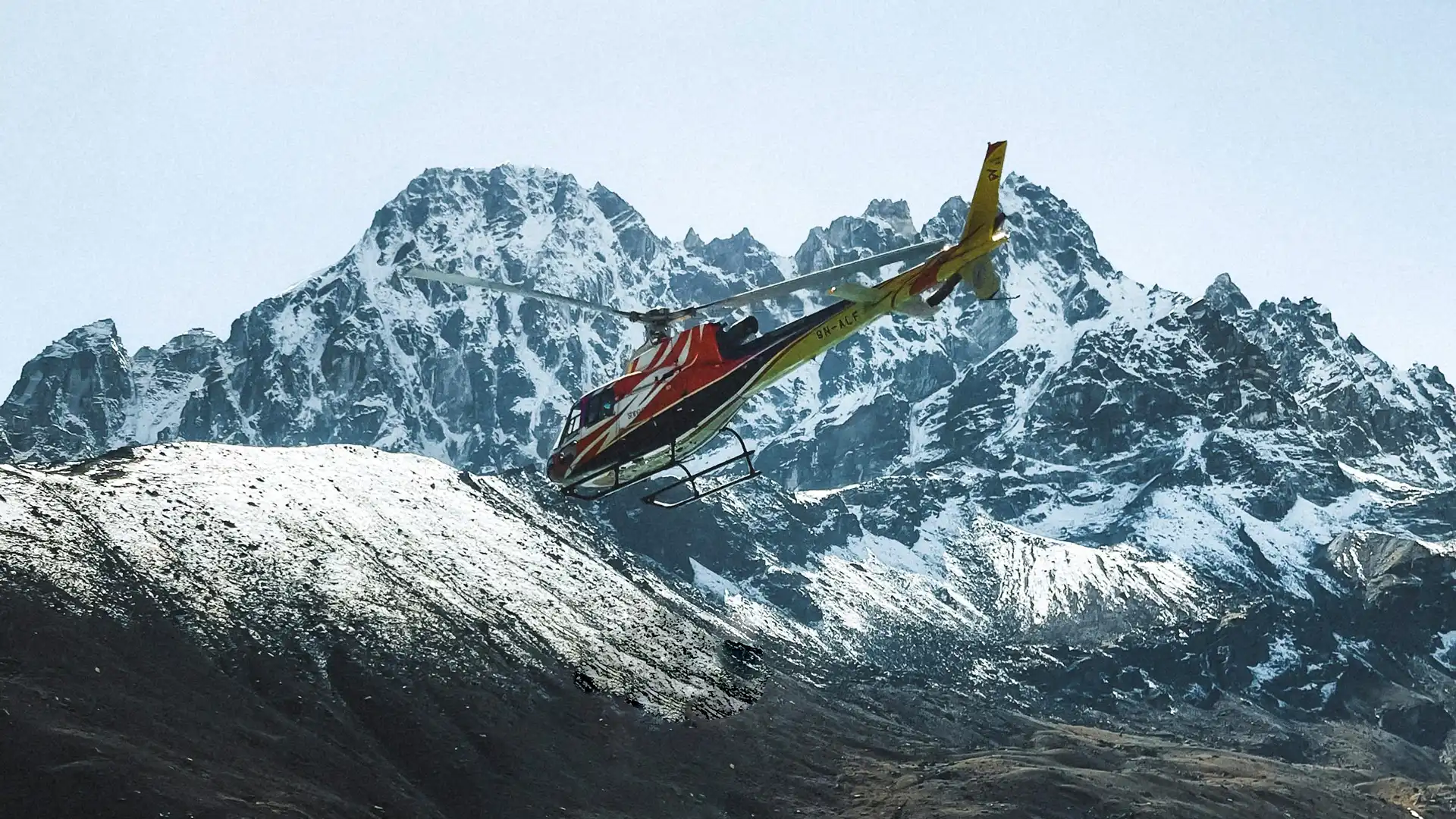
The Everest Base Camp trek with helicopter return costs between USD 3,500 and USD 6,500 in 2026 depending on package, season, and personal choices. We break down every expense line by line so you know exactly what to budget before you book.
On this page(21)
The Everest Base Camp trek with helicopter return is one of the most rewarding adventure travel experiences in the world.
It is also one where costs can catch trekkers off guard if they do not plan ahead.
This guide breaks down every single expense you can expect for the Everest Base Camp trek with helicopter return in 2026, from permits and packages to tips, gear, and everything in between.
There are no hidden surprises here. Just the full picture.
What Does the EBC Trek with Helicopter Return Cost in 2026?
The total cost for most trekkers falls between USD 3,500 and USD 6,500, depending on the level of service, time of year, and personal choices along the way.
Here is a high-level summary before we go deeper:
Cost Category | Estimated Range (USD) |
|---|---|
Tour package (guide, accommodation, meals, heli) | 2,500 to 4,500 |
International flights to Kathmandu | 500 to 1,500 |
Nepal visa | 30 to 50 |
Trekking permits and TIMS card | 50 to 70 |
Travel insurance | 100 to 250 |
Gear and equipment | 100 to 800 |
Personal spending on trail | 150 to 400 |
Tips for guide and porter | 100 to 200 |
Total estimated range | 3,500 to 6,500 |
Every line item is explained in detail below.
1. The Tour Package: Your Biggest Cost
The tour package is the single largest expense and also the most important thing to get right.
A quality EBC trek with helicopter return package from a reputable operator typically includes:
Return helicopter flight from Gorak Shep or Kala Patthar to Lukla or Kathmandu
Professional licensed trekking guide
Porter services (one porter per two trekkers)
Teahouse accommodation throughout the trek
Three meals per day during the trek
Domestic flight from Kathmandu to Lukla (inbound)
All trekking permits and TIMS card
First aid kit and emergency communication support
Airport transfers in Kathmandu
Pre-trek hotel accommodation in Kathmandu (typically one to two nights)
What packages typically do NOT include:
International flights to Nepal
Nepal visa fees
Travel insurance
Personal spending and snacks on the trail
Tips for guides and porters
Gear and equipment
Our 12-day EBC trek with helicopter return is priced to include all the essentials above with no surprise add-ons.
Budget range for tour package only: USD 2,500 to USD 4,500
The variation depends on group size, season, and the level of accommodation and service. Private treks cost more than group departures. Spring and autumn packages tend to be slightly higher priced due to peak demand.
2. The Helicopter Return: What It Actually Costs
The helicopter return is what sets this itinerary apart from a standard EBC trek.
And it is worth every dollar.
A helicopter flight from the Khumbu back to Lukla or Kathmandu typically costs between USD 400 and USD 900 per person when booked as part of a group or shared charter. Private helicopter charters cost significantly more.
Here is a detailed breakdown of every factor that moves the price, with 2026 cost averages for each.
Factor 1: Departure Point
Where you board the helicopter in the Khumbu is the single biggest cost driver.
Higher departure altitudes require more engine power, more fuel, and more technically demanding piloting. All of that adds to the price.
Gorak Shep (5,164m): The most common departure point for EBC heli returns. Located just 45 minutes walk from Everest Base Camp. Shared charter cost: USD 450 to USD 550 per person.
Kala Patthar (5,545m): Helicopters cannot land at the summit but can pick up trekkers at the Gorak Shep landing pad immediately after the Kala Patthar sunrise climb. Cost is similar to Gorak Shep: USD 450 to USD 550 per person.
Pheriche (4,371m): A lower pickup point sometimes used when weather closes in higher on the route. Significantly less demanding for the aircraft. Shared charter cost: USD 300 to USD 400 per person.
Namche Bazaar (3,440m): The lowest common pickup point, rarely used for helicopter returns but available. Shared charter cost: USD 200 to USD 300 per person.
Most trekkers on the full EBC itinerary depart from Gorak Shep, making USD 450 to USD 550 the most relevant benchmark for 2026.
Factor 2: Destination
Where the helicopter drops you off affects flight time, fuel cost, and landing fees.
To Lukla (2,860m): The shortest and most common destination for the helicopter return. Flight time from Gorak Shep is approximately 20 to 25 minutes. This is the most cost-effective end point. Cost included in the Gorak Shep ranges above.
To Ramechhap Airport: An intermediate option used during peak season when Lukla traffic is heavy. Adds about 15 minutes of flight time over a direct Lukla landing.
To Kathmandu directly (1,400m): A longer, more scenic flight of approximately 60 to 90 minutes from Gorak Shep, passing over the entire Khumbu region. Premium option. Shared charter cost: USD 700 to USD 950 per person. Private charter: USD 2,500 to USD 4,000 total for the aircraft.
Flying directly to Kathmandu saves the additional domestic Lukla to Kathmandu flight (USD 190 to USD 210) but the helicopter cost itself is higher. For trekkers who value the aerial experience and time savings, the direct Kathmandu flight is worth it.
Factor 3: Shared Charter vs. Private Charter
This is where the price gap is most dramatic.
A standard helicopter used for EBC returns seats five to six passengers plus the pilot. When seats are shared, the per-person cost drops significantly.
Shared charter (5 to 6 passengers): USD 400 to USD 550 per person from Gorak Shep to Lukla. This is what most package-based trekkers use.
Semi-private charter (3 to 4 passengers): USD 550 to USD 750 per person. A middle ground for small private groups who want more space and flexibility.
Full private charter (entire aircraft): USD 1,800 to USD 3,500 total for the helicopter, regardless of how many passengers. For a solo trekker, this could mean USD 1,800 to USD 3,500 alone. For a couple, it works out to USD 900 to USD 1,750 per person. For a family of four, it becomes more cost-competitive.
When we arrange helicopter returns for our group departures, we consolidate passengers into shared charters so everyone gets the best possible per-person rate without compromising on timing or service.
Factor 4: Season
Helicopter pricing in the Khumbu follows the same seasonal demand curve as trekking packages.
Spring peak (April and early May): Highest demand and highest prices. Expect to pay the upper end of any price range quoted. April is the single busiest month for EBC helicopter returns. Shared charter from Gorak Shep to Lukla: USD 500 to USD 550 per person.
Autumn peak (October): Similarly high demand as expedition teams return and trekking traffic peaks. Prices comparable to spring peak season. USD 480 to USD 540 per person.
Shoulder seasons (March, November): Slightly lower demand means more negotiating room and occasional discounts on shared charters. USD 420 to USD 480 per person.
Off-season (December to February, June to August): Lowest prices but weather is the challenge. Winter cold and monsoon precipitation make helicopter operations less reliable. USD 350 to USD 430 per person when flights do operate.
Read more about why spring is the best season for the EBC trek with helicopter return and how seasonal weather directly affects helicopter flight conditions and reliability.
Factor 5: Fuel Surcharges
Helicopter fuel surcharges in Nepal are real and they fluctuate.
Aviation fuel prices in the Khumbu are significantly higher than at lower altitudes because fuel itself must be transported to high-altitude refuelling points by porter or airlift. Global oil price movements, Nepal import duties, and exchange rates all feed into this.
Fuel surcharges typically add USD 30 to USD 80 per person on top of the base helicopter fare.
In 2024 and 2025, surcharges were at the lower end of this range due to stabilised fuel prices globally.
In 2026, surcharges are expected to remain in the USD 40 to USD 60 per person range for most operators, but this can change quickly.
Always confirm whether the quoted helicopter price includes fuel surcharges or lists them separately. We include all surcharges in our package pricing with no line-item surprises.
2026 Helicopter Return Cost Summary Table
Departure to Destination | Shared Charter (per person) | Private Charter (full aircraft) |
|---|---|---|
Gorak Shep to Lukla | USD 450 to USD 550 | USD 1,800 to USD 2,500 |
Pheriche to Lukla | USD 300 to USD 400 | USD 1,400 to USD 1,800 |
Gorak Shep to Kathmandu | USD 700 to USD 950 | USD 2,500 to USD 4,000 |
Namche to Kathmandu | USD 400 to USD 600 | USD 1,800 to USD 2,800 |
All figures are 2026 estimates including typical fuel surcharges. Prices vary by operator and are subject to change.
When helicopter return is included in our package, we coordinate the booking, timing, and logistics so trekkers do not need to arrange anything independently. We schedule flights for early morning when weather conditions in the Khumbu are most reliable.
Helicopter return cost when booked independently: USD 400 to USD 950 per person depending on departure point, destination, and season
3. International Flights to Kathmandu
International airfare is the most variable cost in the entire budget.
Where you fly from, how far in advance you book, and whether you fly direct or with a stopover all affect the price significantly.
Rough airfare estimates by region (round trip to Kathmandu):
From Europe: USD 700 to USD 1,200
From North America: USD 900 to USD 1,500
From Australia: USD 700 to USD 1,100
From Southeast Asia: USD 300 to USD 600
From India: USD 150 to USD 400
Book at least three to four months in advance for the best rates, especially if you are traveling in spring (March to May) or autumn (September to November), when demand is high.
Tribhuvan International Airport in Kathmandu is the main international gateway. Major connecting hubs include Doha, Dubai, Singapore, Delhi, and Bangkok.
4. Nepal Visa Fees
Nepal requires a visa for most nationalities, obtainable on arrival at Kathmandu airport or in advance at a Nepali embassy.
2026 Nepal visa fees:
15-day visa: USD 30
30-day visa: USD 50
90-day visa: USD 125
For a 12-day EBC trek with helicopter return, a 15-day visa is usually sufficient if you arrive and depart on schedule. Many trekkers opt for the 30-day visa for flexibility.
The visa application process at Kathmandu airport is straightforward but can be slow during peak season. Completing the online pre-arrival form at the Nepal immigration portal saves time.
5. Trekking Permits and TIMS Card
All trekkers entering the Khumbu region require two official documents.
Sagarmatha National Park Permit:
Cost: NPR 3,000 (approximately USD 22) for SAARC nationals
Cost: NPR 3,000 (approximately USD 22 to USD 30) for other nationalities
This permit is mandatory for entry into the national park, which covers the entire EBC trekking route
TIMS Card (Trekkers Information Management System):
Cost: USD 20 for individual trekkers
Cost: USD 10 for trekkers booked through a registered agency
When you trek with us, your permits and TIMS card are arranged as part of your package. You do not need to queue at the trekking bureau offices in Kathmandu independently.
Total permit cost: approximately USD 40 to USD 70 depending on nationality and booking method
6. The Lukla Flight: Kathmandu to Lukla
The Lukla Airport flight is a non-negotiable part of the EBC experience. There is no road access to Lukla from Kathmandu.
The domestic flight from Kathmandu to Lukla takes approximately 35 minutes and offers breathtaking aerial views of the Himalayan foothills.
Lukla flight cost in 2026:
One-way ticket (Kathmandu to Lukla): USD 190 to USD 210 per person
Prices are regulated but fluctuate slightly by season and airline
When you book the helicopter return, the Lukla flight is only needed one-way (inbound). This saves you the cost and time of a second Lukla flight back to Kathmandu.
This cost is typically included in our package pricing.
7. Teahouse Accommodation on the Trail
Teahouses are the backbone of the EBC trekking experience.
These are small family-run guesthouses along the trail that offer a bed, blankets, meals, and hot drinks. They are simple, warm, and part of what makes the Khumbu so special.
Teahouse accommodation costs in 2026:
Lower elevations (Lukla, Phakding, Namche): USD 5 to USD 15 per night per person
Mid-elevations (Tengboche, Dingboche, Lobuche): USD 8 to USD 20 per night per person
High elevations (Gorak Shep, near Base Camp): USD 10 to USD 25 per night per person
Most teahouses offer rooms for free or at a very low rate on the condition that you eat your meals there. This is standard practice on the trail.
When accommodation is included in your package, you do not pay separately for your room each night.
8. Food and Drinks on the Trail
Food costs on the EBC trail increase with altitude.
At higher elevations, all supplies must be carried by porters or flown in by helicopter. This drives prices up considerably above 4,000 meters.
Typical meal prices on the trail:
Dal bhat (the classic Nepali staple): USD 6 to USD 12
Pasta, noodles, or fried rice: USD 5 to USD 10
Breakfast (porridge, eggs, toast): USD 4 to USD 8
Snacks and energy bars: USD 2 to USD 5
Hot drinks (tea, coffee, hot chocolate): USD 2 to USD 5
Bottled water: USD 2 to USD 4 (or use a water filter to save significantly)
Daily food budget estimate (not included in package): USD 20 to USD 40 per day
If your package includes three meals per day, your out-of-pocket food spending drops to snacks, hot drinks, and any meals you buy outside the package arrangement.
9. Travel Insurance: Non-Negotiable
Travel insurance is not optional for the Everest Base Camp trek. It is essential.
You need a policy that specifically covers high-altitude trekking above 5,000 meters and helicopter evacuation. Standard travel insurance policies do not cover this.
What your EBC travel insurance must cover:
High-altitude trekking up to at least 5,500 meters (Kala Patthar is 5,545m)
Emergency helicopter evacuation from altitude
Trip cancellation and interruption
Medical expenses and hospitalization
Baggage loss or delay
Estimated cost of adequate EBC travel insurance:
Basic adventure coverage: USD 80 to USD 150 for the trip
Comprehensive policy with high evacuation limits: USD 150 to USD 250
Do not skimp here. A helicopter evacuation from altitude without insurance can cost USD 3,000 to USD 5,000 out of pocket.
10. Gear and Equipment Costs
Good gear matters at altitude. The right equipment can be the difference between a comfortable trek and a miserable one.
If you are buying gear new:
Down jacket (rated to minus 10 or colder): USD 100 to USD 300
Trekking boots (waterproof, ankle support): USD 100 to USD 250
Trekking poles: USD 30 to USD 100
Base layers and mid-layers: USD 50 to USD 150
Waterproof shell jacket and pants: USD 80 to USD 200
Daypack (25 to 35 litres): USD 50 to USD 120
Sleeping bag (rated to minus 10): USD 80 to USD 200
Accessories (gloves, hat, sunglasses, buff, gaiters): USD 50 to USD 150
Total new gear budget: USD 500 to USD 1,500
Budget option: rent gear in Kathmandu
Trekking Mart and Outdoor gear shops in Thamel, Kathmandu offer good quality rental gear at very reasonable prices. You can rent a down jacket, sleeping bag, trekking poles, and more for USD 5 to USD 15 per item per week.
Rental gear total: USD 50 to USD 150 for the trek
If you already own hiking boots and base layers, your additional gear cost drops significantly. Most first-time EBC trekkers spend USD 200 to USD 600 on gear, combining owned, rented, and newly purchased items.
If this is your first serious high-altitude trek, the Everest Base Camp beginner guide has a full gear checklist worth reading before you start shopping.
11. Tips for Your Guide and Porter
Tipping is customary and expected in the Nepali trekking industry.
Your guide and porter work hard every single day, often carrying heavy loads at high altitude. Tipping is a meaningful and appreciated part of their income.
Recommended tipping amounts per person (trekker):
Lead guide: USD 10 to USD 20 per day (total USD 100 to USD 200 for a 10-day trek)
Assistant guide (if applicable): USD 7 to USD 12 per day
Porter: USD 6 to USD 10 per day
Tips are usually given at the end of the trek in Kathmandu, either individually or pooled from the group and distributed collectively.
Budget for tips: USD 100 to USD 200 per trekker
12. Personal and Miscellaneous Spending
There are a few extra costs that do not fit neatly into any category.
Hot showers: Most teahouses charge USD 3 to USD 6 per shower above Namche Bazaar.
Charging devices: Electricity for charging phones, cameras, and batteries typically costs USD 2 to USD 5 per charge at teahouses above 4,000m.
WiFi: Teahouse WiFi costs USD 3 to USD 8 per day at higher elevations. Consider buying a local SIM card in Namche Bazaar for more reliable data.
Souvenirs: Namche Bazaar has the best selection of trekking souvenirs, thangkas, Sherpa crafts, and branded expedition merchandise.
Bottled oxygen: Not needed for Base Camp but sometimes purchased by trekkers prone to altitude sensitivity. This is an optional and uncommon cost.
Personal budget estimate: USD 150 to USD 400 for the full trek
13. Kathmandu Pre and Post-Trek Costs
Most trekkers spend one to three nights in Kathmandu before and after the EBC trek.
Hotel costs in Kathmandu (per night):
Budget guesthouse (Thamel area): USD 20 to USD 50
Mid-range hotel: USD 60 to USD 120
Boutique or four-star hotel: USD 120 to USD 300
Meals in Kathmandu: USD 5 to USD 20 per meal depending on restaurant type.
Kathmandu sightseeing: Pashupatinath Temple, Boudhanath Stupa, Swayambhunath, and Patan Durbar Square are all worth visiting. Entry fees total approximately USD 20 to USD 40.
Airport transfers: USD 10 to USD 20 per ride by taxi or private transfer.
Kathmandu spending estimate (two to three nights): USD 150 to USD 400
14. Full Cost Breakdown: Budget vs. Mid-Range vs. Premium
Here is how the numbers come together across three realistic traveler profiles.
Budget Trekker (USD 3,500 to USD 4,000)
Group departure package with shared services
Economy international flights booked far in advance
Rental gear from Kathmandu shops
Budget guesthouses in Kathmandu
Minimal personal spending on trail
Mid-Range Trekker (USD 4,500 to USD 5,500)
Private or small-group package with dedicated guide
Mid-range international flights
Mix of owned and rented gear, some new purchases
Comfortable mid-range hotel in Kathmandu
Reasonable daily spending on trail snacks and hot drinks
Premium Trekker (USD 5,500 to USD 7,000+)
Private fully customized itinerary with senior guide
Business or premium economy international flights
Full new gear kit from quality brands
Boutique hotel in Kathmandu
Private helicopter charter for the return flight
All meals, drinks, and extras covered
The classic EBC trek without helicopter return is available at a lower overall cost for trekkers who prefer the full round-trip on foot.
15. Is the Helicopter Return Worth the Extra Cost?
This is one of the most common questions we get.
The short answer: yes, almost always.
Here is the value calculation:
A standard EBC trek takes 16 to 18 days round trip on foot
Our EBC trek with helicopter return takes 12 days
The helicopter saves 4 to 6 days of trekking time
That time saving translates directly into fewer vacation days used, lower food and accommodation costs on the trail, and reduced wear on your knees and joints from repetitive downhill trekking.
For most working trekkers with limited annual leave, the helicopter return pays for itself in time saved alone.
And the flight itself is one of the most spectacular things you will ever experience. Aerial views of Everest, the Khumbu Glacier, and the endless Himalayan ranges from above are something no trail can replicate.
16. How to Save Money on the EBC Heli Return Trek
There are smart ways to reduce costs without compromising safety or experience.
Book early: Packages and domestic flights booked three to six months in advance cost less and secure better availability during peak spring and autumn seasons.
Travel in a group: Group departures share costs across multiple trekkers. Our group packages offer significant savings compared to private treks without sacrificing guide quality.
Rent gear in Kathmandu: Thamel gear shops offer reliable rentals at a fraction of the cost of buying new.
Use a water filter on the trail: A quality water filter or purification tablets saves USD 4 to USD 8 per day in bottled water costs.
Skip private upgrades: Shared teahouse rooms are perfectly comfortable and significantly cheaper than private rooms above Namche Bazaar.
Choose spring for best value: Spring offers the best combination of value, weather, and experience for the EBC heli return trek.
17. What to Watch Out For: Hidden Costs
A few costs catch first-time EBC trekkers off guard.
Altitude medication: Diamox (acetazolamide) requires a prescription and costs USD 20 to USD 50 depending on your country. Get this before you travel.
Flight delays at Lukla: Lukla Airport is weather-dependent. Budget an extra one to two days in Kathmandu post-trek in case of delays, especially in off-peak months.
Supplemental oxygen: Rarely needed at Base Camp altitude but available at Namche and Pheriche for emergencies.
Currency exchange fees: Nepal uses Nepali Rupees (NPR). Exchange at banks in Kathmandu for the best rates. ATM fees in Namche Bazaar can be high.
Porter luggage limits: Most helicopter charters have strict weight limits (typically 10kg per person). Excess baggage fees apply.
18. Why Book the EBC Heli Return Trek with Us?
Choosing the right operator directly affects both your experience and your total cost.
We specialize in small-group and private Everest Base Camp experiences with professional high-altitude guides, seamless helicopter coordination, and full logistical support from Kathmandu to Kala Patthar and back.
Our Everest Base Camp trek with heli return is a 12-day itinerary designed specifically for trekkers who want the complete experience with maximum efficiency and safety.
We are transparent about what is included and what is not. No hidden fees, no surprise add-ons at altitude.
Still Planning Your EBC Adventure?
These resources will help you prepare:
Everything to know about Everest Base Camp: The complete EBC reference guide
Why trek Everest Base Camp?: The case for making this trek your next big adventure
EBC beginner guide: Essential reading if this is your first serious trek
Why spring is the best season for EBC with helicopter return: Timing your trek for the best conditions
Classic EBC trek (without helicopter return): The full round-trip on foot for those with more time
Final Word: Budget Smart, Trek Well
The Everest Base Camp trek with helicopter return is an investment. There is no getting around that.
But it is also one of the most life-changing things you will ever do.
Understanding the full cost before you book means no stress at altitude, no unexpected credit card bills when you get home, and no corners cut on safety or experience.
Budget well, prepare properly, and the Khumbu will take care of the rest.
Start planning your 2026 EBC heli return trek: Everest Base Camp Trek with Helicopter Return (12 Days)
Sharing route guides and trail experience from the high trails of Nepal.