 Nepal Visuals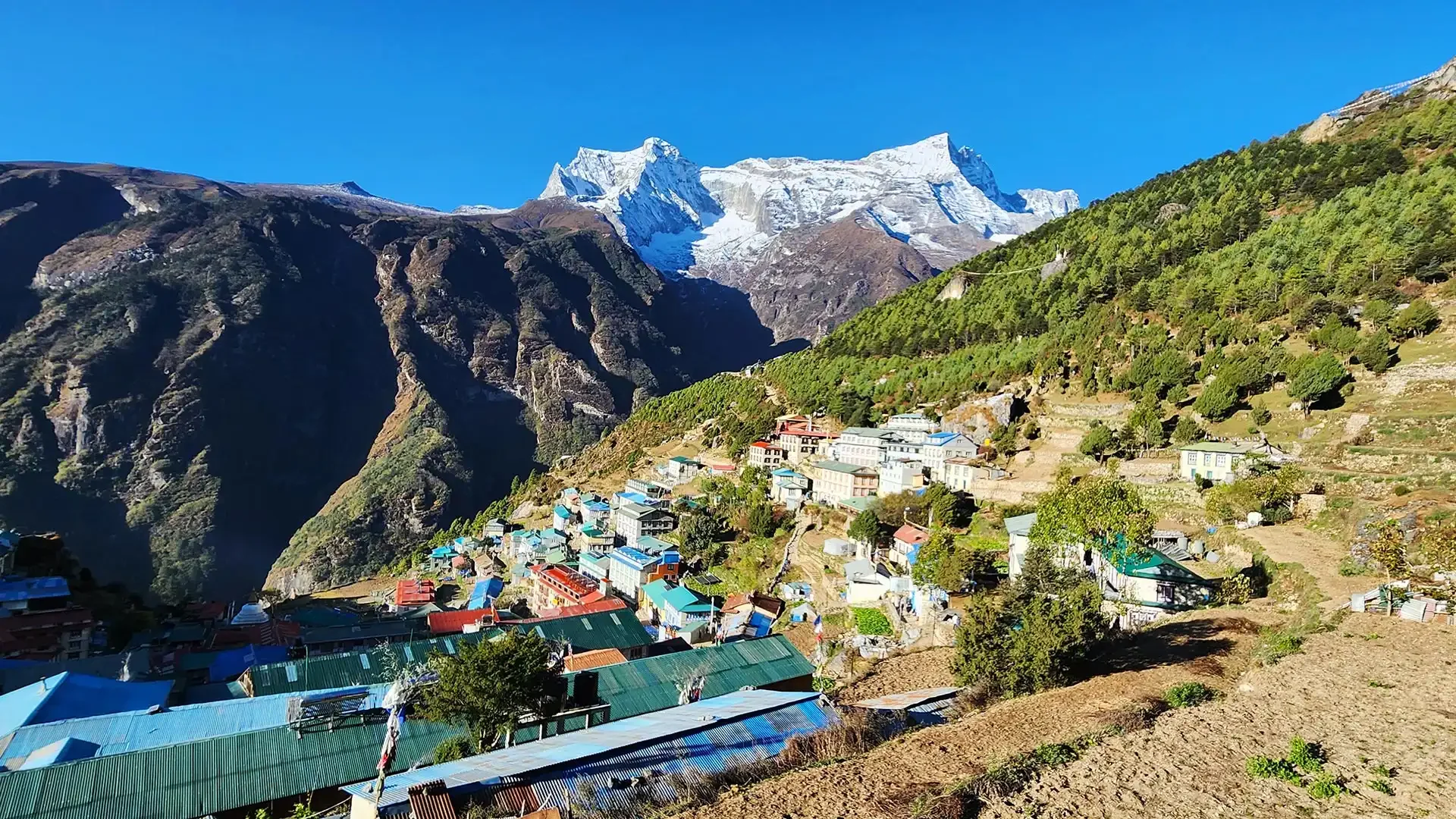
Step into the vibrant "Gateway to Everest." This guide covers everything you need to know about Namche Bazaar, from its bustling mountain markets and cultural museums to essential tips for high-altitude acclimatization.
On this page(11)
Most people arrive in Namche Bazaar exhausted.
The final climb from the Dudh Koshi valley is steep, relentless, and arrives at the end of an already long day on the trail. Your legs are done. Your lungs are working overtime. And then you round the last switchback and the town appears, tiered into the hillside like something out of a dream.
Bakeries. Coffee shops. A gear store with North Face jackets in the window. Prayer flags everywhere.
It takes a moment to reconcile what you are seeing with where you are. This is 3,440 meters above sea level, deep in the Himalayas, hours from the nearest road. And yet Namche Bazaar feels genuinely alive in a way that many towns at sea level do not.
That contrast is exactly what makes it one of the most memorable places on any trek in Nepal.
A Little History
Namche was a trading village long before it was a trekking hub.
For centuries, Tibetan traders crossed the high mountain passes above the Khumbu carrying salt, wool, and yak products. Merchants from the lower valleys brought rice, grain, and manufactured goods up the river trails. Namche Bazaar sat in the middle of that exchange, a natural meeting point where the two worlds could do business.
The word bazaar tells you everything. This was always a market town.
The Saturday market, which still happens every week, is a direct continuation of that tradition. Villagers from surrounding areas gather to trade goods ranging from vegetables and packaged food to household items and clothing. If you are in Namche on a Saturday morning, the market namche bazaar is worth setting your alarm for.
The modern transformation began after 1953, when Hillary and Norgay's Everest summit brought the Khumbu to global attention. Trekkers started arriving. Climbers needed a staging point. Namche, already the largest settlement in the region, grew into the role naturally.
It has never stopped growing since.
Where Namche Bazaar Is Located
Namche Bazaar is located in the Solukhumbu District of Koshi Province in northeastern Nepal, inside Sagarmatha National Park.
The elevation of Namche Bazaar sits at 3,440 meters above sea level, or 11,286 feet for those who prefer imperial measurements. That Namche Bazaar altitude in feet figure puts it well above most European ski resorts and significantly higher than anything in the continental United States outside of a handful of Colorado peaks.
On the trail, it sits between Phakding below and Tengboche above. Geographically, it is northeast of Kathmandu and southwest of Everest. The Namche Bazaar everest base camp trekking route runs directly through town, which means every single person heading to EBC passes through here. There is no detour around it.
The town is built into a natural horseshoe-shaped depression on the western wall of the Bhote Koshi valley. This sheltered position protects it from the worst of the wind and gives the south-facing buildings good sun exposure through most of the day. It is one of the reasons Namche feels warmer and more hospitable than many settlements at similar altitude.
How to Get to Namche Bazaar
There is no road to Namche. Full stop.
Everything that arrives here comes on foot, on the back of an animal, or by helicopter. That fact shapes everything about the place, from the prices of goods in the shops to the pace of daily life.
Flying from Kathmandu
The standard approach starts with a flight. The Kathmandu to Namche Bazaar flight price covers a ticket to Lukla, as there is no airstrip in Namche itself. The Kathmandu to Lukla sector takes roughly 35 minutes in a small propeller aircraft and operates in the early morning when mountain air is most stable.
Lukla flight bookings sell out quickly during October and spring season. Build this into your planning early.
Lukla to Namche Bazaar on Foot
From Lukla, the trek to Namche Bazaar covers two days for most trekkers.
Day one follows the trail down to Phakding at 2,610 meters, a gentle three to four hour walk along the Dudh Koshi River through small Sherpa settlements. Day two is the serious one.
The Phakding to Namche Bazaar section climbs nearly 800 meters over roughly ten kilometers. The trail crosses the famous Hillary Suspension Bridge, passes through the Sagarmatha National Park gate at Monjo, and then grinds uphill for the final two to three hours to town.
The Phakding to Namche Bazaar distance sounds manageable on paper. The elevation gain is where it earns its reputation.
Helicopter Options
Lukla to Namche Bazaar by helicopter takes about ten minutes and is available for those with the budget or the medical need. A Kathmandu to Namche Bazaar helicopter flight bypasses Lukla entirely and lands directly at the Namche Bazaar helipad just above town.
These options exist primarily for emergency evacuations and for travelers with mobility or health limitations. Most people walk.
Longer Trail Approaches
The Jiri to Namche Bazaar distance covers roughly 180 kilometers and takes eight to ten days. This was the original approach before Lukla airport existed, following the historic route used by early Everest expeditions. The Salleri to Namche Bazaar distance and Phaplu to Namche Bazaar distance are slightly shorter variations on the same theme.
These routes are quieter, culturally richer, and more physically demanding. They reward trekkers who have the time.
The Acclimatization Question
Spending time in Namche is not optional if you are heading higher.
The jump from Lukla at 2,860 meters to Namche Bazaar altitude at 3,440 meters happens over two days. That is a gain of about 580 meters, which sounds modest until you consider that the body needs time to produce more red blood cells, adjust its breathing patterns, and generally recalibrate for thinner air.
Most itineraries build in a full Namche Bazaar acclimatization day between the two nights spent here. The standard approach is to hike higher during the day and return to sleep at Namche altitude, which your body has already partially adjusted to.
The most popular acclimatization options from town are:
Everest View Hotel (3,880 meters): A forty-five minute climb above Namche brings you to one of the most famous viewpoints in the Khumbu. The Everest View Hotel Namche Bazaar sits at the top with clear sightlines to Everest, Lhotse, Ama Dablam, and Thamserku. Tea with that view is one of the small pleasures of the EBC trail.
Khumjung and Kunde Villages: A longer loop through traditional Sherpa settlements above town. The Hillary School in Khumjung is still operating. The monastery nearby reportedly houses a yeti scalp. Locals maintain this claim with total conviction.
Sagarmatha National Park Visitor Center: Located just above town with excellent exhibits on the region's ecology and mountaineering history, plus a viewpoint that is among the best in Namche for morning light.
The Namche Bazaar acclimatization day is also a good opportunity to sort out any gear issues, make adjustments to your itinerary, and give your body a genuine rest before the harder days ahead.
Namche Bazaar Weather: Season by Season
The Namche Bazaar weather follows the Himalayan seasonal pattern, with some altitude-specific characteristics that are worth understanding before you pack.
Current weather Namche Bazaar conditions vary dramatically across the year. Here is a practical breakdown:
Spring (March to May)
Days are mild, typically ten to fifteen degrees Celsius in direct sun. Nights drop below freezing. The rhododendron forests below town bloom red and pink. Skies tend to be clear in the morning before afternoon clouds build.
The weather in Namche Bazaar in April is widely considered the most pleasant of the year. Warm enough to be comfortable on the trail, cold enough to feel like proper mountain air.
Monsoon (June to Early September)
Rain arrives in June and dominates through August. Trails become slippery. Clouds cover the peaks for days at a stretch. Flights to Lukla are frequently delayed.
The Namche Bazaar weather in September marks the monsoon's retreat, with conditions improving but still unreliable. The landscape is intensely green. Fewer trekkers are around, which some people actively prefer.
Autumn (Late September to November)
Peak season, and the most popular window for the Namche Bazaar trek.
The Namche Bazaar weather in October is the clearest and most stable of the year. Temperatures sit around ten to twelve degrees Celsius in the day, well below freezing at night. Mountain views are razor sharp.
The Namche Bazaar temperature in November drops noticeably. Days remain clear but cold. Some teahouses higher on the trail begin to close as the season winds down.
Winter (December to February)
Quiet and genuinely cold. Daytime temperatures hover around five to seven degrees Celsius. Nights can fall to minus ten or colder. The Namche Bazaar weather Fahrenheit equivalent puts nighttime winter temperatures around fourteen degrees Fahrenheit.
Snow is possible. Higher trail sections can become difficult. Christmas in Namche Bazaar has become a small tradition among international trekkers, with some teahouses marking the occasion in their own way.
The Namche Bazaar weather forecast should be checked daily during any visit. Conditions at this altitude change quickly, sometimes within a single afternoon.
Where to Stay in Namche Bazaar
The accommodation range in Namche is wider than most people expect from a remote mountain town.
At the comfortable end of the market, the Yeti Mountain Home Namche Bazaar sits at the premium tier, offering design-forward rooms, good food, and a level of finish that would be impressive at any altitude. The Panorama Lodge Namche Bazaar is another well-regarded option with strong reviews and mountain views from the common areas.
The Himalayan Lodge Namche Bazaar and Everest Hotel Namche Bazaar are among the established mid-range options with solid reputations among returning trekkers.
For budget travelers, the classic Namche Bazaar tea house remains the backbone of accommodation in the Khumbu. Rooms are simple, walls are thin, bathrooms are usually shared. The meals are filling and the owners are generous with information about the trail ahead.
The Namche Bazaar hotel guide would not be complete without noting that prices here are higher than in Kathmandu, which is simply the cost of remoteness. Everything on that plate of dal bhat was carried up from a lower valley on someone's back.
Namche Bazaar hotels fill quickly in October. Book ahead, or arrive early in the day and walk until you find a room. Neither option is ideal. Book ahead.
Namche Bazaar Food Prices and Where to Eat
Namche Bazaar food prices reflect the altitude and the logistics. A standard teahouse meal runs between 500 and 1,200 Nepalese rupees depending on the dish and the establishment.
Dal bhat remains the best value on any menu. Most teahouses offer unlimited refills, and the nutritional case for it at altitude is strong.
Beyond trail staples, Namche has genuine cafe culture. Espresso machines operate here. Apple pie, cinnamon rolls, and brownies appear on menus alongside momos and noodle soup. Several bakeries have become institutions on the Khumbu trekking circuit.
And then there is the Namche Bazaar Irish Pub.
The Irish Pub Namche Bazaar Nepal has been a social institution in the village for years. It serves beer, hosts an eclectic crowd of trekkers, guides, and expedition climbers, and operates at an elevation that gives any evening there a genuinely unusual quality.
Namche Bazaar bars are limited beyond this, but a few teahouses turn lively in the evenings during peak season.
Namche Bazaar Shopping
Namche Bazaar shopping covers almost everything a trekker could need or want.
The main street holds trekking gear shops, souvenir stalls, pharmacies, and general stores. Replacement gear, technical clothing, sleeping bag liners, trekking poles, and altitude medication are all available here. Whether the brand-name gear is genuine is a conversation that happens in every teahouse.
What to buy in Namche Bazaar beyond gear:
Namche Bazaar souvenirs: Prayer flags, singing bowls, thangka paintings, yak wool products, and hand-carved wooden items are widely available and make meaningful keepsakes.
Local textiles: Sherpa weavings and traditional jewelry support artisan families directly and are harder to find in Kathmandu with the same provenance.
Baked goods: A warm cinnamon roll at 3,440 meters is genuinely one of the better things available for purchase anywhere on the planet.
Practical Things Worth Knowing
Namche Bazaar internet is available at most lodges and teahouses, though speeds vary and reliability during peak season can be patchy. Ncell does work in Namche Bazaar for those with a local SIM, though coverage thins above town.
ATMs exist in Namche and they do work, though not always consistently. Carrying sufficient cash from Kathmandu remains the safer approach. Higher on the trail there are no ATMs at all.
The Namche Bazaar clinic and health post provide basic medical services and altitude sickness assessment. The Himalayan Rescue Association operates a staffed clinic during trekking season. If anyone in your group shows signs of serious altitude illness, this is where to go.
Refill stations Namche Bazaar are available for drinking water. Using them instead of single-use plastic bottles is strongly encouraged and increasingly expected by the national park.
Drones: flying within Sagarmatha National Park requires a permit. Check current regulations before bringing equipment.
The Culture Underneath Everything
Namche is the largest Sherpa settlement in the Khumbu, and Sherpa culture is not a backdrop here. It is the thing itself.
The Sherpa people are Tibetan Buddhist, and that faith runs through daily life in ways that are visible if you pay attention. Mani walls line the trail entrances. Prayer wheels spin in doorways. The gompa in town holds regular services. Monasteries near Namche Bazaar, including the Khumjung Monastery above town, are active religious institutions.
Dumje and Mani Rimdu are the major festivals on the Sherpa calendar. Both involve chanting, masked dances, ritual offerings, and community gathering on a scale that makes the town feel transformed. If your visit timing overlaps with either, it is worth adjusting your itinerary to stay for it.
The warmth that trekkers consistently comment on in Namche is real. The teahouse owners who remember returning visitors by name, the guides who know every family between here and Base Camp, the genuine interest in where you are from and what you think of the mountains. It is a community that has been welcoming outsiders for generations and has developed its own particular way of doing it.
Getting Around the Trail from Namche
Namche Bazaar to Everest Base Camp covers approximately 65 kilometers one way, gaining over 1,900 meters of elevation from here to EBC at 5,364 meters.
The standard route heads northeast to Tengboche. The Namche Bazaar Tengboche section drops steeply to the river at Phunki Thanka before climbing hard through rhododendron forest to the monastery ridge. It takes four to five hours and is one of the most beautiful trail days in the Khumbu.
Namche Bazaar to Tengboche Monastery specifically is a walk that delivers Ama Dablam growing larger ahead of you throughout the day, until it fills the skyline above the monastery.
Beyond Tengboche, the route continues through Namche Bazaar to Dingboche, then Lobuche, then Gorak Shep, and finally Base Camp.
For the Gokyo valley, Namche Bazaar to Gokyo Lake begins by heading northwest through Dole and Machhermo, a route that typically takes three days from Namche. The Namche Bazaar to Dole distance covers one of those days.
Namche Bazaar to Deboche is an alternative staging stop just below Tengboche, used by some trekkers who want a shorter day on that section.
Tengboche to Namche Bazaar on the return journey takes most trekkers three to four hours, mostly downhill, and feels considerably easier than the outbound direction.
One More Thing Before You Leave
The Namche Bazaar with kids trek is increasingly common as family trekking grows in popularity. Namche itself is well set up for younger travelers: reliable food, a clinic, comfortable lodges, and enough happening in town to keep children engaged on a rest day.
The Namche Bazaar bike community is small but growing, with a few hardy cyclists making it up to the Khumbu on mountain bikes via longer trail approaches.
Namche Bazaar to Pokhara is a journey that most people complete by returning to Kathmandu via Lukla and then traveling onward, as there is no direct trail connection between the Khumbu and the Annapurna region.
Namche Bazaar to Kathmandu distance by road is technically possible via a very long combination of mountain trails and roads, but in practice everyone flies from Lukla. The Kathmandu to Namche Bazaar bus option does not realistically exist in any conventional sense.
Two nights is the minimum for Namche. Three is better.
The town rewards the extra time. The views improve. The altitude adjusts. And somewhere between the cinnamon roll and the sunrise over Ama Dablam, Namche stops being a waypoint and starts being a place you genuinely did not want to leave.
Sharing route guides and trail experience from the high trails of Nepal.