 Nepal Visuals
Embark on the ultimate adventure with our comprehensive guide to trekking in Nepal. Discover essential tips on the best seasons, required permits, gear lists, and iconic routes like Everest Base Camp.
On this page(16)
Nepal is one of the most extraordinary trekking destinations on Earth, and the numbers back that up.
Eight of the world's fourteen highest mountains are located within its borders. The country spans everything from subtropical jungle in the south to Arctic-level glaciers in the north, all within a few hundred kilometers. You can walk through ancient Buddhist monasteries in the morning and camp beside a glacier by afternoon.
In 2024, over 170,000 tourists visited Nepal specifically for trekking, according to the Nepal Tourism Board. That number continues to grow every year, driven by improved trail infrastructure, better teahouse facilities, and a global appetite for adventure travel that goes beyond resorts and package tours.
Whether you are a first-time trekker looking for a gentle introduction to mountain walking or an experienced hiker ready for one of the most demanding routes in the Himalayas, Nepal has a trail built for you.
This guide covers everything you need to know: the best routes, the right seasons, difficulty levels, safety, culture, gear, permits, and how to make the most of one of the greatest walking destinations in the world.
Why Nepal Is the World's Premier Trekking Destination
Most countries offer good hiking. Very few offer what Nepal does.
The Himalayan range stretches across the entire northern border of the country, creating a wall of peaks so high and so dramatic that they reshape the weather patterns of an entire continent.
Within that range, Nepal is home to Mount Everest (8,848.86 m), Kangchenjunga (8,586 m), Lhotse (8,516 m), Makalu (8,485 m), Cho Oyu (8,188 m), Dhaulagiri (8,167 m), Manaslu (8,163 m), and Annapurna I (8,091 m). Every single one of those peaks exceeds 8,000 meters. All of them are within reach of Nepal's trekking trails.
Beyond the peaks, Nepal offers remarkable cultural diversity. The country is home to over 125 distinct ethnic groups, each with their own language, traditions, food, and relationship with the mountain environment.
Trekking in Nepal is not simply a physical activity. It is an immersion in one of the most complex and beautiful cultures in the world.
The Most Famous Trekking Routes in Nepal
Everest Base Camp Trek
The Everest Base Camp Trek is the most iconic trekking route in the world and the one that most people think of first when they imagine trekking in Nepal.
The route begins with a flight from Kathmandu to Lukla Airport (2,845 m) and follows the Dudh Koshi River valley northward through the Khumbu region, passing through Sherpa villages, ancient monasteries, and increasingly dramatic mountain scenery.
Key stops along the route include Namche Bazaar, the bustling hub of Sherpa culture at 3,440 meters, Tengboche Monastery at 3,860 meters, the acclimatization village of Dingboche at 4,410 meters, and the high glacial settlement of Gorak Shep at 5,164 meters.
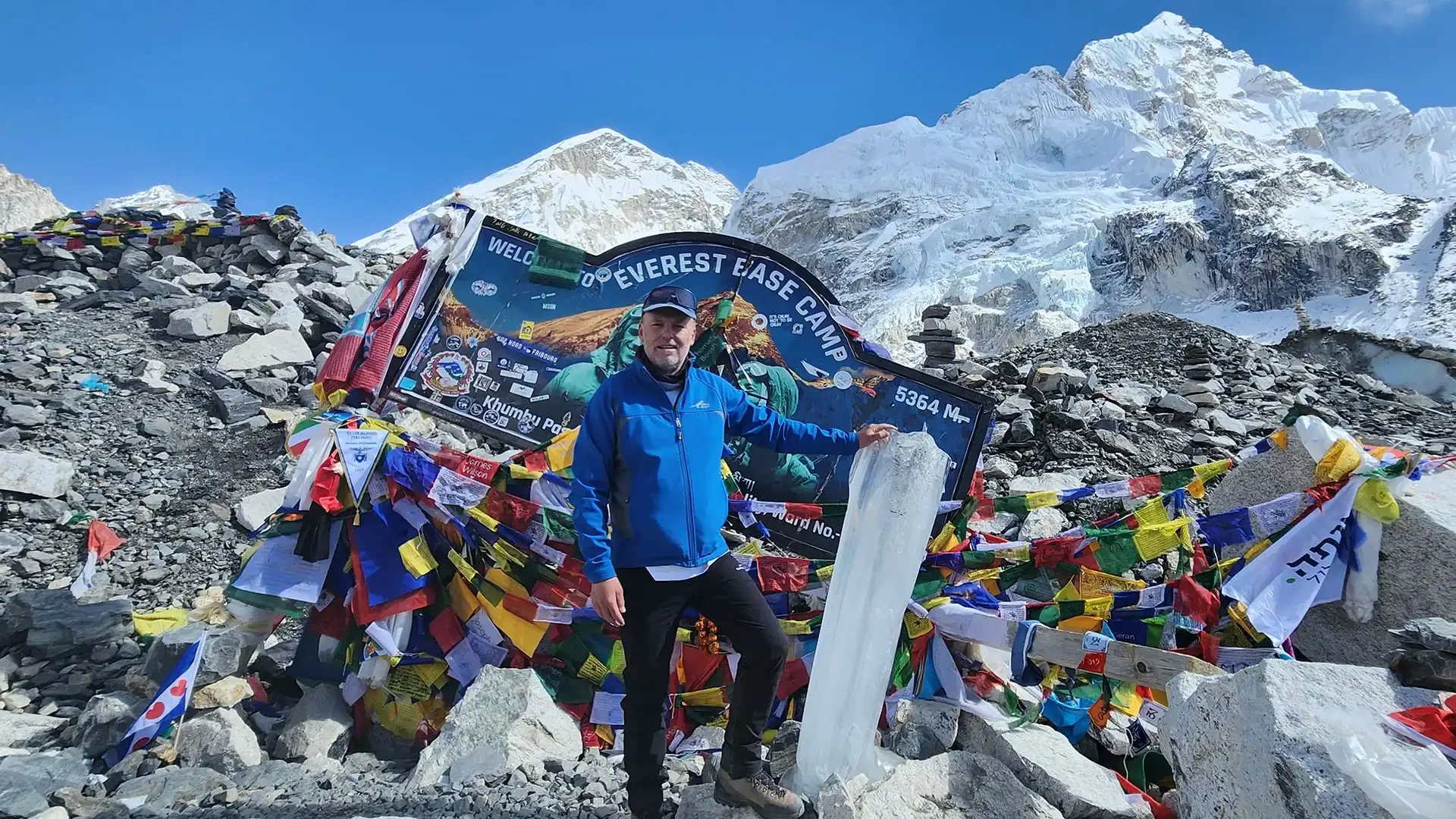 Everest Base Camp Trek
The trek reaches Everest Base Camp at 5,364 meters and Kala Patthar at 5,545 meters, the latter offering the most celebrated sunrise view of Mount Everest available to non-climbers anywhere in the world.
The standard EBC Trek takes 12 to 14 days and is rated moderate to challenging. It does not require technical climbing skills, but it demands good physical fitness and a respect for the acclimatization process.
The Everest Base Camp Trek is best done in spring (March to May) or autumn (September to November).
Read More: Everest Base Camp Trek -14 Days by Nepal Visuals
Annapurna Circuit Trek
The Annapurna Circuit Trek is one of the great classic long-distance treks in Asia and arguably the most diverse trekking route in Nepal.
The route circles the entire Annapurna Massif, passing through dramatically different climate zones, landscapes, and ethnic communities as it goes.
You begin in the subtropical lowlands of the Marsyangdi River valley, where rice paddies and banana trees line the trail. Over the following weeks, the landscape transforms steadily through temperate forests, alpine meadows, and high desert plateau into the stark, wind-scoured terrain of the Thorong La Pass at 5,416 meters.
The crossing of Thorong La is the physical and psychological centerpiece of the circuit. Standing at 5,416 meters, with the Annapurna range behind you and the Mustang plateau opening ahead, is one of the most dramatic moments available on any trekking route in the world.
The full Annapurna Circuit takes approximately 15 to 20 days and is rated moderate to challenging. The diversity of landscapes, cultures, and altitudes it passes through makes it one of the most rewarding multi-week treks available anywhere.
Read More: Annapurna Circuit Trek - 14 Days by Nepal Visuals
Annapurna Base Camp Trek
The Annapurna Base Camp Trek offers something rarer than panoramic views. It offers immersion.
The route leads directly into the heart of the Annapurna Sanctuary, a natural amphitheater ringed by thirteen peaks over 6,000 meters. Annapurna Base Camp itself sits at 4,130 meters, surrounded on all sides by glaciers and the towering walls of Annapurna I, Machapuchare, Hiunchuli, and Gangapurna.
The approach passes through Gurung and Magar villages in the Modi Khola valley, through rhododendron and bamboo forests that are spectacular in spring bloom, and across increasingly open alpine terrain as you gain altitude.
The Annapurna Base Camp Trek takes approximately 10 to 12 days and is rated moderate in difficulty.
It is a particularly good option for trekkers who want a genuine high-altitude experience without the extended duration or logistical complexity of the Everest Base Camp or Annapurna Circuit routes.
Read More: Annapurna Base Camp Trek - 11 Days by Nepal Visuals
Manaslu Circuit Trek
The Manaslu Circuit Trek is the best-kept secret in Himalayan trekking and the preferred choice of experienced trekkers who want to avoid the busiest trails.
The route circles Mount Manaslu (8,163 m), the eighth highest mountain in the world, through a restricted area that requires a special permit. That permit requirement keeps visitor numbers significantly lower than the Everest and Annapurna regions.
The trail passes through remote Tibetan-influenced villages where traditional ways of life remain largely unchanged by tourism. Stone houses, chortens, prayer flags, and yak herders are part of the daily landscape.
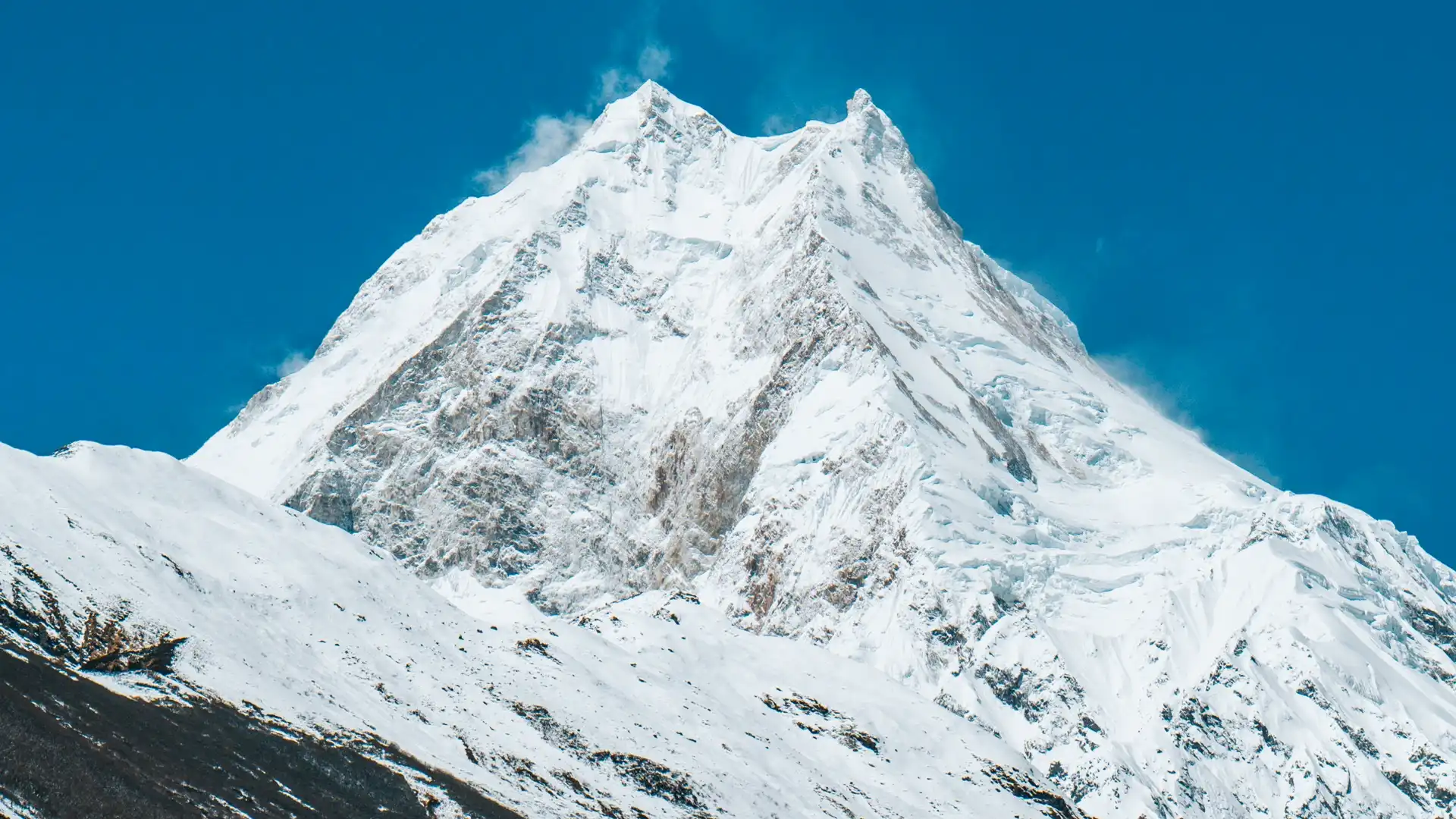 Mount Manaslu in Manaslu Circuit Trek
The high point of the circuit is the Larkya La Pass at 5,160 meters, a demanding but rewarding crossing with views of Manaslu and surrounding giants that rank among the finest in Nepal.
The Manaslu Circuit takes approximately 14 to 18 days and is rated challenging. Prior trekking experience at altitude is strongly recommended.
A licensed guide is mandatory for the Manaslu Circuit, as it passes through a restricted conservation area.
Read More: Manaslu Circuit Trek - 15 Days by Nepal Visuals
Langtang Valley Trek
The Langtang Valley Trek is the closest major trekking route to Kathmandu and one of the most underappreciated trails in Nepal.
The Langtang Valley sits just 50 kilometers north of Kathmandu, yet the landscape feels completely wild and remote. The route follows the Langtang River through dense rhododendron and oak forests before opening into a high glacial valley flanked by peaks over 7,000 meters.
The Tamang people of the Langtang region have a culture deeply rooted in Tibetan Buddhism, and the villages along the route offer an intimate cultural experience that feels authentic and unhurried.
The Langtang Valley Trek takes approximately 7 to 10 days and is rated moderate in difficulty.
It is an excellent choice for trekkers who have limited time, want to avoid the crowds of the Everest and Annapurna regions, or are looking for a high-quality trekking experience within easy reach of Kathmandu.
Read More: Lanatang Valley Trek - 10 Days by Nepal Visuals
Ghorepani Poon Hill Trek
The Ghorepani Poon Hill Trek is the ideal starting point for anyone new to trekking in Nepal and one of the most visually rewarding short treks in the country.
The route passes through Gurung villages and dense rhododendron forests in the Annapurna foothills before reaching Poon Hill at 3,210 meters.
From Poon Hill at sunrise, the view of the Annapurna and Dhaulagiri ranges stretching across the entire horizon is genuinely spectacular. It is one of the most photographed viewpoints in Nepal and, on a clear morning, one of the most beautiful.
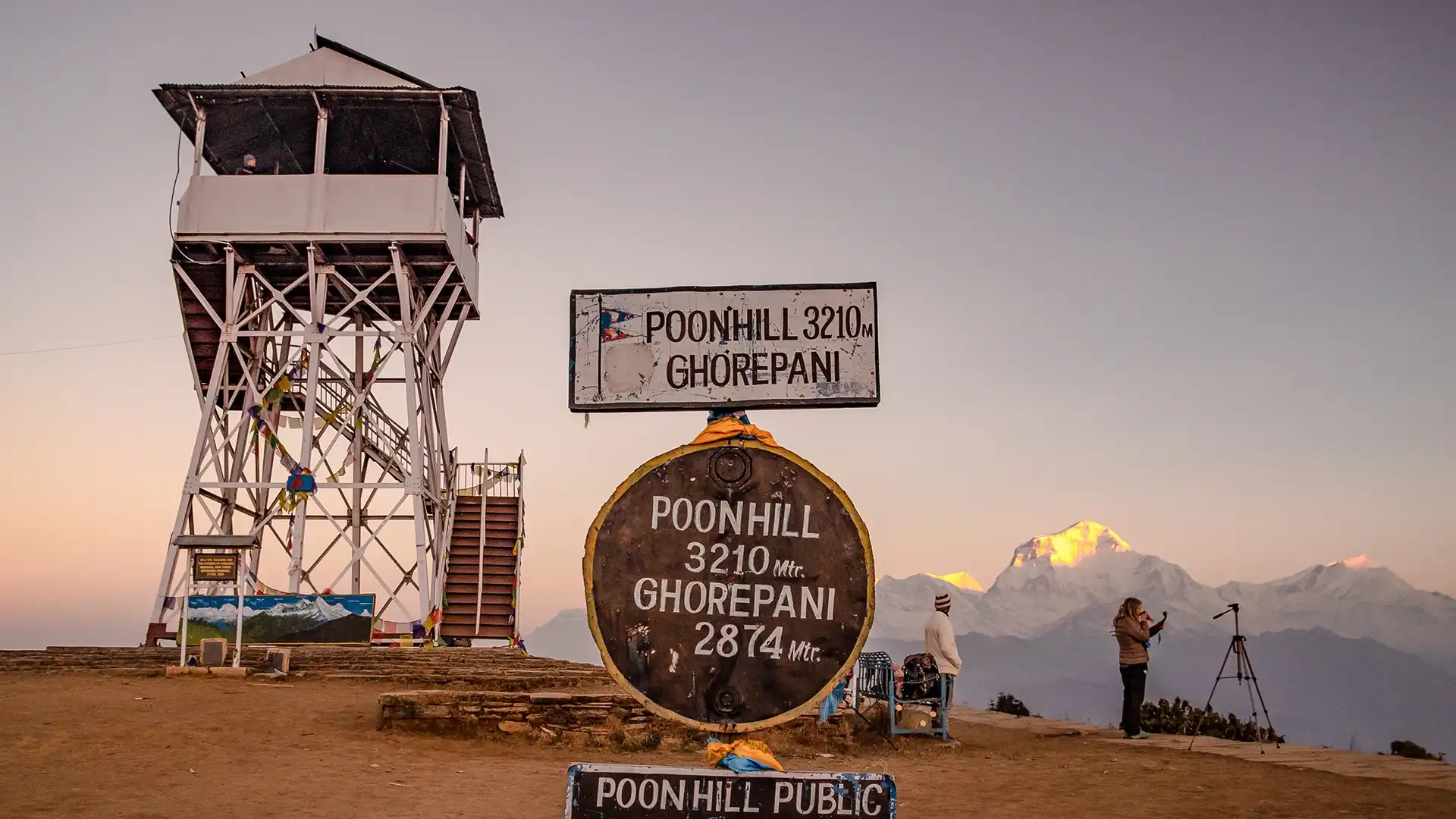 Ghorepani Poon Hill Trek
The full loop takes three to five days and is rated easy to moderate. No prior trekking experience is required.
This trek is particularly popular in spring, when the rhododendron forests along the route are in full bloom and the entire hillside turns shades of red, pink, and white.
Read More: Ghorepani Poonhill Trek - 9 Days by Nepal Visuals
Three Passes Trek
The Three Passes Trek is the most demanding route in the Everest region and one of the most challenging trekking routes in Nepal.
The route crosses three high mountain passes: Renjo La (5,360 m), Cho La (5,420 m), and Kongma La (5,535 m), while also visiting both the Gokyo Lakes and Everest Base Camp.
This is not a trek for first-timers. It requires excellent physical fitness, prior high-altitude experience, and the willingness to spend multiple consecutive days above 5,000 meters.
The reward is a complete and immersive experience of the Khumbu region, with views and routes that the standard EBC itinerary never reaches.
The Three Passes Trek takes approximately 18 to 21 days and is rated very challenging.
Read More: Everest Three Passes Trek - 19 Days by Nepal Visuals
Mardi Himal Trek
The Mardi Himal Trek is one of Nepal's newer officially designated trekking routes and one of its hidden gems.
The trail approaches the Annapurna Sanctuary from the east, climbing through subtropical forests, rhododendron ridgelines, and high alpine terrain to a viewpoint at 4,500 meters with a close-up view of Mardi Himal, Machapuchare, and the Annapurna range.
The Mardi Himal Trek takes five to seven days and is rated moderate.
It is an excellent option for trekkers who want a less crowded, more off-the-beaten-path experience in the Annapurna region without committing to the full circuit.
Read More: Mera Peak Climbing - 14 Days by Nepal Visuals
Difficulty Levels: Choosing the Right Trek for You
One of the things that makes Nepal so accessible as a trekking destination is the range of difficulty levels available.
Easy treks include the Ghorepani Poon Hill Trek, the Everest View Trek, and the Helambu Trek. These routes have lower maximum altitudes, shorter daily walking times, and straightforward navigation. They are ideal for first-time trekkers, families with older children, or anyone who wants to experience Nepal's mountain scenery without a significant physical challenge.
Moderate treks include the Annapurna Base Camp Trek, the Langtang Valley Trek, and the Mardi Himal Trek. These routes involve longer walking days, higher altitudes, and more sustained physical effort. A reasonable level of cardiovascular fitness is required, and some prior hiking experience is helpful.
Challenging treks include the Everest Base Camp Trek, the Manaslu Circuit Trek, and the Annapurna Circuit Trek. These are multi-week routes that reach high altitudes, require acclimatization rest days, and demand good physical fitness and mental resilience.
Very challenging treks include the Three Passes Trek and extended high-altitude routes combining multiple circuits. These require prior high-altitude trekking experience and excellent physical preparation.
When in doubt about your fitness level or experience, start with a moderate route and build from there. The mountains will be waiting when you are ready for more.
Best Season to Trek in Nepal (Spring & Autumn/Fall)
Choosing the right season is one of the most important decisions you will make when planning a Nepal trek.
Spring (March to May)
Spring is one of the two ideal trekking seasons in Nepal.
Temperatures are warming up after winter, skies are generally clear, and the lower trail sections are transformed by rhododendron forests in full bloom.
March through May is also the main Everest climbing season, which means Base Camp is at its most active and atmospheric during these months.
Daytime temperatures on the trail are comfortable at lower elevations. At altitude above 4,000 meters, nights remain cold, particularly in March and April.
Autumn/Fall (September to November)
Autumn is widely considered the single best season for trekking in Nepal.
The monsoon clears in early September, leaving the air exceptionally clean and the visibility extraordinary. Mountain views are at their sharpest and clearest during October and November.
Trail conditions are dry and stable. Temperatures during the day are comfortable at all elevations, and the crowds, while present on popular routes, are manageable.
October is the peak month for Nepal trekking, and it deserves its reputation.
Winter (December to February)
Winter trekking in Nepal is a genuine option for experienced trekkers who are properly equipped and prefer quieter trails.
The skies are often brilliantly clear, and the lack of other trekkers creates a sense of solitude that is impossible to find in peak season.
The significant drawback is the cold. Temperatures above 4,000 meters drop to extreme lows at night, and snow covers the higher sections of most routes from December onward.
High passes like Thorong La and Larkya La may be closed or extremely dangerous in deep winter.
Winter trekking is not recommended for beginners or for anyone not equipped with proper cold-weather mountaineering gear.
Monsoon (June to August)
The monsoon season brings heavy and persistent rain to most of Nepal from June through August.
Trails become slippery and muddy. Leeches appear on the lower forested sections of most routes. Landslides are a genuine risk on certain trails. Flights to Lukla are frequently delayed or cancelled.
Mountain views are largely obscured by cloud and rain for extended periods.
The monsoon is not recommended for most trekking routes in Nepal. The exception is rain-shadow areas like Upper Mustang and the Dolpo region, which lie north of the main Himalayan range and receive significantly less monsoon rainfall.
Is Trekking in Nepal Safe for Beginners?
Yes, trekking in Nepal is safe and achievable for beginners, provided you choose the right route and prepare appropriately.
The most beginner-friendly routes include the Ghorepani Poon Hill Trek, the Everest View Trek, and the Helambu Trek. These have lower maximum altitudes, well-marked trails, and a steady supply of teahouses along the route.
The key principles for beginner trekkers in Nepal are simple.
Walk at your own pace and never let group dynamics or schedule pressure push you to go faster than your body is comfortable with. Stay hydrated throughout every day on the trail. Do not skip rest days, particularly if you are trekking above 3,000 meters. Learn the early symptoms of altitude sickness and act on them immediately.
Hiring a licensed local guide is strongly recommended for first-time trekkers and is now legally required on most Nepal trekking routes. A good guide does far more than navigate. They monitor your health, manage logistics, communicate with teahouse owners, and provide context for the culture and landscape around you.
Is Solo Female Trekking in Nepal Safe?
Yes, Nepal is one of the safer destinations in Asia for solo female travelers, and many women trek here alone every year with positive experiences.
The Nepalese trekking community is generally welcoming, respectful, and accustomed to international visitors of all backgrounds.
The safest approach for solo female trekkers is to stick to the well-traveled routes like the EBC Trek, Annapurna Base Camp Trek, and Ghorepani Poon Hill Trek, where trail traffic is steady, teahouses are well-established, and there are always other trekkers nearby.
For more remote routes, joining a small group or hiring a licensed guide adds an important layer of security and practical support.
As with solo travel anywhere in the world, staying aware of your surroundings, trusting your instincts, and choosing established, licensed agencies for bookings are the most important practical steps.
Altitude Sickness: What Every Nepal Trekker Needs to Know
Altitude sickness is the most significant health risk for trekkers in Nepal, and understanding it properly before you go is essential.
Above 3,000 meters, the concentration of oxygen in the air drops below what the human body is accustomed to at sea level. The body responds by breathing faster, producing more red blood cells, and gradually adjusting its chemistry to the new environment. This process takes time and cannot be accelerated by willpower or physical fitness.
Acute Mountain Sickness (AMS) can affect anyone at altitude, regardless of age, fitness, or prior experience. It does not discriminate.
Common early symptoms include headache, nausea, dizziness, fatigue, loss of appetite, and poor sleep quality. These are normal responses to a new altitude and usually improve with rest and hydration within one to two days.
The symptoms that must never be ignored are a worsening headache that does not respond to rest or pain relief, loss of coordination, unusual confusion or disorientation, and a persistent wet cough.
These signs indicate a potential progression to HAPE (High Altitude Pulmonary Edema) or HACE (High Altitude Cerebral Edema), both of which are life-threatening conditions. The only correct response is immediate descent, regardless of how close you are to your destination or what time of day it is.
The most effective prevention strategies are gradual ascent, proper hydration, avoiding alcohol at altitude, following the acclimatization rest days built into your itinerary, and never ascending with active AMS symptoms.
Diamox (acetazolamide) is a medication that assists acclimatization and is widely used by Nepal trekkers. Speak to your doctor well before your departure date to determine whether it is appropriate for you.
Permits for Trekking in Nepal
Nepal's trekking permit system is straightforward for popular routes but requires more preparation for restricted areas.
Sagarmatha National Park Entry Permit is required for the Everest Base Camp Trek and all trekking within Sagarmatha National Park. It costs approximately NPR 3,000 (around $25 USD) for foreign nationals.
Khumbu Pasang Lhamu Rural Municipality Permit has replaced the TIMS card for the Everest region and costs approximately NPR 2,000 to 3,000.
Annapurna Conservation Area Permit (ACAP) is required for all treks in the Annapurna region, including the Circuit, Base Camp, and Poon Hill routes. It costs NPR 3,000.
TIMS Card (Trekkers' Information Management System) is required for some regions outside of national parks and conservation areas. Confirm with your agency whether it is needed for your specific route.
Restricted Area Permits are required for the Manaslu Circuit, Upper Mustang, Dolpo, and several other remote zones. These cost significantly more and must be arranged in advance through a licensed trekking agency.
Your trekking agency will typically arrange all permits on your behalf as part of the booking process. If you are arranging permits independently, the Nepal Tourism Board office in Kathmandu is the most reliable source for current requirements and fees.
A Guide Is Now Required for Most Nepal Treks
As of April 2023, the Nepal government made it mandatory to hire a licensed guide for trekking in all major regions of Nepal.
This regulation applies to the Everest, Annapurna, Langtang, Manaslu, and most other popular trekking routes.
The rule was introduced primarily to improve trekker safety, reduce the number of incidents involving lost or injured solo trekkers, and support local employment in mountain communities.
Beyond the legal requirement, the practical benefits of trekking with a guide are significant.
An experienced local guide knows the trail conditions, the best teahouses, the cultural context of every village and monastery you pass, and the signs of altitude sickness before they become serious. In an emergency, they can coordinate evacuation quickly and communicate with local services in ways that most international trekkers cannot.
Hiring a porter in addition to a guide is also strongly recommended. A porter carries your main duffel bag, which frees your energy for the walk itself and makes the entire experience more enjoyable. It also directly supports the livelihoods of local mountain communities.
Accommodation on Nepal's Trekking Routes
The teahouse system is one of the great practical advantages of trekking in Nepal compared to many other mountain destinations in the world.
Teahouses are small, family-run lodges that line the popular trekking routes, providing a bed, basic meals, and a social space at the end of each day's walking.
On well-traveled routes like the EBC Trek and the Annapurna Circuit, teahouses are comfortable and increasingly well-equipped. Private rooms, attached bathrooms, hot showers, Wi-Fi, and even charging facilities are available at many establishments on the lower sections of popular routes.
As you gain altitude, facilities become more basic. Rooms are simpler, bathrooms are shared, and hot water may be limited to certain hours of the day.
The communal dining room is the heart of every teahouse. In the evenings, trekkers from different countries gather around the central stove, share stories, compare blisters, review their maps, and plan the following day. These evenings are often among the most memorable parts of the entire trek.
On remote routes like the Manaslu Circuit or the Dolpo region, teahouse facilities are significantly more basic. Carrying a sleeping bag rated to at least -15 degrees Celsius and a reliable power bank is essential on any Nepal trek, particularly above 4,000 meters.
Food on the Trail
Nepal's teahouse menus are more varied and satisfying than most first-time trekkers expect.
Dal bhat, the traditional Nepali meal of rice, lentil soup, vegetable curry, and pickled condiments, is the most recommended choice on any Nepal trek. It is freshly cooked, highly nutritious, filling, and perfectly suited to high-altitude energy demands. Most teahouses offer unlimited dal bhat refills, making it exceptional value as well.
Other common menu items include noodle soups, fried rice, pasta, eggs prepared various ways, porridge, pancakes, and a wide range of hot drinks including Nepali tea, butter tea, ginger and lemon tea, and hot chocolate.
Avoid meat above Namche Bazaar on the EBC Trek and above Chhomrong on the Annapurna Base Camp route. Supply chains become unreliable at higher elevations, and freshness cannot be guaranteed.
Food prices increase significantly with altitude on all routes. Everything above the major resupply towns has to be carried up by porter or yak, and the prices at teahouses above 4,500 meters reflect that logistical reality.
Read More: What to eat and not eat on treks
Gear and Packing for Nepal Treks
Packing smart for a Nepal trek means finding the balance between being properly equipped and not carrying more weight than necessary.
Footwear is the single most important gear decision you will make. Invest in well-fitting, waterproof trekking boots with good ankle support, and break them in thoroughly with multiple long walks before your departure. New boots on day one of a two-week trek are a recipe for blisters and misery.
Clothing should be based on the layering principle. A moisture-wicking base layer, an insulating mid-layer (fleece or down jacket), and a waterproof and windproof outer shell covers the majority of conditions on most Nepal routes.
Sleeping bag rated to at least -10 degrees Celsius for moderate routes and -15 degrees Celsius or lower for high-altitude routes like EBC. Teahouses provide blankets, but they are not reliable above 4,000 meters.
Trekking poles are strongly recommended for all Nepal treks. They reduce the load on your knees during descents, improve stability on uneven terrain, and help maintain rhythm on long uphill sections.
Daypack of 25 to 35 liters for carrying your daily essentials while your porter carries the main duffel bag.
Power bank of sufficient capacity to charge your phone and camera multiple times. Charging at teahouses is available but costs extra and is not always reliable at high altitude.
Sun protection including SPF 50 sunscreen, UV-blocking sunglasses, and a wide-brimmed hat or sun cap. UV radiation increases significantly with altitude, and sunburn at 5,000 meters happens faster than most people expect.
Water purification using a personal filter like a Sawyer Squeeze or a SteriPen, combined with purification tablets as backup. Buying bottled water at every stop generates enormous amounts of plastic waste in the mountain environment.
Read More: Find out what gears are needed for Everest Base Camp Trek in Nepal
Eco-Trekking and Responsible Tourism in Nepal
Nepal's mountain environment is fragile, and the impact of trekking tourism on trails, glaciers, forests, and local communities is a growing concern.
Sagarmatha National Park, the Annapurna Conservation Area, and other protected zones have specific environmental rules that all trekkers are expected to follow.
Carry out everything you carry in. This includes food packaging, batteries, and any other waste generated during the trek. Do not leave anything behind at campsites or teahouses.
Use a refillable water bottle with a filter rather than purchasing single-use plastic bottles along the trail.
Avoid using soap, shampoo, or detergent near streams or water sources. Carry a small biodegradable soap and use it well away from any watercourse.
Choose teahouses that use solar power and eco-toilets where available. These exist on most popular routes and represent meaningful progress in reducing the environmental footprint of mountain tourism.
Support local businesses at every opportunity. Buy supplies from local shops, stay in locally owned teahouses, hire local guides and porters, and pay fair rates for services.
Organizations like the Sagarmatha Pollution Control Committee (SPCC) and the Annapurna Conservation Area Project (ACAP) do vital work maintaining trails, managing waste, and supporting local environmental education. Supporting them directly, either through donations or by following their guidelines, makes a genuine difference.
The Cultural Experience of Trekking in Nepal
Trekking in Nepal is as much a cultural journey as it is a physical one.
Every major trekking region is home to distinct ethnic communities with their own languages, traditions, religious practices, and architecture.
In the Everest region, the Sherpa people have built a culture deeply rooted in Tibetan Buddhism, shaped by centuries of life at high altitude. Prayer flags, mani walls, chortens, and ancient monasteries are a constant presence on the trail.
In the Annapurna region, you pass through communities of Gurung, Magar, Thakali, and Tibetan-heritage peoples, each with their own distinctive food, dress, festivals, and relationship with the mountains.
Buddha Statue on a Himalayan Trek Route
In the Langtang Valley, the Tamang people maintain a way of life that reflects their Tibetan Buddhist roots and their deep connection to the forest and high pasture environment of the valley.
Respecting local culture on the trail is not simply a matter of politeness. It is an acknowledgment that you are a guest in someone else's home.
Always ask permission before taking photographs of people. Pass mani walls and chortens on the left. Remove your shoes before entering monasteries or temples. Dress modestly in villages, covering shoulders and knees. Greet people with "Namaste" and a slight bow of the head.
These small gestures cost nothing and mean a great deal.
Travel Insurance for Nepal Trekking
Travel insurance is not optional for trekking in Nepal. It is essential.
Your policy must specifically cover high-altitude trekking up to at least 6,000 meters and include helicopter evacuation.
Standard travel insurance policies almost never include these provisions as a default. Read your policy carefully before you depart and confirm that helicopter rescue and high-altitude medical treatment are explicitly covered.
Emergency helicopter evacuation from the Khumbu region or other remote trekking areas in Nepal typically costs between $3,000 and $6,000 USD. Without insurance, this cost falls entirely on you.
Medical evacuation to Kathmandu or overseas can cost tens of thousands of dollars. Being uninsured in a high-altitude emergency in Nepal is a risk that is simply not worth taking.
Nepal Awaits
Trekking in Nepal offers something increasingly rare in the modern world: the chance to be genuinely challenged, genuinely moved, and genuinely present.
The trails take you through landscapes that are almost incomprehensibly beautiful. The culture you encounter along the way is warm, complex, and endlessly interesting. The physical challenge asks something real of your body and your mind, and gives back more than it takes.
Whether you are standing at Everest Base Camp watching the sunrise turn Everest gold, crossing the Thorong La Pass with the whole of Annapurna behind you, or simply sitting in a teahouse in a Gurung village with a cup of tea and no signal on your phone, Nepal delivers.
Choose your route. Plan carefully. Respect the mountains and the people who live among them. And go.
Sharing route guides and trail experience from the high trails of Nepal.