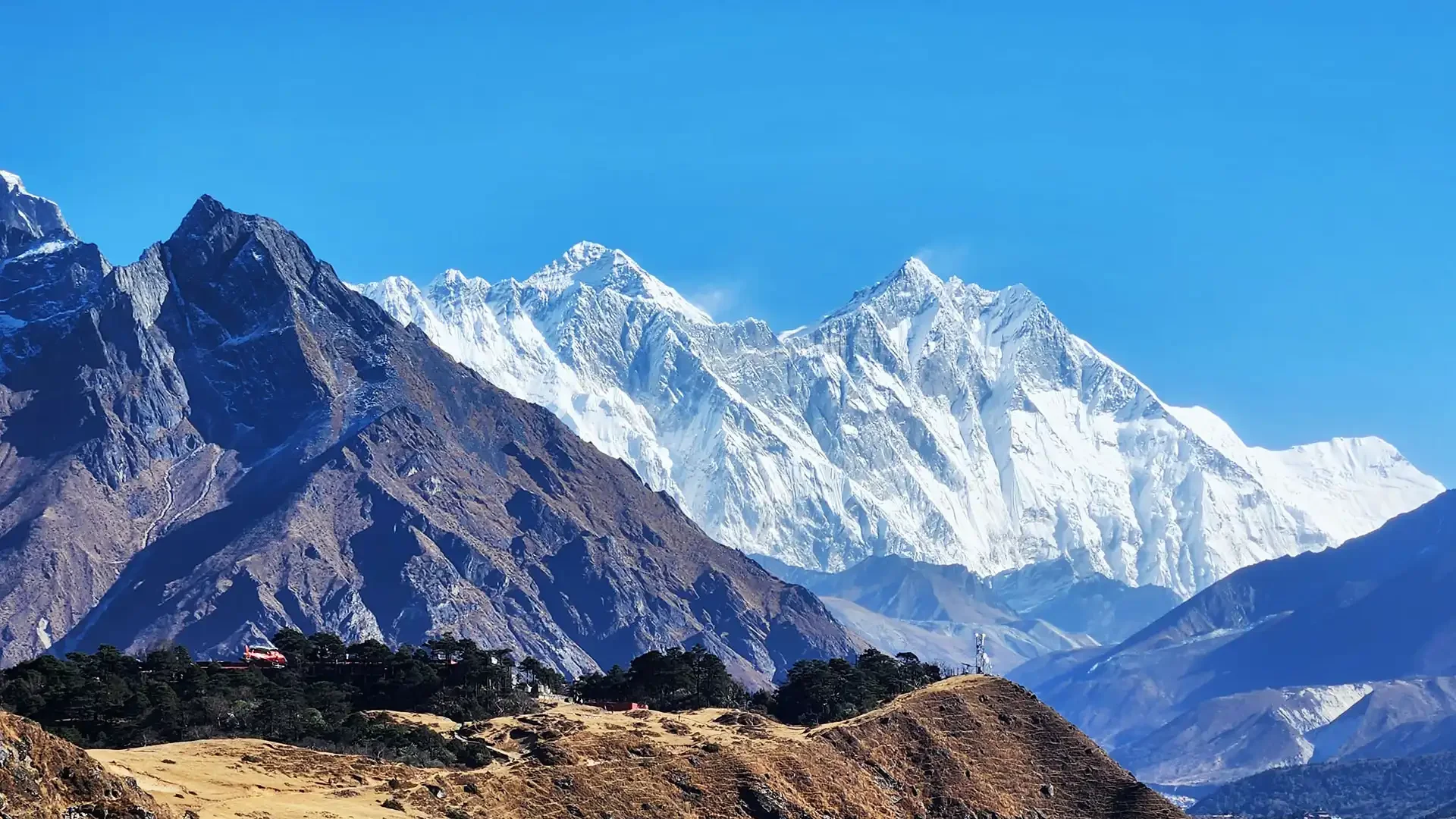
With its rich Sherpa culture, breathtaking scenery, and adventurous spirit, the Everest base camp still is one of the most iconic places in the trekking world.
On this page(9)
Every year, thousands of trekkers make a quiet, life-altering decision.
They pack away their routines, step away from their screens, and trade warm beds for cold teahouses somewhere high in the Himalayas. All for a chance to stand in the shadow of the world's tallest mountain.
No oxygen tanks. No ropes. Just boots, willpower, and a trail that has been quietly changing lives for decades.
The Everest Base Camp Trek (or EBC Trek, as most trekkers come to call it) is one of the most iconic, celebrated, and recommended trekking routes on Earth.
It's the kind of journey that earns a permanent place in your memory and the kind of story you'll still be telling twenty years from now.
Whether you're a seasoned trekker chasing your next big adventure or someone who has never done anything remotely like this before, the trail to Everest has a way of finding the right moment to call your name. And when it does, you'll know it's time to go.
1. The Landscape Is High-Altitude Drama at Its Most Breathtaking
The Everest Base Camp Trek begins with a bang.
The legendary flight into Lukla Airport, one of the most thrilling short-haul landings in the world, sets the tone immediately.
As your small propeller plane drops into a narrow valley and skids to a stop on a tiny runway perched at 2,860 meters, you already know: this journey is going to be different.
From Lukla, the trail unfolds through the Khumbu region of northeastern Nepal.
This is a landscape of almost absurd beauty. Glacial rivers rush through deep gorges. Ancient forests of rhododendron and pine give way to high alpine meadows. And towering above everything, the Himalayan giants keep watch in silence.
Ama Dablam is often the mountain that stops trekkers in their tracks first. It is a dramatic, jewel-like peak that seems almost too perfect to be real.
Then come Lhotse, Nuptse, Cho Oyu, and Pumori, each of them technically among the highest mountains on Earth, yet somehow dwarfed by the presence of Mount Everest itself.
There is no adequate way to describe what it feels like to see Everest for the first time.
The mountain is massive, stoic, and utterly magnetic. At sunrise, the snow-covered ridges ignite in shades of gold and amber. At dusk, the peaks glow a cool, ethereal blue. It is not merely a view. It is an experience that settles somewhere deep inside you and stays there.
The beauty of this trail isn't just about Everest, though.
It's the full picture: the turquoise Dudh Koshi River threading through the valley below, the morning mist curling off frozen lakes near Gorak Shep, and the high plateau of Kala Patthar at 5,545 meters, where the panoramic view of the Khumbu stretches endlessly in every direction.
This is nature at its most humbling and most magnificent.
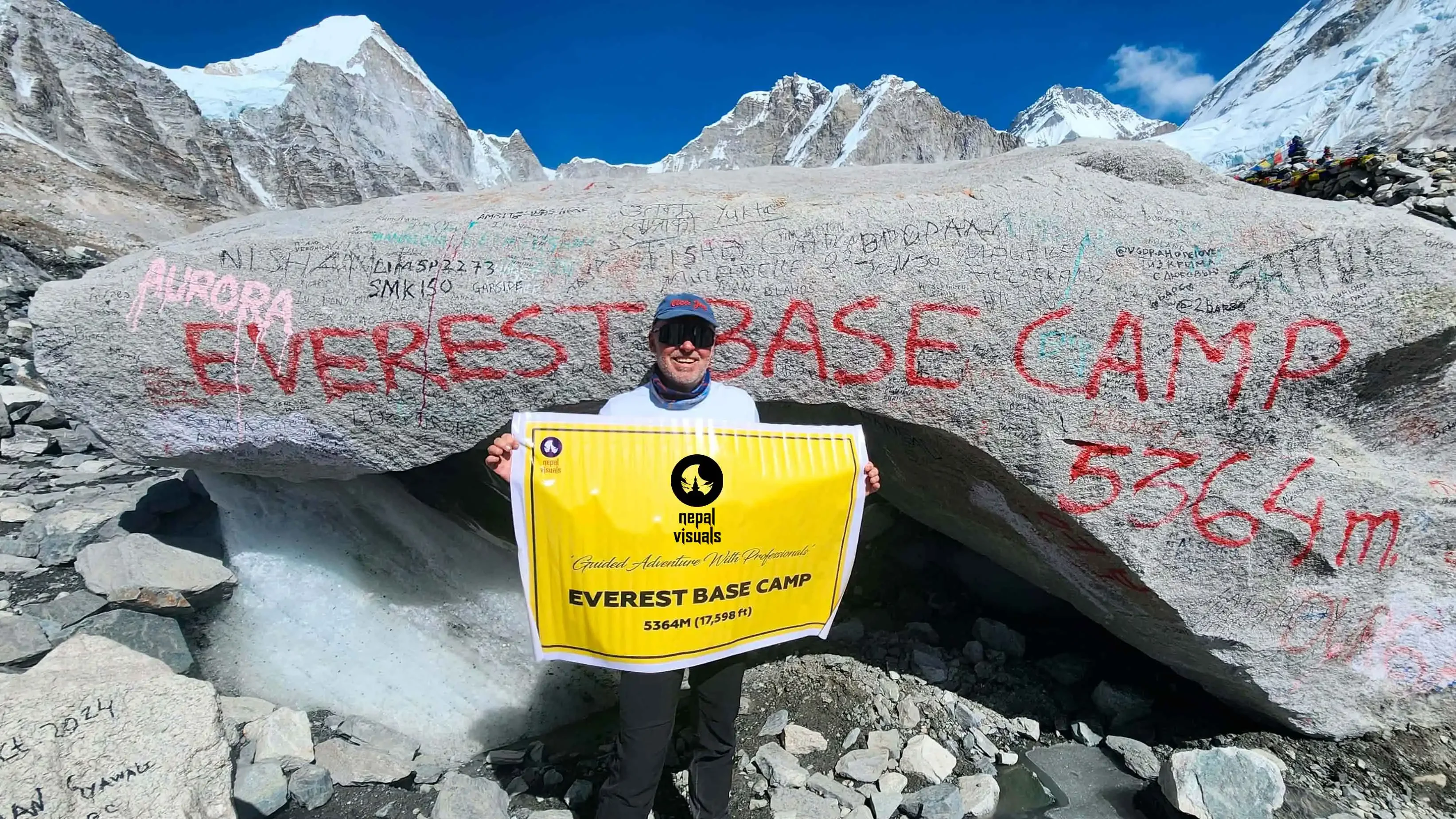 Reaching Everest Base Camp With Nepal Visuals
2. You Walk Through a Living, Breathing Culture
One of the most underrated aspects of the EBC Trek is how deeply it takes you into the living culture of the Sherpa people, the indigenous communities of the Khumbu who have called these mountains home for centuries.
As you walk the trail, you're passing through a way of life.
Stone-walled villages cling to steep hillsides. Prayer flags, faded and weathered and endlessly fluttering, stretch across suspension bridges and mountain passes, sending their blessings into the wind.
Hand-carved mani stones line the trail, inscribed with Tibetan Buddhist mantras worn smooth by generations of pilgrims. The tradition is to always pass these stones on the left, a practice that connects modern trekkers to centuries of spiritual journeying.
Namche Bazaar, the bustling gateway town at 3,440 meters, deserves far more than just a rest stop.
This lively hub is where trekkers, traders, and locals converge in a high-altitude marketplace that somehow manages to feel both remote and cosmopolitan at once.
Spend an extra day here for acclimatization. Use it to explore the Sherpa Culture Museum, visit the Saturday market, or simply sit in a teahouse and watch the world go by.
Higher up, the Tengboche Monastery at 3,867 meters is one of the most spiritually powerful places on the entire route. Set against a backdrop of towering peaks, the monastery is the spiritual heart of the Khumbu.
If your timing is right, you'll hear the low, resonant chanting of monks during morning prayers.
Clouds of juniper incense rise toward the rafters while Everest watches from just beyond the window. It is, without question, one of the most extraordinary settings of any religious site in the world.
In the villages of Pangboche, Dingboche, and Pheriche, daily life continues much as it has for generations.
Yaks carry supplies up steep trails. Elderly women spin prayer wheels outside their doorways. A warm "Namaste" greets every passing stranger.
Remember: Spirituality here isn't something you go looking for. It finds you naturally, in every quiet moment of the trek.
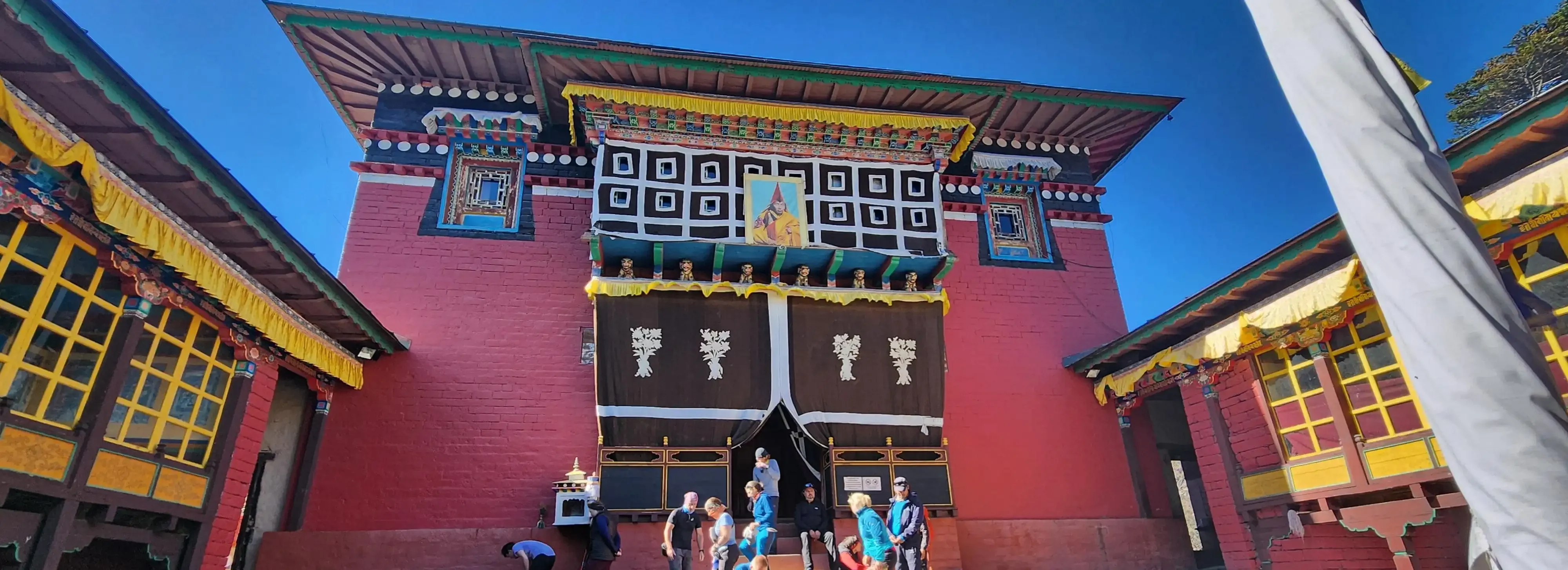 The spiritual aspect of Tengboche Monastery
3. The Friendships You Form Are Unlike Any Other
There's something remarkable that happens to people on the EBC trail. Maybe it's the altitude stripping away pretension. Maybe it's the shared suffering of a particularly steep climb to Dingboche. Maybe it's just the garlic soup, sipped in freezing teahouses at the end of a long day, somehow becoming the most delicious thing you've ever tasted.
Whatever the reason, the bonds that form on this trek are real and fast and lasting.
You'll share tables with strangers from entirely different corners of the world and find yourself deep in conversation within minutes. You'll swap snacks on rocky ledges, encourage each other through tough stretches of trail, and laugh often at how hard and ridiculous and beautiful all of this is.
There's a particular kind of community that only exists on long-distance trails like this one: generous, unpretentious, and completely genuine.
And when you finally reach Everest Base Camp at 5,364 meters, standing at the foot of the Khumbu Icefall, you won't be celebrating alone. You'll be celebrating with a group of people who understand exactly what it took to get there, because they were right beside you the whole way.
4. You Don't Need to Summit to Feel the Summit
This is something that first-timers often don't realize: the Everest Base Camp Trek is not a climbing expedition. You don't need crampons, ice axes, specialized mountaineering skills, or oxygen tanks.
What you need is decent physical fitness, a well-packed bag, and a genuine desire to push yourself beyond the comfortable and familiar.
The goal of the trek, standing at Everest Base Camp or ascending Kala Patthar, is entirely within reach for most reasonably fit adults who prepare properly.
And when you get there, what you feel is something older and quieter than satisfaction.
A recognition of your own resilience. A recalibration of what you thought you were capable of.
Standing at Kala Patthar with the Khumbu Glacier glittering below and every one of the world's highest peaks visible around you, that moment belongs to you completely. You didn't just buy a ticket to see this. You walked here. Every breath of thin air, every aching muscle, every early morning start in the cold all led to this.
That's the gift of the EBC Trek. It doesn't just show you something beautiful. It makes you earn it.
5. The Route Is Challenging but Genuinely Accessible
One of the most common questions from first-time EBC trekkers is simple: "Can someone like me actually do this?"
The answer, more often than not, is yes.
What makes the Everest Base Camp Trek route extraordinary is that it's remote without being inaccessible.
Decades of trekking tourism have created an infrastructure that supports all experience levels. The trail is well-marked and well-traveled.
Teahouses along the route provide warm meals, comfortable beds, and even Wi-Fi in some spots (though we'd gently encourage you to leave the notifications behind for a while).
Experienced local guides and Sherpa porters, whose knowledge of the mountain is unparalleled, are available to accompany you throughout the journey. Their presence isn't just practical. It enriches the entire experience in ways that are hard to put into words.
The standard EBC Trek itinerary runs approximately 12 to 14 days, starting and ending in Lukla, with carefully spaced acclimatization days built in to help your body adjust to the altitude. These rest days are not optional extras.
They are essential. Altitude sickness is the most common challenge on the trek, and proper acclimatization combined with staying well-hydrated and ascending gradually is the most reliable way to prevent it.
The best times to attempt the Everest Base Camp Trek are pre-monsoon spring (March through May) and post-monsoon autumn (September through November).
Both seasons offer stable weather and clear skies for those iconic mountain views. Spring has the added magic of rhododendron forests in full bloom below. Autumn offers exceptional clarity at altitude after the monsoon washes the air completely clean.
You don't need to be a mountaineer. You need to be willing to prepare, to take it slow, and to trust the process. The Himalayas will do the rest.
6. It Changes the Way You See the Ordinary World
Ask anyone who has completed the Everest Base Camp Trek what surprised them most, and it's rarely the mountain itself. It's what the mountain showed them about themselves.
There's an unexpected clarity that comes with stripping life down to the essentials for two weeks.
When your daily concerns are reduced to how your feet feel, how your breathing is holding up, and what's on the dinner menu tonight, the rest of life's noise quietly fades.
The to-do lists, the pressures, the accumulated anxieties of modern life all seem very far away from here, and somehow smaller.
What takes their place is presence. The specific quality of light on snow at 7 AM. The sound of a yak bell echoing off a valley wall. The simple pleasure of warm dal bhat after a long day on the trail.
Trekkers consistently describe returning home with a shifted sense of priority. A deeper appreciation for simplicity, for human connection, for physical capability, and for the extraordinary scale of the natural world. It's a recalibration that's difficult to manufacture any other way.
You walk into the Khumbu expecting a physical challenge. You walk out having rediscovered something essential about yourself. That's not a small thing.
Practical EBC Trek Information to Know Before You Go
Starting point: Kathmandu, Nepal, then a flight to Lukla (approximately 35 minutes)
Trek duration: 12 to 14 days (standard route)
Maximum altitude: Kala Patthar at 5,545 m / Everest Base Camp at 5,364 m
Best seasons: March to May and September to November
Permits required: TIMS Card and Sagarmatha National Park Permit
Fitness level: Moderate to challenging (no technical climbing required)
Average daily walking: 5 to 7 hours
Key stops along the EBC Trek trail include Phakding, Namche Bazaar, Tengboche, Dingboche, Lobuche, Gorak Shep, Everest Base Camp, and Kala Patthar. Each stop has its own character, its own altitude, and its own rewards. No two days on this trail feel the same.
More Than a Trek, a Conversation Between You and the Mountain
The Everest Base Camp Trek is many things at once. It is a physical challenge and a cultural immersion. It is a meditation on scale and a celebration of human endurance. It is one of the most visited trekking routes in the Himalayas, yet somehow feels personal and intimate in a way that surprises almost everyone who does it.
One morning you're sharing butter tea with a Sherpa family in a stone kitchen warmed by a yak-dung fire. The next, you're watching the first light of dawn explode across the South Face of Everest from the windswept summit of Kala Patthar.
Somewhere between these moments, between the prayer flags and the thin air, between the garlic soup and the glacier, you find something you weren't quite expecting.
Maybe it's clarity. Maybe it's humility. Maybe it's simply the quiet, surprising joy of knowing you belong here, on this trail, right now.
You walk in expecting a trek. You walk out carrying a story that's yours alone.
Ready to Walk the Trail That Legends Did?
If the Everest Base Camp Trek has been sitting on your "one day" list, consider this your sign to move it up. The trail is waiting. The teahouses are warm. The mountains have been standing there for millennia, patient and magnificent, and they'll be there when you arrive.
Take your time to prepare well. Choose an experienced operator. Trust yourself. The Khumbu has a way of taking care of the people who come to it with an open heart.
Follow us for more trail notes, travel tips, packing guides, and stories from the roof of the world.
Sharing route guides and trail experience from the high trails of Nepal.