 Nepal Visuals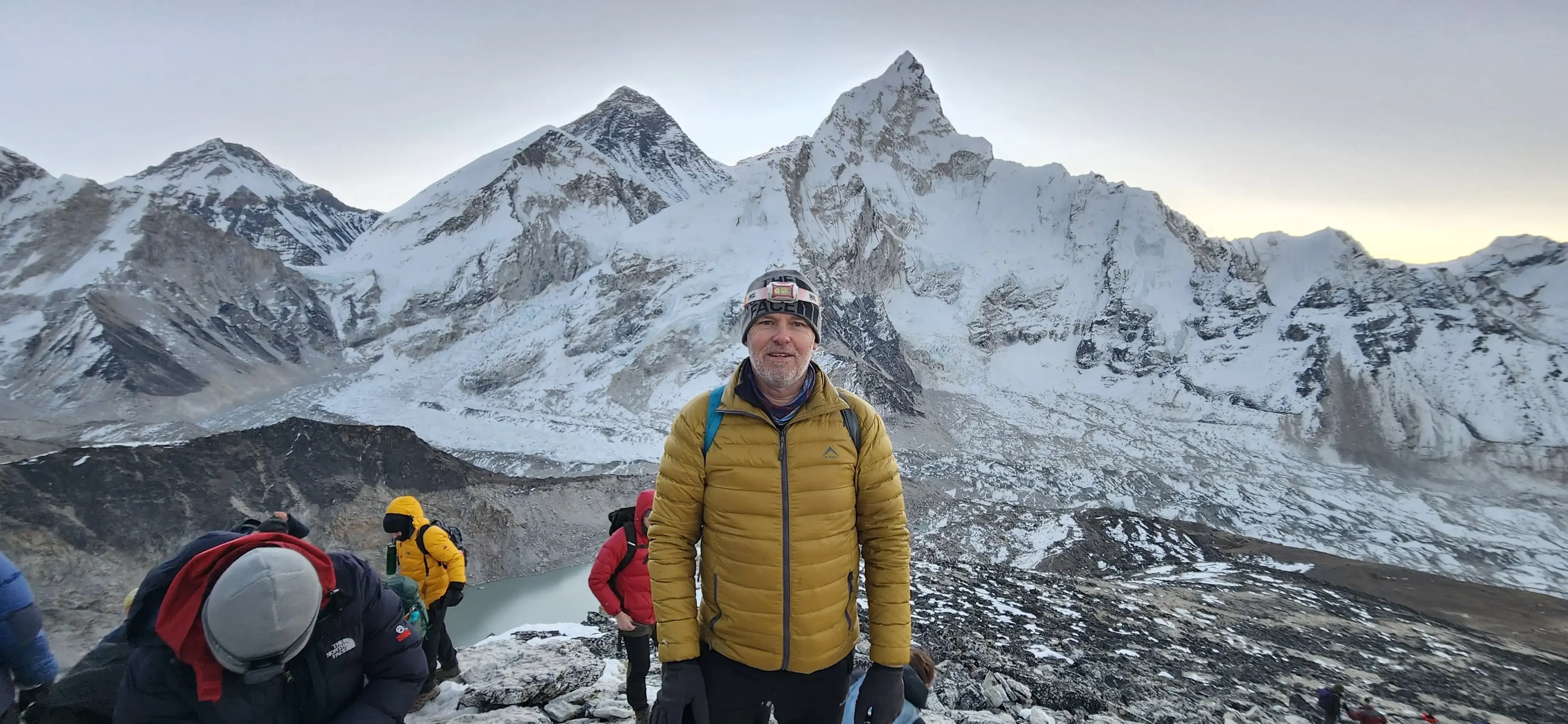
Reach the ultimate vantage point of the Everest region. This guide explains why the trek to Kala Patthar is essential for breathtaking, panoramic views of Everest’s summit that you simply can't see from Base Camp.
On this page(12)
Most trekkers reach Everest Base Camp and feel something they did not expect.
Not disappointment exactly. But a quiet realization. From Base Camp itself, you cannot actually see the summit of Everest. The mountain is too close, its upper slopes hidden behind the bulk of the West Ridge and the chaos of the Khumbu Icefall.
The view everyone pictures, that iconic shot of Everest rising above everything else in sharp and overwhelming clarity, does not happen at Base Camp.
It happens at Kala Patthar.
Kala Patthar is a subsidiary peak on the south ridge of Pumori, sitting at an elevation of 5,545 meters above sea level, or 18,192 feet. It is not a technical climb. It is a steep, high-altitude hike that most EBC trekkers complete in the pre-dawn hours of the morning after visiting Base Camp.
And it delivers what nothing else on the Everest trek can match.
A direct, unobstructed, close-range view of Everest's south face. The Khumbu Glacier spread below. The surrounding giants of the Mahalangur range across the horizon in every direction.
The name means black rock in Nepali. Simple description, extraordinary location.
What Kala Patthar Actually Is
Before anything else, it helps to understand the geography.
Kala Patthar sits on the southern ridge of Pumori, a 7,161-meter peak that stands just west of Everest. The viewpoint itself is a dark rocky prominence rising above the surrounding moraine and glacier terrain near Gorak Shep, the last settlement on the trail.
The Kala Patthar elevation of 5,545 meters makes it the highest point most non-technical trekkers will reach during the Everest Base Camp trek. For comparison, Everest Base Camp sits at 5,364 meters. Kala Patthar stands 181 meters higher.
That difference matters enormously for what you can see.
 Kala Patthar
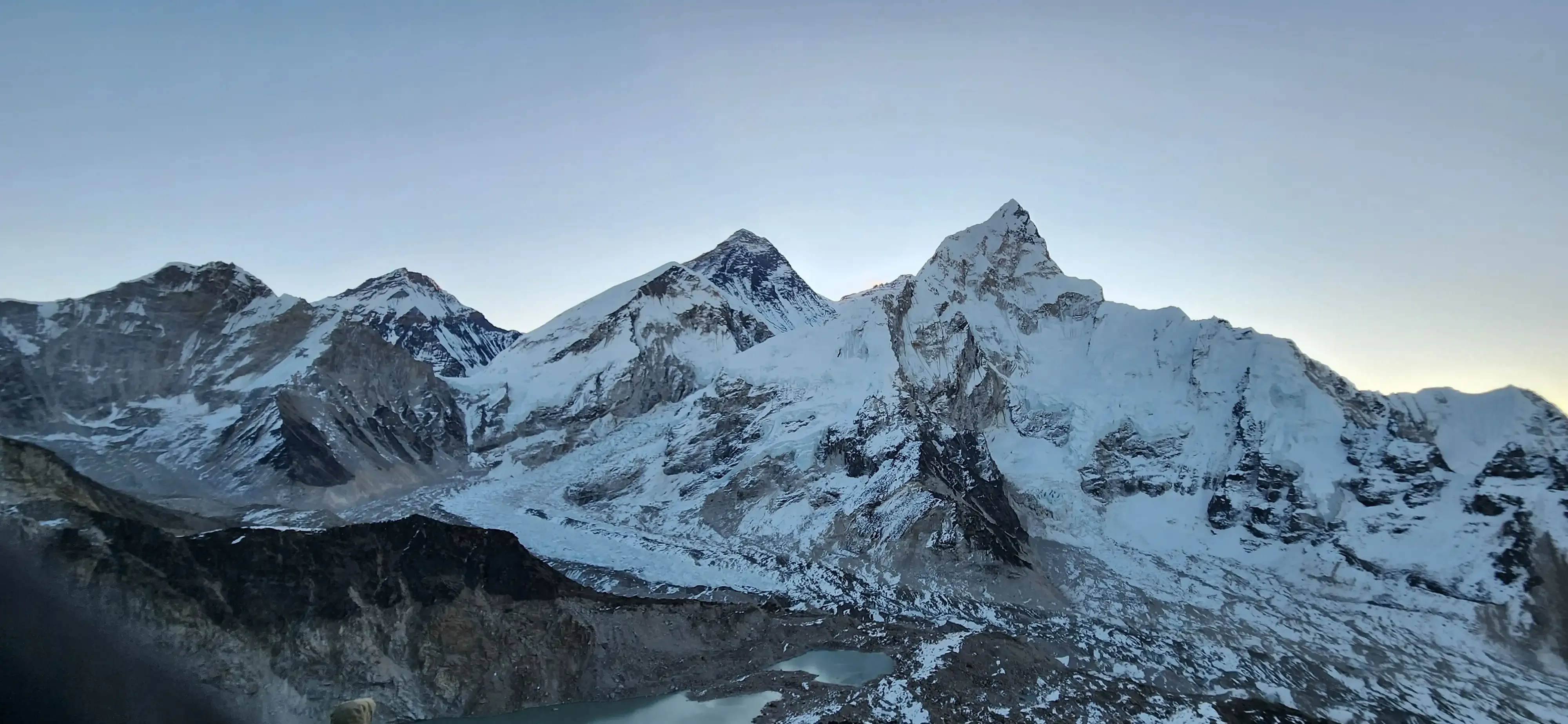
From the summit, the full south face of Everest comes into view, the summit pyramid, the Southeast Ridge, and the dramatic sweep of the West Cwm below. On a clear day, you can see the plume of snow blowing from the summit in the jet stream winds.
Lhotse, the fourth highest mountain on earth, dominates to the southeast. Nuptse forms a wall to the south. Pumori rises steeply directly above to the northwest. And far below, the sprawling lateral moraine of the Khumbu Glacier stretches down the valley, with the colored tents of Everest Base Camp visible during climbing season.
No other accessible point in the Khumbu offers this combination.
Kala Patthar Altitude and What It Means
The Kala Patthar altitude of 5,545 meters is high enough that the air contains roughly fifty percent less oxygen than at sea level.
That number is worth sitting with for a moment.
Every breath you take up there delivers half the oxygen your lungs are designed to process. Your heart is working harder. Your muscles are getting less fuel. Your thinking is slightly slower than usual, though you may not notice it.
The hike is typically done in the early morning, starting from Gorak Shep at 5,164 meters. That means you begin at an altitude that most people consider extreme, and you climb an additional 381 meters before sunrise.
The Gorak Shep to Kala Patthar distance is approximately four kilometers round trip, with an elevation gain of roughly 380 meters. In normal conditions at sea level, that is a straightforward morning walk.
At this altitude, it takes most trekkers two to three hours for the ascent alone.
Go slow. Stop often. Breathe deliberately.
The Kala Patthar difficulty is less about technical challenge and more about sustained effort at altitude when your body is already tired from days of high-altitude trekking. The path is steep in sections, loose underfoot in others, and navigated in the dark during the sunrise hike.
Is Kala Patthar harder than the Base Camp day? For many trekkers, yes. The altitude is higher, the start time is earlier, and the temperature on the exposed ridge before sunrise is significantly colder.
Is Kala Patthar worth it? Every person who has stood on that ridge in the first light of morning answers the same way.
The Kala Patthar Sunrise: Why Everyone Wakes Up at 4am
The Kala Patthar sunrise is the reason most trekkers set their alarms before 4am in Gorak Shep.
It starts with darkness and cold. Serious cold. The temperature on the exposed ridge before dawn in autumn regularly drops to minus fifteen degrees Celsius or lower. Wind chill pushes the felt temperature lower still. You are wearing every layer you packed, and you are still aware of the cold in a way that is impossible to ignore.
Then the eastern horizon begins to lighten.
The first peaks to catch the light are the highest ones. Everest's summit turns from grey to pink. Then orange. Then gold, that specific Himalayan gold that photographers spend entire careers chasing. Lhotse catches it next. Then Nuptse. Then the lower ridges.
The light moves down the mountain faces slowly, the shadows retreating, the snow turning from blue-grey to white to brilliant, eye-watering brightness.
Many experienced Himalayan trekkers consider this sunrise one of the finest experiences available anywhere in the mountains.
Cold management matters more than most people prepare for. Bring your warmest gloves, not your second warmest. Bring a balaclava. Bring chemical hand warmers if you run cold. Your camera battery will drain faster in the cold, so keep it close to your body until you need it.
The view at sunset is equally spectacular but far fewer trekkers see it, since most arrive in the morning and descend to lower elevation afterward. Those who time an afternoon ascent are often rewarded with softer light and the peaks turning amber and red as the sun drops.
The Kala Patthar Trek: Route and How to Get There
There are two ways to reach Kala Patthar.
Trekking: The Standard Route
The vast majority of visitors reach Kala Patthar as part of the Everest Base Camp trek. The route follows a well-established trail from Lukla through the Khumbu valley, passing through Namche Bazaar, Tengboche, Dingboche, and Lobuche before reaching Gorak Shep.
The typical sequence looks like this:
Day 1: Fly Kathmandu to Lukla, trek to Phakding
Day 2: Phakding to Namche Bazaar
Day 3: Acclimatization day in Namche Bazaar
Day 4: Namche to Tengboche
Day 5: Tengboche to Dingboche
Day 6: Acclimatization day in Dingboche
Day 7: Dingboche to Lobuche
Day 8: Lobuche to Gorak Shep, afternoon visit to Everest Base Camp
Day 9: Pre-dawn hike to Kala Patthar for sunrise, then descend
Trekkers reach Base Camp in the afternoon on day eight, return to Gorak Shep for the night, and then push to Kala Patthar before sunrise the following morning. Some attempt both Base Camp and Kala Patthar in the same day. This is possible but demanding, and most experienced guides recommend splitting the two.
Helicopter Tour
For those with limited time or who are unable to complete the multi-day trek, a helicopter tour from Kathmandu or Lukla is available. The helicopter flies to the viewpoint area with a short stop of ten to fifteen minutes for photographs before returning.
It is expensive and gives you a fraction of the experience that the trek provides. But for travelers with mobility limitations or genuine time constraints, it makes the Kala Patthar view accessible when the trail route is not.
The View in Detail
Standing on the Kala Patthar viewpoint, what you see demands a moment to process.
Directly to the northeast, at a distance of roughly nine kilometers, Everest's south face fills a significant portion of your field of view. The summit pyramid rises above the connecting ridges, the West Ridge extending toward Pumori and the Southeast Ridge dropping toward the South Col. This is the most photographed perspective of Everest in existence, the image that appears in mountaineering books, expedition documentaries, and travel features around the world.
Below the mountain, during the climbing season in April and May, Everest Base Camp is visible on the glacier. The colored tents of dozens of expedition teams dot the moraine. From up here, the camp looks small against the scale of the surrounding terrain, which gives you an immediate sense of just how large the mountain actually is.
The Khumbu Glacier extends down the valley in a river of broken ice and moraine. Its surface is grey and chaotic, punctuated by ice towers called seracs and the dark lines where tributary glaciers have joined the main flow.
The combination of proximity and perspective here is what no other viewpoint offers. Closer points are technically harder to reach. More distant viewpoints lack the sense of scale. Kala Patthar sits at exactly the right distance.
Gokyo Ri vs Kala Patthar: The Honest Comparison
This question comes up in every teahouse between Namche and Gorak Shep.
The debate is genuinely contested among experienced Himalayan trekkers, and there is no universally right answer.
Kala Patthar sits at 5,545 meters and provides a close, dramatic view of Everest's south face. It is on the main EBC trail and requires no route deviation. The sunrise from here is widely considered one of the finest in the Himalayas.
Gokyo Ri sits at 5,357 meters and provides a panoramic view that includes Everest, Cho Oyu, Makalu, and Lhotse simultaneously. The breadth of that panorama arguably surpasses Kala Patthar. The Gokyo valley is quieter and the approach feels more remote.
The choice ultimately comes down to what you prioritize. If you want the closest possible view of Everest's south face on the standard EBC route, Kala Patthar is the answer. If you want the widest panorama and do not mind the longer route deviation, Gokyo Ri delivers something genuinely different.
Many trekkers doing the Three Passes Trek include both and consider the question settled.
Temperature and Weather
The temperature at Kala Patthar is among the most extreme conditions most trekkers will ever voluntarily experience.
Here is a practical breakdown by season:
Spring (March to May)
Daytime temperatures range from minus ten to plus five degrees Celsius. Nighttime temperatures at Gorak Shep drop to minus fifteen or colder. The pre-dawn hours on the ridge sit somewhere around minus ten to minus fifteen, with wind chill pushing lower.
Spring is the most popular season because of the stable weather windows and the energy of the climbing expedition season in the region.
Monsoon (June to August)
Cloud cover is persistent, views are frequently blocked, and the approach trails lower in the valley become slippery and difficult. Temperatures are milder, zero to ten degrees Celsius in the day, but visibility makes the trip largely pointless for most visitors.
Autumn (September to November)
Post-monsoon clarity gives the sharpest mountain views of the year. Temperatures are cold and getting colder as the season advances, with nighttime temperatures at Gorak Shep falling well below minus ten by November.
October is widely considered the best time to visit for the combination of clear skies, tolerable temperatures, and manageable conditions on the ridge.
Winter (December to February)
Daytime temperatures reach minus fifteen to minus five degrees Celsius. Nights are genuinely dangerous without proper equipment. Snow on the approach trail is common and wind speeds increase significantly.
A small number of very experienced winter trekkers complete the route in this window. It is not recommended for standard EBC trekkers.
Altitude Sickness at Kala Patthar
Altitude sickness is a real and serious concern at this elevation.
Most trekkers arrive at Kala Patthar already tired from nine or ten days of progressive altitude gain, which is both a challenge and a benefit. The acclimatization built up through the trek provides some protection, but the altitude is high enough that symptoms remain possible even in well-prepared trekkers.
Symptoms to watch for include persistent headache, nausea, dizziness, loss of coordination, and confusion. Any of these warrant descent rather than continuing upward.
Practical steps to reduce your risk:
Acclimatize properly on the way up: The rest days at Namche Bazaar and Dingboche are not optional extras. They are the reason you can stand at this altitude at all.
Hydrate consistently: Dehydration at altitude accelerates the onset of symptoms. Drink water throughout every day from Lukla onward.
Walk slowly: The most common mistake is starting too fast in the excitement of the pre-dawn departure. Slow down from the first step.
Consider Diamox: Acetazolamide helps some people acclimatize more effectively. Consult your doctor before the trek, not after symptoms appear.
Climb high, sleep low: The sunrise hike follows this principle naturally since you return to Gorak Shep and descend to lower elevation afterward.
Is Kala Patthar safe for kids? With proper preparation, good fitness, and conservative pacing, older children with solid trekking experience have completed the route. Parents should be honest about their children's fitness level, prior altitude experience, and ability to communicate symptoms clearly before committing to this section.
Permits Required
Two permits are needed to reach Kala Patthar.
The Sagarmatha National Park permit is mandatory for entry into the Khumbu trekking region from Monjo upward. The Khumbu Pasang Lhamu Rural Municipality entrance permit is required separately and is typically obtained at checkpoints in Lukla or Monjo.
Both permits can be arranged in Kathmandu through the Department of National Parks and Wildlife Conservation, or through a registered trekking agency. Agencies handling organized EBC trek packages will normally process both permits on your behalf.
Comprehensive travel insurance covering high-altitude trekking and emergency helicopter evacuation is strongly recommended. Medical facilities above Namche Bazaar are extremely limited.
Photography Tips
Kala Patthar is one of the great photography locations in the world, and getting the most out of it requires some preparation.
Batteries drain significantly faster in extreme cold. Carry at least one spare for every device you plan to shoot with, and keep spares inside your jacket against your body until you need them.
A lightweight tripod is worth the extra weight for the sunrise shoot. The light is low, exposures are longer, and hand-held photography in gloves at this altitude produces results that disappoint on review.
The first twenty to forty minutes after sunrise produce the most dramatic light on the peaks. The warm tones on the snow and ice during this window are what make photographs from this viewpoint iconic.
Experiment with foreground elements: the dark rocks of the summit, prayer flags, other trekkers silhouetted against the dawn light. A polarizing filter reduces glare on the snow and deepens the blue of the high-altitude sky.
Photographers occasionally spend nights in tents at the viewpoint to capture astrophotography. The Milky Way from 5,545 meters, above most of the atmospheric interference that affects lower-altitude shots, is extraordinary. This is for experienced, well-equipped photographers only.
Is Kala Patthar Worth It
This is the question asked in teahouses from Namche to Gorak Shep.
The hike adds genuine effort to an already demanding trek. You wake up in the coldest hour of the night, at the highest altitude you have ever been, and you climb a steep ridge for two to three hours in the dark.
Then the sun comes up.
Then Everest turns gold.
Nobody who has stood on that ridge at sunrise has come back saying it was not worth it. The combination of physical effort, visual spectacle, and sheer altitude creates an experience that stays permanently in the memory.
Base Camp is the destination on paper. Kala Patthar is the moment you carry home.
The best place to photograph Mount Everest
If you have seen a real photograph of Everest taken from the ground with the summit pyramid filling the frame, there is a good chance it was shot from Kala Patthar at 5,644 m (18,519 ft). From Everest Base Camp itself the summit is hidden behind Nuptse; Kala Patthar is the viewpoint that opens the whole face up.
Most trekkers climb it before dawn from Gorak Shep, arriving as the first light hits the summit. Sunset works too and is warmer, though the light is behind the mountain. Bring spare batteries - cold drains them fast. Both our 14-day Everest Base Camp Trek and the 12-day route include the Kala Patthar ascent.
Sharing route guides and trail experience from the high trails of Nepal.