 Nepal Visuals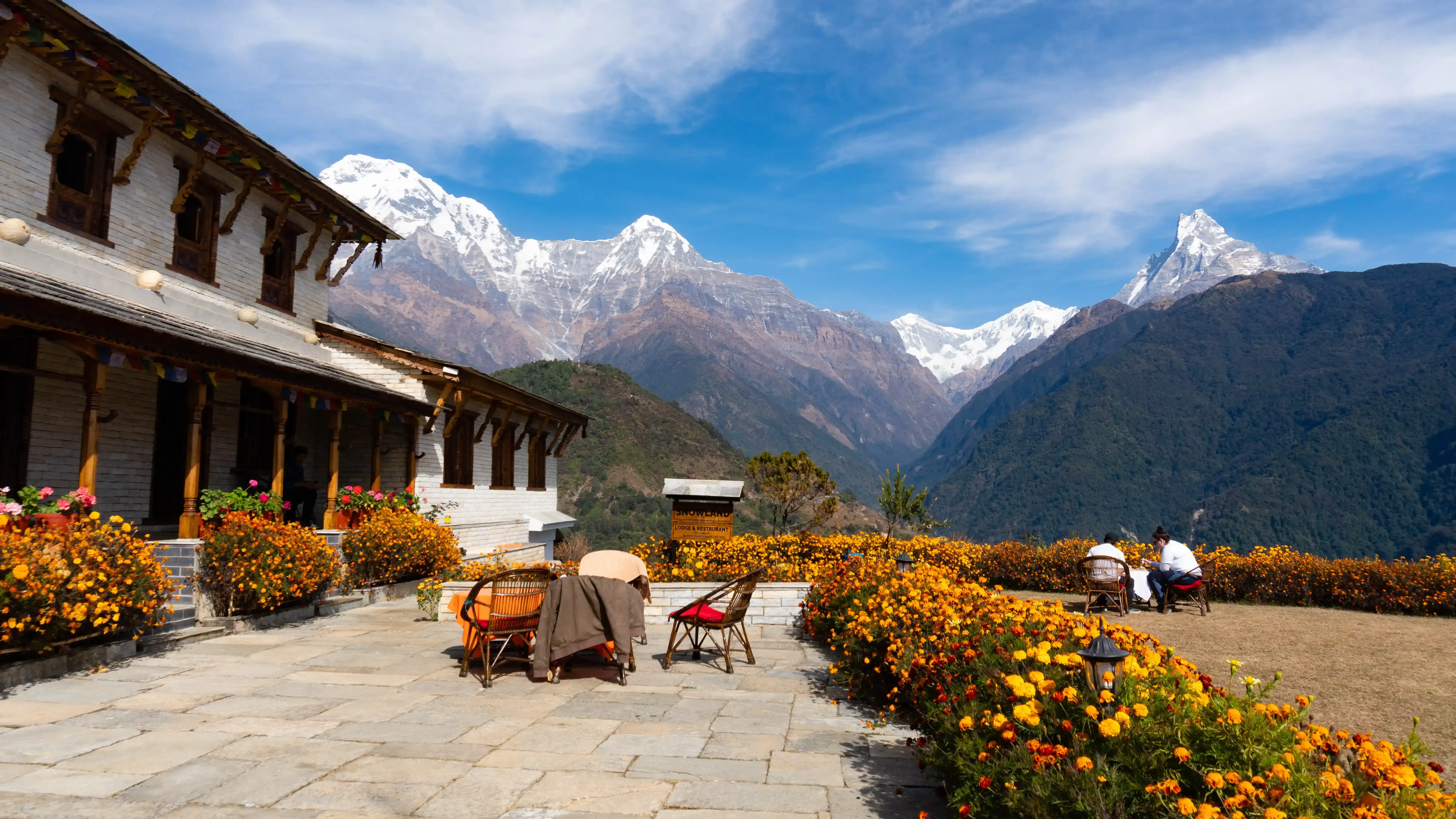
Annapurna Region · Easy grade
Kokhe Danda, Poonhill, and Ghandruk Trek
The route
What the walk is.
The Kokhe Danda, Poonhill, and Ghandruk Trek (7 Days) is a perfect introduction to the Annapurna region, combining peaceful off-the-beaten-path exploration with classic Himalayan highlights. This easy, beginner-friendly trek offers three spectacular viewpoints: quiet Kokhe Danda (3,310 m) with 360-degree mountain panoramas, the iconic Poonhill sunrise (3,210 m), and cultural immersion in traditional Gurung village Ghandruk.
It is ideal for first-time trekkers, families with active children (10+), photographers, and anyone seeking a balanced combination of solitude, scenery, and culture.
The journey begins with a scenic drive from Kathmandu to Pokhara, followed by trekking through rural villages including peaceful Lespar. Trails pass through rhododendron forests and quiet ridges before reaching Kokhe Danda, where breathtaking, uncrowded views of Annapurna South, Dhaulagiri, Machapuchare, Hiunchuli, and surrounding peaks await.
The trek continues to Ghorepani and Poonhill, offering the famous pre-dawn sunrise experience that illuminates the Himalayan panorama in golden light. From there, the route descends into Ghandruk, a beautiful Gurung village with traditional slate-roofed houses, terraced fields, and a cultural museum, providing insight into authentic local life.
Daily walking distances of 3–7 hours make this trek accessible for beginners, and well-maintained trails require no technical skills. Comfortable teahouse accommodations ensure rest along the way, while the complete package includes transport between Kathmandu and Pokhara.
Best undertaken in spring (March–May) for rhododendron blooms or autumn (September–November) for clear mountain views, this seven-day trek offers a harmonious mix of peaceful solitude, iconic Himalayan vistas, and cultural richness for an unforgettable Nepalese adventure.
General Information
Detail | Information |
Start Point | Lespar Village (via Kushma from Pokhara) |
End Point | Syauli (return to Pokhara) |
Daily Walking | 3-7 hours |
Permits Required | ACAP, TIMS |
Ideal For | Beginners, families, photographers, viewpoint seekers |
What makes this trek extraordinary:
Three Spectacular Viewpoints: Kokhe Danda (3,310m) offers peaceful panoramic vistas, Poonhill (3,210m) delivers famous sunrise spectacle, Ghandruk (2,012m) provides intimate close-up mountain perspectives—three completely different experiences showcasing Annapurna range diversity.
Best of Both Worlds: Experience genuine off-trail peace at Kokhe Danda (quiet trails, authentic interactions, solitude) then join the classic Poonhill experience understanding why it's famous, finally immerse in Ghandruk's cultural richness. You get adventure, iconic moments, and cultural depth all in one efficient 7-day package.
Beginner-Perfect Easy Rating: Maximum 3,310m altitude lower than most Nepal treks (Poonhill alone reaches 3,210m), gradual ascent, well-maintained trails, excellent teahouse network, manageable daily distances (3-7 hours), no technical skills required. This is ideal first Himalayan trek.
Cultural Authenticity: Trek through rarely visited Lespar village experiencing rural Nepali life unchanged by tourism, explore famous Ghandruk with Gurung Museum showcasing indigenous traditions, interact with welcoming locals throughout, sleep in family-run teahouses hearing stories and sharing meals.
Efficiency: Only 7 days total yet delivers comprehensive Annapurna experience including mountain viewpoints, cultural villages, rhododendron forests, and classic highlights without feeling rushed. Perfect for time-constrained travelers.
The complete package handles everything: Kathmandu-Pokhara scenic drives both directions, comfortable Pokhara hotel stays before and after trekking, experienced guide and porter service, cozy teahouse accommodation, all meals during trek, permits, and emergency support. Simply arrive in Nepal ready to explore.
Why choose Nepal Visuals for the Kokhe Danda, Poon Hill and Ghandruk Trek?
A route most trekkers never find on their own
Kokhe Danda is an off-the-beaten-path ridge trail that most visitors to the Annapurna foothills walk straight past. Our guides know it well and bring it confidently into a 7-day itinerary that feels genuinely different.
Three distinct highlights in one connected journey
Kokhe Danda's ridge views, Poon Hill's famous sunrise, and Ghandruk's Gurung village culture are woven into a single flowing route rather than treated as separate day trips bolted together.
Poon Hill sunrise timed and guided perfectly
The early morning push to 3,210 m is one of the most photographed moments in Nepal. Our guides handle the timing, the trail conditions, and the pre-dawn start so you arrive at the viewpoint exactly when the light does.
Seven days with every logistical detail pre-organised
Pokhara transfers, ACAP permits, and teahouse reservations across all seven nights are confirmed before you travel so not a single morning begins with uncertainty about what comes next.
Honest pricing with no additions along the trail
The full cost of your 7-day trek is quoted clearly before booking. Every included service from permits to accommodation is listed so your budget stays predictable from day one to day seven.
Ghandruk and Gurung culture woven into the route
Time in Ghandruk is built into the itinerary with purpose, giving you space to walk the stone lanes, visit the local museum, and connect with one of the Annapurna region's most welcoming communities.
Responsive support across every one of your seven days
Short treks still deserve attentive backup. Our team stays reachable via WhatsApp, Email, and Zoom throughout so any question or concern gets a quick answer before it affects your day on the trail.
Your departure is confirmed and it stays that way
Solo trekkers and small groups are given the same guarantee as larger bookings. Once your 7-day trek is confirmed, it runs as planned and your spot on the Kokhe Danda ridge is secured.
Day by day
Where you sleep, night by night.
Pokhara → Pokhara · highest point 3,210 m
- Day 012-star Hotel (Twin Sharing) · Breakfast, Lunch, Dinner822 m
Scenic drive along the Prithvi Highway. Arrive Pokhara late afternoon. Evening free at Phewa Lake. Trek briefing with your guide over dinner.
- Day 02Tea House (Twin Sharing) · Breakfast, Lunch, Dinner1,495 m
Drive from Pokhara to Nayapul (1 hour). Begin trekking through terraced farmland to Tikhedhunga. A gentle first day on the trail.
- Day 03Tea House (Twin Sharing) · Breakfast, Lunch, Dinner2,874 m
Climb the famous stone staircase through Ulleri into rhododendron and oak forest. Arrive at Ghorepani ridge. Early dinner preparing for the pre-dawn Poonhill sunrise tomorrow.
- Day 04Highest point · sleep 1,940 m · Tea House (Twin Sharing) · Breakfast, Lunch, Dinner3,210 m
Pre-dawn headtorch climb to Poon Hill for the most celebrated Himalayan sunrise over Dhaulagiri and the Annapurna Range. After breakfast, descend through Ghandruk and continue to Kimche in the Modi Khola valley.
- Day 05Tea House (Twin Sharing) · Breakfast, Lunch, Dinner2,012 m
A short day through forest and terraced fields. Arrive at Ghandruk, one of Nepal most beautiful and culturally significant Gurung villages. Afternoon exploring stone-paved streets, visiting the Gurung Museum, and watching sunset illuminate Annapurna South and Hiunchuli.
- Day 062-star Hotel (Twin Sharing) · Breakfast, Lunch, Dinner822 m
Trek down through terraced farmland to Nayapul. Meet your vehicle for the 1-hour drive back to Pokhara. Arrive mid-afternoon with time for a hot shower and lakeside celebration dinner.
- Day 07Hotel (Twin Sharing) · Breakfast, Dinner822 m
Scenic return drive to Kathmandu along the Prithvi Highway. Arrive evening. Transfer to hotel. Final dinner in Thamel celebrating your Kokhe Danda Poonhill Ghandruk adventure.
Fixed departures
12 group dates open.
144 places across them. Or start on any flexible date in the calendar below.
| Departure | Booked | Filling | Left | Status | Book |
|---|---|---|---|---|---|
| Sat, Mar 6, 2027 | 0/12 | 12 | Available | ||
| Sat, Mar 20, 2027 | 0/12 | 12 | Available | ||
| Sat, Apr 3, 2027 | 0/12 | 12 | Available | ||
| Sat, Apr 17, 2027 | 0/12 | 12 | Available | ||
| Sat, May 1, 2027 | 0/12 | 12 | Available | ||
| Sat, May 15, 2027 | 0/12 | 12 | Available | ||
| Sat, Sep 4, 2027 | 0/12 | 12 | Available | ||
| Sat, Sep 18, 2027 | 0/12 | 12 | Available | ||
| Sat, Oct 2, 2027 | 0/12 | 12 | Available | ||
| Sat, Oct 16, 2027 | 0/12 | 12 | Available | ||
| Sat, Nov 6, 2027 | 0/12 | 12 | Available | ||
| Sat, Nov 20, 2027 | 0/12 | 12 | Available |
Prices are per person, twin share, in USD. Book with a 20 % deposit — the balance is due 7 days before departure. Scheduled departures show places left; flexible departures can be booked on any listed start date. Booking terms
| Su | Mo | Tu | We | Th | Fr | Sa |
|---|---|---|---|---|---|---|
| 1 | 2 | 3 | ||||
| 4 | 5 | 6 | 7 | 8 | 9 | 10 |
| 11 | 12 | 13 | 14 | 15 | 16 | 17 |
| 18 | 19 | 20 | 21 | 22 | 24 | |
| 25 | 26 | 28 | 29 | 30 |
- Selected trip dates
- Available
- Filling fast
- Almost sold out
- Sold out
Fri, Oct 23Thu, Oct 29, 2026
7 days · flexible departure
- StartsFri, Oct 23, 2026 · Pokhara
- EndsThu, Oct 29, 2026 · Pokhara
USD $550 per person, twin share · Deposit today USD $110 (20 %)
On the trail
Photographs from the route.
The whole number
What the price covers.
12 things are in the price and 12 more are named as excluded.
In the price
Professional Support & Safety
- ✓Expert Leadership · A government-certified, highly experienced, English-speaking trekking guide (helpful, knowledgeable, and friendly).
- ✓Group Support · An assistant guide provided for larger groups (8 or more people).
- ✓Porter Service · Professional porters to carry your luggage (1 porter per 2 trekkers, with a 10 kg limit per person).
- ✓Staff Welfare · All wages, meals, lodging, transportation, and insurance for your guide and porter team.
- ✓Emergency Coordination · Full assistance in arranging helicopter services for emergencies (costs covered by your insurance).
Permits & Logistics
- ✓Official Documentation · All necessary conservation fees, permit fees, and government taxes.
- ✓Government Liaison · Complete coordination with relevant government offices for all trekking formalities.
Accommodation & Meals
- ✓Trek Nutrition · Full board standard meals (breakfast, lunch, and dinner) during the trek.
- ✓Pokhara Stay · 2-star hotel accommodation in Pokhara on a twin-sharing basis, including breakfast.
- ✓Trail Lodging · The best available teahouse or lodge accommodation throughout the trek (twin-sharing).
Gear & Recognition
- ✓Trekking Essentials · Complimentary use of duffle bags and trekking poles for those who do not have their own.
- ✓Official Achievement · A formal Trek Completion Certificate issued by Nepal Visuals.
Not included
Travel & Entry Requirements
- ×International Travel · International flight fares and airport departure taxes.
- ×Nepal Entry Visa · Fees for your visa ($50 for 30 days or $125 for 90 days), obtainable upon arrival at the airport.
- ×Baggage Overages · Any extra baggage charges exceeding the standard weight limits.
- ×Miscellaneous · Any expenses or services not explicitly listed in the inclusions.
Personal Protection & Equipment
- ×Mandatory Insurance · Comprehensive Travel and Medical Insurance (Compulsory).
- ×Rescue Costs · Actual charges for emergency rescue or evacuation by helicopter (to be claimed via your insurance).
- ×Individual Gear · All personal trekking gear, clothing, and mountain equipment.
Trail & City Expenses
- ×Pokhara Dining · Main meals (lunch and dinner) while staying in Pokhara.
- ×Teahouse Amenities · Out-of-pocket costs for hot showers, internet access, battery/device recharging, and extra hot drinks or hot water.
- ×Beverages · All alcoholic and non-alcoholic drinks (sodas, bottled water, etc.).
- ×Extended Stays · Any additional nights of accommodation in Pokhara due to early arrivals, late departures, or early returns from the trail.
Gratuity & Professional Appreciation
- ×Staff Tips · Gratuity for the guides and porters as a gesture of thanks for their hard work and service.
Easy grade
Is this trek right for you?
You can do this if…
- ✓Walk 3–5 hours a day at an easy pace
- ✓Carry a light daypack (around 5 kg)
- ✓Well-formed trails, no exposed or technical ground
Recommended preparation
- ✓Regular walking for 4–6 weeks beforehand
- ✓A few longer weekend walks
- ✓Break in your boots
Experience & support
- ✓No trekking experience needed
- ✓Guided throughout — a licensed guide is required on Nepal treks
- ✓Unsure about age, health or fitness? Ask us — we tailor the pace
About three months out? Follow our free 12-week trek fitness plan.
Good to know
Additional information.
The Innovative West-to-East Approach
Unlike standard Poonhill treks starting from Nayapul (east) and joining crowds immediately, this itinerary approaches from west via Kushma and peaceful Lespar village, ascending quiet Kokhe Danda ridge before reaching famous Ghorepani-Poonhill area. This reverse direction provides:
Solitude First: Days 2-3 on peaceful trails seeing very few trekkers, allowing genuine mountain immersion before tourist crowds.
Gradual Buildup: Experience quiet viewpoints first (Kokhe Danda), then iconic viewpoint (Poonhill), then cultural village (Ghandruk)—each day builds on previous creating satisfying progression.
Unique Perspectives: Approach Annapurna range from different angles: Kokhe Danda's western ridge view, Poonhill's central panorama, Ghandruk's southern intimate perspective—three completely different photo opportunities.
Crowd Management: By reaching Poonhill on Day 4 (after experiencing Kokhe Danda solitude), the crowds feel manageable and you appreciate why this viewpoint earned fame rather than feeling overwhelmed immediately.
Kokhe Danda: The Hidden Gem (3,310m)
Day 3's highlight—reaching Kokhe Danda ridge—provides this trek's unique character. This high ridge at 3,310m offers spectacular 360-degree panoramas:
Mountains Visible: Dhaulagiri massif (8,167m, seventh highest) dominates western horizon, Annapurna South (7,219m) rises northeast, Annapurna I (8,091m) visible north, Machapuchare/Fishtail (6,993m) distinctive profile, Hiunchuli (6,441m), Nilgiri range, and countless 6,000m peaks surrounding.
Why Special: Unlike valley viewpoints looking up at mountains, ridge positioning at 3,310m provides eye-level perspectives creating intimate scale. The relative obscurity (few trekkers visit) means pristine experience without crowds, pristine nature, and authentic interactions with rare fellow trekkers and local teahouse families.
Photography Paradise: 360-degree access allows sunrise/sunset from same location, foreground interest with prayer flags and alpine vegetation, dramatic ridge positioning creates depth in photos, and peaceful solitude enables patience for perfect shots.
Poonhill: The Classic Sunrise (3,210m)
Day 4 begins with pre-dawn climb from Ghorepani to famous Poonhill viewpoint (3,210m) for spectacular sunrise over Annapurna and Dhaulagiri ranges. While crowded (200-500 people at peak season sunrise), the experience justifies the fame:
The Sunrise Show: First light progressively illuminates peaks from gold to pink to brilliant white, Dhaulagiri's massive bulk catching first rays, Annapurna range transforming as sun rises, Machapuchare's distinctive summit glowing.
Shared Experience: Unlike Kokhe Danda's solitude, Poonhill's crowds create communal atmosphere—strangers sharing reverent silence watching nature's daily miracle, multilingual "wows" echoing as light transforms mountains, photography enthusiasts jostling for positions.
Why Include Both: Having experienced Kokhe Danda's peaceful panoramas, you appreciate Poonhill for what it offers (iconic classic viewpoint, communal experience, photographic documentation) without feeling it's your only mountain encounter. Best of both worlds.
Ghandruk: Cultural Jewel (2,012m)
Day 5 descends to Ghandruk (2,012m), arguably the Annapurna region's most beautiful and culturally significant Gurung village:
Village Character: Large settlement (population ~5,000) maintaining traditional architecture despite tourism, stone-paved streets wind between slate-roofed houses centuries old, prayer wheels and stupas throughout, terraced fields showcase agricultural heritage, dramatic Annapurna South and Machapuchare backdrop.
Gurung Museum: Small but fascinating displays of traditional dress, weapons, household items, musical instruments, Gurkha military history (many Ghandruk men serve in British or Indian Gurkha regiments), marriage customs, festivals, daily life providing deep cultural insights.
Mountain Views: Annapurna South and Hiunchuli loom spectacularly close creating dramatic village backdrop. Sunrise/sunset from Ghandruk rival Poonhill for beauty while offering intimate scale rather than distant panorama.
Rhododendron Forest Walks
The trek passes through extensive rhododendron forests blooming spectacularly spring (March-May). Nepal's national flower grows as massive trees creating colorful canopies filtering sunlight. Walking through blooming forest creates ethereal atmosphere trekkers remember as much as viewpoints themselves.
Who Should Choose This Trek
Ideal for:
First-time Himalayan trekkers wanting manageable challenge
Families with active children (ages 10+) and seniors in good health
Photographers seeking diverse viewpoint opportunities
Trekkers valuing both solitude and classic highlights
Time-constrained travelers (7 days total)
Those seeking balance between adventure and comfort
Culture enthusiasts wanting authentic village experiences
Anyone wanting "best of Annapurna" efficient sampler
Not ideal for:
Experienced trekkers seeking extreme challenge (too easy)
Those specifically wanting high altitude (max 3,310m)
Trekkers seeking complete wilderness (passes through villages)
Anyone uncomfortable with Poonhill crowds (Day 4)
Accommodation and Meals
Pokhara (Days 1, 6): 2-star hotel, comfortable, hot showers, WiFi, lakeside location
Lespar Village (Day 2): Simple village teahouses, basic but welcoming, authentic rural experience
Kokhe Danda (Day 3): Basic ridge teahouses at 3,310m, simple facilities, spectacular views compensate
Ghorepani (Day 4): Well-established lodges (famous Poonhill route), better facilities, busy atmosphere
Ghandruk (Day 5): Excellent village teahouses, traditional Gurung hospitality, cultural atmosphere
Meals: Dal bhat (unlimited refills), fried rice, chowmein, momos, noodle soups, eggs, pancakes, Tibetan bread. Simple but hearty, vegetarian always available.
Locations Covered
Pokhara (Days 1, 6-7): Lakeside city, trek start/end, comfortable hotels
Kushma: Scenic town, drive stop, gateway to Lespar
Lespar Village (Day 2): Peaceful starting village, authentic rural Nepal
Kokhe Danda (3,310m, Day 3): High ridge viewpoint, 360-degree panoramas, quiet solitude
Ghorepani (2,874m, Day 4): Famous Poonhill base village, busy atmosphere
Poonhill (3,210m, Day 4): Iconic sunrise viewpoint
Tadapani (2,630m, Day 5): Ridge village, transition point
Ghandruk (2,012m, Day 5): Beautiful Gurung cultural village
Syauli (Day 6): Trek end, road access to Pokhara
Trek Difficulty
Rating: Easy
Why Easy:
Low Altitude: Maximum 3,310m at Kokhe Danda (lower than many Nepal treks), minimal altitude sickness risk
Manageable Daily Distances: 3-7 hours walking at comfortable pace, no extreme endurance days
Well-Maintained Trails: Established paths throughout, easy navigation, good teahouse support
Gradual Ascent: Steady climb from Lespar to Kokhe Danda allows natural acclimatization
No Technical Skills: Simple hiking, no climbing/scrambling required
Physical Requirements: Basic fitness (walk 5-7 hours daily), suitable for active children 10+, seniors in good health, first-time trekkers
Training: 4 weeks cardio training beneficial but not essential for fit individuals
Success Rate: 99%+ (virtually everyone completes successfully)
Before you book
Questions we get most.
The Kokhe Danda Difference
What is Kokhe Danda and how is it different from Poon Hill?
Kokhe Danda (3,300m) is a "hidden gem" viewpoint near the famous Poon Hill. Unlike the crowded Poon Hill, Kokhe Danda offers a peaceful, solitary experience with nearly identical views of Dhaulagiri and the Annapurna massif.
Does this 7-day trek include the famous Ghandruk village?
Yes, this itinerary combines the tranquility of Kokhe Danda with the rich culture of Ghandruk. This provides a perfect balance of quiet ridge walking and the traditional hospitality of a large Gurung settlement.
Is this trek less crowded than the standard Poon Hill route?
Significantly so. While Poon Hill can see hundreds of people at sunrise, Kokhe Danda is often visited by only a handful of trekkers, making it ideal for those seeking a quiet mountain connection.
Pace & Fitness
Is this 7-day trek suitable for families and children?
Absolutely. The maximum altitude is only 3,300m, and the daily walking hours are a moderate 4–6 hours. It is one of the best "entry-level" treks in Nepal for families with kids or seniors.
How many hours will I walk on the longest day?
The longest day is usually the trek from the Kokhe ridge down to Ghandruk, which takes about 6 to 7 hours. Most of this is a scenic descent through lush rhododendron and oak forests.
What is the trail condition like on the Kokhe ridge?
The trail is "natural" and less commercialized than the stone steps of the main ABC route. You will walk on soft forest floors and grassy ridges, which is much gentler on the knees.
Culture & Comfort
What is the homestay experience like in the lower villages?
In villages like Haljure or Banau, you may stay in local homestays. This offers a rare chance to eat organic meals with a Nepali family and learn about their agricultural lifestyle firsthand.
Can I see the "Fishtail" mountain from Kokhe Danda?
Yes, the view of Machhapuchhre (Fishtail) from this ridge is spectacular. Because you are on a southern ridge, the mountain looks incredibly sharp and dominant against the skyline.
Is there electricity and Wi-Fi available at Kokhe Danda?
There is a newly opened community lodge at the summit with basic electricity. Wi-Fi is spotty due to the remote ridge location, so we recommend enjoying a "digital detox" for those 24 hours.
Preparation & Gear
What is the best month for the Kokhe Danda trek?
Spring (March-May) is arguably the best time because the entire ridge turns into a garden of blooming red rhododendrons, creating a stunning contrast with the white snow peaks.
Do I need a special permit for the Kokhe Danda area?
As of 2026, you primarily need the standard ACAP permit and TIMS card. Because it is part of a community trekking project, your fees go directly toward supporting local schools and mountain infrastructure.
What kind of clothing should I pack for this 7-day loop?
Since you stay below 3,500m, you don't need heavy expedition gear. A good down jacket for the evenings and breathable layers for the sunny daytime walks are usually sufficient.
The Ridge Experience & Scenery
How does the sunrise at Kokhe Danda compare to the Poon Hill experience?
While both viewpoints offer spectacular 360-degree panoramas, the sunrise at Kokhe Danda (3,300m) is much more intimate and silent. You will see the first light hit Dhaulagiri and Annapurna South without the noise of large crowds, allowing for a profound, meditative connection with the Himalayas. Many trekkers find the perspective of Machhapuchhre (Fishtail) from this specific southern ridge to be the sharpest and most dramatic in the entire Annapurna region.
Is the forest scenery different on the Kokhe Danda trail?
The trail along the Kokhe ridge passes through some of the most pristine and "wild" rhododendron and oak forests in Nepal. Because this is a newer community route, the undergrowth is lush and the trees are draped in moss, creating a "fairytale" atmosphere that feels much more ancient than the heavily trafficked main trails. In the spring, the forest floor is a carpet of fallen petals, providing a colorful and soft walking surface that is gentle on the joints.
Community & Sustainability
What makes the "Community Lodge" at Kokhe Danda unique?
The accommodation at the ridge is part of a local development project where the profits stay directly within the nearby villages to fund schools and health clinics. Unlike the commercial teahouses on the main ABC route, these lodges are often run by the community members themselves, offering a more authentic and humble hospitality experience. You will enjoy home-cooked meals prepared with ingredients sourced from the organic farms you passed during your ascent.
Can I participate in any local activities in Ghandruk or Banau?
In the larger settlement of Ghandruk, you can visit the Gurung Cultural Museum to learn about the history of the "Gurkha" soldiers and even try on traditional ethnic costumes for a small fee. In the smaller villages like Banau, your guide can often arrange for you to watch traditional weaving or agricultural practices. This 7-day loop is designed for travelers who want to engage with the people as much as the mountains.
Difficulty & Safety
What is the "Elevation Profile" like for this 7-day journey?
The trek is categorized as "Moderate" because it stays well below the extreme altitude zone, peaking at 3,300m. You will experience a steady climb for the first three days followed by a scenic ridge walk and a long, stepped descent into Ghandruk. This "staircase" finish is the most physically demanding part for the knees, so we recommend using trekking poles to balance your weight during the final two days.
Are there any specific safety concerns for the Kokhe ridge?
The ridge can be narrow in certain sections, requiring a steady foot, especially if there has been recent rain or morning frost. While the trail is safe and well-maintained by the local community, it is less "manicured" than the stone-paved paths of Poon Hill. Your guide will lead the way to ensure you stay on the correct path through the forest, as some of the offshoot trails used by local herders can be confusing for solo trekkers.
Logistics & Connectivity
How do we travel from Pokhara to the start of the Kokhe Danda trek?
The journey typically begins with a 2-to-3-hour private jeep ride from Pokhara to the trailhead at either Hile or a nearby village. This drive takes you through beautiful river valleys and terraced hillsides, offering a glimpse of rural Nepali life before you even step onto the trail. In 2026, the road conditions have improved, making the transition from the city to the start of your 7-day adventure much smoother and faster.
Should I bring a high-capacity power bank for this route?
Because the lodges on the Kokhe ridge rely on solar power, charging facilities are more limited and slower than in the larger hubs like Ghandruk. We strongly suggest bringing a 10,000mAh or 20,000mAh power bank to ensure your camera and phone remain functional for the entire week. Keeping your devices inside your sleeping bag at night is also a smart trick to prevent the cool ridge air from draining your battery life.
Weather & Timing
What should I expect from the weather in the Ghandruk region?
Mornings are almost always crisp and clear, providing perfect visibility for the massive peaks of the Annapurna massif. By early afternoon, clouds often drift up from the valleys, occasionally resulting in short, refreshing rain showers that keep the forests green and vibrant. Because this 7-day trek stays at lower altitudes, the temperatures are quite pleasant, rarely dropping more than a few degrees below freezing even at the highest camp.
Is it worth doing the Kokhe Danda trek during the winter months?
December and January offer the clearest skies of the year, with virtually no haze to block the mountain views. While it can be quite cold on the ridge at night, the daytime walking temperatures are perfect for hiking. In 2026, many trekkers choose this "off-season" window to enjoy the Kokhe Danda viewpoint in total solitude, as the snow on the ridge is rarely deep enough to block the trail.
Still have a question? WhatsApp us →