 Nepal Visuals
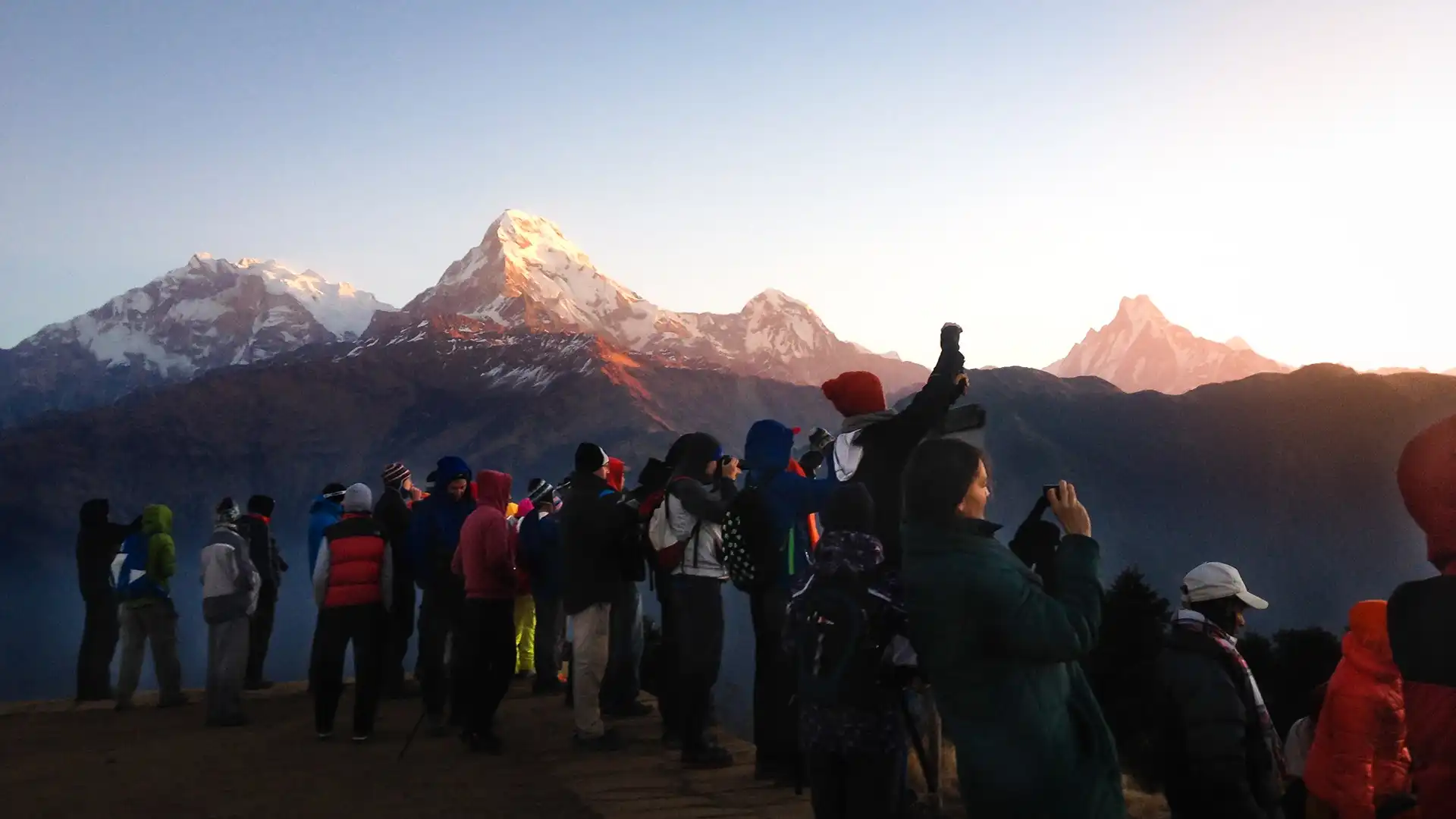
Annapurna Region · Moderate grade
Khopra Danda Trek
The route
What the walk is.
The Khopra Danda Trek (6 Days) is one of the Annapurna region’s best hidden gems, offering breathtaking Himalayan views and authentic cultural experiences far from the crowds of more popular trekking routes. This moderate adventure is ideal for trekkers seeking a quieter alternative while still enjoying spectacular mountain panoramas and rewarding ridge walks.
The trek begins from Syauli Bazar and passes through traditional Gurung and Magar villages such as Ghandruk, where trekkers can experience local culture and hospitality. The trail continues through terraced farmlands and beautiful rhododendron forests, which are especially vibrant during the spring season.
The main highlight is reaching Khopra Danda (3,660 m), a scenic ridge offering incredible 360 degree views of Annapurna South, Dhaulagiri, Nilgiri, Hiunchuli, and Machapuchare. The peaceful setting and fewer trekkers make this viewpoint particularly special for those seeking solitude in the Himalayas.
The itinerary also includes the classic Poon Hill sunrise experience, adding another famous Himalayan viewpoint to the journey. This combination allows trekkers to enjoy both a well-known highlight and a quieter off trail destination in a single trek.
Accommodation in community managed lodges provides a meaningful cultural experience while supporting local development projects. For those wanting an extra challenge, an optional hike to the sacred Khayer Lake offers a unique spiritual and scenic extension to the trek.
With daily walking times of about 5 to 7 hours and no technical sections, this trek is suitable for beginners with good fitness. Overall, the Khopra Danda Trek is perfect for travelers looking for a short, peaceful, and culturally rich Himalayan experience with outstanding mountain views.
General Information
Detail | Information |
Start Point | Syauli Bazar |
End Point | Birethanti |
Trek Distance | 40-50 km / 25-31 miles |
Daily Walking | 4-7 hours |
Permits Required | ACAP, TIMS |
Why Khopra Danda Stands Apart
While thousands flock daily to Annapurna Base Camp and Poonhill, Khopra Ridge remains refreshingly uncrowded despite offering equally spectacular scenery. Why? The trail opened relatively recently (2012), requires slightly more effort than Poonhill alone, and hasn't achieved the fame of established routes. For discerning trekkers, this obscurity is precisely the appeal.
What You Get:
Spectacular mountain panoramas without crowds
Authentic village experiences without tourist saturation
Community-managed lodges supporting local development
Peaceful trails through pristine rhododendron forests
Two incredible viewpoints (Khopra Ridge + Poonhill)
Achievable challenge in just 6 days total
What Makes It Special:
Quieter Than Poonhill: While Ghorepani village hosts hundreds of trekkers nightly before the Poonhill sunrise stampede, Khopra Ridge sees perhaps 20-30 visitors daily. You'll experience genuine mountain solitude.
Community Tourism Model: The community lodge at Khopra Ridge represents sustainable tourism success. Built and operated by local villagers, profits fund schools, health posts, and community projects. Your trekking directly improves village life.
Two Viewpoints: Why choose between Khopra Ridge and Poonhill when this itinerary delivers both? Experience the peaceful sunrise at Khopra Ridge (Day 3-4), then catch the famous Poonhill panorama (Day 6) without the overnight crowds.
Cultural Authenticity: Villages like Ghandruk, Bayeli Kharka, and Swanta maintain traditional Gurung and Magar cultures. You'll encounter locals pursuing centuries-old livelihoods rather than merely servicing tourists.
Why choose Nepal Visuals for the Khopra Danda Trek?
One of the Annapurna region's best kept secrets
Khopra Danda sits well off the main trekking corridors, offering a ridgeline experience that feels genuinely removed from the crowds. Our guides know every section of this trail and navigate it with quiet confidence.
Annapurna South closer than you expect
The Khopra ridge delivers unusually intimate views of Annapurna South and Hiunchuli. Our itinerary positions overnight stays to make the most of clear morning light across the face of these peaks.
Six well-structured days with nothing left to chance
ACAP permits, Pokhara transfers, and teahouse reservations along the Khopra route are all confirmed ahead of your arrival so each of your six days begins with a clear plan and zero guesswork.
Completely transparent pricing from the start
Every cost involved in your 6-day trek is laid out before you book. No permit charges, accommodation fees, or guide costs surface unexpectedly once you are on the trail.
Khaire Lake included as more than a footnote
The sacred glacial Khaire Lake near the ridge is one of the trail's most atmospheric moments. We build in enough time at the lake for it to feel like a destination rather than a quick detour.
Gurung and Magar community life along the way
Villages like Swanta and Bayeli on the Khopra route see very few outside visitors. Our guides create space to engage with local families and traditions that most trekkers in the Annapurna region never encounter.
Prompt support when six days leaves little room for delay
On a shorter trek every day has weight. Our team stays reachable via WhatsApp, Email, and Zoom throughout so any question gets resolved quickly and nothing small disrupts the rhythm of the route.
Solo travellers trek with the same certainty as groups
Every confirmed departure runs as planned regardless of how many trekkers are on the roster. Your six days on the Khopra ridge are fully protected from the moment your booking is made.
Day by day
Where you sleep, night by night.
Pokhara → Swanta · highest point 4,700 m
- Day 01Hotel (Twin Sharing) · Dinner822 m
Fly or drive to Pokhara. Transfer to your lakeside hotel. Evening free to explore Phewa Lake and the vibrant lakeside restaurants. Trek briefing with your guide.
- Day 02Tea House (Twin Sharing) · Breakfast, Lunch, Dinner2,050 m
Drive from Pokhara to Nayapul (1 hour), then begin trekking up through Birethanti and the famous stone staircase past terraced farmlands to Ulleri, a large Magar village. The steady climb is a good introduction to the effort level of the trek ahead.
- Day 03Tea House (Twin Sharing) · Breakfast, Lunch, Dinner2,874 m
Continue ascending through beautiful rhododendron and oak forests, blooming spectacularly in spring. Reach Ghorepani, a busy ridge-top village. Early dinner and early bed if planning the pre-dawn Poonhill sunrise tomorrow.
- Day 04Village Lodge (Twin Sharing) · Breakfast, Lunch, Dinner3,660 m
Pre-dawn climb to Poon Hill for the famous sunrise panorama over Dhaulagiri and the Annapurna Range. Return for breakfast, then trek toward Khopra Ridge via forest and high alpine pastures. Arrive at Khopra Danda, a remote ridge-top with extraordinary mountain views and very few trekkers.
- Day 05Highest point · Village Lodge (Twin Sharing) · Breakfast, Lunch, Dinner4,700 m
Altitude day and spiritual highlight. Climb to the sacred Khayer Lake, a high glacial tarn considered holy by both Hindus and Buddhists. The climb takes 3-4 hours with breathtaking views of Dhaulagiri, Annapurna South, and Nilgiri. The lake sits in a dramatic cirque. Return to Khopra for overnight.
- Day 06Village Lodge (Twin Sharing) · Breakfast, Lunch, Dinner2,250 m
Early morning sunrise on Khopra Ridge watching first light illuminate Dhaulagiri and the Annapurna Range. Descend through alpine meadows and re-enter rhododendron forest, arriving at Swanta, a picturesque traditional village surrounded by terraced fields and authentic rural Nepali life.
Fixed departures
12 group dates open.
144 places across them. Or start on any flexible date in the calendar below.
| Departure | Booked | Filling | Left | Status | Book |
|---|---|---|---|---|---|
| Sat, Mar 6, 2027 | 0/12 | 12 | Available | ||
| Sat, Mar 20, 2027 | 0/12 | 12 | Available | ||
| Sat, Apr 3, 2027 | 0/12 | 12 | Available | ||
| Sat, Apr 17, 2027 | 0/12 | 12 | Available | ||
| Sat, May 1, 2027 | 0/12 | 12 | Available | ||
| Sat, May 15, 2027 | 0/12 | 12 | Available | ||
| Sat, Sep 4, 2027 | 0/12 | 12 | Available | ||
| Sat, Sep 18, 2027 | 0/12 | 12 | Available | ||
| Sat, Oct 2, 2027 | 0/12 | 12 | Available | ||
| Sat, Oct 16, 2027 | 0/12 | 12 | Available | ||
| Sat, Nov 6, 2027 | 0/12 | 12 | Available | ||
| Sat, Nov 20, 2027 | 0/12 | 12 | Available |
Prices are per person, twin share, in USD. Book with a 20 % deposit — the balance is due 7 days before departure. Scheduled departures show places left; flexible departures can be booked on any listed start date. Booking terms
| Su | Mo | Tu | We | Th | Fr | Sa |
|---|---|---|---|---|---|---|
| 1 | 2 | 3 | ||||
| 4 | 5 | 6 | 7 | 8 | 9 | 10 |
| 11 | 12 | 13 | 14 | 15 | 16 | 17 |
| 18 | 19 | 20 | 21 | 22 | 24 | |
| 25 | 26 | 28 | 29 | 30 |
- Selected trip dates
- Available
- Filling fast
- Almost sold out
- Sold out
Fri, Oct 23Wed, Oct 28, 2026
6 days · flexible departure
- StartsFri, Oct 23, 2026 · Pokhara
- EndsWed, Oct 28, 2026 · Swanta
USD $460 per person, twin share · Deposit today USD $92 (20 %)
On the trail
Photographs from the route.
The whole number
What the price covers.
12 things are in the price and 10 more are named as excluded.
In the price
Transportation & Logistics
- ✓Private Jeep Transport · All ground transfers via private jeep (Pokhara to Syauli Bazar and Birethanti back to Pokhara).
- ✓Official Permits · All required trekking permits, including the Annapurna Conservation Area Project (ACAP) fee and TIMS card.
- ✓Government Coordination · All applicable government fees and coordination for a seamless trekking experience.
Professional Support & Safety
- ✓Expert Leadership · A government-certified, English-speaking guide trained in first aid.
- ✓Porter Service · Professional porter support (1 porter per 2 trekkers, carrying a total of 20 kg—10 kg per person).
- ✓Staff Welfare · Full coverage of wages, meals, insurance, and lodging for your entire guide and porter team.
- ✓Health Monitoring · Daily vitals checks using an oximeter (altitude monitoring) and access to a comprehensive first aid kit.
- ✓Emergency Support · Full coordination for emergency evacuations if required (costs covered by your insurance).
Accommodation & Meals
- ✓Trek Nutrition · Full board meals (Breakfast, Lunch, and Dinner) throughout the 5 active trekking days.
- ✓Trail Lodging · Best available teahouse or community lodge accommodation during the trek (twin-sharing).
Gear & Recognition
- ✓Trekking Essentials · Complimentary use of durable duffel bags and trekking poles for those who do not have their own.
- ✓Official Achievement · A formal Trek Completion Certificate issued by Nepal Visuals.
Not included
Flights, Visas, and Logistics
- ×International Travel · International airfare and Nepal Entry Visa fees.
- ×Pokhara Stays · All hotel accommodation in Pokhara before and after the trekking dates.
- ×City Dining · Lunch and dinner while staying in Pokhara.
Personal Protection & Equipment
- ×Mandatory Insurance · Comprehensive Travel and Medical Insurance (Compulsory), which must cover trekking above 4,000m and helicopter evacuation.
- ×Individual Gear · All personal trekking clothing, hiking boots, and sleeping bags.
- ×Personal Items · Individual toiletries and personal medications.
Daily Trail Expenses
- ×Teahouse Amenities · Out-of-pocket costs for hot showers (NPR 200–400) and battery/device recharging (NPR 100–300).
- ×Beverages & Snacks · All alcoholic beverages, extra snacks, and bottled drinks.
- ×General Extras · Any personal expenses not explicitly listed in the inclusions.
Professional Tips and Gratuity
- ×Staff Appreciation · Customary tips for your guide and porter as a gesture of thanks for their service and support.
Moderate grade
Is this trek right for you?
You can do this if…
- ✓Walk 5–6 hours a day, some of it steep
- ✓Carry a 5–8 kg daypack
- ✓Comfortable with several days in a row on foot
Recommended preparation
- ✓2–3 months of regular cardio (walking, running, cycling)
- ✓Weekend hikes with a loaded pack
- ✓Read the altitude notes below — you will sleep above 3,000 m
Experience & support
- ✓A good first Himalayan trek
- ✓Guided throughout — a licensed guide is required on Nepal treks
- ✓Unsure about age, health or fitness? Ask us — we tailor the pace
About three months out? Follow our free 12-week trek fitness plan.
Good to know
Additional information.
The Khopra Ridge Experience
Khopra Ridge sits at 3,660 meters, perched dramatically on a high ridgeline offering 360-degree mountain panoramas. Unlike valley-based treks, the ridge positioning creates intimate proximity to surrounding peaks:
Mountain Views:
Dhaulagiri massif (7,000m+ peaks) dominates the western horizon
Annapurna South (7,219m) rises spectacularly close to the northeast
Nilgiri (7,061m) creates dramatic vertical relief
Hiunchuli (6,441m) and Machhapu chhre/Fishtail (6,993m) frame eastern views
Countless 6,000m peaks fill every vista
Sunrise/Sunset Magic: The ridge's east-west orientation means spectacular both sunrise (eastern Annapurnas) and sunset (western Dhaulagiri) viewing. Plan to arrive early afternoon (Day 3), enjoy sunset, wake for sunrise (Day 4), then trek onward. The golden light on snow-clad peaks creates photographer's paradise.
Community Lodge Atmosphere: Unlike commercial teahouses, the community lodge emphasizes simple comfort and genuine hospitality. Dining rooms feature traditional decoration, meals showcase local cuisine, and evening conversations with lodge managers reveal village life insights impossible at tourist-saturated lodges.
Ghandruk: Cultural Jewel
Your trek begins in Ghandruk, one of Nepal's most beautiful and culturally significant Gurung villages. Perched at 2,000m with stunning Annapurna South and Hiunchuli views, Ghandruk features stone-paved streets, traditional slate-roofed houses, and the fascinating Gurung Museum showcasing indigenous culture.
The Gurungs, one of Nepal's major ethnic groups, have deep historical connections to Gurkha military service. Many Ghandruk families have members serving in British or Indian Gurkha regiments, bringing economic stability that's evident in well-maintained houses and community facilities. This prosperity hasn't diminished cultural preservation; traditional dress, language, and customs remain vibrant.
Rhododendron Forest Glory
The trail between Ghandruk and Khopra Ridge passes through extensive rhododendron forests that explode into spectacular bloom during spring (March-May). Nepal's national flower, rhododendrons grow as massive trees at these elevations, creating colorful canopies of red, pink, white, and purple blossoms.
Spring trekkers walk through natural cathedrals of flowering trees, sunlight filtering through petals creating ethereal atmosphere. The forests also shelter diverse wildlife: colorful Himalayan monals (national bird), blood pheasants, langur monkeys, and if very fortunate, red pandas (though sightings rare).
Optional Khayer Lake Extension
For trekkers with an extra day and good fitness, the side trip from Khopra Ridge to Khayer Lake (4,660m) adds remarkable dimension. This demanding day hike (6-8 hours round trip, 1,000m elevation gain) reaches a sacred glacial lake nestled beneath towering peaks.
Religious Significance: Khayer Lake holds spiritual importance for both Buddhists and Hindus. During the August full moon (Janai Purnima festival), pilgrims trek here for ritual bathing believed to wash away sins. Prayer flags and offerings surround the lake year-round.
Scenic Beauty: The turquoise glacial waters surrounded by snow-capped peaks create stunning reflections. The trail traverses high alpine terrain with expansive mountain panoramas.
Challenge Note: This is a demanding hike from already high Khopra Ridge. Altitude effects possible. Only attempt if well-acclimatized and weather favorable. Not included in standard 6-day itinerary but can be added as Day 4.
Poonhill: The Classic Finale
Your trek concludes with the famous Poonhill (3,210m) sunrise, one of Nepal's most celebrated viewpoints. While Poonhill is crowded (hundreds gather for sunrise), experiencing it after the peaceful Khopra days provides perspective on what mass tourism does to mountains.
The view justifies the crowds: as sunrise illuminates the Annapurna and Dhaulagiri ranges, the golden light on snow-capped peaks creates magical moments. Dhaulagiri, Annapurna South, Annapurna I, Machhapuchhre, Manaslu, and countless others glow progressively as sunlight descends their faces.
The clever itinerary timing means you stay in Ghorepani (overnight), wake early for Poonhill sunrise, then immediately descend to Birethanti and drive to Pokhara. You experience Poonhill's spectacle without enduring Ghorepani's overnight crowds.
Who Should Trek Khopra Danda
Ideal for:
Trekkers seeking off-the-beaten-path Annapurna experiences
Beginners with basic fitness wanting moderate Himalayan challenge
Travelers with limited time (6 days total, 5 trekking)
Photographers wanting spectacular views without crowds
Cultural enthusiasts seeking authentic village experiences
Sustainable tourism advocates supporting community development
Those who've done Poonhill and want something different
Families with active teenagers (14+)
Not ideal for:
Trekkers specifically wanting high-altitude challenge (max 3,660m)
Those seeking luxury accommodations (lodges basic but comfortable)
People uncomfortable with community lodge simplicity
Anyone unable to walk 5-7 hours daily
Before you book
Questions we get most.
The Hidden Ridge Experience
How is Khopra Danda different from the neighboring Poon Hill?
Khopra Danda is much higher (3,660m) and located closer to the mountains. While Poon Hill looks at the range from a distance, Khopra feels like you are "on top" of the mountains, overlooking the deep Kali Gandaki Gorge.
What is the "Community Lodge" concept on this trek?
Most lodges on the Khopra Ridge are community-owned. The profits are used to support local schools and health clinics, so your trekking dollars have a direct positive impact on the remote Magar and Gurung villages.
Is this trek really "off-the-beaten-path"?
Yes. While thousands of people visit Ghorepani, only a tiny fraction continue up to Khopra Danda. You will often have the trails and even the lodges entirely to yourself, especially in the "shoulder" seasons.
Challenge & Side Trips
What is the hike to Khayer Lake like?
Khayer Lake (4,660m) is a sacred high-altitude lake at the foot of Annapurna South. The round-trip from Khopra Danda takes 7–8 hours and is quite strenuous, but it is a spiritual and scenic highlight of the 6-day trip.
Is the 6-day itinerary too short for this trek?
It is a fast-paced version that uses jeeps to reach the higher trailheads. It is perfect for fit trekkers who want an "epic" mountain experience but only have a week-long vacation in Nepal.
How difficult is the descent from Khopra Danda?
The descent toward Tatopani is very steep, dropping nearly 2,500 meters in a single day or two. We highly recommend using trekking poles to protect your knees during this long downhill section.
Facilities & Culture
Do we visit a local Cheese Factory?
Yes! The village of Swanta on this route has its own community-run cheese factory. You can visit and sample fresh yak and cow cheese, which is a rare treat in the middle of a Himalayan trek.
What kind of wildlife can I see on the Khopra Ridge?
Because the area is quiet, you have a high chance of spotting Himalayan Tahr (wild goats), Danphe pheasants, and even yaks grazing in the high alpine pastures just below the lodge.
Is there Wi-Fi at the Khopra Community Lodge?
The lodge uses solar power and has limited satellite Wi-Fi. It is often slow and only available for a few hours in the evening, so it’s best to plan for a few days of being disconnected.
Essentials & Tips
Do I need to carry my own water purification?
Yes, we strongly recommend bringing water purification tablets or a filter. The lodges sell boiled water, but having your own system is better for the environment and saves money over the 6-day journey.
What is the "Tatopani" reward at the end?
The trek usually ends in Tatopani, which literally translates to "Hot Water." You can soak in natural riverside hot springs, which is the ultimate way to celebrate completing the challenging Khopra loop.
What is the one "must-pack" item for Khopra Danda?
A very warm down jacket. Because the lodge sits on an exposed ridge at 3,660m, it gets incredibly windy and cold as soon as the sun goes down, even in the middle of the trekking season.
The "View from the Top"
What is the "Dhaulagiri vs. Annapurna" panorama?
From the 3,660m Khopra ridge, you are positioned directly between two 8,000-meter giants. You get a massive, eye-level view of Dhaulagiri I (8,167m) across the Kali Gandaki Valley and Annapurna South (7,219m) towering right behind you. It is widely considered the best "big mountain" view available on a 6-day trek.
Is the sunrise better at Khopra than Poon Hill?
While both are beautiful, Khopra Danda offers a more immersive experience. Because the lodge sits directly on the ridge, you don't have to hike in the dark to see the sunrise; you can simply step outside your room with a coffee and watch the light hit the peaks in total silence.
Social Impact & Community
How does my trek help the local schools?
The Khopra Trek was established as a non-profit "Community Trek." Most of the lodge profits are funneled into a local trust that pays for teachers' salaries and school supplies in the villages of Swanta and Paudwar. By trekking here for 6 days, you are directly funding education in the remote Himalayas.
Will I meet the local "Magar" people?
Yes. Unlike the more commercialized Gurung trails, the Khopra region is the heartland of the Magar community. Staying in the community lodges allows for genuine interactions with local staff who are often shareholders in the trekking project, providing a warm, prideful hospitality.
Physicality & Trail Prep
Is the "6-Day" pace too fast for beginners?
The 6-day version is an "express" itinerary that involves significant daily elevation gains. It is best suited for trekkers who have previous hiking experience and a good level of cardiovascular fitness. If you are new to trekking, we recommend adding two extra days to make the ascent more gradual.
What is the "Stone Staircase" of Swanta?
The trail up to Swanta and beyond involves thousands of hand-carved stone steps. This is a classic feature of the Annapurna foothills that requires strong quads and steady breathing. Our guides suggest a "slow and steady" rhythm to manage the 1,000-meter vertical gain on Day 3.
Nutrition & Survival
What is the "Community Cheese" specialty?
The Swanta cheese factory produces a unique Himalayan cheese that is organic and high in protein. Many trekkers buy a block to snack on during the long hike up to the ridge. It is a delicious, local energy source that you won't find on any other major Nepal trekking route.
How do I manage the "Ridge Wind-Chill"?
Khopra Danda is a "sky island" exposed to the elements. Even in the afternoon sun, the wind can be biting. We suggest keeping a windproof "shell" layer in your daypack at all times. In the evening, the lodge's central wood-fire stove becomes the social hub where everyone gathers to stay warm.
Logistics & 2026 Tech
Is there 4G mobile signal on the Khopra Ridge?
Surprisingly, yes. Because the ridge has a direct "line-of-sight" to the cellular towers in the Kali Gandaki Valley, Ncell and NTC signals are often quite strong at the 3,660m lodge. You can often send photos of Dhaulagiri to your friends in real-time without needing the slow satellite Wi-Fi.
How do we get back to Pokhara on Day 6?
The trek usually concludes with a 4-to-5-hour scenic jeep drive from Tatopani or Shikha back to Pokhara. This drive takes you along the rugged Kali Gandaki corridor, offering a different perspective of the mountains you just spent the week overlooking from the high ridge.
Still have a question? WhatsApp us →