 Nepal Visuals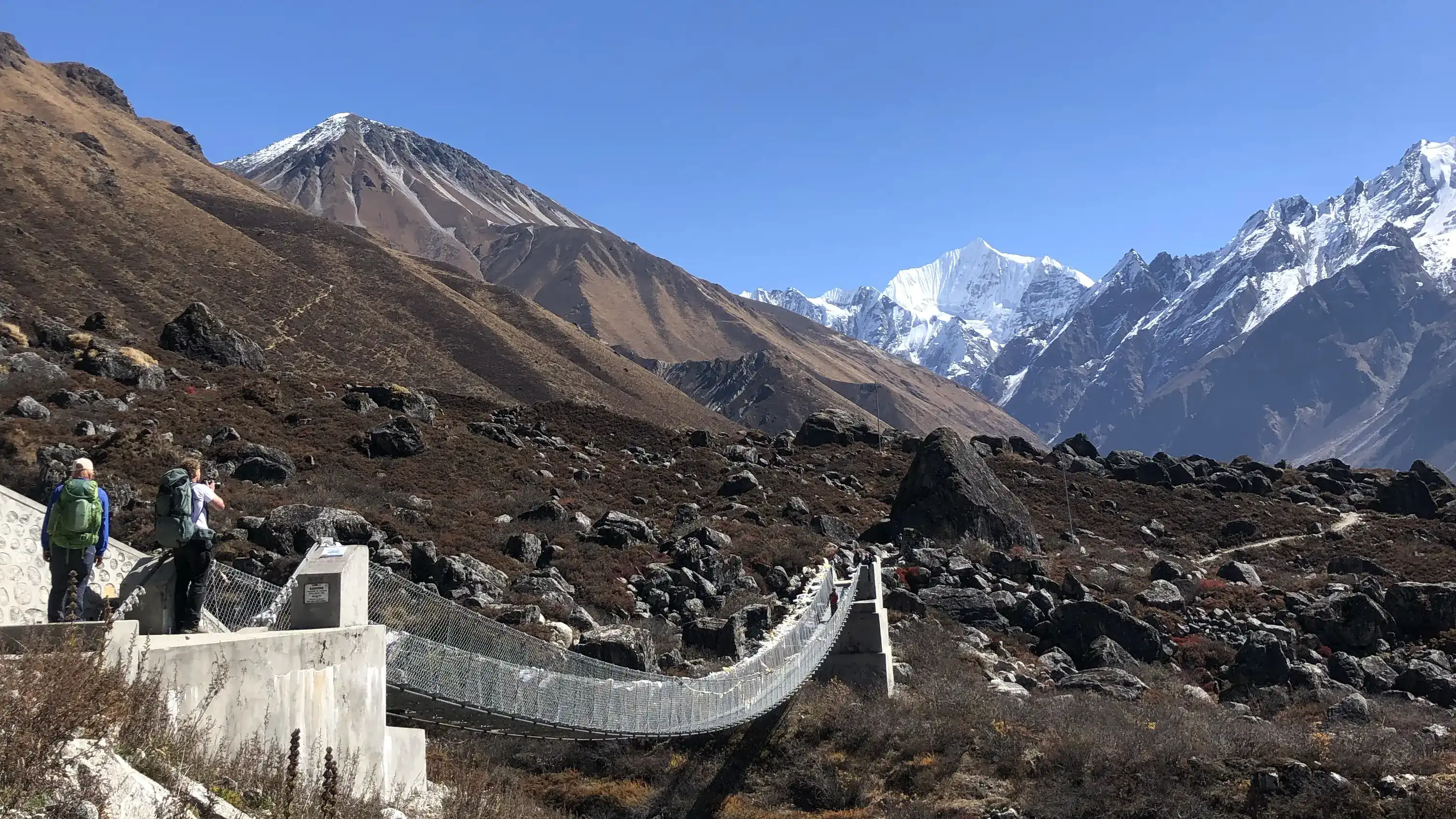
Langtang Region · Easy grade
Langtang Valley Trek
The route
What the walk is.
The Langtang Valley Trek (10 Days) is one of Nepal’s most accessible Himalayan adventures, offering stunning mountain scenery and rich cultural experiences within easy reach of Kathmandu. This moderate trek is perfect for first time trekkers, families, and anyone seeking a quieter alternative to the busy Everest and Annapurna regions.
The journey begins with a scenic drive to Syabrubesi, followed by trekking through Langtang National Park. The trail passes through dense rhododendron and bamboo forests, home to diverse wildlife including the rare red panda, before opening into alpine meadows and glacial valleys.
Trekkers pass through traditional Tamang villages where Tibetan influenced culture, monasteries, and prayer flags provide a deep cultural experience. Staying in local teahouses also offers a chance to experience warm Himalayan hospitality and traditional mountain lifestyles.
The main destination is Kyanjin Gompa (3,870 m), a historic monastery surrounded by dramatic peaks and glaciers. From here, optional hikes to Kyanjin Ri (4,773 m) and Tserko Ri (4,984 m) provide breathtaking panoramic views of Langtang Lirung, Gangchempo, and other Himalayan giants.
With gradual altitude gain and comfortable daily walking distances, the trek is considered moderately difficult and achievable for those with good fitness. The return journey follows the same scenic route back to Syabrubesi.
Overall, the Langtang Valley Trek is a perfect choice for those wanting a peaceful Himalayan experience with beautiful landscapes, authentic culture, and rewarding viewpoints within a well paced 10 day itinerary.
General Information
Detail | Information |
Region | Langtang National Park |
Daily Walking | 4-7 hours |
Why choose Nepal Visuals for the 10-day Langtang Valley Trek?
Ten days to do Langtang the justice it deserves
With two additional days over the standard itinerary, our 10-day schedule lets the valley breathe. Slower mornings, longer stays at Kyanjin Gompa, and unhurried exploration replace the pressure of fitting everything into a tight window.
Both Kyanjin Ri and Tserko Ri within reach
The extra days make it realistic to attempt both high viewpoints above Kyanjin Gompa rather than choosing one. Our guides assess your condition and pace each climb so you get the best panoramas the valley has to offer.
Acclimatization built in without sacrificing any highlight
A more relaxed ascent profile across 10 days gives your body genuine time to adjust to the altitude at each stage, reducing risk and ensuring you arrive at the upper valley feeling strong rather than stretched.
Tamang villages explored with time to spare
The extended schedule creates room to linger in communities along the valley floor, join a monastery visit, or simply sit with a local family over tea without one eye on the next day's distance.
All logistics confirmed well before you leave home
Langtang National Park permits, the road transfer from Kathmandu to Syabrubesi, and teahouse bookings for all 10 nights are arranged in advance so the trek starts smoothly and stays that way throughout.
Transparent pricing across every one of your ten days
The full cost of your trek is presented clearly before booking with no charges held back. What you agree to at the start is what the trip costs in full, from Kathmandu to Kyanjin Gompa and back.
The valley's story told with the depth it warrants
The history of Langtang village, its destruction in the 2015 earthquake, and its remarkable rebuilding is woven into how our guides lead the trek. Ten days gives that story the space to land properly.
Langtang glacier walks on a schedule that allows for them
The additional days open up time to explore the glacier edges and moraines above Kyanjin Gompa that shorter itineraries skip entirely, adding a raw high-alpine dimension few Langtang visitors experience.
Reachable support from start to finish
Our team stays available via WhatsApp, Email, and Zoom across all 10 days so any question, whether it comes the night before departure or mid-valley, gets a timely and useful response.
Every confirmed booking is a departure that happens
Group size never determines whether a trek runs. Solo travellers and small groups receive the same ironclad guarantee, and your 10 days in the Langtang valley are protected from the moment you book.
Day by day
Where you sleep, night by night.
Kathmandu → Kathmandu · highest point 4,773 m
- Day 01Hotel (Twin Sharing) · Welcome Dinner1,400 m
Your Nepal Visuals representative meets you at the airport and transfers you to your hotel in Thamel. Welcome briefing this evening.
- Day 02Tea House (Twin Sharing) · Breakfast, Lunch, Dinner1,950 m
Early morning drive north through terraced farmland, crossing the Trishuli River valley. Arrive at Dhunche, the permit check post for Langtang National Park. Afternoon rest and gear preparation.
- Day 03Lodge/Tea-House (Twin Sharing) · Breakfast, Lunch, Dinner2,500 m
Trek begins. Descend to the Bhote Koshi River, cross the suspension bridge with prayer flags fluttering, and enter Langtang National Park. Climb through dense oak, maple, and rhododendron forest — prime red panda habitat. Pass through Bamboo settlement before arriving at Lama Hotel, a cozy cluster of lodges nestled in the forest clearing.
- Day 04Lodge/Tea-House (Twin Sharing) · Breakfast, Lunch, Dinner3,440 m
Continue ascending through thinning forest into open valley with spectacular views of Langtang Lirung south face. Pass through Ghoratabel and Thangsyap before arriving at Langtang Village, rebuilt after the devastating 2015 earthquake. Visit memorial stupas honouring those lost and witness the remarkable resilience of this community.
- Day 05Lodge/Tea-House (Twin Sharing) · Breakfast, Lunch, Dinner3,870 m
A shorter but high-altitude day. Trek through yak pastures and past stone-walled herder settlements to Kyanjin Gompa, the highest teahouse cluster in the Langtang valley. Afternoon visit to the small Buddhist monastery and the famous Langtang yak cheese factory. Stunning views of Langtang Lirung, Gangchenpo, and the Langtang Glacier.
- Day 06Highest point · Lodge/Tea-House (Twin Sharing) · Breakfast, Lunch, Dinner4,773 m
Climb high, sleep low. Ascend Kyanjin Ri for a 360-degree panorama of the entire Langtang massif: Langtang Lirung, Dorje Lakpa, Yala Peak, and the glaciers cascading down from the Tibetan plateau. Return to Kyanjin Gompa for the afternoon and a well-deserved rest.
- Day 07Lodge/Tea-House (Twin Sharing) · Breakfast, Lunch, Dinner2,500 m
Begin the descent. The trail now familiar, you walk faster and notice new details in the forest and river landscape. Pass through Langtang Village and continue down through the national park. Arrive back at Lama Hotel for a celebratory dinner.
- Day 08Lodge/Tea-House (Twin Sharing) · Breakfast, Lunch, Dinner1,450 m
Final trekking day. Complete descent through rhododendron and bamboo forest back to Syabrubesi. Hot showers available, more varied food, phone signal restored. Celebrate with your guide and porter team over a final dinner together.
- Day 09Hotel (Twin Sharing) · Breakfast, Dinner1,400 m
After breakfast, board the tourist bus for the scenic drive back to Kathmandu. Arrive late afternoon. Transfer to hotel. Final rest and dinner before departure tomorrow.
- Day 10Breakfast1,400 m
Our representative transfers you to Tribhuvan International Airport for your onward flight. Carry the mountains of Langtang with you forever.
Fixed departures
12 group dates open.
144 places across them. Or start on any flexible date in the calendar below.
| Departure | Booked | Filling | Left | Status | Book |
|---|---|---|---|---|---|
| Sat, Mar 6, 2027 | 0/12 | 12 | Available | ||
| Sat, Mar 20, 2027 | 0/12 | 12 | Available | ||
| Sat, Apr 3, 2027 | 0/12 | 12 | Available | ||
| Sat, Apr 17, 2027 | 0/12 | 12 | Available | ||
| Sat, May 1, 2027 | 0/12 | 12 | Available | ||
| Sat, May 15, 2027 | 0/12 | 12 | Available | ||
| Sat, Sep 4, 2027 | 0/12 | 12 | Available | ||
| Sat, Sep 18, 2027 | 0/12 | 12 | Available | ||
| Sat, Oct 2, 2027 | 0/12 | 12 | Available | ||
| Sat, Oct 16, 2027 | 0/12 | 12 | Available | ||
| Sat, Nov 6, 2027 | 0/12 | 12 | Available | ||
| Sat, Nov 20, 2027 | 0/12 | 12 | Available |
Prices are per person, twin share, in USD. Book with a 20 % deposit — the balance is due 7 days before departure. Scheduled departures show places left; flexible departures can be booked on any listed start date. Booking terms
| Su | Mo | Tu | We | Th | Fr | Sa |
|---|---|---|---|---|---|---|
| 1 | 2 | 3 | ||||
| 4 | 5 | 6 | 7 | 8 | 9 | 10 |
| 11 | 12 | 13 | 14 | 15 | 16 | 17 |
| 18 | 19 | 20 | 21 | 22 | 24 | |
| 25 | 26 | 28 | 29 | 30 |
- Selected trip dates
- Available
- Filling fast
- Almost sold out
- Sold out
Fri, Oct 23Sun, Nov 1, 2026
10 days · flexible departure
- StartsFri, Oct 23, 2026 · Kathmandu
- EndsSun, Nov 1, 2026 · Kathmandu
USD $740 per person, twin share · Deposit today USD $148 (20 %)
On the trail
Photographs from the route.
The whole number
What the price covers.
15 things are in the price and 12 more are named as excluded.
In the price
Transportation & Logistics
- ✓Private Transfers · Professional airport pickup and drop-off via private tourist vehicle.
- ✓Official Permits · All Langtang National Park conservation fees, trekking permits, and government taxes.
- ✓Government Coordination · Full handling of all paperwork and liaison with relevant government offices.
Professional Support & Safety
- ✓Expert Leadership · A government-certified, highly experienced English-speaking guide (friendly, helpful, and knowledgeable).
- ✓Group Support · An assistant guide provided for groups of 8 or more participants.
- ✓Porter Service · Professional porter support (1 porter per 2 trekkers, with a 10 kg limit per person).
- ✓Health Monitoring · Twice-daily vitals checks using an oximeter (pulse, oxygen levels, and heart rate) and a comprehensive first aid kit.
- ✓Staff Welfare · All wages, meals, lodging, transportation, and insurance for your entire guide and porter team.
- ✓Emergency Coordination · Full assistance in arranging helicopter services for emergencies (costs covered by your insurance).
Accommodation & Meals
- ✓Kathmandu Stay · 2-star hotel accommodation in Kathmandu on a twin-sharing basis, including breakfast.
- ✓Trek Nutrition · Full board standard meals (breakfast, lunch, and dinner) throughout the duration of the trek.
- ✓Trail Lodging · Best available teahouse or lodge accommodation during the trekking days (twin-sharing).
- ✓Celebratory Dining · Both a welcome and a farewell dinner at a typical Nepalese restaurant in Kathmandu.
Gear & Recognition
- ✓Trekking Essentials · Complimentary use of duffle bags and trekking poles for those who do not have their own.
- ✓Official Achievement · A formal Trek Completion Certificate issued by Contour Expeditions.
Not included
Flights, Visas, and Logistics
- ×International Travel · International flight fares and airport departure taxes.
- ×Entry Requirements · Nepal Entry Visa fees ($50 for 30 days or $125 for 90 days), obtainable upon arrival at the airport.
- ×Baggage Overages · Any extra baggage charges exceeding weight limits.
- ×General Extras · Any expenses or services not explicitly mentioned in the "What's Included" section.
Personal Protection & Equipment
- ×Mandatory Insurance · Comprehensive Travel and Medical Insurance (Compulsory).
- ×Rescue Costs · Actual charges for emergency rescue or evacuation by helicopter (to be claimed via your insurance).
- ×Individual Gear · All personal trekking gear, clothing, and mountain equipment.
Trail & City Expenses
- ×Kathmandu Dining · Main meals (lunch and dinner) in Kathmandu, excluding the celebratory welcome/farewell dinners.
- ×Teahouse Amenities · Out-of-pocket costs for hot showers, internet access, battery recharging, and extra hot drinks or hot water.
- ×Beverages · All alcoholic and non-alcoholic drinks (sodas, bottled water, etc.).
- ×Extended Stays · Any additional nights of accommodation in Kathmandu due to early arrivals, late departures, or early returns from the trail.
Professional Tips and Gratuity
- ×Staff Appreciation · Customary tips for the guides and porters as a gesture of thanks for their service.
Easy grade
Is this trek right for you?
You can do this if…
- ✓Walk 3–5 hours a day at an easy pace
- ✓Carry a light daypack (around 5 kg)
- ✓Well-formed trails, no exposed or technical ground
Recommended preparation
- ✓Regular walking for 4–6 weeks beforehand
- ✓A few longer weekend walks
- ✓Break in your boots
Experience & support
- ✓No trekking experience needed
- ✓Guided throughout — a licensed guide is required on Nepal treks
- ✓Unsure about age, health or fitness? Ask us — we tailor the pace
About three months out? Follow our free 12-week trek fitness plan.
Good to know
Additional information.
Nepal's Hidden Gem
Located just 51 km north of Kathmandu as the crow flies, Langtang Valley feels worlds away from urban chaos. This narrow, high valley carved by glaciers over millennia runs north-south between the main Himalayan range and a slightly lower string of peaks to the south. The result is a spectacular corridor of mountains, forests, and traditional villages that has remained relatively untouched despite its proximity to the capital.
The valley's remoteness ended tragically in April 2015 when a massive earthquake triggered devastating landslides and avalanches that destroyed Langtang Village and killed hundreds. The region has since rebuilt with remarkable resilience, and trekking here now supports the local communities' recovery and ongoing livelihoods. Your visit makes a direct, meaningful contribution to these mountain communities.
Langtang National Park
Established in 1976 as Nepal's first Himalayan national park, Langtang National Park covers 1,710 square kilometers of protected wilderness. The park encompasses diverse ecosystems from subtropical forests at 1,500m to alpine terrain and glaciers above 7,000m.
This biodiversity hotspot protects:
Over 1,000 plant species including 150 species of rhododendrons
Endangered wildlife like red pandas, snow leopards, Himalayan black bears
46 mammal species including musk deer, Himalayan tahr, langur monkeys
250+ bird species including the Impeyan pheasant (Nepal's national bird)
Trekking through this protected area means walking through pristine forest where wildlife thrives, crossing glacial rivers that feed the Ganges watershed, and experiencing nature conservation in action.
The Tamang Cultural Corridor
The Langtang Valley has been inhabited by Tamang people for centuries. This indigenous ethnic group, related to Tibetans, maintains distinct cultural traditions including their own language, dress, music, and spiritual practices.
As you trek, you'll pass through Tamang villages where:
Stone houses with intricately carved wooden windows line narrow lanes
Buddhist prayer wheels and mani stones inscribed with sacred texts mark paths
Prayer flags flutter from rooftops, carrying blessings on mountain winds
Small monasteries host daily rituals unchanged for generations
Traditional agriculture (potatoes, barley, yak herding) follows seasonal rhythms
The teahouse lodge system provides genuine cultural exchange. Staying with Tamang families, sharing meals around wood stoves, learning words in their language, these interactions transform the trek from sightseeing into true cultural immersion.
The Trekking Route
The Langtang Valley Trek follows a straightforward in-and-out route, ascending the valley from Syabrubesi to Kyanjin Gompa, then retracing your steps back. This simplicity is part of its appeal: no high passes to cross, no complicated route-finding, just steady progress up a spectacular valley.
Days 1-2: Kathmandu to Syabrubesi by road
Days 3-5: Ascend valley through forests and villages to Kyanjin Gompa
Day 6: Acclimatization day with optional climbs to viewpoints
Days 7-9: Descend valley back to Syabrubesi
Day 10: Return to Kathmandu
The route's gradual altitude gain provides excellent acclimatization. You climb from Syabrubesi (1,450m) to Kyanjin Gompa (3,870m) over three days, with the option to climb Kyanjin Ri (4,773m) or Tserko Ri (4,984m) on your acclimatization day.
The Mountain Views
While Langtang doesn't feature on the "tallest mountains" lists dominated by Everest and K2, its peaks create equally stunning scenery:
Langtang Lirung (7,227m): The highest peak in the Langtang region, dominating the skyline with its massive south face and hanging glaciers. Often called the most beautiful 7,000m peak in Nepal.
Gangchempo (6,387m): Also known as Fluted Peak for its distinctive ridges, this elegant mountain frames the western end of the valley.
Dorje Lakpa (6,966m): Visible to the south, this sacred peak appears at various points along the trek.
Langtang Ri (7,205m): Part of the northern wall forming the Tibetan border.
These peaks, while lower than 8,000m giants, are incredibly photogenic and feel intimately close as you trek directly beneath their faces.
Kyanjin Gompa: The Spiritual Heart
Your destination is Kyanjin Gompa, a small monastery settlement at 3,870m. This ancient Buddhist gompa sits in a wide valley surrounded by soaring peaks, glacial streams, and yak pastures. The monastery itself is small but active, with monks maintaining daily prayers and rituals.
Kyanjin Gompa serves as your base for acclimatization and exploration. From here you can:
Visit the monastery and witness Buddhist ceremonies
Sample yak cheese from the local cheese factory (established with Swiss assistance in the 1950s)
Hike to Kyanjin Ri (4,773m) for sunrise views
Climb Tserko Ri (4,984m) for the ultimate panorama
Explore glacial moraines and alpine meadows
Simply rest and absorb the profound mountain atmosphere
Why Choose the 10-Day Itinerary?
This 10-day version provides perfect pacing:
Gradual ascent preventing altitude sickness
Full acclimatization day at Kyanjin Gompa for viewpoint climbs
Cultural immersion time not rushing past villages
Photographic opportunities at optimal lighting times
Physical recovery with manageable daily distances
Flexibility for weather or pace adjustments
Shorter versions exist (8 days), but 10 days allows the ideal balance of challenge and enjoyment.
Physical Requirements
Rated easy to moderate, this trek is achievable for most active people:
Daily walking: 4-7 hours at comfortable pace
Maximum altitude: 4,773m (or 4,984m if doing Tserko Ri)
Gradual ascent with only one significant climb per day
Good trails throughout (well-maintained, well-marked)
No technical skills required (no climbing, scrambling, or glacier travel)
The trek suits first-time Himalayan trekkers, families with teenagers, older trekkers with good fitness, and anyone seeking beautiful scenery without extreme challenge.
Before you book
Questions we get most.
Pacing & Acclimatization
How is the 10-day trek different from the 8-day version?
The 10-day itinerary includes a dedicated exploration day at Kyanjin Gompa. This allows you to attempt the more challenging Tserko Ri climb without feeling rushed or physically exhausted by the return journey.
Does the extra day help with altitude sickness?
Absolutely. Spending two nights at 3,870m before descending or climbing higher allows your body to produce more red blood cells, significantly reducing the risk of headaches and fatigue during the high-point hikes.
What is the average walking time on this 10-day route?
The daily walking time is a comfortable 5 to 6 hours. Because the itinerary is extended, you can afford to take long lunch breaks in scenic spots like Ghodatabela and truly soak in the surroundings.
High-Altitude Challenges
Is climbing Tserko Ri mandatory?
No, it is an optional side trip. Tserko Ri (5,033m) is a strenuous 7-to-8-hour round trip. If you prefer something easier, you can visit the Langshisha Kharka glacier or simply relax at the monastery.
What can I see from the top of Tserko Ri?
At over 5,000 meters, you are eye-level with massive glaciers. You get an unobstructed view of Langtang Lirung (7,227m) and can even see across the border into the high plateaus of Tibet.
Do I need technical gear for the 10-day side trips?
No technical climbing gear like ropes or harnesses is required. However, because you are reaching 5,000m, high-quality trekking poles and micro-spikes are strongly recommended for stability on the rocky and potentially icy summit trails.
Nature & Wildlife
What are the chances of seeing a Red Panda?
While rare, the 10-day pace increases your chances! The forests between Bamboo and Lama Hotel are prime Red Panda habitats. Walking quietly and having more time allows for better wildlife spotting opportunities.
What other animals live in Langtang National Park?
Keep an eye out for the Himalayan Tahr (wild goat) on the cliffs, Musk Deer in the woods, and the colorful Himalayan Monal (pheasant). In the lower sections, you will frequently see playful Rhesus Macaques.
Is the flora different on the 10-day route?
You will experience a full vertical "bio-zone" transition, starting from subtropical forests at 1,500m and moving up into alpine meadows and high-altitude desert tundra by day 5 and 6 of your journey.
Preparation & Extras
Is the 10-day trek better for photographers?
Yes. The extra day in Kyanjin Gompa is a "Golden Ticket" for photographers. It allows you to wait for the perfect light on the peaks and explore the valley's lateral moraines for unique glacial compositions.
What kind of food is unique to this region?
Beyond Dal Bhat, you must try Tibetan Bread with local seabuckthorn jam. The high-altitude lodges also serve hearty "Sherpa Stew" (Syakpa), which is perfect for staying warm during the cold Himalayan nights.
Can I customize the 10-day trek to include Gosaikunda?
Yes, but that would typically extend the trip to 14 or 15 days. If you have 10 days, we recommend focusing entirely on the Langtang Valley to ensure a high-quality, relaxed, and culturally immersive experience.
The "Extra Day" Advantage
What is the best way to spend the Kyanjin exploration day?
The 10-day route gives you a full day at Kyanjin Gompa (3,870m). You can challenge yourself with the 5,033m Tserko Ri climb for the ultimate glacial view, or take a flatter, scenic walk to Langshisha Kharka. This extra time ensures you don't have to choose between a summit and seeing the high-altitude yak pastures.
Can I visit the "Langsisa Kharka" glacier on this trip?
Yes. Unlike the 8-day trek, the 10-day itinerary allows enough time to trek further up the valley toward the massive Langsisa glacier. This area is much quieter and offers a "wilderness" feel where you can see the giant peaks of Dorje Lakpa and Ganchempo from a closer perspective.
Logistics & Tech
What is the Wi-Fi and mobile signal status in 2026?
Connectivity is surprisingly good but tiered. NTC (Nepal Telecom) SIM cards usually have 4G signal up to Langtang Village. At Kyanjin Gompa, most lodges now use the Everest Link or local community Wi-Fi, which costs roughly $5–$10 for a 24-hour pass. Note that signals often drop during afternoon snow or heavy cloud cover.
How do I handle charging for 10 days?
While most lodges have micro-hydro power, they charge $3–$6 per device. To stay within budget, bring a 20,000mAh power bank. A pro-tip for 2026: many trekkers now use portable, foldable solar panels that clip onto their daypacks during the sunny 6-hour walk from Lama Hotel to Langtang.
Mountain Wellness & Diet
Is the "Kyanjin Cheese" safe to carry back?
The government-run cheese factory in Kyanjin produces famous Yak cheese. It is safe, vacuum-packed, and lasts for weeks. On a 10-day trip, we suggest buying it on your descent day so it stays fresh for your return to Kathmandu. It’s an excellent, high-protein snack for the long walk down!
What is "Sherpa Stew" and why eat it here?
Also known as Syakpa, this is a hearty vegetable and dough-ball soup. In the 10-day itinerary, you spend more nights at high altitude; this stew is specifically designed by mountain communities to provide hydration and warmth, helping you sleep better at 3,800m.
Gear & Trail Prep
Are micro-spikes needed for Tserko Ri?
In the 2026 Spring (March/April) and late Autumn (November) seasons, the final 200m of Tserko Ri is often covered in slippery, hard-packed snow. We strongly recommend carrying lightweight slip-on micro-spikes. They weigh very little but are essential for a safe "summit" at 5,033m.
Should I bring a "Buff" or face mask?
The trail near Syabrubesi can be dusty in 2026 due to road maintenance, and the air at Kyanjin is very dry. A Buff protects your lungs from the "Himalayan Cough" and prevents windburn on the exposed Tserko Ri ridge. It’s a small item that makes a huge difference in your comfort.
Permits & Regulations
What are the 2026 permit costs for Langtang?
You need two permits: the Langtang National Park Permit (approx. $30) and the TIMS Card (approx. $20). These are mandatory for the 10-day trek and are checked at the Dhunche and Ghodatabela military posts. Your guide will handle the registration process at each stop.
Is travel insurance still mandatory for 2026?
Yes. Your insurance must specifically cover emergency helicopter evacuation up to 5,500m. Because Langtang is a "dead-end" valley, if a trail is blocked or you suffer from severe AMS, a helicopter is often the only way out. Ensure your policy is printed and a copy is given to your guide.
Still have a question? WhatsApp us →