 Nepal Visuals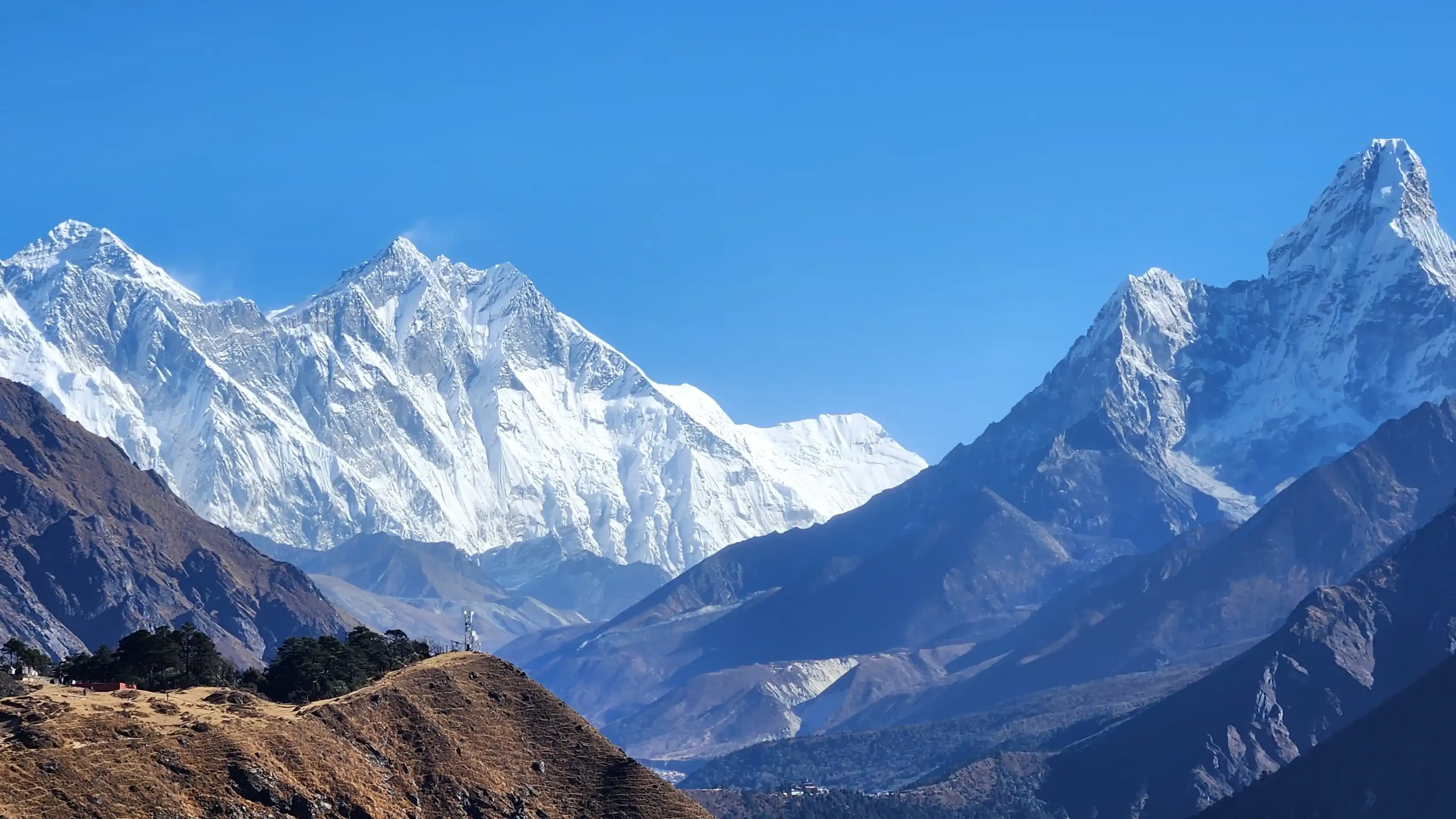
This is the complete day-by-day guide to the 12-day Everest Base Camp trek with helicopter return. From the Lukla flight on Day 2 to the Kala Patthar sunrise and helicopter flight home on Day 10, here is exactly what to expect at every stage.
On this page(18)
Twelve days. One of the greatest adventures on earth.
The Everest Base Camp trek with helicopter return is the most efficient, most spectacular way to experience the Khumbu. You earn every meter of altitude on foot, and you fly back over the roof of the world.
This is the complete day-by-day breakdown of what to expect, what to do, and what it costs each day along the trail.
Before You Read: How to Use This Itinerary
This guide covers the full 12-day itinerary we use for our EBC heli return trek.
Each day includes a detailed account of the route, key highlights, altitude, estimated hiking time, and a per-day cost estimate covering accommodation, meals, and personal spending. Package inclusions (guide, permits, helicopter) are noted separately from out-of-pocket costs.
If you are new to the EBC trek, the Everest Base Camp beginner guide is essential reading before you book.
Quick Itinerary Overview
Day | Route | Altitude | Approx. Hiking Time |
|---|---|---|---|
1 | Arrive Kathmandu | 1,400m | Rest day |
2 | Kathmandu to Lukla, trek to Phakding | 2,860m to 2,610m | 3 to 4 hours |
3 | Phakding to Namche Bazaar | 2,610m to 3,440m | 5 to 6 hours |
4 | Acclimatization day in Namche Bazaar | 3,440m | 3 to 4 hours optional hike |
5 | Namche Bazaar to Tengboche | 3,440m to 3,860m | 5 to 6 hours |
6 | Tengboche to Dingboche | 3,860m to 4,410m | 4 to 5 hours |
7 | Acclimatization day in Dingboche | 4,410m | 3 to 4 hours optional hike |
8 | Dingboche to Lobuche | 4,410m to 4,910m | 4 to 5 hours |
9 | Lobuche to Everest Base Camp, return to Gorak Shep | 4,910m to 5,364m to 5,140m | 6 to 7 hours |
10 | Kala Patthar sunrise, helicopter return to Lukla | 5,140m to 5,644m | 2 to 3 hours + heli flight |
11 | Lukla flight to Kathmandu | 2,860m to 1,400m | Flight day |
12 | Departure from Kathmandu | 1,400m | Transfer day |
Day 1: Arrival in Kathmandu (1,400m)
Welcome to Nepal.
The moment you step off the plane at Tribhuvan International Airport, you feel the energy of a city that has been welcoming pilgrims, traders, and adventurers for centuries. Prayer flags flutter above rooftops. Incense drifts from temple courtyards. The noise, color, and warmth of Kathmandu hit you all at once.
Our team meets you at the arrivals hall and transfers you to your hotel in Thamel, Kathmandu's famous tourist district. Thamel is a maze of trekking gear shops, rooftop restaurants, traditional craft stores, and lively cafes where trekkers from every corner of the world gather before heading into the mountains.
Today is a rest and preparation day. Use it well.
What to do on Day 1:
Attend your pre-trek briefing with your guide (we schedule this for the afternoon or evening)
Check your gear and pick up any last items from Thamel's trekking shops
Visit Boudhanath Stupa or Pashupatinath Temple if you arrive early enough
Eat a proper meal and hydrate well before tomorrow's early start
Get to bed early as the Lukla flight requires a pre-dawn departure
Altitude: 1,400m. No altitude concerns on Day 1.
Day 1 Cost Estimate:
Item | Estimated Cost (USD) |
|---|---|
Hotel in Thamel (if not included in package) | 40 to 80 |
Dinner and drinks | 10 to 20 |
Sightseeing entry fees (if you visit temples) | 5 to 15 |
Personal shopping or last-minute gear | 20 to 100 |
Total out-of-pocket Day 1 | 75 to 215 |
Airport transfer and briefing are included in our package. Hotel may be included depending on your package tier.
Day 2: Fly Kathmandu to Lukla (2,860m), Trek to Phakding (2,610m)
Hiking time: 3 to 4 hours Elevation change: Descent of 250m from Lukla to Phakding
Today is when the adventure truly begins.
You wake before dawn for the transfer to the airport. The Lukla flight departs early, and for good reason: mountain weather deteriorates as the day progresses, and pilots prefer to fly in the calm, clear morning air. The flight itself takes approximately 35 minutes and is one of the most spectacular short flights in the world.
You soar over terraced hillsides, river gorges, and the first Himalayan ridges before touching down at Tenzing-Hillary Airport in Lukla, perched at 2,860 meters on the edge of a steep mountain slope. The runway is short, steeply inclined, and ends at a cliff. It is thrilling and safe in equal measure.
From Lukla, you meet your full team: guide, assistant guide if applicable, and porter. After a quick tea stop and gear check, you begin trekking.
The trail descends gradually through pine and rhododendron forests to the village of Phakding on the banks of the Dudh Koshi River. You cross your first suspension bridges today. These iconic wire bridges, strung with prayer flags, sway gently above the rushing glacial river below. They become a defining feature of the entire trek.
Phakding is a warm and welcoming village with comfortable teahouses and a genuine sense of calm after the energy of Kathmandu.
Key highlights of Day 2:
The Lukla flight: 35 minutes of aerial Himalayan views
First steps on the Everest trail
Suspension bridges over the Dudh Koshi River
Pine and rhododendron forests along the riverbank
The peaceful rhythm of trail life begins
Important note on Lukla flights: During peak seasons (March to May and September to November), many Lukla flights depart from Manthali Airport (Ramechhap), which is a 5 to 6 hour drive from Kathmandu. This requires a very early departure, often around 2:00 to 3:00 AM from Kathmandu. We manage all logistics for this transfer as part of your package.
Weather delays and cancellations at Lukla are common. We always recommend building one to two buffer days into your overall Nepal travel dates to account for any disruptions without affecting your international flight home.
Altitude: Lukla 2,860m, Phakding 2,610m. Mild altitude, no significant concern for most trekkers.
Day 2 Cost Estimate:
Item | Estimated Cost (USD) |
|---|---|
Lukla flight (included in most packages; if independent) | 190 to 210 |
Teahouse accommodation in Phakding | 5 to 10 |
Meals (lunch on trail, dinner in Phakding) | 15 to 25 |
Hot drinks and snacks | 5 to 10 |
Total out-of-pocket Day 2 (excluding Lukla flight if in package) | 25 to 45 |
Day 3: Trek from Phakding (2,610m) to Namche Bazaar (3,440m)
Hiking time: 5 to 6 hours Elevation gain: 830m
Day 3 is the most physically demanding day of the first half of the trek.
You leave Phakding after breakfast and follow the Dudh Koshi River upstream through a series of small villages and forested valleys. The trail crosses several more suspension bridges, some of them among the longest on the entire route, before entering the lower reaches of Sagarmatha National Park.
The national park checkpoint is where your Sagarmatha National Park permit and TIMS card are verified. Make sure both documents are accessible in your daypack.
From here, the trail climbs steeply through pine forests toward Namche Bazaar. This is where the altitude begins to ask something of you. The ascent is relentless but the forest is beautiful, and as you round the final ridge, two things happen simultaneously.
You see Everest for the first time.
And Namche Bazaar appears below you, a horseshoe-shaped town of brightly painted lodges, bakeries, gear shops, and teahouses carved into the steep hillside.
It is one of the most welcome sights on any trek.
Key highlights of Day 3:
Long suspension bridges over the Dudh Koshi gorge
Sagarmatha National Park entry and first forest trails
The first glimpse of Mount Everest above the ridge line
Arrival in Namche Bazaar, the capital of the Khumbu
Altitude: Namche Bazaar 3,440m. Mild altitude effects possible for some trekkers. Take it steady on the final ascent.
Day 3 Cost Estimate:
Item | Estimated Cost (USD) |
|---|---|
Teahouse accommodation in Namche | 8 to 15 |
Meals (breakfast, lunch, dinner) | 20 to 35 |
Hot drinks and snacks on trail | 8 to 15 |
Total out-of-pocket Day 3 | 36 to 65 |
Day 4: Acclimatization Day in Namche Bazaar (3,440m)
Hiking time: 3 to 4 hours (optional acclimatization hike) Elevation gain: Up to 600m on the optional hike
Do not skip this day. It is not optional.
Spending a full day at Namche Bazaar before ascending further is one of the most important decisions you can make for a safe and successful EBC trek. Your body needs time to produce more red blood cells and adapt to the reduced oxygen at altitude. Rushing past Namche is the most common mistake first-time EBC trekkers make.
The acclimatization hike today follows the principle of "climb high, sleep low." After breakfast, we hike up to the Everest View Hotel at approximately 3,880 meters, one of the highest hotels in the world and the finest viewpoint in the Khumbu valley below 4,000 meters.
From the hotel terrace, you get a sweeping panoramic view of Everest (8,849m), Lhotse (8,516m), Ama Dablam (6,812m), Thamserku, Kantega, and dozens of other peaks. This is the view that ends up in travel magazines. Take your time with it.
You then return to Namche for lunch, rest, and an afternoon of exploration.
What to explore in Namche Bazaar on your rest day:
The Sherpa Culture Museum: Excellent exhibits on Sherpa history, mountaineering heritage, and traditional life in the Khumbu
The Saturday market: If your acclimatization day falls on a weekend, Namche's weekly market is a fascinating gathering of Sherpa traders, Tibetan vendors, and trekkers
Bakeries and coffee shops: Namche has proper espresso, fresh-baked bread, and apple pie. This is the last real town until Kathmandu.
Gear shops: Stock up on batteries, snacks, sunscreen, or any trekking item you forgot in Kathmandu
The Hillary School and local monastery
Altitude: 3,440m base, up to 3,880m on acclimatization hike. Drink at least 3 to 4 liters of water today.
Day 4 Cost Estimate:
Item | Estimated Cost (USD) |
|---|---|
Teahouse accommodation in Namche | 8 to 15 |
Meals (breakfast, lunch, dinner) | 25 to 40 |
Hot drinks and snacks | 8 to 15 |
Sherpa Museum entry | 3 to 5 |
Hot shower | 3 to 5 |
Bakery treats or coffee | 5 to 10 |
Total out-of-pocket Day 4 | 52 to 90 |
Day 5: Trek from Namche Bazaar (3,440m) to Tengboche (3,860m)
Hiking time: 5 to 6 hours Elevation gain: 420m net (with significant descent and re-ascent)
Leaving Namche, the trail contours around the valley with Everest and Ama Dablam visible for much of the morning. This is one of the most scenically rewarding sections of the entire trek.
The route drops into the Imja Khola valley before crossing the river and climbing back up through rhododendron and birch forests to the ridge above Tengboche. In spring, these forests are blanketed in red, pink, and white rhododendron flowers. The contrast with the snow-capped peaks above is extraordinary.
Tengboche sits at 3,860 meters on a broad ridge with 360-degree mountain views. It is home to the most famous Buddhist monastery in the Khumbu, Tengboche Monastery, the spiritual heart of the Sherpa community.
Arriving at Tengboche in the late afternoon, when golden light falls across the monastery walls and the surrounding peaks glow in the dying sun, is one of the most memorable moments of the entire 12-day journey.
If you arrive before 3:00 PM, join the afternoon puja (prayer ceremony) at the monastery. The chanting of monks, the smell of butter lamps, and the sound of horns echoing across the ridge is something that stays with you long after you leave.
Key highlights of Day 5:
High trail above the valley with continuous Everest and Ama Dablam views
Rhododendron forests in full spring bloom
Tengboche Monastery and the afternoon puja ceremony
One of the most photogenic campsites on the entire Everest route
Altitude: 3,860m. Some trekkers begin to feel mild altitude effects. Rest well tonight.
Day 5 Cost Estimate:
Item | Estimated Cost (USD) |
|---|---|
Teahouse accommodation in Tengboche | 8 to 15 |
Meals (breakfast, lunch, dinner) | 22 to 38 |
Hot drinks and trail snacks | 8 to 14 |
Monastery entry donation | 3 to 5 |
Total out-of-pocket Day 5 | 41 to 72 |
Day 6: Trek from Tengboche (3,860m) to Dingboche (4,410m)
Hiking time: 4 to 5 hours Elevation gain: 550m
You cross the 4,000-meter mark for the first time today.
The trail descends from Tengboche into the Imja Khola valley and passes through the village of Pangboche, home to the oldest monastery in the Khumbu region. Take a short break here. The monastery is small but remarkable, and the valley views from Pangboche are exceptional.
From Pangboche, the trail climbs steadily through increasingly open terrain. The forest thins, then disappears. The landscape becomes more stark and dramatic, with glaciated peaks filling every horizon.
You arrive in Dingboche (4,410m), a high-altitude settlement tucked in the Imja Valley. At this altitude, the air is noticeably thinner. The sky above is a deeper shade of blue. The wind is colder. And the mountains feel closer than they have at any point before.
Dingboche is a beautiful place to spend two nights. The stone-walled teahouses are warm and welcoming, and the surrounding peaks including Lhotse, Island Peak, and Ama Dablam create an amphitheatre of mountains around the village.
Key highlights of Day 6:
Pangboche Monastery, the oldest in the Khumbu
Crossing 4,000 meters for the first time
Expansive views of Lhotse, Ama Dablam, and Island Peak
The dramatic high-altitude landscape of the upper Imja valley
Altitude: 4,410m. Altitude awareness is important from here. Headache, fatigue, and reduced appetite are common and normal at this elevation. Drink plenty of water and tell your guide if symptoms feel severe.
Day 6 Cost Estimate:
Item | Estimated Cost (USD) |
|---|---|
Teahouse accommodation in Dingboche | 10 to 18 |
Meals (breakfast, lunch, dinner) | 25 to 42 |
Hot drinks and snacks | 8 to 15 |
Total out-of-pocket Day 6 | 43 to 75 |
Day 7: Acclimatization Day in Dingboche (4,410m)
Hiking time: 3 to 4 hours (acclimatization hike) Elevation reached: Up to 5,100m on the Nangkartshang hike
The second acclimatization day is just as important as the first.
At 4,410 meters, your body is working hard simply to function normally. This rest day allows your system to continue adapting before you push above 5,000 meters. Skipping this day significantly increases your risk of altitude sickness on the higher sections of the route.
The acclimatization hike today goes up to Nangkartshang Peak, a ridge above Dingboche that reaches approximately 5,000 to 5,100 meters.
From the top, the views are among the finest of the entire trek. You see Everest, Lhotse, Makalu, Ama Dablam, Baruntse, Cho Oyu, and the entire upper Khumbu spread out before you. This is a preview of what awaits at Kala Patthar, at a fraction of the effort.
Descend back to Dingboche by midday, eat a good lunch, rest in the afternoon, and stay well hydrated.
What to watch for on Day 7:
Symptoms of acute mountain sickness (AMS): persistent headache, nausea, loss of appetite, dizziness, or difficulty sleeping
If symptoms are moderate to severe, do not ascend further. Descend immediately and notify your guide.
Your guide carries a pulse oximeter to monitor your blood oxygen levels throughout the trek
Key highlights of Day 7:
Summit of Nangkartshang ridge at 5,000 to 5,100m
Panoramic views of Everest, Makalu, Lhotse, and Ama Dablam
Time to rest, recover, and prepare mentally for the high-altitude days ahead
Altitude: 4,410m sleep, up to 5,100m on hike (climb high, sleep low).
Day 7 Cost Estimate:
Item | Estimated Cost (USD) |
|---|---|
Teahouse accommodation in Dingboche | 10 to 18 |
Meals (breakfast, lunch, dinner) | 25 to 42 |
Hot drinks and snacks | 10 to 18 |
Hot shower | 4 to 6 |
Total out-of-pocket Day 7 | 49 to 84 |
Day 8: Trek from Dingboche (4,410m) to Lobuche (4,910m)
Hiking time: 4 to 5 hours Elevation gain: 500m
You are now entering the high Khumbu.
The trail from Dingboche climbs through open moraine terrain past the small cluster of stone monuments at Thukla Pass (4,620m). These are memorial chortens and cairns built in honor of climbers who have lost their lives on Everest and the surrounding peaks. The names on the plaques read like a history of Himalayan mountaineering. Take a moment here.
From Thukla, the trail continues along the lateral moraine of the Khumbu Glacier to Lobuche (4,910m), a small collection of teahouses perched at the edge of the glacier. The landscape here is raw, windswept, and magnificent.
Pyramidal peaks rise above the glacier on all sides. The Khumbu Icefall is now visible for the first time, a churning cascade of blue-white ice tumbling down from the Western Cwm above. This is the most dangerous section of the Everest summit route, and seeing it from Lobuche gives you real respect for what Everest climbers face.
Arrive at Lobuche by early afternoon. Rest. Drink water. Eat a proper dinner. Tomorrow is the most important day of the trek.
Key highlights of Day 8:
Thukla memorial chortens honoring Everest climbers
Entry into the upper Khumbu Glacier moraine landscape
First view of the Khumbu Icefall from a distance
Arrival at Lobuche, the last significant stop before Base Camp
Altitude: 4,910m. This is serious altitude. Take the afternoon easy. Appetite suppression and disturbed sleep are common above 4,800m.
Day 8 Cost Estimate:
Item | Estimated Cost (USD) |
|---|---|
Teahouse accommodation in Lobuche | 12 to 20 |
Meals (breakfast, lunch, dinner) | 28 to 45 |
Hot drinks and snacks | 10 to 18 |
Total out-of-pocket Day 8 | 50 to 83 |
Day 9: Trek from Lobuche (4,910m) to Everest Base Camp (5,364m), Return to Gorak Shep (5,140m)
Hiking time: 6 to 7 hours round trip Elevation gain to Base Camp: 454m above Lobuche
This is the day you came for.
You leave Lobuche early in the morning and trek across the rocky moraine of the Khumbu Glacier toward Gorak Shep (5,140m), the highest permanent settlement on the route. The walk to Gorak Shep takes approximately 2 hours and is a demanding crossing of boulder-strewn glacial terrain with stunning views of Pumori, Lingtren, and Khumbutse.
Drop your bags at Gorak Shep teahouse. Have a light lunch. Then continue to Everest Base Camp.
The trail from Gorak Shep to Base Camp follows the edge of the Khumbu Glacier for approximately 2 hours of rocky, tiring, high-altitude terrain. There is no clear path in sections. You navigate boulders, glacial streams, and loose moraine. At 5,000 meters and above, every step takes effort.
And then you arrive.
Everest Base Camp (5,364m) is not a summit. There is no single dramatic viewpoint. But standing on the Khumbu Glacier at the foot of the world's highest mountain, surrounded by the sounds of cracking ice and distant wind on the upper ridges, is one of the most profound experiences a trekker can have.
The Khumbu Icefall towers above you. During expedition season (spring), bright yellow tents of summit teams dot the glacier. The sense of scale is humbling.
Take your time here. This moment is what the previous eight days have been building toward.
Then return to Gorak Shep for dinner and an early night. Tomorrow's pre-dawn start is the most important departure of the trek.
Key highlights of Day 9:
Trek across the Khumbu Glacier moraine from Lobuche to Gorak Shep
Arrival at Everest Base Camp (5,364m)
Standing on the Khumbu Glacier with the Icefall above you
Expedition tents and the energy of active summit attempts in spring
Return to Gorak Shep for rest before the Kala Patthar sunrise
Altitude: 5,364m at Base Camp, 5,140m sleep at Gorak Shep. This is the highest altitude most trekkers will ever reach. Sleep difficulties and vivid dreams are normal.
Day 9 Cost Estimate:
Item | Estimated Cost (USD) |
|---|---|
Teahouse accommodation in Gorak Shep | 15 to 25 |
Meals (breakfast, packed lunch, dinner) | 30 to 50 |
Hot drinks throughout the day | 12 to 20 |
Total out-of-pocket Day 9 | 57 to 95 |
Day 10: Kala Patthar Sunrise Hike (5,644m) and Helicopter Return to Lukla
Hiking time: 2 to 3 hours (Gorak Shep to Kala Patthar and back) Helicopter flight: Approximately 20 to 25 minutes to Lukla
The alarm goes off at 4:00 AM.
It is cold. The sky is still dark. Your body wants to stay in the sleeping bag. Go anyway.
The sunrise hike to Kala Patthar (5,644m) is the single greatest viewpoint of the entire EBC trek. Higher than Base Camp, positioned directly opposite Everest's southwest face, Kala Patthar offers what is widely considered the finest close-up view of Mount Everest available to any non-climber on earth.
The ascent from Gorak Shep takes 1.5 to 2 hours in the dark. Your headlamp illuminates the rocky trail. The wind is cold and sharp at altitude. Every step requires deliberate effort in the thin air.
Then the sky begins to lighten in the east.
And Everest turns pink.
The sunrise over the Khumbu from Kala Patthar is transformative. Everest (8,849m), Lhotse (8,516m), Nuptse (7,861m), Pumori (7,161m), and Changtse glow in the early light. The Khumbu Icefall catches the first rays of sun and glitters below you. In every direction, the Himalaya extends to the horizon.
This is the moment.
After spending time at the summit, descend back to Gorak Shep for a warm breakfast. Then it is time for the helicopter.
The helicopter arrives at the Gorak Shep landing pad in the late morning. You board with your daypack, lift off from the glacier, and within seconds the world falls away beneath you.
The helicopter sweeps over the Khumbu Glacier, banks past the Icefall, and follows the valley south toward Lukla. In 20 to 25 minutes you cover terrain that took eight days to ascend on foot. The aerial views of the Khumbu, the Imja Valley, the ridges above Namche, and the winding Dudh Koshi River below are breathtaking from above.
You land in Lukla with sore knees spared, vacation days saved, and memories that will last a lifetime.
Key highlights of Day 10:
Pre-dawn ascent of Kala Patthar (5,644m)
Sunrise over Everest from the finest viewpoint on the trek
Helicopter flight over the entire Khumbu region
Aerial views of Everest Base Camp, the Khumbu Icefall, and the valley below
Landing in Lukla with the trek effectively complete
Altitude: 5,644m at Kala Patthar summit, back to 2,860m in Lukla by late morning. The rapid descent by helicopter is generally well tolerated.
Day 10 Cost Estimate:
Item | Estimated Cost (USD) |
|---|---|
Helicopter return (included in package; if independent, Gorak Shep to Lukla) | 450 to 550 |
Breakfast in Gorak Shep | 8 to 14 |
Teahouse accommodation in Lukla | 5 to 10 |
Dinner and drinks in Lukla (celebration dinner) | 15 to 25 |
Total out-of-pocket Day 10 (excluding heli if in package) | 28 to 49 |
Day 11: Fly from Lukla (2,860m) Back to Kathmandu (1,400m)
Flight time: Approximately 35 minutes
The morning is relaxed for the first time in many days.
You have earned a slow breakfast. The Lukla flight back to Kathmandu departs in the morning, and unlike the outbound leg, there is no altitude pressure and no long approach hike waiting at the other end.
The flight from Lukla to Kathmandu follows the same spectacular route in reverse. The Himalayan foothills roll beneath the aircraft as you descend back toward the Kathmandu Valley. Landing at Tribhuvan International Airport, you step out into air that feels thick and warm after ten days above 3,000 meters.
You will feel the difference in your lungs immediately. Breathing is suddenly easy again.
Our team picks you up from the domestic terminal and transfers you back to your hotel in Thamel. Tonight is for celebration. A good meal, a hot shower, and the satisfaction of something accomplished.
At the hotel, our Nepal Visuals team presents you with your official trek completion certificate.
It is a small thing. But it means a lot.
What to do in Kathmandu on Day 11:
A long hot shower (you have earned it)
Celebration dinner at one of Thamel's best restaurants
Souvenir shopping in the Thamel bazaar
Visit to Boudhanath Stupa in the evening for the kora (circumambulation) ceremony
Rest and let the altitude and distance sink in
Altitude: Back to 1,400m in Kathmandu. Some trekkers feel unusually energetic at lower altitude after days above 4,000m.
Day 11 Cost Estimate:
Item | Estimated Cost (USD) |
|---|---|
Lukla flight to Kathmandu (included in most packages; if independent) | 190 to 210 |
Hotel in Kathmandu (may be included in package) | 40 to 80 |
Celebration dinner and drinks | 20 to 45 |
Souvenir shopping | 20 to 80 |
Hot shower and laundry | 5 to 15 |
Total out-of-pocket Day 11 (excluding flights and hotel if in package) | 45 to 140 |
Day 12: Departure from Kathmandu or Continue Your Nepal Adventure
The final morning.
We transfer you to Tribhuvan International Airport in time for your departure flight. The transfer is included in our package. Our team ensures you have everything you need for a smooth departure.
If you are not quite ready to leave Nepal, there is no shortage of ways to extend your adventure.
Options for extending your trip:
Annapurna Base Camp trek (a completely different Himalayan landscape)
Langtang Valley trek (closer to Kathmandu and less crowded)
A cultural tour of Bhaktapur and Patan Durbar Square
White-water rafting on the Trishuli River
A jungle safari in Chitwan National Park
Whatever you choose, Nepal has a way of making you want to come back.
And if the EBC trek has given you the appetite for more, the classic Everest Base Camp trek is available for those who want the full round-trip experience on foot next time.
Day 12 Cost Estimate:
Item | Estimated Cost (USD) |
|---|---|
Airport transfer (included in package) | 0 |
Final meals before departure | 15 to 30 |
Last-minute souvenirs | 10 to 50 |
Airport snacks and drinks | 5 to 15 |
Total out-of-pocket Day 12 | 30 to 95 |
Full Trip Cost Summary: 12 Days Out of Pocket
This table covers personal out-of-pocket spending only, assuming the tour package covers guide, permits, accommodation, meals, Lukla flight, and helicopter return.
Day | Route | Est. Personal Spending (USD) |
|---|---|---|
Day 1 | Arrive Kathmandu | 75 to 215 |
Day 2 | Lukla, trek to Phakding | 25 to 45 |
Day 3 | Phakding to Namche Bazaar | 36 to 65 |
Day 4 | Acclimatization in Namche | 52 to 90 |
Day 5 | Namche to Tengboche | 41 to 72 |
Day 6 | Tengboche to Dingboche | 43 to 75 |
Day 7 | Acclimatization in Dingboche | 49 to 84 |
Day 8 | Dingboche to Lobuche | 50 to 83 |
Day 9 | Lobuche to EBC, Gorak Shep | 57 to 95 |
Day 10 | Kala Patthar, helicopter to Lukla | 28 to 49 |
Day 11 | Lukla to Kathmandu | 45 to 140 |
Day 12 | Departure | 30 to 95 |
Total personal spending | 531 to 1,108 |
Budget trekkers who are careful with snacks, drinks, and shopping can stay toward the lower end of this range. Trekkers who enjoy extras (hot showers, bakery stops, souvenirs, celebration dinners) will sit closer to the upper end.
For a complete picture of all costs including the package itself, international flights, visa, gear, and insurance, read our full EBC heli return cost breakdown for 2026.
Tips for Making the Most of This Itinerary
Start slow. The biggest mistake on EBC is going too fast in the first three days. The trail feels easy at low altitude. That energy should be saved for Lobuche and above.
Hydrate relentlessly. Three to four liters of water per day minimum. More above 4,000m. Hot drinks count. Caffeinated drinks do not hydrate as effectively.
Listen to your guide. Our guides have made this journey dozens of times. If your guide recommends slowing down, resting, or descending, that advice is based on real experience with altitude and real concern for your safety.
Trust the acclimatization days. Days 4 and 7 feel like rest days. They are actually the two most important days of the trek.
Carry cash in small denominations. Nepali Rupees (NPR) are used on the trail. ATMs are available in Namche Bazaar but are not always reliable above that point. Carry enough cash from Kathmandu to cover the full trek.
Protect your camera and electronics from cold. Battery life drops significantly at altitude and in cold temperatures. Keep devices inside your jacket close to your body when not in use.
Why Choose This Itinerary?
The 12-day format works because it builds in exactly the right number of acclimatization days without wasting time on unnecessary back-tracking.
You ascend properly. You see everything. You fly back on a helicopter that turns the journey home into its own adventure.
Read more about why spring is the best season for this exact itinerary and how the season affects every day described above.
If you are still deciding whether the EBC trek is right for you, these guides will help:
Everything to know about Everest Base Camp: The complete EBC reference
Why trek Everest Base Camp?: The personal and experiential case for going
EBC beginner guide: Everything a first-timer needs to know before booking
Book the 12-Day EBC Trek with Helicopter Return
We specialize in small-group and private Everest Base Camp experiences with professional high-altitude guides, seamless helicopter coordination, and full logistical support from Kathmandu to Kala Patthar and back.
Our Everest Base Camp trek with heli return is designed for trekkers who want the complete experience with maximum efficiency, safety, and no wasted days.
Twelve days. Everest Base Camp. A helicopter flight over the Himalayas. A sunrise on Kala Patthar.
Start planning your trek: Everest Base Camp Trek with Helicopter Return (12 Days)
Sharing route guides and trail experience from the high trails of Nepal.