 Nepal Visuals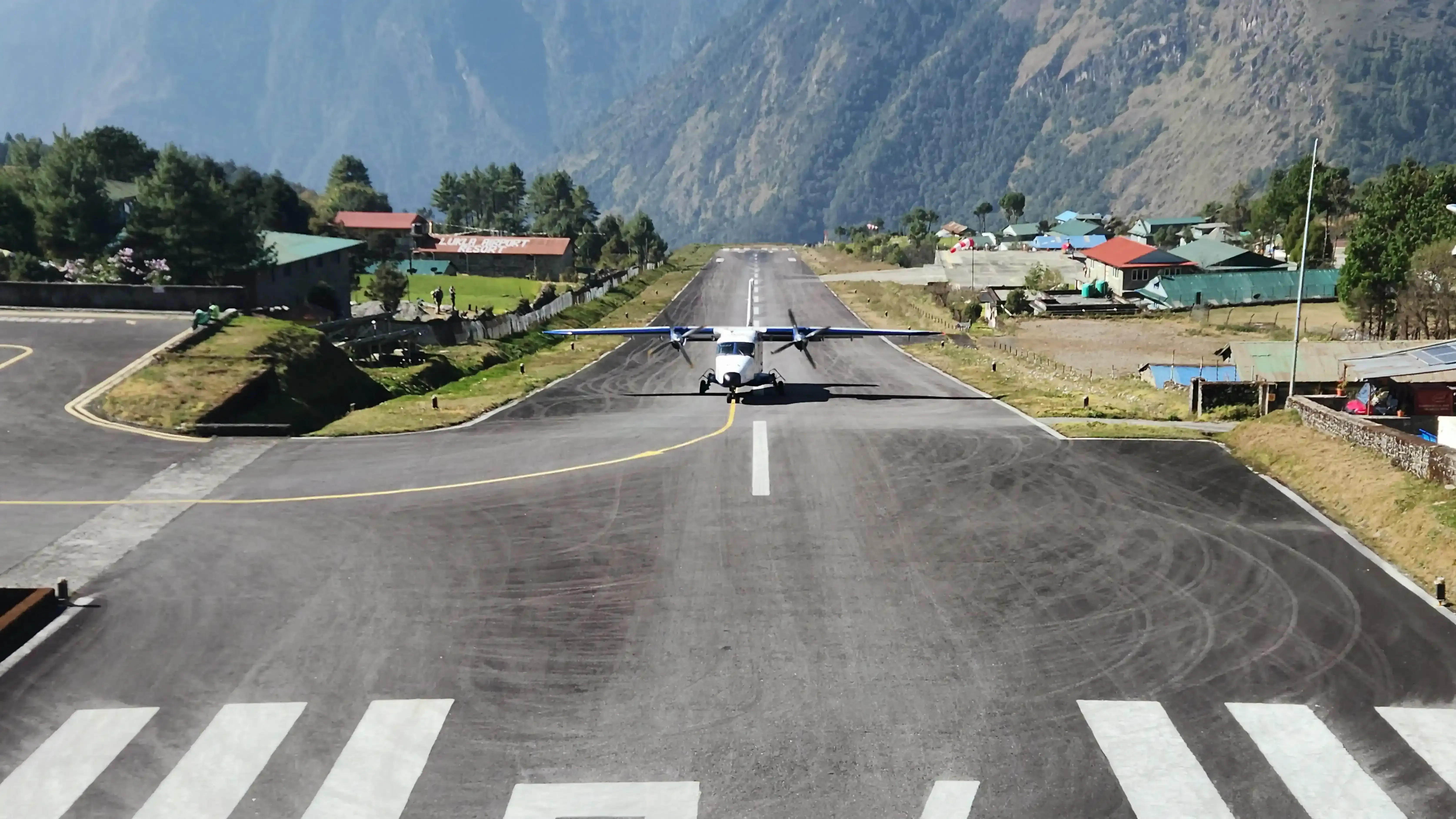
Lukla Airport: often called the gateway to Mount Everest is a small regional airport and a landing strip which is one of, if not the most dangerous airports in the planet.
On this page(17)
Lukla Airport in Nepal
Lukla Airport Nepal (VNLK Airport), officially known as Tenzing-Hillary Airport, is the main gateway for trekkers heading to the Everest region. The ICAO code for Lukla Airport is VNLK (VNLK Airport). Located in the mountain town of Lukla in eastern Nepal, it marks the beginning of the classic route toward Mount Everest. Most travelers flying from Kathmandu arrive here before starting the multi-day journey from Lukla Airport in Nepal to Everest Base Camp, passing through remote Sherpa villages and high-altitude trails in the Khumbu Valley.
This small airstrip is also considered one of the most dangerous airports in the world due to its short runway, steep incline, and rapidly changing mountain weather. Despite the risks, it remains a vital hub for those attempting the Everest Base Camp trek or join expeditions aiming for the summit of Mount Everest. For many, landing at Lukla Ariport is the first real taste of the adventure that lies ahead in the Himalayas.
Why Lukla Airport Matters for Your Everest Trek
Landing at Lukla Airport in Nepal is the first step on your journey to the iconic Mount Everest Base Camp. Known for its breathtaking views and dramatic setting, this mountain airstrip connects thousands of trekkers each year to Sagarmatha National Park and the Everest Base Camp trek.
You won’t just be starting a hike - you're stepping into a remote part of the Himalaya, where modern roads end, and the trail to the world’s highest peak begins.
10 Fascinating Facts About Lukla Airport Nepal
World’s Most Dangerous Airport: Lukla Airport in Nepal, officially known as Tenzing-Hillary Airport, is often called the most dangerous airport in the world because of its short runway, tricky winds, and dramatic mountain setting.
Runway Length is Shockingly Short: The runway is only 527 meters (1,729 feet) long, which is barely enough for small planes like Twin Otters and Dornier aircraft to land and take off.One-Way Takeoff and Landing: There’s no room for error here. Planes must land uphill and take off downhill in one fixed direction because the runway starts at a cliff edge and ends at a solid mountain wall.
Extreme Altitude: Sitting at 2,845 meters (9,334 feet) above sea level, Lukla’s high altitude adds to the challenge. It reduces engine performance and makes takeoffs more difficult.
Named After Everest Heroes: The airport is named after Tenzing Norgay and Sir Edmund Hillary, the first climbers to summit Mount Everest in 1953. Hillary actually helped build the airport in the 1960s.
Weather is Wildly Unpredictable: Lukla’s weather changes quickly. Fog, wind, and low visibility can appear within minutes, and flights are often delayed or canceled, especially in the afternoon.
Only Morning Flights: Most flights to and from Lukla operate early in the morning when the weather is usually calm. Flying later in the day becomes too risky.
Manual Air Traffic Control: There’s no advanced radar system here. Air traffic control is done visually with basic communication tools, so pilot skill is absolutely crucial.
Gateway to Everest: Lukla is the starting point for almost everyone trekking to Everest Base Camp. Thousands of trekkers and climbers pass through this tiny airstrip each year.
Thrill Seekers Love It: Despite its reputation, Lukla is on many adventurers’ bucket lists. Some even say landing here is more exciting than the trek itself.
Lukla Flight Cost
Kathmandu to Lukla: One-way flights range from $210–$230 USD
Ramechhap to Lukla: One-way flights cost around $180–$200 USD
Pro Tip:
During peak trekking seasons (March to May and September to November), flights to Lukla operate from Manthali Airport in Ramechhap instead of Kathmandu. This seasonal shift helps reduce air traffic congestion at Kathmandu Airport but adds an extra leg to your journey. Plan accordingly and allow buffer time in your itinerary.
To catch the early flights from Ramechhap, trekkers usually leave Kathmandu around 1–2 AM and drive 4 to 5 hours to reach the airport on time. The road is winding, and the ride can be tiring, but it’s necessary for those flying to Lukla Airport during peak demand.
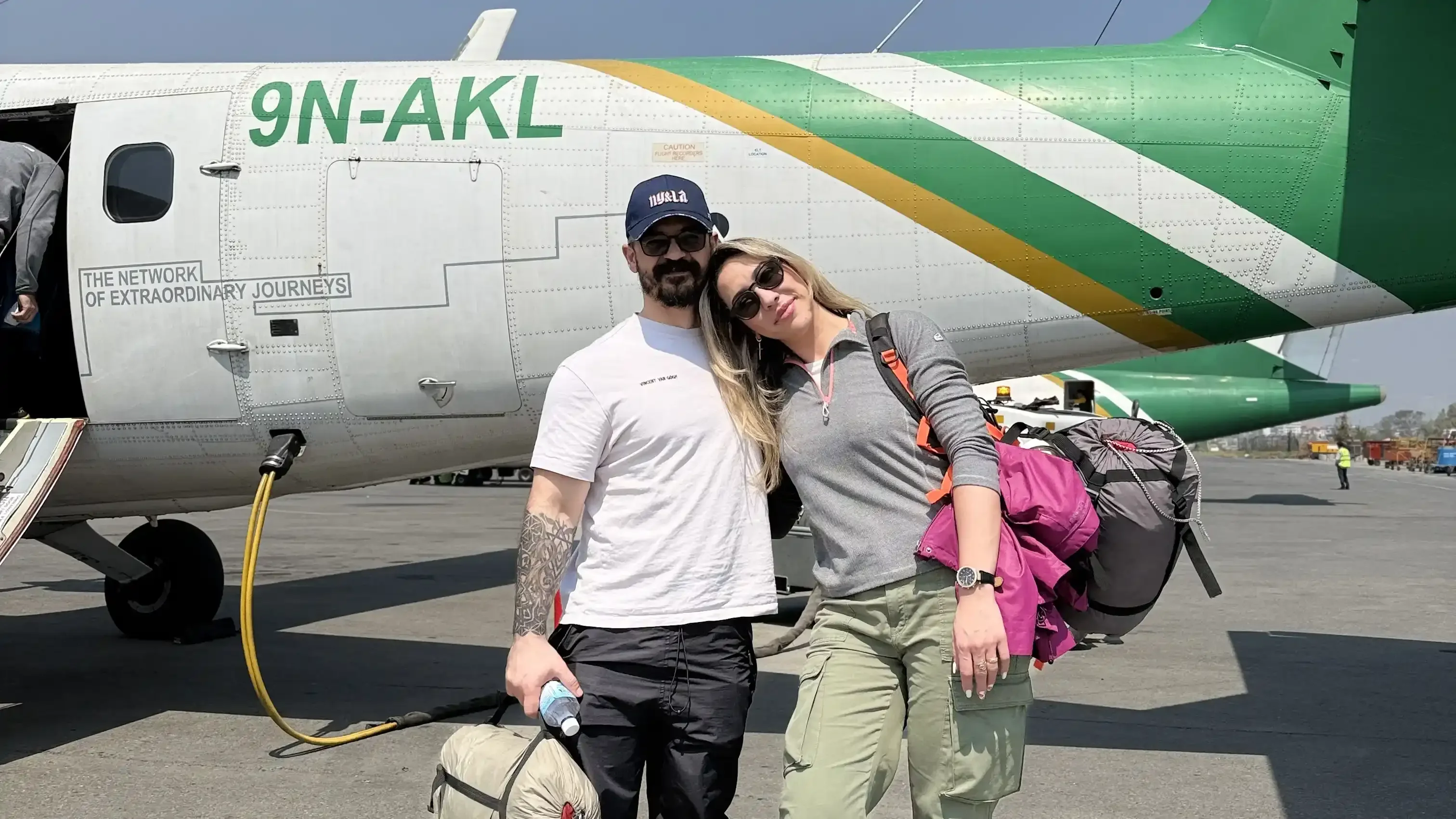 Grigore and Dorina all set to start the Everest Base Camp Trek
Location, Altitude, and Lukla Airport Height
Location : Solukhumbu District, Nepal
Lukla Airport Altitude : 2845m (9334 ft)
Lukla Airport Height above sea level places it amongst the highest airports in the world
Because of this elevation, your body begins to adapt to thinner air from day one - vital for reducing the risk of altitude sickness as you ascend to Everest Base Camp (5,364 m).
Runway Details – Airport Lukla Length & Safety
Runway Length : 527 meters (1729 ft)
Slope : 11.7% gradient
Surface : Paved Asphalt
Lukla Airport Departures : Operate early morning (6:00 am - 12:00 pm)
The short, slanted runway is what makes Nepal Lukla Airport so well-known. Only specially trained pilots fly here, making landings and takeoffs a skill-intensive process. Despite its reputation, flights are generally safe, though delays are frequent due to weather.
Unpredictable Skies – Nepal Lukla Airport Weather Conditions
Lukla Airport weather is unpredictable. Morning skies can be clear, but thick fog or winds may roll in by noon. Since there’s no radar tower, pilots rely on visual flying, so flights are often delayed or cancelled. Always plan 1–2 buffer days in case your Lukla departure is rescheduled.
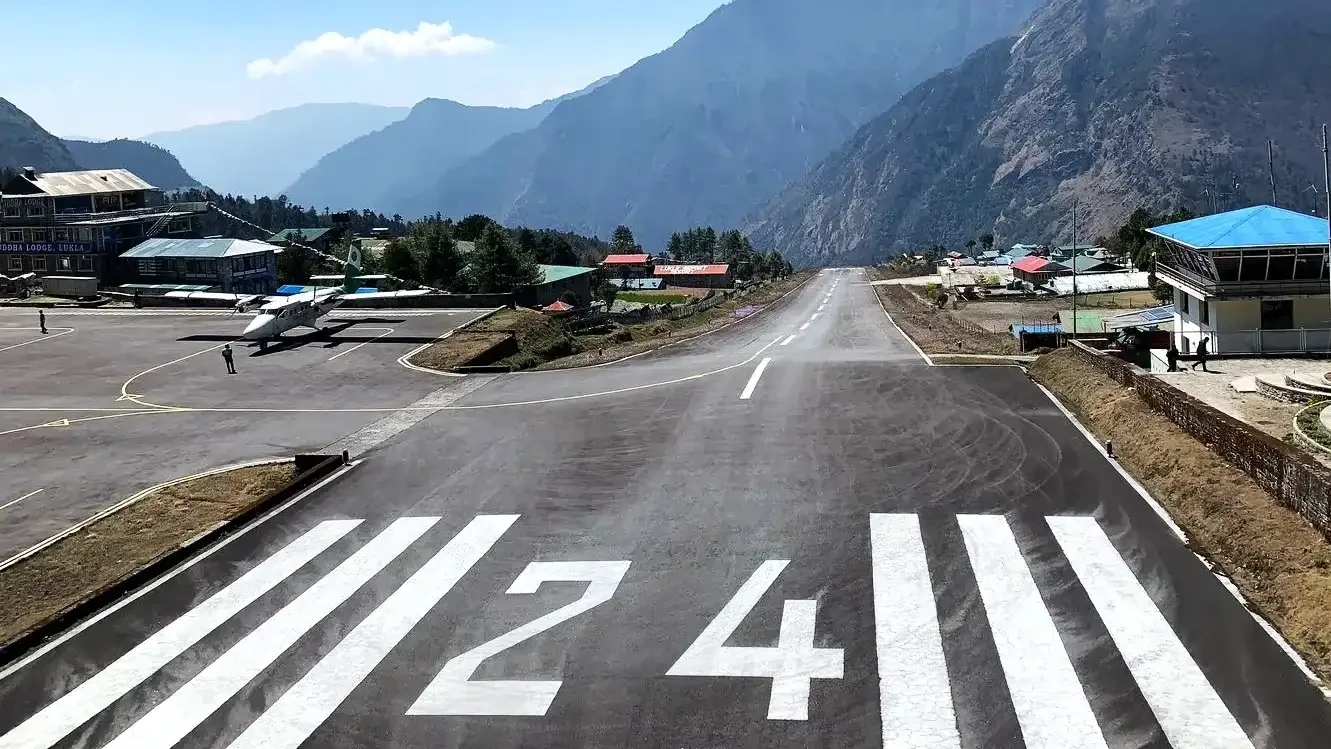 The slanted runway of the Lukla Airport
Lukla Airport to Everest Base Camp – What to Expect
The trek from Lukla Airport to Everest Base Camp covers roughly 65 kilometers one way. Most trekkers complete it in 8–10 days, including time for acclimatization.
Trek Highlights:
Namche Bazaar - Cultural and trade center of Khumbu region
Tengboche Monastery - Spritual stop with mountain views
Kala Patthar - Panoramic views of Mt. Everest
Everest Base Camp - The final destination at 5364 meters
Along the trail, you’ll pass yak caravans, cross suspension bridges, and sleep in local teahouses that offer basic comforts.
Lukla City: Life in the Town Itself
Step back from the airport and the trail logistics for a moment, and Lukla reveals itself as a real place where real people live year-round.
The main street runs roughly parallel to the runway and is paved with flat stones worn smooth by decades of boots, hooves, and bare feet. On either side sit teahouses, bakeries, gear shops, expedition offices, pharmacy stalls, and small hotels.
The buildings are mostly two and three storeys, built from stone and timber in the style common across the Khumbu. Prayer flags run between rooftops. A chorten marks the trail entrance at the lower end of town.
In the morning during trekking season, Lukla hums. Guides check equipment, porters arrange loads, kitchen staff at the teahouses start fires for the first breakfast orders. The helicopter pad to one side of town sees its first departures.
By mid-morning, the main wave of trekkers heading down the valley has left. The town settles.
By afternoon, the next group arrives from higher up, descending after completing their trek. The teahouses fill again for a different reason.
This rhythm, of arrivals and departures, of people at the beginning of something and people at the end of something, gives Lukla a particular quality that is hard to find elsewhere.
The Altitude of Lukla and What It Means for Your Body
The lukla altitude of 2,860 meters is high enough to register physically for most people arriving from sea level or low elevation. It is not high enough to cause serious altitude sickness in the majority of travelers on arrival, but it is high enough to notice.
You might feel slightly breathless climbing stairs. Sleep can be lighter than usual the first night. A mild headache is possible.
These are normal responses to a meaningful gain in elevation, not warnings of something serious. The elevation of Lukla airport at 2,845 meters means you are already well above many European and American mountain resort towns.
For reference: Namche Bazaar sits at 3,440 meters, Tengboche at 3,867 meters, and Everest Base Camp at 5,364 meters. Lukla is the floor of the Khumbu trekking experience, not the ceiling.
Most experienced guides recommend spending at least one night in Lukla before beginning the trail. This gives your body its first adjustment before the real climbing begins.
Rushing out of Lukla on the same day you arrive is possible and many trekkers do it. It is not always wise.
Hotels in Lukla Nepal: Where to Stay
Hotels in Lukla Nepal range from very basic to surprisingly comfortable, given the location and altitude. The options are almost entirely locally owned and operated, which means your accommodation choice directly supports the community.
The most common category is the trekking teahouse, a guesthouse where rooms are simple: two narrow beds, thin walls, a small window, limited power outlets. Shared bathrooms are the norm at lower price points.
Some lukla hotel options have improved significantly in recent years. Hot showers, heated dining rooms, reliable wifi, and even espresso machines are available at the better establishments on the main street.
The lukla airport resort category is a slight marketing stretch for what are essentially the most comfortable teahouses near the airstrip, but a few places genuinely offer a step above the standard accommodation in terms of bedding, food quality, and room insulation.
Booking ahead during peak season is strongly recommended. October in particular sees the town fill quickly, and arriving without a reservation is a gamble worth avoiding.
For most trekkers, one or two nights in Lukla bookend the trek. One night on arrival, another on return if the flight schedule requires it. Neither needs to be luxurious. The point of Lukla is not comfort.
The point of Lukla is what comes next.
The Sherpa Culture at the Heart of Lukla
Lukla sits in the ancestral territory of the Sherpa people, and while tourism has transformed the economics of the town, it has not replaced the culture underneath.
The Sherpas of the Solukhumbu are Tibetan Buddhist in faith and tradition. The monasteries, mani walls, prayer wheels, and chortens that punctuate the landscape of Lukla and the trail beyond it are not decorative. They are active expressions of a living religious practice.
Morning prayers happen in households across town before the tourist day begins. Festival calendars follow the Tibetan lunar cycle. Offerings are made at shrines that most trekkers walk past without noticing.
The hospitality in Lukla, the warmth of teahouse owners, the patience of guides, the cheerfulness of porters carrying loads that would challenge most Western gym-goers, is rooted in a cultural value system, not in customer service training.
Dumje and Mani Rimdu are the major festivals of the Sherpa calendar. If your trek timing overlaps with either, you will see a side of Lukla that most passing trekkers miss entirely.
Slow down. Talk to people. Ask questions. The culture here is worth more than a quick look from the trail.
Lukla as the Gateway: The Trekking Routes That Begin Here
The lukla base camp connection is the one most people know. The Everest Base Camp trek begins the moment you leave Lukla heading north on the stone trail toward Phakding and Namche Bazaar.
But Lukla is the starting point for more than just the classic EBC route. The Gokyo Lakes trek, the Three Passes Trek, the Everest Base Camp with Heli Return, the Everest Panorama Trek, the Island Peak climb, and the Mera Peak expedition all begin or end with a flight into or out of Lukla.
The lukla airport everest base camp trekking route runs north from town through the Dudh Koshi valley, climbing steadily through Sherpa villages, rhododendron forest, and increasingly dramatic mountain terrain before arriving at Base Camp roughly ten to fourteen days after leaving the airstrip.
Every one of those journeys, regardless of destination or duration, starts with the same first steps out of Lukla's lower gate and down toward the river.
That gate is easy to miss. It is just a stone archway with prayer flags above it.
Walk through it and the mountains take over.
Lukla Air Crash: The History and the Reality
Because Lukla airport has such a dramatic profile, it attracts significant attention whenever something goes wrong. The Lukla air crash history is real and worth understanding honestly.
Several accidents have occurred at or near the airport over the decades, and some have been fatal. The terrain, the weather dependency, the short runway, and the high volume of small aircraft operations all contribute to an environment where errors have little margin.
The most significant incidents have typically involved weather deterioration during approach, spatial disorientation in cloud, or runway excursions. The 2019 crash on the ground at Lukla, which killed three people, received wide international coverage.
What the coverage often misses is context. Thousands of flights operate into Lukla every year during trekking seasons, carrying tens of thousands of passengers. The per-flight accident rate, while higher than major international airports, is not exceptional by the standards of remote mountain aviation worldwide.
Flying into Lukla airport is a real-world risk calculation, not a reckless act. Choosing reputable airlines with experienced mountain pilots, flying in the morning when conditions are most stable, and building flexibility into your schedule are the practical responses to that risk.
The drama of landing in Lukla airport is real. So is the fact that the vast majority of people who fly in and out do so without incident.
Travel Tips for Your Lukla Journey
Before You Go:
Book flights early especially in peak spring and autumn seasons.
Carry essentials incase your luggage arrives later.
Who Should Travel Through Lukla?
Beginner Trekkers: Starting your journey from Lukla Airport Nepal gives you time to adapt to high altitudes.
Adventure Seekers: Flying to the Himalayas is an adrenaline rush in itself.
Luxury Travelers: Book a helicopter ride to Everest Base Camp for stunning aerial views and skip the trek itinerary.
Flying into Lukla Airport is one of the most thrilling parts of the Everest Base Camp trek. Whether you're trekking to base camp, flying for a trip to base camp and exploring the Everest Base Camp, your journey begins here.
Prepare for delays, enjoy the mountain air, and embrace the adventure.
Key Takeaway:
Lukla Airport in Nepal isn’t just an airport—it’s the door to your Everest Base Camp journey. It connects you to the heart of Sagarmatha and sets the tone for your climb to Everest Base Camp.
If you’re planning your Everest Base Camp hike, make sure to understand the route, plan for the weather, and respect the altitude. This remote mountain runway is your first challenge - and the beginning of something unforgettable.
Lukla airport in brief: altitude, flights and the famous landing
Tenzing-Hillary Airport at Lukla sits at roughly 2,845 m (9,334 ft) with a single short, uphill runway ending against the hillside - the reason the approach appears in so many cockpit-view videos. Pilots fly it visually in the early morning, before the valley cloud builds, so almost every scheduled departure is a dawn departure.
In peak trekking season some flights operate from Ramechhap rather than Kathmandu to ease congestion, and helicopter transfers are the usual fallback when fixed-wing flights are grounded. Plan a buffer day at each end of your trek. From Lukla the trail leads to Phakding, Namche Bazaar and eventually Base Camp - see the 14-day Everest Base Camp Trek.
Sharing route guides and trail experience from the high trails of Nepal.